
The Human Eye and Vision 2 Processing The
- Slides: 10
The Human Eye and Vision 2 (Processing The Image) Imaging Science Fundamentals Chester F. Carlson Center for Imaging Science
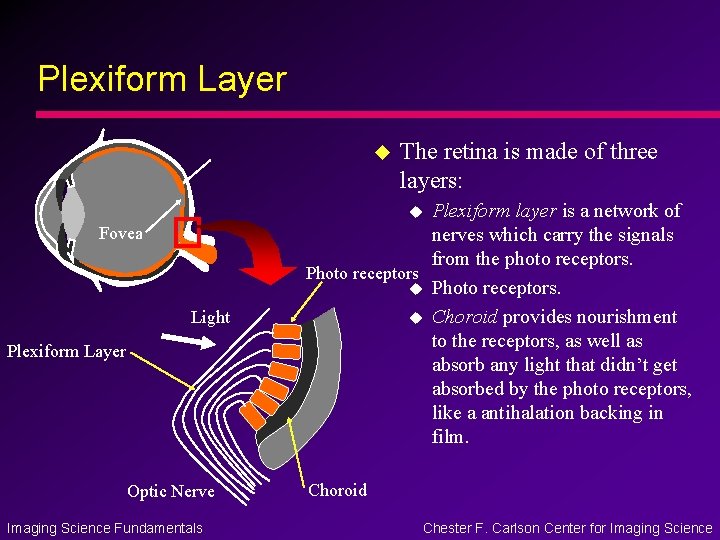
Plexiform Layer u The retina is made of three layers: Plexiform layer is a network of nerves which carry the signals from the photo receptors. Photo receptors u Photo receptors. u Choroid provides nourishment to the receptors, as well as absorb any light that didn’t get absorbed by the photo receptors, like a antihalation backing in film. u Fovea Light Plexiform Layer Optic Nerve Imaging Science Fundamentals Choroid Chester F. Carlson Center for Imaging Science
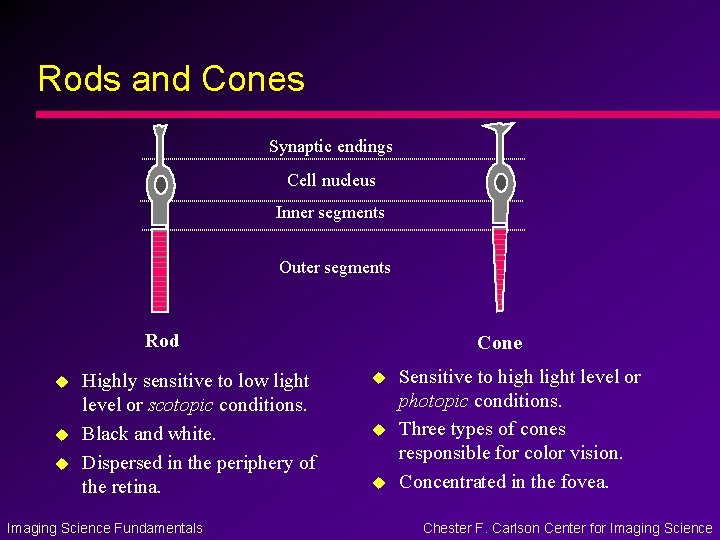
Rods and Cones Synaptic endings Cell nucleus Inner segments Outer segments Rod u u u Highly sensitive to low light level or scotopic conditions. Black and white. Dispersed in the periphery of the retina. Imaging Science Fundamentals Cone u u u Sensitive to high light level or photopic conditions. Three types of cones responsible for color vision. Concentrated in the fovea. Chester F. Carlson Center for Imaging Science
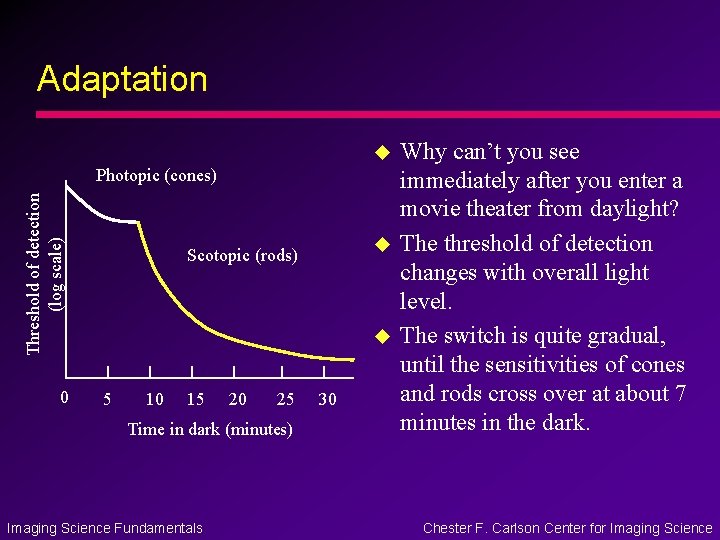
Adaptation u Threshold of detection (log scale) Photopic (cones) 0 u Scotopic (rods) u 5 10 15 20 25 Time in dark (minutes) Imaging Science Fundamentals 30 Why can’t you see immediately after you enter a movie theater from daylight? The threshold of detection changes with overall light level. The switch is quite gradual, until the sensitivities of cones and rods cross over at about 7 minutes in the dark. Chester F. Carlson Center for Imaging Science
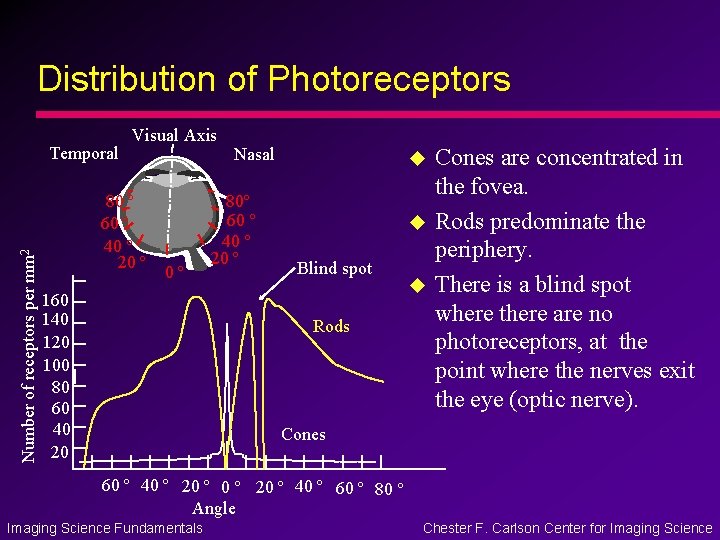
Distribution of Photoreceptors Number of receptors per mm 2 Temporal Visual Axis 80 º 60 º 40 º 20 º 0º 160 140 120 100 80 60 40 20 Nasal 80º 60 º 40 º 20 º u u Blind spot Rods u Cones are concentrated in the fovea. Rods predominate the periphery. There is a blind spot where there are no photoreceptors, at the point where the nerves exit the eye (optic nerve). Cones 60 º 40 º 20 º 40 º 60 º 80 º Angle Imaging Science Fundamentals Chester F. Carlson Center for Imaging Science
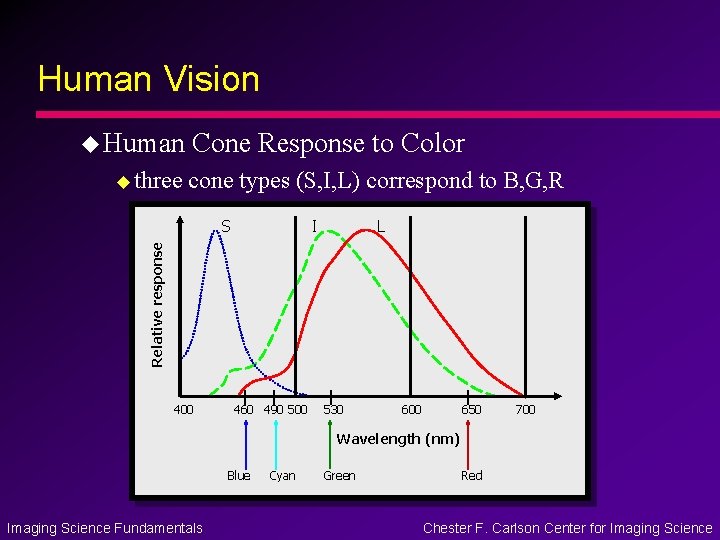
Human Vision u Human u three Cone Response to Color cone types (S, I, L) correspond to B, G, R I L Relative response S 400 460 490 500 530 600 650 700 Wavelength (nm) Blue Imaging Science Fundamentals Cyan Green Red Chester F. Carlson Center for Imaging Science
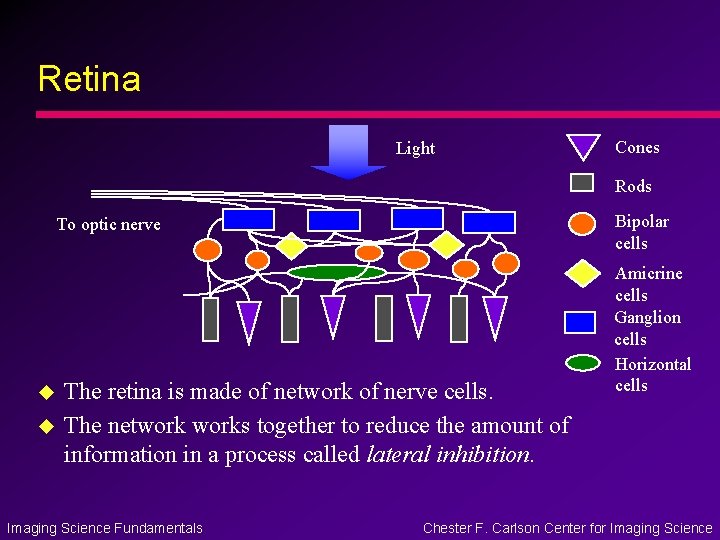
Retina Light Cones Rods Bipolar cells To optic nerve u u The retina is made of network of nerve cells. The networks together to reduce the amount of information in a process called lateral inhibition. Imaging Science Fundamentals Amicrine cells Ganglion cells Horizontal cells Chester F. Carlson Center for Imaging Science
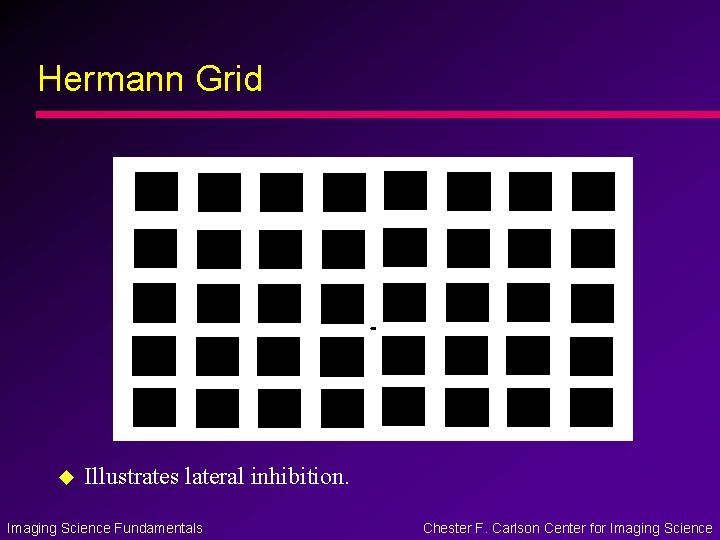
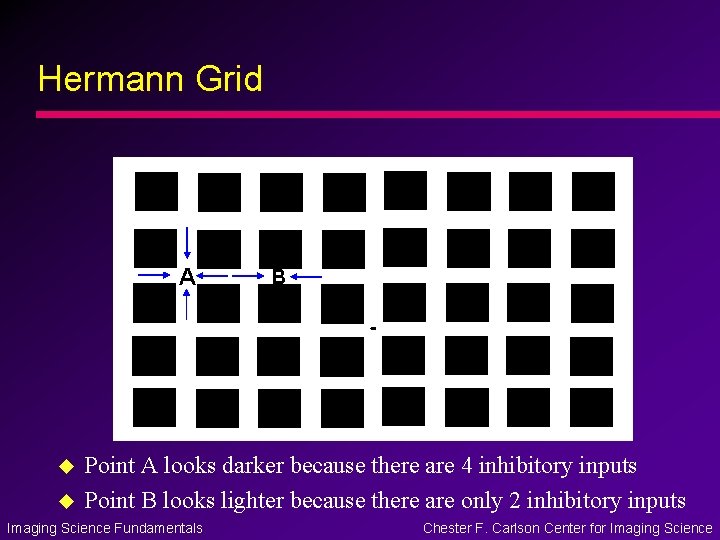
Hermann Grid u Illustrates lateral inhibition. Imaging Science Fundamentals Chester F. Carlson Center for Imaging Science
Hermann Grid A u u B Point A looks darker because there are 4 inhibitory inputs Point B looks lighter because there are only 2 inhibitory inputs Imaging Science Fundamentals Chester F. Carlson Center for Imaging Science
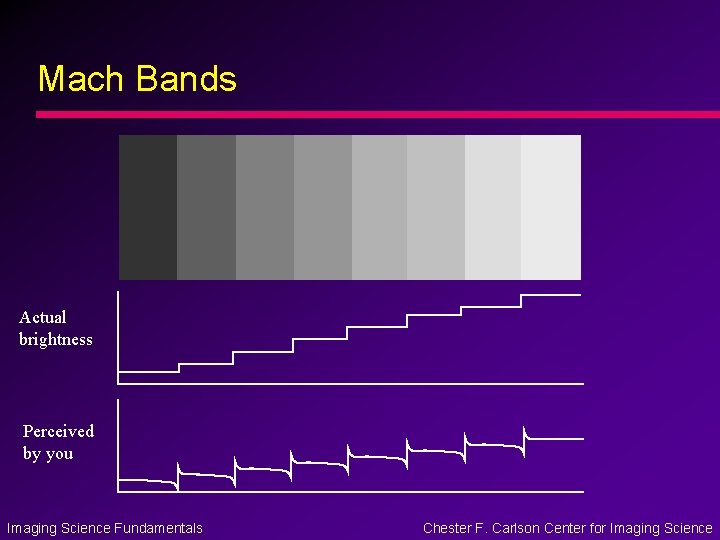
Mach Bands Actual brightness Perceived by you Imaging Science Fundamentals Chester F. Carlson Center for Imaging Science