
The Human Eye 6 th Grade Science Parts

- Slides: 14
The Human Eye 6 th Grade Science
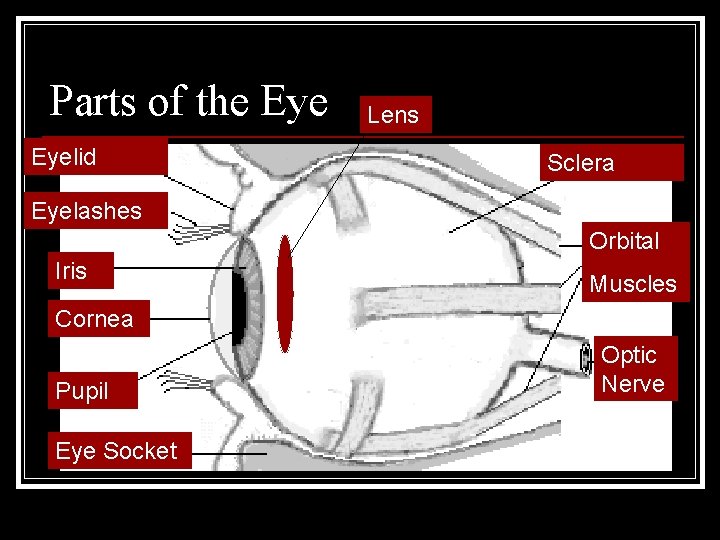
Parts of the Eyelid Lens Sclera Eyelashes Orbital Iris Muscles Cornea Pupil Eye Socket Optic Nerve
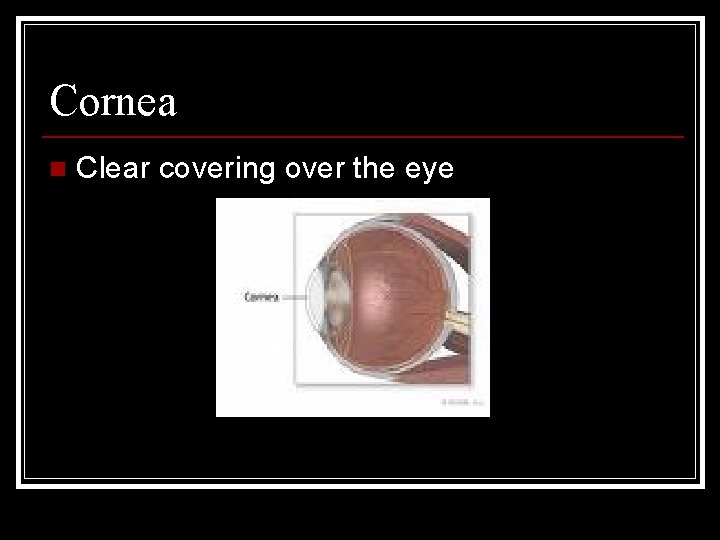
Cornea n Clear covering over the eye
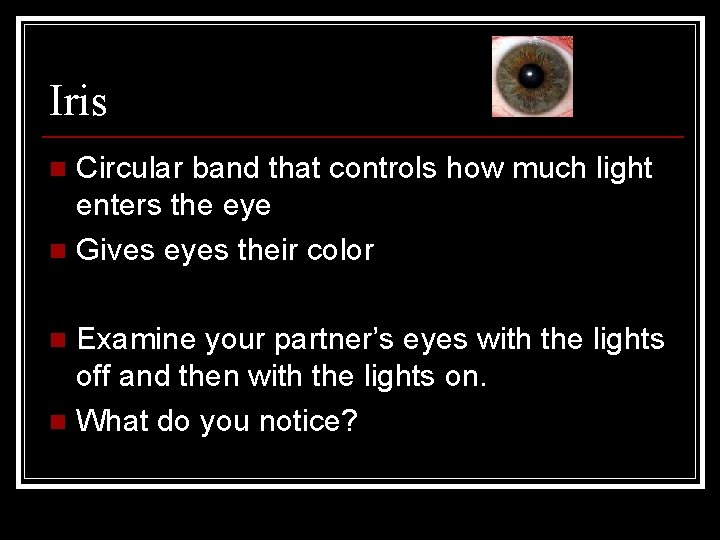
Iris Circular band that controls how much light enters the eye n Gives eyes their color n Examine your partner’s eyes with the lights off and then with the lights on. n What do you notice? n
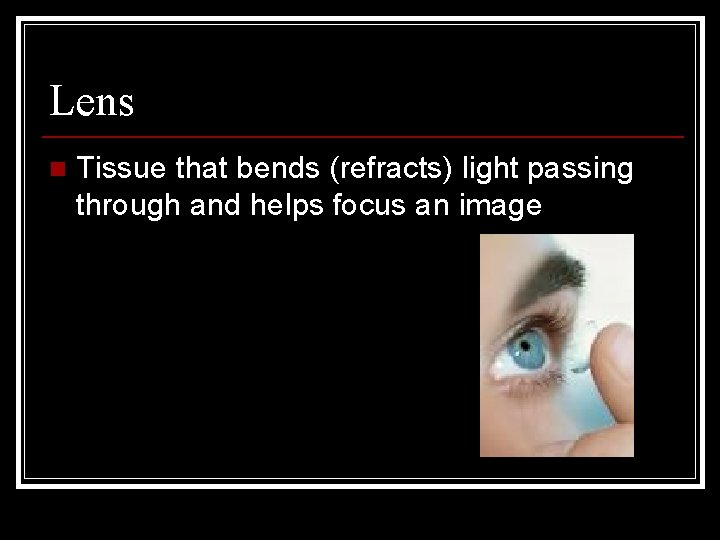
Lens n Tissue that bends (refracts) light passing through and helps focus an image
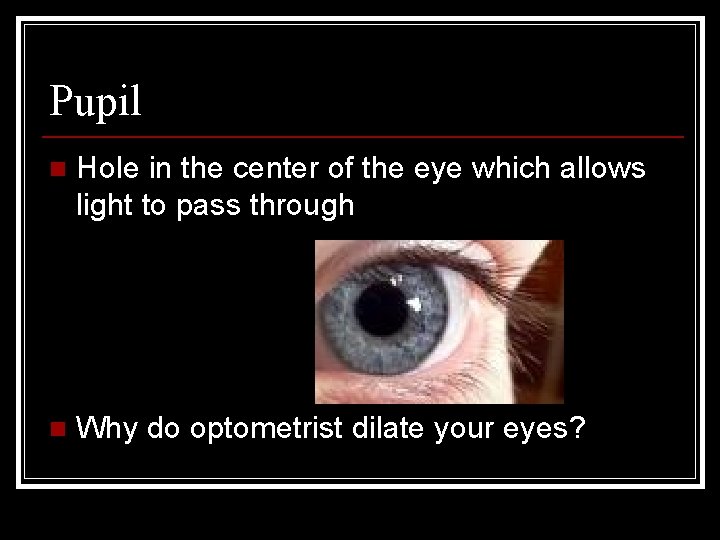
Pupil n Hole in the center of the eye which allows light to pass through n Why do optometrist dilate your eyes?
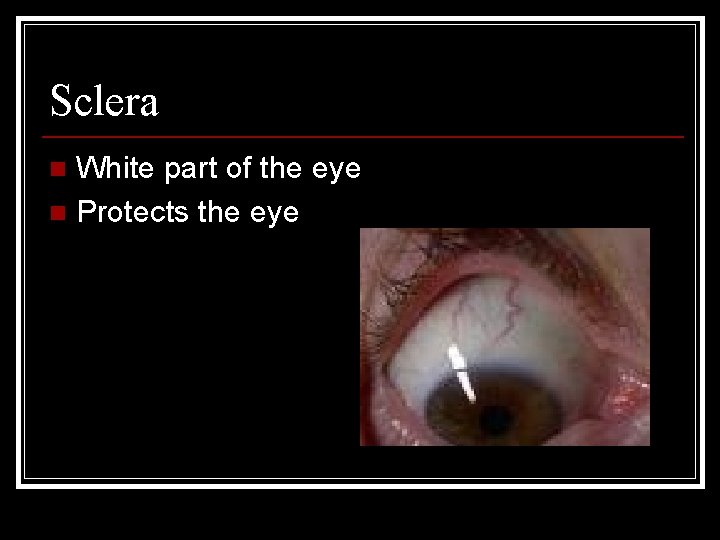
Sclera White part of the eye n Protects the eye n
Retina n Layer of tissue on the back of the eye that has cone and rod cells which gather information n n Rods: allow us to see black, white, & shades of grey Cones: allow us to see red, blue, and green colors n They work together so we can see many shades of colors
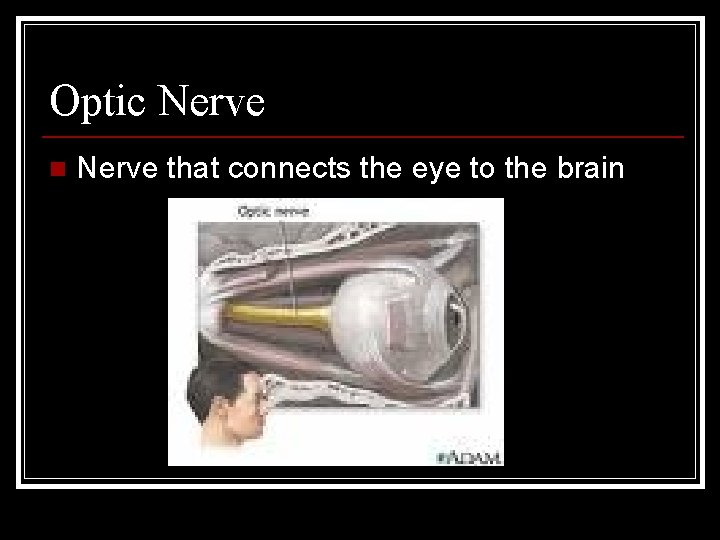
Optic Nerve n Nerve that connects the eye to the brain
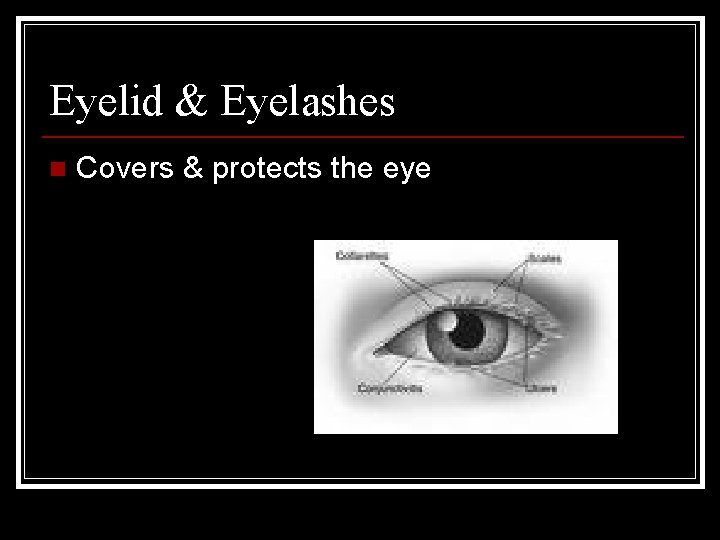
Eyelid & Eyelashes n Covers & protects the eye
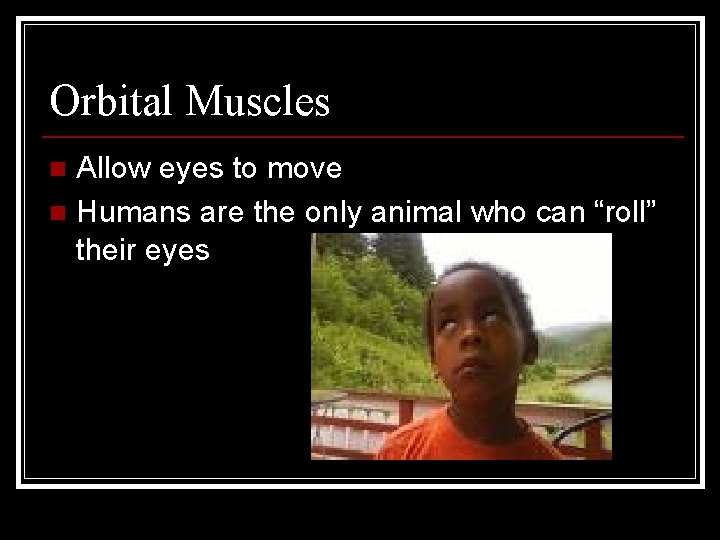
Orbital Muscles Allow eyes to move n Humans are the only animal who can “roll” their eyes n
Media Clip
How do we see? 1. Light enters the eye through the cornea. 2. Light continues through the pupil which is controlled by the iris. 3. Light passes through the lens which refracts (bends) the light causing the picture to be upside down. 4. The upside down picture travels to the retina which flips the image right side up. 5. The optic nerve sends signals to the brain, which interprets the images.
Eye Fun Facts n n n n Most people blink every 2 -10 seconds. Each time you blink, you shut your eyes for 0. 3 seconds, which means your eyes are closed at least 30 minutes a day just from blinking. Owls can see a mouse moving over 150 feet away with light no brighter than a candle. The reason cat's and dog's (and cow’s) eyes glow at night is because of silver mirrors in the back of their eyes called the tapetum. This makes it easier for them to see at night. An ostrich has eyes that are two inches across. Each eye weighs more than their brain. A chameleon's eyes can look in opposite directions at the same time. A newborn baby sees the world upside down because it takes some time for the baby's brain to learn to turn the picture right-side up. One in every twelve males is color blind