
THE HUMAN DIGESTIVE SYSTEM THE ROLE OF THE
- Slides: 9
THE HUMAN DIGESTIVE SYSTEM THE ROLE OF THE DIGESTIVE SYSTEM BREAKDOWN TRANSPORT ABSORB
The Role of the Digestive System �The digestive system consists of the group of organs involved digesting and absorbing food. �These absorbed substances are then transported around the body to be used for energy and for rebuilding and repairing cells and tissues.
3 Functions of the Digestive System: �Digestion (breaking down food) �Absorption (taking in nutrients) �Excretion (eliminating waste)
Digestion: �breaking down food into smaller, simpler substances �mechanical digestion biting , chewing, mixing �chemical digestion chemical splitting of large molecules into smaller subunits
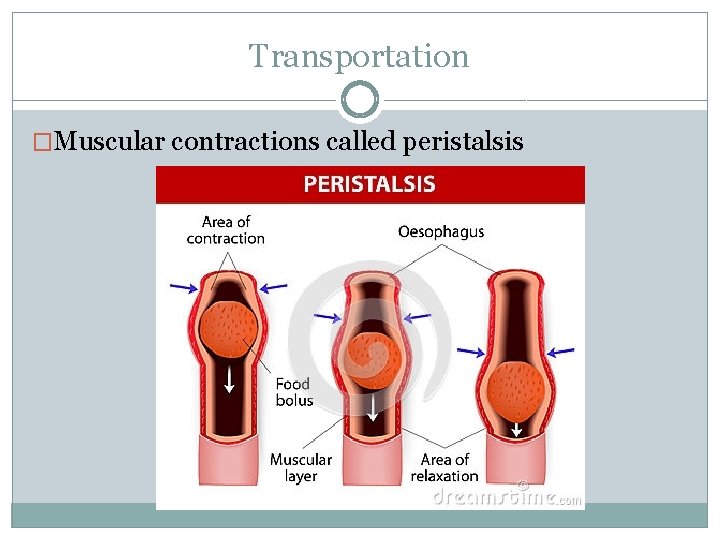
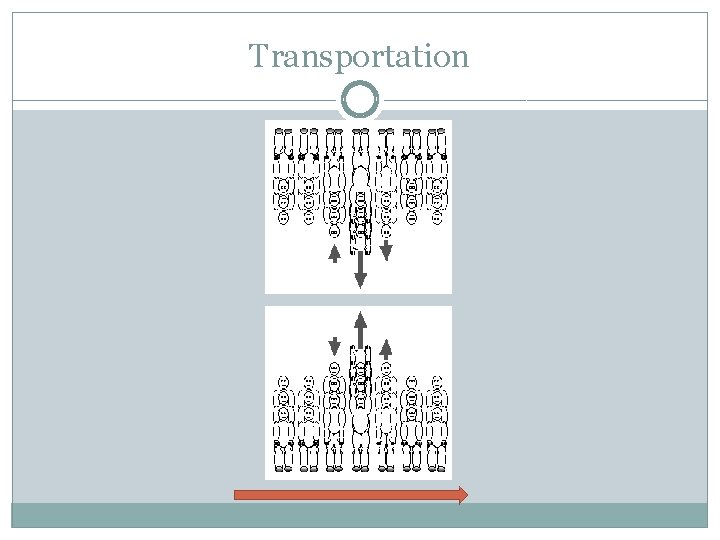
Transportation �Muscular contractions called peristalsis
Transportation
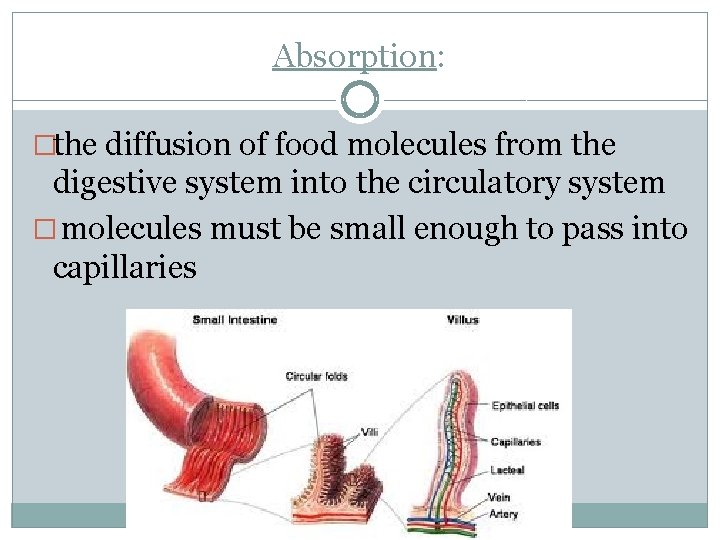
Absorption: �the diffusion of food molecules from the digestive system into the circulatory system � molecules must be small enough to pass into capillaries
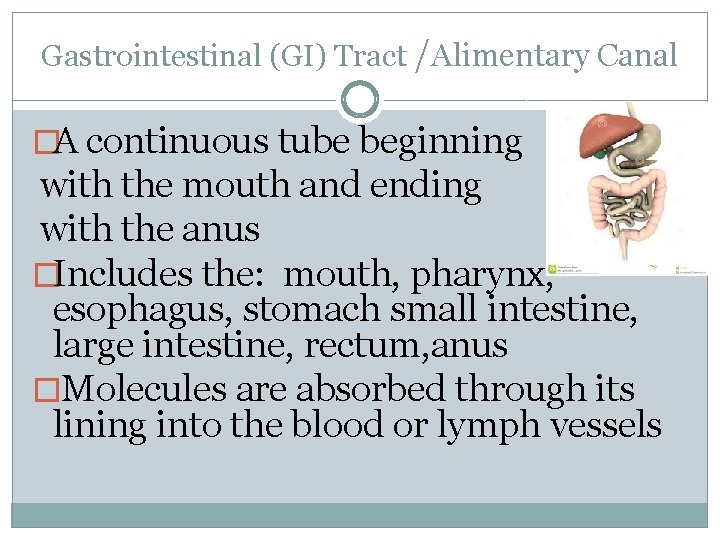
Gastrointestinal (GI) Tract /Alimentary Canal �A continuous tube beginning with the mouth and ending with the anus �Includes the: mouth, pharynx, esophagus, stomach small intestine, large intestine, rectum, anus �Molecules are absorbed through its lining into the blood or lymph vessels
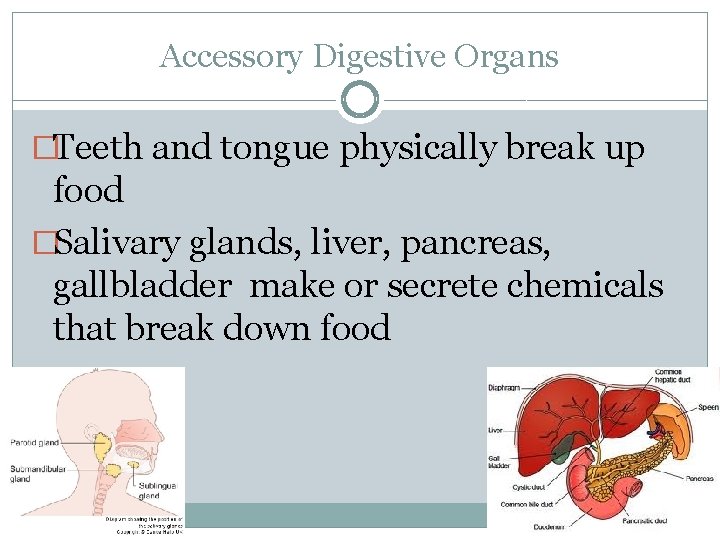
Accessory Digestive Organs �Teeth and tongue physically break up food �Salivary glands, liver, pancreas, gallbladder make or secrete chemicals that break down food