
THE HUMAN DIGESTIVE SYSTEM The Human Digestive System
- Slides: 33
THE HUMAN DIGESTIVE SYSTEM
The Human Digestive System We will divide the Human Digestive System into two main topics: 1. Nutrition and what our body needs 2. How the human body breaks down food and makes it available for use by ALL CELLS.
Nutrition There are 5 kinds of nutrients: q q q Carbohydrates Fats Proteins Vitamins Minerals Require Nutrients which are foundfood in Nutrients are needed energy, growth, and all for other life processes
Carbohydrates are found in: � bread, Carbohydrates are used for: � main pasta, rice, fruit, and candy. source of energy There are two types of carbohydrates: � Simple (Sugars) � Complex (Starches)
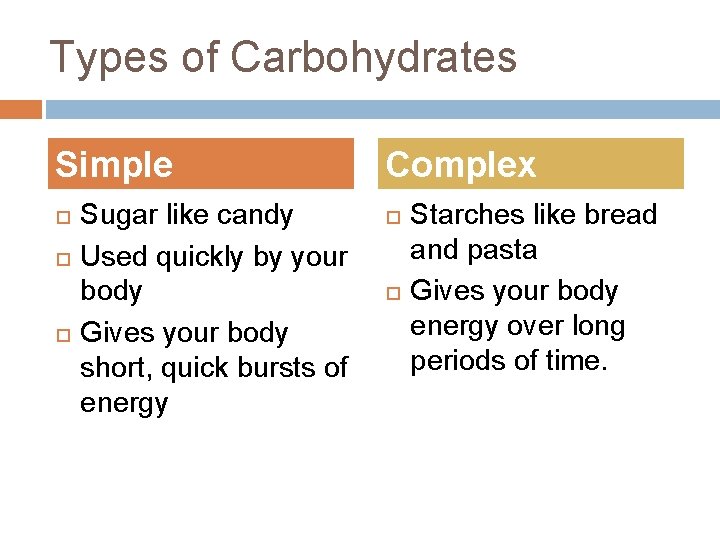
Types of Carbohydrates Simple Sugar like candy Used quickly by your body Gives your body short, quick bursts of energy Complex Starches like bread and pasta Gives your body energy over long periods of time.
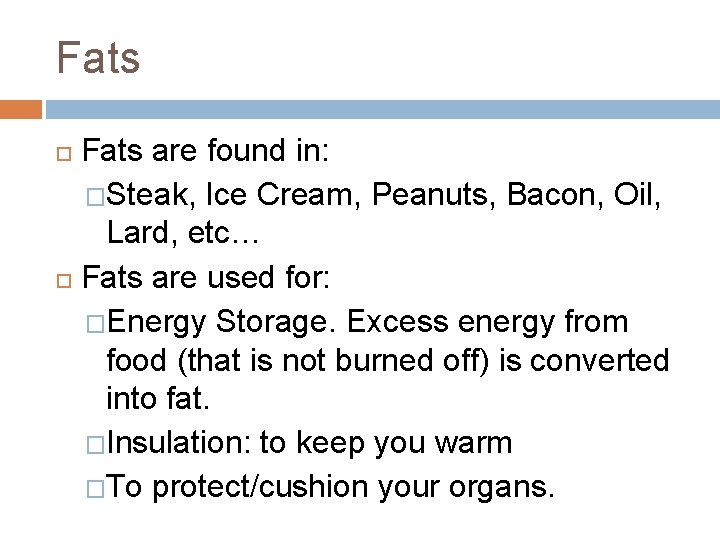
Fats are found in: �Steak, Ice Cream, Peanuts, Bacon, Oil, Lard, etc… Fats are used for: �Energy Storage. Excess energy from food (that is not burned off) is converted into fat. �Insulation: to keep you warm �To protect/cushion your organs.
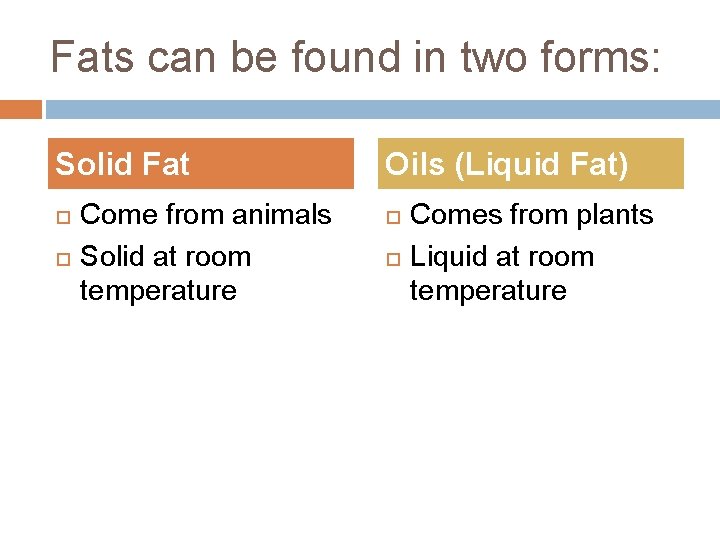
Fats can be found in two forms: Solid Fat Come from animals Solid at room temperature Oils (Liquid Fat) Comes from plants Liquid at room temperature
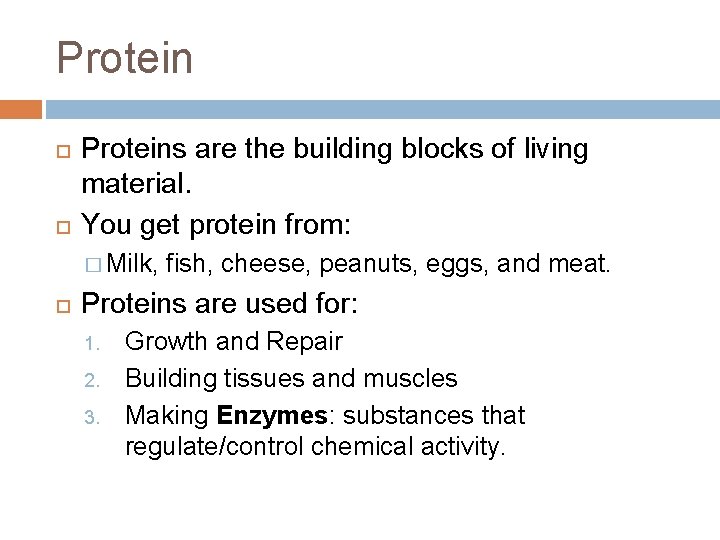
Protein Proteins are the building blocks of living material. You get protein from: � Milk, fish, cheese, peanuts, eggs, and meat. Proteins are used for: 1. 2. 3. Growth and Repair Building tissues and muscles Making Enzymes: substances that regulate/control chemical activity.
Protein continued… The building blocks of proteins are Amino Acids. � Proteins are formed when smaller amino acid molecules join together. There about twenty (20) amino acids. � Twelve (12) are made in the body. � Eight (8) must be taken into the body
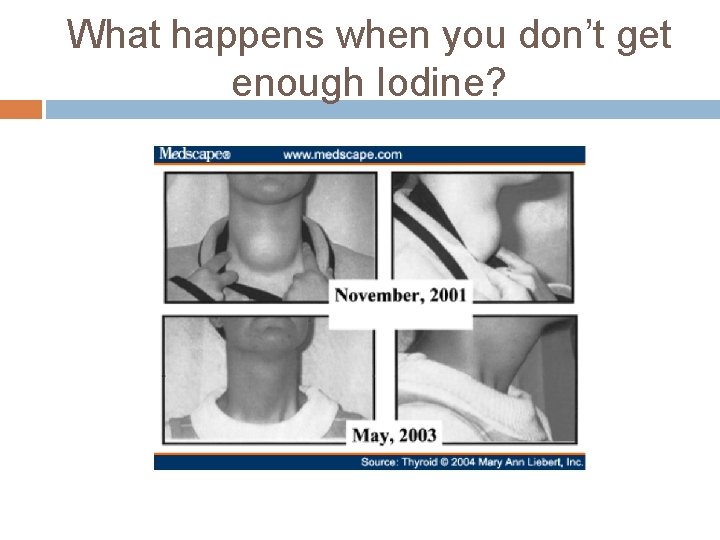
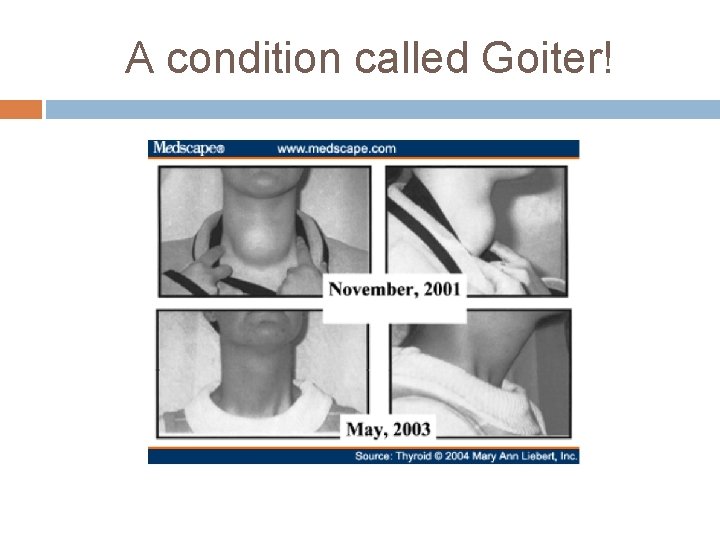
Minerals are nutrients needed by the body to develop properly Each Mineral has a different job: Iron Forms red blood cells Calcium and Build strong teeth and bones Phosphorou s Needed for healthy muscle, Sodium bone, and nerve tissue Part of the hormones that regulate Iodine metabolism
What happens when you don’t get enough Iodine?
A condition called Goiter!
Vitamins You get most of the vitamins you need from food. These are A, B, C, and E. Exception: Vitamins D and K are made in your body Vitamins are used to: � Regulate If you don’t get enough vitamins you get a deficiency � Example: Vitamin C helps prevent Scurvy Water Soluble vitamins (vitamin C) � Excess growth and the normal function of your body. will be flushed out by water Fat Soluble vitamins (beta-carotene) � Gather in fat, and can reach toxic levels if too much are consumed
Water All the chemical reactions in the body take place in water. Water carries nutrients to and from the organs It helps your body maintain its temperature You get water from the foods you eat and the fluids you drink. Your body is about 50%-60% water.
How do living things get energy? 1. 2. 3. 4. 5. They get their energy from food or photosynthesis After food is broken down in the body, it can be used in respiration to produce energy The slow burning of food in your body is called oxidation Some energy is given off as heat. The waste products are carbon dioxide and water.
Calories The amount of energy required to raise one gram of water by one degree Celsius. Calories = Grams x Temperature Change You don’t have to copy this down but, 1000 (Scientific) Calories equals 1 Food Calorie.
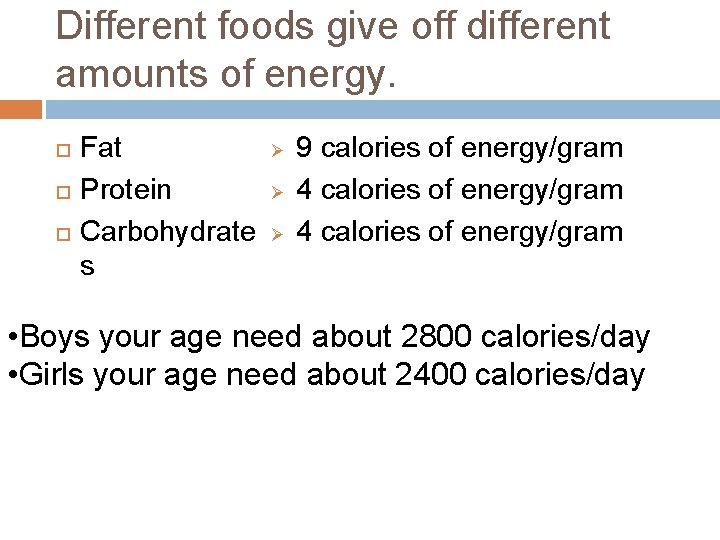
Different foods give off different amounts of energy. Fat Protein Carbohydrate s Ø Ø Ø 9 calories of energy/gram 4 calories of energy/gram • Boys your age need about 2800 calories/day • Girls your age need about 2400 calories/day
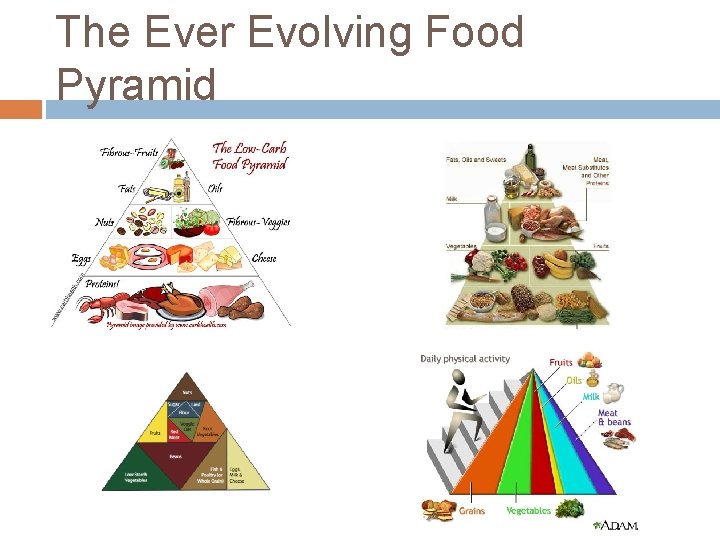
The Ever Evolving Food Pyramid
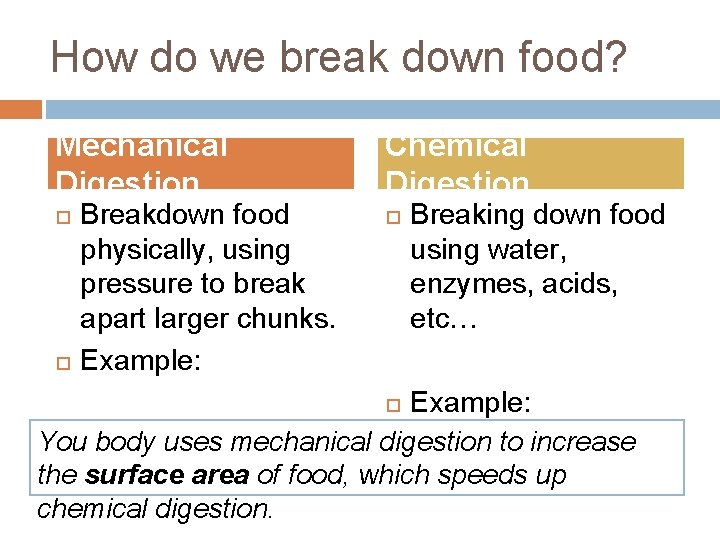
How do we break down food? Mechanical Digestion Chemical Digestion Breakdown food physically, using pressure to break apart larger chunks. Example: Breaking down food using water, enzymes, acids, etc… Example: You body uses mechanical digestion to increase the surface area of food, which speeds up chemical digestion.
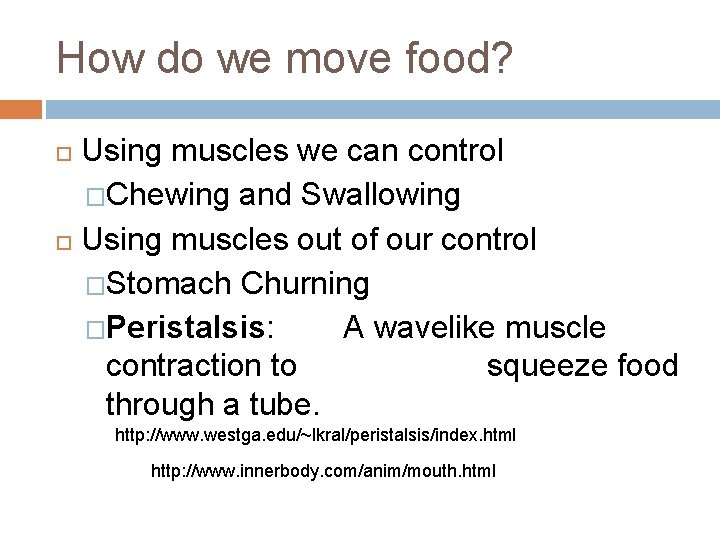
How do we move food? Using muscles we can control �Chewing and Swallowing Using muscles out of our control �Stomach Churning �Peristalsis: A wavelike muscle contraction to squeeze food through a tube. http: //www. westga. edu/~lkral/peristalsis/index. html http: //www. innerbody. com/anim/mouth. html
The Digestive Pathway Mouth (Food) Throat / Pharynx (Bolus ) Mechanical Dig Teeth Chemical Dig Salivary Glands Saliva with Ptyalin A tube to transport food water and air
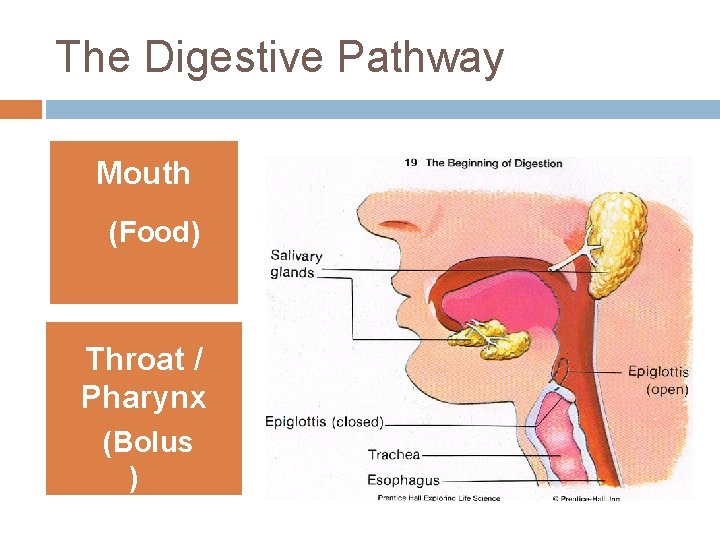
The Digestive Pathway Mouth (Food) Throat / Pharynx (Bolus )
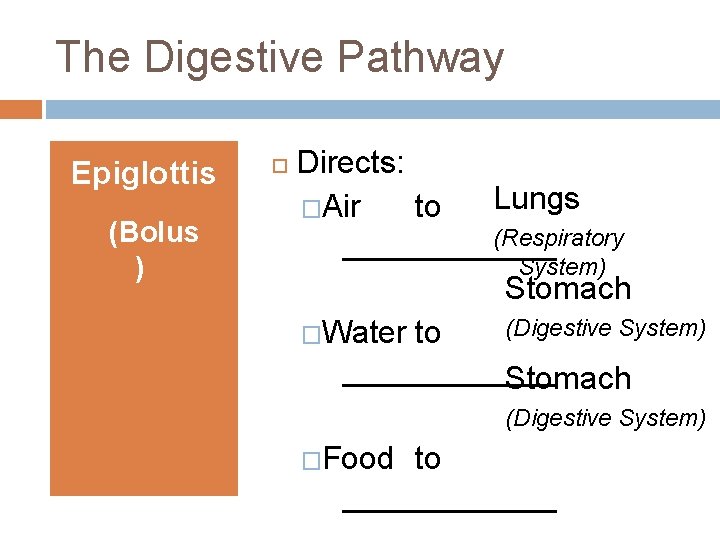
The Digestive Pathway Epiglottis (Bolus ) Directs: Lungs �Air to (Respiratory ______ System) Stomach (Digestive System) �Water to ______ Stomach (Digestive System) �Food to ______
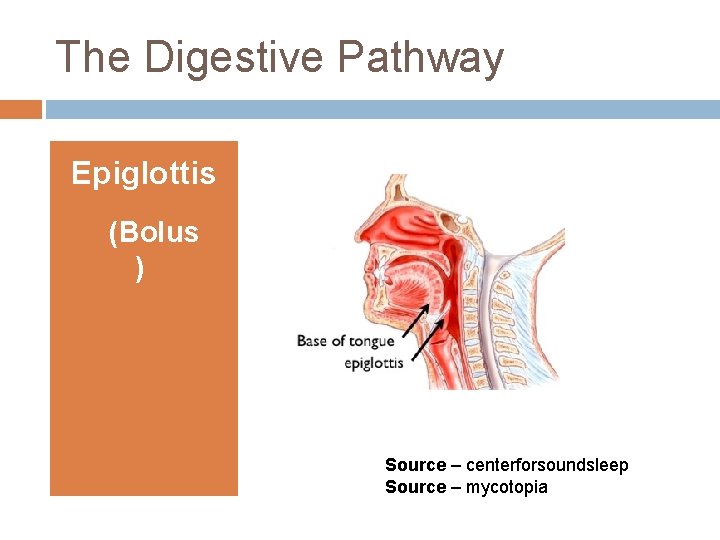
The Digestive Pathway Epiglottis (Bolus ) Source – centerforsoundsleep Source – mycotopia
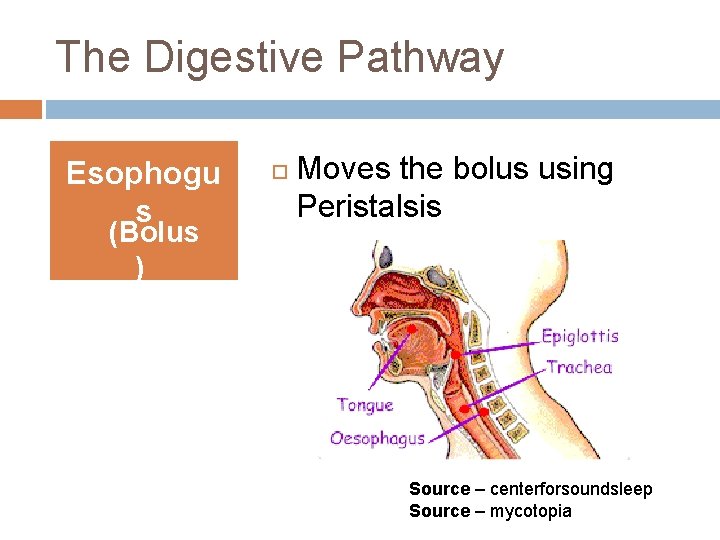
The Digestive Pathway Esophogu s (Bolus ) Moves the bolus using Peristalsis Source – centerforsoundsleep Source – mycotopia
The Digestive Pathway The Stomach (Bolus) Mechanical Dig Churning Chemical Dig HCl to digest Carbs. (Hydrochloric Acid) Pepsin to digest Proteins (Enzyme)
The Digestive Pathway Small Intestines (Chyme) First section: The duodenum Moves food using Peristalsis Increases surface area with villi Digestion of Fats begin here Chemically breaks down food using secretions from the: Pancreas Liver
The Digestive Pathway Small Intestines & The Accessory Organs The Pancreas and Liver Pancrea s Secretes Pancreatic juices to breakdown nutrients Liver Creates Bile: • Breaks down Fats • Stored in Gall Bladder
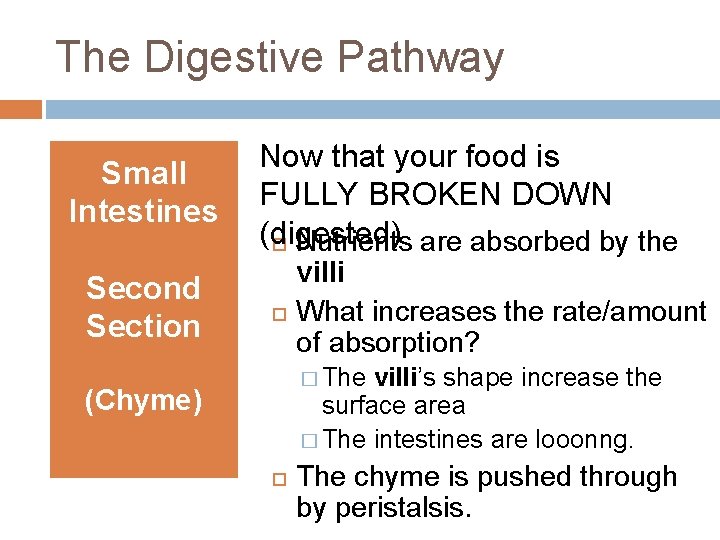
The Digestive Pathway Small Intestines Second Section Now that your food is FULLY BROKEN DOWN (digested) Nutrients are absorbed by the villi What increases the rate/amount of absorption? � The villi’s shape increase the surface area � The intestines are looonng. (Chyme) The chyme is pushed through by peristalsis.
The Digestive Pathway Large Intestines Now that your food is FULLY ABSORBED Reabsorbes: � Water � Vitamin (Feces) B&K
The Digestive Pathway Rectum Feces is stored here Anus Feces is expelled here
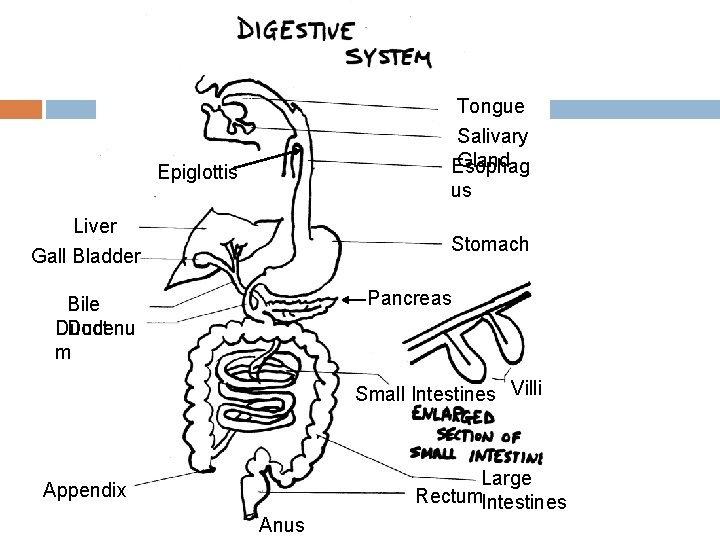
Tongue Salivary Gland Esophag Epiglottis us Liver Gall Bladder Stomach Pancreas Bile Duodenu Duct m Small Intestines Villi Large Rectum. Intestines Appendix Anus
http: //www. innerbody. com/anim/mouth. html