
The Human Digestive System ingestion digestion chemical and
- Slides: 10
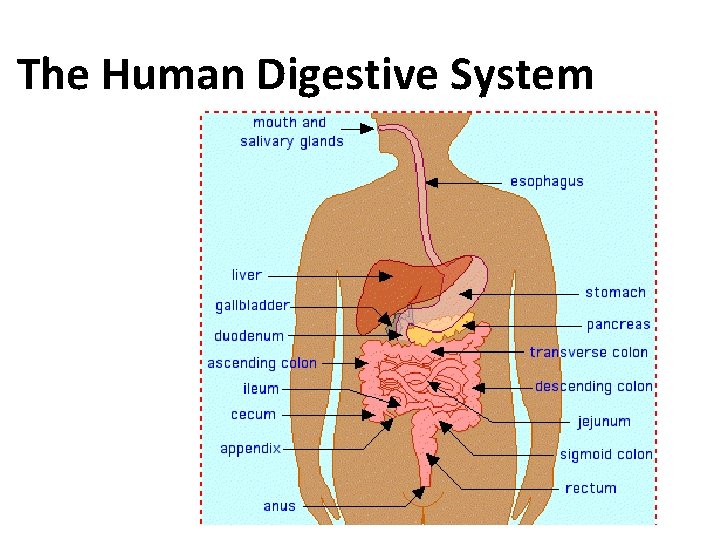
The Human Digestive System
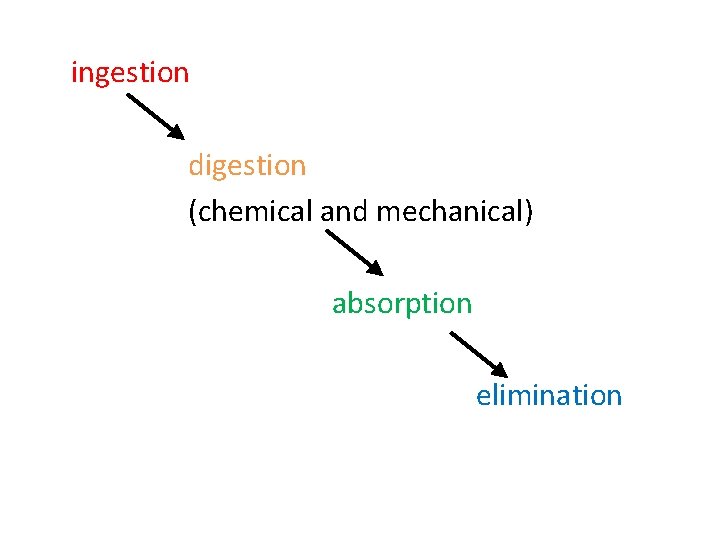
ingestion digestion (chemical and mechanical) absorption elimination
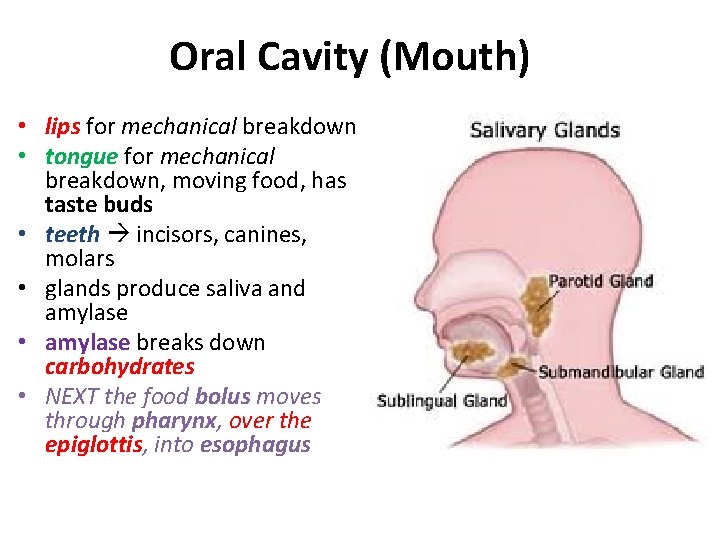
Oral Cavity (Mouth) • lips for mechanical breakdown • tongue for mechanical breakdown, moving food, has taste buds • teeth incisors, canines, molars • glands produce saliva and amylase • amylase breaks down carbohydrates • NEXT the food bolus moves through pharynx, over the epiglottis, into esophagus
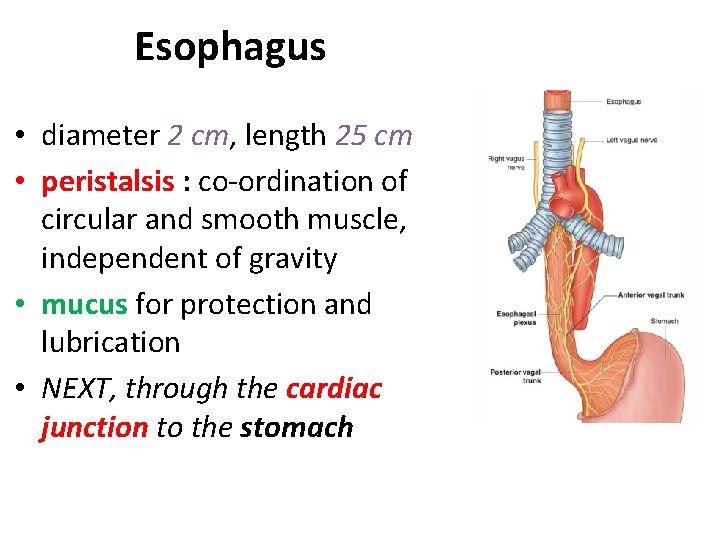
Esophagus • diameter 2 cm, length 25 cm • peristalsis : co-ordination of circular and smooth muscle, independent of gravity • mucus for protection and lubrication • NEXT, through the cardiac junction to the stomach
Esophagus video clip (1: 41): https: //www. youtube. com/wa tch? v=r. JS-Kh 5 w. CQU
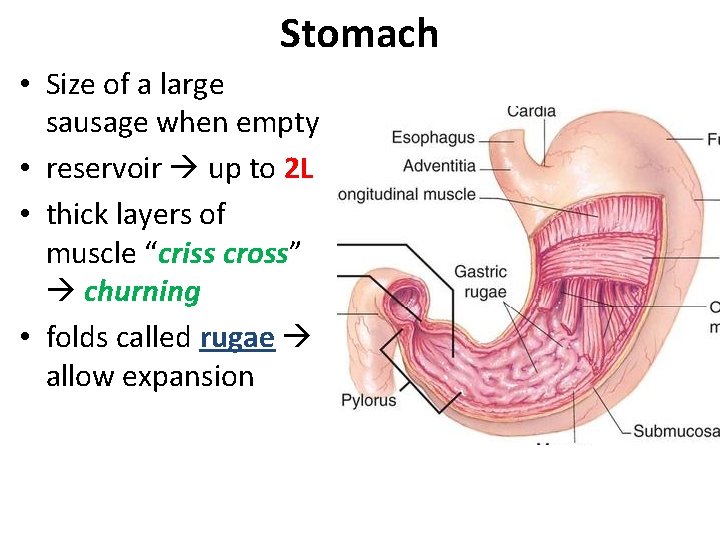
Stomach • Size of a large sausage when empty • reservoir up to 2 L • thick layers of muscle “criss cross” churning • folds called rugae allow expansion
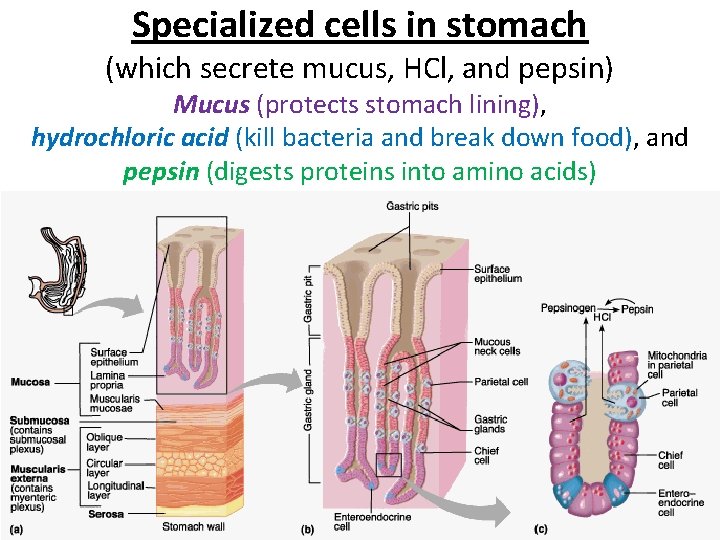
Specialized cells in stomach (which secrete mucus, HCl, and pepsin) Mucus (protects stomach lining), hydrochloric acid (kill bacteria and break down food), and pepsin (digests proteins into amino acids)
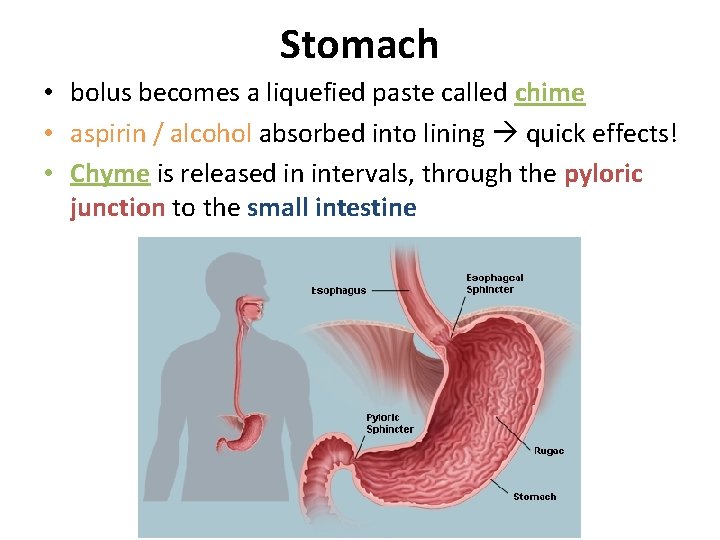
Stomach • bolus becomes a liquefied paste called chime • aspirin / alcohol absorbed into lining quick effects! • Chyme is released in intervals, through the pyloric junction to the small intestine
Broadcasting Live from Inside the Human Stomach (2: 27): https: //www. youtube. com/watch? v=-U 5 Jy. ODRVng (camera) Exclusive look at the anatomy of the Human Stomach (1: 10): https: //www. youtube. com/watch? v=BDd. Sw. N_p. AEU (dissection)
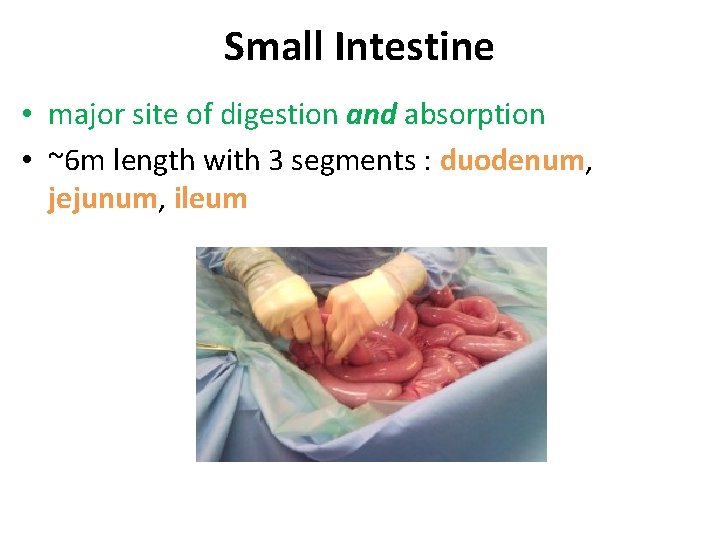
Small Intestine • major site of digestion and absorption • ~6 m length with 3 segments : duodenum, jejunum, ileum