
The Human Defence System What I need to
- Slides: 35
The Human Defence System
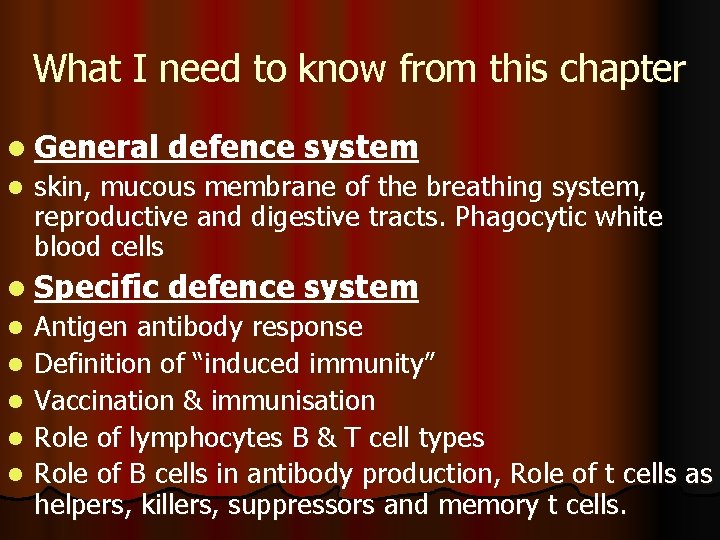
What I need to know from this chapter l General l skin, mucous membrane of the breathing system, reproductive and digestive tracts. Phagocytic white blood cells l Specific l l l defence system Antigen antibody response Definition of “induced immunity” Vaccination & immunisation Role of lymphocytes B & T cell types Role of B cells in antibody production, Role of t cells as helpers, killers, suppressors and memory t cells.
General Defence System l Non specific l Acts against all pathogens l Consists of two parts
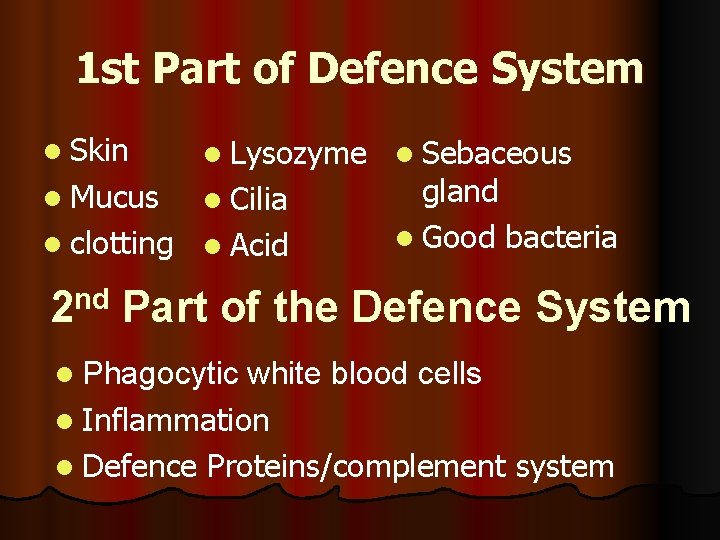
1 st Part of Defence System l Skin l Lysozyme l Mucus l Cilia l clotting l Acid l Sebaceous gland l Good bacteria 2 nd Part of the Defence System l Phagocytic white blood cells l Inflammation l Defence Proteins/complement system
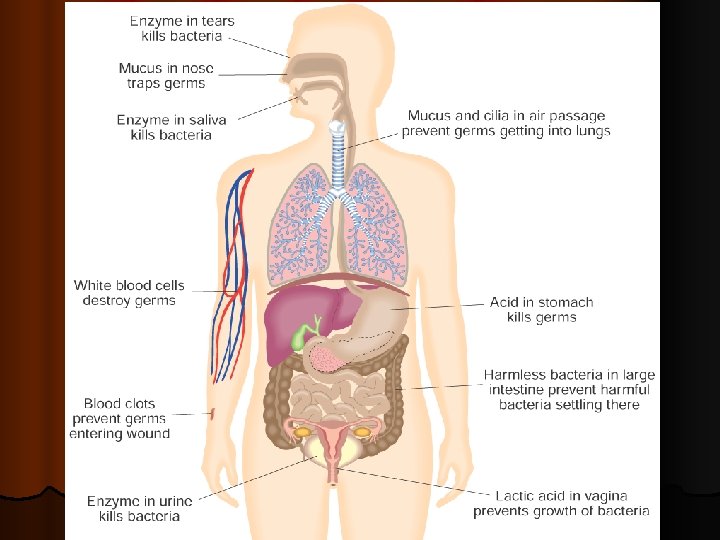
Skin st (1 Line defence) l Skin – provides a structural barrier to infection l Clotting – prevents entry of pathogens l Lysozyme – Enzyme found in sweat, tears, saliva - Dissolves cell walls of bacteria l Sebaceous glands – chemicals to kill bacteria
Respiratory Tract st (1 Line defence) l Respiratory tract lined with mucus -Traps pathogens l Respiratory tract has cilia - Moves mucus back up into the throat - carries pathogens out
Digestive Tract st (1 Line defence) l Produces mucus acid in the stomach - kills many bacteria
Reproductive tract st (1 Line defence) l Beneficial bacteria in vagina produce lactic acid – prevents growth of pathogens
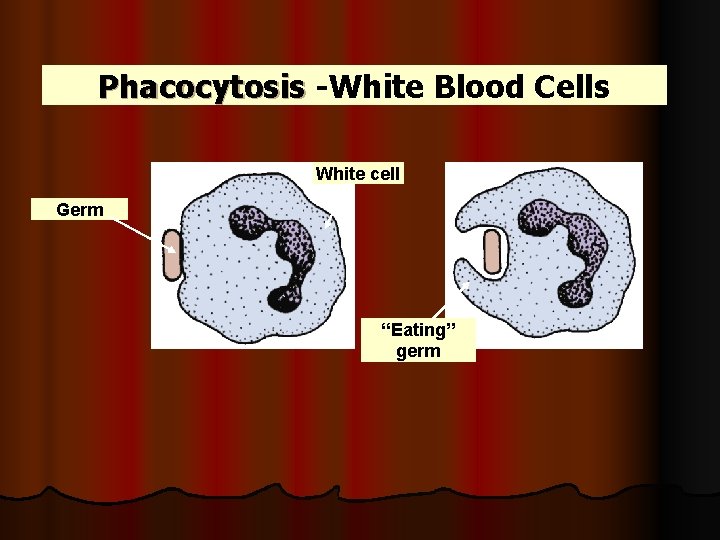
Phagocytic White Blood Cells (2 nd Line Defence) l Micro organisms that damage cells l These cells release chemicals l The chemicals attract white blood cells l White blood cells engulf pathogens l White blood cells that engulf pathogens are called Phagocytes l Large phagocytes called Macrophages – found in Spleen, Tonsils, Adenoids l Filter out pathogens from lymph system
Phacocytosis -White Blood Cells White cell Germ “Eating” germ
Inflammation (2 nd Line Defence) l Infected cells release histamine l This causes dilation (widening) of blood vessels l The wider the vessel the easier white blood cells can get to the area l Which causes vessels to become porous l General Inflammation causes a fever l High temperature stops bacteria reproducing
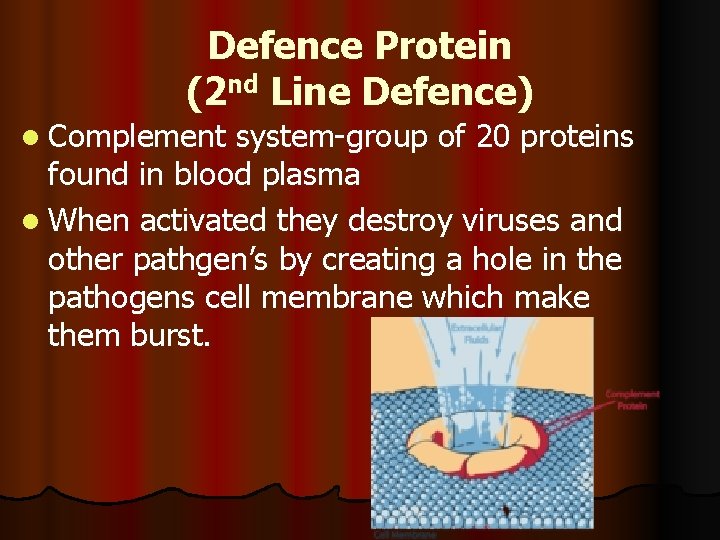
Defence Protein (2 nd Line Defence) l Complement system-group of 20 proteins found in blood plasma l When activated they destroy viruses and other pathgen’s by creating a hole in the pathogens cell membrane which make them burst.
Specific Defence System (The Immune System) l Attacks particular pathogens l Produces antibodies which kill pathogens l Produces white blood cells
White Blood Cells Leucocytes Lymphocytes attack cells that contain antigens Lymphocytes produce antibodies Monocytes develop into macrophages Macrophages recognise antigens (foreign molecules) Digest the pathogens & antigens are displayed on the outside of the macrophage this stimulates the production of antibodies
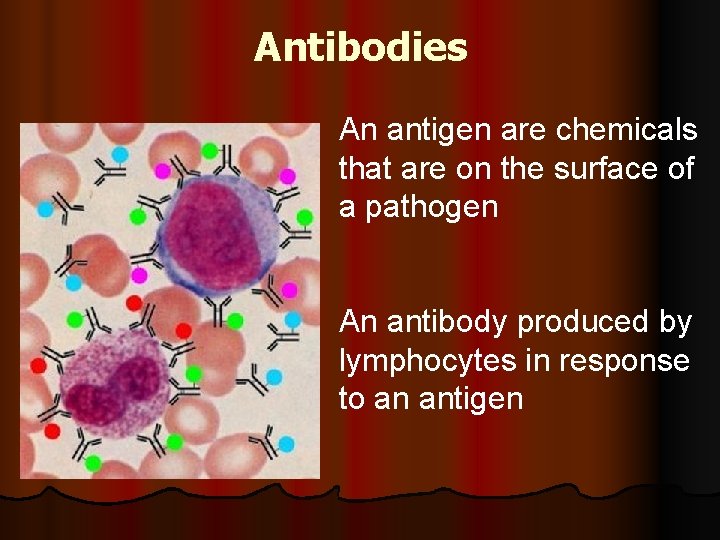
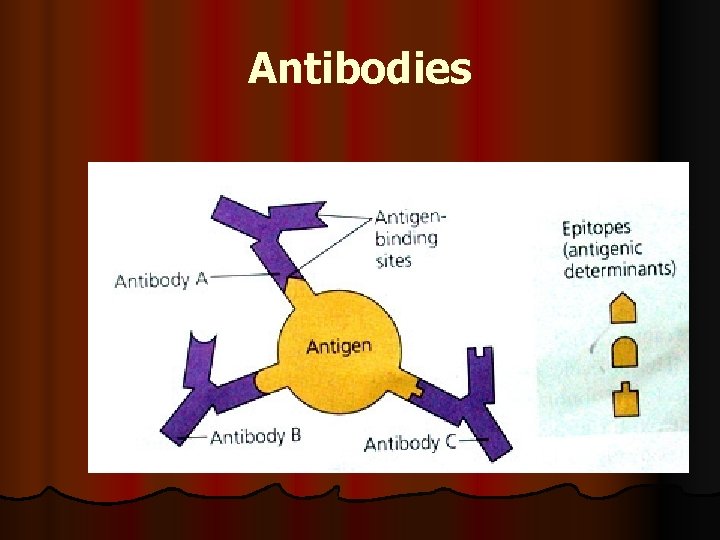
Antibodies An antigen are chemicals that are on the surface of a pathogen An antibody produced by lymphocytes in response to an antigen
Antibodies
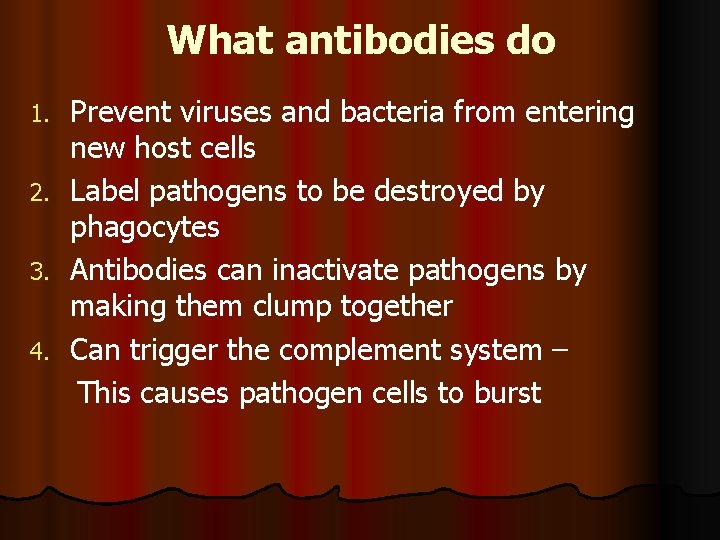
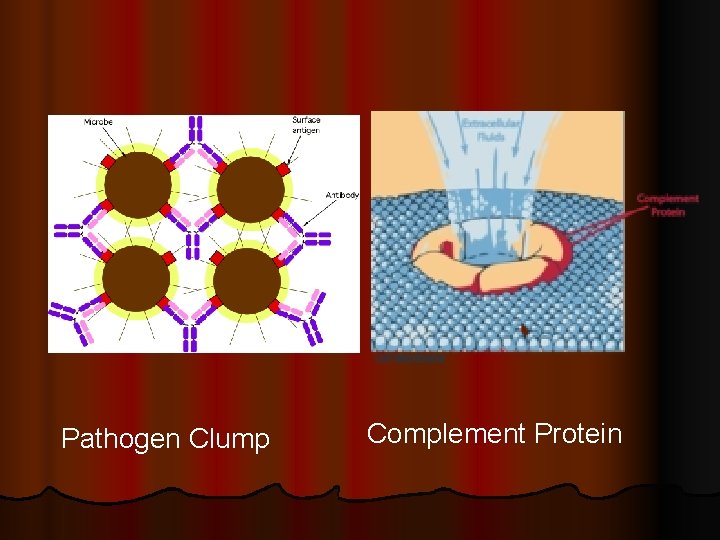
What antibodies do 1. 2. 3. 4. Prevent viruses and bacteria from entering new host cells Label pathogens to be destroyed by phagocytes Antibodies can inactivate pathogens by making them clump together Can trigger the complement system – This causes pathogen cells to burst
Pathogen Clump Complement Protein
Antigen Antibody Reaction l Highly specific l Each antigen stimulates the production of one antibody l Why we get flu every year l Different strain
Problems l Can be disabled - AIDs l Body produces antibodies against its own tissues l Rheumatoid Arthritis l Multiple Sclerosis l Allergies
Duration of Immunity l After infection antibodies remain 1 st time an antigen is produced 14 days to produce maximum no. of antibodies Subsequent infection – 5 days
Induced Immunity l Is the ability to resist disease caused by specific pathogens by the production of antibodies. l 2 Types of immunity 1. Active 2. Passive
Active Immunity l Production of your own antibodies in response to antigens. l Is longer-lasting l Can be induced naturally or artificially Natural Active Immunity l Occurs when pathogen enters body in normal way. Artificial Active Immunity Vaccine is a non disease-causing dose of pathogen, which triggers the production of antibodies l Pathogens in vaccine’s are killed/treated (No reproducing) l Modern vaccines are genetically engineered l
Passive Immunity l Given antibodies that were formed by other organisms l Short term resistance (Few weeks to 6 months) l Induced in 2 ways: Natural Passive Immunity Child gets antibodies from mother l Either through the placenta or mothers milk l Artificial Passive Immunity l Given an injection with antibodies produced by other organism. i. e. Anti-tetanus injection (from horses)
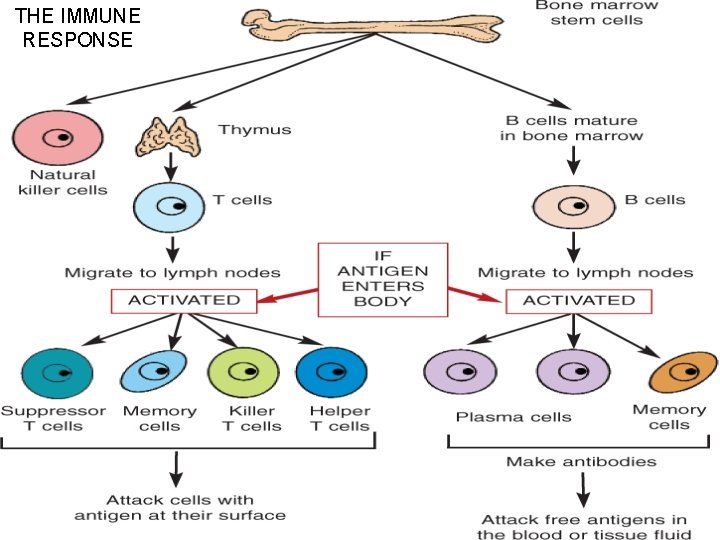
Advanced Study of Lymphocytes 2 Types (mature in different places) l B-lymphocytes (B-cells) –Bone Marrow l T-lymphocytes (T-cells) – Thymus Gland
B-Cells l When matured move from bone marrow to lymphatic tissue –Esp. Spleen and Lymph nodes l There are millions Each adapted to recognise 1 specific antigen Produces only 1 type of antibody
B-Cells l Divides & produces more B-cells (Plasma cells) on contact with antigen l Plasma cells -short lived, produce 2000 AB a second l Anti-bodies AB inactivate antigen by attaching to them Disposed 1. phagocytes 2. Complement system (cells burst)
B-Cells l Some B-cells remain alive = memory B-cells l Secondary response is more effective l Produces antibodies to small amounts of antigen l Much faster response l Greater numbers of antibodies l Active in controlling bacterial infections
T-Cells l Activated when they move from bone marrow to Thymus l Thymus is most active in weeks before & after birth l T-cells DON’T produce antibodies l 4 types 1. Helper T-cells 2. Killer T-cells 3. Suppressor T-cells 4. Memory T-cells
Helper T-cells l Recognise Antigens on surface of other WBC l Enlarge, multiply and form a group l Secretes a range of chemicals- Interferons l This stimulates the production of B-cells l HIV infects these helper T-cells & Killer T-cells
Killer T-Cells l Attack l Virus l Killer & destroy abnormal body cells infected or cancer cells (have antigens) cells are triggered by helper t-cells l They release protein called Perforin l Forms pores in membrane of target cell l This allows water to flow in, target cells swells and bursts. l Process is called Lysis l Killer T-cells said to be Cytotoxic
Suppressor T-Cells l Stimulated l Grow slowly l Activated l They -cells l This to grow by specific antigens after antigen has been destroyed inhibit B-cells, Helper T-cells and killer T controls the immune response
Memory T-Cells l Can survive a long time –life l Some stimulate memory B-cells to produce antibodies later in life l May trigger Killer T-cells l Responsible for life long immunity
THE IMMUNE RESPONSE