
The Human Brain and Behavior Laboratory http www
The Human Brain and Behavior Laboratory http: //www. ccs. fau. edu/hbbl. html EEG COORDINATION DYNAMICS: self-organization in the brain Emmanuelle Tognoli 12/17/2007 Merck – West-Point
The Human Brain and Behavior Laboratory http: //www. ccs. fau. edu/hbbl. html Introduction The paradigm of EEG in “cognitive neuroscience”
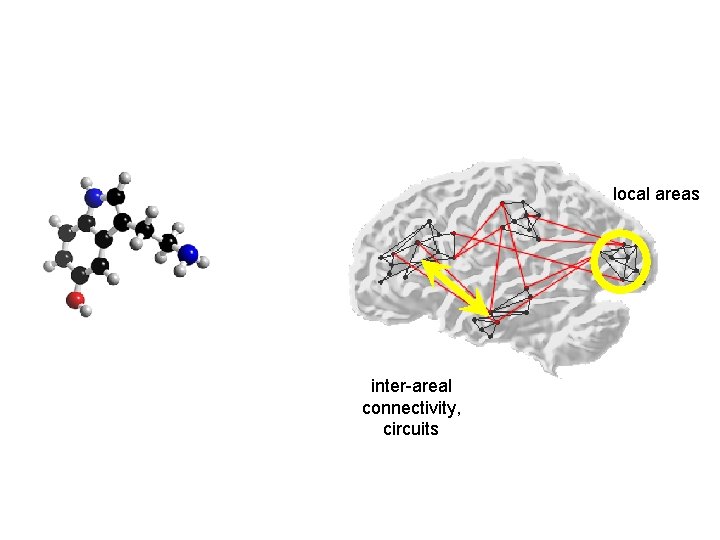
local areas inter-areal connectivity, circuits
The Human Brain and Behavior Laboratory http: //www. ccs. fau. edu/hbbl. html Neuromarkers of social behavior A dual EEG study
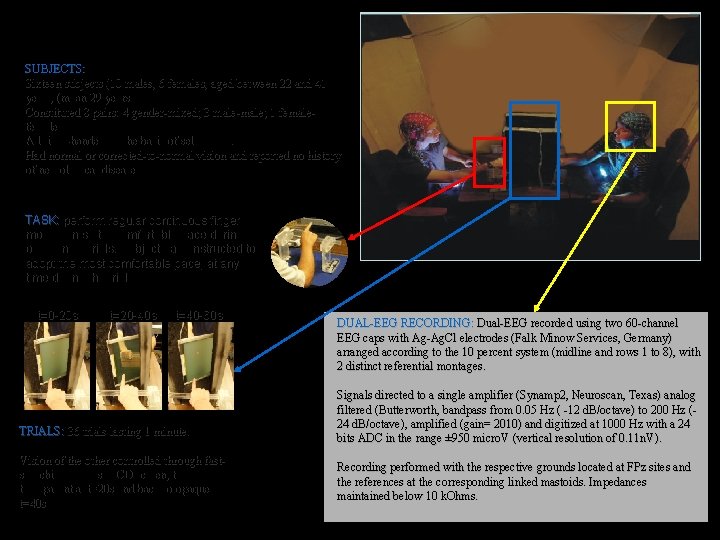
SUBJECTS: Sixteen subjects (10 males, 6 females, aged between 22 and 41 years, (mean 29 years). Constituted 8 pairs: 4 gender-mixed; 3 male-male; 1 female. All right-handed on the basis of self-report. Had normal or corrected-to-normal vision and reported no history of neurological disease. TASK: perform regular continuous finger movements at a comfortable pace during one minute trials. Subjects are instructed to adopt the most comfortable pace, at any time during the trial t=0 -20 s t=20 -40 s t=40 -60 s TRIALS: 36 trials lasting 1 minute. Vision of the other controlled through fastswitching (1. 2 ms) LCD screen, turning transparent at t=20 s and back to opaque at t=40 s DUAL-EEG RECORDING: Dual-EEG recorded using two 60 -channel EEG caps with Ag-Ag. Cl electrodes (Falk Minow Services, Germany) arranged according to the 10 percent system (midline and rows 1 to 8), with 2 distinct referential montages. Signals directed to a single amplifier (Synamp 2, Neuroscan, Texas) analog filtered (Butterworth, bandpass from 0. 05 Hz ( -12 d. B/octave) to 200 Hz (24 d. B/octave), amplified (gain= 2010) and digitized at 1000 Hz with a 24 bits ADC in the range ± 950 micro. V (vertical resolution of 0. 11 n. V). Recording performed with the respective grounds located at FPz sites and the references at the corresponding linked mastoids. Impedances maintained below 10 k. Ohms.
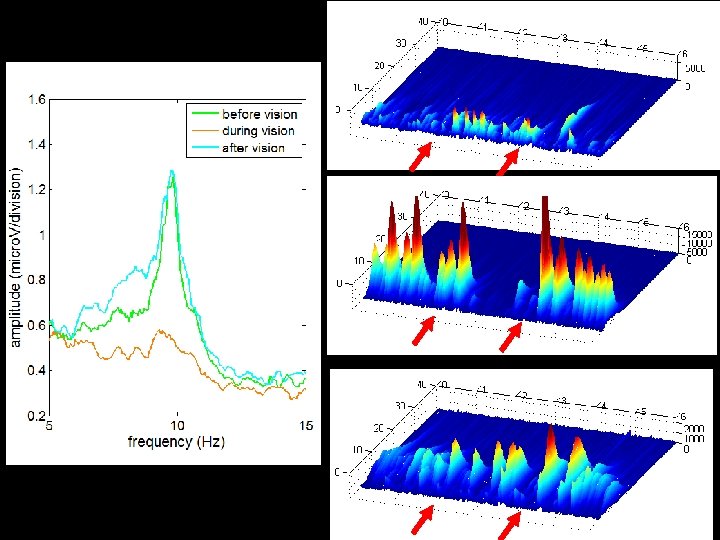
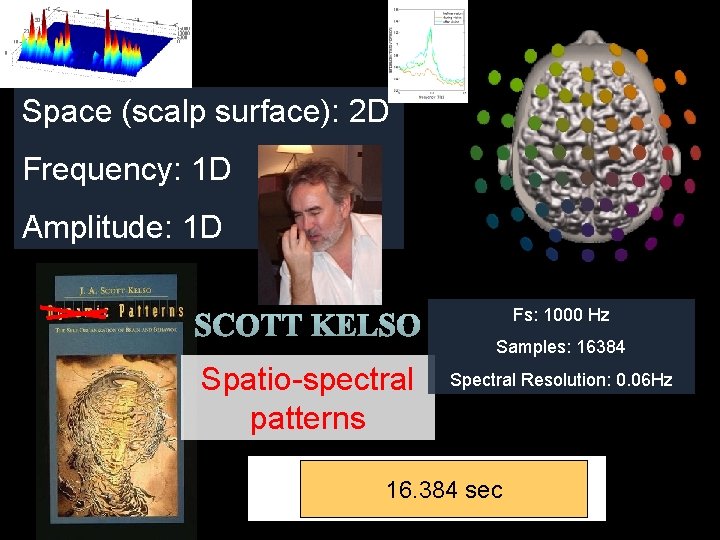
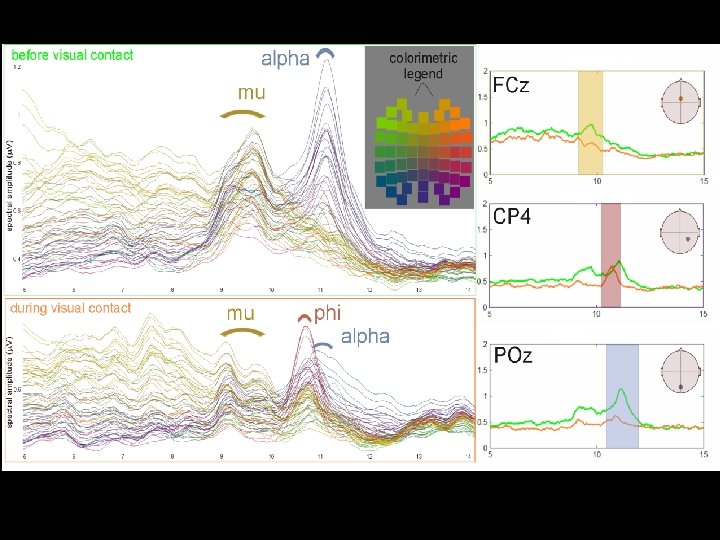
Space (scalp surface): 2 D Frequency: 1 D Amplitude: 1 D Fs: 1000 Hz Samples: 16384 Spatio-spectral patterns Spectral Resolution: 0. 06 Hz 16. 384 sec
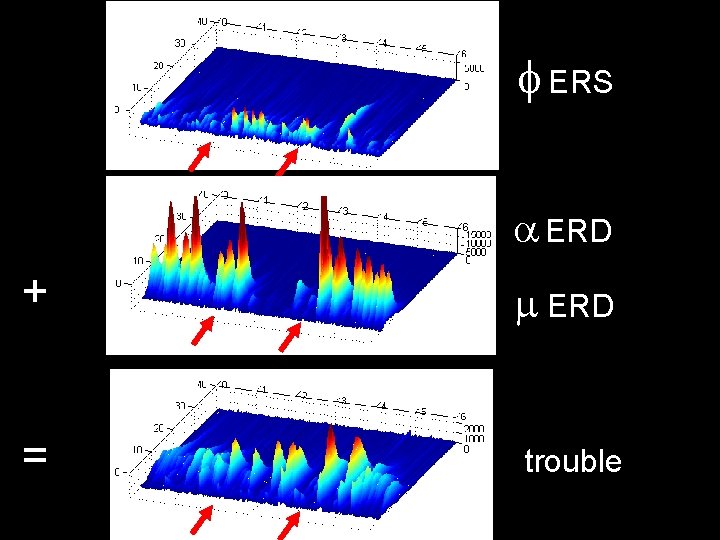
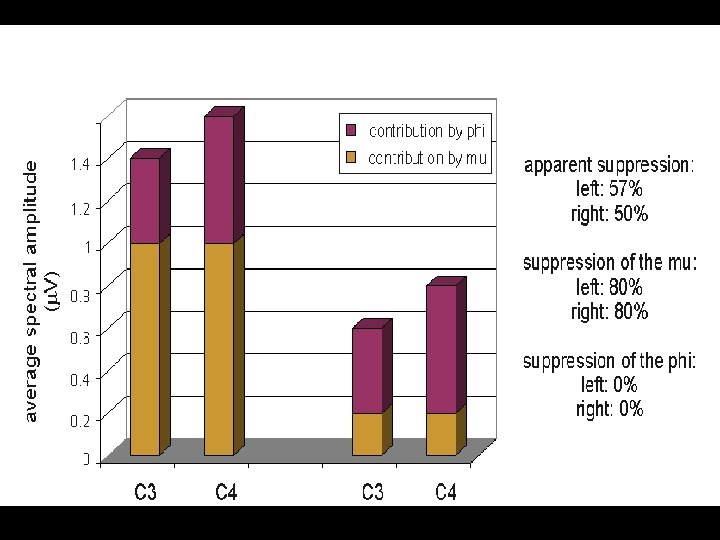
f ERS a ERD + m ERD = trouble
The Human Assessment: Brain and Behavior Laboratory http: //www. ccs. fau. edu/hbbl. html method is sensitive (small change -obscured by other processes- can be detected) cracks-down sources of inter-individual variability has a good construct validity (the measure of mu is a measure of mu, not a measure of mixed processes) differentiates difficultly distinguishable neural activities essentially yields information about local areas (see after)
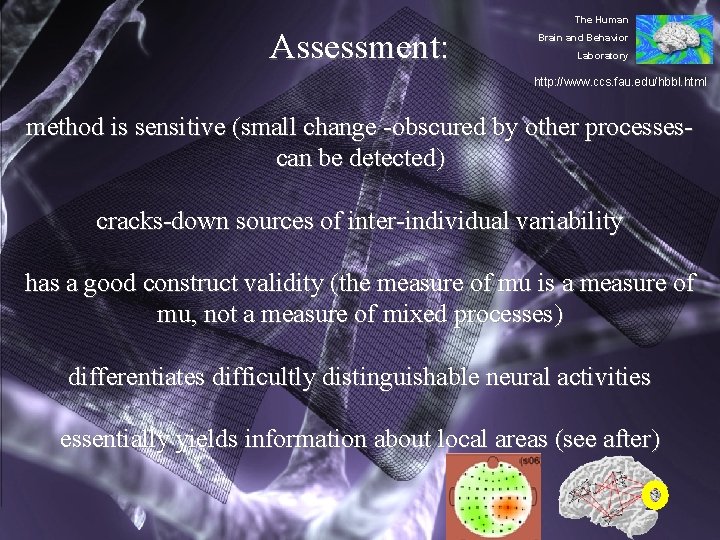
The Human Assessment: Brain and Behavior Laboratory http: //www. ccs. fau. edu/hbbl. html method is sensitive (small change -obscured by other processes- can be detected) cracks-down sources of inter-individual variability has a good construct validity (the measure of mu is a measure of mu, not a measure of mixed processes) differentiates difficultly distinguishable neural activities essentially yields information about local areas (see after)
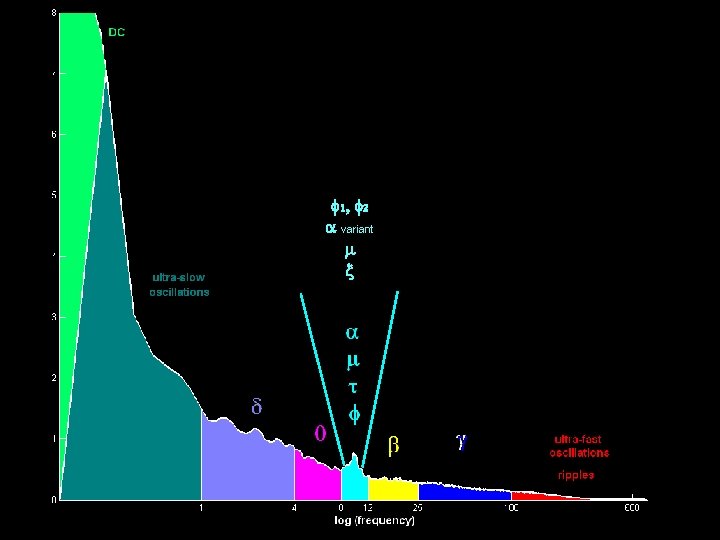
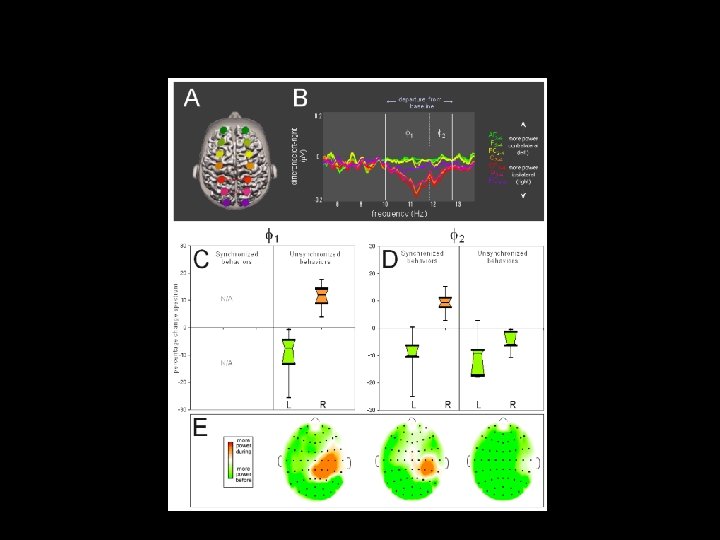
f 1, f 2 a variant m x

The Human Assessment: Brain and Behavior Laboratory http: //www. ccs. fau. edu/hbbl. html method is sensitive (small change -obscured by other processes- can be detected) cracks-down sources of inter-individual variability has a good construct validity (the measure of mu is a measure of mu, not a measure of mixed processes) differentiates difficultly distinguishable neural activities essentially yields information about local areas (see after)
The Human Brain and Behavior Laboratory http: //www. ccs. fau. edu/hbbl. html Theory of Coordination Dynamics: Self-organization of oscillatory ensembles

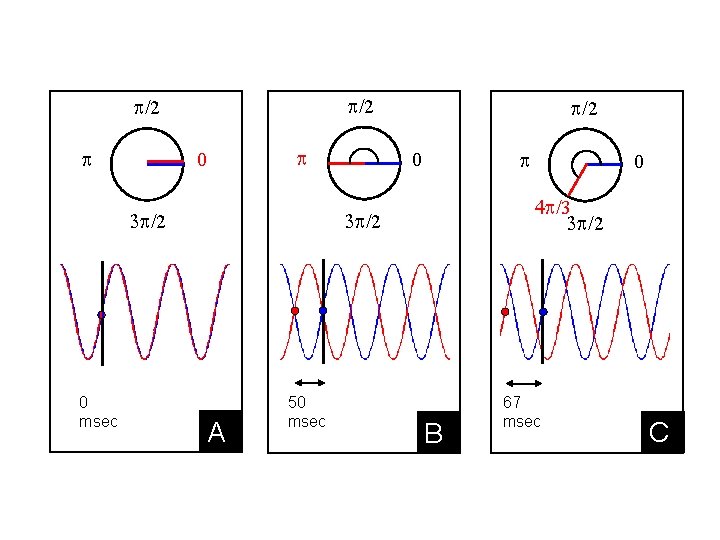
p/2 p 0 p 3 p/2 0 msec p/2 p 0 4 p/3 3 p/2 A 50 msec 0 B 67 msec C
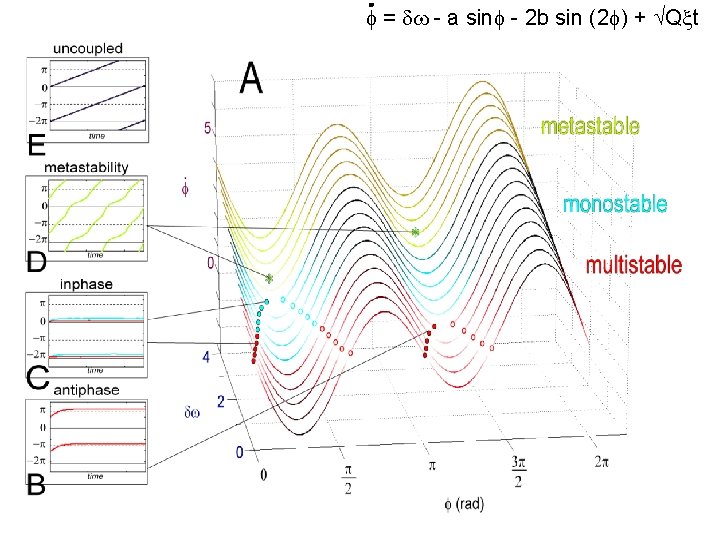
f = dw - a sinf - 2 b sin (2 f) + Qxt
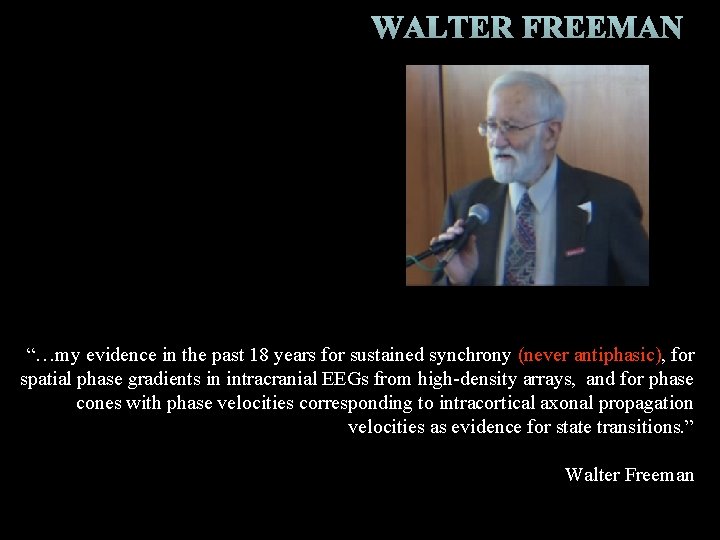
“…my evidence in the past 18 years for sustained synchrony (never antiphasic), for spatial phase gradients in intracranial EEGs from high-density arrays, and for phase cones with phase velocities corresponding to intracortical axonal propagation velocities as evidence for state transitions. ” Walter Freeman
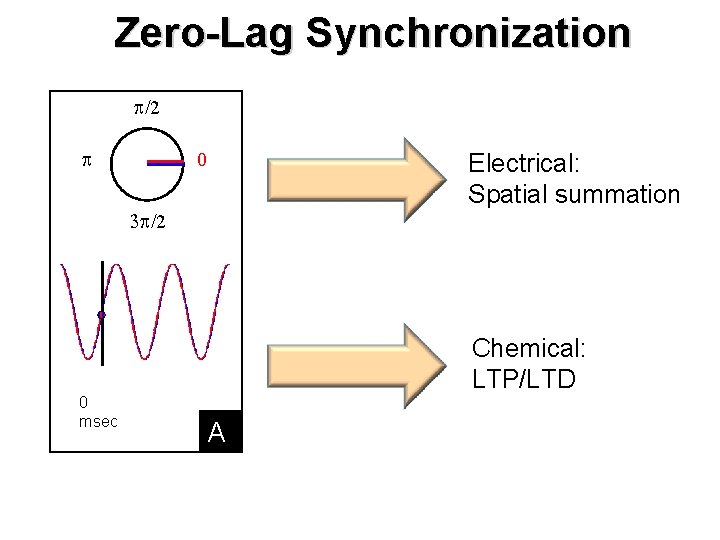
Zero-Lag Synchronization p/2 p 0 3 p/2 0 msec Electrical: Spatial summation Chemical: LTP/LTD A
The Human Brain and Behavior Laboratory http: //www. ccs. fau. edu/hbbl. html Transiently Synchronized Neural Cell Assemblies: Phase Locking in the brain?
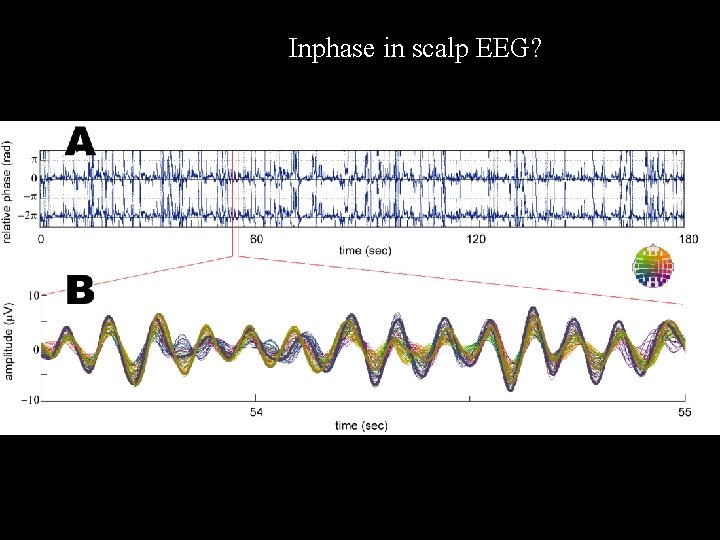
Inphase in scalp EEG?
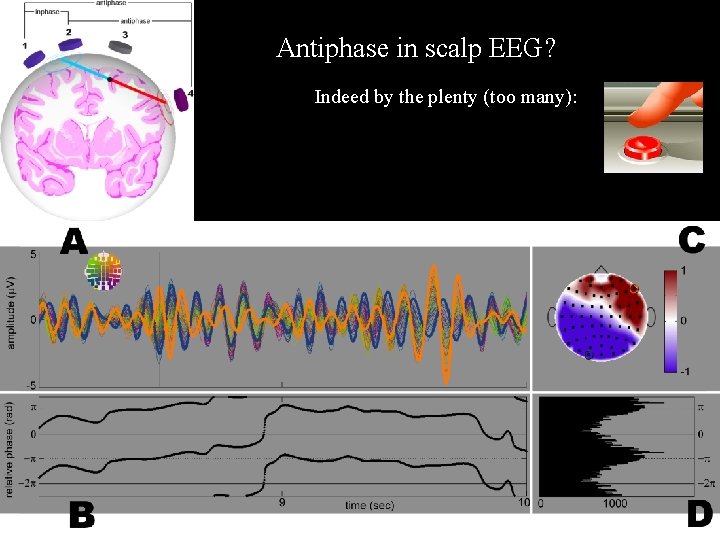
Antiphase in scalp EEG? Indeed by the plenty (too many): 28
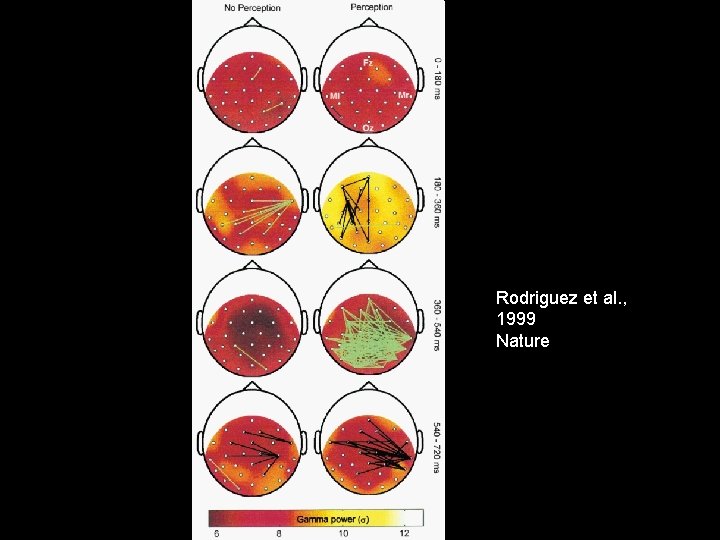
Rodriguez et al. , 1999 Nature
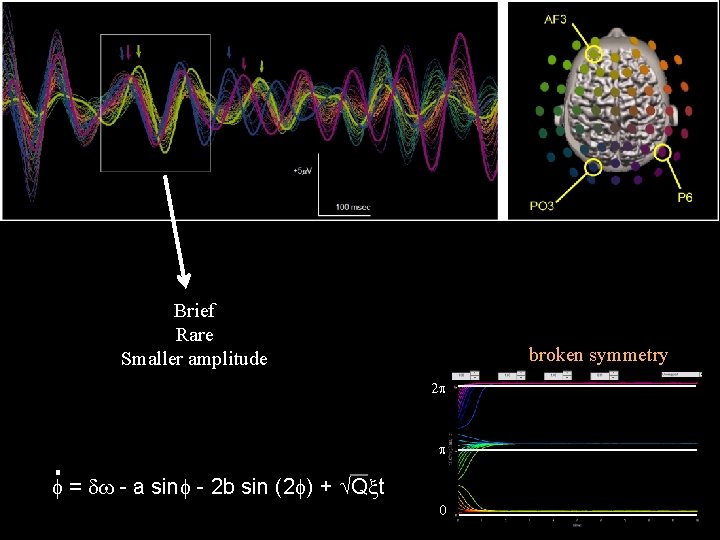
Brief Rare Smaller amplitude broken symmetry 2 p p f = dw - a sinf - 2 b sin (2 f) + Qxt 0
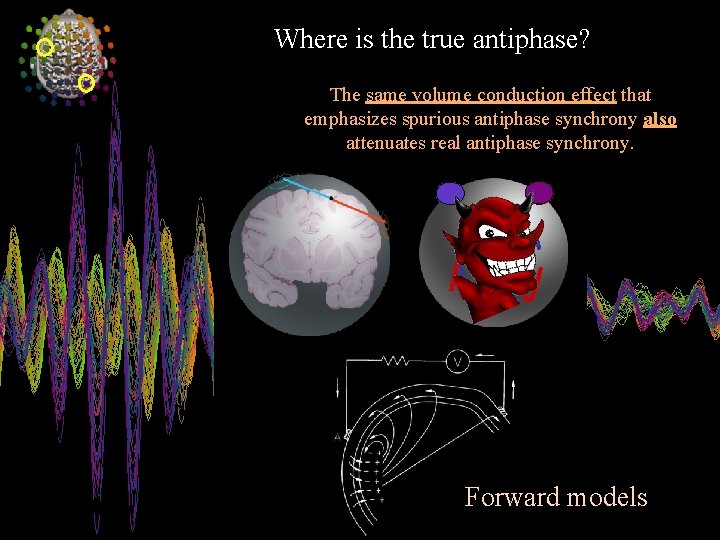
Where is the true antiphase? The same volume conduction effect that emphasizes spurious antiphase synchrony also attenuates real antiphase synchrony. Forward models
The Human Brain and Behavior Laboratory http: //www. ccs. fau. edu/hbbl. html Forward models of source pairs: states and transitions
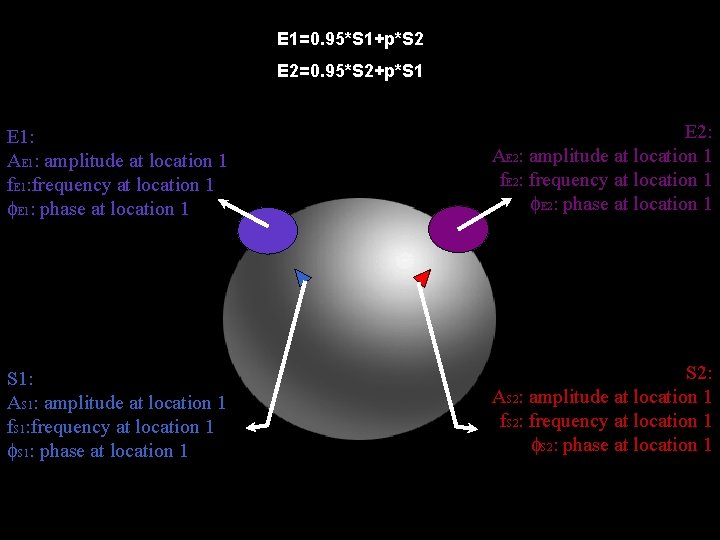
E 1=0. 95*S 1+p*S 2 E 2=0. 95*S 2+p*S 1 E 1: AE 1: amplitude at location 1 f. E 1: frequency at location 1 f. E 1: phase at location 1 E 2: AE 2: amplitude at location 1 f. E 2: frequency at location 1 f. E 2: phase at location 1 S 1: AS 1: amplitude at location 1 f. S 1: frequency at location 1 f. S 1: phase at location 1 S 2: AS 2: amplitude at location 1 f. S 2: frequency at location 1 f. S 2: phase at location 1
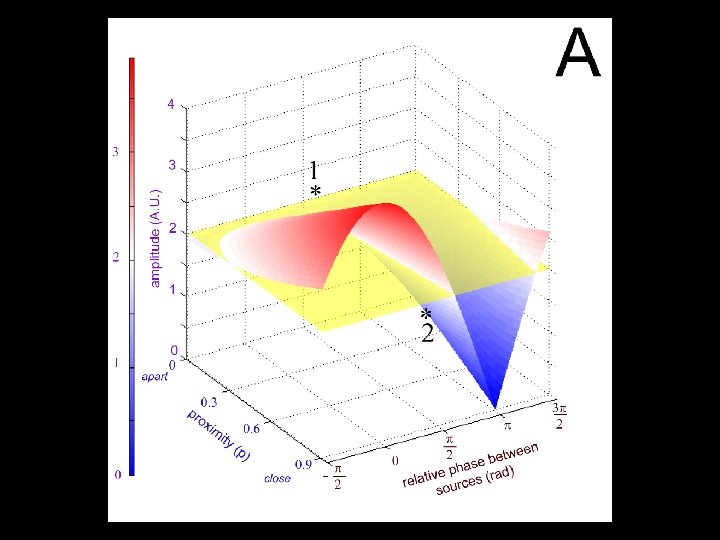
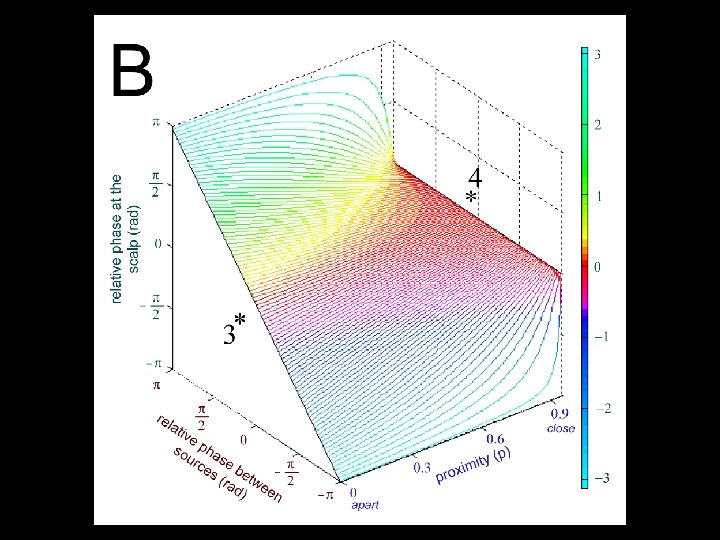
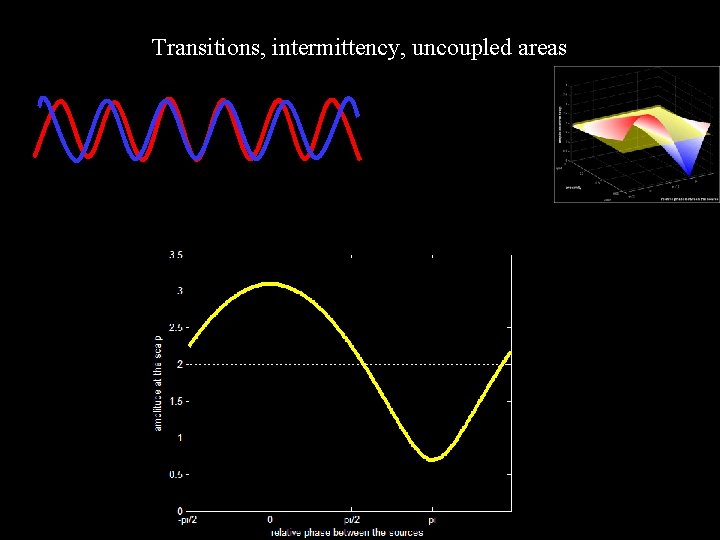
Transitions, intermittency, uncoupled areas
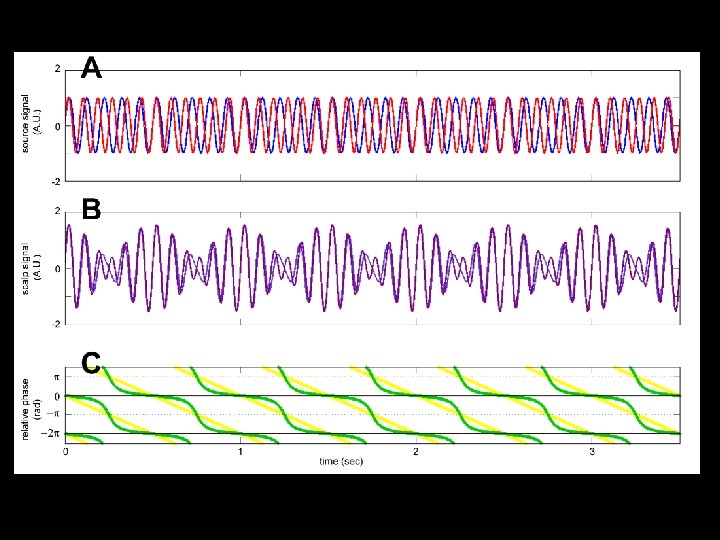
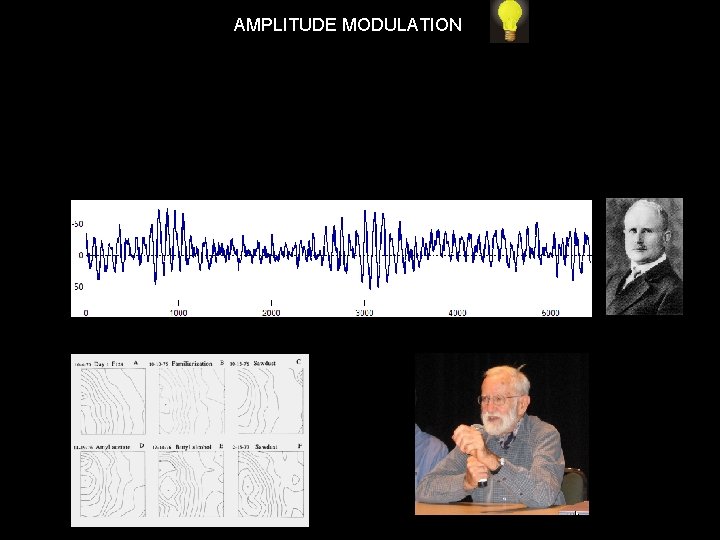
AMPLITUDE MODULATION
Assessment: While the average picture (part I): -discarded critical information (inter-areal coupling) -created intra- and inter-individual variability -occasionally created fictive properties -prevented introduction many variables/steps in protocols (parameter spaces) The continuous method: -yields first deterministic findings of inter-areal synchronization -has temporal resolution at the limit of recording instruments (pharmaco-dynamics) -has maximal consistency -and above all…
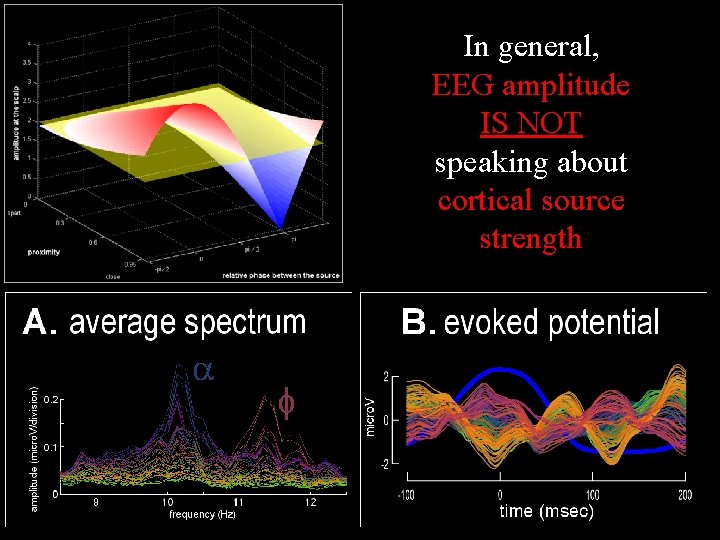
In general, EEG amplitude IS NOT speaking about cortical source strength
- Slides: 37