
The Human Body ORGAN SYSTEMS Excretory System Excretory
+ The Human Body ORGAN SYSTEMS
+ Excretory System

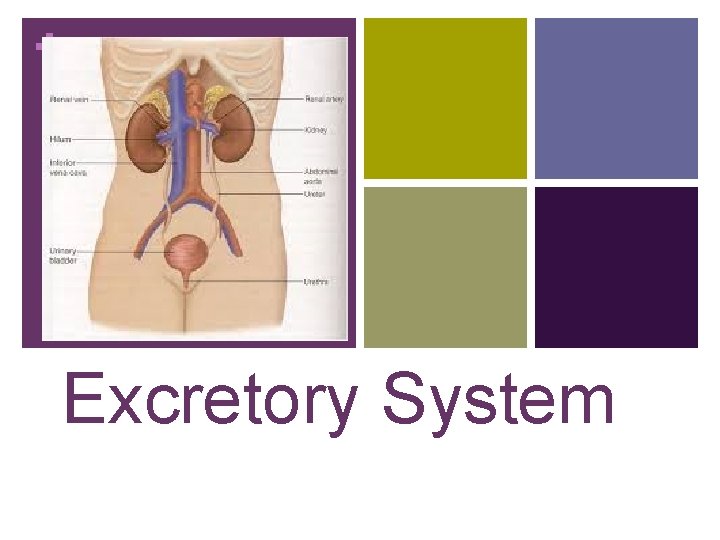
Excretory System: The removal of wastes from the body. Major Organs/Parts o Kidneys o Ureters o Blader o Urethra o Skin/Sweat Glands o Lungs
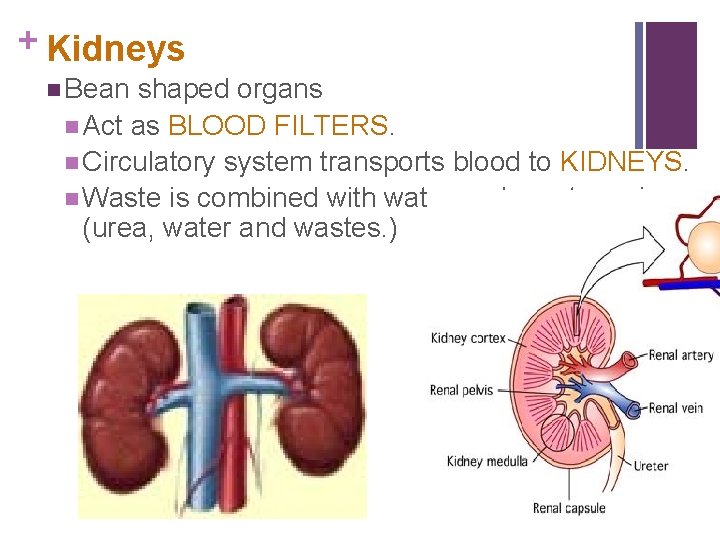
+ Kidneys n Bean shaped organs n Act as BLOOD FILTERS. n Circulatory system transports blood to KIDNEYS. n Waste is combined with water and creates urine. (urea, water and wastes. )
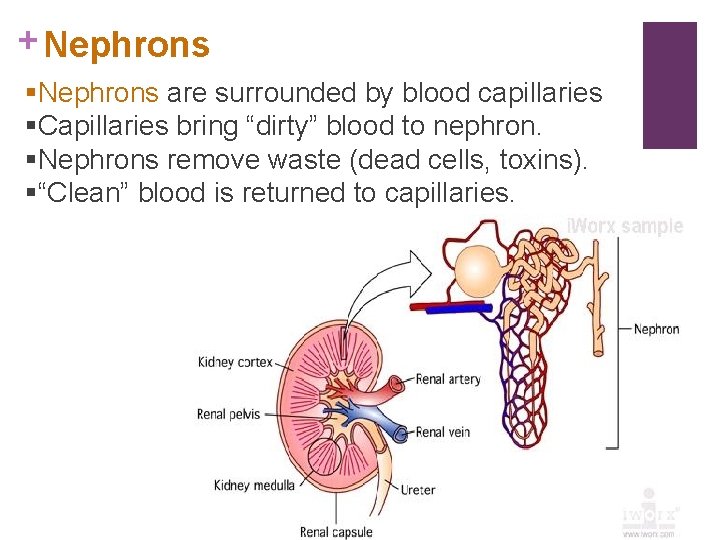
+ Nephrons §Nephrons are surrounded by blood capillaries §Capillaries bring “dirty” blood to nephron. §Nephrons remove waste (dead cells, toxins). §“Clean” blood is returned to capillaries.
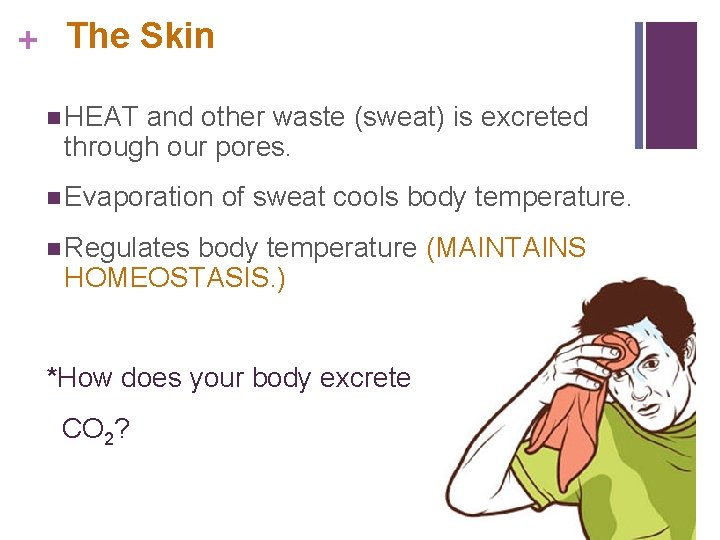
+ The Skin n HEAT and other waste (sweat) is excreted through our pores. n Evaporation of sweat cools body temperature. n Regulates body temperature (MAINTAINS HOMEOSTASIS. ) *How does your body excrete CO 2?
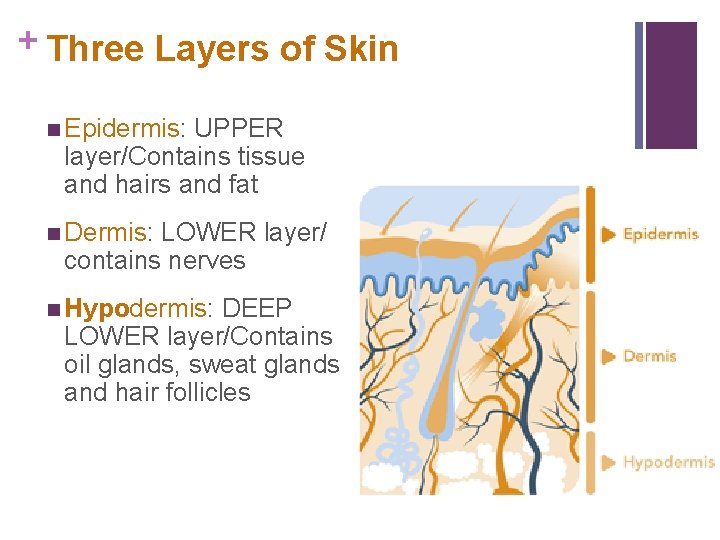
+ Three Layers of Skin n Epidermis: UPPER layer/Contains tissue and hairs and fat n Dermis: LOWER layer/ contains nerves n Hypodermis: DEEP LOWER layer/Contains oil glands, sweat glands and hair follicles
+ Compare Body Systems n The Circulatory System connects to other systems via capillaries. 1. Digestive System: capillaries pick up food and minerals at VILLI in small intestine. 2. Respiratory System: capillaries pick up O 2 and drop off CO 2 at ALVEOLI in the lungs. 3. Excretory System: capillaries drop off wastes at NEPHRONS in the kidneys. THIS IS HOW OUR ORGAN SYSTEMS WORK TOGETHER!
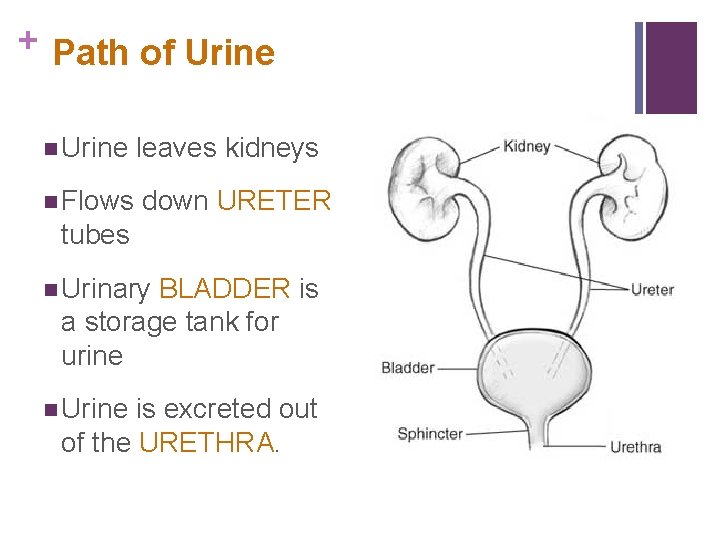
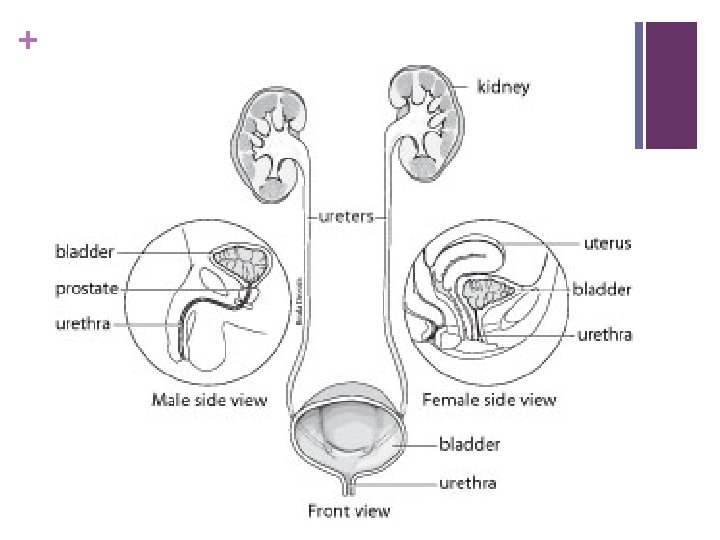
+ Path of Urine n Urine leaves kidneys n Flows down URETER tubes n Urinary BLADDER is a storage tank for urine n Urine is excreted out of the URETHRA.
+ Excretion Disorders Nephritis n Inflammation of the kidney. There are 2 types of Nephritis. n Acute Nephritis: Occurs after a strep infection of the nose or throat. n Symptoms: Fatigue and High Blood Pressure n Hereditary: At birth n Back flow of urine into the bladder and ureter tubes. n Symptoms: Fever, chills, burning urination, cloudy or bloody urine.
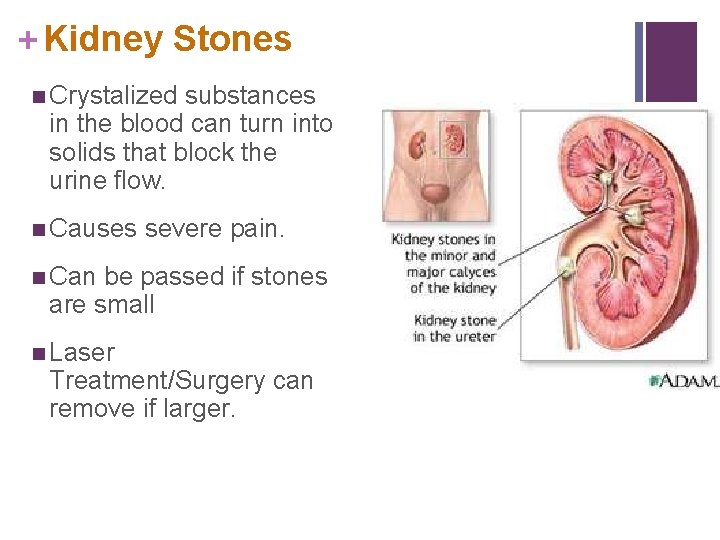
+ Kidney Stones n Crystalized substances in the blood can turn into solids that block the urine flow. n Causes severe pain. n Can be passed if stones are small n Laser Treatment/Surgery can remove if larger.
+ Urinary Tract Infection (UTI) n Bacterial infection in the urinary canal. n Frequent urge for urination, pain during urination, cloudy urine n More common in females due to anatomy and normal flora (good bacteria)
+ Review of Excretory System 1. Name three forms of excretion in humans. 1. Which organ is responsible for filtering waste from blood? 2. How are nephrons similar to alveoli or villi? 1. What waste products are removed through skin? 2. How does the body rid itself of CO 2?
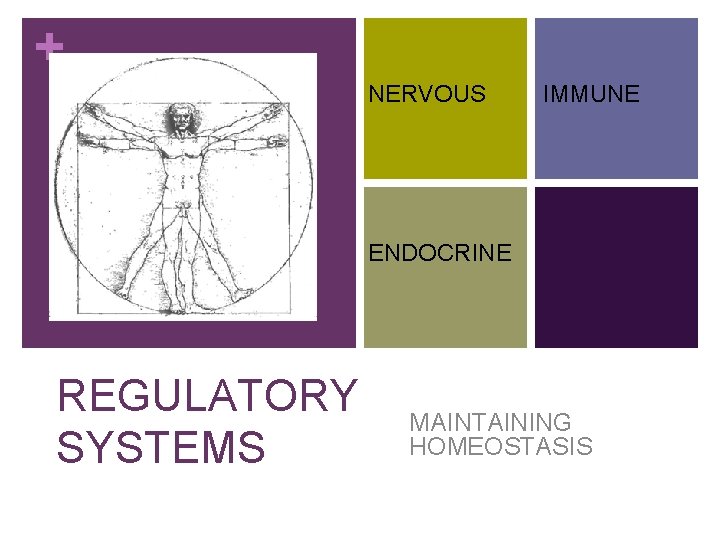
+ NERVOUS IMMUNE ENDOCRINE REGULATORY SYSTEMS MAINTAINING HOMEOSTASIS
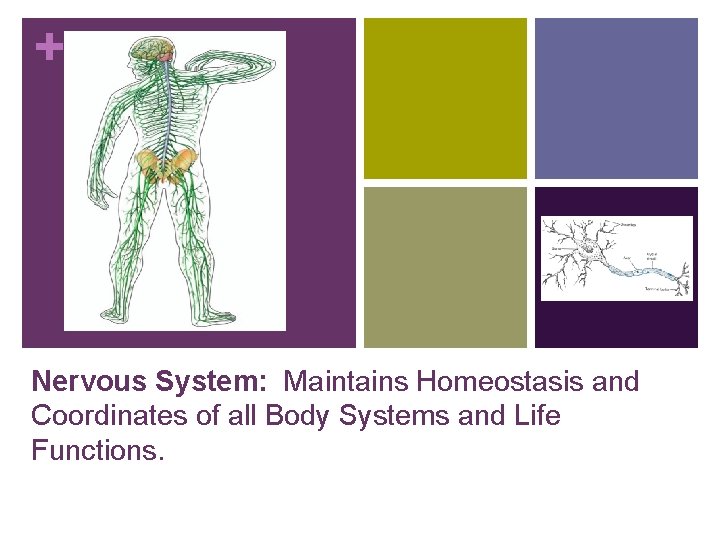
+ Nervous System: Maintains Homeostasis and Coordinates of all Body Systems and Life Functions.
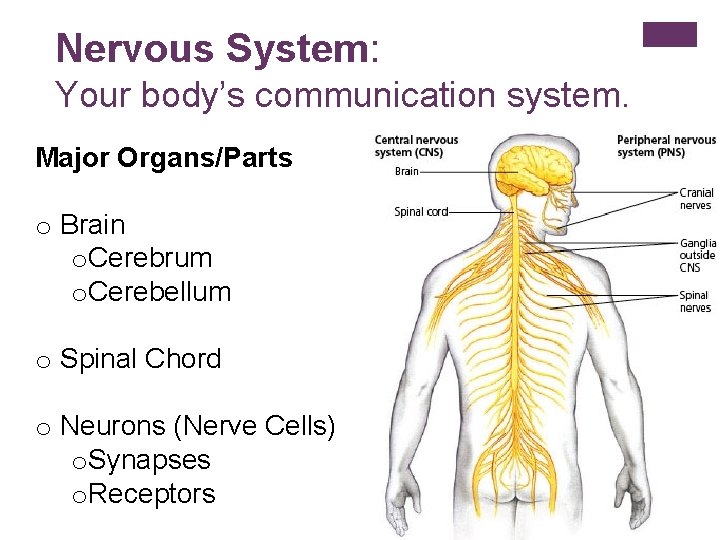
Nervous System: Your body’s communication system. Major Organs/Parts o Brain o. Cerebrum o. Cerebellum o Spinal Chord o Neurons (Nerve Cells) o. Synapses o. Receptors
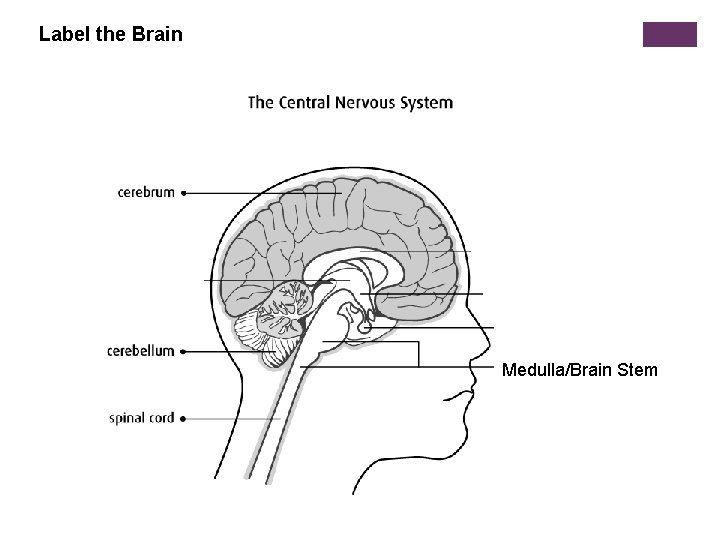
Label the Brain Medulla/Brain Stem
+ The Nervous System sends Messages n. All activities you demand from your body. n. Physical: Voluntary and Involuntary muscular/skeletal actions n. Mental: Speaking, dreaming, thinking n. Remembering: Forming memories, learning
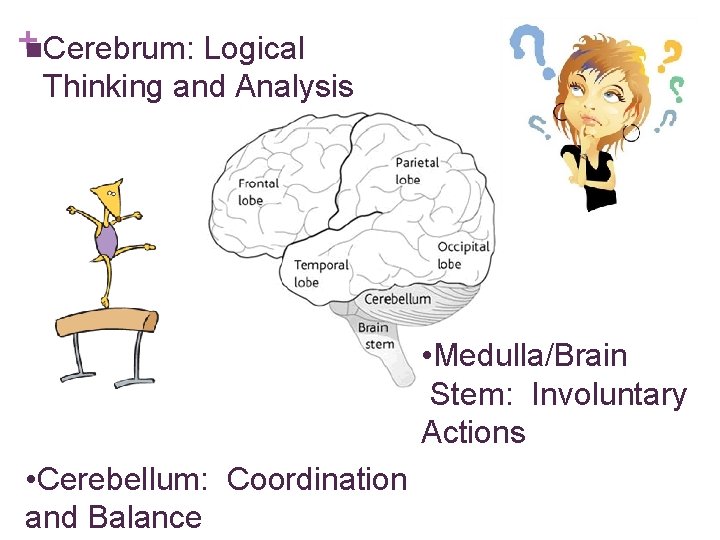
+n. Cerebrum: Logical Thinking and Analysis • Medulla/Brain Stem: Involuntary Actions • Cerebellum: Coordination and Balance
+ Parts of the Cerebrum • • Frontal lobe: speech and emotion Parietal lobe: recognition Occipital lobe: visual processing Temporal lobe: hearing and memory
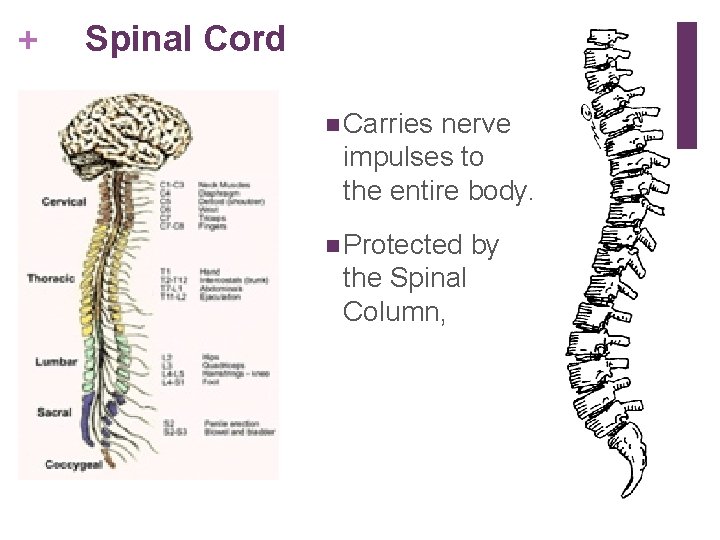
+ Spinal Cord n Carries nerve impulses to the entire body. n Protected the Spinal Column, by
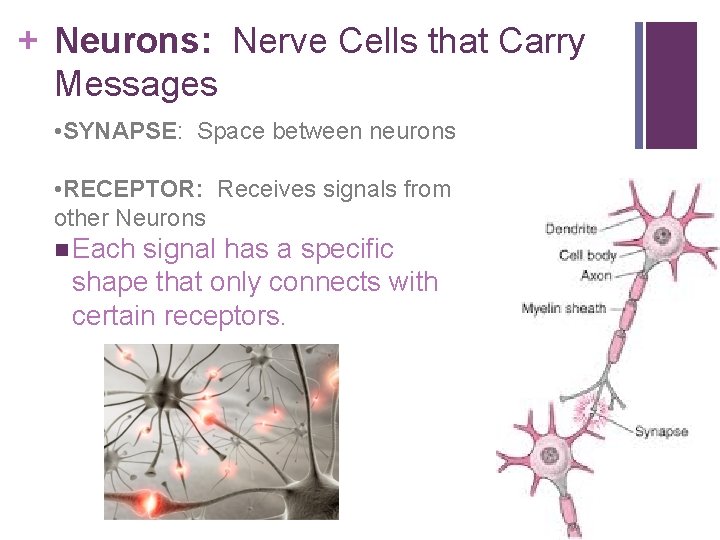
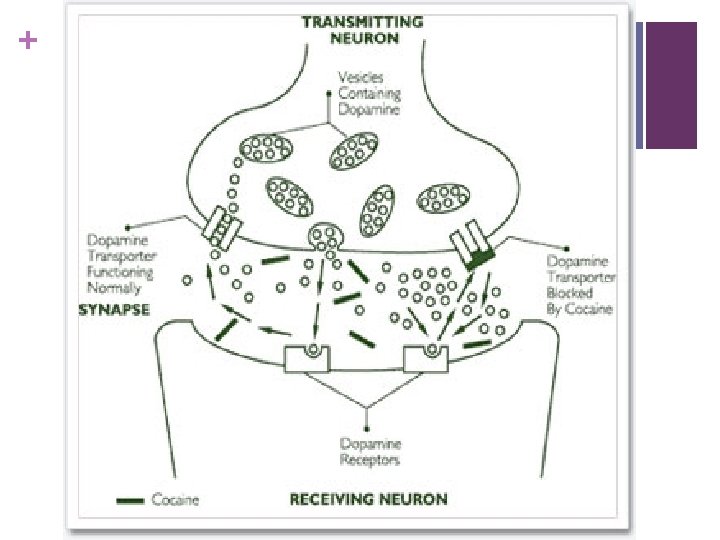
+ Neurons: Nerve Cells that Carry Messages • SYNAPSE: Space between neurons • RECEPTOR: Receives signals from other Neurons n Each signal has a specific shape that only connects with certain receptors.
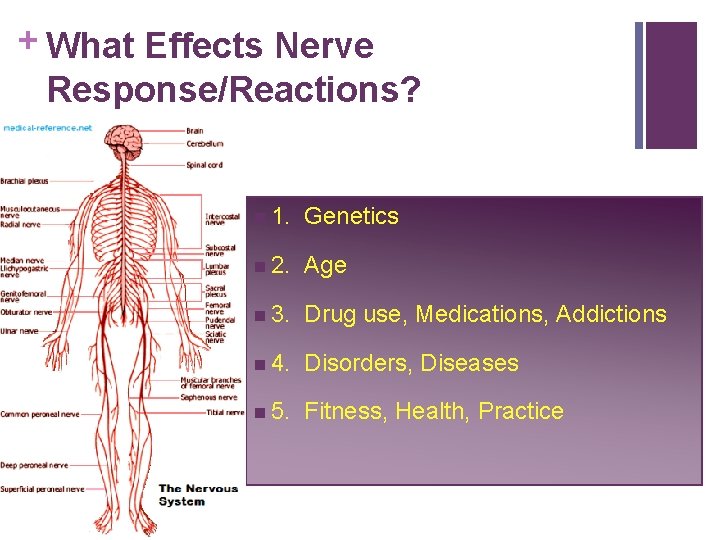
+ What Effects Nerve Response/Reactions? n 1. Genetics n 2. Age n 3. Drug use, Medications, Addictions n 4. Disorders, Diseases n 5. Fitness, Health, Practice
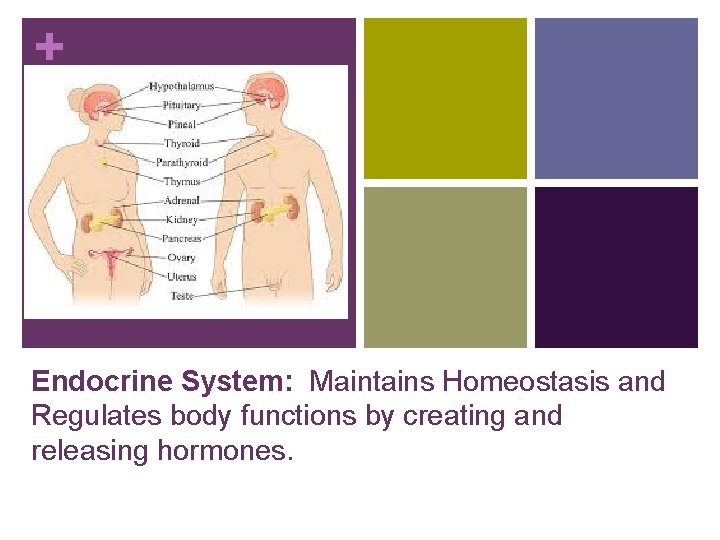
+ Endocrine System: Maintains Homeostasis and Regulates body functions by creating and releasing hormones.
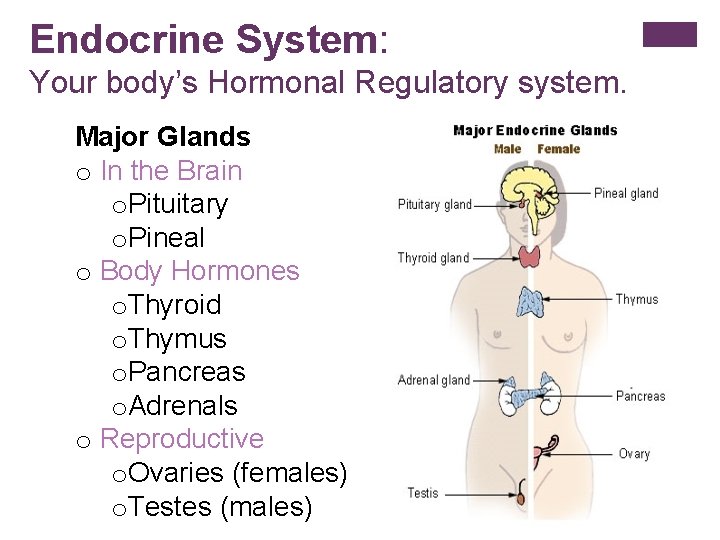
Endocrine System: Your body’s Hormonal Regulatory system. Major Glands o In the Brain o. Pituitary o. Pineal o Body Hormones o. Thyroid o. Thymus o. Pancreas o. Adrenals o Reproductive o. Ovaries (females) o. Testes (males)
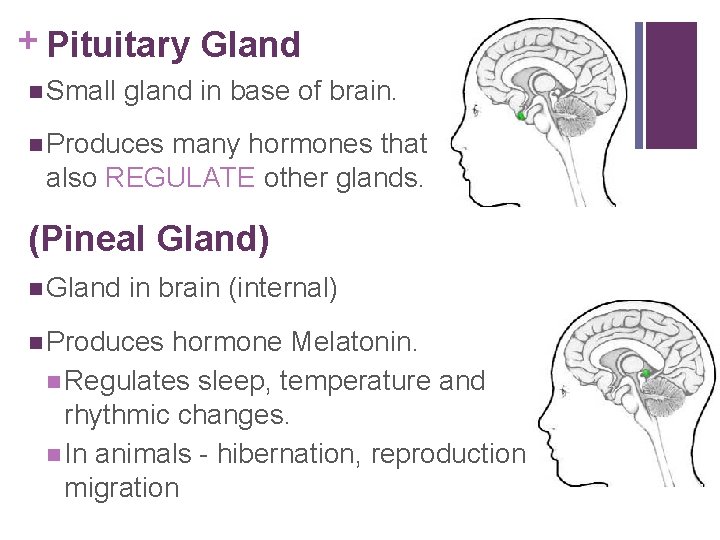
+ Pituitary Gland n Small gland in base of brain. n Produces many hormones that also REGULATE other glands. (Pineal Gland) n Gland in brain (internal) n Produces hormone Melatonin. n Regulates sleep, temperature and rhythmic changes. n In animals - hibernation, reproduction and migration
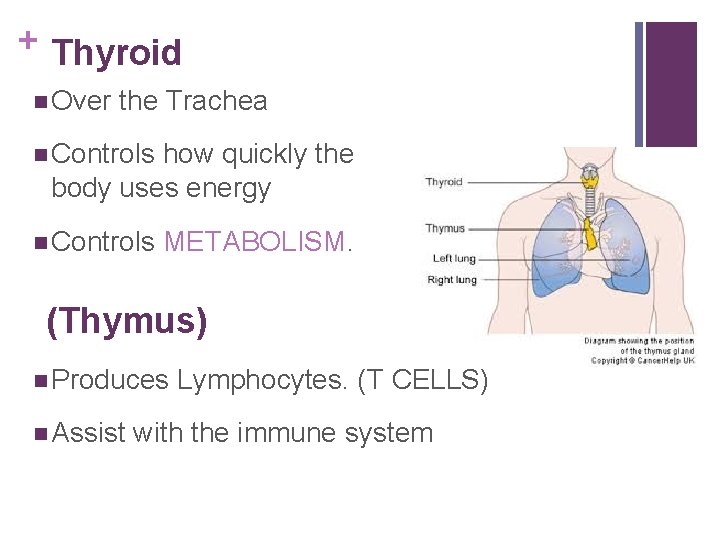
+ Thyroid n Over the Trachea n Controls how quickly the body uses energy n Controls METABOLISM. (Thymus) n Produces n Assist Lymphocytes. (T CELLS) with the immune system
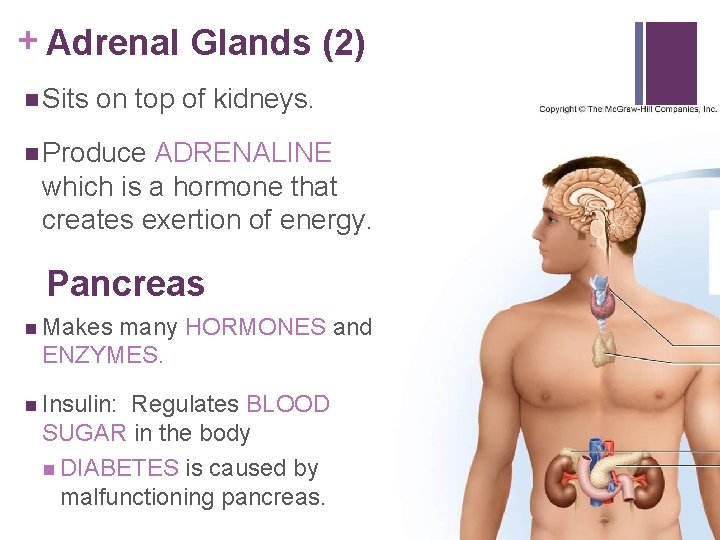
+ Adrenal Glands (2) n Sits on top of kidneys. n Produce ADRENALINE which is a hormone that creates exertion of energy. Pancreas n Makes many HORMONES and ENZYMES. n Insulin: Regulates BLOOD SUGAR in the body n DIABETES is caused by malfunctioning pancreas.
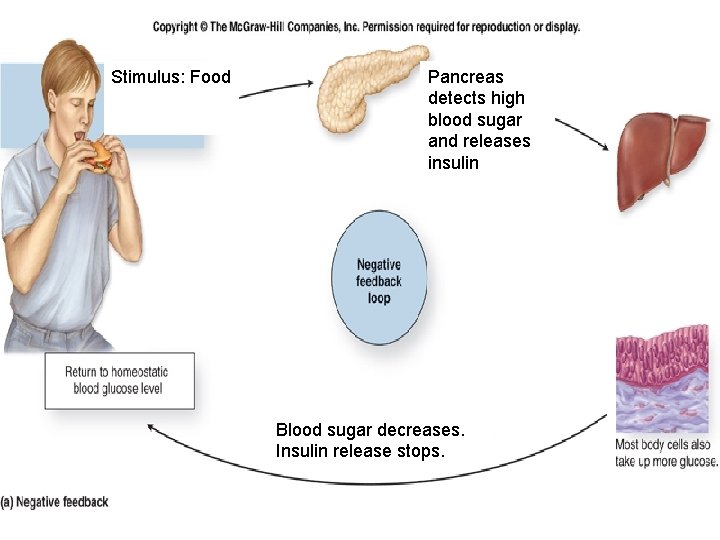
+ Stimulus: Food Pancreas detects high blood sugar and releases insulin Blood sugar decreases. Insulin release stops.
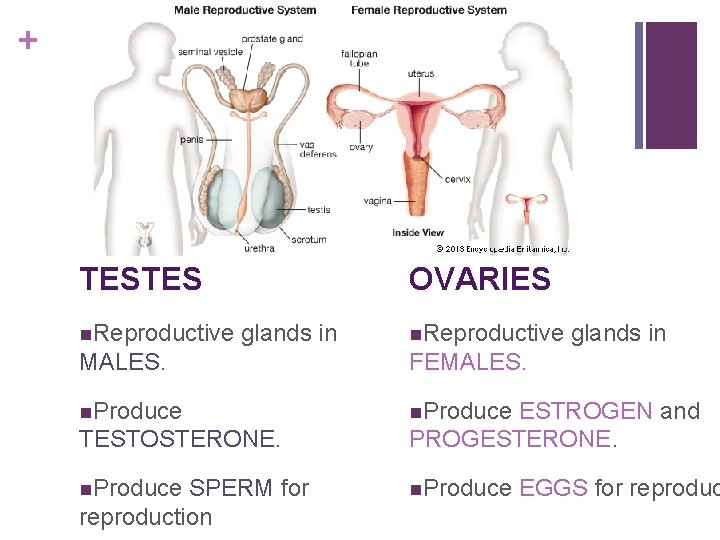
+ TESTES n. Reproductive OVARIES glands in n. Reproductive MALES. FEMALES. n. Produce glands in TESTOSTERONE. ESTROGEN and PROGESTERONE. n. Produce SPERM for reproduction EGGS for reproduc
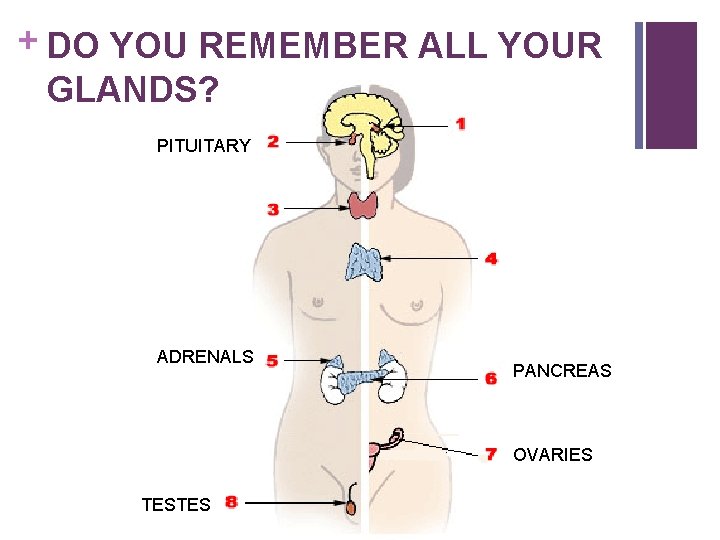
+ DO YOU REMEMBER ALL YOUR GLANDS? PITUITARY ADRENALS PANCREAS OVARIES TESTES
+ Immune System: Maintains homeostasis and bodily health by fighting diseases.
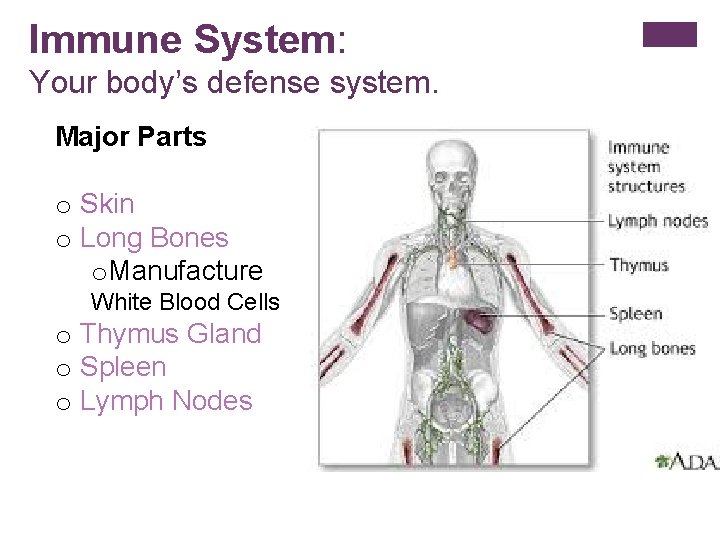
Immune System: Your body’s defense system. Major Parts o Skin o Long Bones o. Manufacture White Blood Cells o Thymus Gland o Spleen o Lymph Nodes
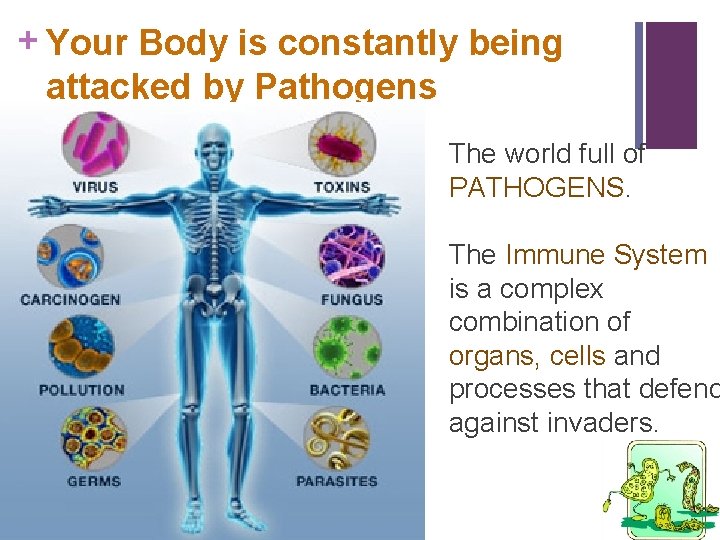
+ Your Body is constantly being attacked by Pathogens The world full of PATHOGENS. The Immune System is a complex combination of organs, cells and processes that defend against invaders.
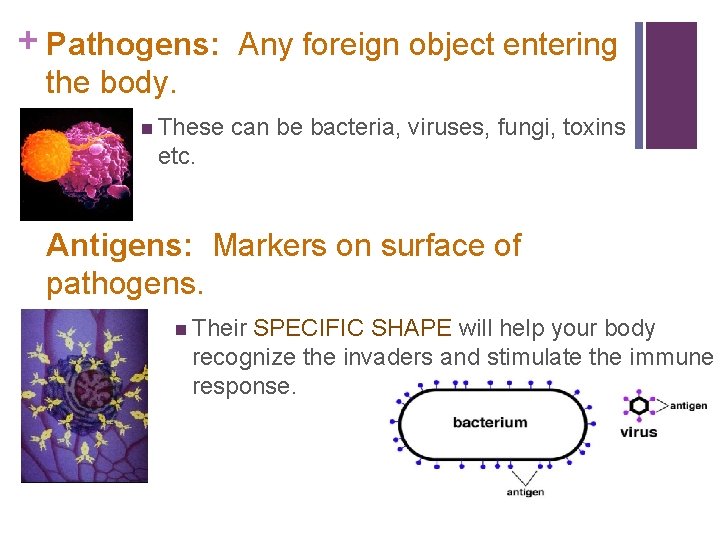
+ Pathogens: Any foreign object entering the body. n These can be bacteria, viruses, fungi, toxins etc. Antigens: Markers on surface of pathogens. n Their SPECIFIC SHAPE will help your body recognize the invaders and stimulate the immune response.
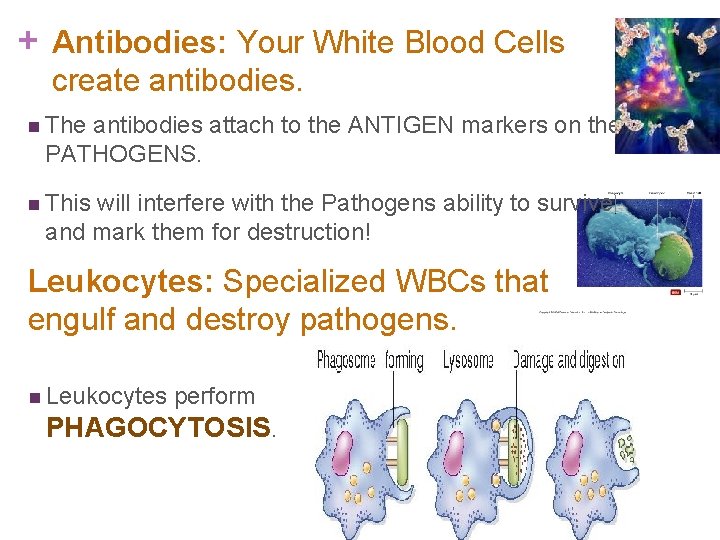
+ Antibodies: Your White Blood Cells create antibodies. n The antibodies attach to the ANTIGEN markers on the PATHOGENS. n This will interfere with the Pathogens ability to survive and mark them for destruction! Leukocytes: Specialized WBCs that engulf and destroy pathogens. n Leukocytes perform PHAGOCYTOSIS.
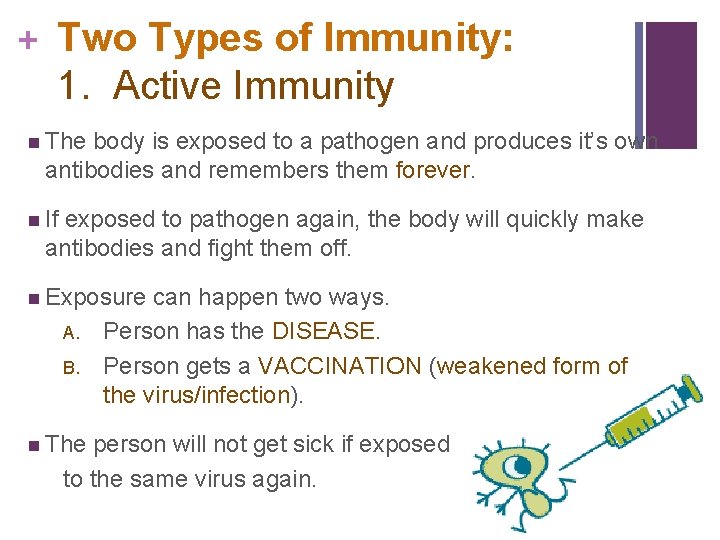
+ Two Types of Immunity: 1. Active Immunity n The body is exposed to a pathogen and produces it’s own antibodies and remembers them forever. n If exposed to pathogen again, the body will quickly make antibodies and fight them off. n Exposure A. B. n The can happen two ways. Person has the DISEASE. Person gets a VACCINATION (weakened form of the virus/infection). person will not get sick if exposed to the same virus again.
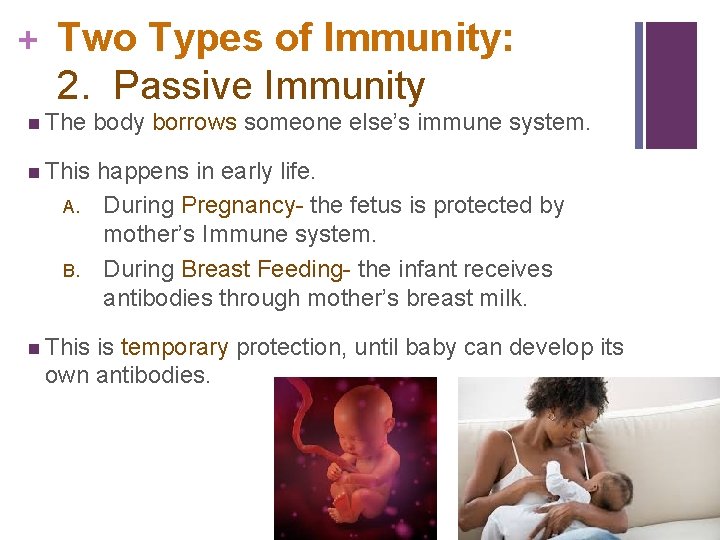
+ Two Types of Immunity: 2. Passive Immunity n The body borrows someone else’s immune system. n This happens in early life. During Pregnancy- the fetus is protected by mother’s Immune system. During Breast Feeding- the infant receives antibodies through mother’s breast milk. A. B. n This is temporary protection, until baby can develop its own antibodies.
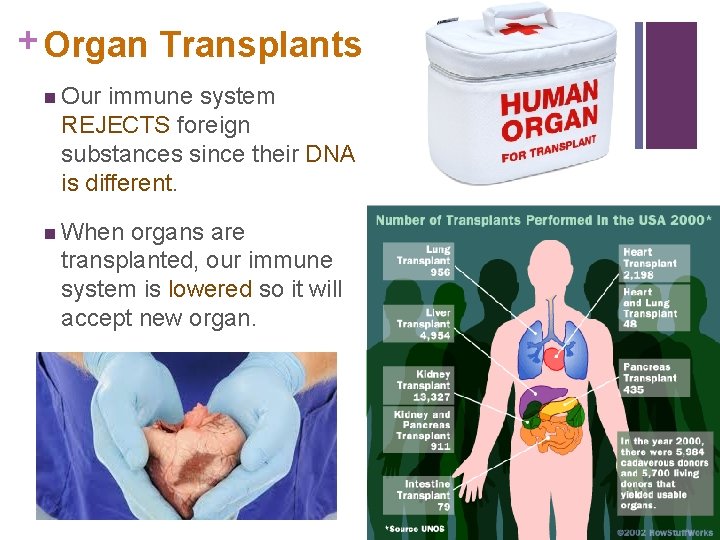
+ Organ Transplants n Our immune system REJECTS foreign substances since their DNA is different. n When organs are transplanted, our immune system is lowered so it will accept new organ.
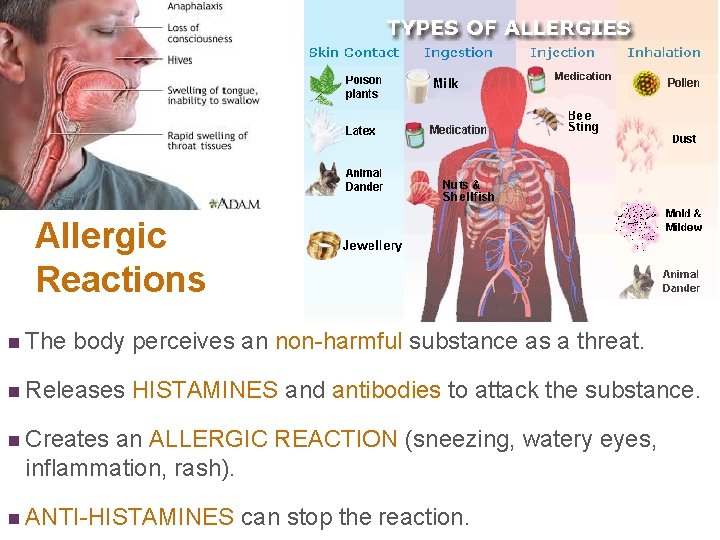
+ Allergic Reactions n The body perceives an non-harmful substance as a threat. n Releases HISTAMINES and antibodies to attack the substance. n Creates an ALLERGIC REACTION (sneezing, watery eyes, inflammation, rash). n ANTI-HISTAMINES can stop the reaction.
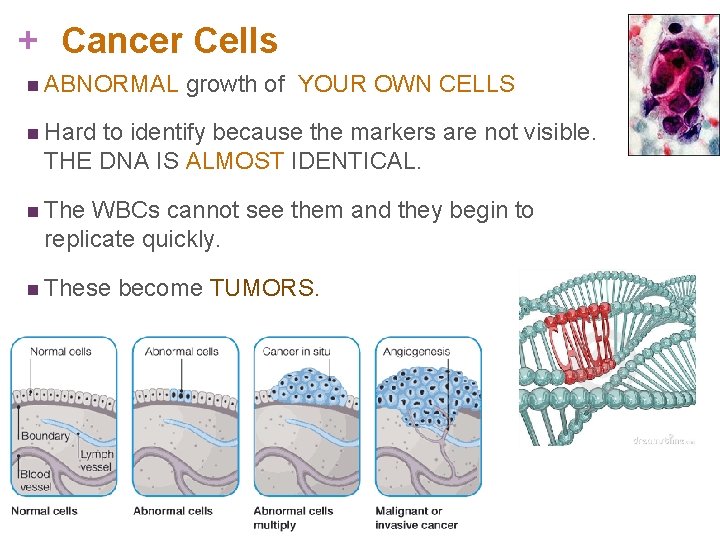
+ Cancer Cells n ABNORMAL growth of YOUR OWN CELLS n Hard to identify because the markers are not visible. THE DNA IS ALMOST IDENTICAL. n The WBCs cannot see them and they begin to replicate quickly. n These become TUMORS.
HIV- Human Immunodeficiency Virus n Virus that attacks your immune system. The virus targets and kills White Blood Cells. n When there is a low WBC count, the body cannot fight off common infections. n AIDS is the last stage of HIV (Very few WBCs). n There is no cure. Better education, medication have slowed the rate of infection, and death rate. n Teens and young adults have the fastest growing number of new cases!
+ Review of the Regulatory Systems 1. What three body systems perform regulation? 2. Name three glands in the endocrine system. What hormones do they produce? What do they regulate? 1. 2. 3. Describe how the nervous system helps you maintain homeostasis. 1. How do white blood cells protect your body from infection?
The Muscular Skeletal Systems
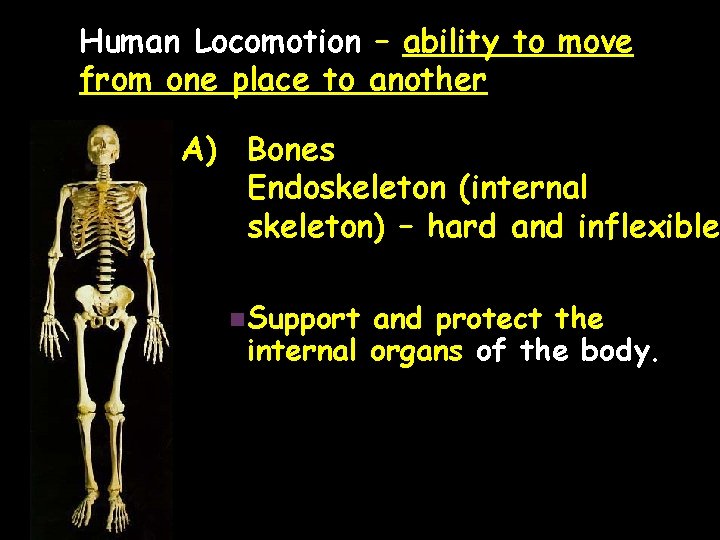
Human Locomotion – ability to move from one place to another A) Bones Endoskeleton (internal skeleton) – hard and inflexible n Support and protect the internal organs of the body.
n Produce red blood cells and white blood cells from the bone marrow of various bones. n It provides levers for body movement n. A point of attachment for muscle
B) Cartilage – flexible, elastic connective tissue
+ C) Muscles – controls internal movement of materials and external movement of the body Three Types of Muscles: n 1) Skeletal n. Voluntary – Ex: Bicep, Tricep n 2) Smooth n. Involuntary – Ex: pulse, diaphragm, peristalsis
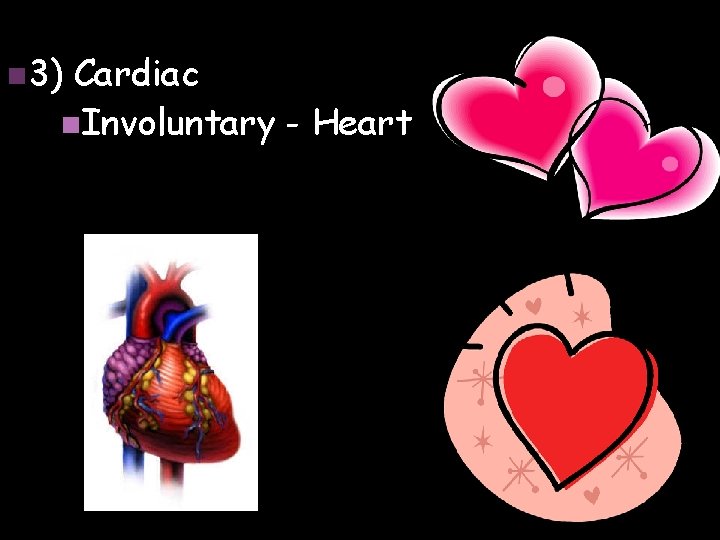
n 3) Cardiac n. Involuntary - Heart
+ D) Tendon n Connects Muscle n. T Bone to B n. THREE M BLIND MICE
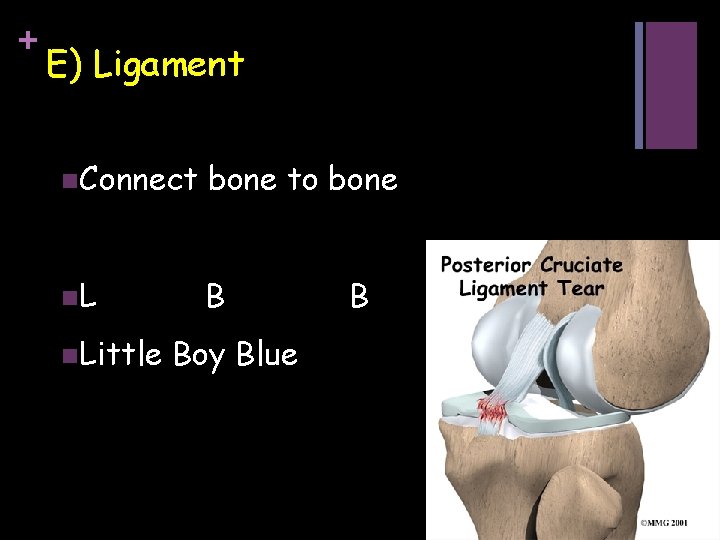
+ E) Ligament n. Connect bone to bone n. L B n. Little Boy Blue B
F) Advantages of Locomotion n 1) obtain food and shelter n 2) escape from predators and harmful substances n 3) reproduction – find mate
+ G) Malfunctions Osteoarthritis 2. Osteoporosis 1.

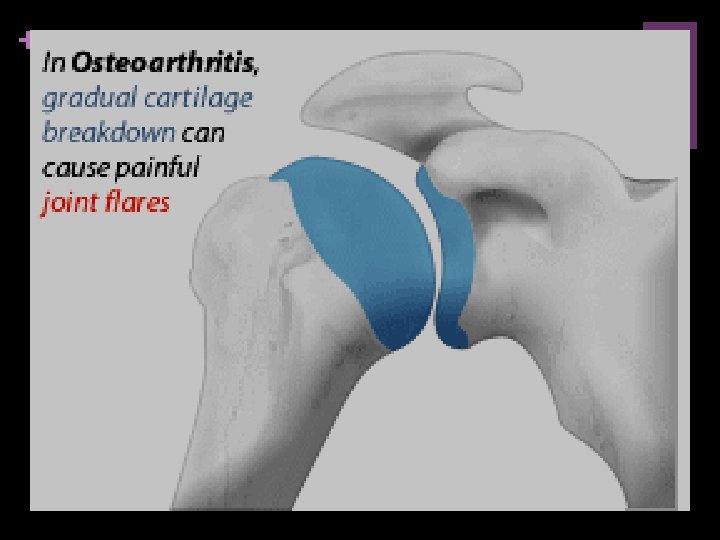
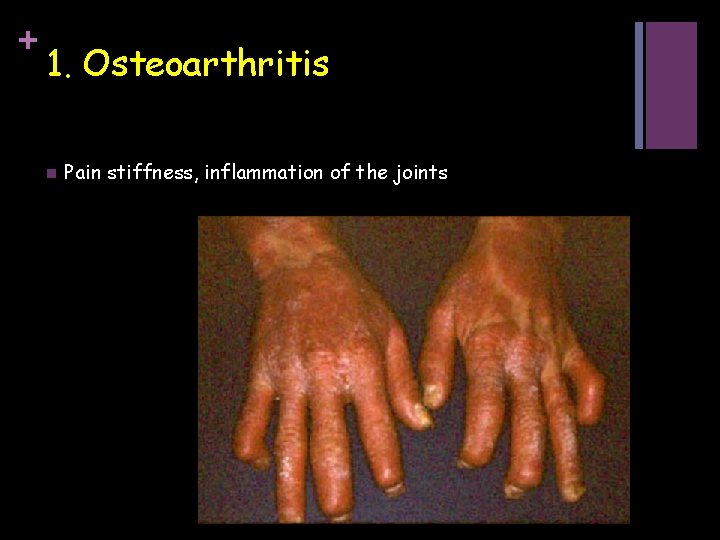
+ 1. Osteoarthritis n Pain stiffness, inflammation of the joints
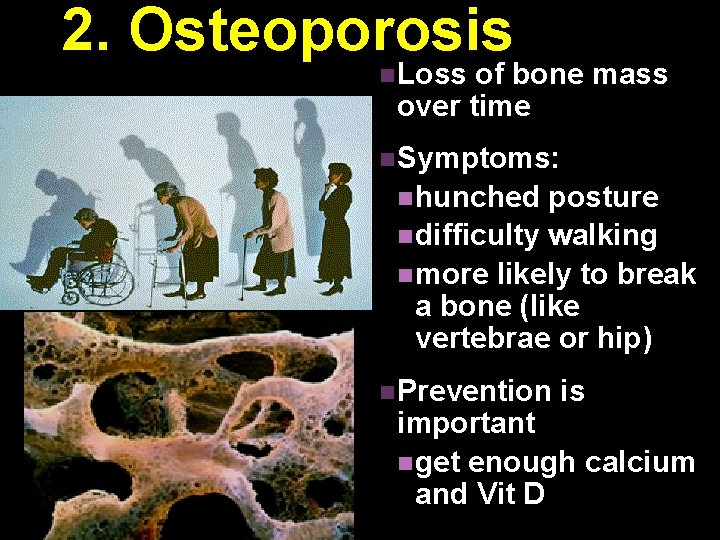
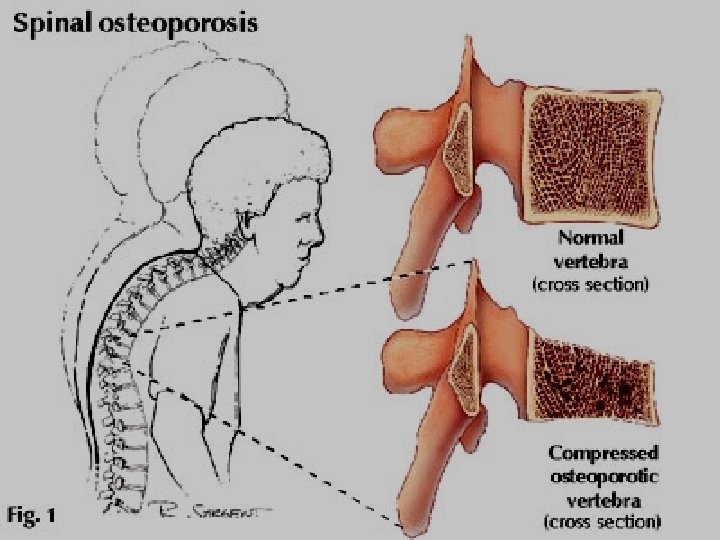
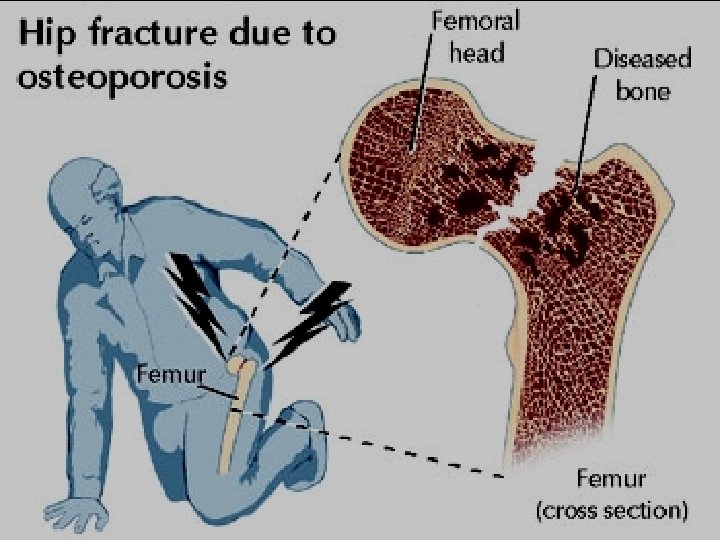
2. Osteoporosis n Loss of bone mass over time n Symptoms: n hunched posture n difficulty walking n more likely to break a bone (like vertebrae or hip) n Prevention is important n get enough calcium and Vit D
+ Many Body Systems Work Together to Maintain Homeostasis
Immune System: Fights infections Endocrine System: Produces Hormones Nervous System: Controls all Functions Transport System: Transports Hormones, Antibodies, WBCs, Wastes Excretory System: Removes Wastes Failure of homeostasis results in disease or death.
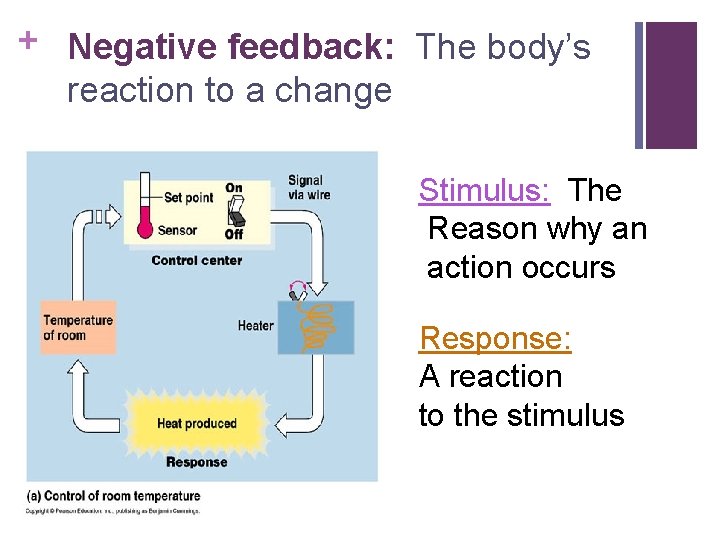
+ Negative feedback: The body’s reaction to a change Stimulus: The Reason why an action occurs Response: A reaction to the stimulus
+ Examples of Negative Feedback n The Endocrine System: Regulates Blood Sugar n When there is too much sugar, the PANCREAS will release the hormone INSULIN. n This lowers the sugar level. n When there is not enough sugar the PANCREAS release the hormone GLUCAGON. n This raises the sugar level. DIABETES is a disorder of this process.
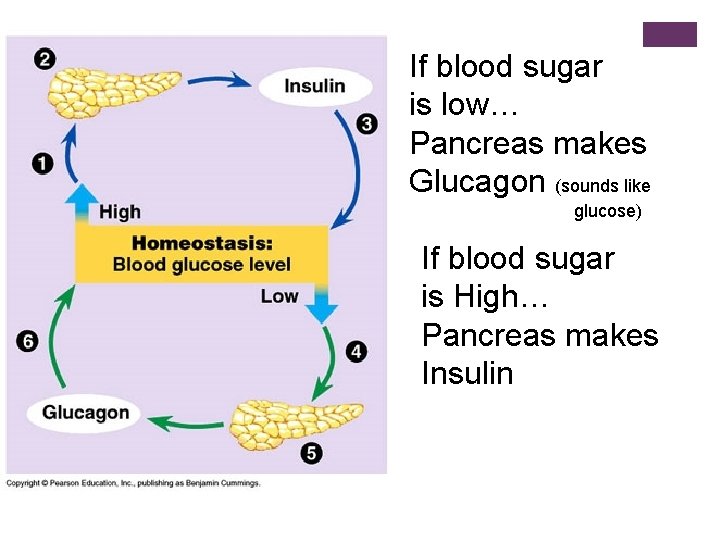
If blood sugar is low… Pancreas makes Glucagon (sounds like glucose) If blood sugar is High… Pancreas makes Insulin
+ Examples of Negative Feedback n The Nervous/Excretory Systems: n When body is too cold, the brain sends a message to your muscle cells. They start to shiver. n This causes friction, raises body temperature. n When the body is too hot, the skin releases sweat. n When sweat evaporates, the body is cooled.
+ Homeostasis in Plants have to REGULATE water, O 2 and CO 2 levels. Stomates: the opening where the materials are transported. Guard cell: (like a door): opens and shuts when water and gases (O 2 and CO 2) need to be exchanged.
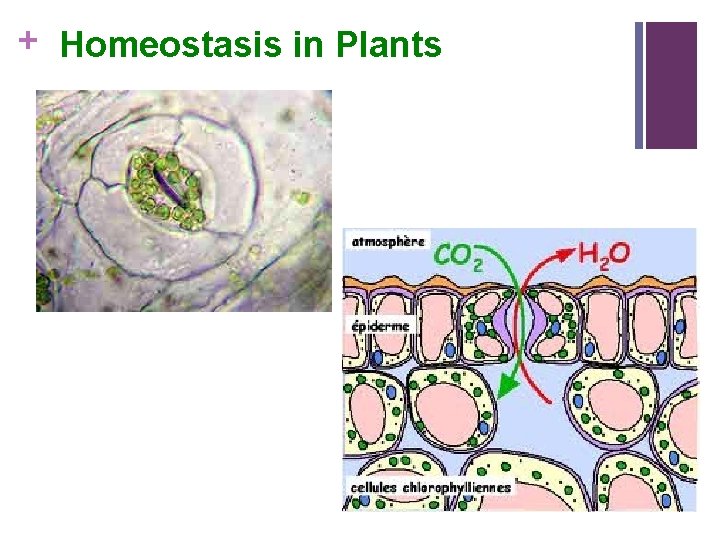
+ Homeostasis in Plants
- Slides: 70