
The Human Body Introduction Overview Chapter 1 Anatomy
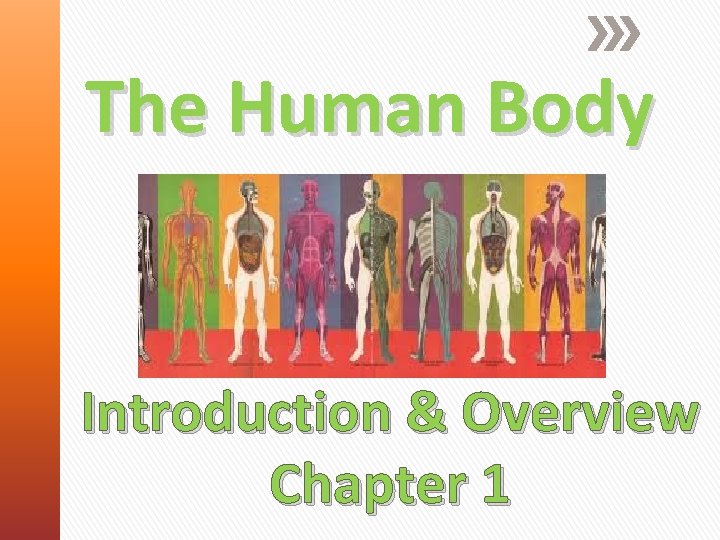
The Human Body Introduction & Overview Chapter 1
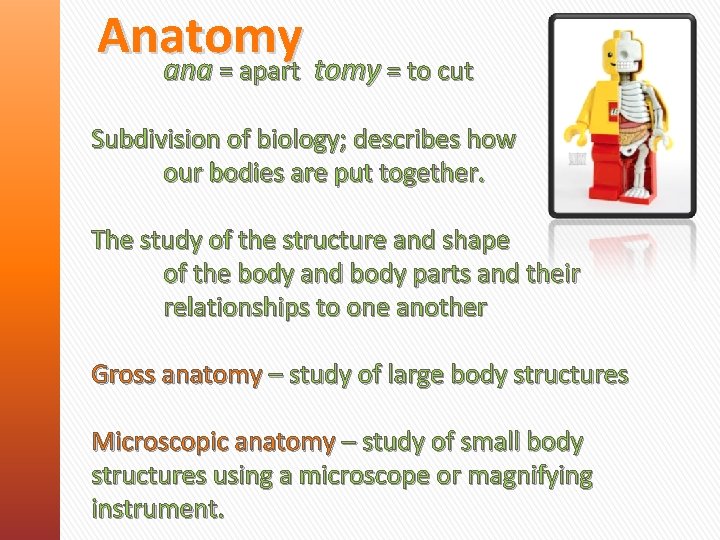
Anatomy ana = apart tomy = to cut Subdivision of biology; describes how our bodies are put together. The study of the structure and shape of the body and body parts and their relationships to one another Gross anatomy – study of large body structures Microscopic anatomy – study of small body structures using a microscope or magnifying instrument.

» Gross Anatomy (large anatomy) ˃ Examines large, physical structures + Surface anatomy (exterior features) + Regional anatomy (body areas) + Systemic anatomy (groups of organs working together) + Developmental anatomy (from egg to maturity) + Embryology (before birth) Specialties of Anatomy
» Microscopic Anatomy ˃ Examines cells and molecules + Cytology (cells and their structures) + Histology (tissues and their structures) » Pathological anatomy ˃ diseases » Radiographic anatomy ˃ internal structures using special visualization techniques
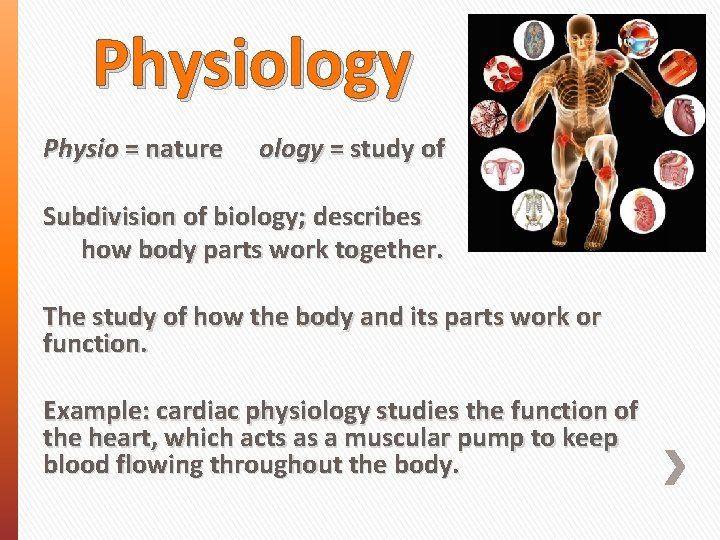
Physiology Physio = nature ology = study of Subdivision of biology; describes how body parts work together. The study of how the body and its parts work or function. Example: cardiac physiology studies the function of the heart, which acts as a muscular pump to keep blood flowing throughout the body.
Relationship between Anatomy & Physiology » All the parts of the body form a well organized unit, and each of those parts has a job to do to make the body operate as a whole. » The structure of a part determines what functions can take place. » Example: lungs are not muscular chambers like the heart and cannot pump blood through the body. The walls of the lungs are very thin; this allows gases to be exchanged and provide oxygen to the body.
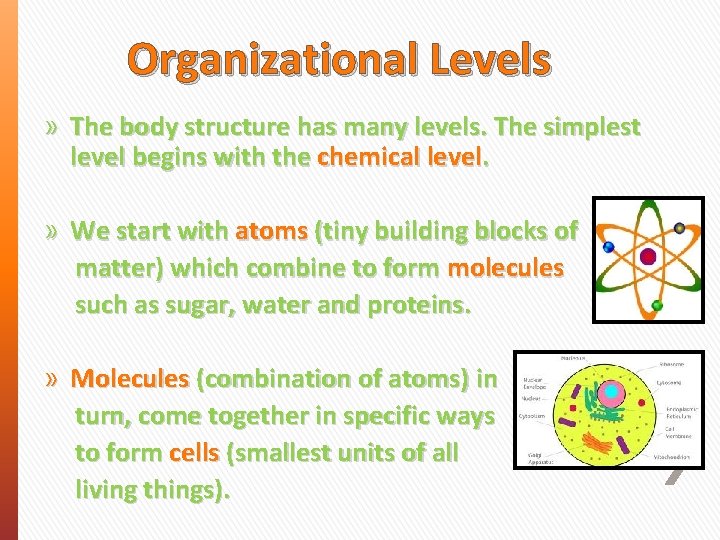
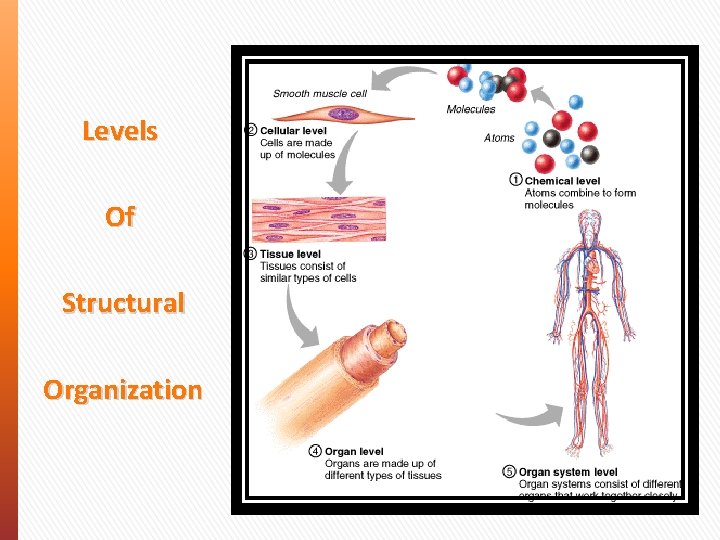
Organizational Levels » The body structure has many levels. The simplest level begins with the chemical level. » We start with atoms (tiny building blocks of matter) which combine to form molecules such as sugar, water and proteins. » Molecules (combination of atoms) in turn, come together in specific ways to form cells (smallest units of all living things).
» Once we have cells, we are in the cellular level. » Cells come in all sizes, and shapes which determine their particular functions in the body. » The simplest living creatures are composed of only a single cell. » In complex organisms like plants and animals the cells come together at the tissue level. » Tissues consists of groups of similar cells that share a similar function. » There are 4 basic tissue types: epithelial, connective, muscular, and neural
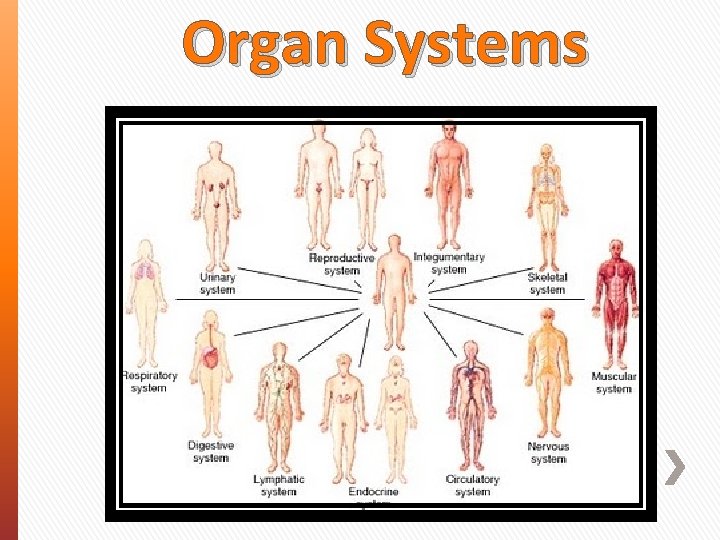
» From the tissue level we move up into the organ level. » An organ is a structure that is composed of 2 or more tissue types and performs a specific function for the body. » Organs may contain more than one kind tissue; this allows the organ to be able to perform extremely complex functions. » All of the body’s organs are grouped together into an organ system, which is the next level. » An organ system is a group of organs that work together to accomplish a common purpose.
Levels Of Structural Organization
Organ Systems
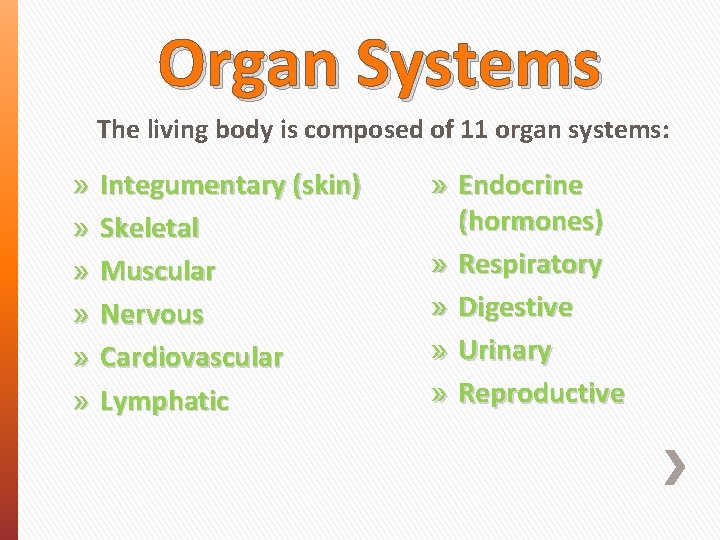
Organ Systems The living body is composed of 11 organ systems: » Integumentary (skin) » Skeletal » Muscular » Nervous » Cardiovascular » Lymphatic » Endocrine (hormones) » Respiratory » Digestive » Urinary » Reproductive
Maintaining Life » In order to maintain life an organism must be able to maintain its boundaries so that its “insides” remain distinct (separate) from its “outside”. » In order to do this the organism also needs to move, respond to stimuli, digest nutrients, excrete wastes, carry on metabolism, reproduce itself and grow. » Survival needs include: food, oxygen, water, appropriate temperature, and normal pressure.
Homeostasis » Body functions interact to maintain homeostasis – a level of relatively stable internal environment within the organism’s body. » Homeostasis is necessary for survival and good health. » In order to maintain homeostasis, communication within the body is essential. The body does this through 3 elements: receptors, control center, and effectors.
» Purpose: keeps system in check » 3 parts: ˃ Receptor + Receives a stimulus ˃ Control Center + Processes info, sends out commands ˃ Effector + A cell or organ that responds to the stimulus Homeostasis
» Use the example of a thermostat ˃ What is the receptor? ˃ What is the control center? ˃ What is the effector?
˃ Use the example of a thermostat + What is the receptor? – Thermometer (internal or external) + What is the control center? – The thermostat + What is the effector? – The air conditioner which turns on and off to maintain the desired temperature.
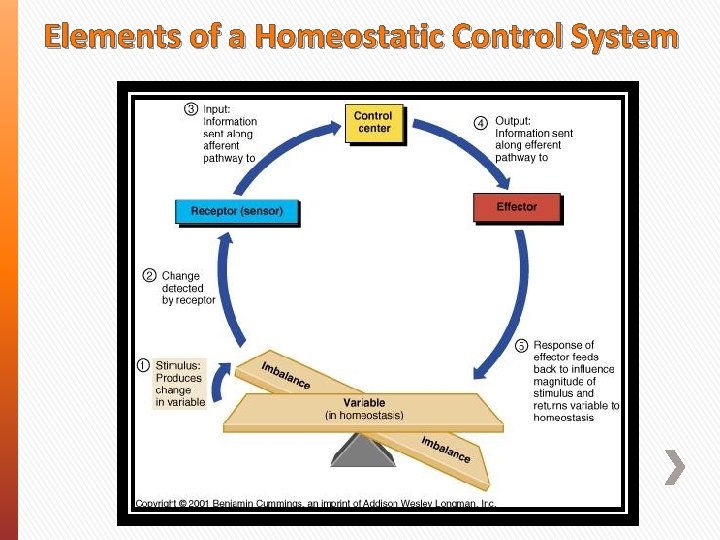
Elements of a Homeostatic Control System
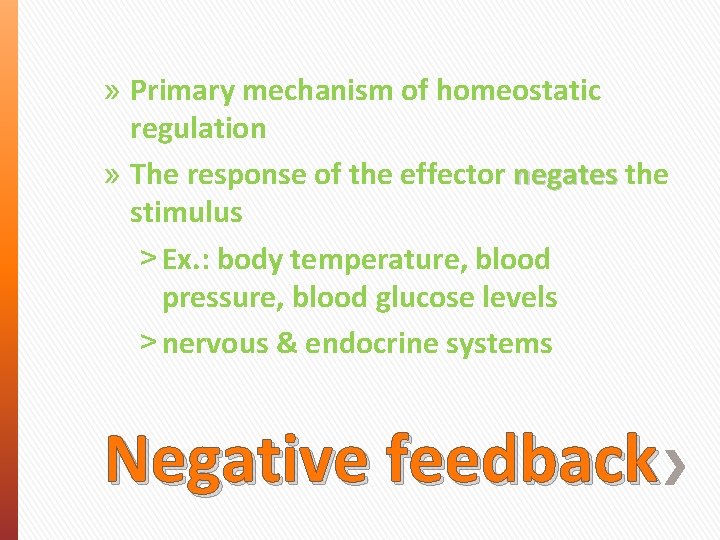
» Primary mechanism of homeostatic regulation » The response of the effector negates the stimulus ˃ Ex. : body temperature, blood pressure, blood glucose levels ˃ nervous & endocrine systems Negative feedback
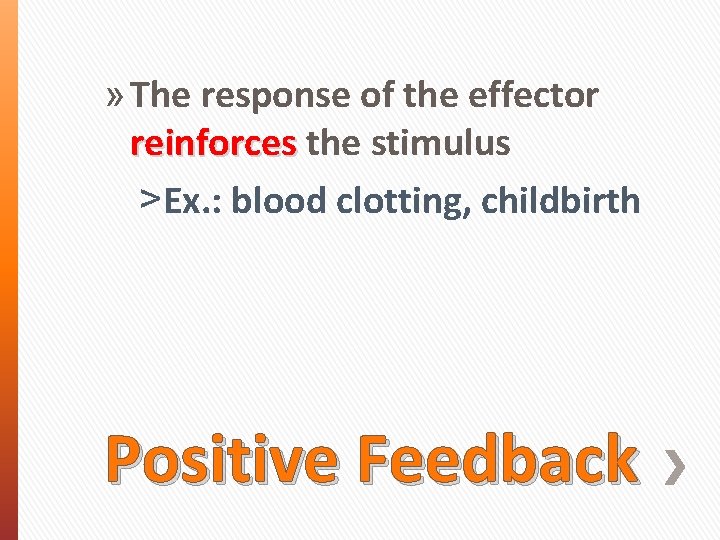
» The response of the effector reinforces the stimulus ˃Ex. : blood clotting, childbirth Positive Feedback
» No homeostasis = disease or death
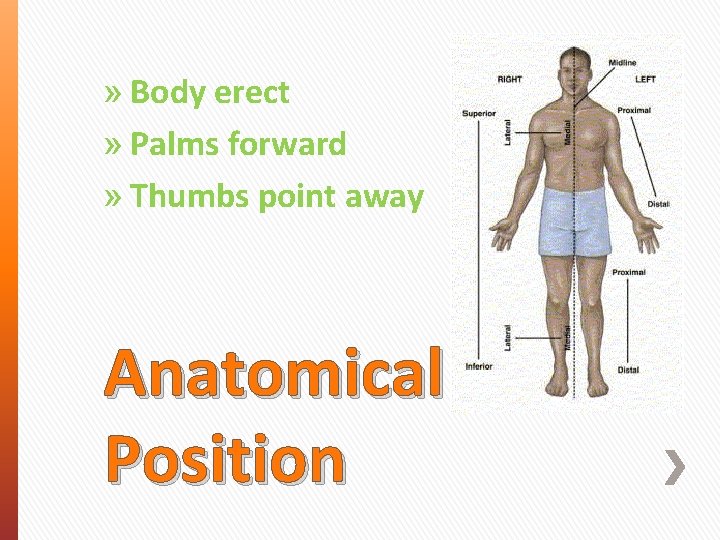
» Body erect » Palms forward » Thumbs point away Anatomical Position
Language of Anatomy » The terms we will be using in class are relative and start off with the assumption that the body is the anatomical position – body is upright with palms facing forward. » The terms are divided into 2 groups: anterior – parts of body facing forward posterior - parts of body facing backwards
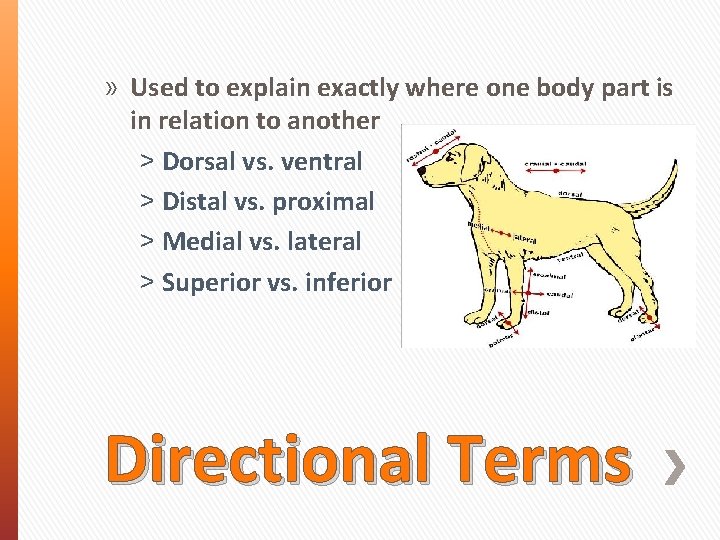
» Used to explain exactly where one body part is in relation to another ˃ Dorsal vs. ventral ˃ Distal vs. proximal ˃ Medial vs. lateral ˃ Superior vs. inferior Directional Terms
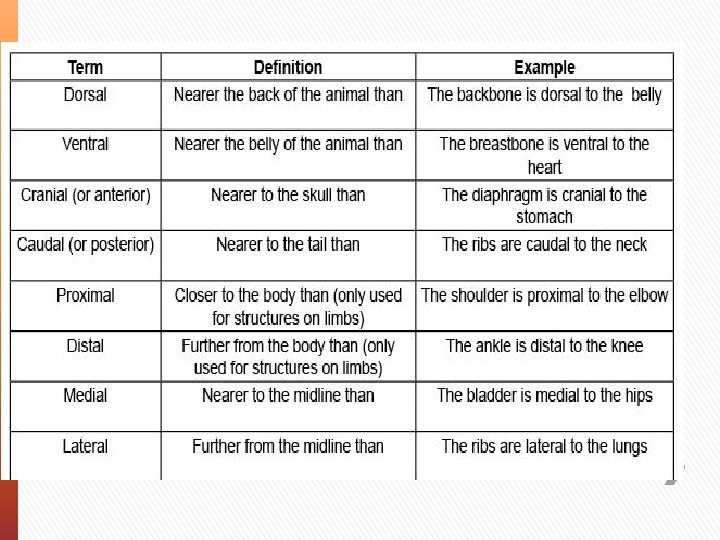
» Superficial-affecting, or being on or near the surface » Deep- situated far beneath the surface; not superficial. » Superior- towards the top (above) » Inferior- towards the bottom (below)
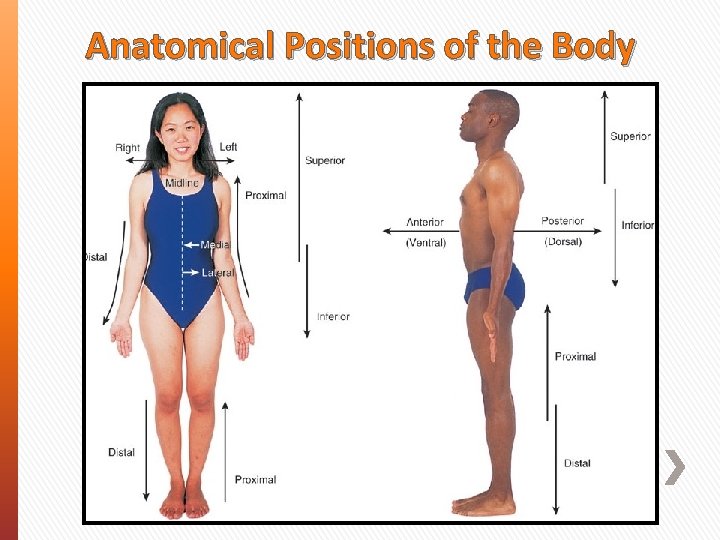
Anatomical Positions of the Body
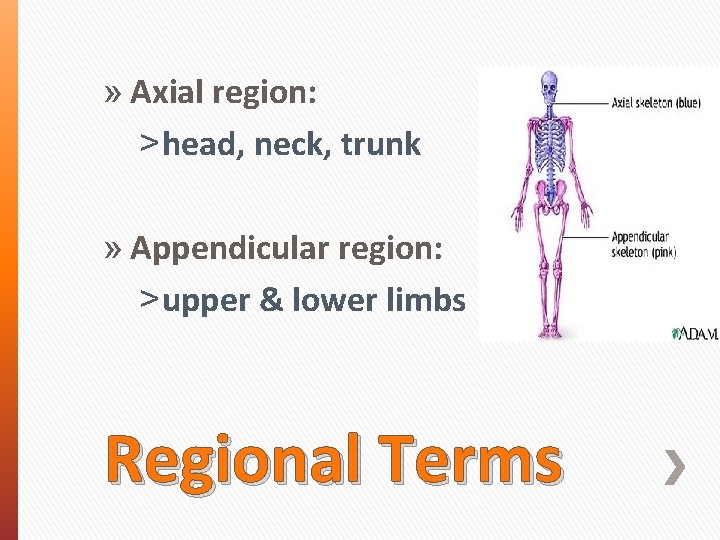
» Axial region: ˃ head, neck, trunk » Appendicular region: ˃ upper & lower limbs Regional Terms
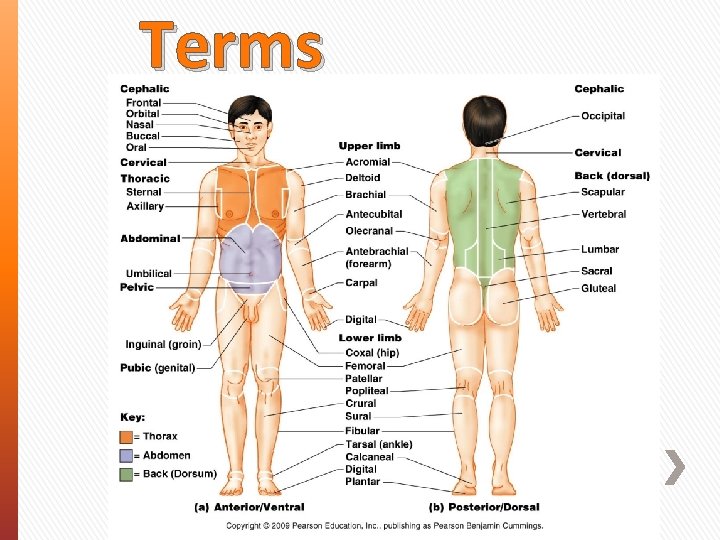
Terms
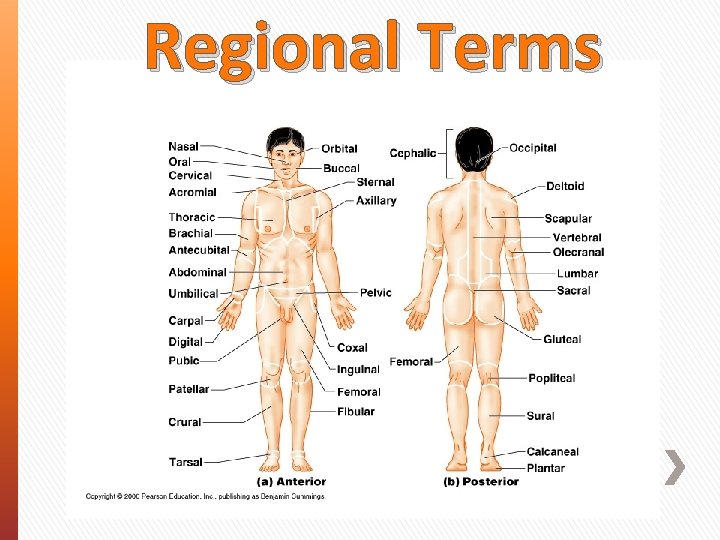
Regional Terms
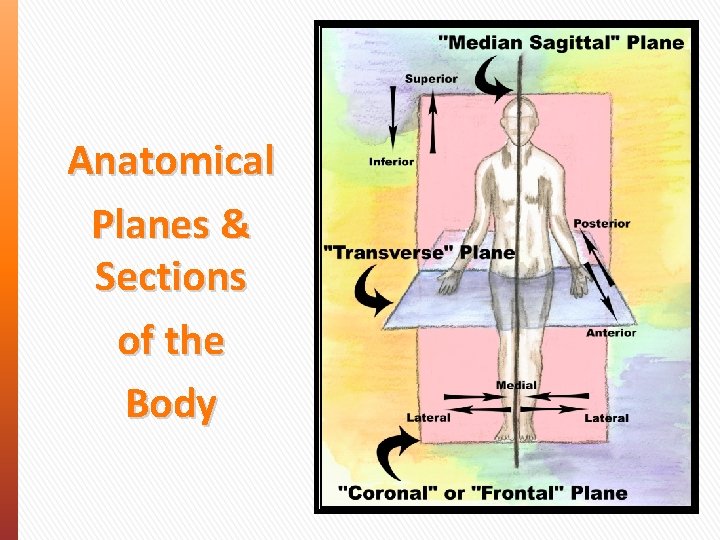
Anatomical Planes & Sections of the Body
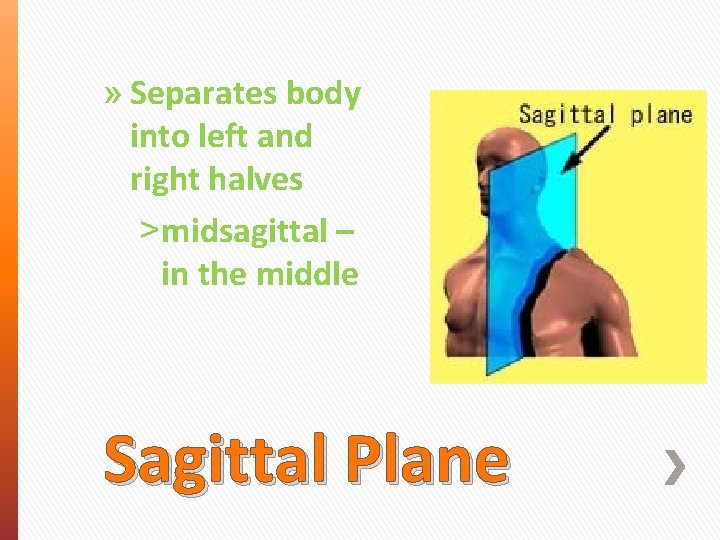
» Separates body into left and right halves ˃ midsagittal – in the middle Sagittal Plane
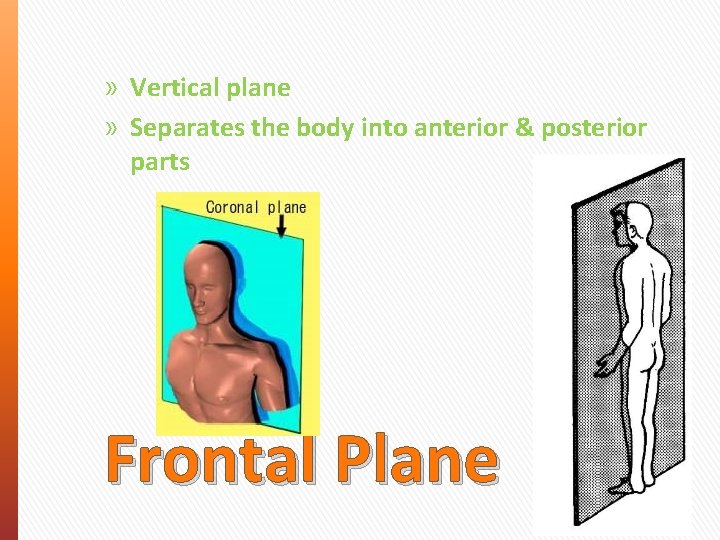
» Vertical plane » Separates the body into anterior & posterior parts Frontal Plane
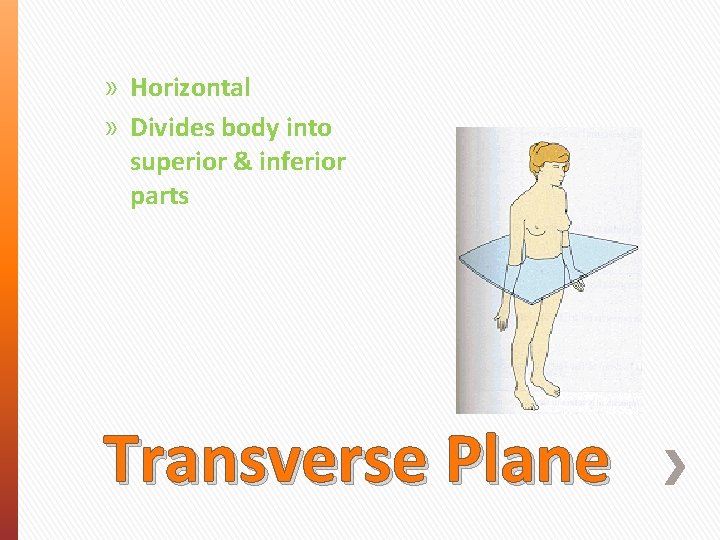
» Horizontal » Divides body into superior & inferior parts Transverse Plane
Body Cavities » There are 2 cavities that provide different degrees of protection to the organs within them. » These cavities differ in their purpose, as well as the manner in which they developed (as an embryo). They also differ in their lining membranes. » The 2 major set of internal cavities are: dorsal body cavity ventral body cavity
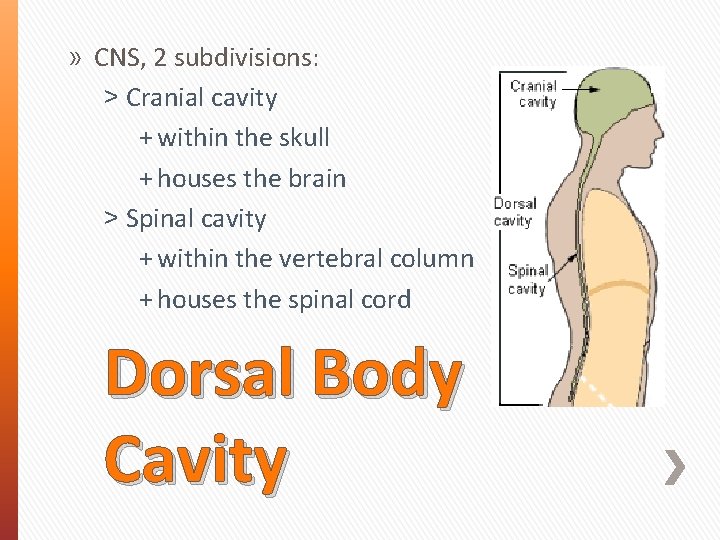
» CNS, 2 subdivisions: ˃ Cranial cavity + within the skull + houses the brain ˃ Spinal cavity + within the vertebral column + houses the spinal cord Dorsal Body Cavity
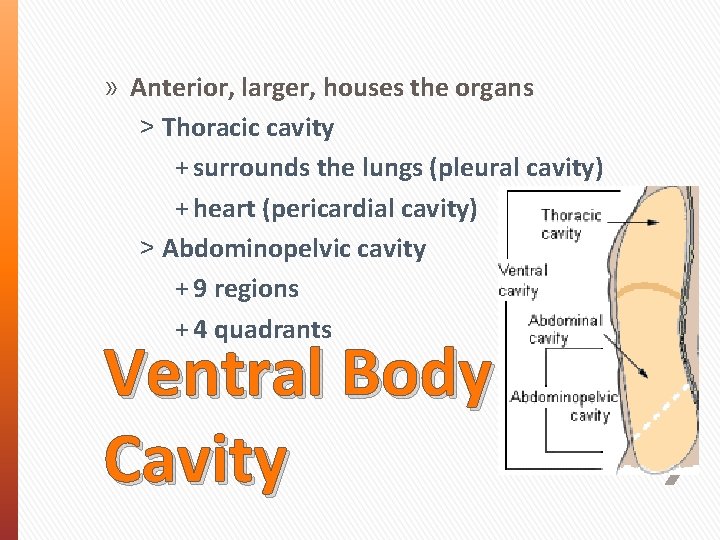
» Anterior, larger, houses the organs ˃ Thoracic cavity + surrounds the lungs (pleural cavity) + heart (pericardial cavity) ˃ Abdominopelvic cavity + 9 regions + 4 quadrants Ventral Body Cavity
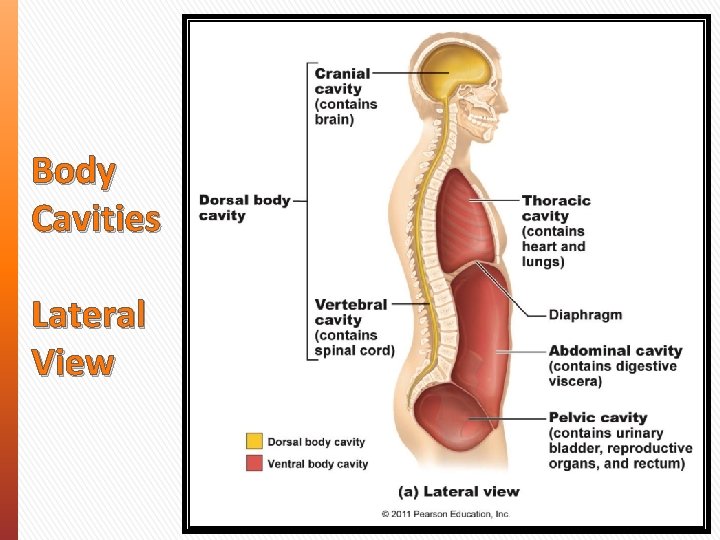
Body Cavities Lateral View
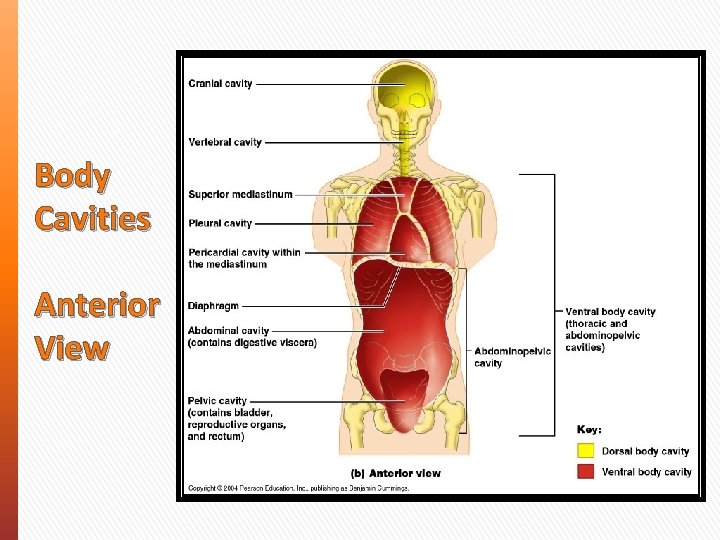
Body Cavities Anterior View
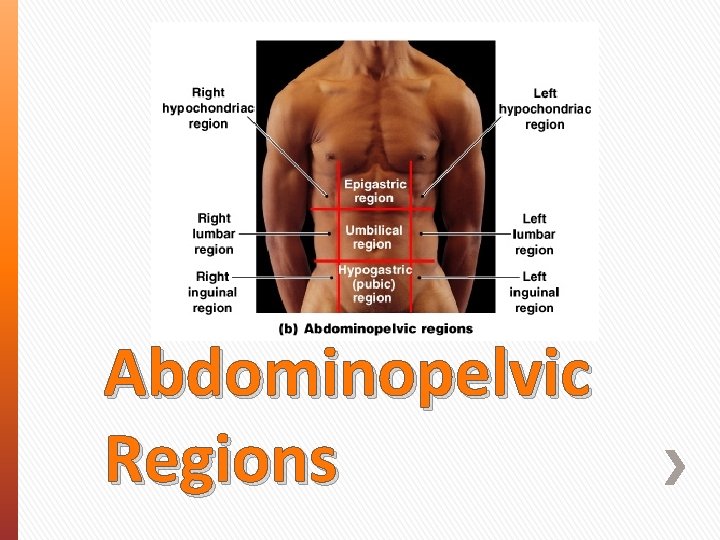
Abdominopelvic Regions
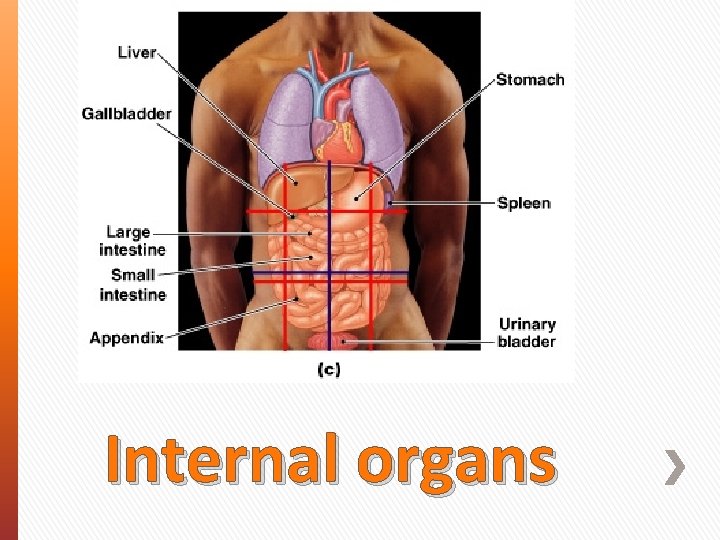
Internal organs
- Slides: 41