
The Human Body Introduction and Orientation Opening Assignment
The Human Body Introduction and Orientation
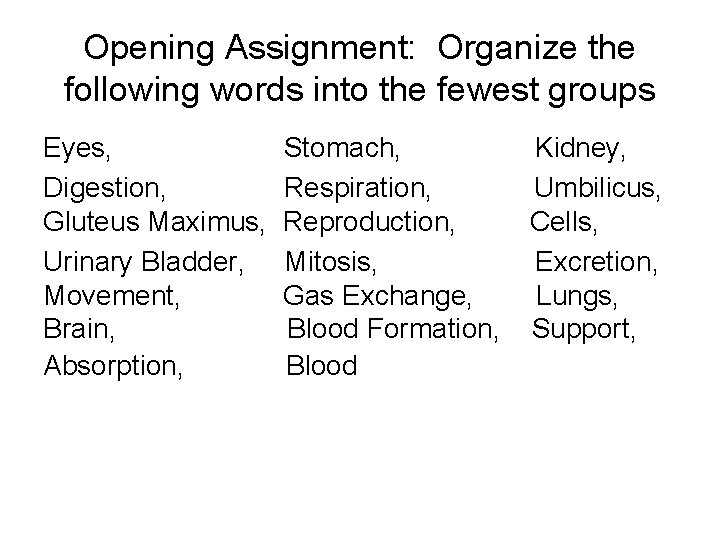
Opening Assignment: Organize the following words into the fewest groups Eyes, Digestion, Gluteus Maximus, Urinary Bladder, Movement, Brain, Absorption, Stomach, Respiration, Reproduction, Mitosis, Gas Exchange, Blood Formation, Blood Kidney, Umbilicus, Cells, Excretion, Lungs, Support,
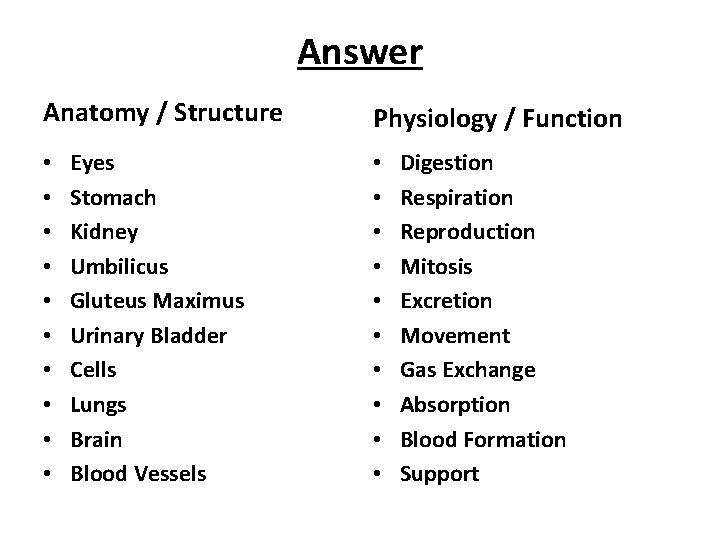
Answer Anatomy / Structure • • • Eyes Stomach Kidney Umbilicus Gluteus Maximus Urinary Bladder Cells Lungs Brain Blood Vessels Physiology / Function • • • Digestion Respiration Reproduction Mitosis Excretion Movement Gas Exchange Absorption Blood Formation Support
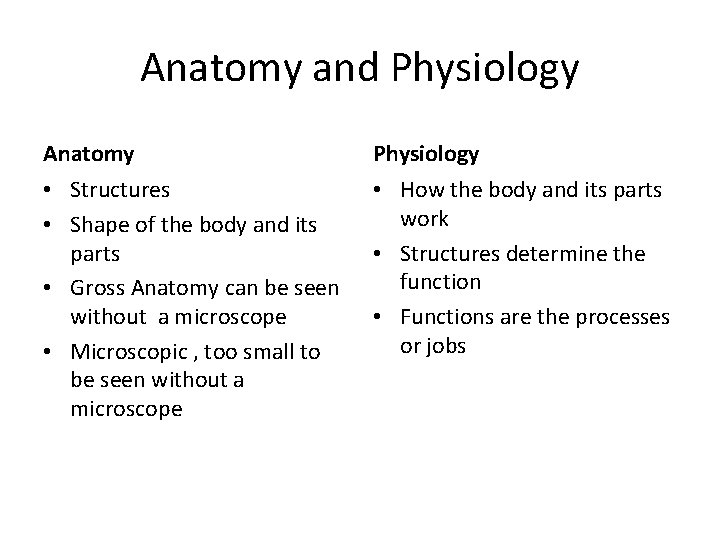
Anatomy and Physiology Anatomy Physiology • Structures • Shape of the body and its parts • Gross Anatomy can be seen without a microscope • Microscopic , too small to be seen without a microscope • How the body and its parts work • Structures determine the function • Functions are the processes or jobs
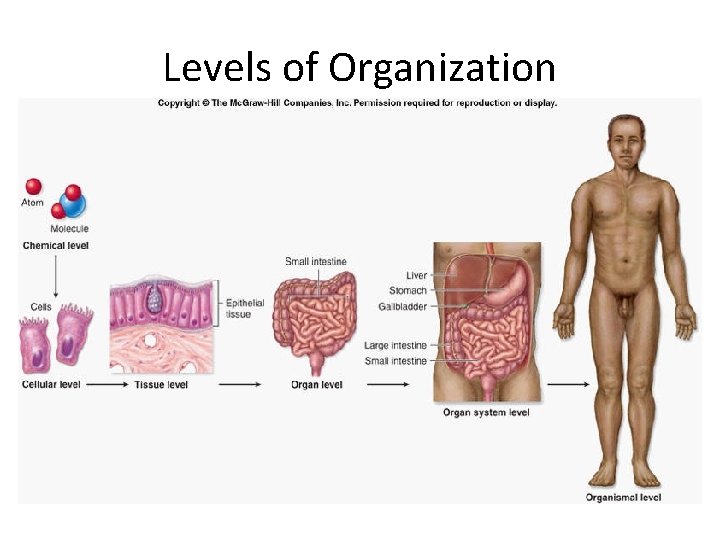
Levels of Organization
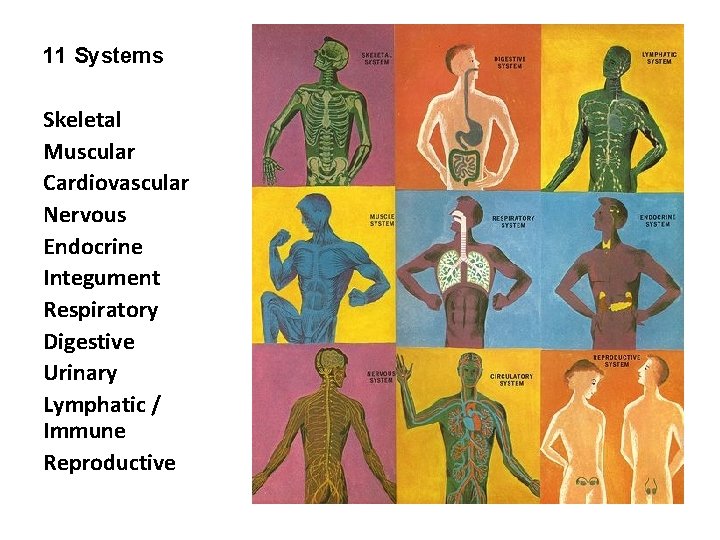
11 Systems Skeletal Muscular Cardiovascular Nervous Endocrine Integument Respiratory Digestive Urinary Lymphatic / Immune Reproductive
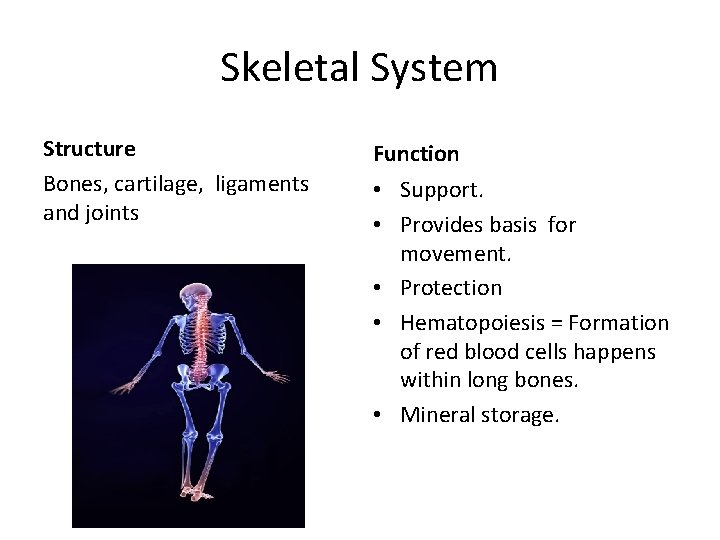
Skeletal System Structure Bones, cartilage, ligaments and joints Function • Support. • Provides basis for movement. • Protection • Hematopoiesis = Formation of red blood cells happens within long bones. • Mineral storage.
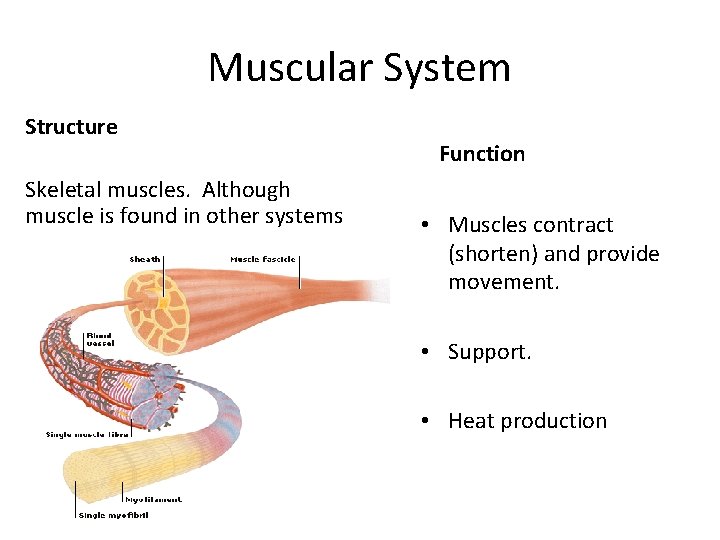
Muscular System Structure Skeletal muscles. Although muscle is found in other systems Function • Muscles contract (shorten) and provide movement. • Support. • Heat production
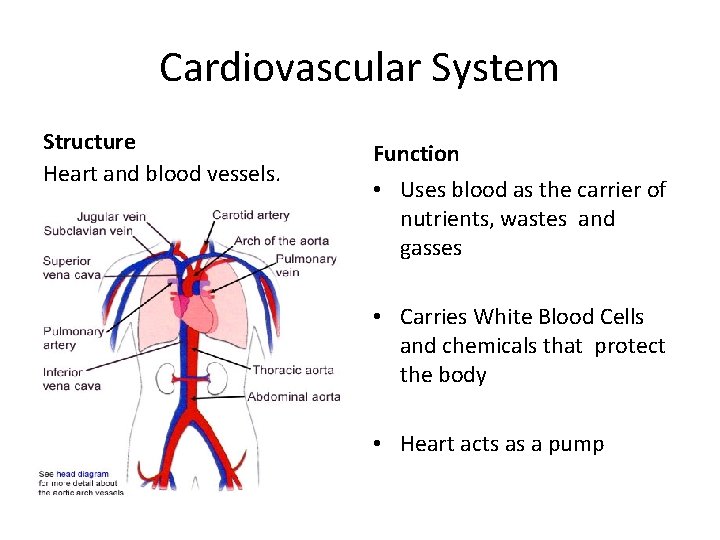
Cardiovascular System Structure Heart and blood vessels. . Function • Uses blood as the carrier of nutrients, wastes and gasses • Carries White Blood Cells and chemicals that protect the body • Heart acts as a pump
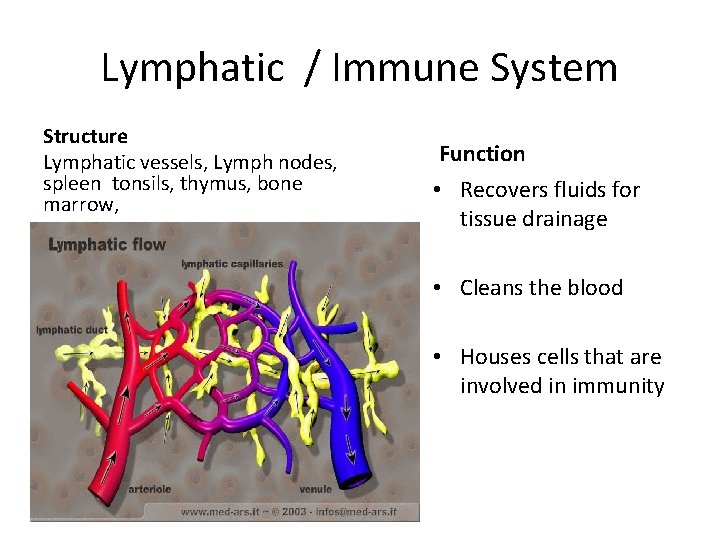
Lymphatic / Immune System Structure Lymphatic vessels, Lymph nodes, spleen tonsils, thymus, bone marrow, Function • Recovers fluids for tissue drainage • Cleans the blood • Houses cells that are involved in immunity
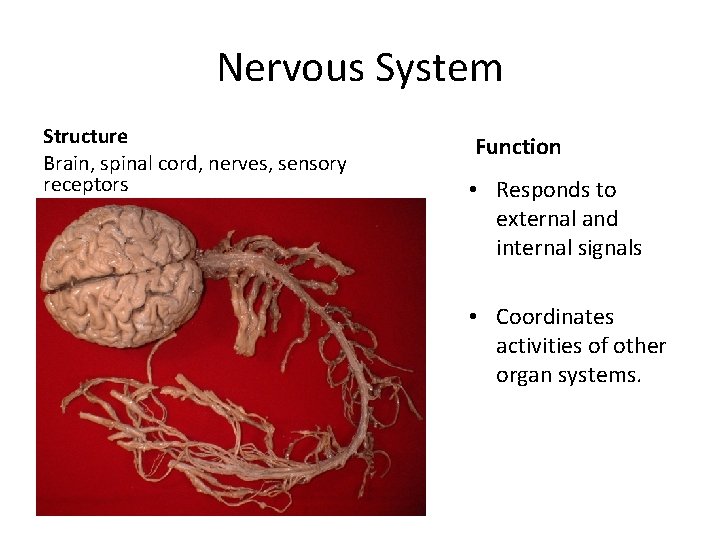
Nervous System Structure Brain, spinal cord, nerves, sensory receptors Function • Responds to external and internal signals • Coordinates activities of other organ systems.
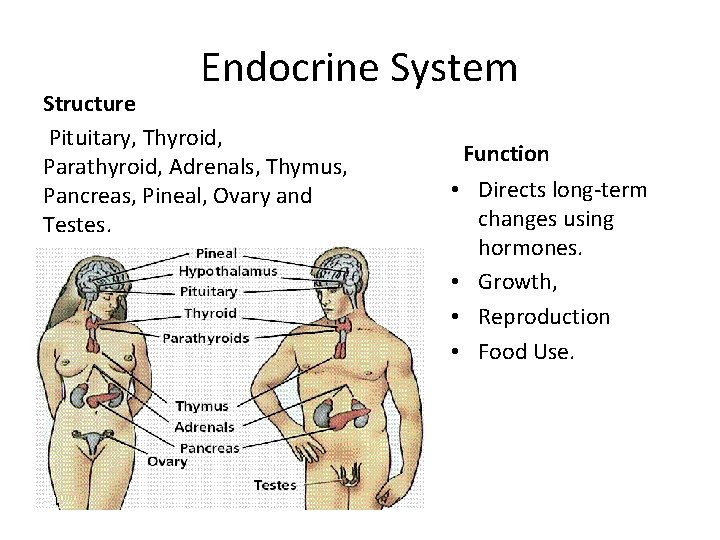
Endocrine System Structure Pituitary, Thyroid, Parathyroid, Adrenals, Thymus, Pancreas, Pineal, Ovary and Testes. Function • Directs long-term changes using hormones. • Growth, • Reproduction • Food Use.
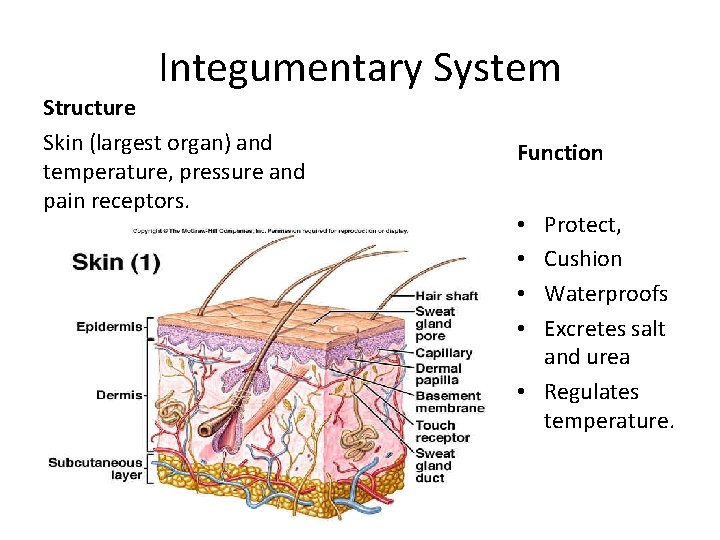
Integumentary System Structure Skin (largest organ) and temperature, pressure and pain receptors. Function Protect, Cushion Waterproofs Excretes salt and urea • Regulates temperature. • •
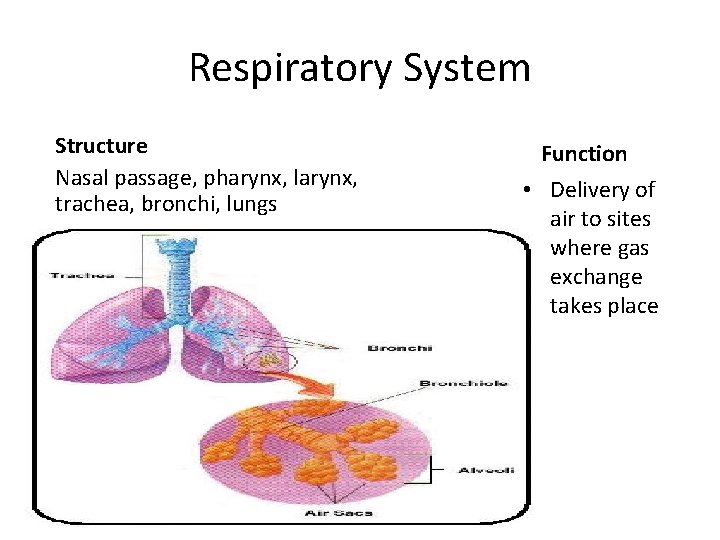
Respiratory System Structure Nasal passage, pharynx, larynx, trachea, bronchi, lungs Function • Delivery of air to sites where gas exchange takes place
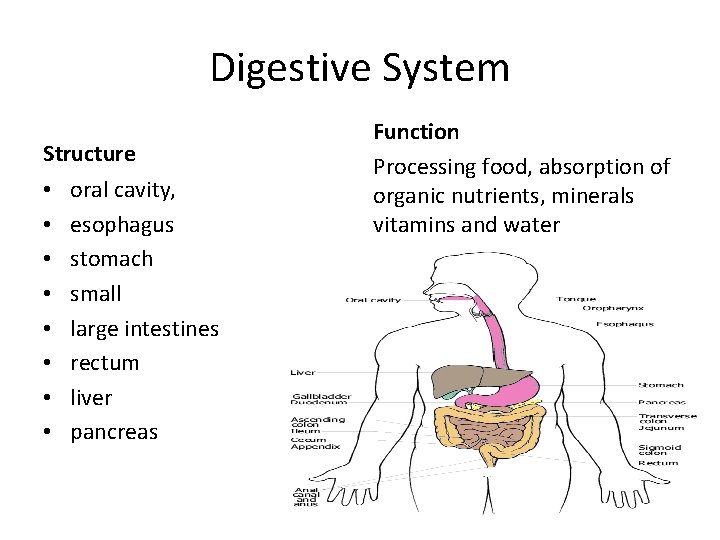
Digestive System Structure • • oral cavity, esophagus stomach small large intestines rectum liver pancreas Function Processing food, absorption of organic nutrients, minerals vitamins and water
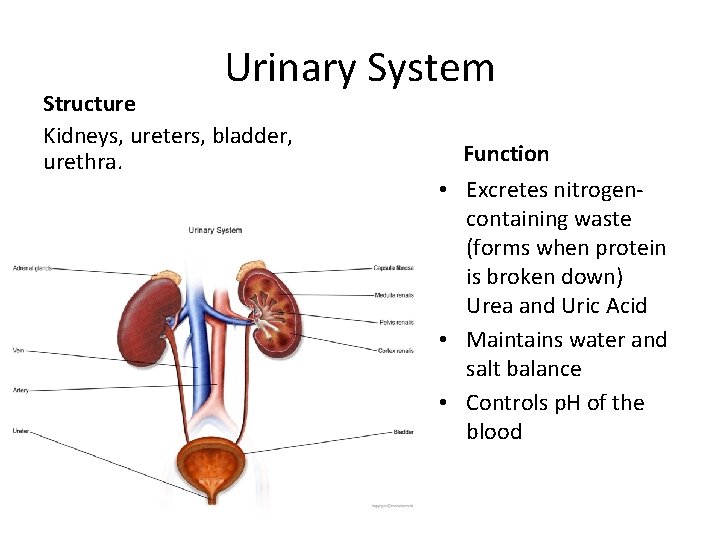
Urinary System Structure Kidneys, ureters, bladder, urethra. Function • Excretes nitrogencontaining waste (forms when protein is broken down) Urea and Uric Acid • Maintains water and salt balance • Controls p. H of the blood
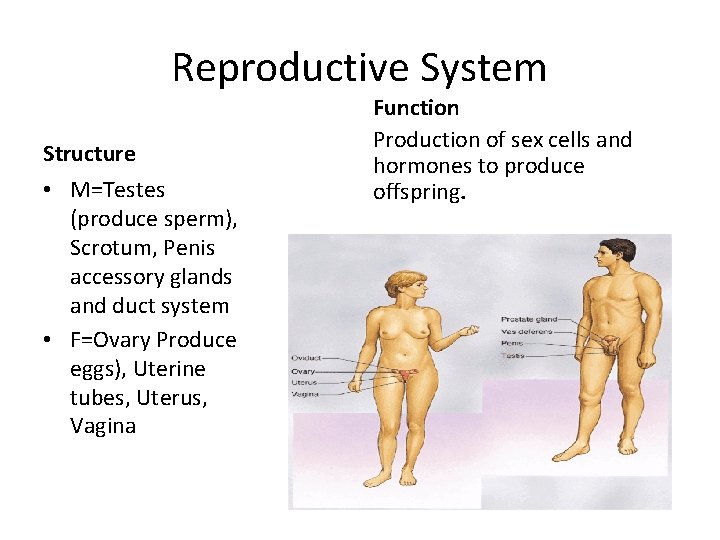
Reproductive System Structure • M=Testes (produce sperm), Scrotum, Penis accessory glands and duct system • F=Ovary Produce eggs), Uterine tubes, Uterus, Vagina Function Production of sex cells and hormones to produce offspring.
8 Life Functions • Boundaries: Inside is separate from outside…every cell has a membrane. • Movement: We move and our food moves through us. • Responsiveness: Sense changes and react. • Digestion: Breaking down of food to be absorbed by blood. • Metabolism: All chemical reactions in the body. Depends on the Digestive and Respiratory systems for nutrients and oxygen but it is regulated by the hormones of the Endocrine system. • Excretion: Removing waste • Reproduction: Production of offspring • Growth: Increase in size.
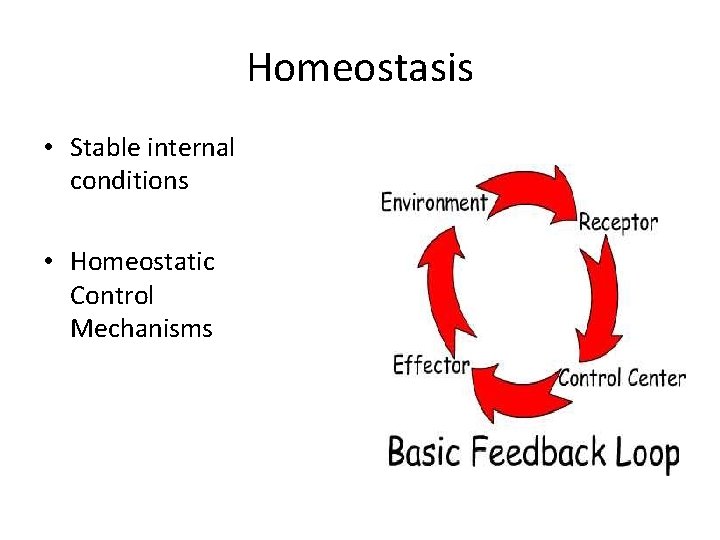
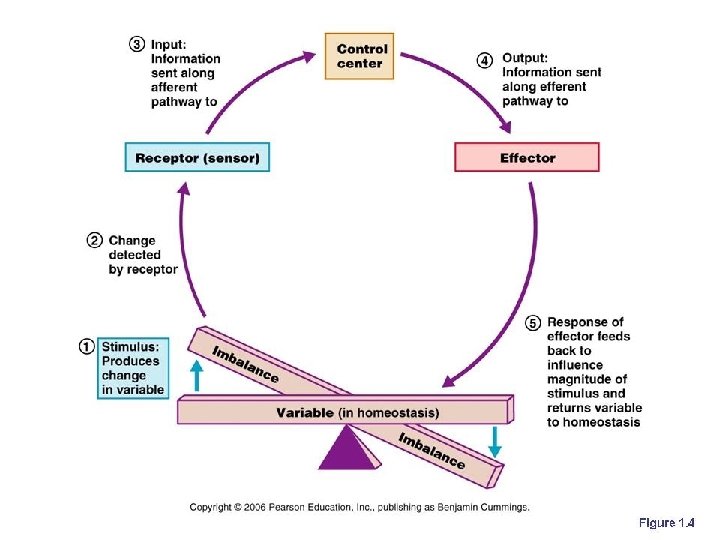
Homeostasis • Stable internal conditions • Homeostatic Control Mechanisms
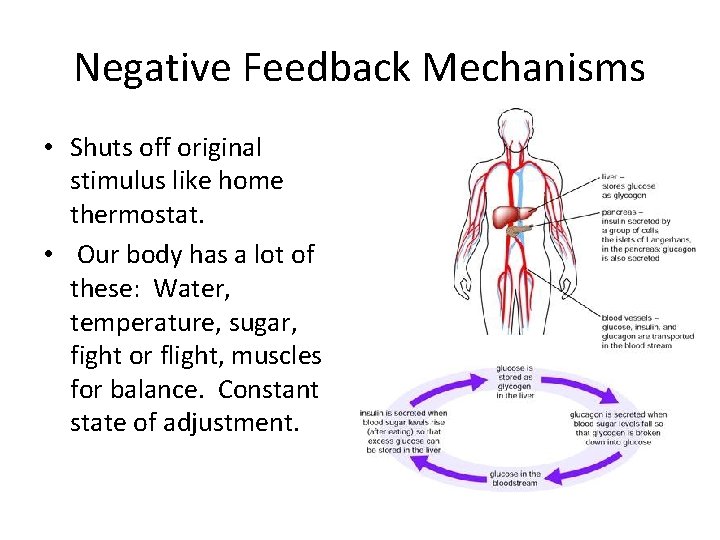
Negative Feedback Mechanisms • Shuts off original stimulus like home thermostat. • Our body has a lot of these: Water, temperature, sugar, fight or flight, muscles for balance. Constant state of adjustment.
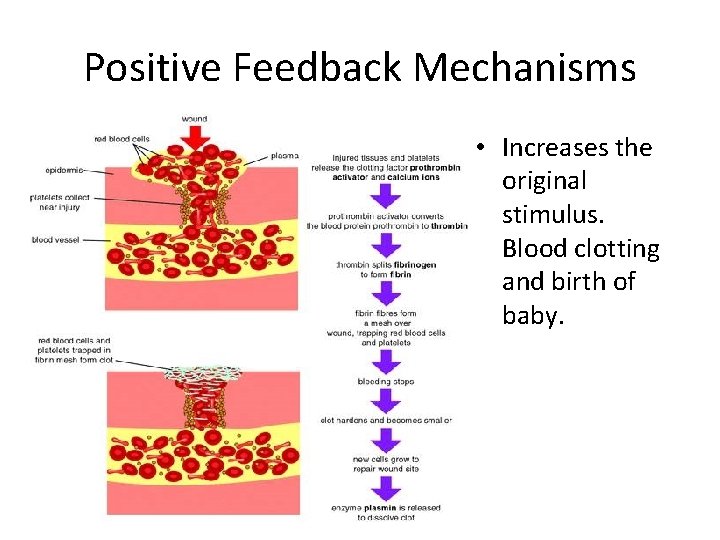
Positive Feedback Mechanisms • Increases the original stimulus. Blood clotting and birth of baby.
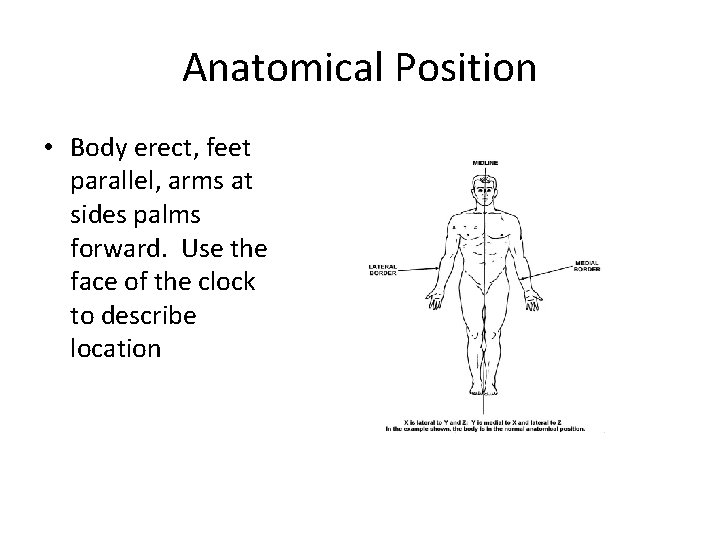
Anatomical Position • Body erect, feet parallel, arms at sides palms forward. Use the face of the clock to describe location
- Slides: 24