
The Human Body in Health and Illness 4
The Human Body in Health and Illness, 4 th edition Barbara Herlihy Chapter 21: Immune System 1
Lesson 21 -1 Objectives • Differentiate between specific and nonspecific immunity. • Describe the process of phagocytosis. • Explain the causes of the signs of inflammation. • Explain the role of fever in fighting infection. • Explain the role of T cells in cell-mediated immunity. Copyright © 2011, 2007 by Saunders, an imprint of Elsevier Inc. All rights reserved. 2
Lesson 21 -1 Objectives (cont’d. ) • Explain the role of B cells in antibodymediated immunity. • Differentiate between genetic immunity and acquired immunity. • Describe naturally and artificially acquired active and passive immunity. • Identify the steps in the development of anaphylaxis. Copyright © 2011, 2007 by Saunders, an imprint of Elsevier Inc. All rights reserved. 3
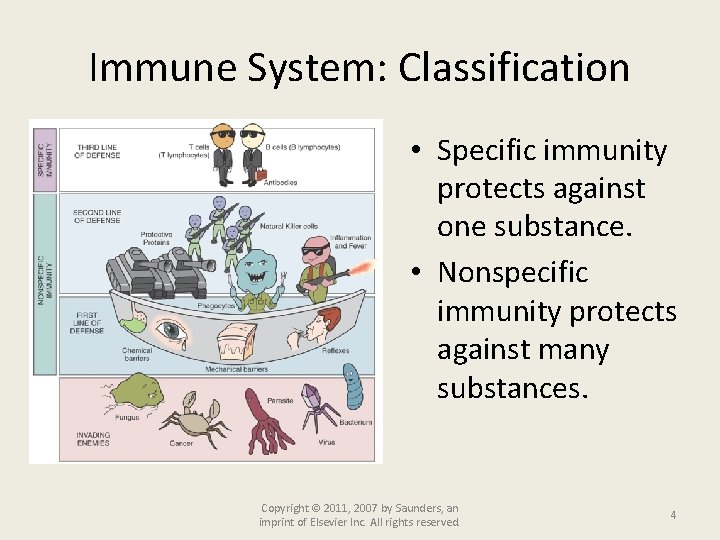
Immune System: Classification • Specific immunity protects against one substance. • Nonspecific immunity protects against many substances. Copyright © 2011, 2007 by Saunders, an imprint of Elsevier Inc. All rights reserved. 4
Immunity: Lines of Defense • Nonspecific immunity – First line: Mechanical or chemical barriers, reflexes – Second line: Phagocytosis, inflammation, fever, protective proteins, natural killer cells • Specific immunity – Third line: B and T lymphocytes or B and T cells Copyright © 2011, 2007 by Saunders, an imprint of Elsevier Inc. All rights reserved. 5
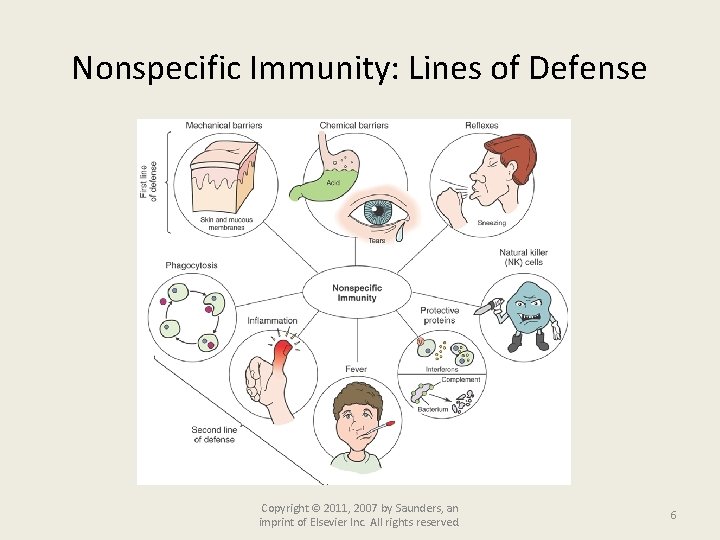
Nonspecific Immunity: Lines of Defense Copyright © 2011, 2007 by Saunders, an imprint of Elsevier Inc. All rights reserved. 6
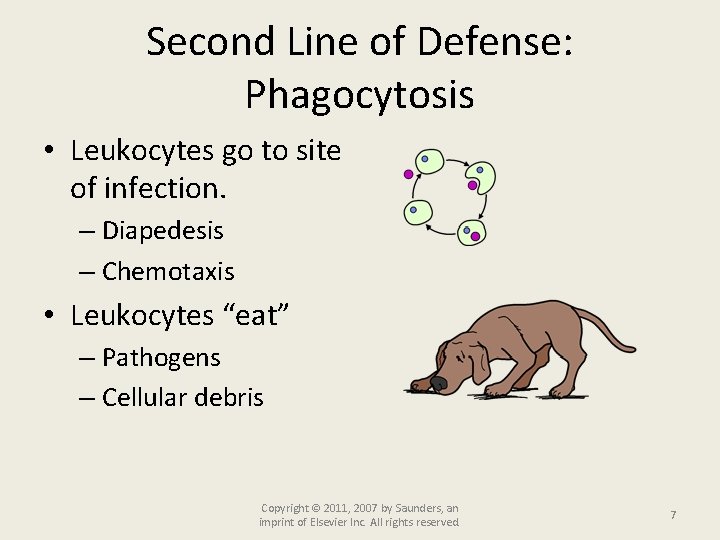
Second Line of Defense: Phagocytosis • Leukocytes go to site of infection. – Diapedesis – Chemotaxis • Leukocytes “eat” – Pathogens – Cellular debris Copyright © 2011, 2007 by Saunders, an imprint of Elsevier Inc. All rights reserved. 7
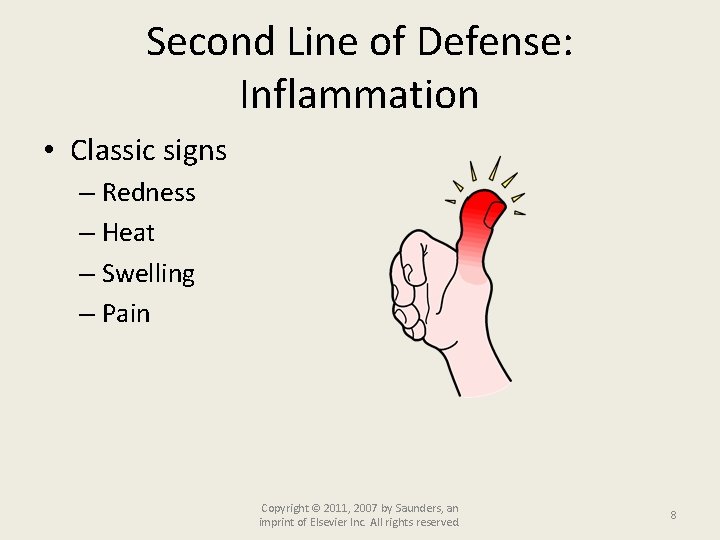
Second Line of Defense: Inflammation • Classic signs – Redness – Heat – Swelling – Pain Copyright © 2011, 2007 by Saunders, an imprint of Elsevier Inc. All rights reserved. 8

Second Line of Defense: Fever (Pyrexia) • Phagocytosis releases pyrogens. • Pyrogens reset body thermostat upward. • Body temperature rises. • Antipyretics can lower temperature. Copyright © 2011, 2007 by Saunders, an imprint of Elsevier Inc. All rights reserved. 9
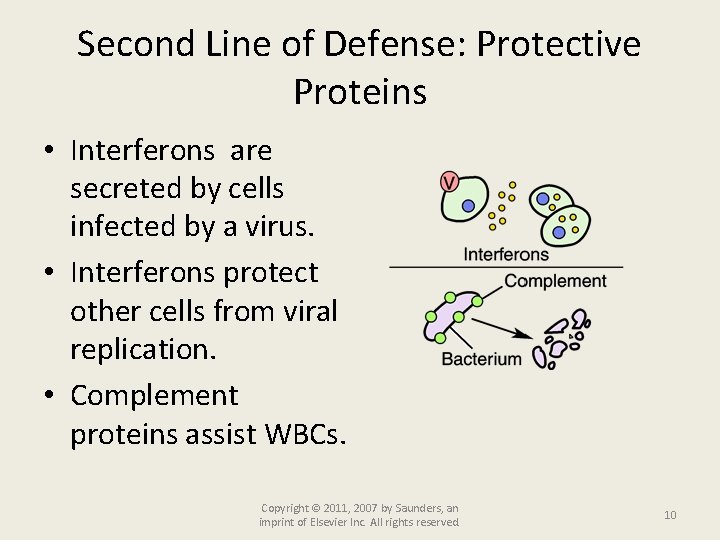
Second Line of Defense: Protective Proteins • Interferons are secreted by cells infected by a virus. • Interferons protect other cells from viral replication. • Complement proteins assist WBCs. Copyright © 2011, 2007 by Saunders, an imprint of Elsevier Inc. All rights reserved. 10
Second Line of Defense: NK Cells • A lymphocyte that acts nonspecifically • Effective against many microbes and certain cancer cells Copyright © 2011, 2007 by Saunders, an imprint of Elsevier Inc. All rights reserved. 11
Specific Immunity: 3 rd Line of Defense • T cells – Cell-mediated immunity • B cells – Antibody-mediated immunity • Macrophages – Help activate T and B cells Copyright © 2011, 2007 by Saunders, an imprint of Elsevier Inc. All rights reserved. 12
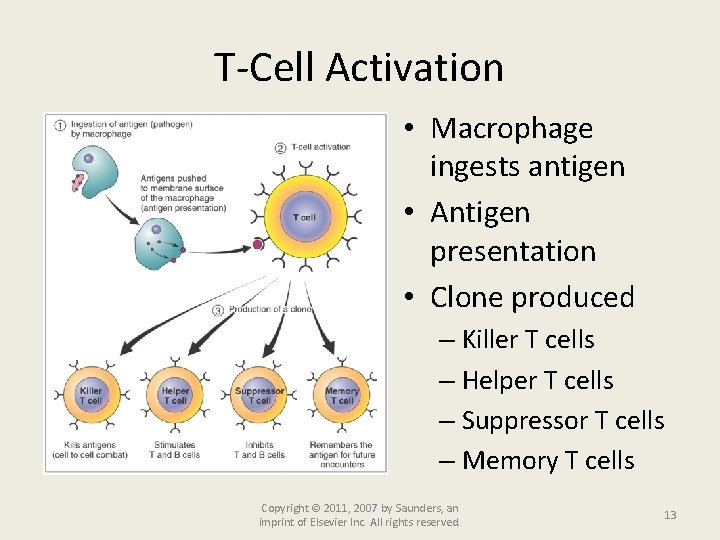
T-Cell Activation • Macrophage ingests antigen • Antigen presentation • Clone produced – Killer T cells – Helper T cells – Suppressor T cells – Memory T cells Copyright © 2011, 2007 by Saunders, an imprint of Elsevier Inc. All rights reserved. 13
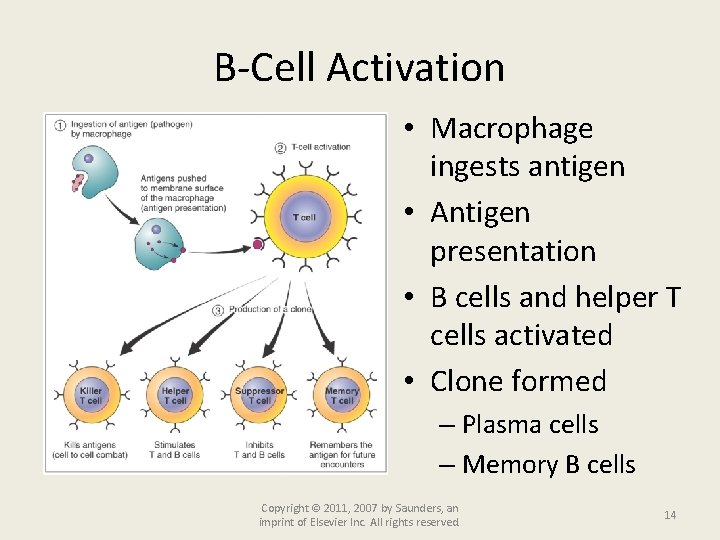
B-Cell Activation • Macrophage ingests antigen • Antigen presentation • B cells and helper T cells activated • Clone formed – Plasma cells – Memory B cells Copyright © 2011, 2007 by Saunders, an imprint of Elsevier Inc. All rights reserved. 14
Antigen, Antibody, Immunoglobulin • Antigen: Stimulates formation of antibodies • Antibody: Secreted by B cells, also called immunoglobulins • Antigen-antibody interaction agglutination • Important immunoglobulins – Immunoglobulin G (Ig. G) – Immunoglobulin A (Ig. A) – Immunoglobulin M (Ig. M) – Immunoglobulin E (Ig. E) Copyright © 2011, 2007 by Saunders, an imprint of Elsevier Inc. All rights reserved. 15
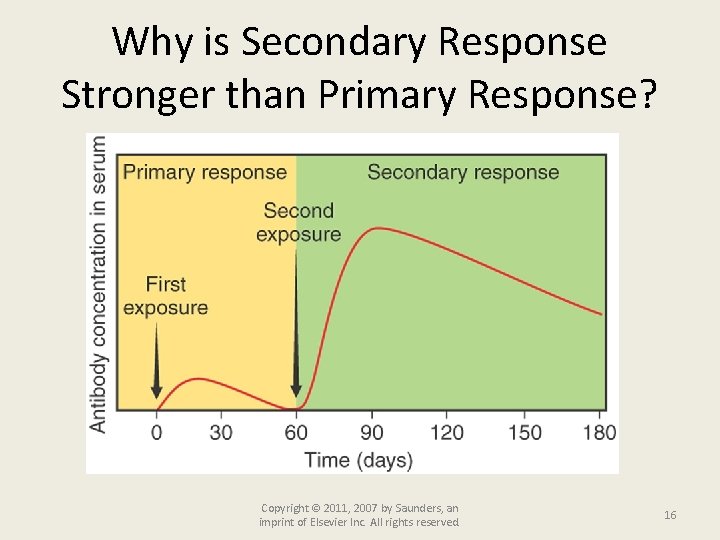
Why is Secondary Response Stronger than Primary Response? Copyright © 2011, 2007 by Saunders, an imprint of Elsevier Inc. All rights reserved. 16
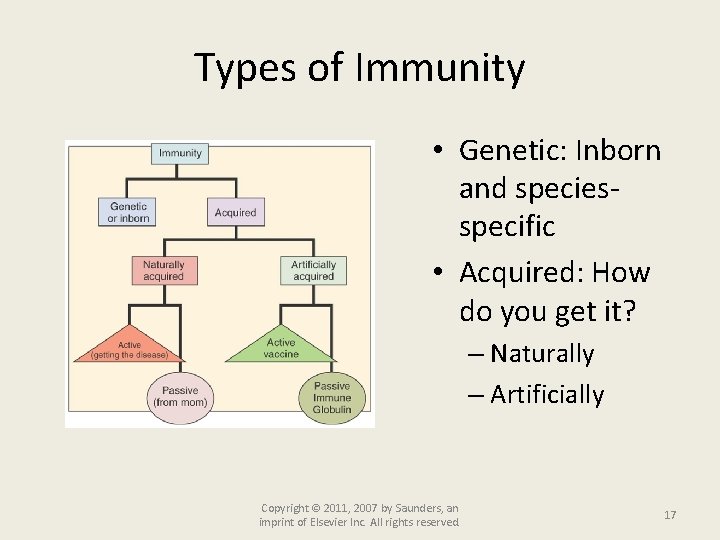
Types of Immunity • Genetic: Inborn and speciesspecific • Acquired: How do you get it? – Naturally – Artificially Copyright © 2011, 2007 by Saunders, an imprint of Elsevier Inc. All rights reserved. 17
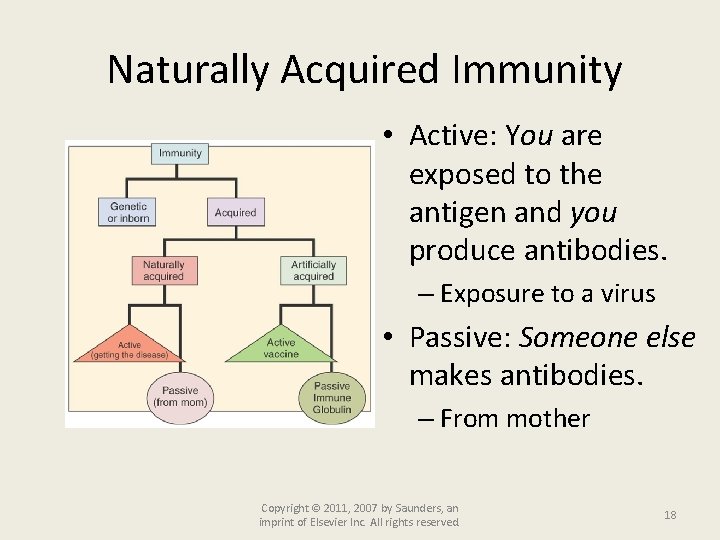
Naturally Acquired Immunity • Active: You are exposed to the antigen and you produce antibodies. – Exposure to a virus • Passive: Someone else makes antibodies. – From mother Copyright © 2011, 2007 by Saunders, an imprint of Elsevier Inc. All rights reserved. 18
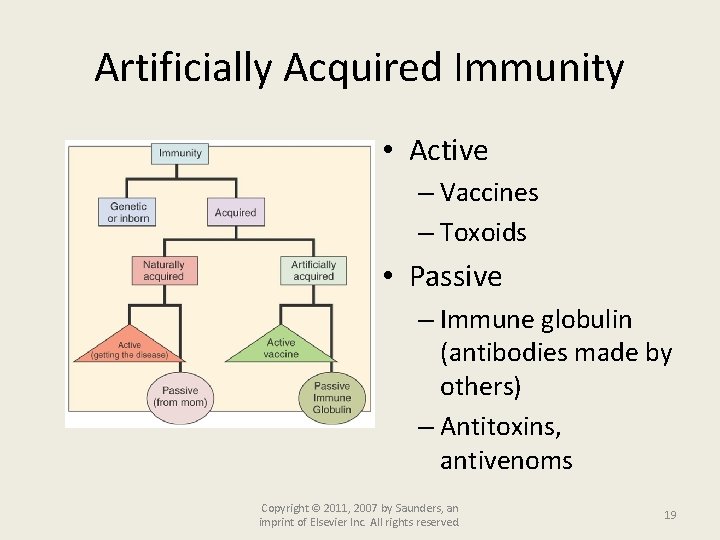
Artificially Acquired Immunity • Active – Vaccines – Toxoids • Passive – Immune globulin (antibodies made by others) – Antitoxins, antivenoms Copyright © 2011, 2007 by Saunders, an imprint of Elsevier Inc. All rights reserved. 19
Allergic Reaction: Delayed • Occurs in about 48 hours • Usual cause is repeated exposure of skin to irritants (household detergents, poison ivy) • Activates T cells, causing skin eruptions and inflammation (contact dermatitis) Copyright © 2011, 2007 by Saunders, an imprint of Elsevier Inc. All rights reserved. 20
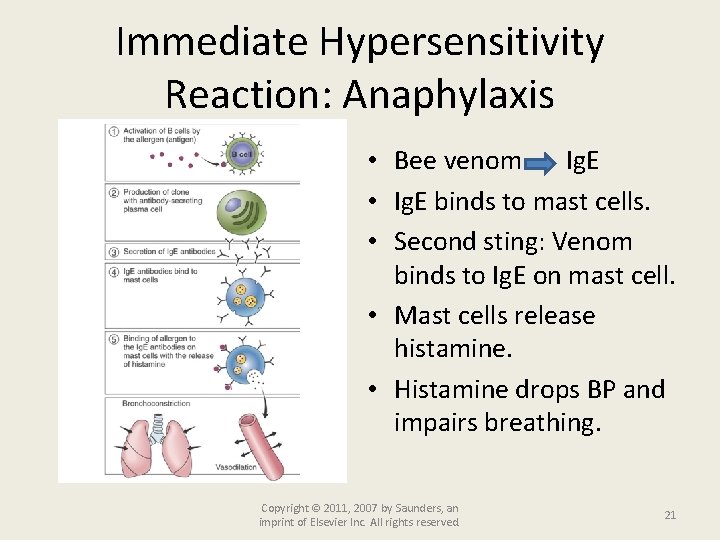
Immediate Hypersensitivity Reaction: Anaphylaxis • Bee venom Ig. E • Ig. E binds to mast cells. • Second sting: Venom binds to Ig. E on mast cell. • Mast cells release histamine. • Histamine drops BP and impairs breathing. Copyright © 2011, 2007 by Saunders, an imprint of Elsevier Inc. All rights reserved. 21
Other Immunological Responses • Autoimmune diseases: Develop in response to self-attack, or autoimmunity • Organ rejection: Recipient’s immune system recognizes donated organ as foreign, mounts immune attack against it Copyright © 2011, 2007 by Saunders, an imprint of Elsevier Inc. All rights reserved. 22
- Slides: 22