
The HUMAN BODY Chapter 32 Skeletal Muscular and
The HUMAN BODY Chapter 32 Skeletal, Muscular, and Integumentary Systems
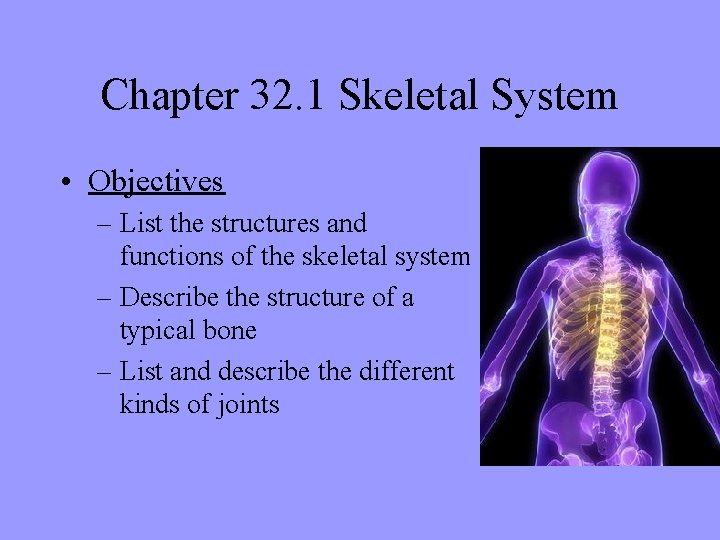
Chapter 32. 1 Skeletal System • Objectives – List the structures and functions of the skeletal system – Describe the structure of a typical bone – List and describe the different kinds of joints
SKELETAL SYSTEM • Functions: – Provides shape and support – Allows movement – Protects tissues and organs – Stores certain minerals – Produces blood cells
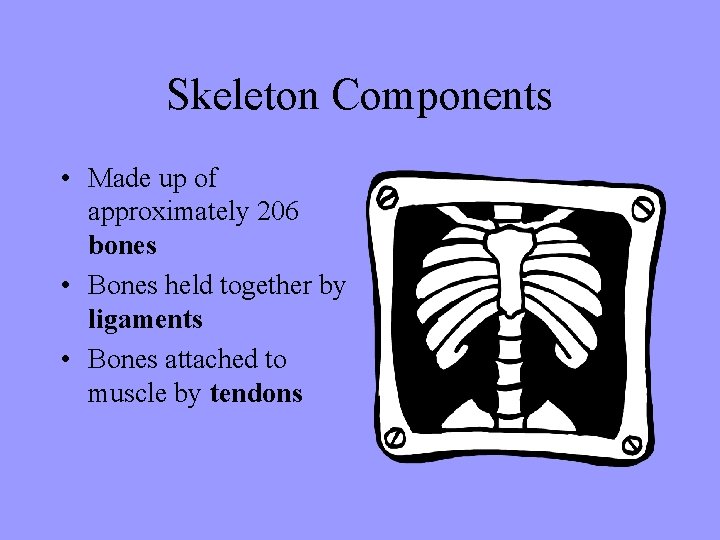
Skeleton Components • Made up of approximately 206 bones • Bones held together by ligaments • Bones attached to muscle by tendons
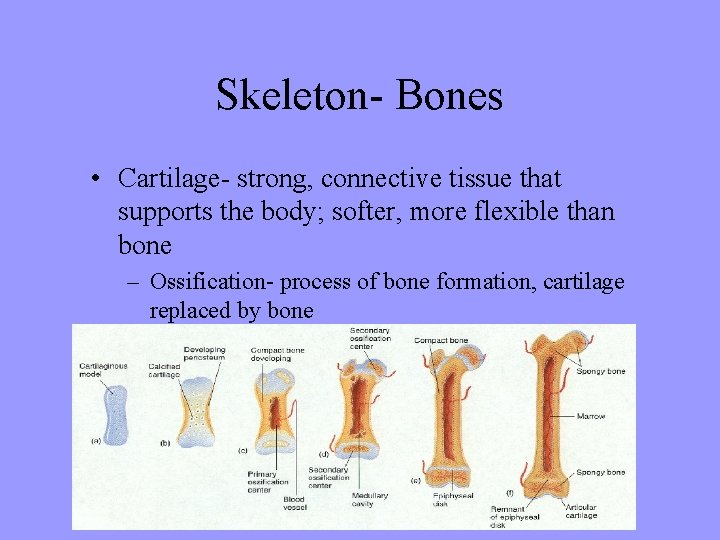
Skeleton- Bones • Cartilage- strong, connective tissue that supports the body; softer, more flexible than bone – Ossification- process of bone formation, cartilage replaced by bone – Cushions bones & Reduces friction
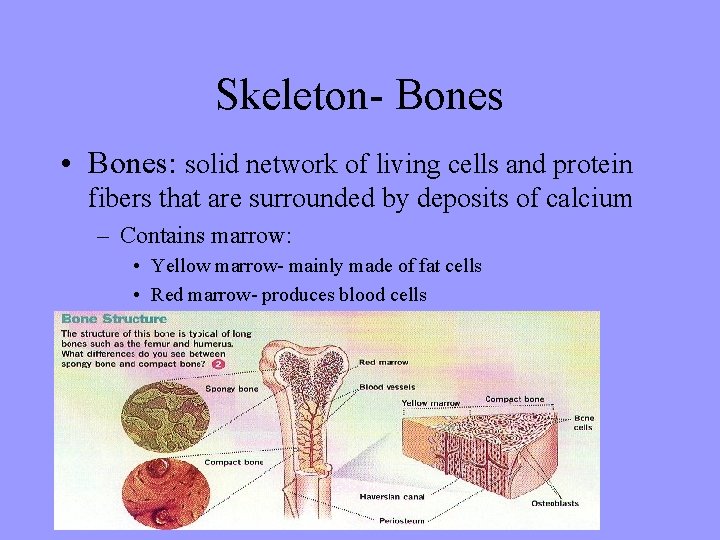
Skeleton- Bones • Bones: solid network of living cells and protein fibers that are surrounded by deposits of calcium – Contains marrow: • Yellow marrow- mainly made of fat cells • Red marrow- produces blood cells
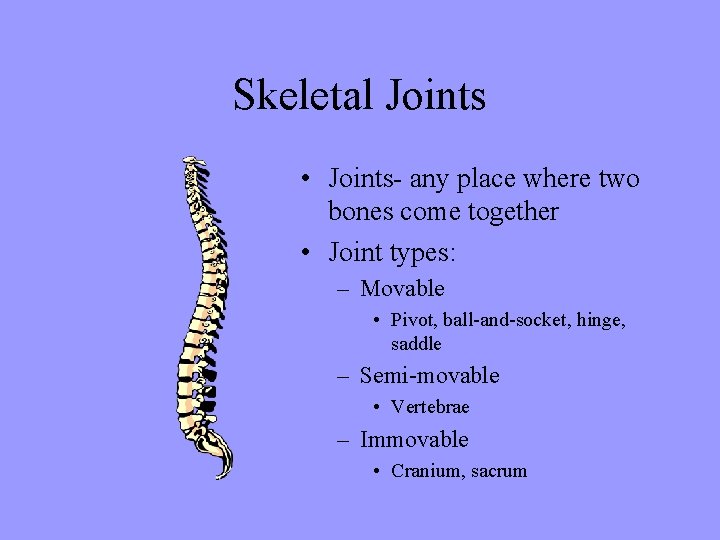
Skeletal Joints • Joints- any place where two bones come together • Joint types: – Movable • Pivot, ball-and-socket, hinge, saddle – Semi-movable • Vertebrae – Immovable • Cranium, sacrum
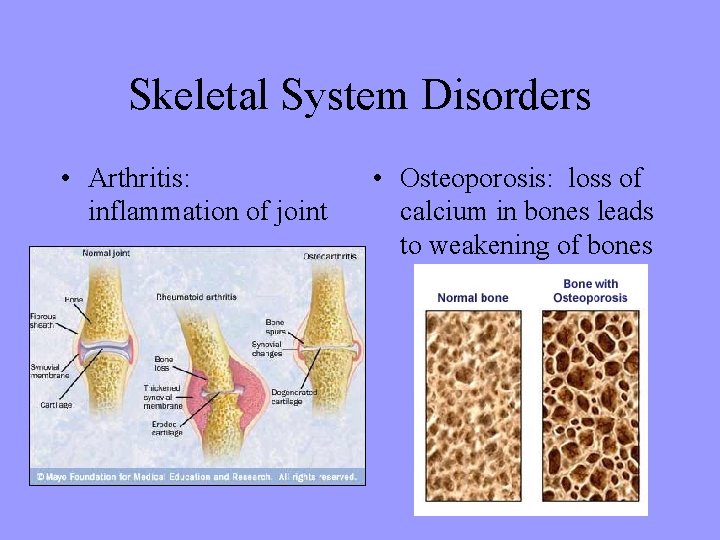
Skeletal System Disorders • Arthritis: inflammation of joint • Osteoporosis: loss of calcium in bones leads to weakening of bones
Check-in • Review bones of body • What holds bone to bone? – Ligaments • What holds muscle to bone? – Tendons
Check-in • What are the functions of the skeletal system? – Shape and support, allows movement, protects tissues and organs, mineral storage, produces blood cells • Process by which cartilage is replaced by bone – Ossification
Check-in • Strong connective tissue more flexible than bone – Cartilage • Place where two bones come together – Joint • Disorder that causes inflammation of joints – Arthritis
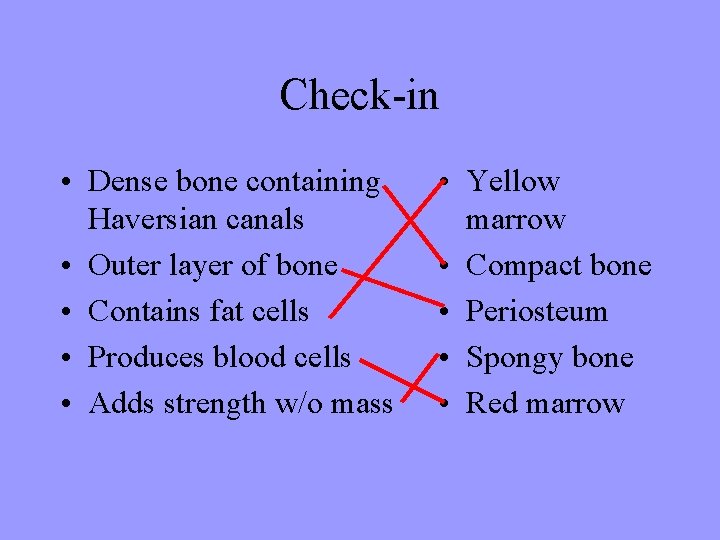
Check-in • Dense bone containing Haversian canals • Outer layer of bone • Contains fat cells • Produces blood cells • Adds strength w/o mass • Yellow marrow • Compact bone • Periosteum • Spongy bone • Red marrow
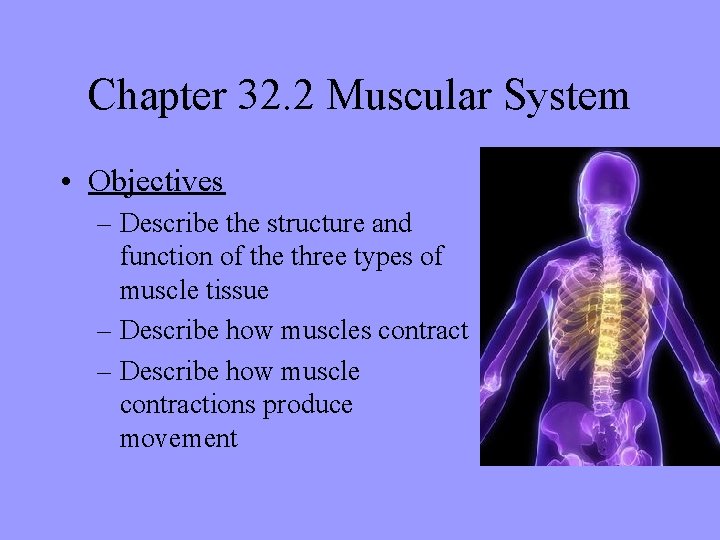
Chapter 32. 2 Muscular System • Objectives – Describe the structure and function of the three types of muscle tissue – Describe how muscles contract – Describe how muscle contractions produce movement
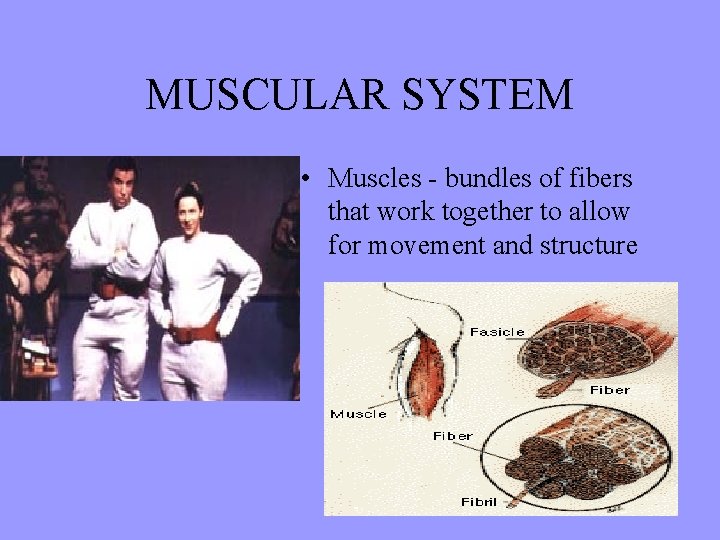
MUSCULAR SYSTEM • Muscles - bundles of fibers that work together to allow for movement and structure
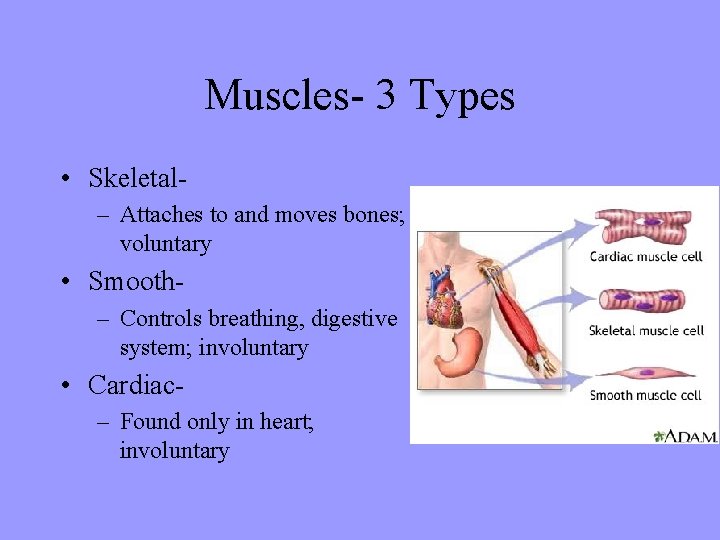
Muscles- 3 Types • Skeletal– Attaches to and moves bones; voluntary • Smooth– Controls breathing, digestive system; involuntary • Cardiac– Found only in heart; involuntary
Check-in • What muscle type(s) is/are striated? – Skeletal and cardiac • What muscle type moves bones? – Skeletal • What muscle type is found in digestive system? – Smooth • What muscle type(s) is/are involuntary? – Smooth and cardiac
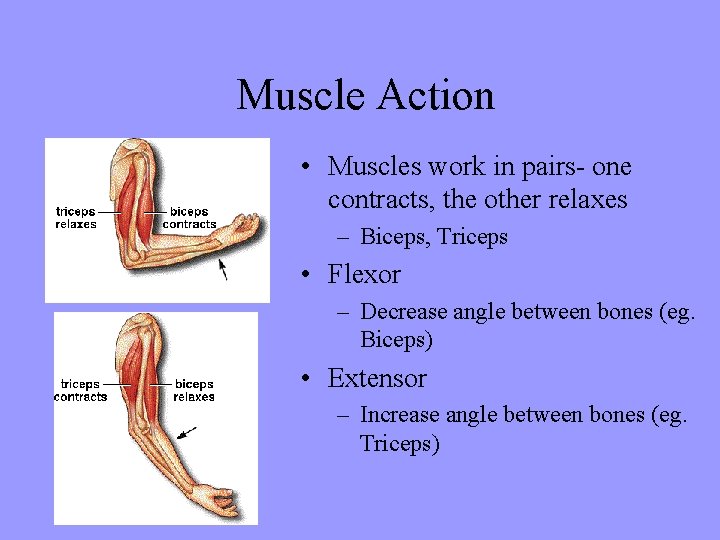
Muscle Action • Muscles work in pairs- one contracts, the other relaxes – Biceps, Triceps • Flexor – Decrease angle between bones (eg. Biceps) • Extensor – Increase angle between bones (eg. Triceps)
How do muscles contract? • Nerve tissue sends message to muscle to contract/relax – Electrochemical signal sent to muscle via nerve – Signal causes release of Calcium ions which react with protein (myosin and actin) in muscle cells – Muscles react by having their long filaments slide past each other – Muscle cells get closer- they contract
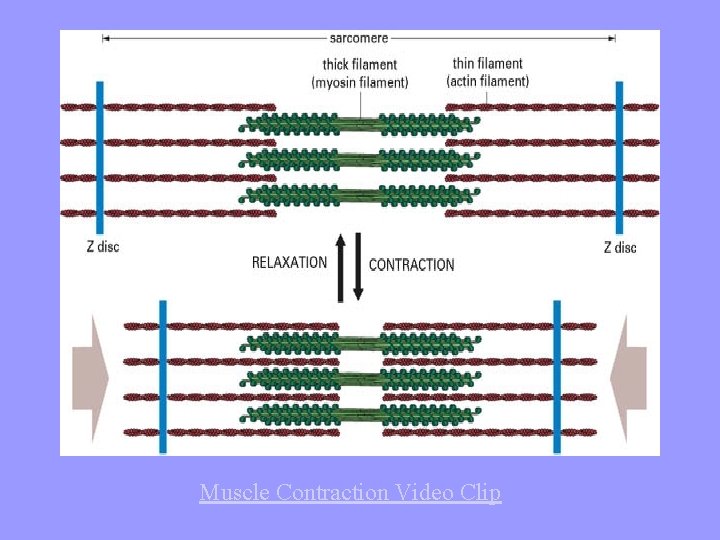
Muscle Contraction Video Clip
Check-in • Type of muscle that decrease angle between bones. – Flexor • Muscle contraction begins with – Nerve impulse • Two proteins found in skeletal muscles – Actin and myosin
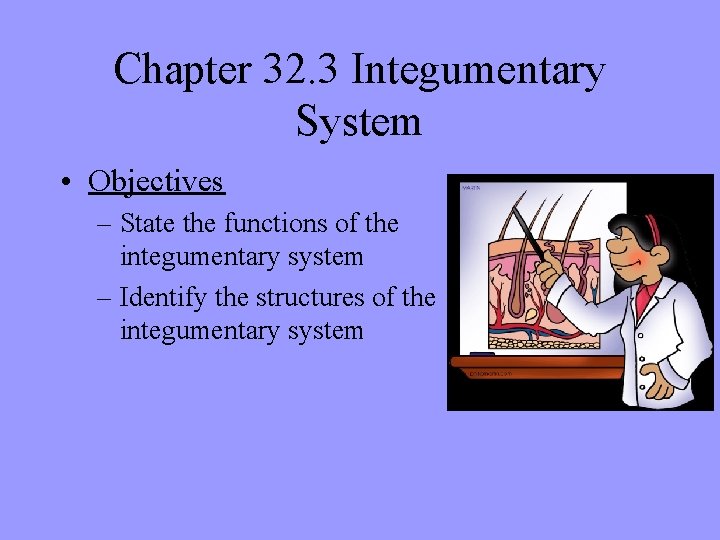
Chapter 32. 3 Integumentary System • Objectives – State the functions of the integumentary system – Identify the structures of the integumentary system
Integumentary System • Function: – Communication of pain, pressure, temperature – Protection of body: • • • Prevents dehydration Regulates body temperature Barrier for disease/infection Covers and holds in organs Removes waste products Barrier for sun’s UV rays
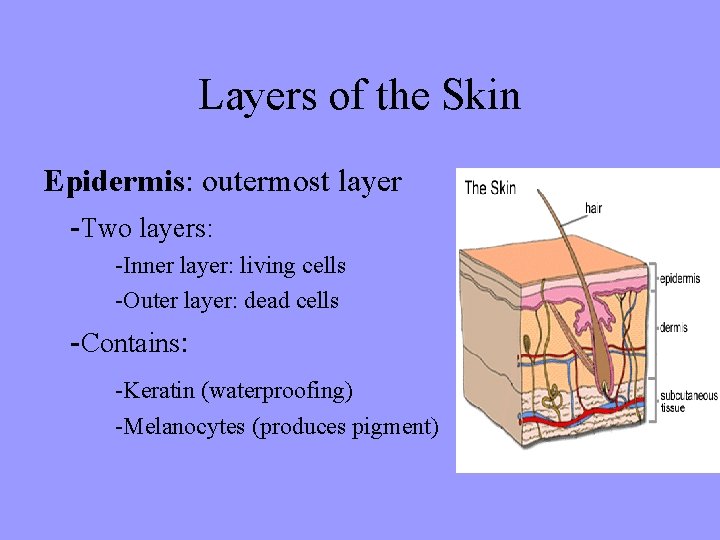
Layers of the Skin Epidermis: outermost layer -Two layers: -Inner layer: living cells -Outer layer: dead cells -Contains: -Keratin (waterproofing) -Melanocytes (produces pigment)
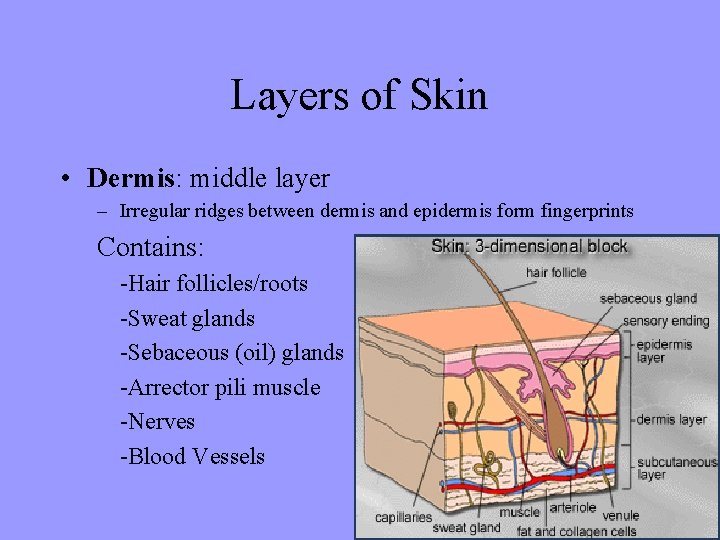
Layers of Skin • Dermis: middle layer – Irregular ridges between dermis and epidermis form fingerprints Contains: -Hair follicles/roots -Sweat glands -Sebaceous (oil) glands -Arrector pili muscle -Nerves -Blood Vessels
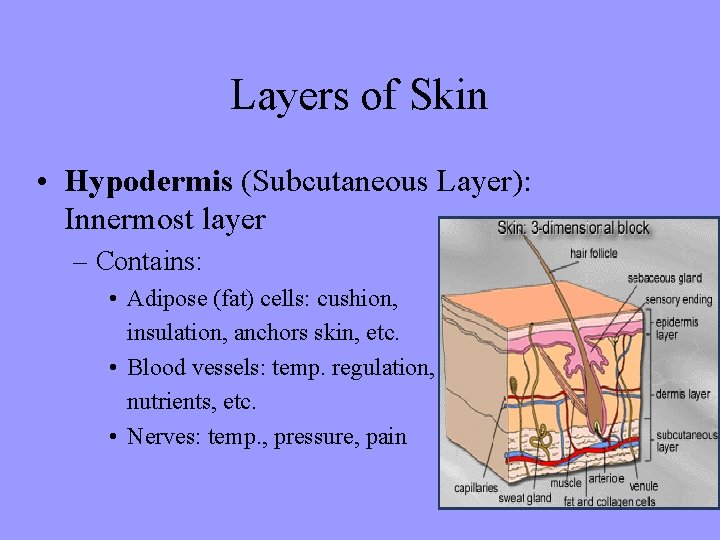
Layers of Skin • Hypodermis (Subcutaneous Layer): Innermost layer – Contains: • Adipose (fat) cells: cushion, insulation, anchors skin, etc. • Blood vessels: temp. regulation, nutrients, etc. • Nerves: temp. , pressure, pain
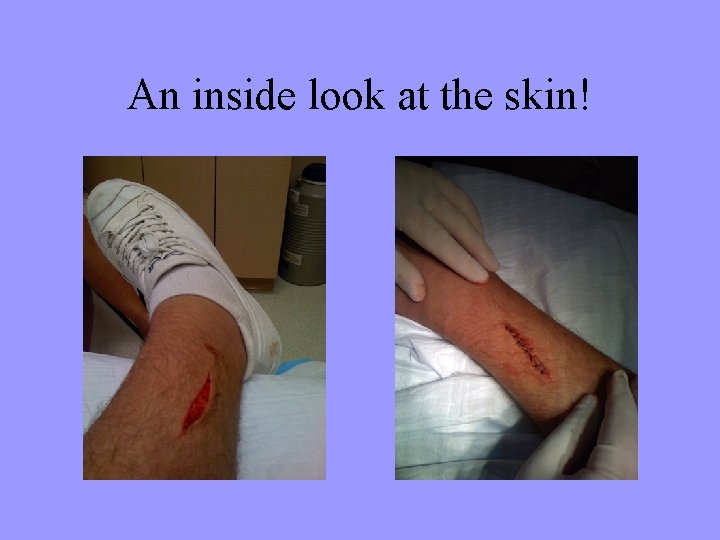
An inside look at the skin!
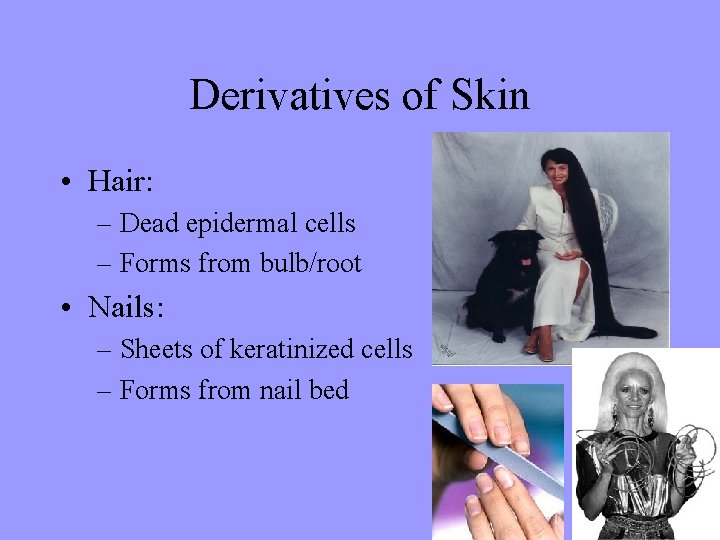
Derivatives of Skin • Hair: – Dead epidermal cells – Forms from bulb/root • Nails: – Sheets of keratinized cells – Forms from nail bed
Check-in • Describe the two layers of the epidermis – Inner layer of living cells and – Outer layer of dead cells • Cell that produces pigment (found in epidermis) – Melanocyte • Protein that waterproofs skin and forms hair and nails – Keratin
Check-in • Describe what the structures of the dermis do when you are hot. – Sweat glands produce sweat – Blood vessels widen to bring more heat to surface of skin • This part of the hypodermis cushions, insulates and helps to anchor skin – Adipose cells
Check-in • Why do we have hair? – Protect head from UV rays, insulation, prevent dirt from entering body • Communicate pain, pressure, temperature to brain – Nerves
- Slides: 30