
The Human Body An Orientation Overview of Anatomy
The Human Body: An Orientation
Overview of Anatomy & Physiology • Anatomy • The science of the structure of living organisms. • ana = apart • tomy = to cut • Physiology • The science of the functioning of living organisms. • physio = nature • ology = the study of
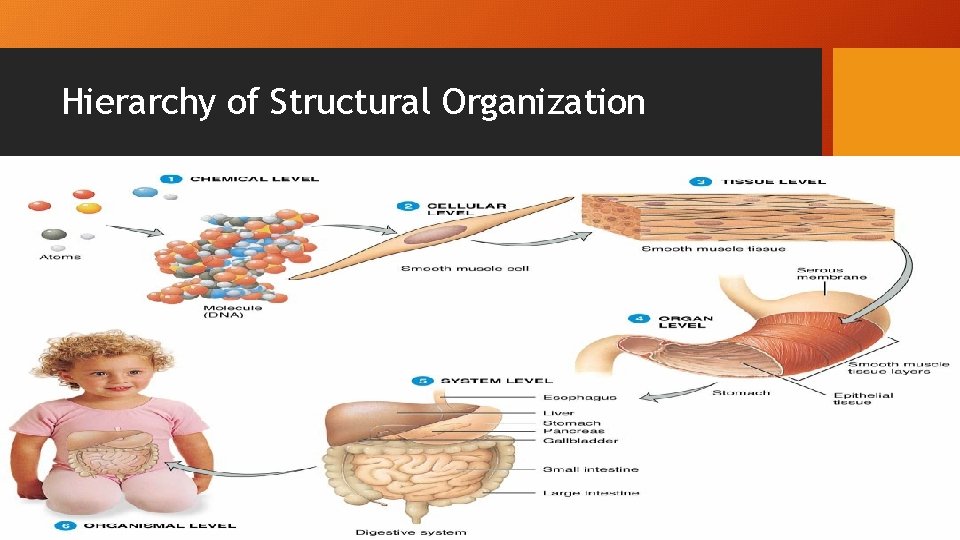
Hierarchy of Structural Organization
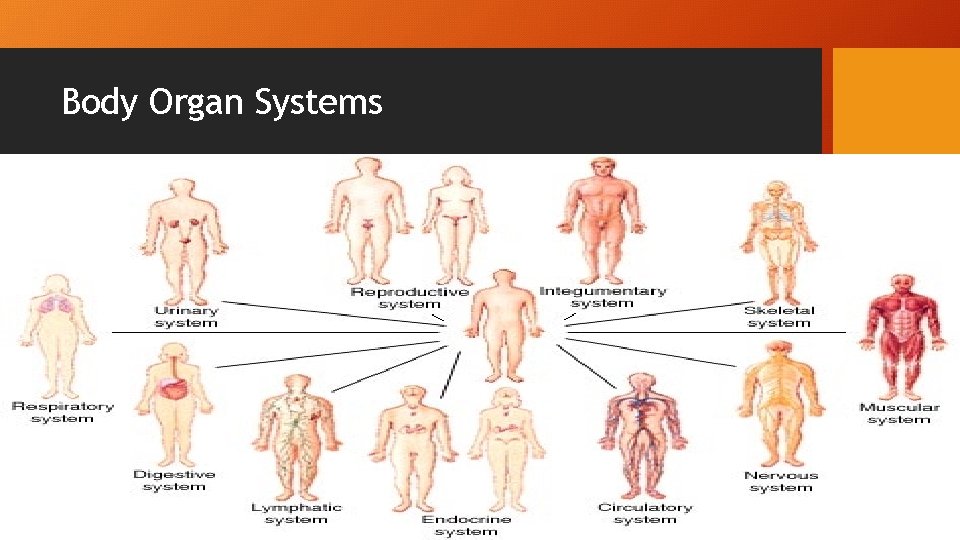
Body Organ Systems
Functional Characteristics • Movement • All activities promoted by the muscular system. • Responsiveness • Sensing changes in the environment and responding to those changes. • Digestion • Breaking down of ingested foodstuffs to simple molecules that can be absorbed by body. • Metabolism • All chemical reactions that occur within body cells.
Functional Characteristics • Excretion • Process of removing wastes from the body. • Reproduction • Formation of offspring. • Growth • Increase in size.

Survival Needs • Factors required to maintain life. • Nutrients used for energy and cell building. • Oxygen required for processing the nutrients. • Water provides the liquid environment for chemical reactions and fluid base for body secretions and excretions. • Body temperature must be maintained for chemical reactions to proceed at life sustaining rates. • Atmospheric pressure is a factor in breathing and the exchange of oxygen and carbon dioxide in the lungs.
Homeostasis • homeo = the same • stasis = standing still • A state of body equilibrium, or the maintenance of a stable internal environment of the body. • The body is said to be in homeostasis when its cells’ needs are adequately met and functional activities are occurring smoothly.

Characteristics of Control Mechanisms • Communication within the body is essential for homeostasis. • The nervous and endocrine (hormones) systems are responsible for this communication. Afferent pathway Efferent pathway
Feedback from Control Center • Negative Feedback • Is response that depresses the whole control mechanism. • The net effect is to decrease the original stimulus or reduce its effects. • Example: Body cells need continuous access to glucose. Blood sugar levels are maintained at a certain level. If levels of glucose are higher the control center sends message to store the excess glucose. Lowering the glucose levels. • Positive Feedback • Is response that enhances the control mechanism. • The net effect is to enhance the original stimulus or increase its effects. • Example: During labor, the body released “oxytocin” that stimulates the muscles that force the baby into the birth canal. This process causes contractions to come more frequently and more powerful, until baby is born.
- Slides: 10