
The Human Body An Orientation An Overview Anatomy
The Human Body: An Orientation
An Overview � Anatomy: “to cut apart”; the study of the structure and shape of the body and body parts and their relationships to one another ◦ Gross anatomy: study of large, easily observable structures; ex: heart, bones ◦ Microscopic anatomy: study of microscopic or very small structures in the body; ex: cells, tissues � Physiology: “to study the nature of”; the study of how the body and its parts work or function ◦ Usually subdivided: neuro-physiology or cardiac physiology �ALWAYS RELATED!
Levels of Structural Organization � Atoms – building blocks of matter � Molecules – water, sugar, proteins, etc. � Cells – smallest unit of all living things � Tissues – group of similar cells that have a common function ◦ Epithelial, connective, muscular, and neural � Organ – structure that is composed of two or more tissue types; ex: heart, kidney � Organ system – group of organs that cooperate to accomplish a common purpose; ex: digestive system � Organism – living body of organ systems
Organ System Overview
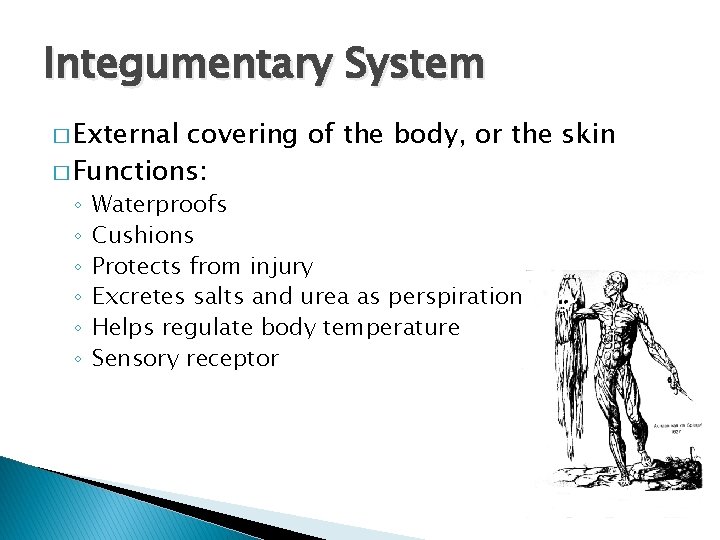
Integumentary System � External covering of the body, or the skin � Functions: ◦ ◦ ◦ Waterproofs Cushions Protects from injury Excretes salts and urea as perspiration Helps regulate body temperature Sensory receptor
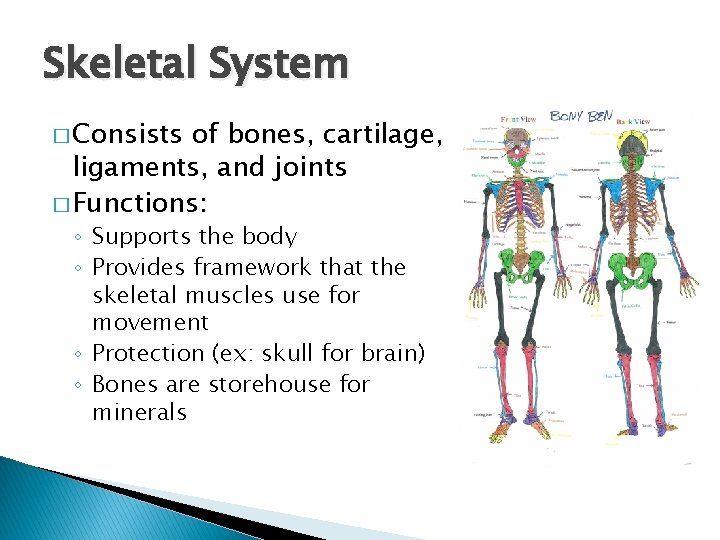
Skeletal System � Consists of bones, cartilage, ligaments, and joints � Functions: ◦ Supports the body ◦ Provides framework that the skeletal muscles use for movement ◦ Protection (ex: skull for brain) ◦ Bones are storehouse for minerals
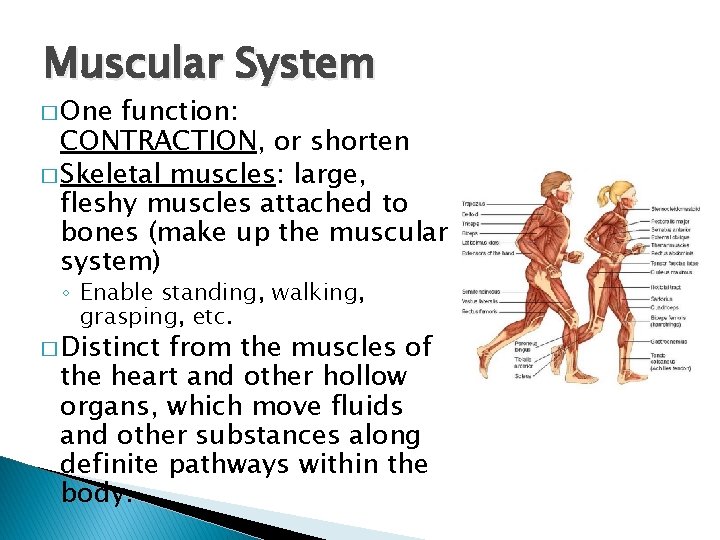
Muscular System � One function: CONTRACTION, or shorten � Skeletal muscles: large, fleshy muscles attached to bones (make up the muscular system) ◦ Enable standing, walking, grasping, etc. � Distinct from the muscles of the heart and other hollow organs, which move fluids and other substances along definite pathways within the body.
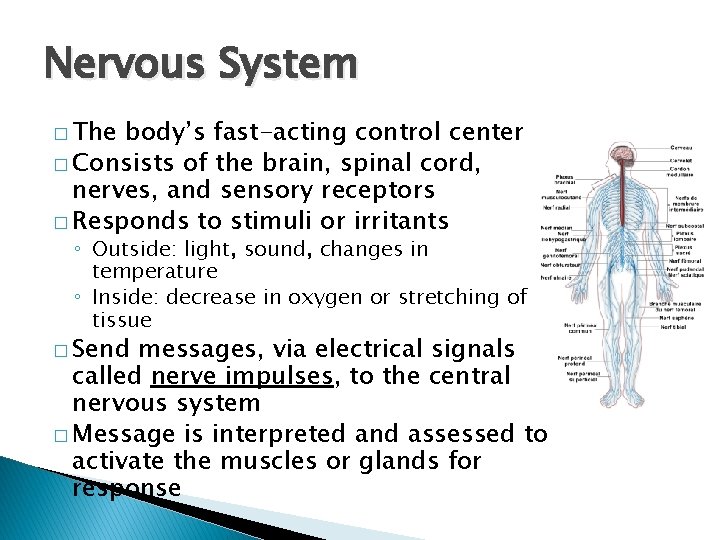
Nervous System � The body’s fast-acting control center � Consists of the brain, spinal cord, nerves, and sensory receptors � Responds to stimuli or irritants ◦ Outside: light, sound, changes in temperature ◦ Inside: decrease in oxygen or stretching of tissue � Send messages, via electrical signals called nerve impulses, to the central nervous system � Message is interpreted and assessed to activate the muscles or glands for response
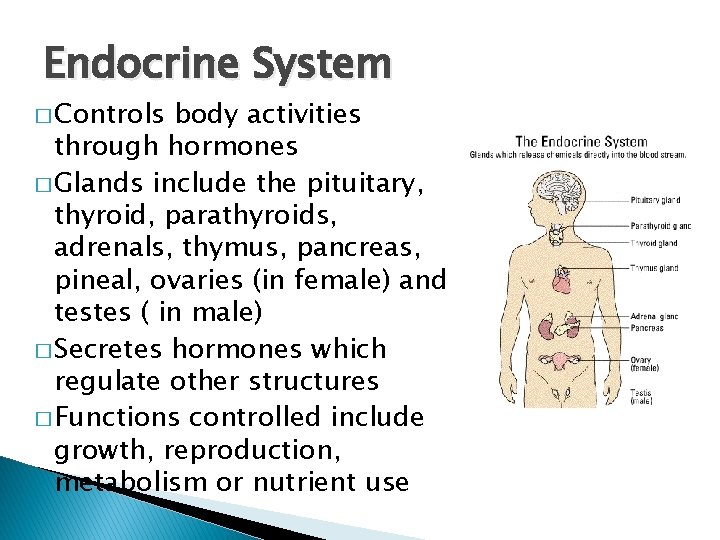
Endocrine System � Controls body activities through hormones � Glands include the pituitary, thyroid, parathyroids, adrenals, thymus, pancreas, pineal, ovaries (in female) and testes ( in male) � Secretes hormones which regulate other structures � Functions controlled include growth, reproduction, metabolism or nutrient use
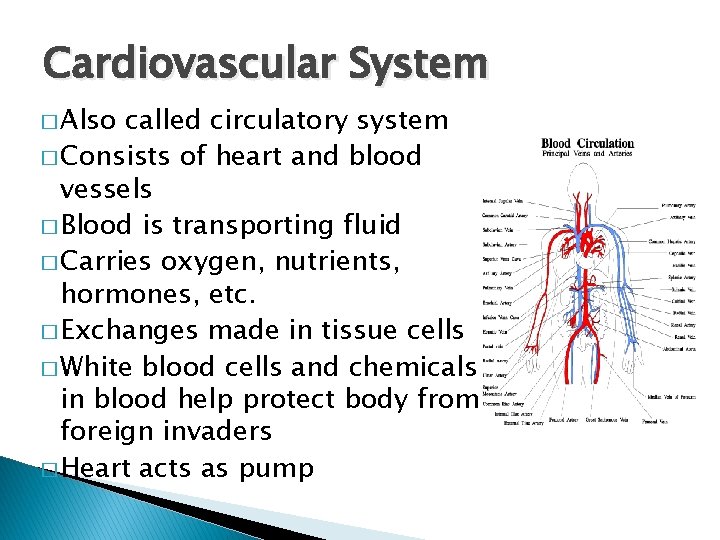
Cardiovascular System � Also called circulatory system � Consists of heart and blood vessels � Blood is transporting fluid � Carries oxygen, nutrients, hormones, etc. � Exchanges made in tissue cells � White blood cells and chemicals in blood help protect body from foreign invaders � Heart acts as pump
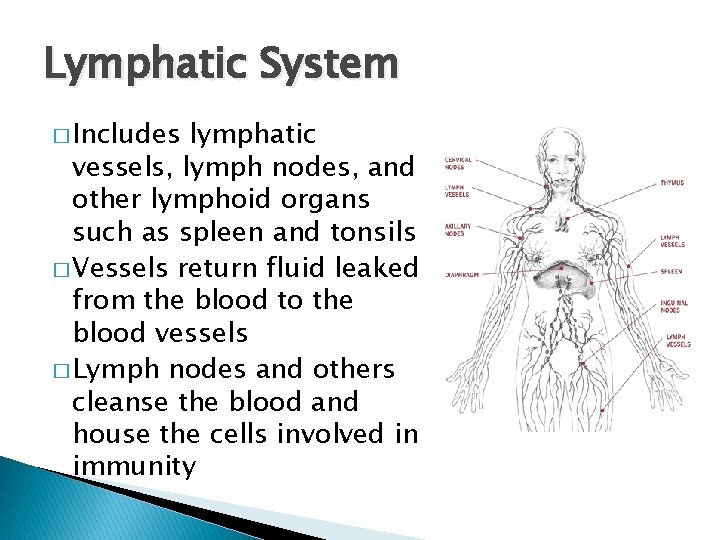
Lymphatic System � Includes lymphatic vessels, lymph nodes, and other lymphoid organs such as spleen and tonsils � Vessels return fluid leaked from the blood to the blood vessels � Lymph nodes and others cleanse the blood and house the cells involved in immunity
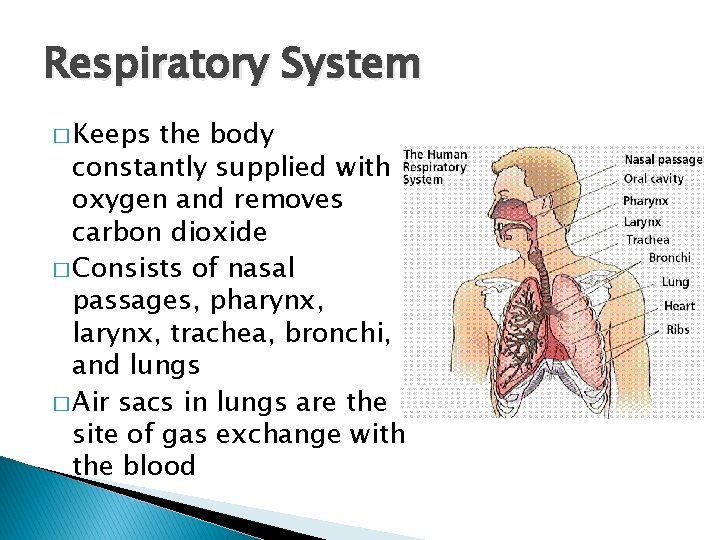
Respiratory System � Keeps the body constantly supplied with oxygen and removes carbon dioxide � Consists of nasal passages, pharynx, larynx, trachea, bronchi, and lungs � Air sacs in lungs are the site of gas exchange with the blood
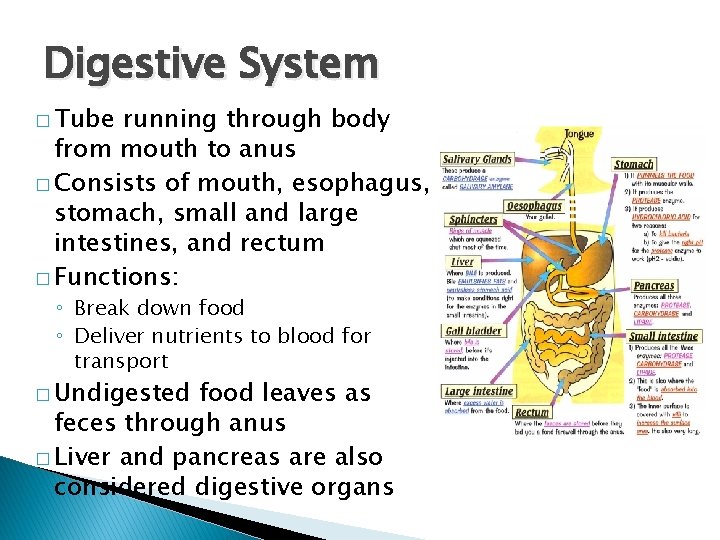
Digestive System � Tube running through body from mouth to anus � Consists of mouth, esophagus, stomach, small and large intestines, and rectum � Functions: ◦ Break down food ◦ Deliver nutrients to blood for transport � Undigested food leaves as feces through anus � Liver and pancreas are also considered digestive organs
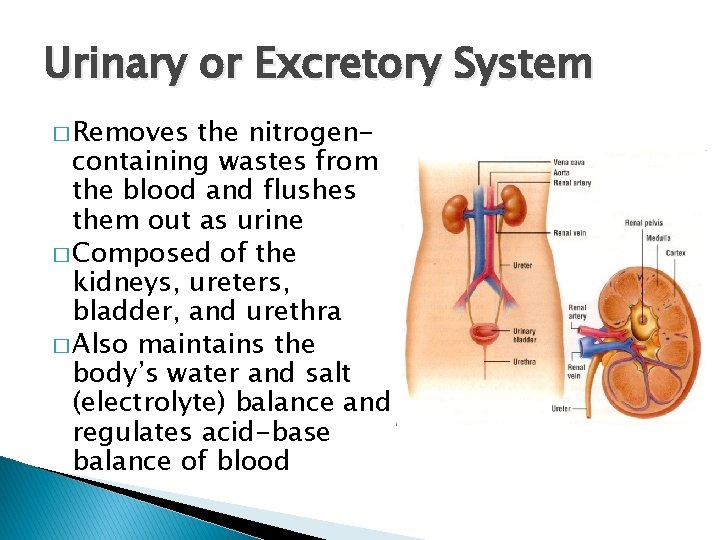
Urinary or Excretory System � Removes the nitrogencontaining wastes from the blood and flushes them out as urine � Composed of the kidneys, ureters, bladder, and urethra � Also maintains the body’s water and salt (electrolyte) balance and regulates acid-base balance of blood
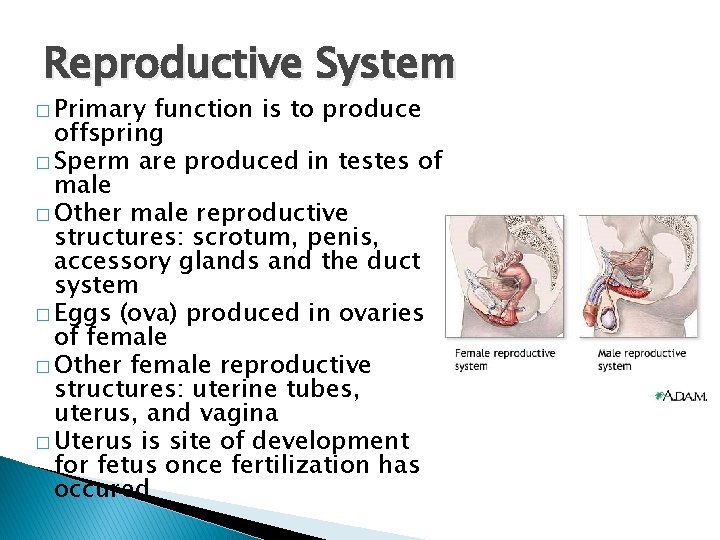
Reproductive System � Primary function is to produce offspring � Sperm are produced in testes of male � Other male reproductive structures: scrotum, penis, accessory glands and the duct system � Eggs (ova) produced in ovaries of female � Other female reproductive structures: uterine tubes, uterus, and vagina � Uterus is site of development for fetus once fertilization has occured
Maintaining Life systems do not work in isolation; instead, they work together to promote the well-being of the entire body. �Organ
Maintaining Life � Each contributes to the 8 necessary life functions: 1) Maintaining boundaries: “inside” remains distinct from “outside”; membranes, skin 2) Movement: all the activities promoted by muscular system 3) Responsiveness: also called irritability; ability to sense changes in environment; nervous system 4) Digestion: process of breaking down ingested food into simple molecules; digestive system and cardiovascular system
Maintaining Life contd. 5) Metabolism: all chemical reactions that occur within the body cells; digestive, respiratory, cardiovascular, and endocrine systems 6) Excretion: removing excreta, or wastes, from the body; digestive, urinary, and lymphatic systems 7) Reproduction: production of offspring, and can happen at the cellular level or organismal level; reproductive system and endocrine system 8) Growth: increase in size or number of cells; reproductive and endocrine systems
Survival Needs � In order for life to be maintained several factors must be available 1. Nutrients: obtained through diet; contain the chemicals used for energy and cell building; ex: carbohydrates, proteins, fats, minerals and vitamins 2. Oxygen: chemical reactions that release energy from food require oxygen; 20% of air we breathe is oxygen 3. Water: 60 – 80% of body weight; single most abundant chemical substance in the body; provides fluid base for all secretions and excretions 4. Body Temperature: must be maintained at 37ºC (98ºF); chemical reactions depend on it 5. Atmospheric Pressure: force exerted on the surface of the body by the weight of air
Homeostasis � The body’s ability to maintain relatively stable internal conditions even though the outside world is continuously changing � A dynamic state of equilibrium, or a balance in which internal conditions change and vary but always within relatively narrow limits � Vital for proper body system function � All communication for homeostasis done through nervous and endocrine systems
Control Mechanisms � Three components: ◦ Receptor: type of sensor that monitors and responds to changes in the environment, called stimuli, and sends info to control center ◦ Control center: analyzes incoming data from receptor and determines appropriate response or course of action ◦ Effector: receives response from control center and provides response to stimulus � Two pathways: ◦ Afferent: receptor to control center (approaching) ◦ Efferent: control center to effector (exiting)
Feedback Systems � Results of response then feedback to influence the stimulus, either by depressing it (negative feedback) or enhancing it (positive feedback) � Most are negative � Negative feedback mechanisms are meant to shut off original stimulus or reduce intensity; ex: home heating system w/thermostat ◦ Body temp. regulation, heart rate, blood pressure, breathing rate, blood levels of glucose, oxygen, carbon dioxide, and minerals
Feedback Systems � Positive feedback systems tend to increase the original disturbance (stimulus) and to push the variable farther from its original value � Rare in the body � Control infrequent events that occur explosively and do not require continuous adjustments � Ex: blood clotting and the birth of a baby
The Language of Anatomy Directional terms
Anatomical Position � Initial reference point � Body erect with feet parallel and the arms hanging at the sides with the palms facing forward
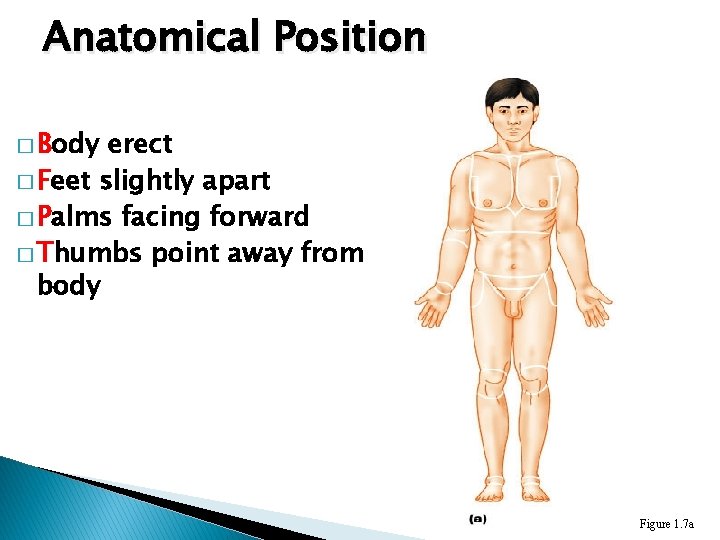
Anatomical Position � Body erect � Feet slightly apart � Palms facing forward � Thumbs point away from body Figure 1. 7 a
Directional Terms � Superior and inferior – toward and away from the head, respectively � Anterior and posterior – toward the front and back of the body � Medial, lateral, and intermediate – toward the midline, away from the midline, and between a more medial and lateral structure
Directional Terms � Proximal and distal – closer to and farther from the origin of the body � Superficial and deep – toward and away from the body surface
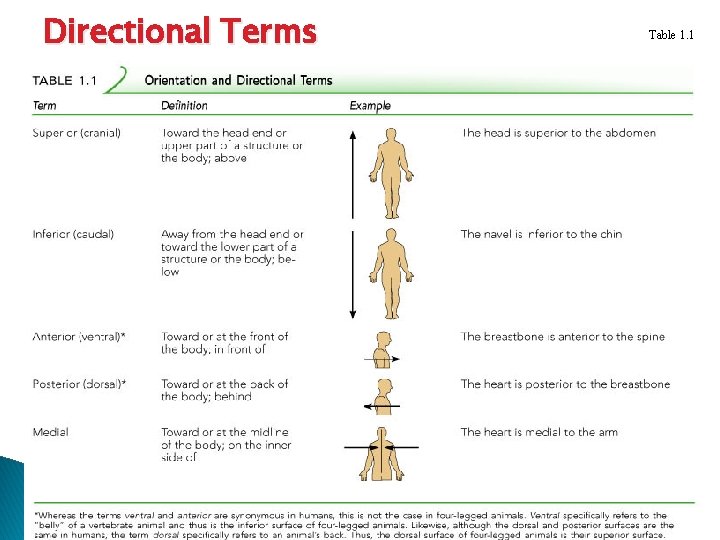
Directional Terms Table 1. 1
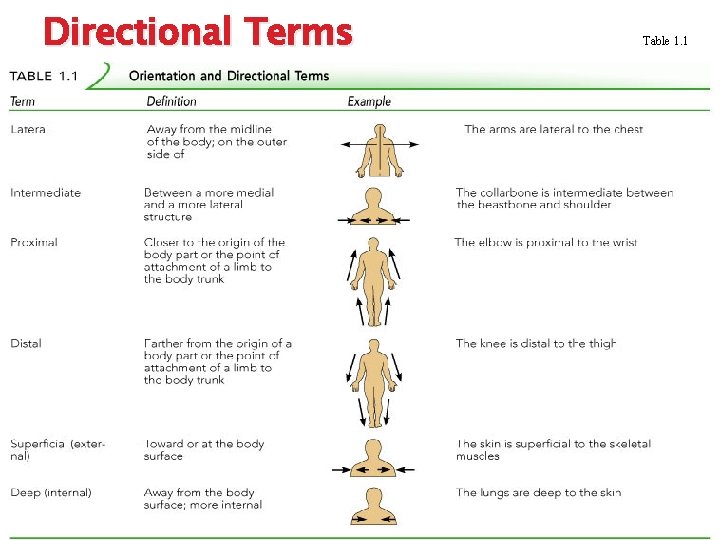
Directional Terms Table 1. 1
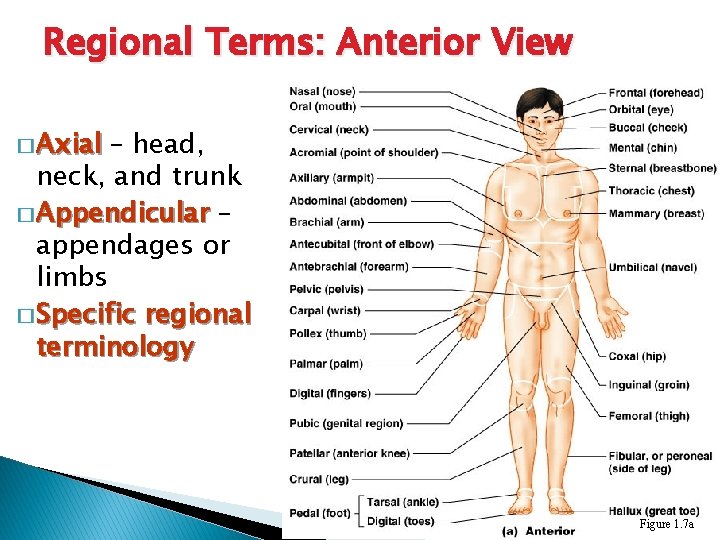
Regional Terms: Anterior View � Axial – head, neck, and trunk � Appendicular – appendages or limbs � Specific regional terminology Figure 1. 7 a
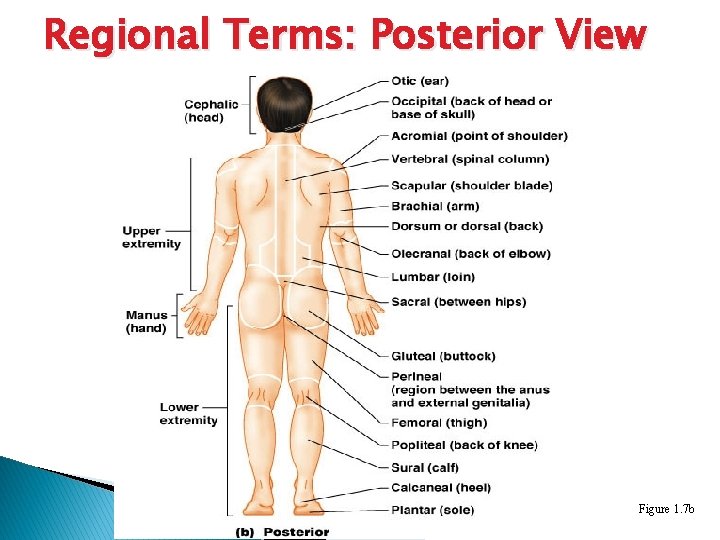
Regional Terms: Posterior View Figure 1. 7 b
Body Planes � Sagittal – divides the body into right and left parts � Midsagittal or medial – sagittal plane that lies on the midline � Frontal or coronal – divides the body into anterior and posterior parts � Transverse or horizontal (cross section) – divides the body into superior and inferior parts � Oblique section – cuts made diagonally
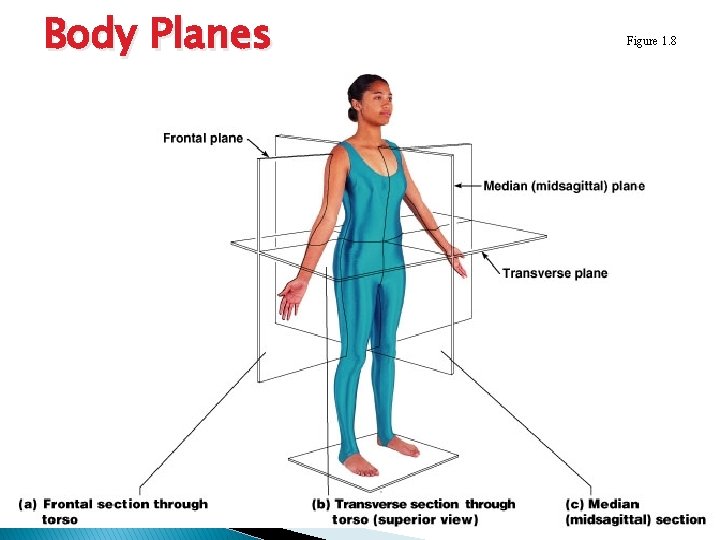
Body Planes Figure 1. 8
Body Cavities � Dorsal cavity protects the nervous system, and is divided into two subdivisions ◦ Cranial cavity is within the skull and encases the brain ◦ Vertebral cavity runs within the vertebral column and encases the spinal cord � Ventral cavity houses the internal organs (viscera), and is divided into two subdivisions: - Thoracic and Abdominopelvic cavities
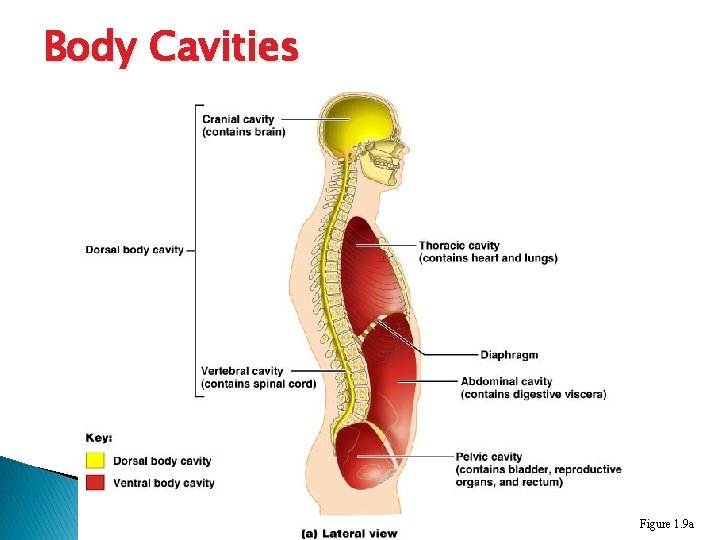
Body Cavities Figure 1. 9 a
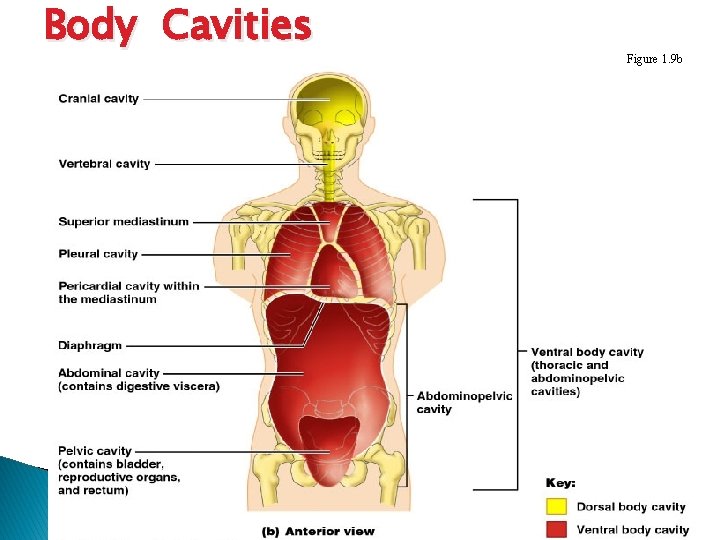
Body Cavities Figure 1. 9 b
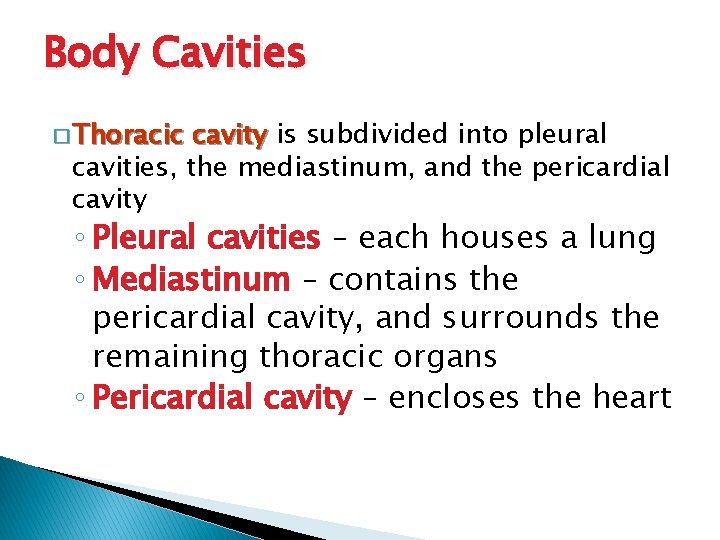
Body Cavities � Thoracic cavity is subdivided into pleural cavities, the mediastinum, and the pericardial cavity ◦ Pleural cavities – each houses a lung ◦ Mediastinum – contains the pericardial cavity, and surrounds the remaining thoracic organs ◦ Pericardial cavity – encloses the heart
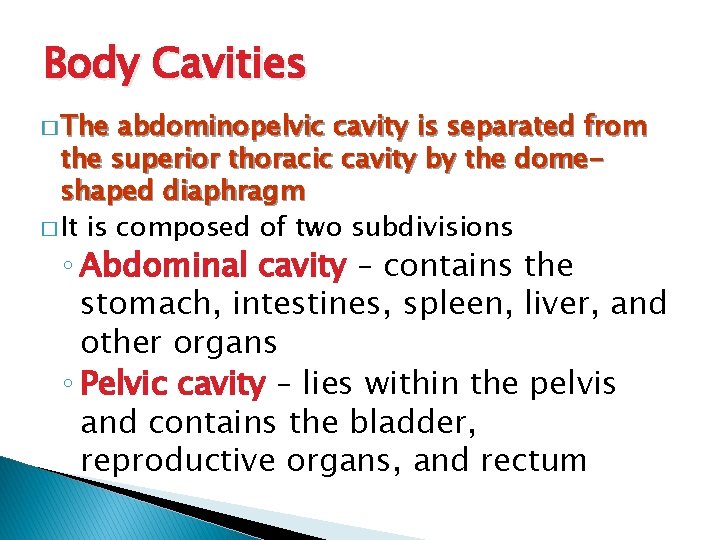
Body Cavities � The abdominopelvic cavity is separated from the superior thoracic cavity by the domeshaped diaphragm � It is composed of two subdivisions ◦ Abdominal cavity – contains the stomach, intestines, spleen, liver, and other organs ◦ Pelvic cavity – lies within the pelvis and contains the bladder, reproductive organs, and rectum
Ventral Body Cavity Membranes � Parietal serosa lines internal body walls � Visceral serosa covers the internal organs � Serous fluid separates the serosae
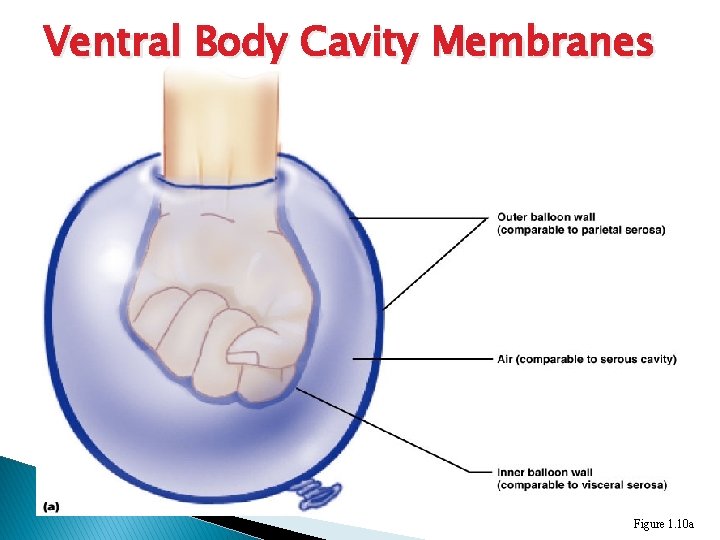
Ventral Body Cavity Membranes Figure 1. 10 a
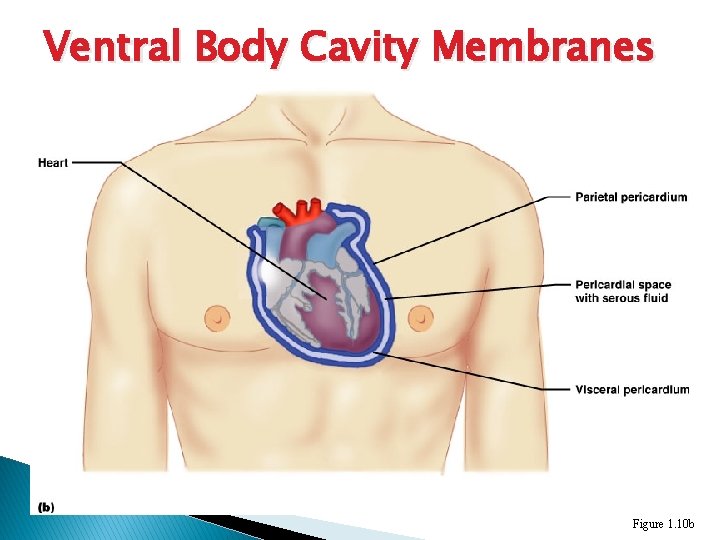
Ventral Body Cavity Membranes Figure 1. 10 b
Other Body Cavities � Oral and digestive – mouth and cavities of the digestive organs � Nasal –located within and posterior to the nose � Orbital – house the eyes � Middle ear – contain bones (ossicles) that transmit sound vibrations � Synovial – joint cavities
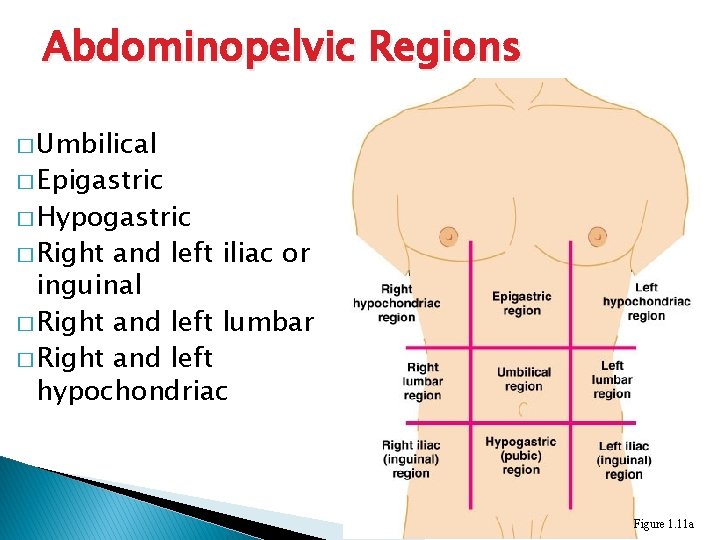
Abdominopelvic Regions � Umbilical � Epigastric � Hypogastric � Right and left iliac or inguinal � Right and left lumbar � Right and left hypochondriac Figure 1. 11 a
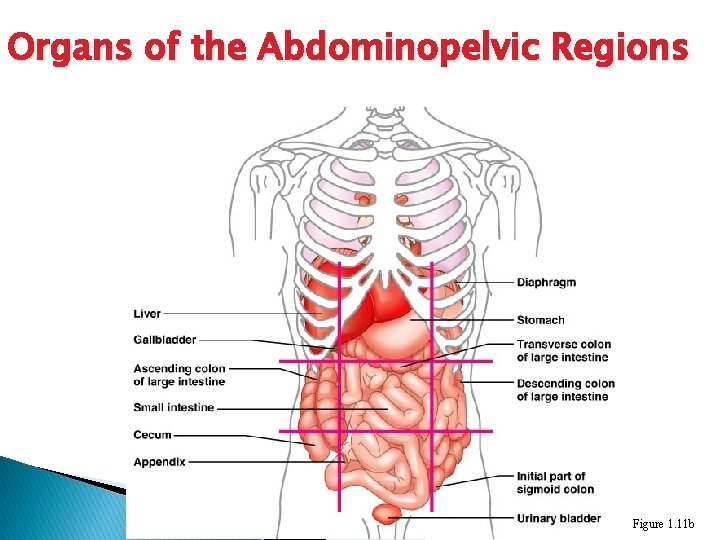
Organs of the Abdominopelvic Regions Figure 1. 11 b
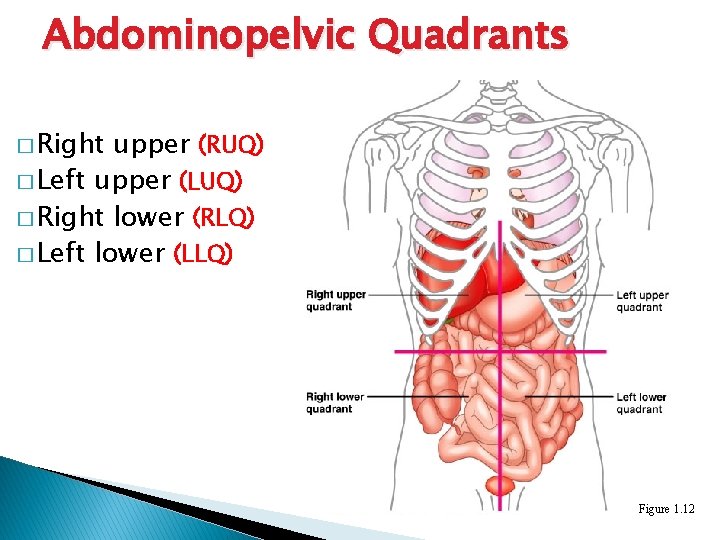
Abdominopelvic Quadrants � Right upper (RUQ) � Left upper (LUQ) � Right lower (RLQ) � Left lower (LLQ) Figure 1. 12
- Slides: 46