
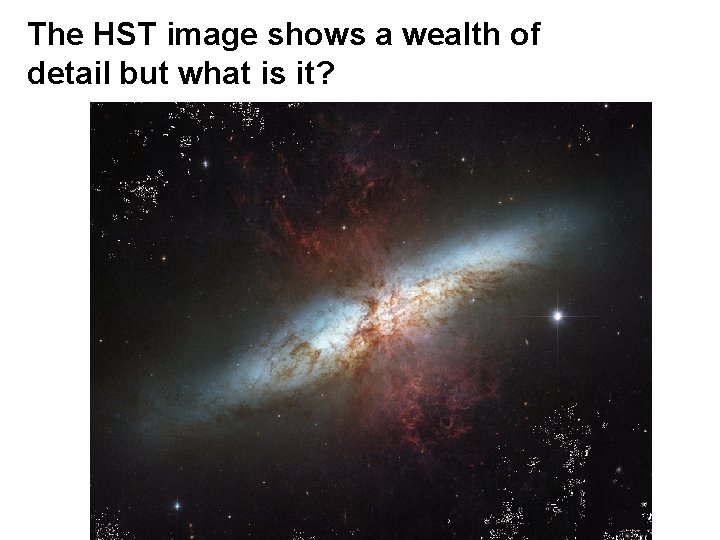
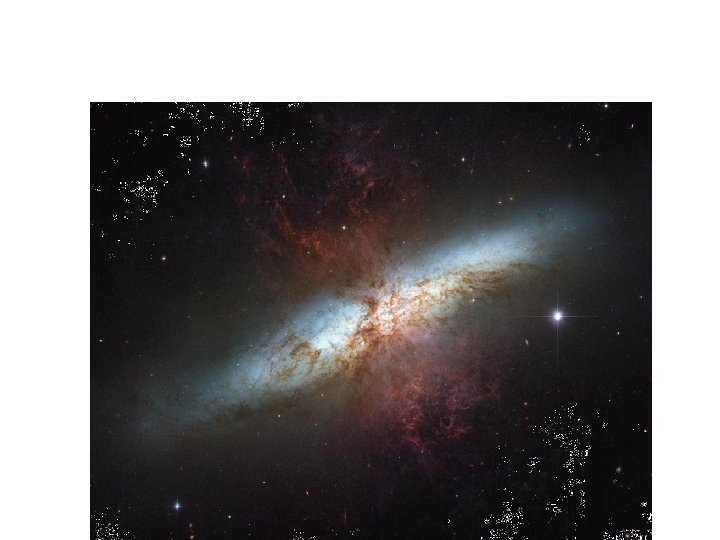
The HST image shows a wealth of detail
- Slides: 9
The HST image shows a wealth of detail but what is it?
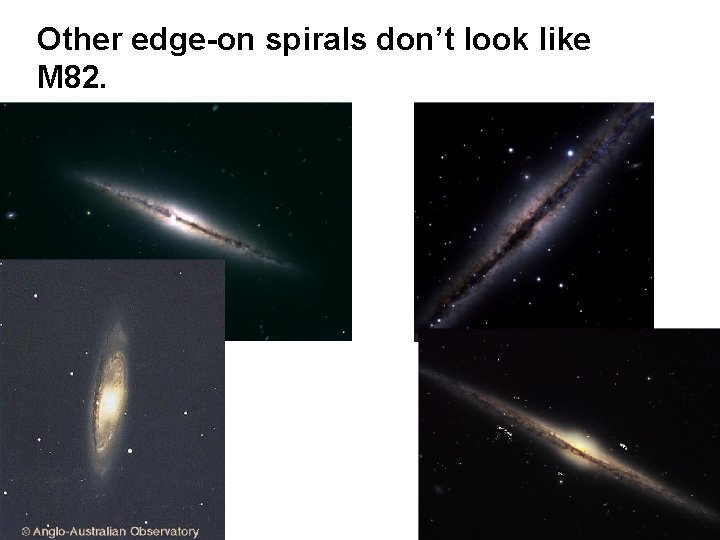
Other edge-on spirals don’t look like M 82.
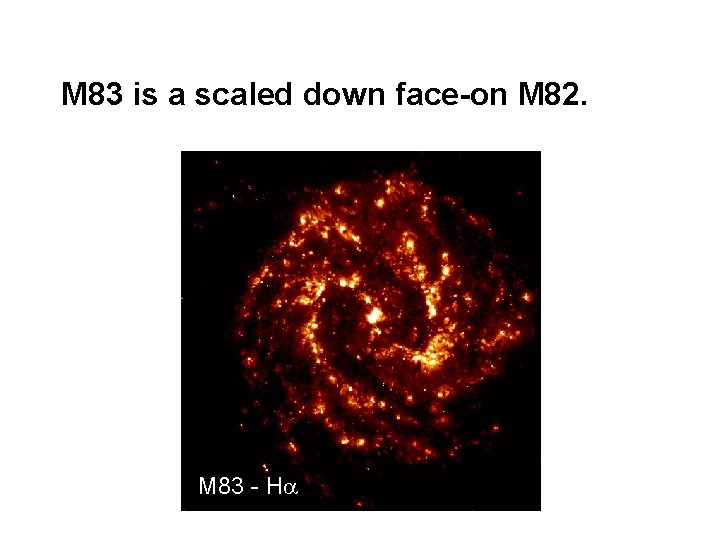
M 83 is a scaled down face-on M 82. M 83 - H
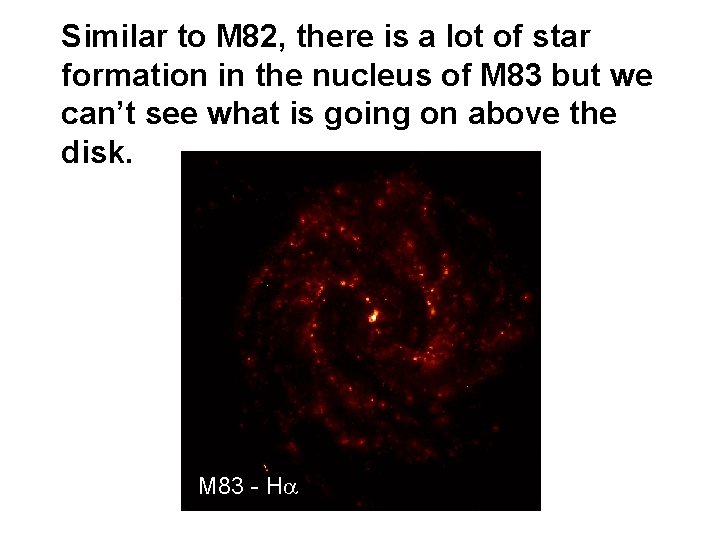
Similar to M 82, there is a lot of star formation in the nucleus of M 83 but we can’t see what is going on above the disk. M 83 - H
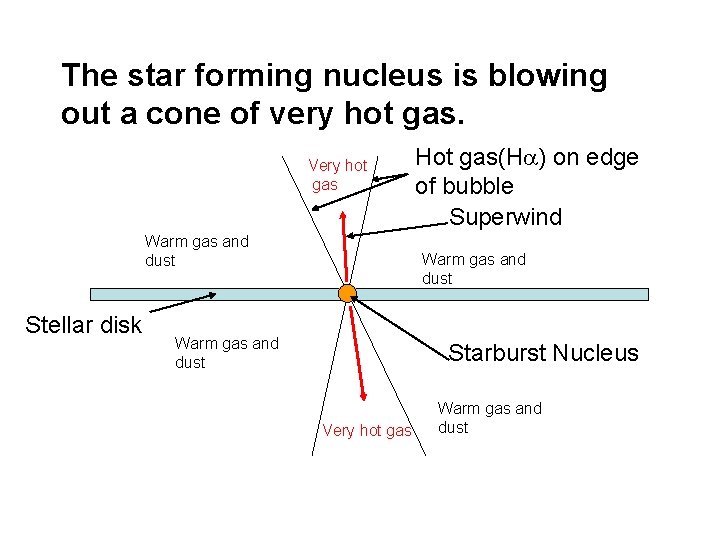
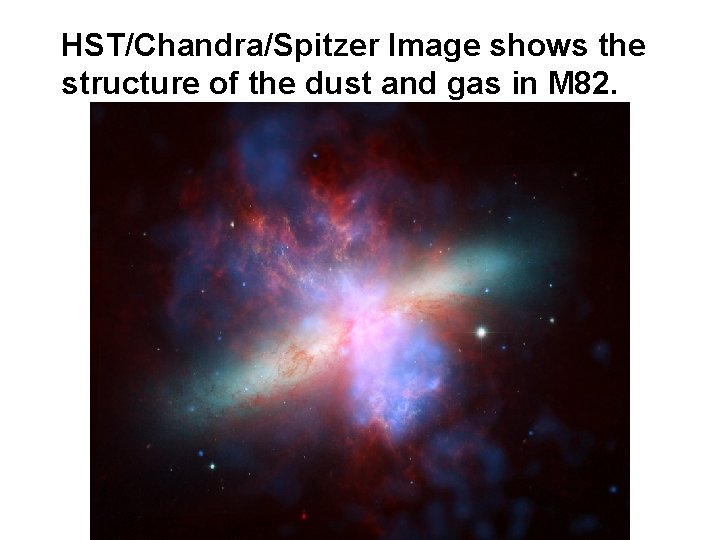
The star forming nucleus is blowing out a cone of very hot gas. Very hot gas Warm gas and dust Stellar disk Hot gas(H ) on edge of bubble Superwind Warm gas and dust Starburst Nucleus Very hot gas Warm gas and dust
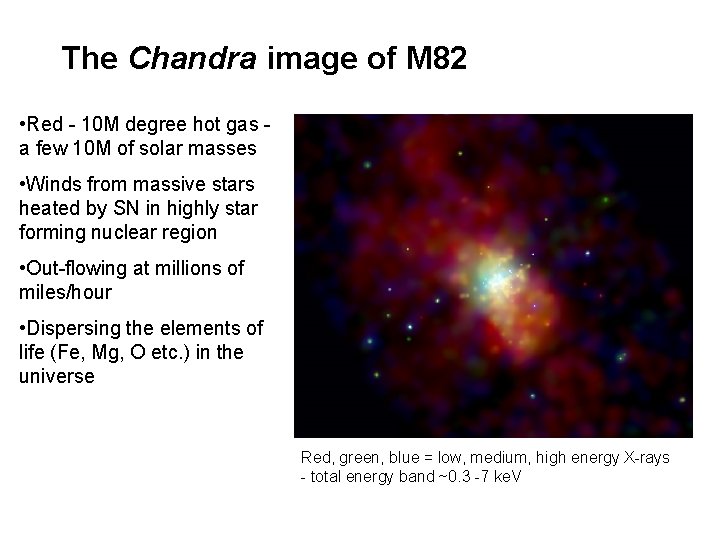
The Chandra image of M 82 • Red - 10 M degree hot gas a few 10 M of solar masses • Winds from massive stars heated by SN in highly star forming nuclear region • Out-flowing at millions of miles/hour • Dispersing the elements of life (Fe, Mg, O etc. ) in the universe Red, green, blue = low, medium, high energy X-rays - total energy band ~0. 3 -7 ke. V
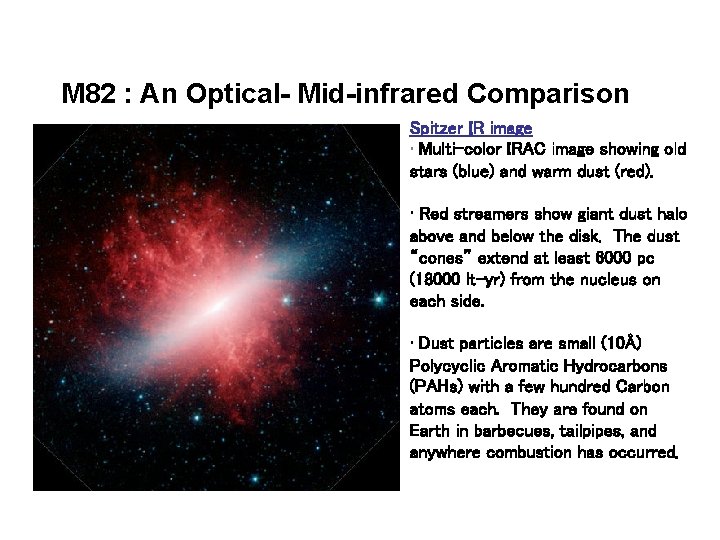
M 82 : An Optical- Mid-infrared Comparison Spitzer IR image • Multi-color IRAC image showing old stars (blue) and warm dust (red). • Red streamers show giant dust halo above and below the disk. The dust “cones” extend at least 6000 pc (18000 lt-yr) from the nucleus on each side. • Dust particles are small (10Å) Polycyclic Aromatic Hydrocarbons (PAHs) with a few hundred Carbon atoms each. They are found on Earth in barbecues, tailpipes, and anywhere combustion has occurred.
HST/Chandra/Spitzer Image shows the structure of the dust and gas in M 82.