
The Homefront World War II in America US







- Slides: 16
The Homefront World War II in America US History – Unit #8
• SSUSH 19 Examine the origins, major developments, and the domestic impact of World War II, including the growth of the federal government. • d. Investigate the domestic impact of the war including war mobilization, as indicated by rationing, wartime conversion, and the role of women and African Americans or Blacks. • e. Examine Roosevelt’s use of executive powers including the integration of defense industries and the internment of Japanese-Americans. GSE – The Standards
The Essential Question: What was the domestic impact of WWII?
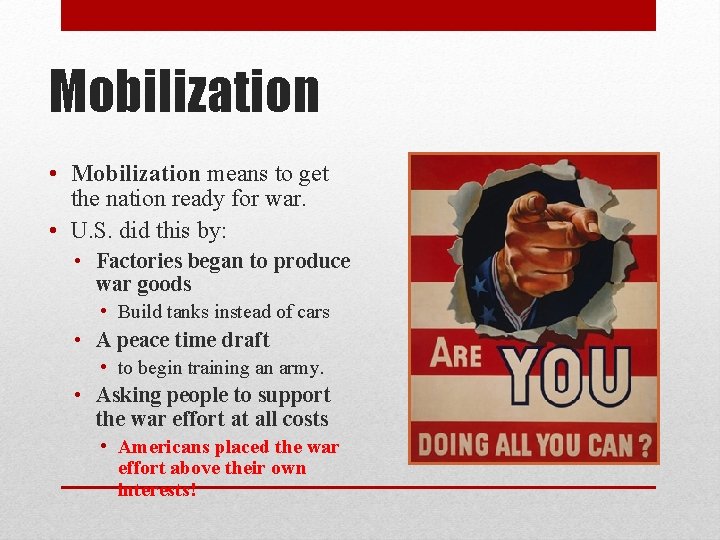
Mobilization • Mobilization means to get the nation ready for war. • U. S. did this by: • Factories began to produce war goods • Build tanks instead of cars • A peace time draft • to begin training an army. • Asking people to support the war effort at all costs • Americans placed the war effort above their own interests!
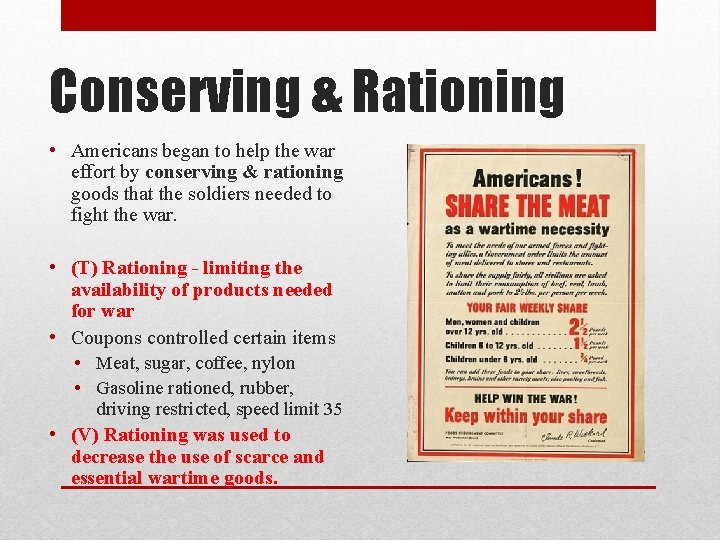
Conserving & Rationing • Americans began to help the war effort by conserving & rationing goods that the soldiers needed to fight the war. • (T) Rationing - limiting the availability of products needed for war • Coupons controlled certain items • Meat, sugar, coffee, nylon • Gasoline rationed, rubber, driving restricted, speed limit 35 • (V) Rationing was used to decrease the use of scarce and essential wartime goods.
• Victory gardens - planted to produce food for the war effort. • Scrap drives - collecting rubber, tin, aluminum, steel, oil • Taxes raised - Americans pay higher taxes to fund war • War bonds - sold by gov’t to raise the rest of war cost • V for Victory - Patriotism at all-time high. Americans felt this a “just” war.
on the home front • Doing without, rationing and conserving of items for the war effort was not hard for Americans because they had just come through 10 years of doing without due to the Great Depression.
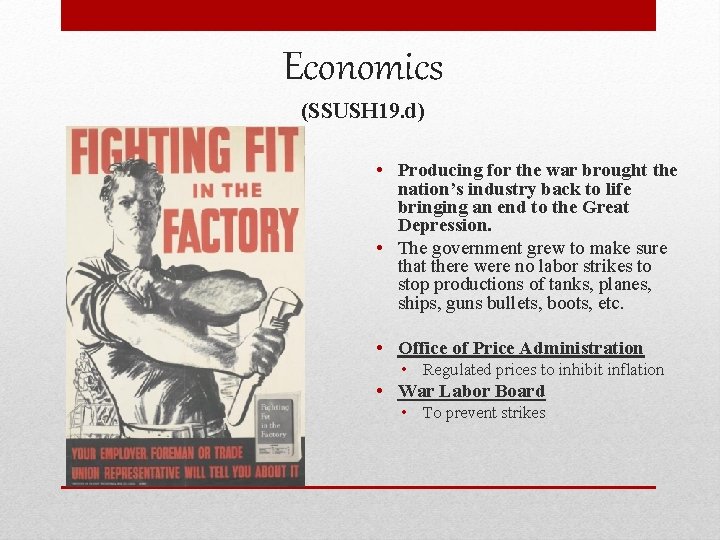
Economics (SSUSH 19. d) • Producing for the war brought the nation’s industry back to life bringing an end to the Great Depression. • The government grew to make sure that there were no labor strikes to stop productions of tanks, planes, ships, guns bullets, boots, etc. • Office of Price Administration • Regulated prices to inhibit inflation • War Labor Board • To prevent strikes
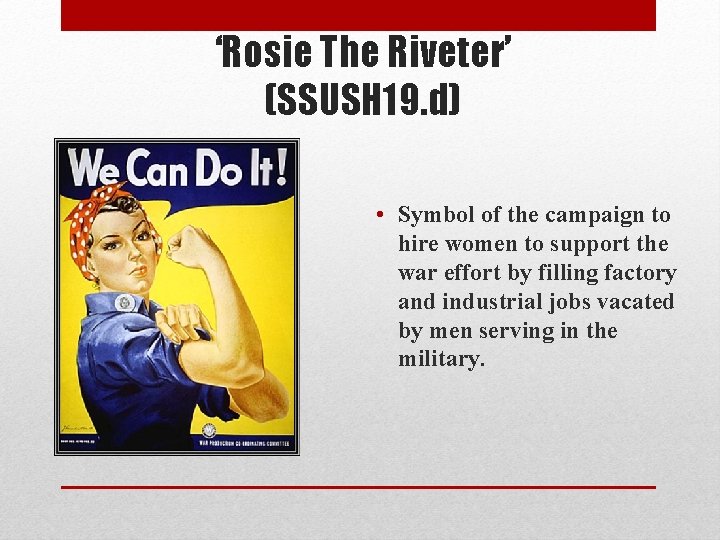
Women for the War • As men went to war, women went to work in industry producing the tanks, planes & ships needed to fight. • 5 million women went to work in industry • Changed American attitudes about women in the workplace. • “If you can follow a recipe and bake a cake, you can learn to load shells!”
‘Rosie The Riveter’ (SSUSH 19. d) • Symbol of the campaign to hire women to support the war effort by filling factory and industrial jobs vacated by men serving in the military.
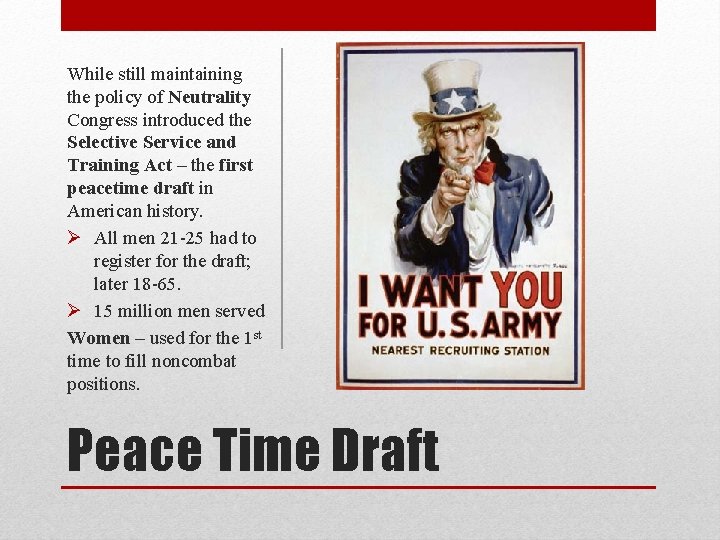
While still maintaining the policy of Neutrality Congress introduced the Selective Service and Training Act – the first peacetime draft in American history. Ø All men 21 -25 had to register for the draft; later 18 -65. Ø 15 million men served Women – used for the 1 st time to fill noncombat positions. Peace Time Draft
You’re in the Army Now!
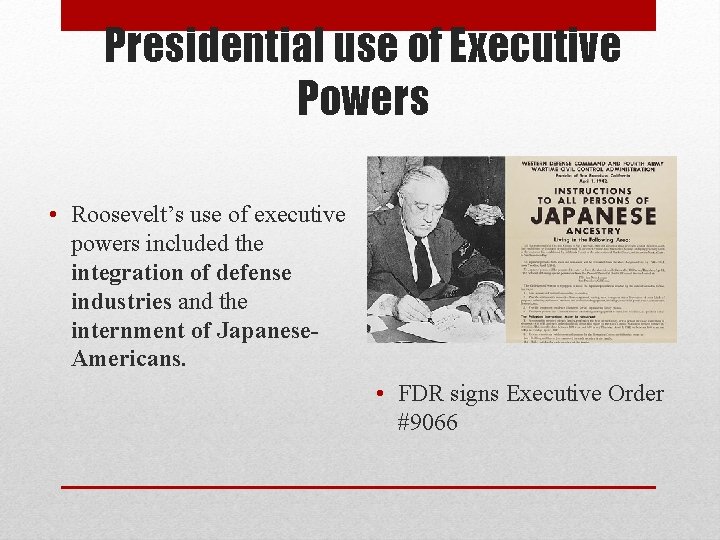
Presidential use of Executive Powers • Roosevelt’s use of executive powers included the integration of defense industries and the internment of Japanese. Americans. • FDR signs Executive Order #9066
Internment Japanese Internment Camp (SSUSH 19. e) • After Pearl Harbor, FDR ordered the forced internment of all Japanese-Americans from the West Coast as a measure of national security. • The purpose of the internment camps was to keep a close eye on citizens who might be a threat to the US war effort. • German & Italian-Americans faced possible internment too.
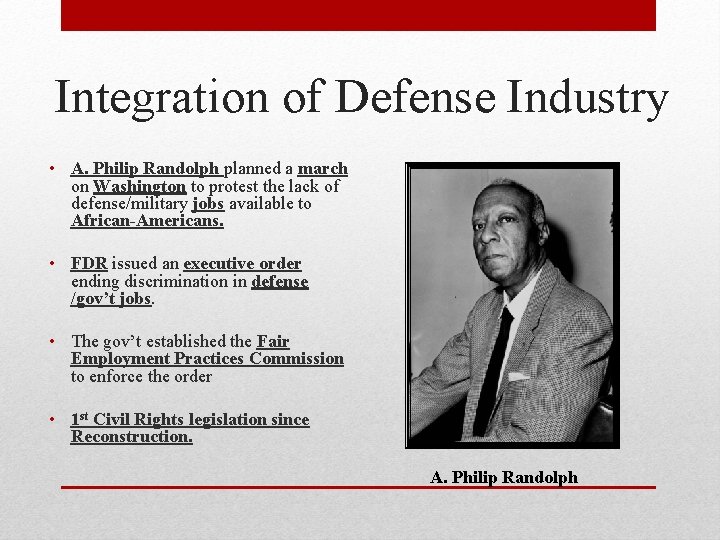
Integration of Defense Industry • A. Philip Randolph planned a march on Washington to protest the lack of defense/military jobs available to African-Americans. • FDR issued an executive order ending discrimination in defense /gov’t jobs. • The gov’t established the Fair Employment Practices Commission to enforce the order • 1 st Civil Rights legislation since Reconstruction. A. Philip Randolph
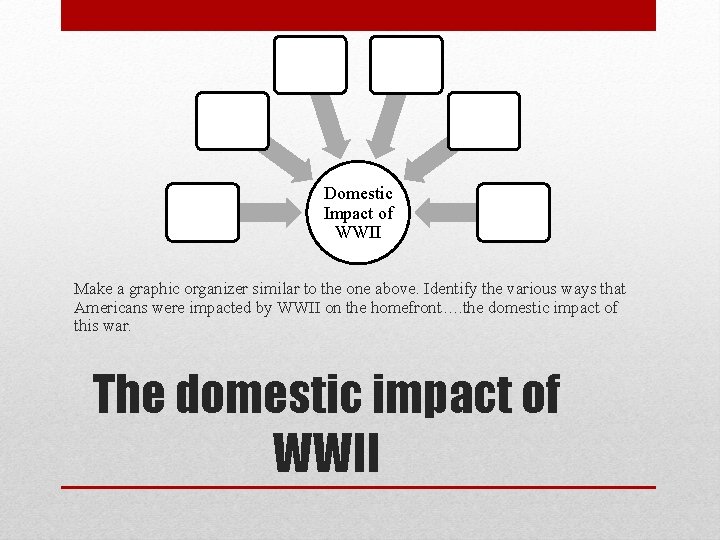
Domestic Impact of WWII Make a graphic organizer similar to the one above. Identify the various ways that Americans were impacted by WWII on the homefront…. the domestic impact of this war. The domestic impact of WWII