
The Home front Managing America War Industries Board
The Home front
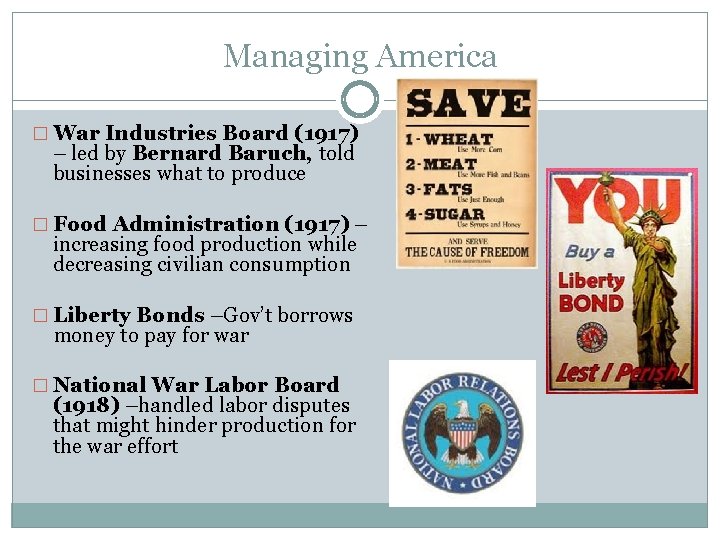
Managing America � War Industries Board (1917) – led by Bernard Baruch, told businesses what to produce � Food Administration (1917) – increasing food production while decreasing civilian consumption � Liberty Bonds –Gov’t borrows money to pay for war � National War Labor Board (1918) –handled labor disputes that might hinder production for the war effort
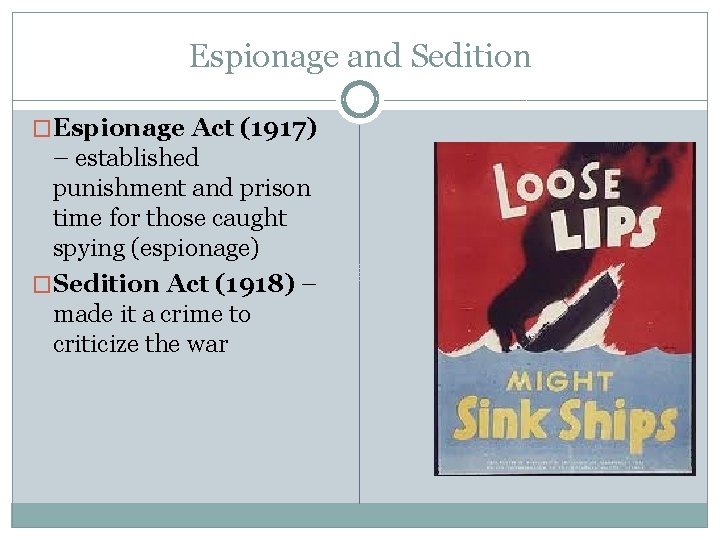
Espionage and Sedition �Espionage Act (1917) – established punishment and prison time for those caught spying (espionage) �Sedition Act (1918) – made it a crime to criticize the war

Famous Court Case �Schenck v. United States (1919) – court case that challenged the Espionage and Sedition Acts �Schenck was charged after passing out flyers criticizing the draft and asked people to peacefully challenge it
Result of Schenck v. U. S. �Justice Oliver Wendell Holmes said that Schenck passing out flyers was a “clear and present danger” � ruled freedom of speech could be limited during war
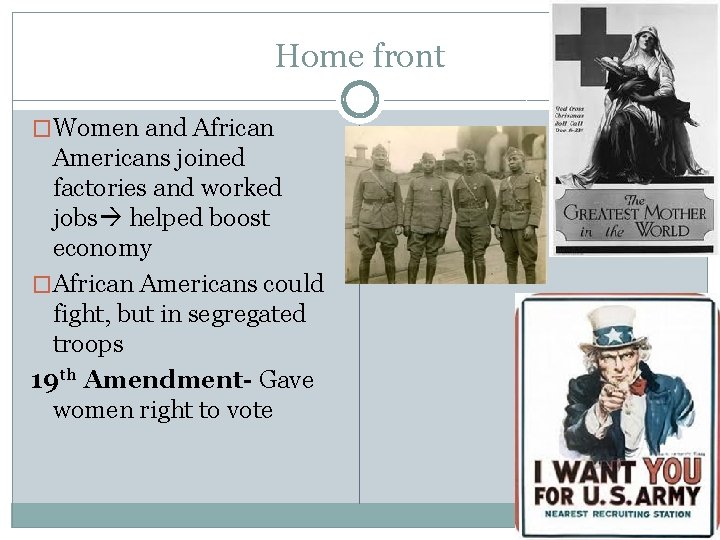
Home front �Women and African Americans joined factories and worked jobs helped boost economy �African Americans could fight, but in segregated troops 19 th Amendment- Gave women right to vote
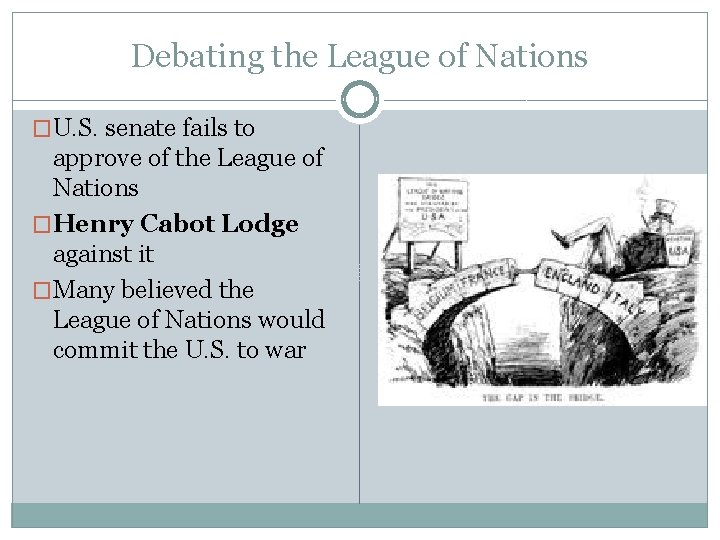
Debating the League of Nations �U. S. senate fails to approve of the League of Nations �Henry Cabot Lodge against it �Many believed the League of Nations would commit the U. S. to war

Isolationism �Isolationism- staying out of foreign affairs �America recovered from the war and focused on domestic issues �Dawes Plan- economic aid given to Germany to help recover from the war
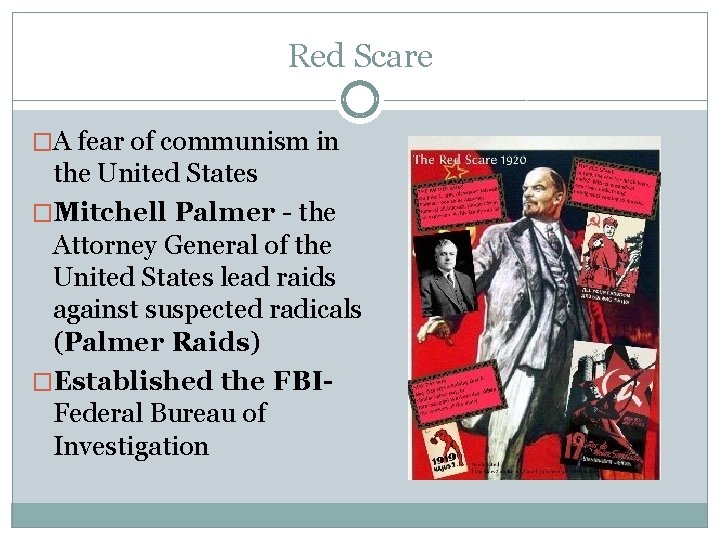
Red Scare �A fear of communism in the United States �Mitchell Palmer - the Attorney General of the United States lead raids against suspected radicals (Palmer Raids) �Established the FBIFederal Bureau of Investigation
- Slides: 9