
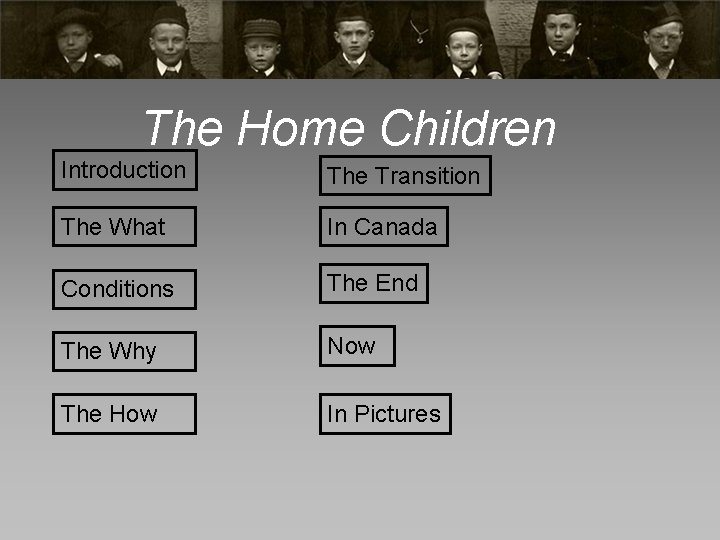
The Home Children Introduction The Transition The What
- Slides: 27
The Home Children Introduction The Transition The What In Canada Conditions The End The Why Now The How In Pictures
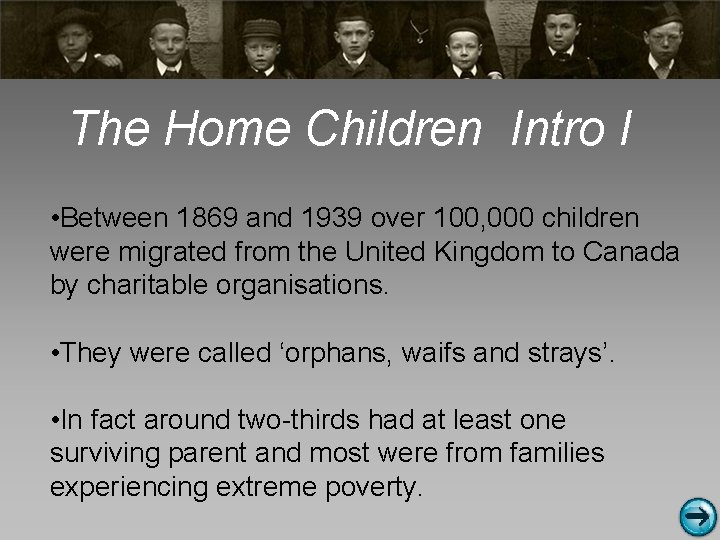
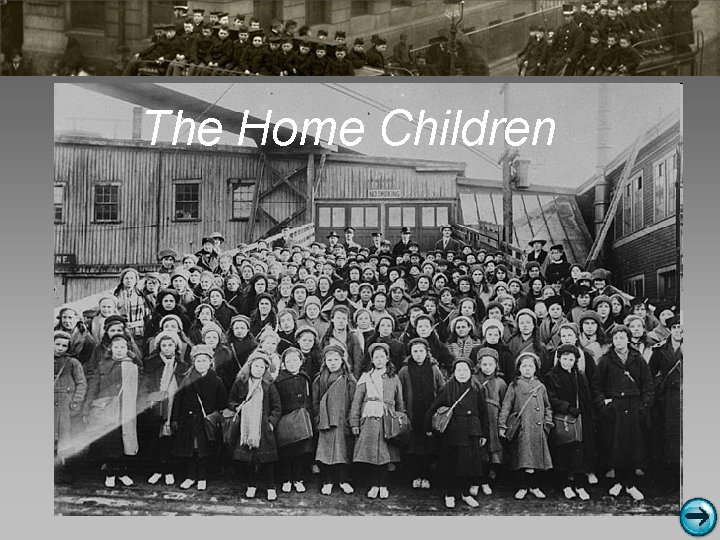
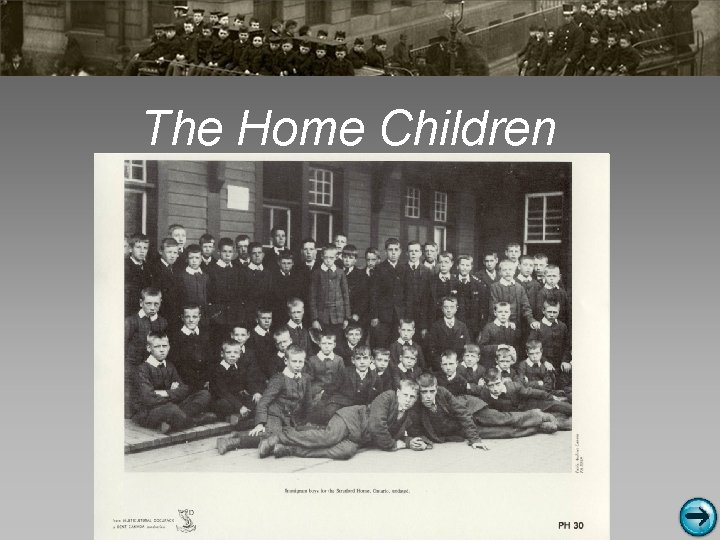
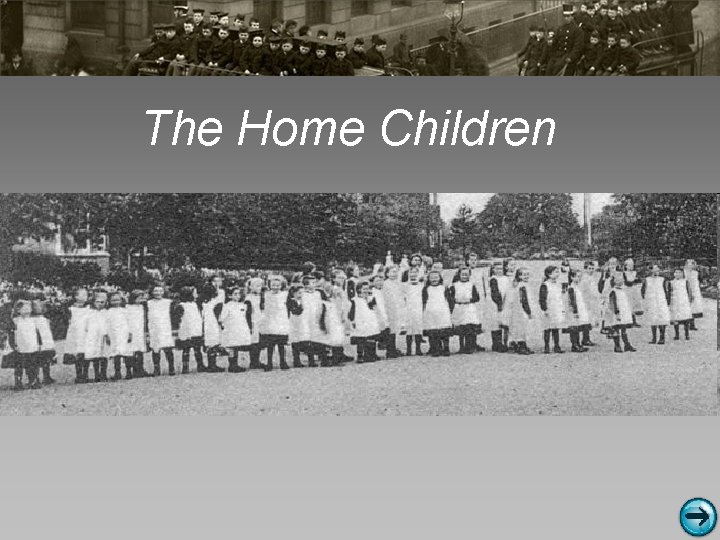
The Home Children Intro I • Between 1869 and 1939 over 100, 000 children were migrated from the United Kingdom to Canada by charitable organisations. • They were called ‘orphans, waifs and strays’. • In fact around two-thirds had at least one surviving parent and most were from families experiencing extreme poverty.
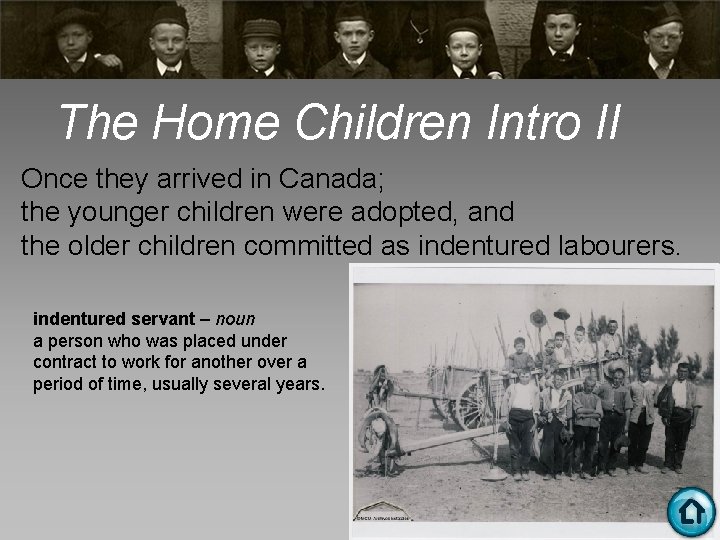
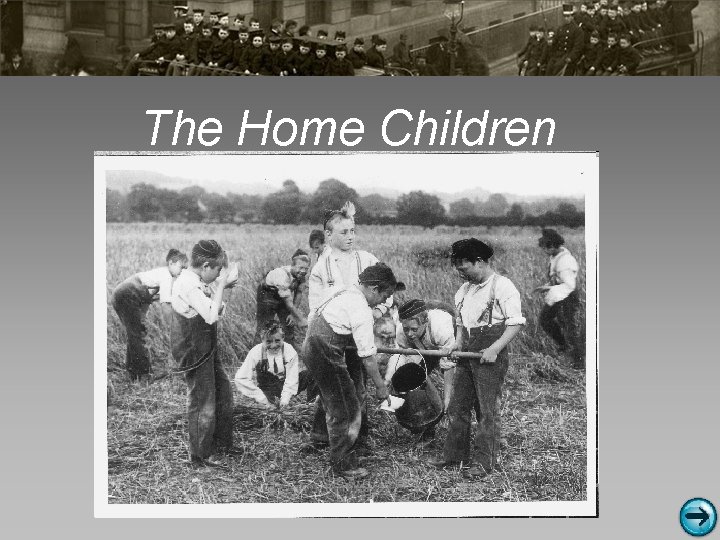
The Home Children Intro II Once they arrived in Canada; the younger children were adopted, and the older children committed as indentured labourers. indentured servant – noun a person who was placed under contract to work for another over a period of time, usually several years.
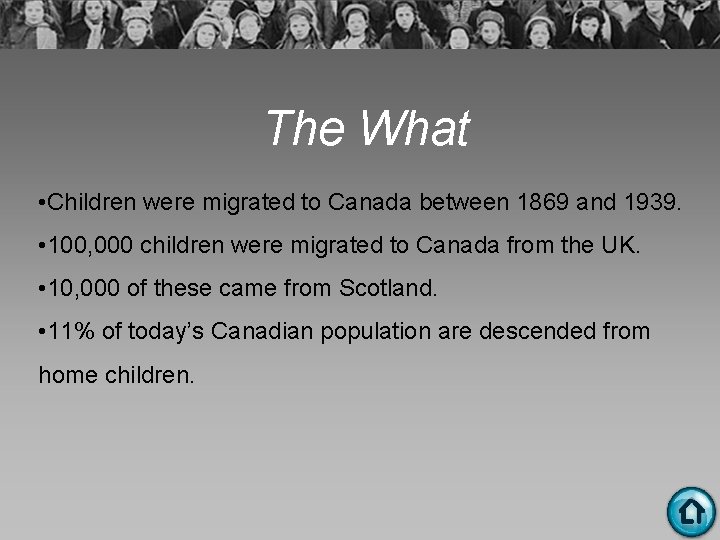
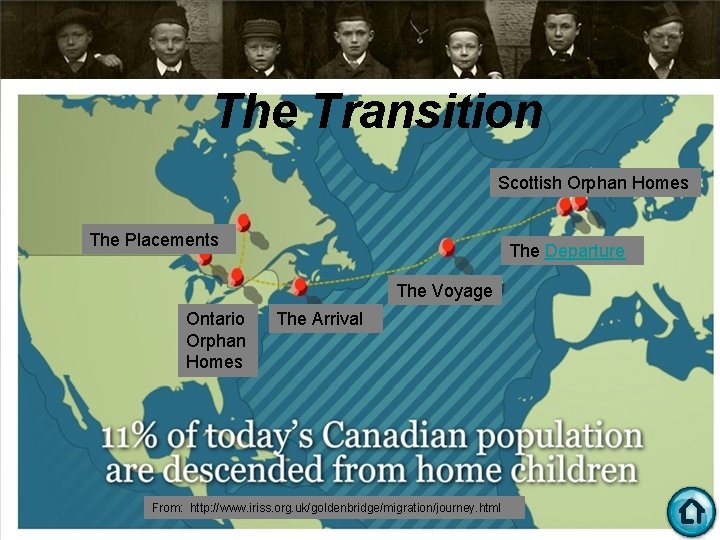
The What • Children were migrated to Canada between 1869 and 1939. • 100, 000 children were migrated to Canada from the UK. • 10, 000 of these came from Scotland. • 11% of today’s Canadian population are descended from home children.
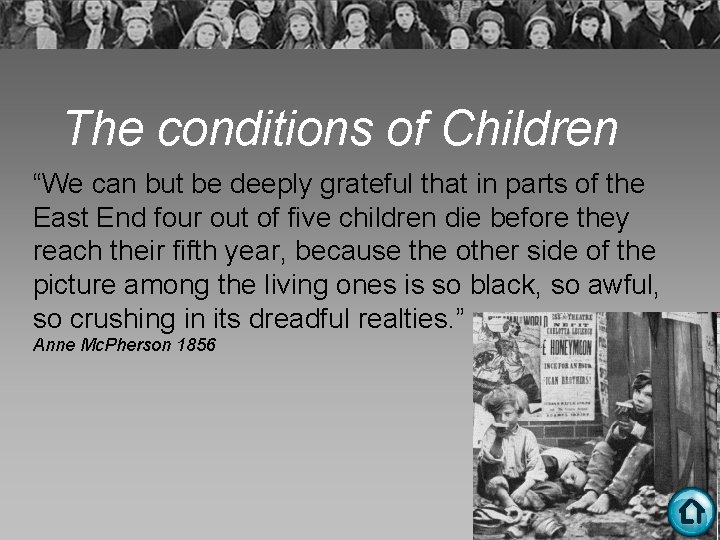
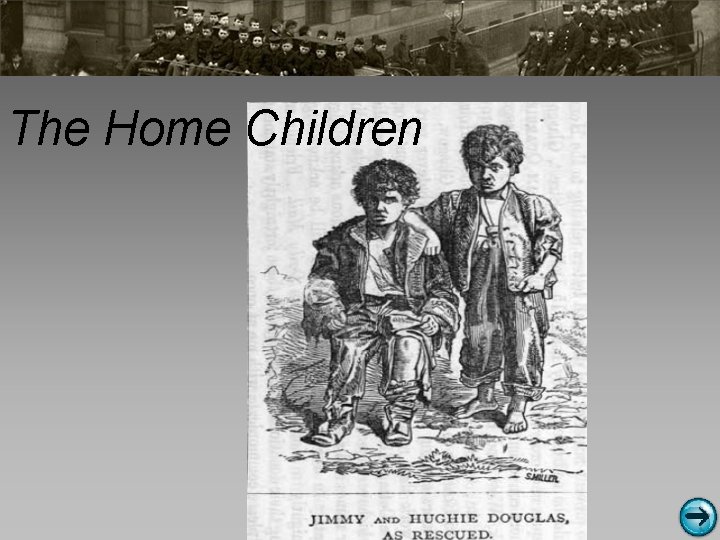
The conditions of Children “We can but be deeply grateful that in parts of the East End four out of five children die before they reach their fifth year, because the other side of the picture among the living ones is so black, so awful, so crushing in its dreadful realties. ” Anne Mc. Pherson 1856
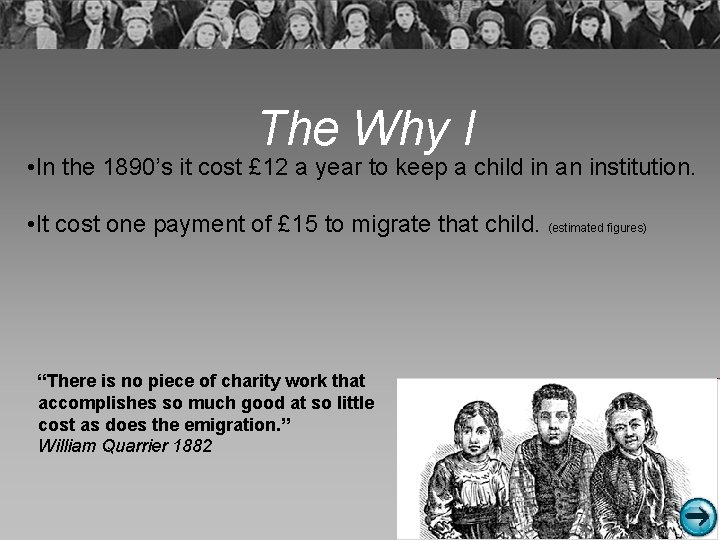
The Why I • In the 1890’s it cost £ 12 a year to keep a child in an institution. • It cost one payment of £ 15 to migrate that child. (estimated figures) “There is no piece of charity work that accomplishes so much good at so little cost as does the emigration. ” William Quarrier 1882
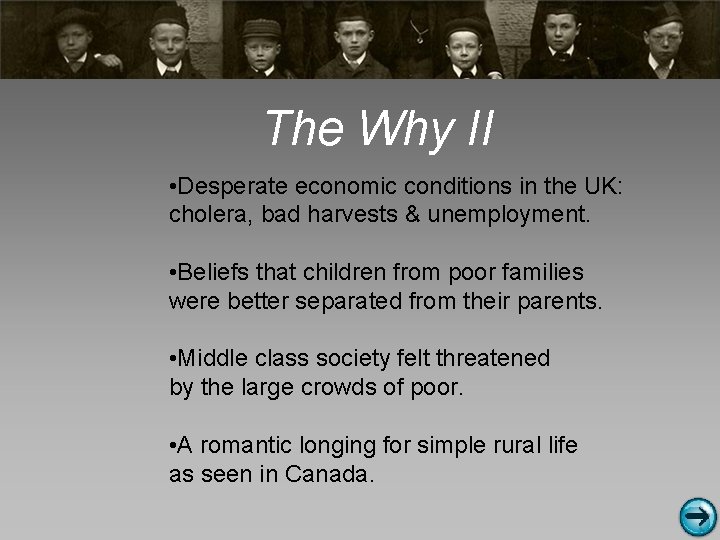
The Why II • Desperate economic conditions in the UK: cholera, bad harvests & unemployment. • Beliefs that children from poor families were better separated from their parents. • Middle class society felt threatened by the large crowds of poor. • A romantic longing for simple rural life as seen in Canada.
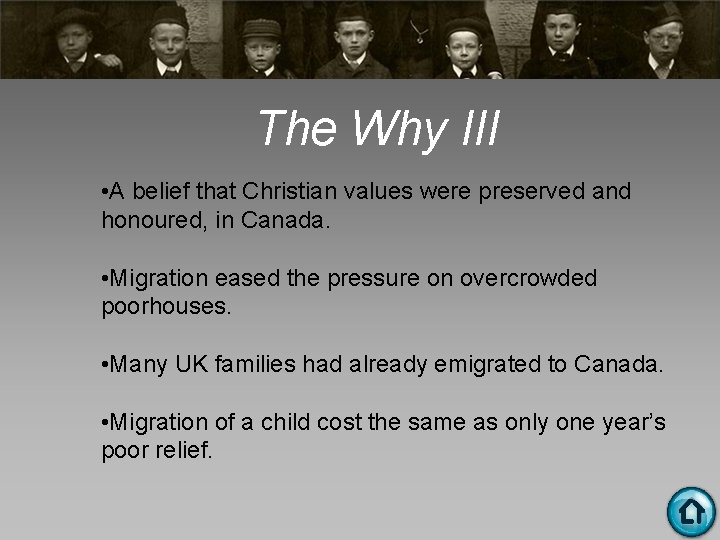
The Why III • A belief that Christian values were preserved and honoured, in Canada. • Migration eased the pressure on overcrowded poorhouses. • Many UK families had already emigrated to Canada. • Migration of a child cost the same as only one year’s poor relief.
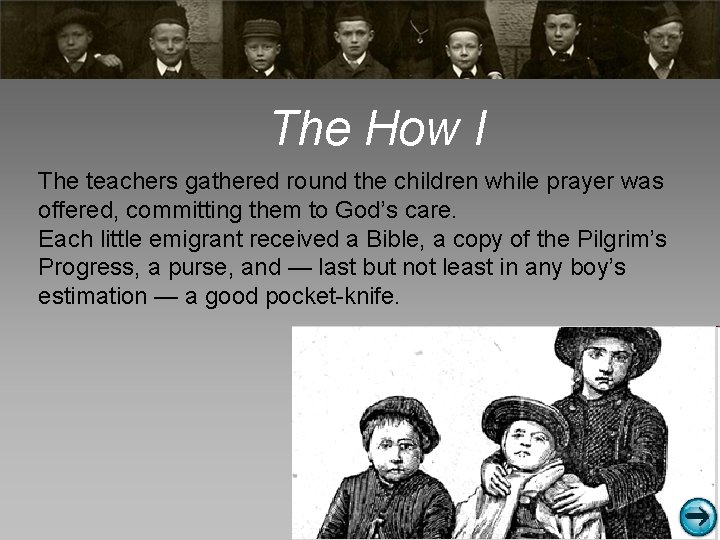
The How I The teachers gathered round the children while prayer was offered, committing them to God’s care. Each little emigrant received a Bible, a copy of the Pilgrim’s Progress, a purse, and — last but not least in any boy’s estimation — a good pocket-knife.
The How II LOG: S S. Buenos Ayrean March 25 1892 Daily routine as follows: Boys up 6. 30 am, wash and dress, then, weather permitting, a run on deck; breakfast 7. 30 am; prayers 10. 00 am; lunch 12 noon; dinner 5. 30 pm; Prayers 7. 15 pm. Hot gruel at 8 pm and bed 8. 15 o’ clock; interspersed with a romp on deck, tug of war, watching for whales, ships, icebergs.
The How III LOG: S S. Buenos Ayrean March 31 1892 Now in the midst of a terrific storm; boys ordered to their bunks, everyone holding on by anything he could get hold of. Saloon tables at dinner gave way, precipitating the passengers underneath, covering them with food, broken dishes etc. Heavy seas caused water to run up the ventilator and down into the second deck to the discomfort and fun of the boys.
The How IV LOG: S S. Buenos Ayrean April 5 1892 Beautiful morning. Passed Lambro Head, having logged 2, 597 miles (4, 180 Kms) from Greenock. Now landed at Halifax at 8. 30 am, am well and happy, and thankful to God for His goodness in keeping our little company from accident of any kind.
The Transition Scottish Orphan Homes The Placements The Departure The Voyage Ontario Orphan Homes The Arrival From: http: //www. iriss. org. uk/goldenbridge/migration/journey. html
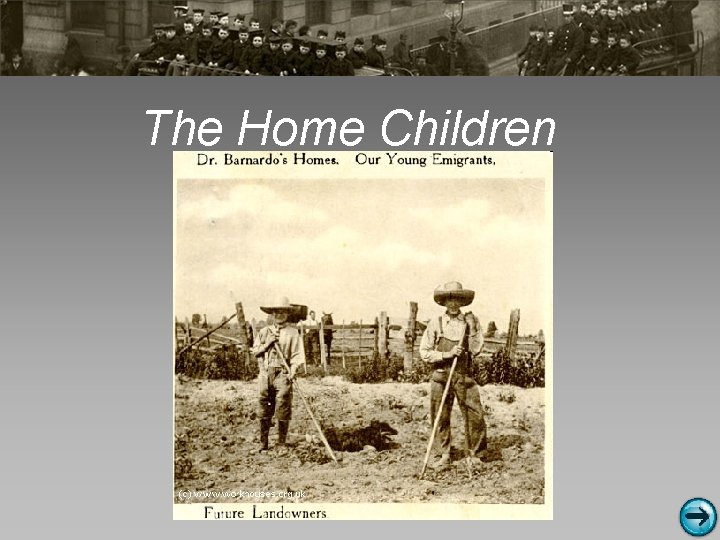
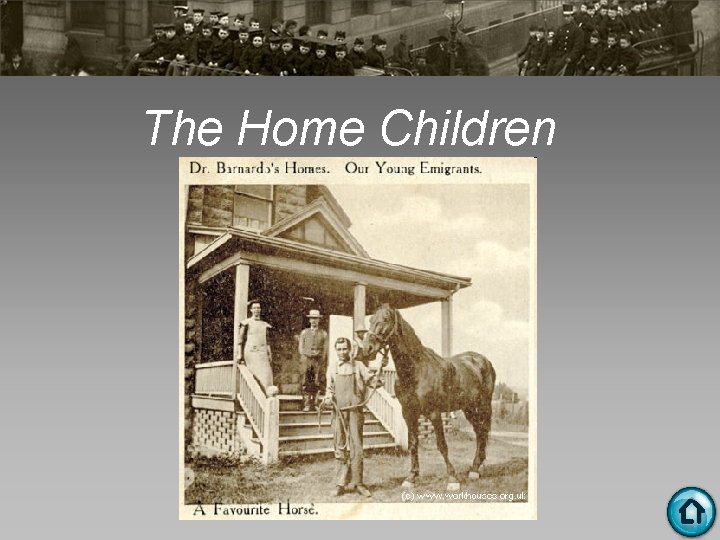
In Canada I “Everything was mud and the first thing I had to buy out my wages was knee-high rubber boots. Learning how to harness horses was confusing. However I learned very quickly and in May I was working the horses in the field, preparing the spring planting. ” “We rose about 4. 30 am and worked as long as it was daylight, usually about 9. 30 pm. They were atrocious hours for a young boy, but it was usual for the time and nobody thought there was anything wrong. ”
In Canada II “Ellen Buck was 12 when she arrived in Ontario in 1911 and should have gone to school for nine months in the year; but often there was too much work around the farm to be done. ” “Many a time I cried with cold hands and broken nails, picking up turnips, of which we had many loads, then putting them through a chopper. ”
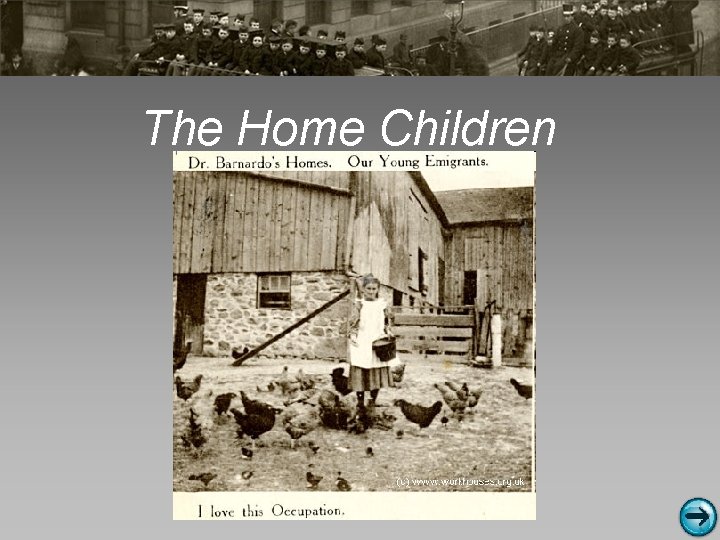
In Canada III “Mrs Pritchard was good to me and taught me to make bread and churn butter. We would spend a day killing and cleaning chickens for market where we sold them, and butter and eggs. ” “I was glad when my sister Jessie moved closer. It was five miles away. I would visit her on Sunday and run back the five miles to help milk the cows. ”
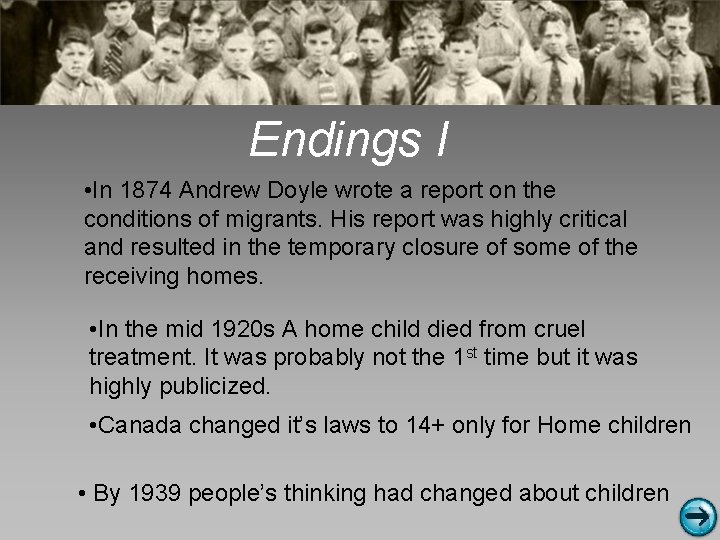
Endings I • In 1874 Andrew Doyle wrote a report on the conditions of migrants. His report was highly critical and resulted in the temporary closure of some of the receiving homes. • In the mid 1920 s A home child died from cruel treatment. It was probably not the 1 st time but it was highly publicized. • Canada changed it’s laws to 14+ only for Home children • By 1939 people’s thinking had changed about children
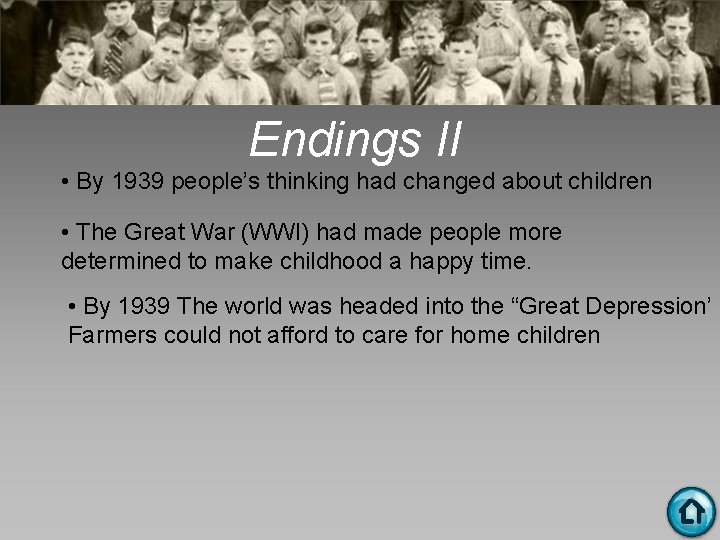
Endings II • By 1939 people’s thinking had changed about children • The Great War (WWI) had made people more determined to make childhood a happy time. • By 1939 The world was headed into the “Great Depression’ Farmers could not afford to care for home children
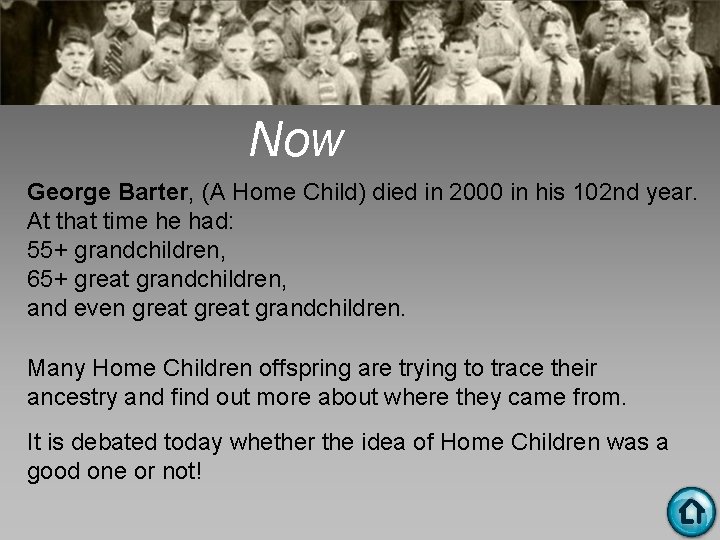
Now George Barter, (A Home Child) died in 2000 in his 102 nd year. At that time he had: 55+ grandchildren, 65+ great grandchildren, and even great grandchildren. Many Home Children offspring are trying to trace their ancestry and find out more about where they came from. It is debated today whether the idea of Home Children was a good one or not!
The Home Children
The Home Children
The Home Children
The Home Children
The Home Children
The Home Children
The Home Children
The Home Children