
The History of Theatre The Renaissance What was
- Slides: 13
The History of Theatre The Renaissance
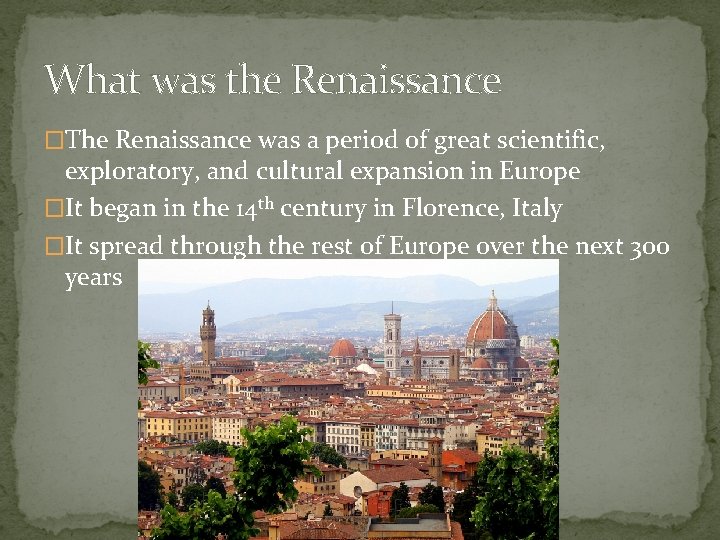
What was the Renaissance �The Renaissance was a period of great scientific, exploratory, and cultural expansion in Europe �It began in the 14 th century in Florence, Italy �It spread through the rest of Europe over the next 300 years
The Masque �Renaissance theatre took the developments of the medieval era and expanded upon them �Masques were evolved from courtly shows done before kings and queens �They combined music, dancing, theatre, and elaborate sets �They usually celebrated the life of the noble it was written for �Royals often had a role in the masque. Louis XIV of France danced ballet in his masque.
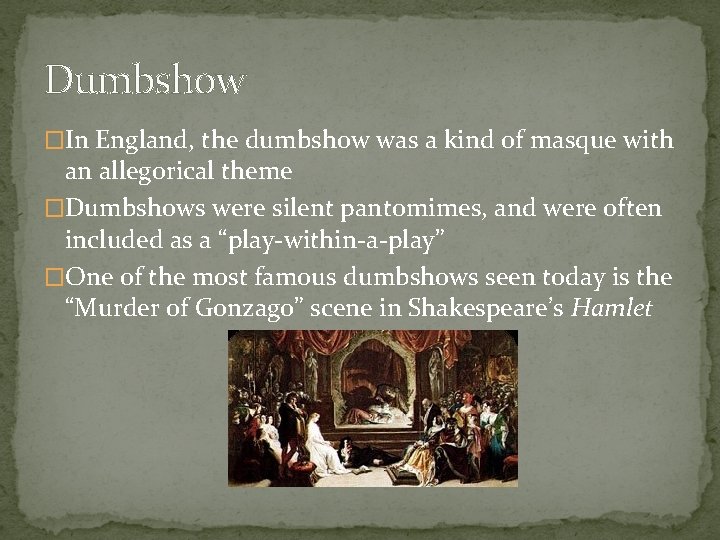
Dumbshow �In England, the dumbshow was a kind of masque with an allegorical theme �Dumbshows were silent pantomimes, and were often included as a “play-within-a-play” �One of the most famous dumbshows seen today is the “Murder of Gonzago” scene in Shakespeare’s Hamlet
Commedia dell’Arte �Commmedia dell’Arte emerged in Italy during the 16 th century �The name translates to “comedy of art” �Commedia was generally improvised theatre, which was inspired by given scene ideas or “Scenarios” �Commedia also utilized several stock characters in the performance of the scenarios
The main roles of Commedia �The characters originally were meant to represent different districts and towns in Italy �There were three main divisions of characters in Commedia dell’Arte � Servant � Master � Innamorati (lover) �Some of the most notable named characters in Commedia were Harlequin, Pantalone, Il Dottore, Il Capitano, Scaramucha, and the Innamorati
Innamorati �The innamorati were the lovers in Commedia �Their sole purpose was to be in love with one another, and more importantly, themselves �They were usually separated by some force at the beginning of the play �By the end, they are almost always reunited
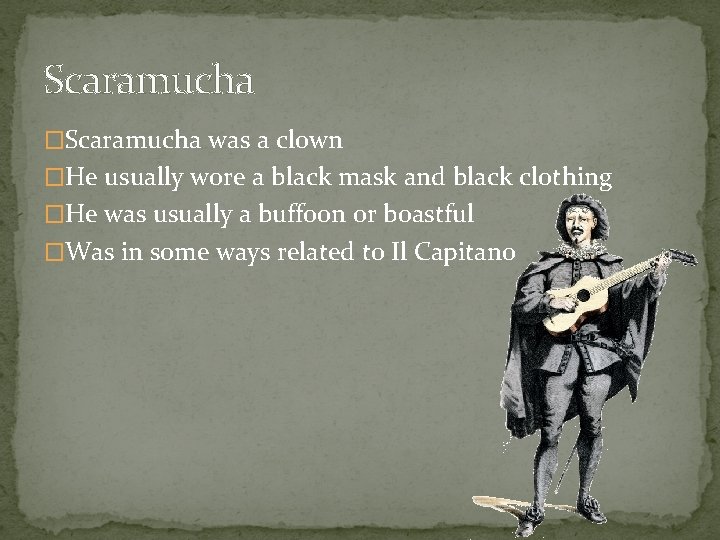
Scaramucha �Scaramucha was a clown �He usually wore a black mask and black clothing �He was usually a buffoon or boastful �Was in some ways related to Il Capitano
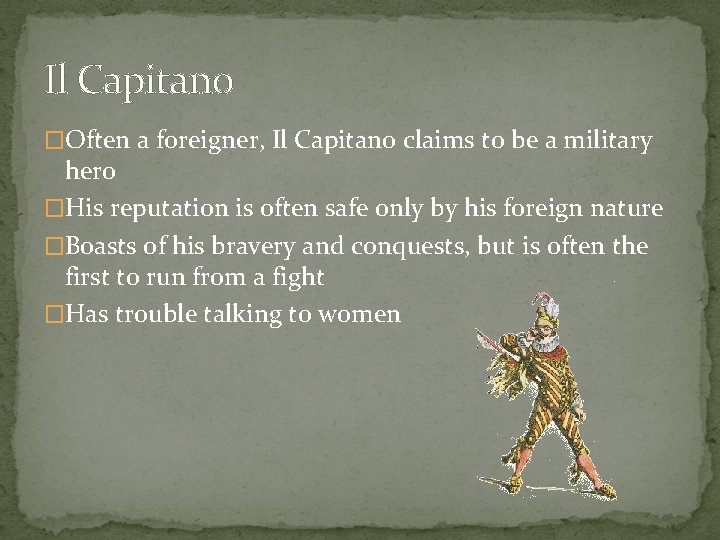
Il Capitano �Often a foreigner, Il Capitano claims to be a military hero �His reputation is often safe only by his foreign nature �Boasts of his bravery and conquests, but is often the first to run from a fight �Has trouble talking to women
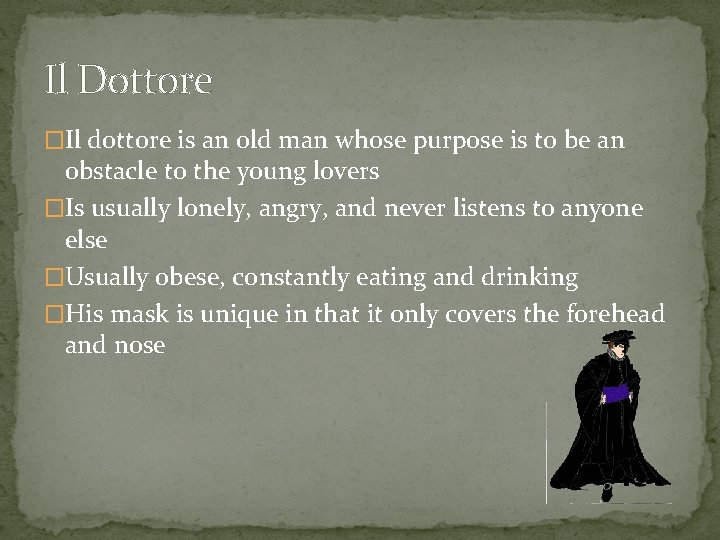
Il Dottore �Il dottore is an old man whose purpose is to be an obstacle to the young lovers �Is usually lonely, angry, and never listens to anyone else �Usually obese, constantly eating and drinking �His mask is unique in that it only covers the forehead and nose
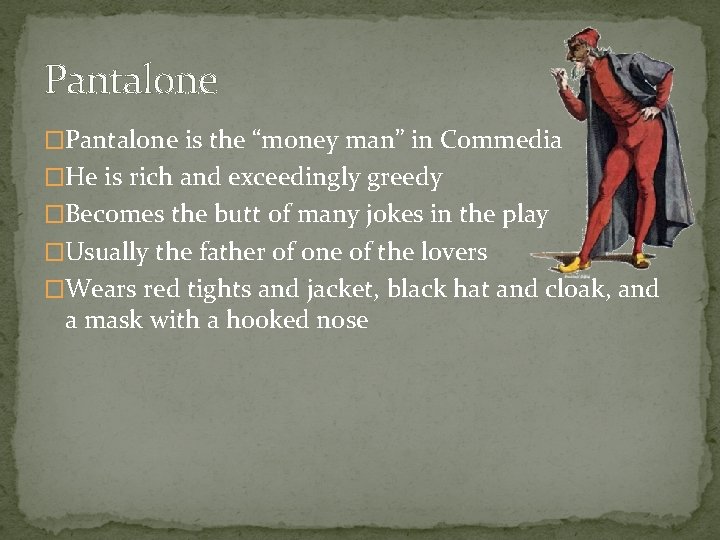
Pantalone �Pantalone is the “money man” in Commedia �He is rich and exceedingly greedy �Becomes the butt of many jokes in the play �Usually the father of one of the lovers �Wears red tights and jacket, black hat and cloak, and a mask with a hooked nose
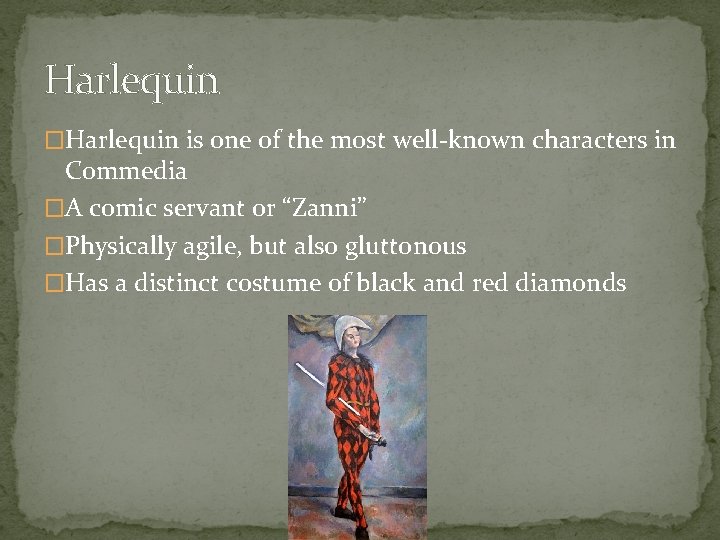
Harlequin �Harlequin is one of the most well-known characters in Commedia �A comic servant or “Zanni” �Physically agile, but also gluttonous �Has a distinct costume of black and red diamonds
The Influence �The influence of Commedia dell’Arte on theatre was immense and is still seen today �Many of the scenarios used in Commedia are still utilized as plots in comedies �One classic example was William Shakespeare’s “The Tempest” �The stock characters can be seen in many characters in TV and film today