
THE HISTORY OF THE MICROSCOPE EARLY MICROSCOPES The



- Slides: 24
THE HISTORY OF THE MICROSCOPE
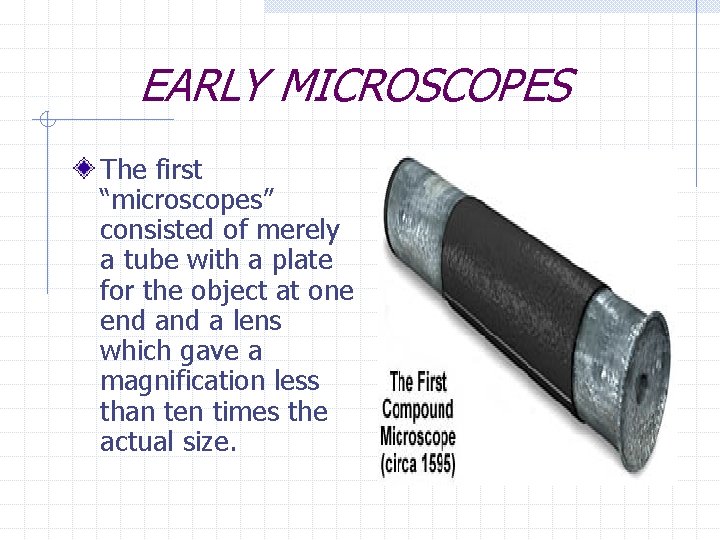
EARLY MICROSCOPES The first “microscopes” consisted of merely a tube with a plate for the object at one end a lens which gave a magnification less than ten times the actual size.
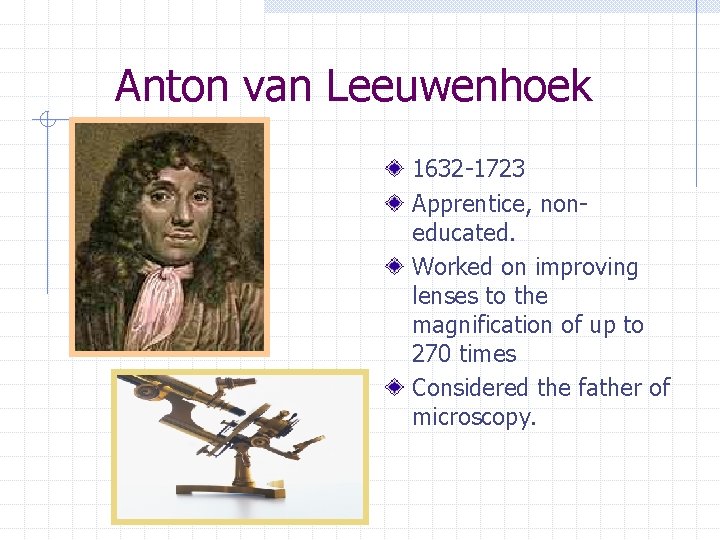
Anton van Leeuwenhoek 1632 -1723 Apprentice, noneducated. Worked on improving lenses to the magnification of up to 270 times Considered the father of microscopy.
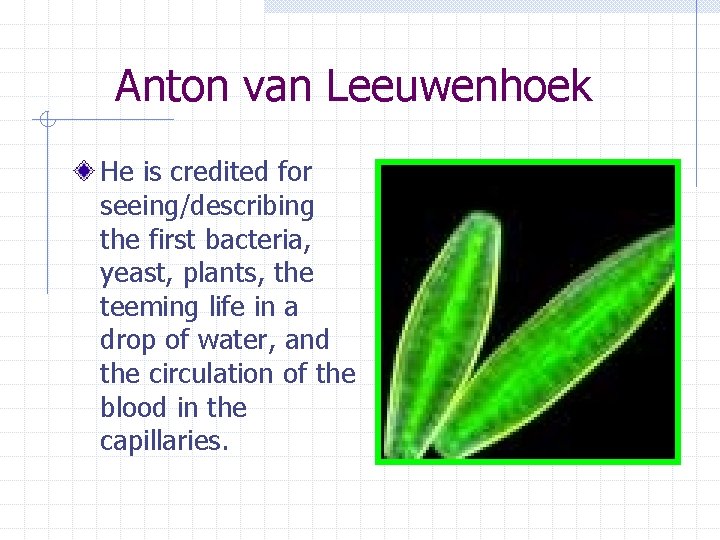
Anton van Leeuwenhoek He is credited for seeing/describing the first bacteria, yeast, plants, the teeming life in a drop of water, and the circulation of the blood in the capillaries.
POND WATER!!
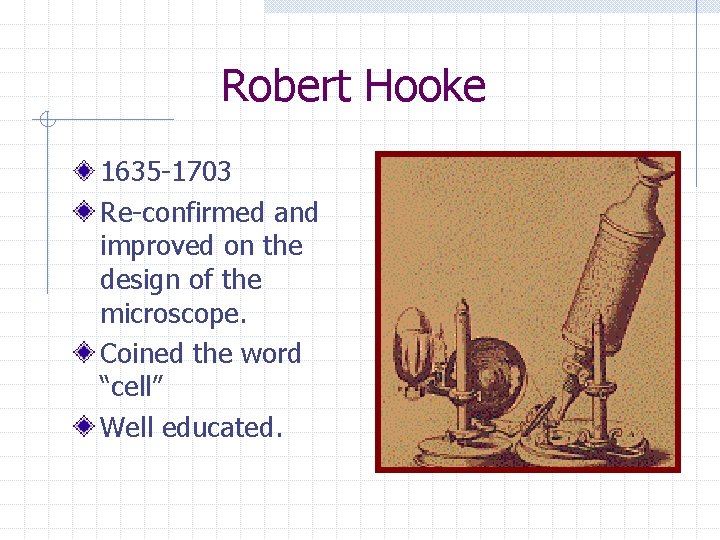
Robert Hooke 1635 -1703 Re-confirmed and improved on the design of the microscope. Coined the word “cell” Well educated.
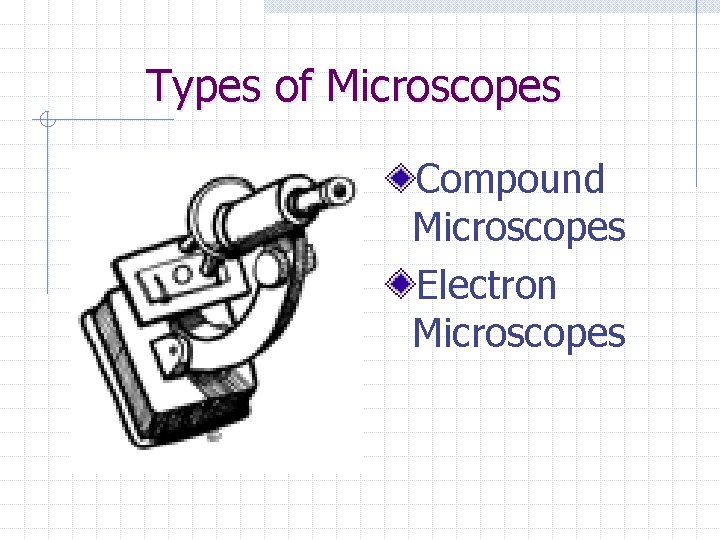
Types of Microscopes Compound Microscopes Electron Microscopes
COMPOUND MICROSCOPE Compound Light Microscopes are light illuminated. Two dimensional Very common High Magnification Low Resolution This is what we use!
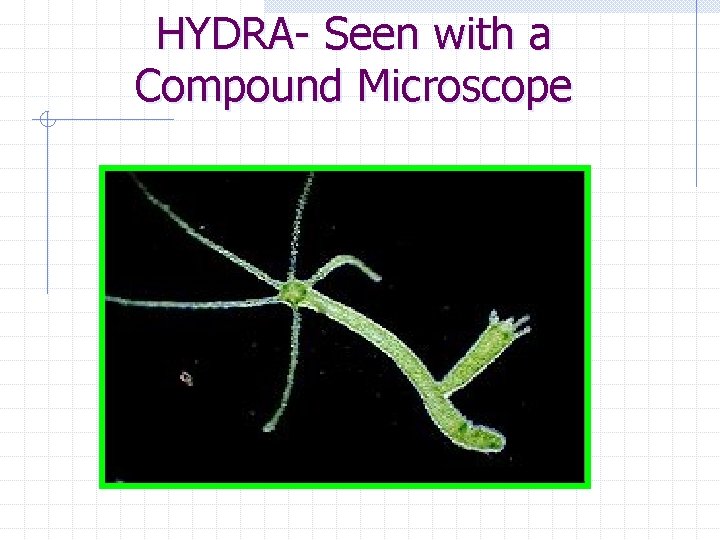
HYDRA- Seen with a Compound Microscope
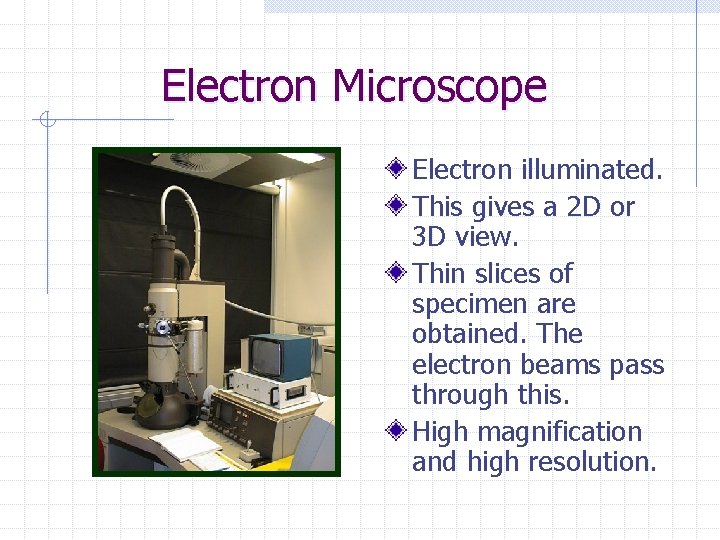
Electron Microscope Electron illuminated. This gives a 2 D or 3 D view. Thin slices of specimen are obtained. The electron beams pass through this. High magnification and high resolution.
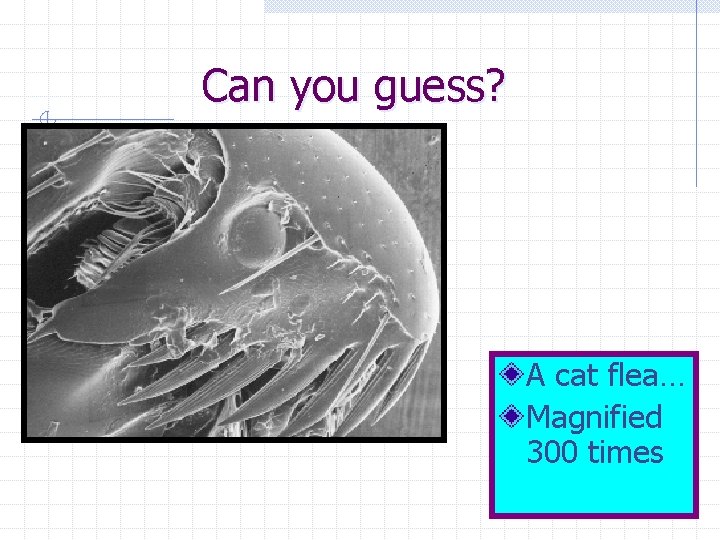
Can you guess? A cat flea… Magnified 300 times
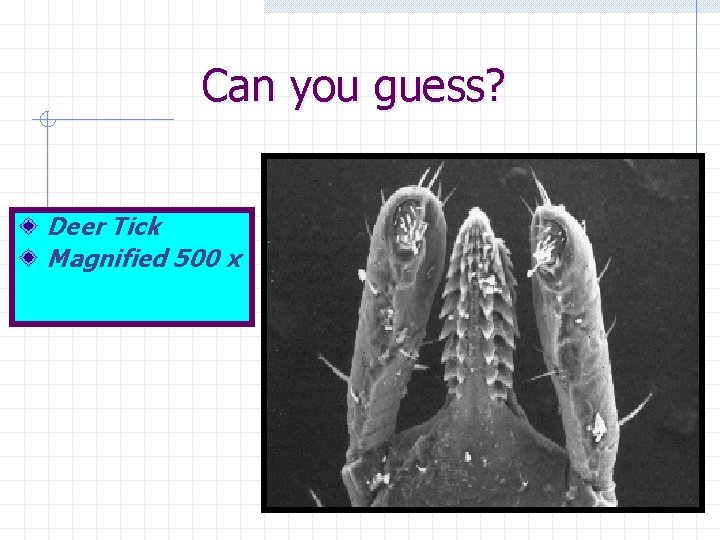
Can you guess? Deer Tick Magnified 500 x
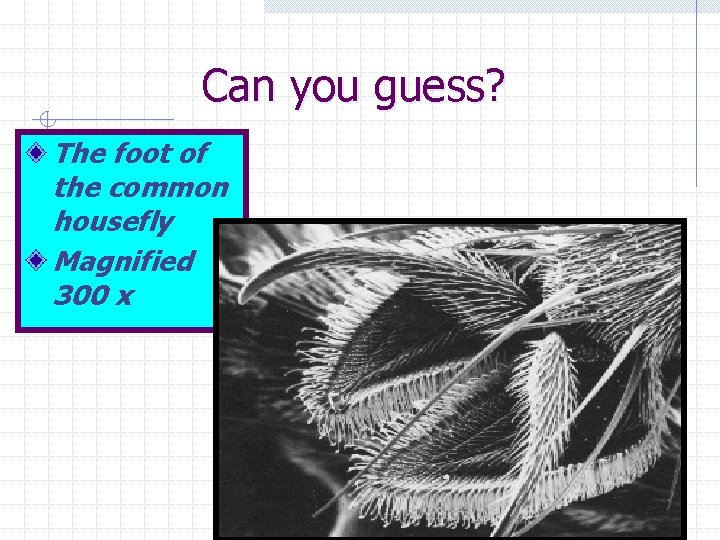
Can you guess? The foot of the common housefly Magnified 300 x
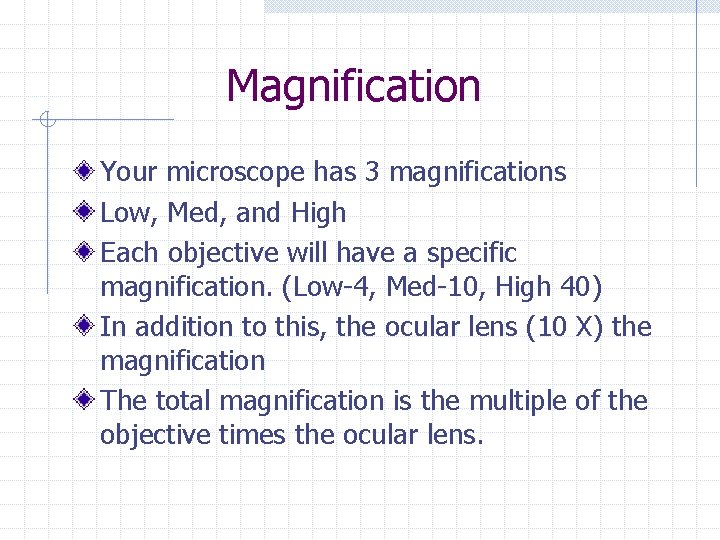
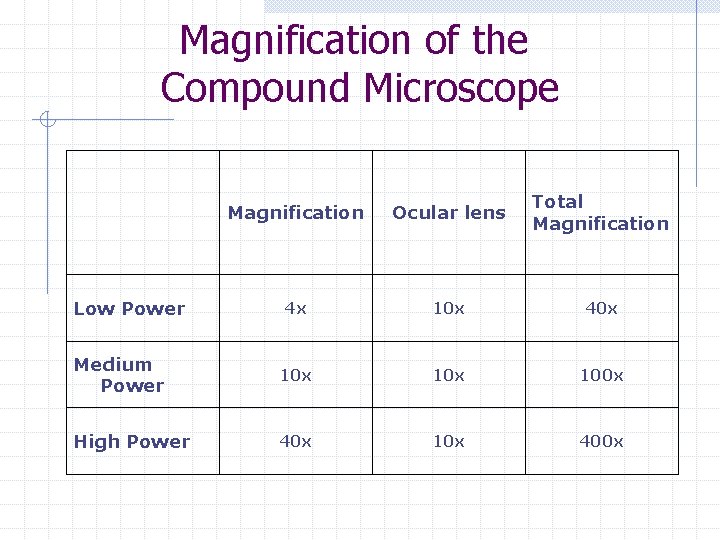
Magnification Your microscope has 3 magnifications Low, Med, and High Each objective will have a specific magnification. (Low-4, Med-10, High 40) In addition to this, the ocular lens (10 X) the magnification The total magnification is the multiple of the objective times the ocular lens.
Magnification of the Compound Microscope Magnification Ocular lens Total Magnification 4 x 10 x 40 x Medium Power 10 x 100 x High Power 40 x 10 x 400 x Low Power
Microscope! When looking at an object through the microscope…keep in mind that the image is actually inverted! We will observe this today when working on your microscopes!
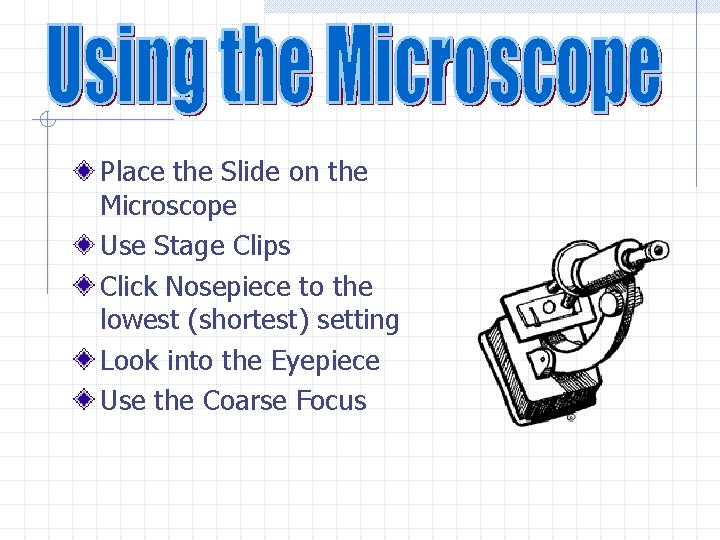
Place the Slide on the Microscope Use Stage Clips Click Nosepiece to the lowest (shortest) setting Look into the Eyepiece Use the Coarse Focus
Bring slide into focus You will then click to the nosepiece to medium power. Do NOT use the Coarse Focusing Knob ONLY use the Fine Focus Knob to bring the slide to view Repeat steps with the high power. What can you find on your slide?
Microscope Care & Handling
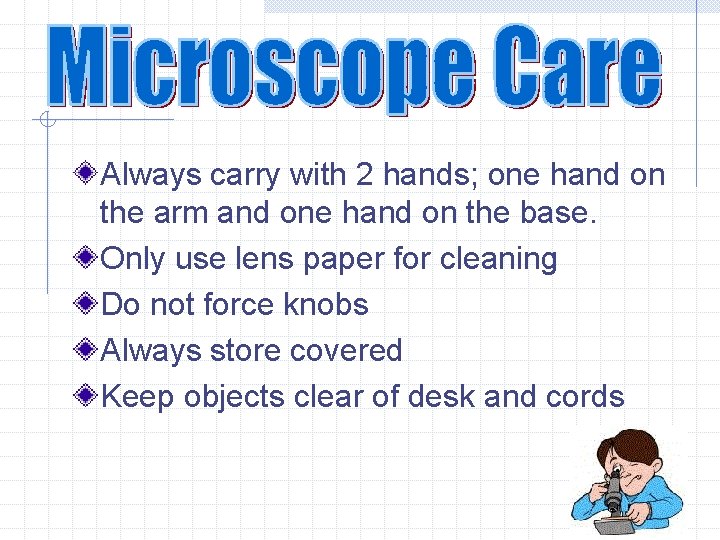
Always carry with 2 hands; one hand on the arm and one hand on the base. Only use lens paper for cleaning Do not force knobs Always store covered Keep objects clear of desk and cords
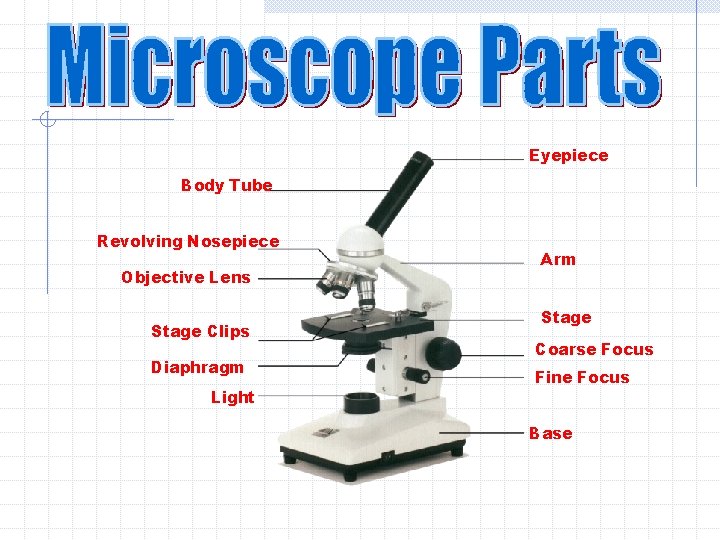
Eyepiece Body Tube Revolving Nosepiece Objective Lens Stage Clips Diaphragm Light Arm Stage Coarse Focus Fine Focus Base
Microscope Care and Handling How do I transport the microscope? Again. . the proper way to carry a microscope is with one hand on the arm and one hand on the base.
Microscope Care and Handling How much does a microscope cost? $200 -300 What happens if I break it? If you were engaging in any horse play or not following lab regulations YOU will be responsible for paying for any damages!!
Microscope Care & Handling Clean all slides, materials, and work area when you're done. Please, be careful with the slides and cover slips. They are made of glass and if broken, you will get cut and you will bleed. DON'T CUT YOURSELF, THERE ARE NO BAND AIDS IN THIS ROOM…Maybe I have a few!!!