
The History of the Farm Broadcaster Chapter 1
The History of the Farm Broadcaster Chapter 1
The Beginning • Broadcasting information to farmers started just after the invention of the AM radio • WHA in Madison, WI began broadcasting weather reports in January 1921 • A few months later, KDKA in Pittsburgh, PA put Nelson Gilpin, assistant editor of the National Stockman & Farmer, on the air to report markets • By 1922 the USDA reported that 36 stations had been licensed by the Commerce Department, and 35 of the 36 had been approved to broadcast USDA markets
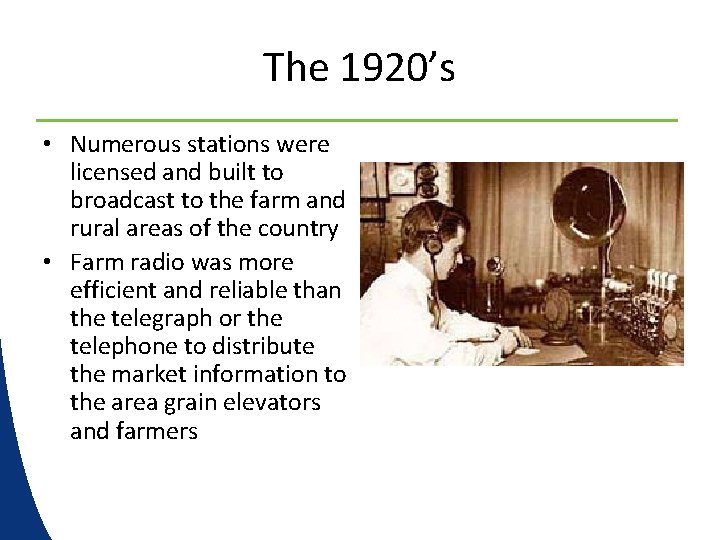
The 1920’s • Numerous stations were licensed and built to broadcast to the farm and rural areas of the country • Farm radio was more efficient and reliable than the telegraph or the telephone to distribute the market information to the area grain elevators and farmers
KFEQ • KFEQ, licensed in 1923 to broadcast from Oak, NE was relocated to St. Joseph, MO in 1926. • KFEQ was one of the first stations to initiate live remote broadcasts from the St. Joseph Stockyards and the St. Joseph Grain Exchange – 3 times daily from the St. Joseph Stockyards – 4 times daily from the St. Joseph Grain Exchange
The First Farm Broadcaster • First full-time farm broadcaster was Frank Mullen with KDKA, who began after college in 1923 • Mullen extended his broadcasting career in 1926 to NBC to found the first network farm program, “The National Farm Service Home Hour. ” • Retired as executive vice president of NBC
A National Association • The 1930’s saw more stations hiring full time farm reporters • The idea for a national association grew out of a 1943 meeting of the Institute for Education by Radio in Columbus, OH • Farm broadcaster Larry Haeg called a meeting of 35 who attended the show • in May 1944, the organization was officially formed and named the National Association of Radio Farm Directors (NARFD).
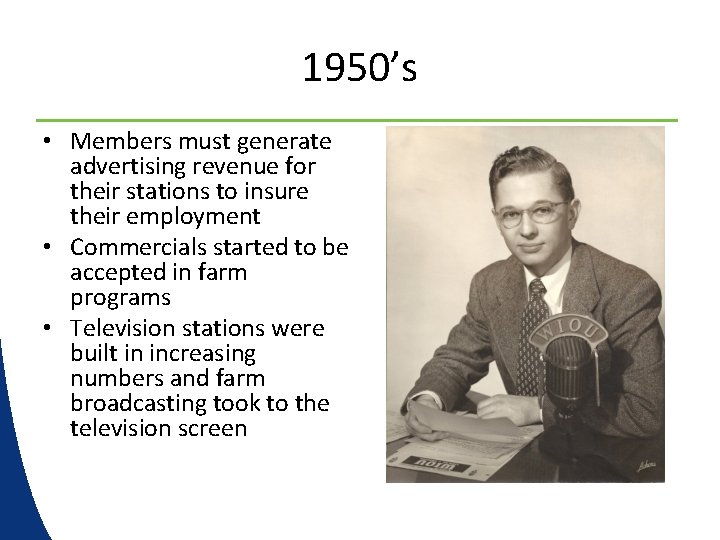
1950’s • Members must generate advertising revenue for their stations to insure their employment • Commercials started to be accepted in farm programs • Television stations were built in increasing numbers and farm broadcasting took to the television screen
Changing Times • In 1955 NARFD became NATRFD and 137 new farm broadcasters joined to bring the total membership to 500 • Became the National Association of Farm Broadcasters, NAFB in 1964 • In 2005, the name was adjusted to National Association of Farm Broadcasting to be more inclusive of its diverse members

Functions of the NAFB • Marketing and promotion of farm broadcasting to the agricultural advertising community • Commission research to measure media use among farmers and ranchers as the industry evolves • Provides a structure for farm broadcast news distribution through its National Farm Broadcast News Service as well as other professional farm broadcast special events and services
- Slides: 9