
The History of the Cell The Properties of
- Slides: 25
The History of the Cell The Properties of Life Biology Department Hampton High School SOL BIO 2 a
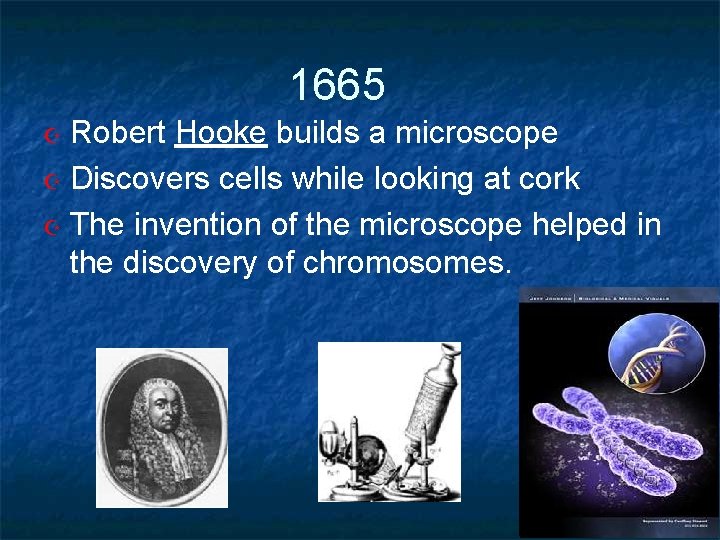
1665 Robert Hooke builds a microscope Discovers cells while looking at cork The invention of the microscope helped in the discovery of chromosomes.
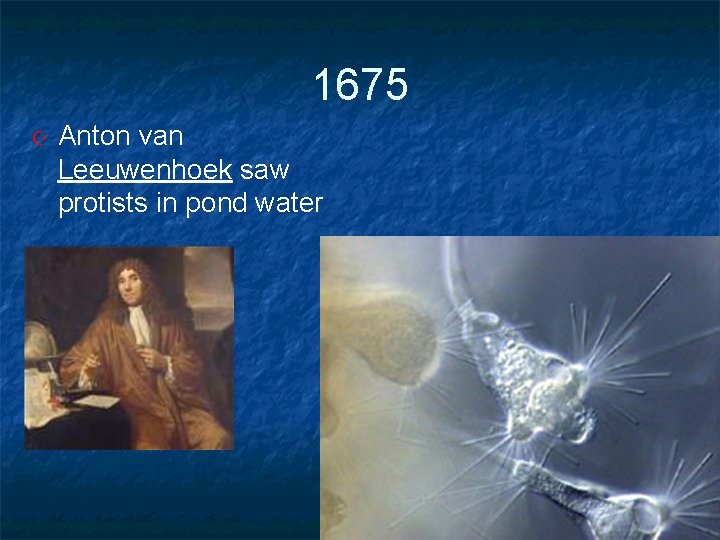
1675 Anton van Leeuwenhoek saw protists in pond water
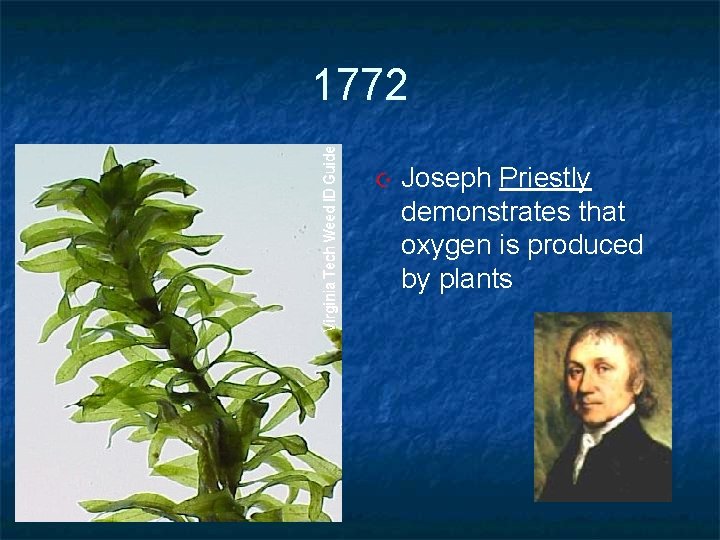
1772 Joseph Priestly demonstrates that oxygen is produced by plants
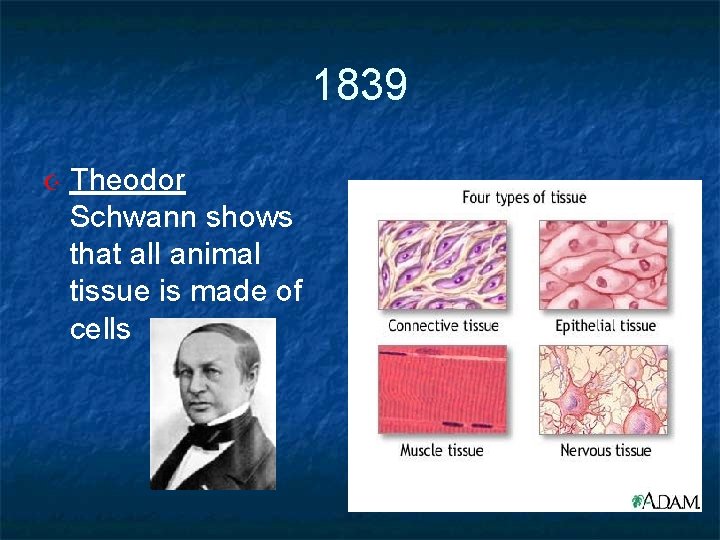
1839 Theodor Schwann shows that all animal tissue is made of cells
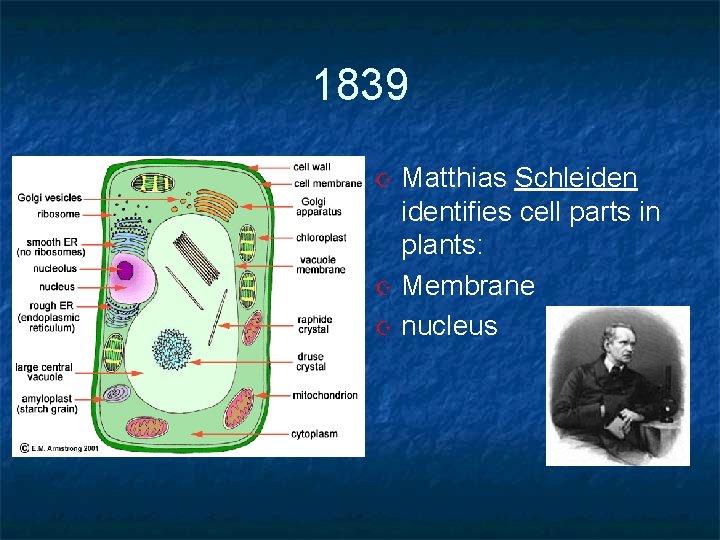
1839 Matthias Schleidentifies cell parts in plants: Membrane nucleus
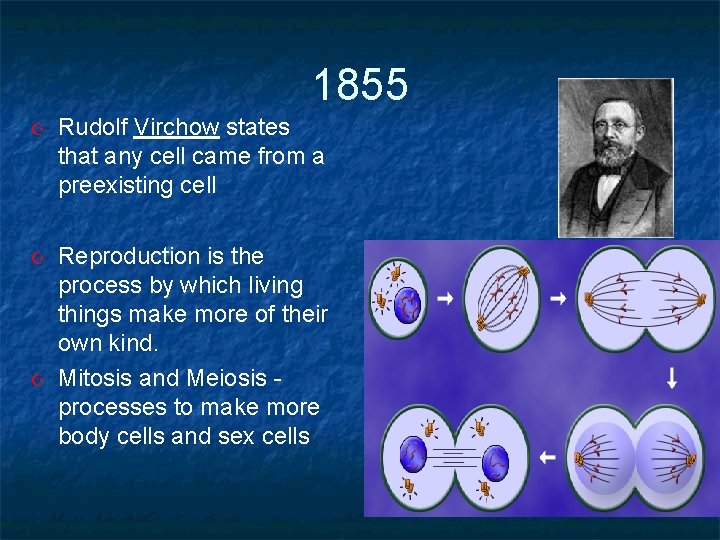
1855 Rudolf Virchow states that any cell came from a preexisting cell Reproduction is the process by which living things make more of their own kind. Mitosis and Meiosis processes to make more body cells and sex cells
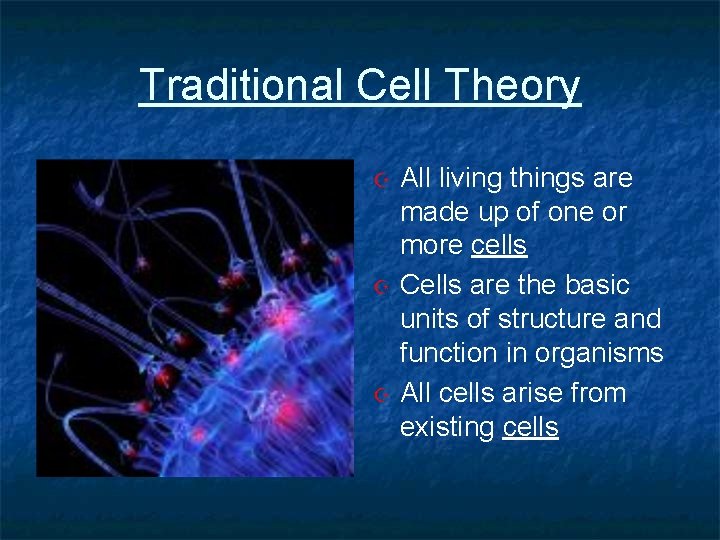
Traditional Cell Theory All living things are made up of one or more cells Cells are the basic units of structure and function in organisms All cells arise from existing cells
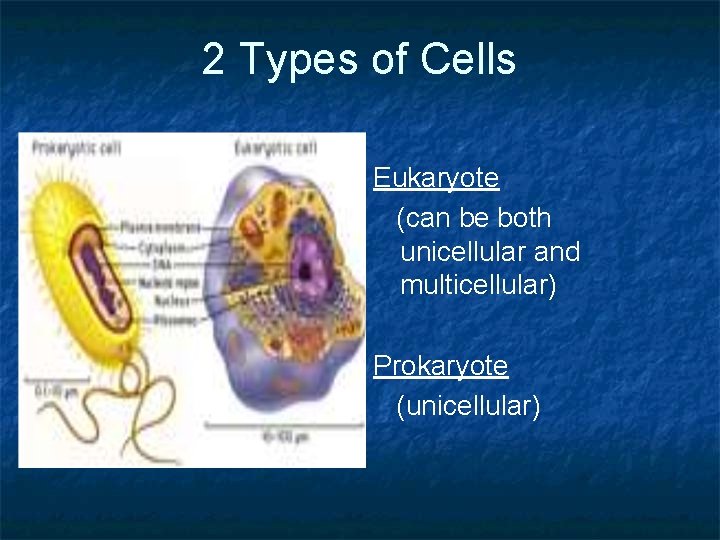
2 Types of Cells Eukaryote (can be both unicellular and multicellular) Prokaryote (unicellular)
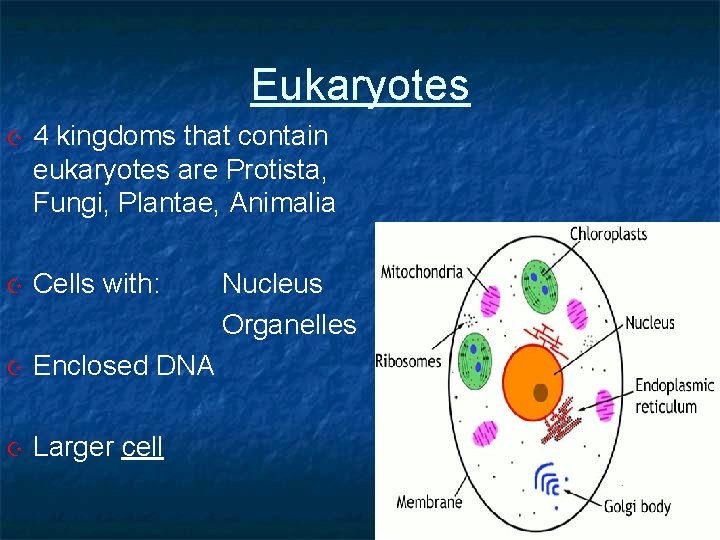
Eukaryotes 4 kingdoms that contain eukaryotes are Protista, Fungi, Plantae, Animalia Cells with: Enclosed DNA Larger cell Nucleus Organelles
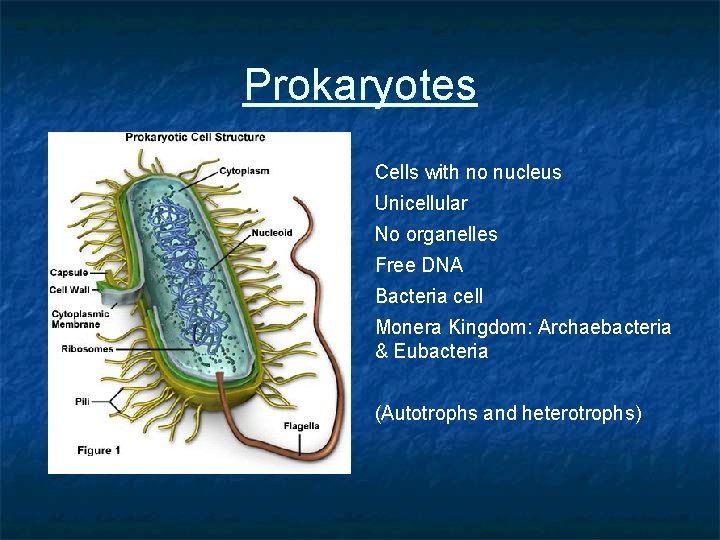
Prokaryotes Cells with no nucleus Unicellular No organelles Free DNA Bacteria cell Monera Kingdom: Archaebacteria & Eubacteria (Autotrophs and heterotrophs)
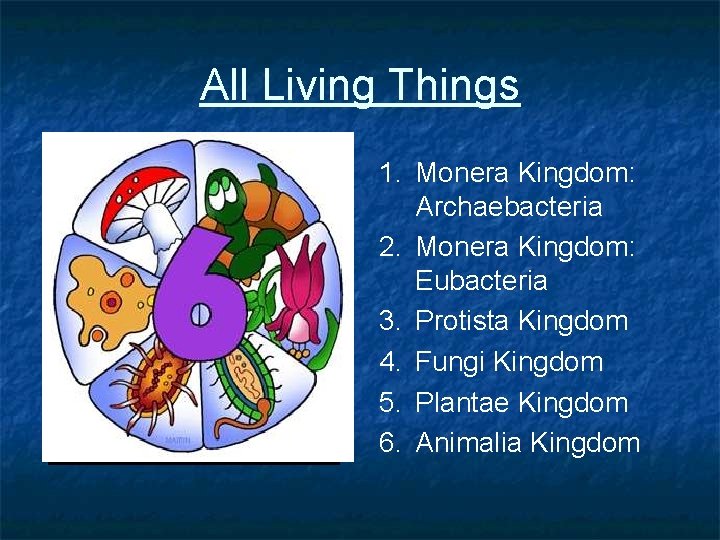
All Living Things 1. Monera Kingdom: Archaebacteria 2. Monera Kingdom: Eubacteria 3. Protista Kingdom 4. Fungi Kingdom 5. Plantae Kingdom 6. Animalia Kingdom
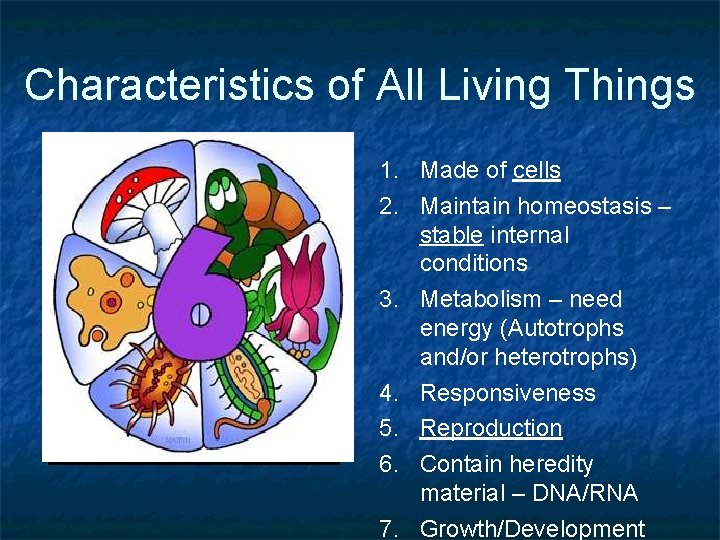
Characteristics of All Living Things 1. Made of cells 2. Maintain homeostasis – stable internal conditions 3. Metabolism – need energy (Autotrophs and/or heterotrophs) 4. Responsiveness 5. Reproduction 6. Contain heredity material – DNA/RNA 7. Growth/Development
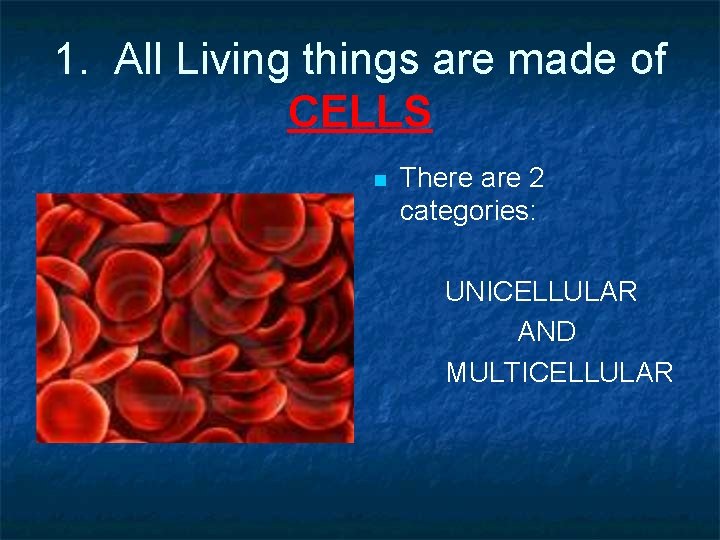
1. All Living things are made of CELLS n There are 2 categories: UNICELLULAR AND MULTICELLULAR
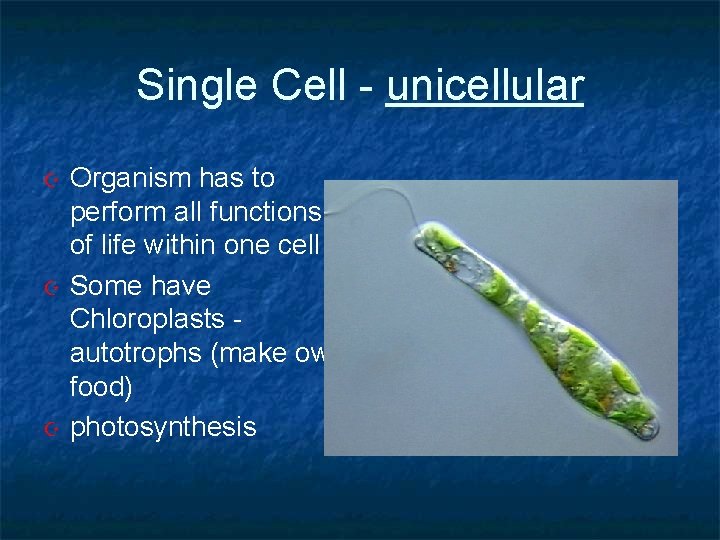
Single Cell - unicellular Organism has to perform all functions of life within one cell Some have Chloroplasts autotrophs (make own food) photosynthesis
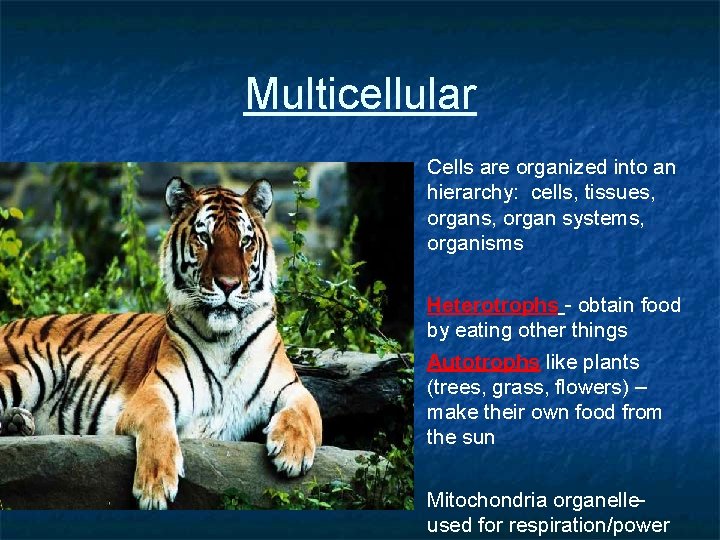
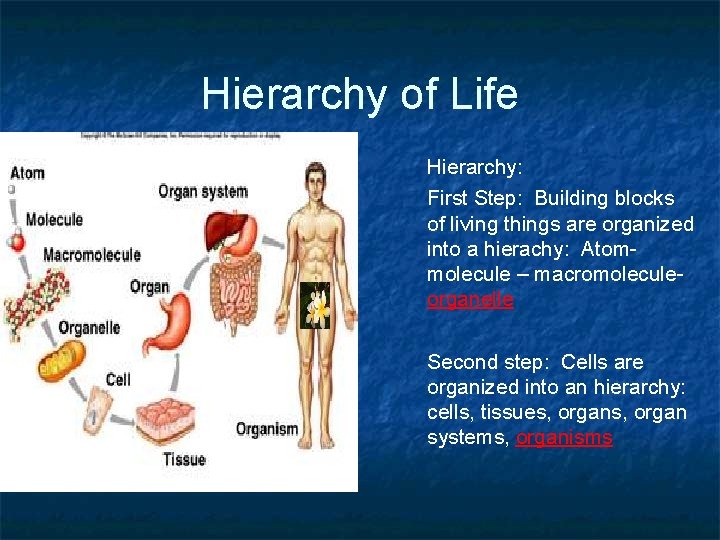
Multicellular Cells are organized into an hierarchy: cells, tissues, organ systems, organisms Heterotrophs - obtain food by eating other things Autotrophs like plants (trees, grass, flowers) – make their own food from the sun Mitochondria organelleused for respiration/power
Hierarchy of Life Hierarchy: First Step: Building blocks of living things are organized into a hierachy: Atommolecule – macromoleculeorganelle Second step: Cells are organized into an hierarchy: cells, tissues, organ systems, organisms
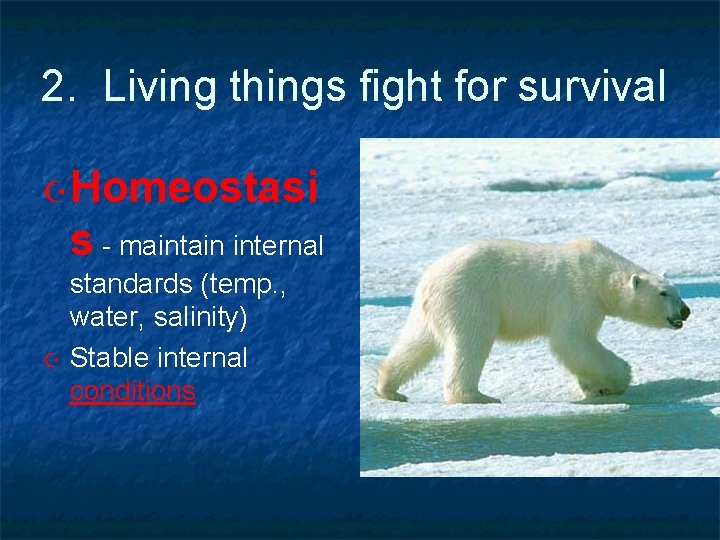
2. Living things fight for survival Homeostasi s - maintain internal standards (temp. , water, salinity) Stable internal conditions
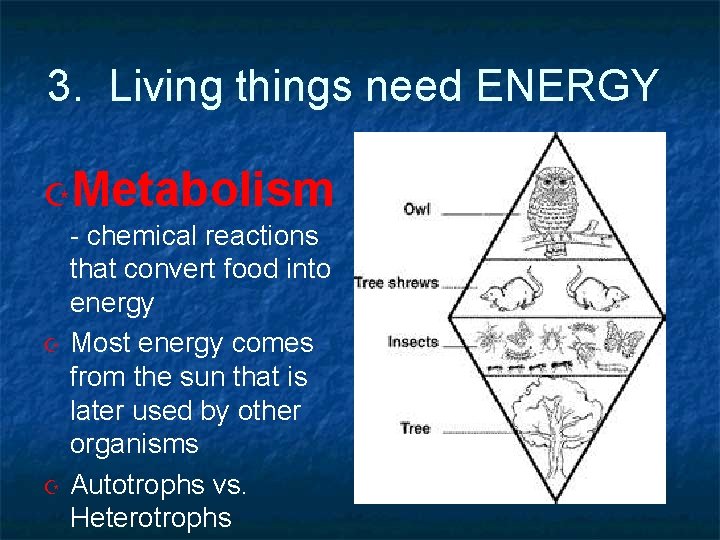
3. Living things need ENERGY Metabolism - chemical reactions that convert food into energy Most energy comes from the sun that is later used by other organisms Autotrophs vs. Heterotrophs
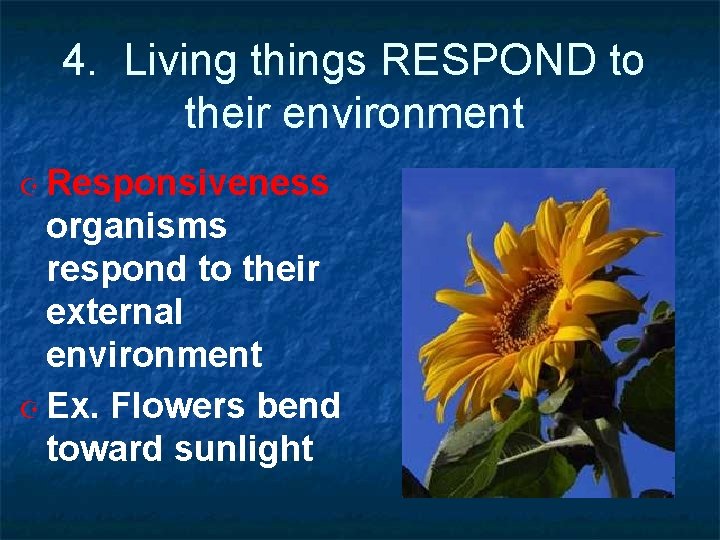
4. Living things RESPOND to their environment Responsiveness organisms respond to their external environment Ex. Flowers bend toward sunlight
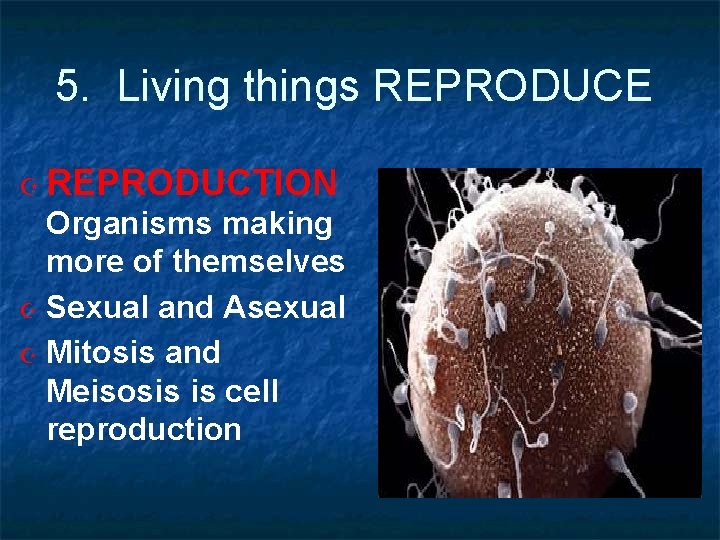
5. Living things REPRODUCE REPRODUCTION Organisms making more of themselves Sexual and Asexual Mitosis and Meisosis is cell reproduction
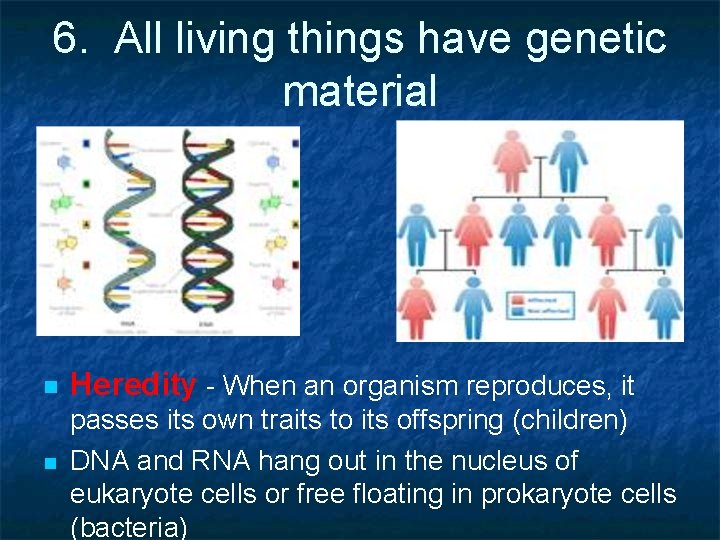
6. All living things have genetic material n n Heredity - When an organism reproduces, it passes its own traits to its offspring (children) DNA and RNA hang out in the nucleus of eukaryote cells or free floating in prokaryote cells (bacteria)
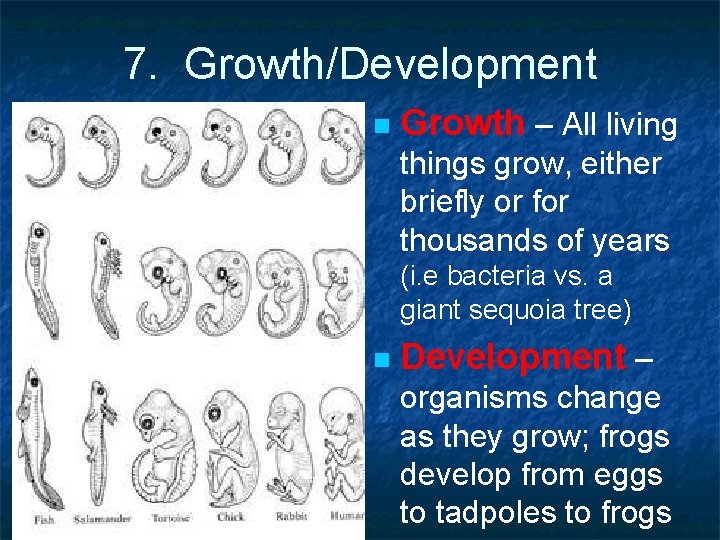
7. Growth/Development n Growth – All living things grow, either briefly or for thousands of years (i. e bacteria vs. a giant sequoia tree) n Development – organisms change as they grow; frogs develop from eggs to tadpoles to frogs
These characteristics led to the modification of the cell theory. n In addition to the traditional parts of the cell theory 3 more statements were added.
Modern Cell Theory n n n Energy flow (metabolism and biochemistry) occurs within cells Cells contain hereditary (DNA) information that is passed from cell to cell All cells are the same in chemical composition in organisms of similar species.