
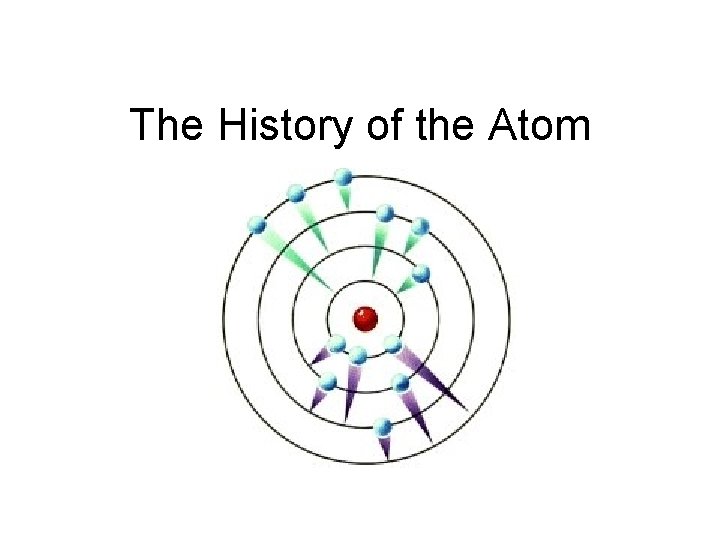
The History of the Atom 1 3 Atomic
- Slides: 36
The History of the Atom
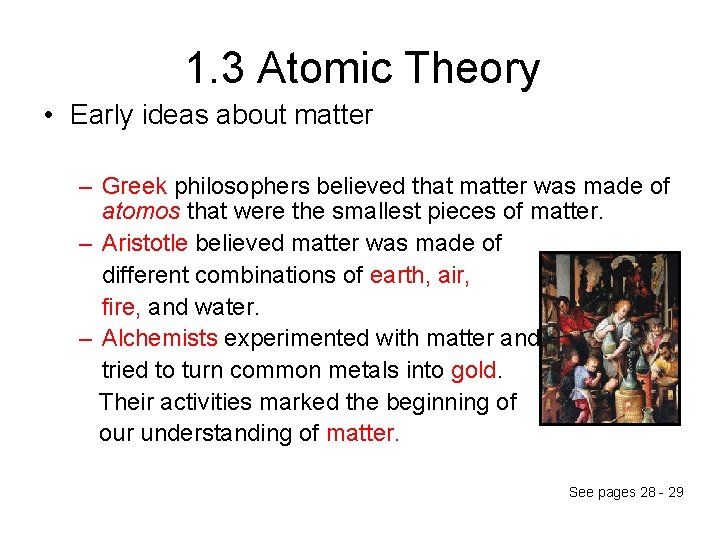
1. 3 Atomic Theory • Early ideas about matter – Greek philosophers believed that matter was made of atomos that were the smallest pieces of matter. – Aristotle believed matter was made of different combinations of earth, air, fire, and water. – Alchemists experimented with matter and tried to turn common metals into gold. Their activities marked the beginning of our understanding of matter. See pages 28 - 29
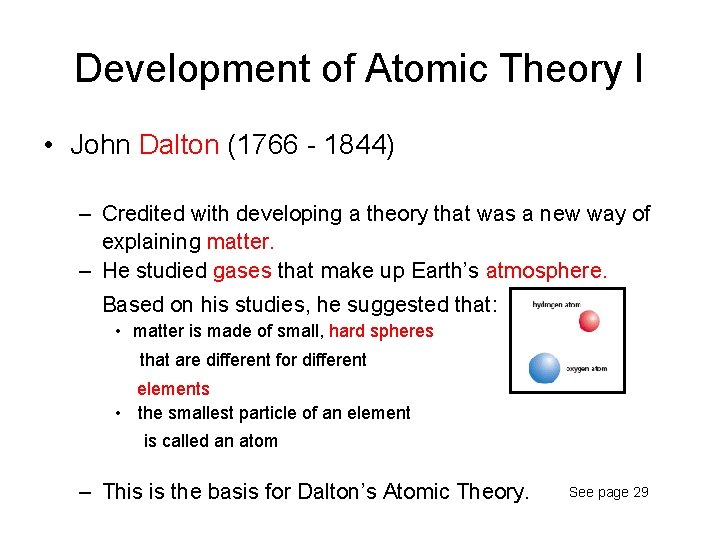
Development of Atomic Theory I • John Dalton (1766 - 1844) – Credited with developing a theory that was a new way of explaining matter. – He studied gases that make up Earth’s atmosphere. Based on his studies, he suggested that: • matter is made of small, hard spheres that are different for different elements • the smallest particle of an element is called an atom – This is the basis for Dalton’s Atomic Theory. See page 29
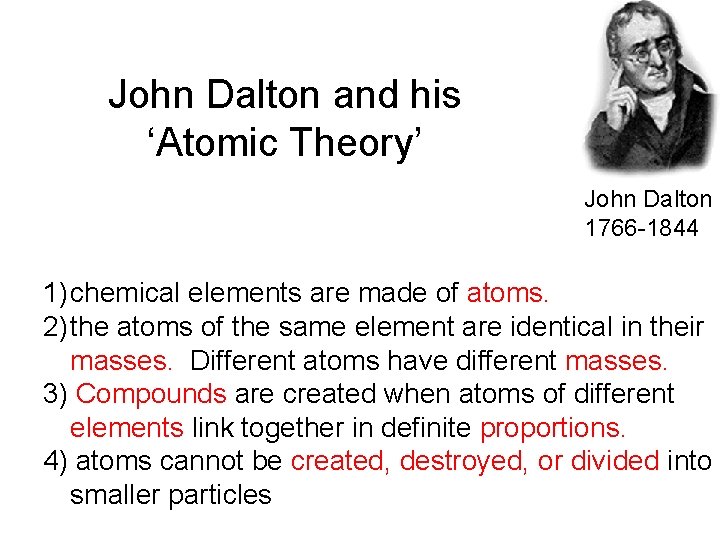
John Dalton and his ‘Atomic Theory’ John Dalton 1766 -1844 1) chemical elements are made of atoms. 2) the atoms of the same element are identical in their masses. Different atoms have different masses. 3) Compounds are created when atoms of different elements link together in definite proportions. 4) atoms cannot be created, destroyed, or divided into smaller particles
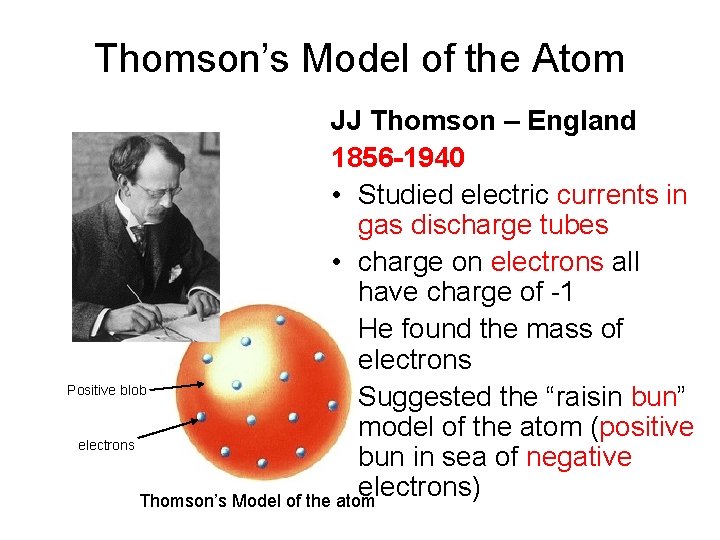
Thomson’s Model of the Atom JJ Thomson – England 1856 -1940 • Studied electric currents in gas discharge tubes • charge on electrons all have charge of -1 • He found the mass of electrons Positive blob • Suggested the “raisin bun” model of the atom (positive electrons bun in sea of negative electrons) Thomson’s Model of the atom
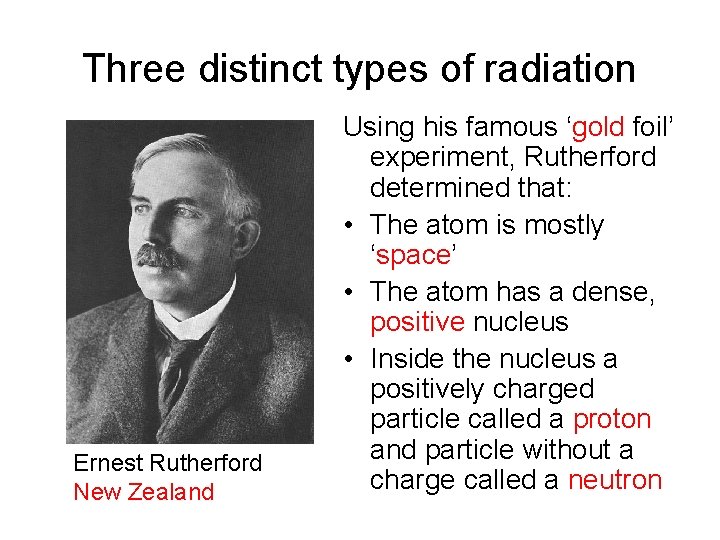
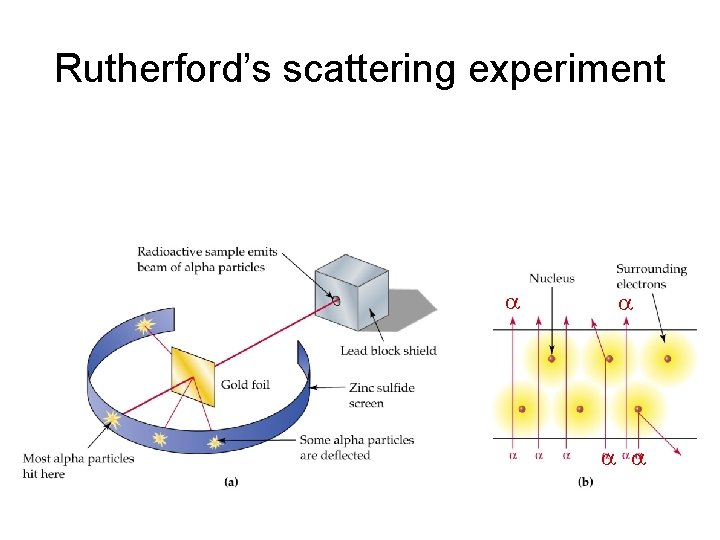
Three distinct types of radiation Ernest Rutherford New Zealand Using his famous ‘gold foil’ experiment, Rutherford determined that: • The atom is mostly ‘space’ • The atom has a dense, positive nucleus • Inside the nucleus a positively charged particle called a proton and particle without a charge called a neutron
Rutherford’s scattering experiment
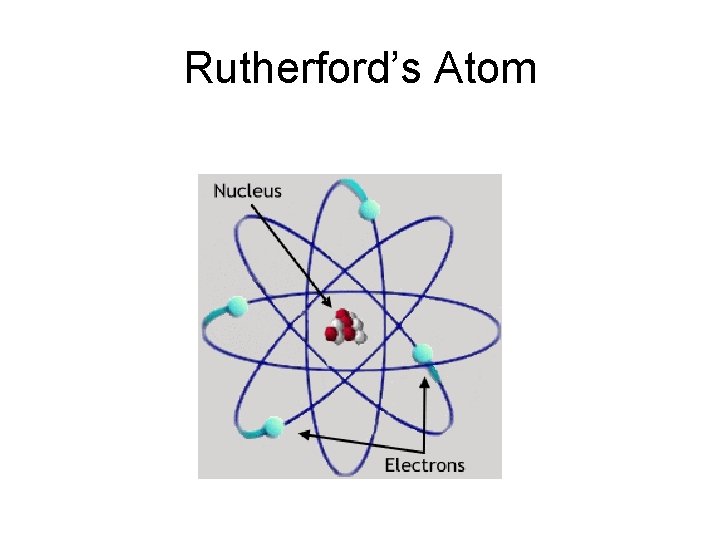
Rutherford’s Atom
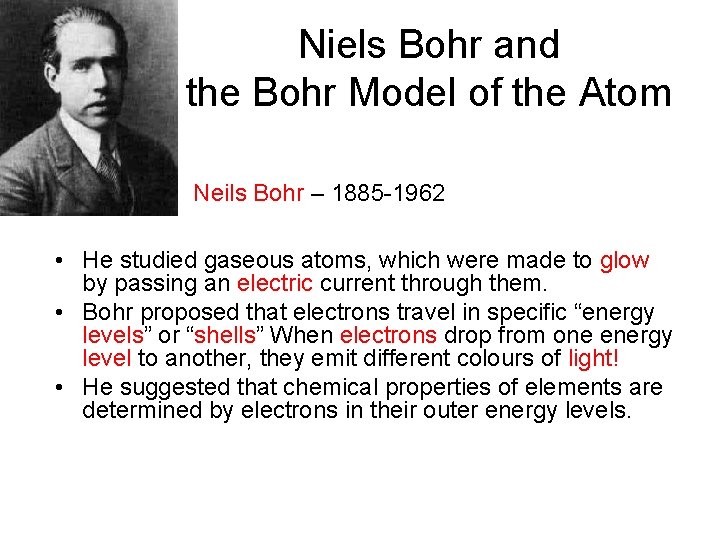
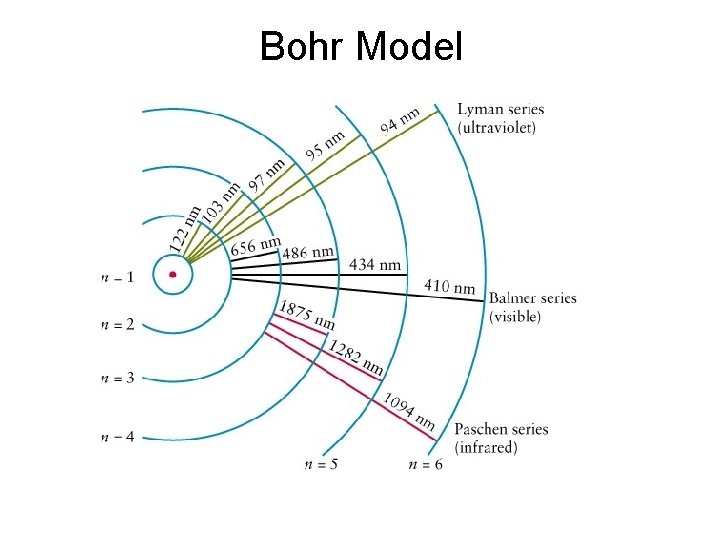
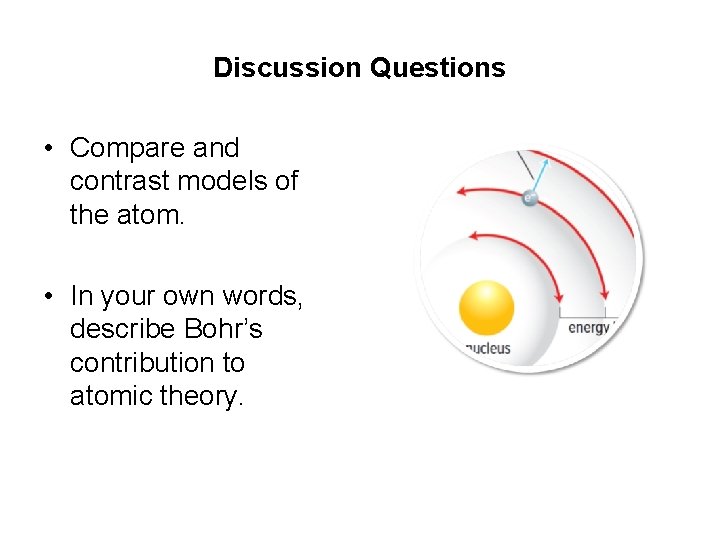
Niels Bohr and the Bohr Model of the Atom Neils Bohr – 1885 -1962 • He studied gaseous atoms, which were made to glow by passing an electric current through them. • Bohr proposed that electrons travel in specific “energy levels” or “shells” When electrons drop from one energy level to another, they emit different colours of light! • He suggested that chemical properties of elements are determined by electrons in their outer energy levels.
Bohr Model
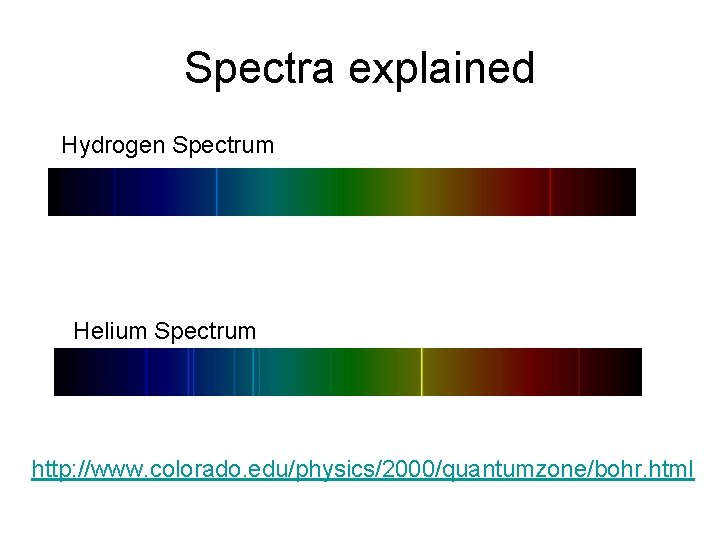
Spectra explained Hydrogen Spectrum Helium Spectrum http: //www. colorado. edu/physics/2000/quantumzone/bohr. html
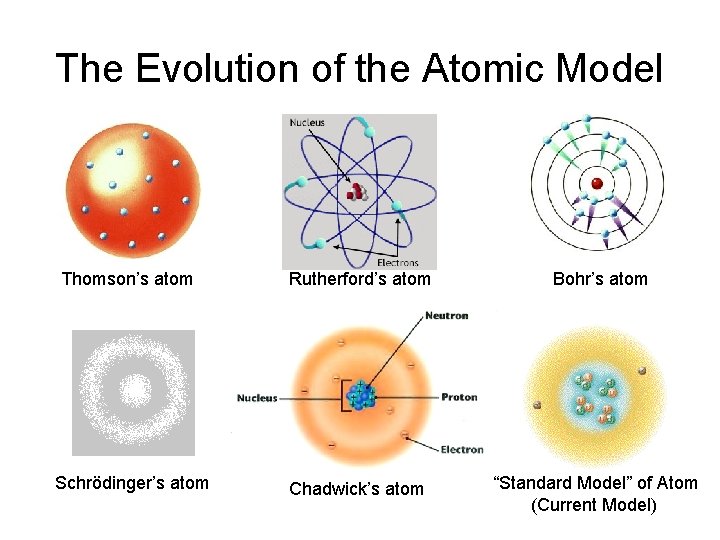
The Evolution of the Atomic Model Thomson’s atom Rutherford’s atom Bohr’s atom Schrödinger’s atom Chadwick’s atom “Standard Model” of Atom (Current Model)
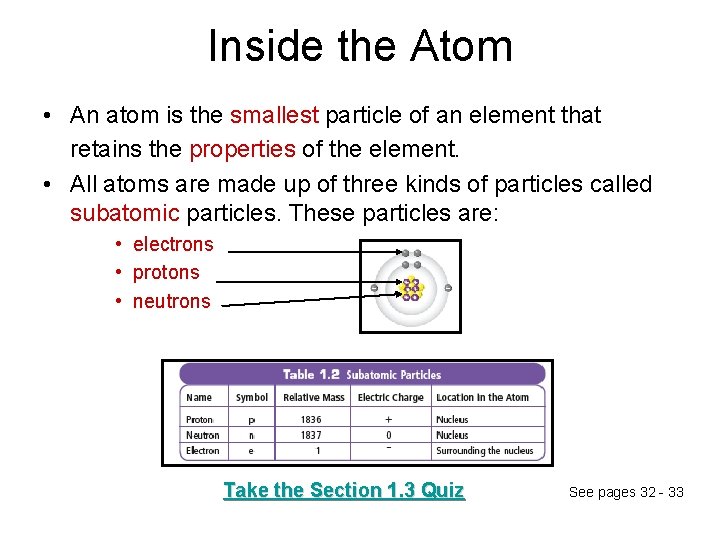
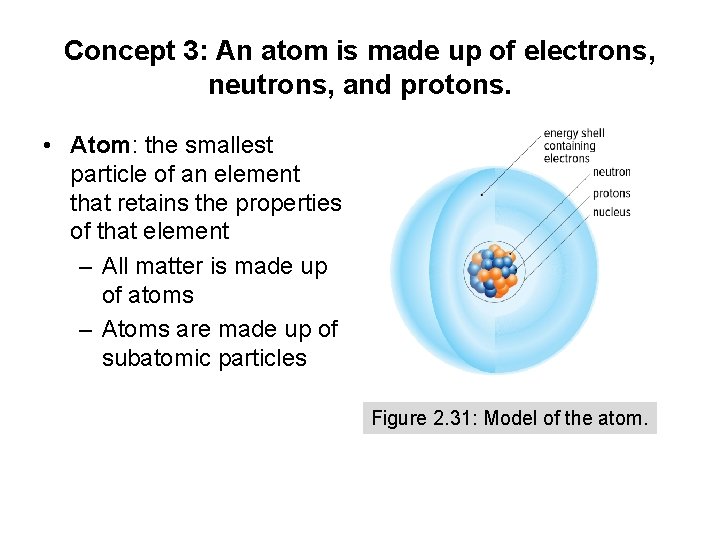
Inside the Atom • An atom is the smallest particle of an element that retains the properties of the element. • All atoms are made up of three kinds of particles called subatomic particles. These particles are: • electrons • protons • neutrons Take the Section 1. 3 Quiz See pages 32 - 33
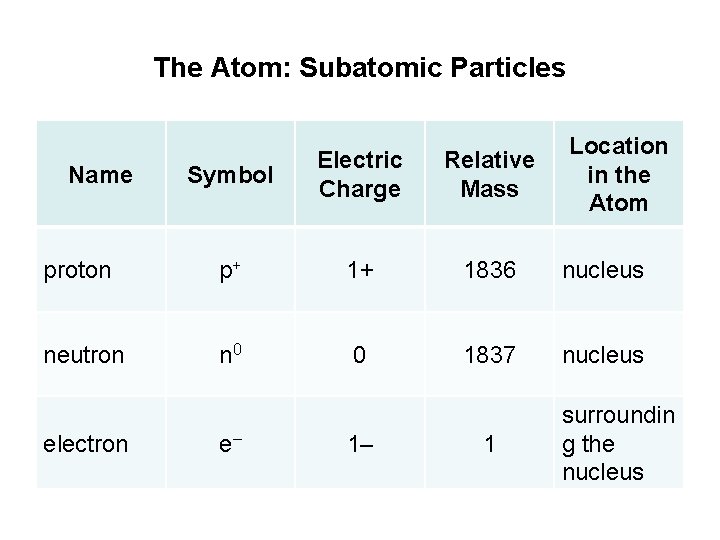
• Mass: protons and neutrons have about 1800 time’s more mass than electrons. • Electric Charge: – Protons have a positive charge and electrons have a negative charge. – Each proton counts as +1 and each electron counts as -1 – Together the charges add up to zero, making the atom neutral
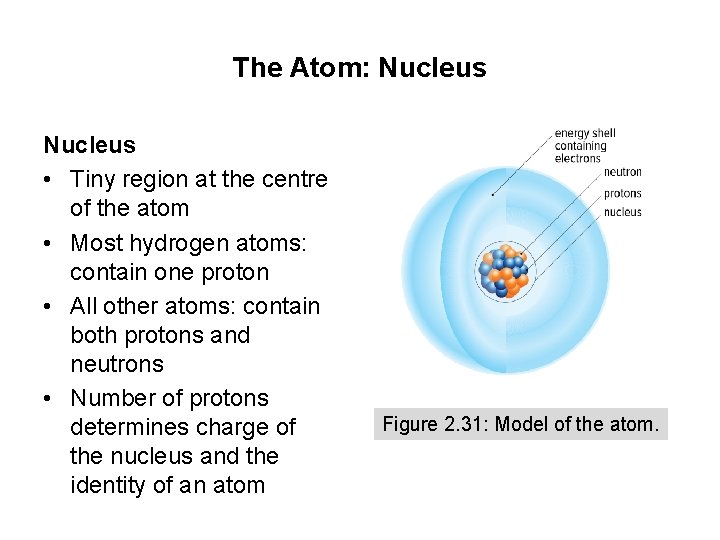
• The Nucleus: tiny region in centre of the atom. • It would take 10 000 nuclei lined up to stretch across an atom. • The nucleus always has a positive charge because of it’s protons. • Protons and neutrons are held in the nucleus and cannot normally leave.
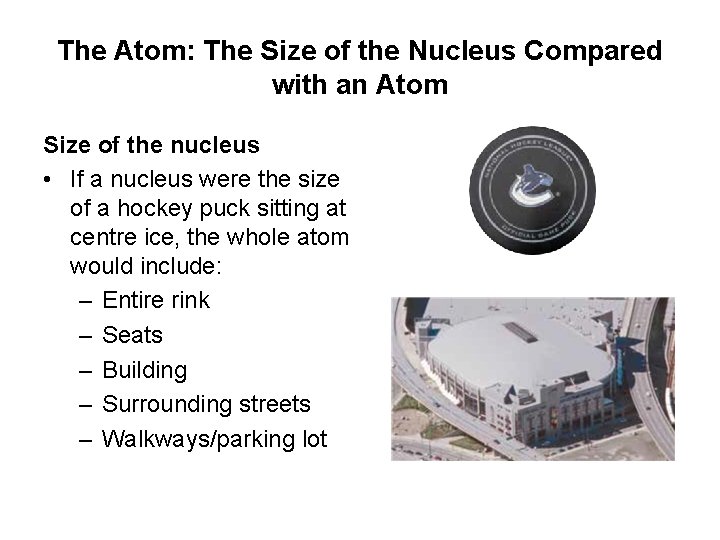
• Electrons: Electrons occupy energy shells or levels around the nucleus. • If a hockey puck was the nucleus, the whole atom would include the ice rink, the seats and the walls of a hockey arena. • Each electron occupies one whole level at a time.
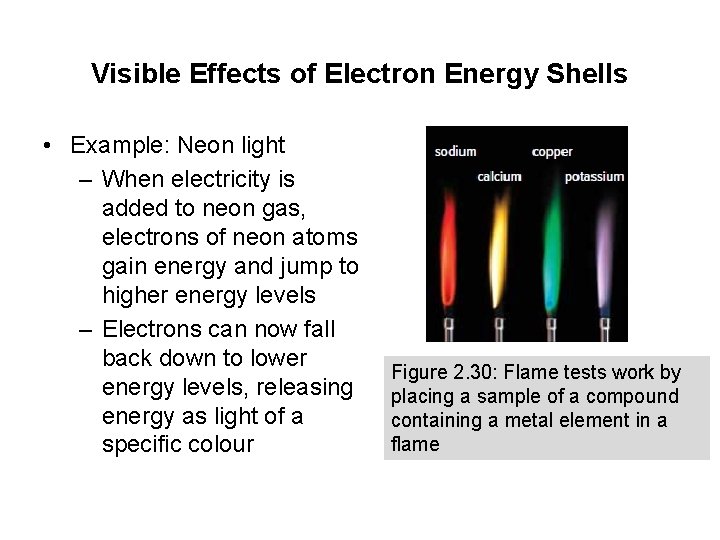
Visible Effects of Electron Energy Shells • Example: Neon light – When electricity is added to neon gas, electrons of neon atoms gain energy and jump to higher energy levels – Electrons can now fall back down to lower energy levels, releasing energy as light of a specific colour Figure 2. 30: Flame tests work by placing a sample of a compound containing a metal element in a flame
Discussion Questions • Compare and contrast models of the atom. • In your own words, describe Bohr’s contribution to atomic theory.
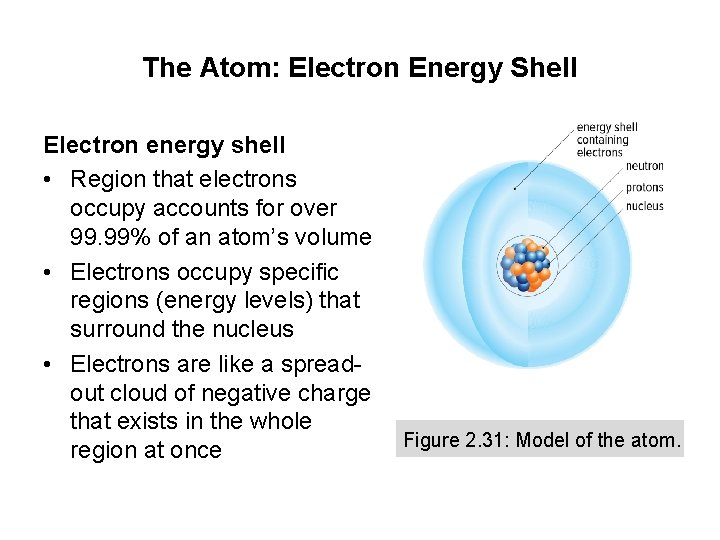
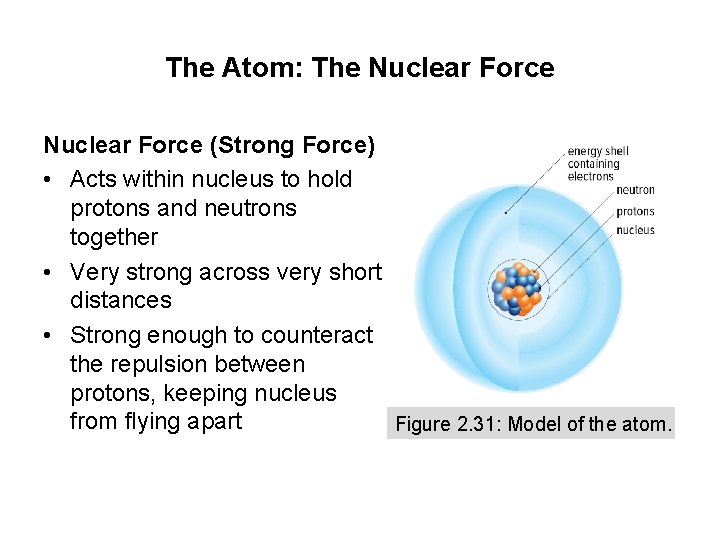
Concept 3: An atom is made up of electrons, neutrons, and protons. • Atom: the smallest particle of an element that retains the properties of that element – All matter is made up of atoms – Atoms are made up of subatomic particles Figure 2. 31: Model of the atom.
The Atom: Nucleus • Tiny region at the centre of the atom • Most hydrogen atoms: contain one proton • All other atoms: contain both protons and neutrons • Number of protons determines charge of the nucleus and the identity of an atom Figure 2. 31: Model of the atom.
The Atom: Electron Energy Shell Electron energy shell • Region that electrons occupy accounts for over 99. 99% of an atom’s volume • Electrons occupy specific regions (energy levels) that surround the nucleus • Electrons are like a spreadout cloud of negative charge that exists in the whole region at once Figure 2. 31: Model of the atom.
The Atom: Electric Charge • Comes in two types: positive and negative • Protons: positive charge (1+ each) • Electrons: negative charge (1– each) • Neutrons: no charge • Positive charge of protons in the nucleus attractions electrons • Overall charge of an atom: uncharged/neutral (equal numbers of protons and electrons)
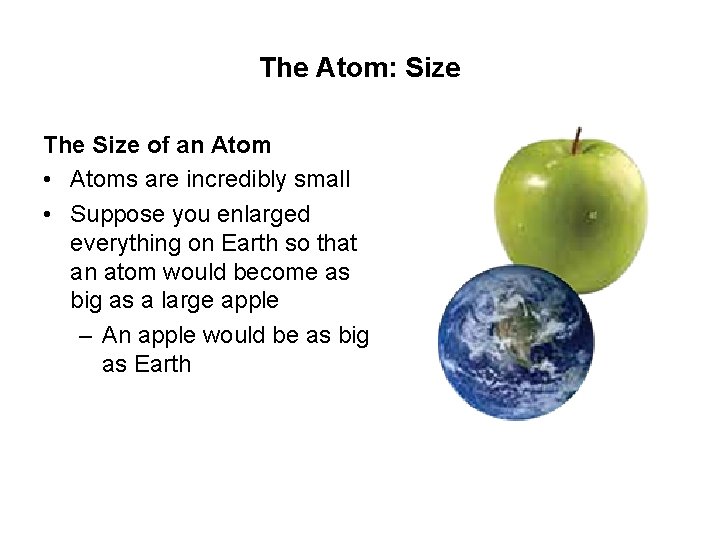
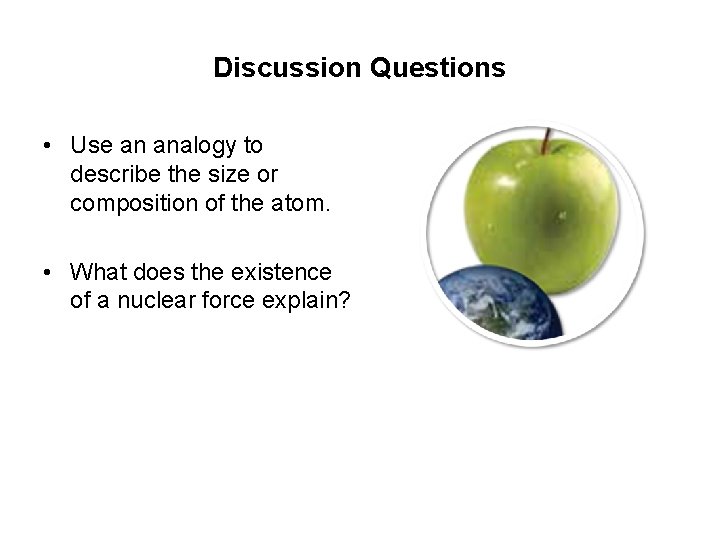
The Atom: Size The Size of an Atom • Atoms are incredibly small • Suppose you enlarged everything on Earth so that an atom would become as big as a large apple – An apple would be as big as Earth
The Atom: The Size of the Nucleus Compared with an Atom Size of the nucleus • If a nucleus were the size of a hockey puck sitting at centre ice, the whole atom would include: – Entire rink – Seats – Building – Surrounding streets – Walkways/parking lot
The Atom: The Nuclear Force (Strong Force) • Acts within nucleus to hold protons and neutrons together • Very strong across very short distances • Strong enough to counteract the repulsion between protons, keeping nucleus from flying apart Figure 2. 31: Model of the atom.
The Atom: Subatomic Particles Location in the Atom Symbol Electric Charge Relative Mass proton p+ 1+ 1836 nucleus neutron n 0 0 1837 nucleus Name electron e– 1– 1 surroundin g the nucleus
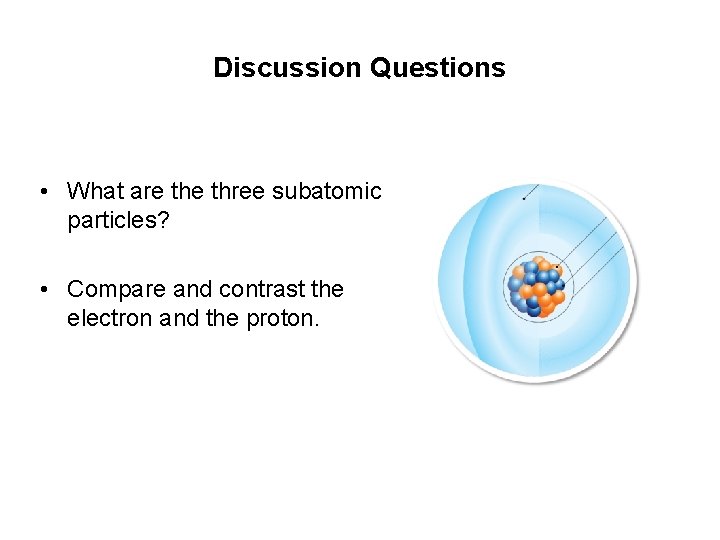
Discussion Questions • What are three subatomic particles? • Compare and contrast the electron and the proton.
Discussion Questions • Use an analogy to describe the size or composition of the atom. • What does the existence of a nuclear force explain?
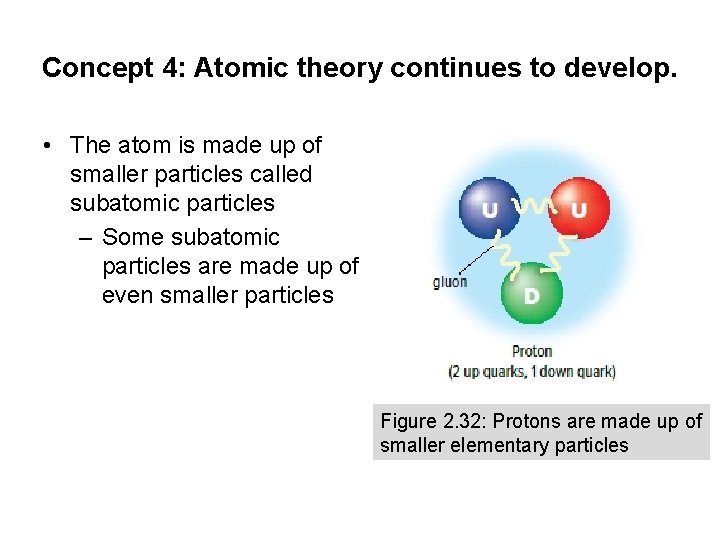
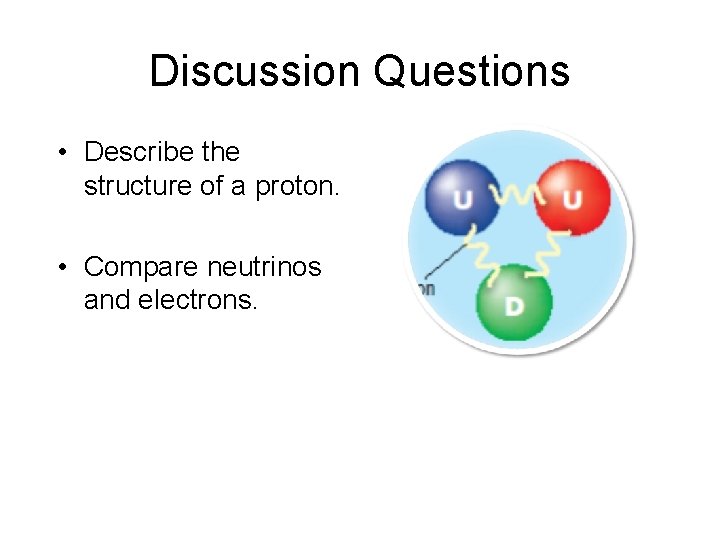
Concept 4: Atomic theory continues to develop. • The atom is made up of smaller particles called subatomic particles – Some subatomic particles are made up of even smaller particles Figure 2. 32: Protons are made up of smaller elementary particles
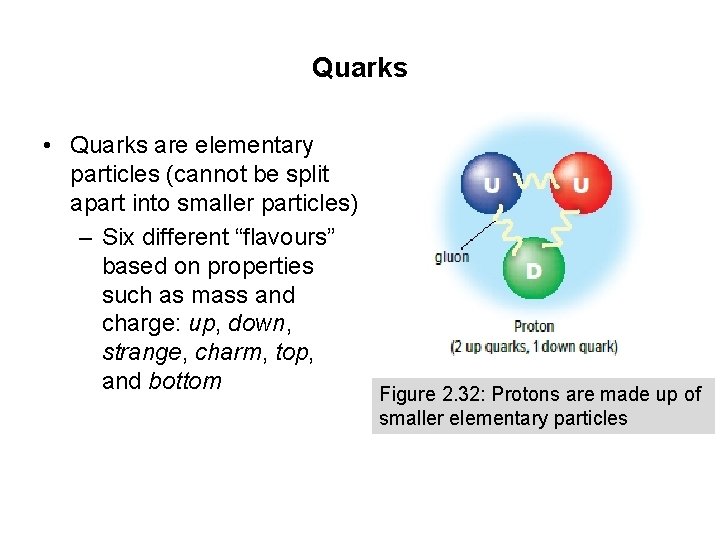
Quarks • Quarks are elementary particles (cannot be split apart into smaller particles) – Six different “flavours” based on properties such as mass and charge: up, down, strange, charm, top, and bottom Figure 2. 32: Protons are made up of smaller elementary particles
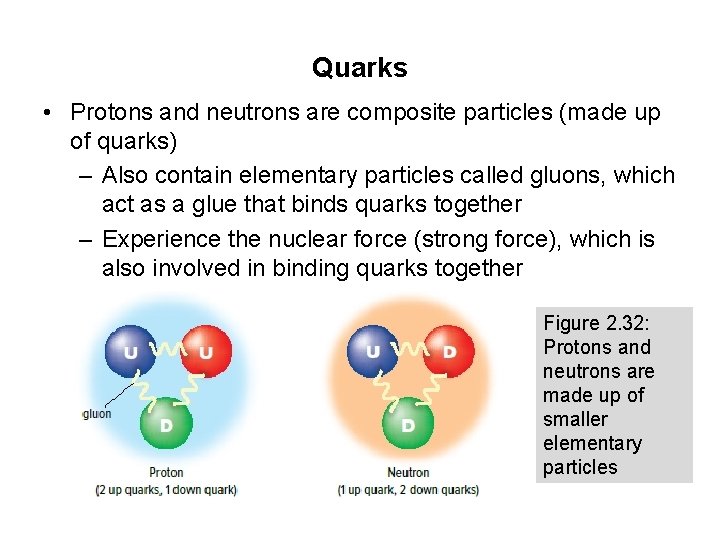
Quarks • Protons and neutrons are composite particles (made up of quarks) – Also contain elementary particles called gluons, which act as a glue that binds quarks together – Experience the nuclear force (strong force), which is also involved in binding quarks together Figure 2. 32: Protons and neutrons are made up of smaller elementary particles
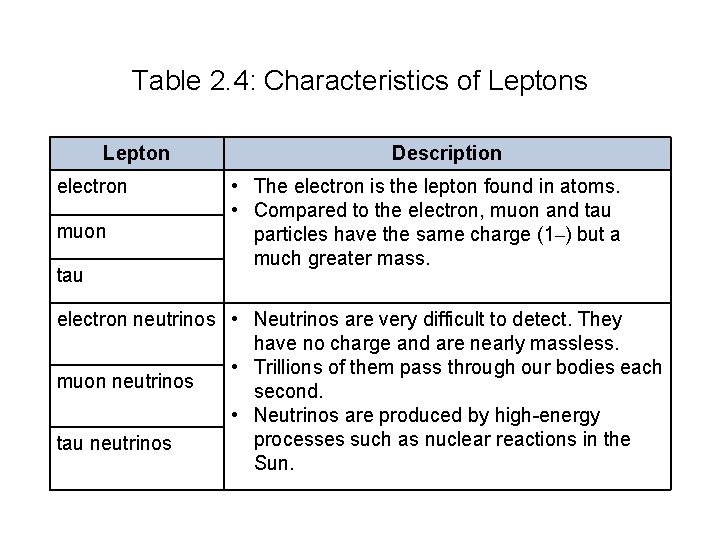
Leptons • Electrons are elementary particles called leptons – Come in six “flavours”: electron, muon, tau, electron neutrino, muon neutrino, and tau neutrino – Do not experience the nuclear force (strong force)
Table 2. 4: Characteristics of Leptons Lepton electron muon tau Description • The electron is the lepton found in atoms. • Compared to the electron, muon and tau particles have the same charge (1–) but a much greater mass. electron neutrinos • Neutrinos are very difficult to detect. They have no charge and are nearly massless. • Trillions of them pass through our bodies each muon neutrinos second. • Neutrinos are produced by high-energy processes such as nuclear reactions in the tau neutrinos Sun.
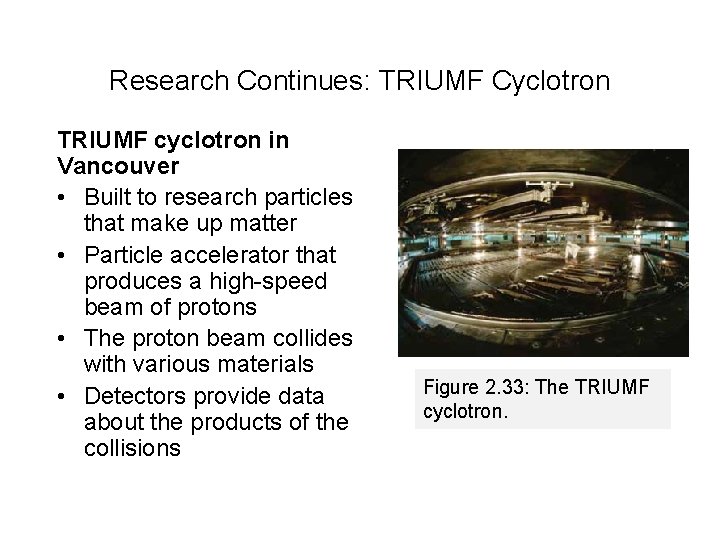
Research Continues: TRIUMF Cyclotron TRIUMF cyclotron in Vancouver • Built to research particles that make up matter • Particle accelerator that produces a high-speed beam of protons • The proton beam collides with various materials • Detectors provide data about the products of the collisions Figure 2. 33: The TRIUMF cyclotron.
Discussion Questions • Describe the structure of a proton. • Compare neutrinos and electrons.
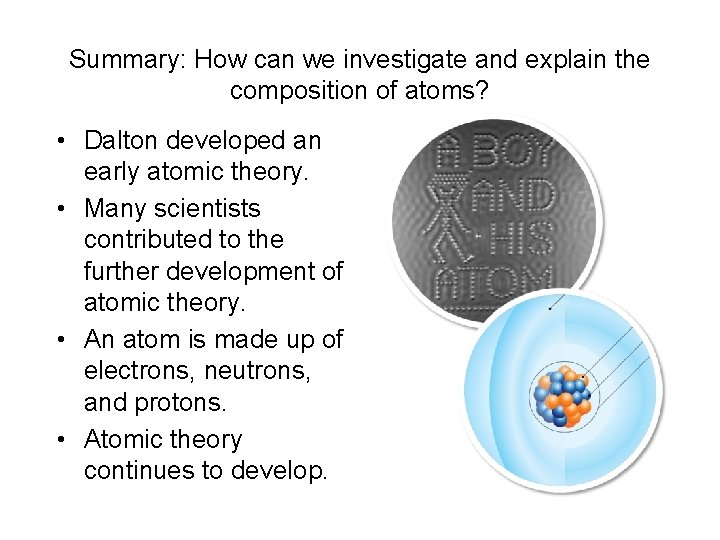
Summary: How can we investigate and explain the composition of atoms? • Dalton developed an early atomic theory. • Many scientists contributed to the further development of atomic theory. • An atom is made up of electrons, neutrons, and protons. • Atomic theory continues to develop.