
The History of Shakespeare William Shakespeares Life Time

- Slides: 12
The History of Shakespeare William Shakespeare's Life & Time Period
William Shakespeare: ü ü ü ü Born: April 23, 1564 and Died: April 23, 1616 The third of eight children in his family Lived in Stratford, England (market town close to London) Father: John was a shopkeeper, glove maker and high bailiff John was a man of importance (high bailiff is an elected official similar to mayor) Mother: Mary Arden His father’s social status helped Shakespeare advance in his society
William Shakespeare (1564 -1616): ü ü ü Attended a prestigious grammar school Married Anne Hathaway at age 18 (she was 8 years older than he was) Children: Susanna, Twins Judith and Hamnet (Hamnet died at age 11) Moved to London, leaving his family behind. The Lost Years 1585 -1592: Not much is documented or known about Shakespeare in this period By 1592 he had become an actor and playwright
Actor and Playwright History: ü Highbrow: Richer, nobler people quality ü Lowbrow: Poorer or working class people quality ü ü ü Characters of Royalty and Nobility appealed to highbrow work Characters such as clowns and servants provide comic relief and appealed to lowbrow work By 1592, Shakespeare was a member of theatrical company, Lord Chamberlain’s Men, aka the King’s Men, a company supported by King James.
Actor and Playwright History: ü Shakespeare wrote 37 plays in his lifetime: Julius Caesar, Hamlet, Othello, King Lear, and Macbeth ü Quality: Highbrow ü Known as a successful playwright and actor in London by 1592 ü 1593 Theaters closed due to The Plague ü Wrote plays and famous sonnets ü Grew in popularity and wealth ü Died at 52, on April 23, 1616, of unknown causes ü Buried in Stratford with a famous epitaph
Shakespeare’s Famous Epitaph: ü Shakespeare is buried under the old stone floor of Holy Trinity Church in Stratford with these words carved above his grave: Good friend, for Jesus’ sake forbear To dig the dust enclosed here Blessed be the man that spares these stones And cursed be he that moves my bones. ü His bones still lie undisturbed to this day
Shakespearean Prose VS Poetry: ü Prose is spoken by the common people and sometimes Mercutio when he is joking throughout the play ü Most of the characters speak in poetry ü Blank Verse: No rhyme at the end of the lines ü Iambic Pentameter: unstressed syllable is followed by a stressed syllable. The word pre-FER. ü Shakespearean Sonnets: alternating rhyme scheme (ababcdcd) then switches in the tenth line to couplets (ee). ü Full of puns, literary elements, and word play!
Elizabethan Theatre: ü ü Galleries: covered seating around edge and in balconies (upper class seating) 1500 people = more money Groundlings: people who stood on the floor in front of stage (lower class lawn seats) Possible for people of all social classes to attend
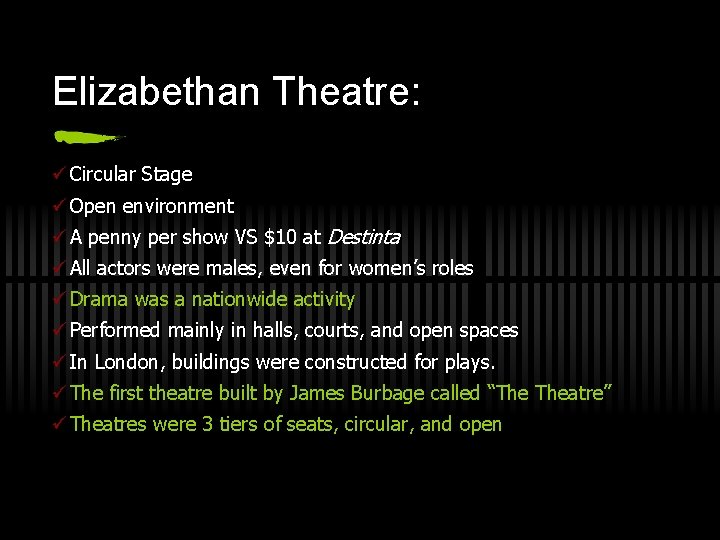
Elizabethan Theatre: ü Circular Stage ü Open environment ü A penny per show VS $10 at Destinta ü All actors were males, even for women’s roles ü Drama was a nationwide activity ü Performed mainly in halls, courts, and open spaces ü In London, buildings were constructed for plays. ü The first theatre built by James Burbage called “The Theatre” ü Theatres were 3 tiers of seats, circular, and open
The Globe Theatre: ü The first movie theatre ü There’d be no Destinta without it! ü Shakespeare was part owner and produced many plays there. ü Constructed from parts of THEATRE in 1599. ü 20 sided and seated 2500 people ü June 1613 fire from cannon explosion during Henry VIII destroyed The Globe ü The Globe was rebuilt a year later
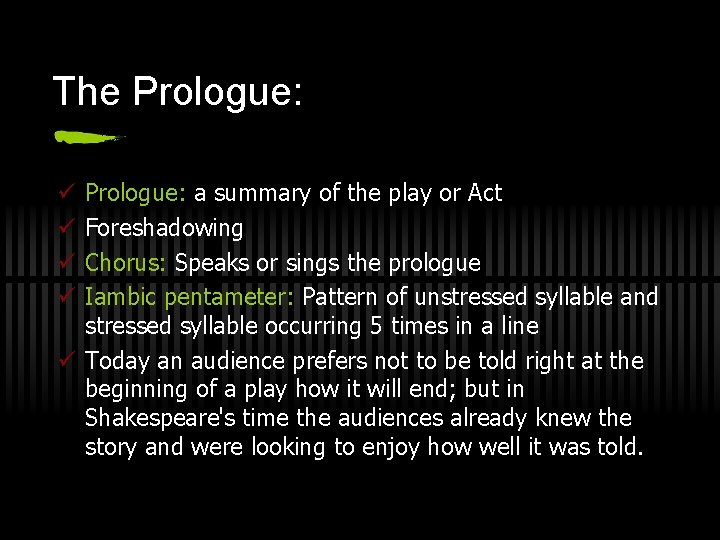
The Prologue: a summary of the play or Act Foreshadowing Chorus: Speaks or sings the prologue Iambic pentameter: Pattern of unstressed syllable and stressed syllable occurring 5 times in a line ü Today an audience prefers not to be told right at the beginning of a play how it will end; but in Shakespeare's time the audiences already knew the story and were looking to enjoy how well it was told. ü ü
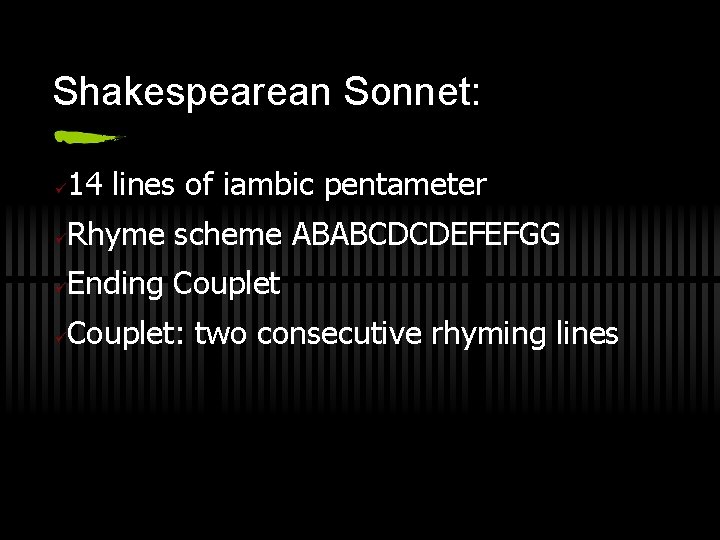
Shakespearean Sonnet: ü 14 lines of iambic pentameter ü Rhyme scheme ABABCDCDEFEFGG ü Ending Couplet ü Couplet: two consecutive rhyming lines