
The History of Reading in Research and Policy
- Slides: 23
The History of Reading in Research and Policy 1960’s until present Mark Conley What is Literacy?
Great Society Programs – 1960’s • Right to Read • Ameri. Corps/Vista • Teacher Corps
First educational malpractice lawsuits appear – 1960’s • “a school district has the duty of educating a student to a certain required minimum level of proficiency. ” – When Can Johnny Sue? • Since schools have taken up the obligation to educate, they must demonstrate due process in ensuring that students learn sufficiently to earn a diploma. • Schools that fail to get students to sufficient levels of literacy and fail to recognize lack of progress or to remediate are liable for educational malpractice. • In response to the legal challenges, competency testing at the state level commences in 1970,
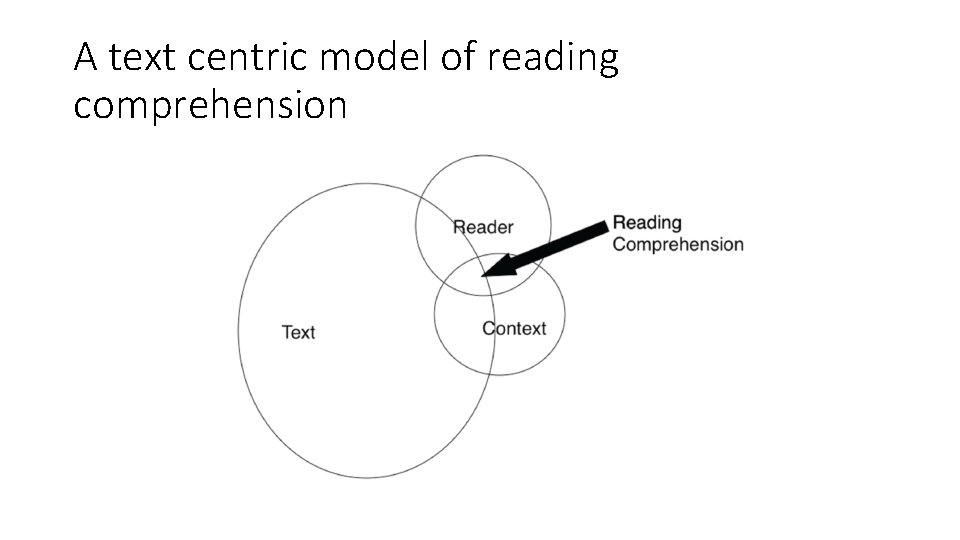
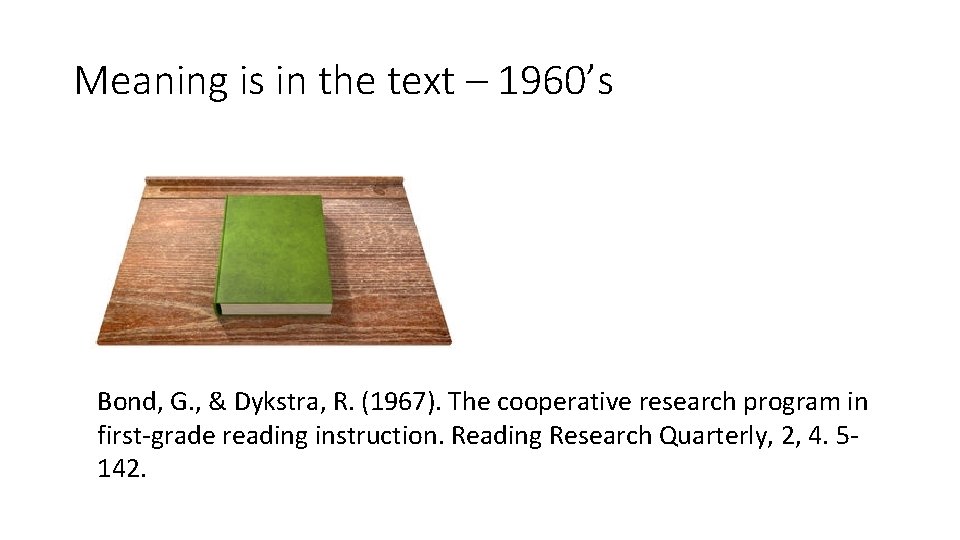
A text centric model of reading comprehension
Meaning is in the text – 1960’s Bond, G. , & Dykstra, R. (1967). The cooperative research program in first-grade reading instruction. Reading Research Quarterly, 2, 4. 5142.
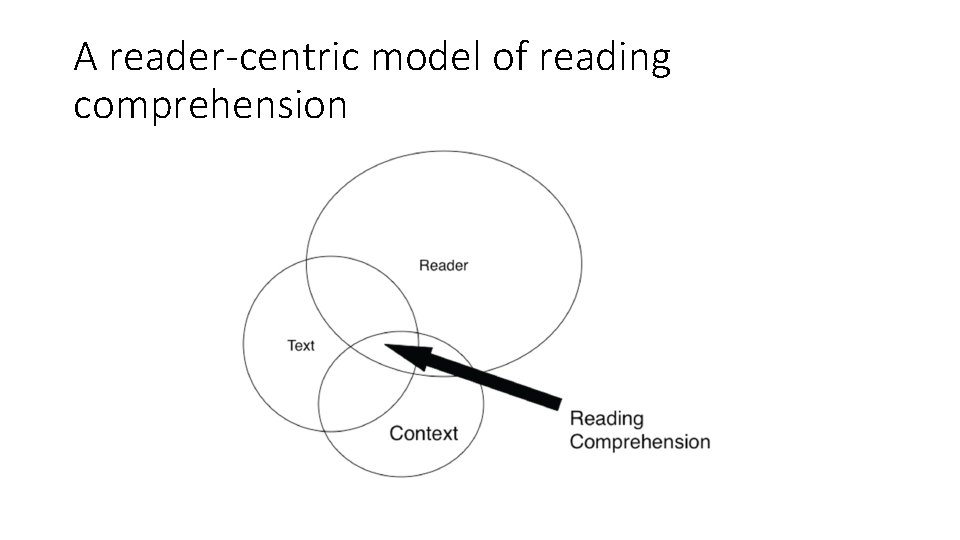
A reader-centric model of reading comprehension
Readers might play a role in reading – 1970’s and beyond Anderson, R. , Pichert, J. , Goetz, E. , Schallert, D. , Stevens, K. , & Trollip, S. (1976). Instantiation of general terms. Journal of Verbal Learning and Verbal Behavior, 667 -679. Asher, S. R. , Hymel, S. , & Wigfield, A. (1978). Influence of topic interest on children's reading comprehension. Journal of Reading Behavior, 10, 35 -47
Thinking about Thinking: Metacognition and Reading – more 1980’s Paris, S. , Oka, E. (1986). Children’s reading strategies, metacognition, and motivation. Developmental Review, 6, 1, 25 -56. Armbruster, B. , Anderson, T. , Ostertag, J. (1987). Does text structure/summarization instruction facilitate learning from expository text? Reading Research Quarterly, 22, 3, 331 -346.
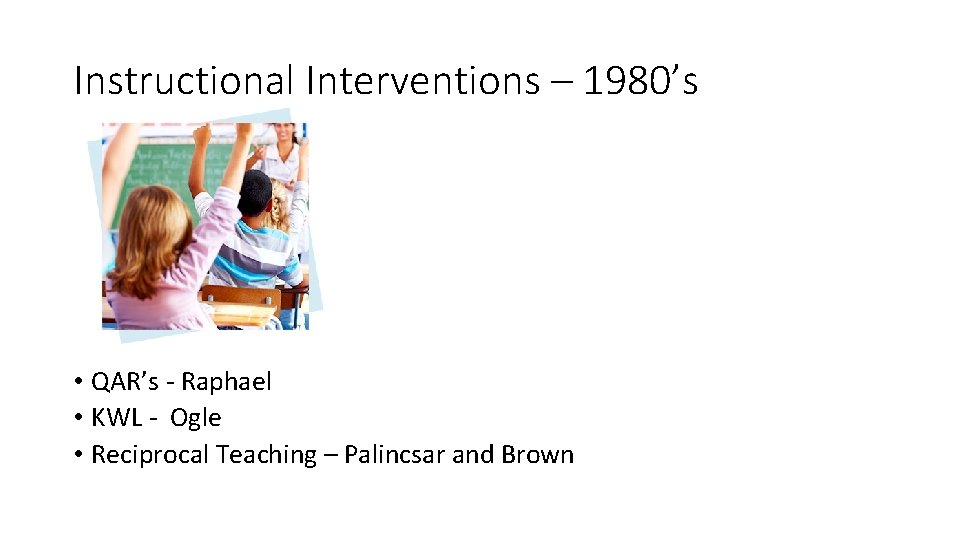
Instructional Interventions – 1980’s • QAR’s - Raphael • KWL - Ogle • Reciprocal Teaching – Palincsar and Brown
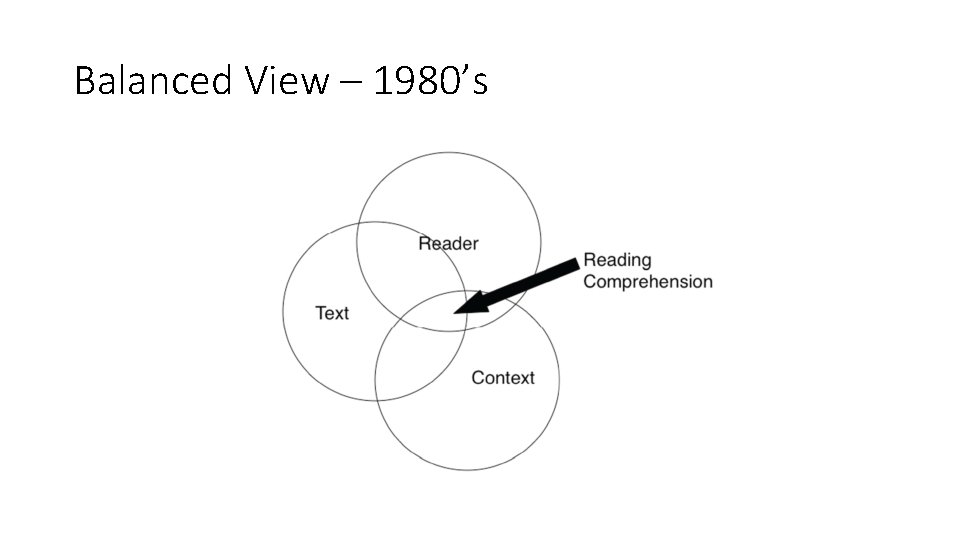
Balanced View – 1980’s
Michigan reading test revisions – The new definition of reading – 1980’s • State test that embeds features of texts and students in the test. • Typical literacy and inferential test questions, that focus attention on text meaning. • New emphasis on how readers construct meaning from and with texts. • Assessing prior knowledge (topic familarity) and motivation on a large scale. • New categories of meaning, including thematic and “beyond text” understandings.
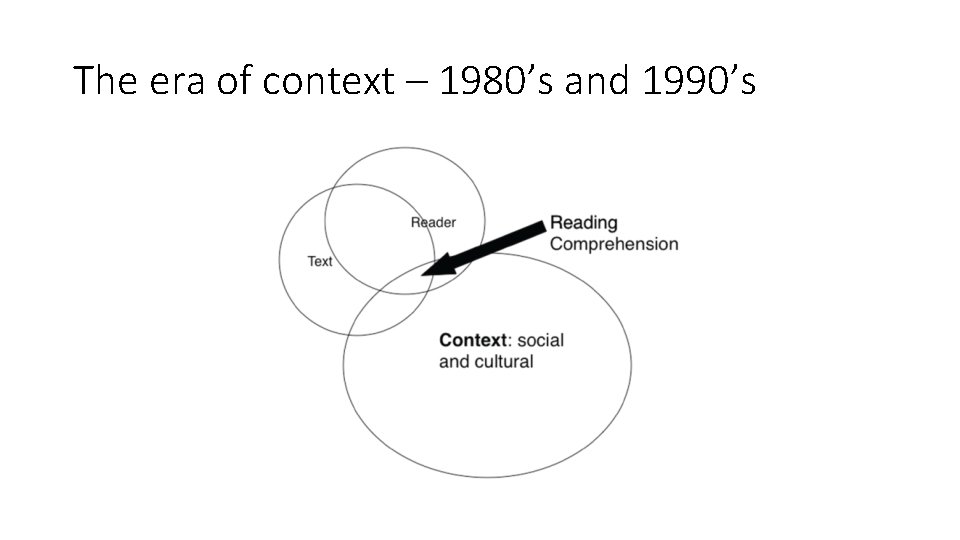
The era of context – 1980’s and 1990’s
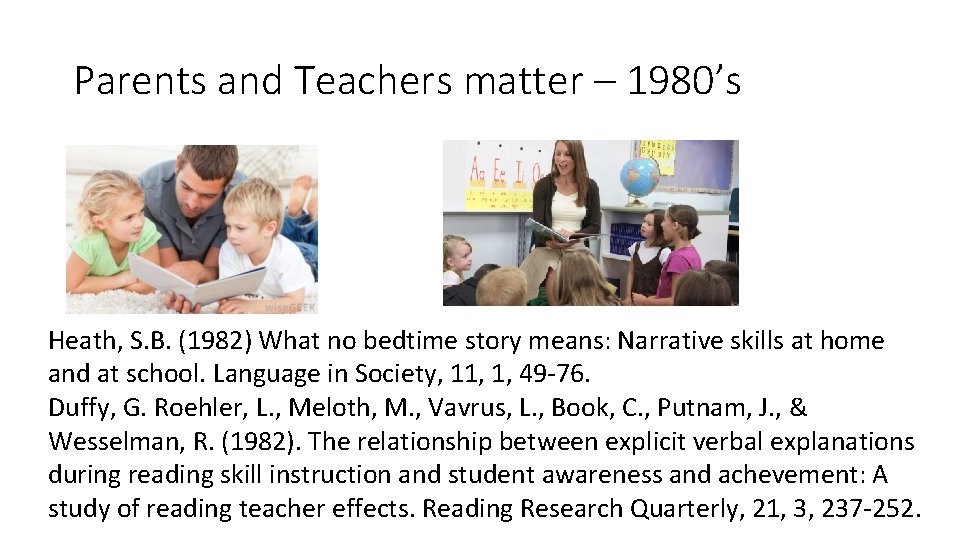
Parents and Teachers matter – 1980’s Heath, S. B. (1982) What no bedtime story means: Narrative skills at home and at school. Language in Society, 11, 1, 49 -76. Duffy, G. Roehler, L. , Meloth, M. , Vavrus, L. , Book, C. , Putnam, J. , & Wesselman, R. (1982). The relationship between explicit verbal explanations during reading skill instruction and student awareness and achevement: A study of reading teacher effects. Reading Research Quarterly, 21, 3, 237 -252.
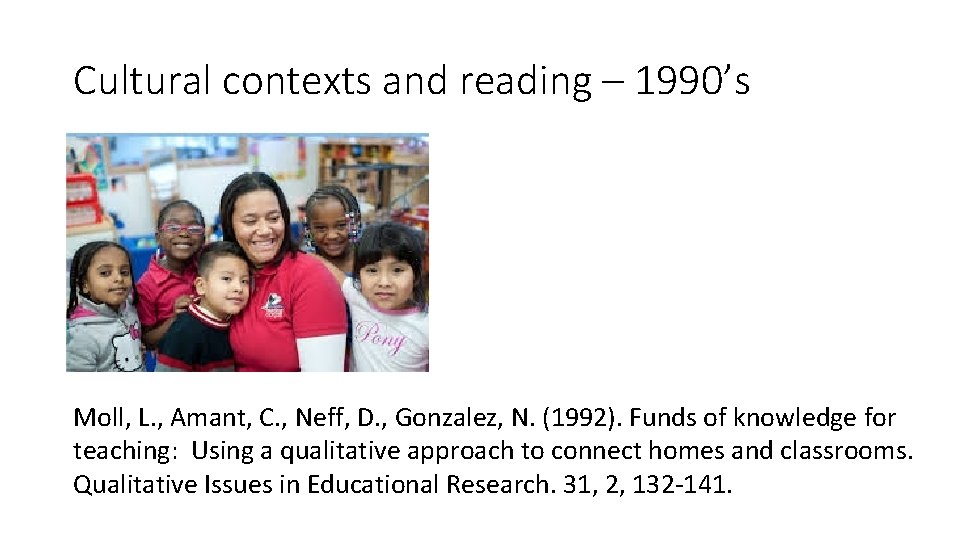
Cultural contexts and reading – 1990’s Moll, L. , Amant, C. , Neff, D. , Gonzalez, N. (1992). Funds of knowledge for teaching: Using a qualitative approach to connect homes and classrooms. Qualitative Issues in Educational Research. 31, 2, 132 -141.
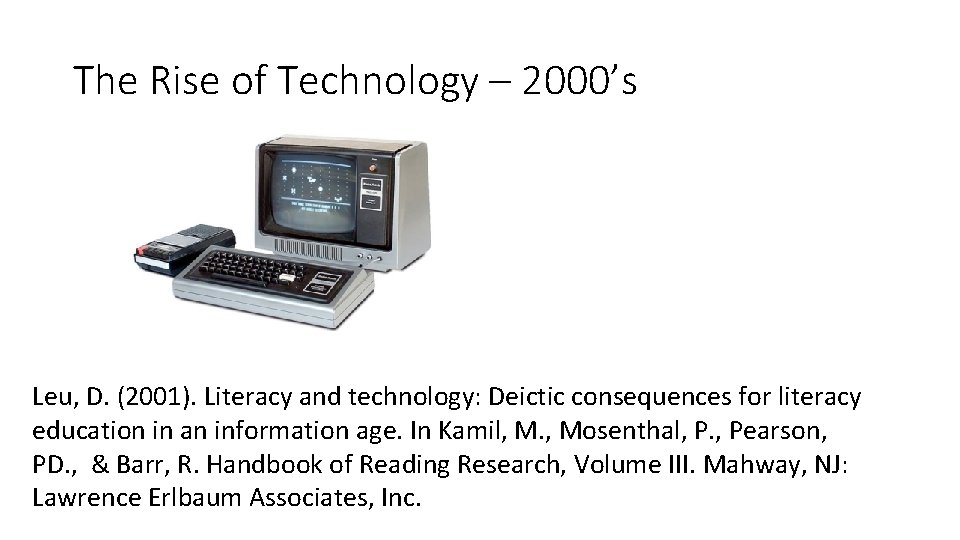
The Rise of Technology – 2000’s Leu, D. (2001). Literacy and technology: Deictic consequences for literacy education in an information age. In Kamil, M. , Mosenthal, P. , Pearson, PD. , & Barr, R. Handbook of Reading Research, Volume III. Mahway, NJ: Lawrence Erlbaum Associates, Inc.
Early literacy research – 2000’s Neuman, S. , Dickinson, D. (2003). Handbook of early literacy research, volume 1. New York: Guilford.
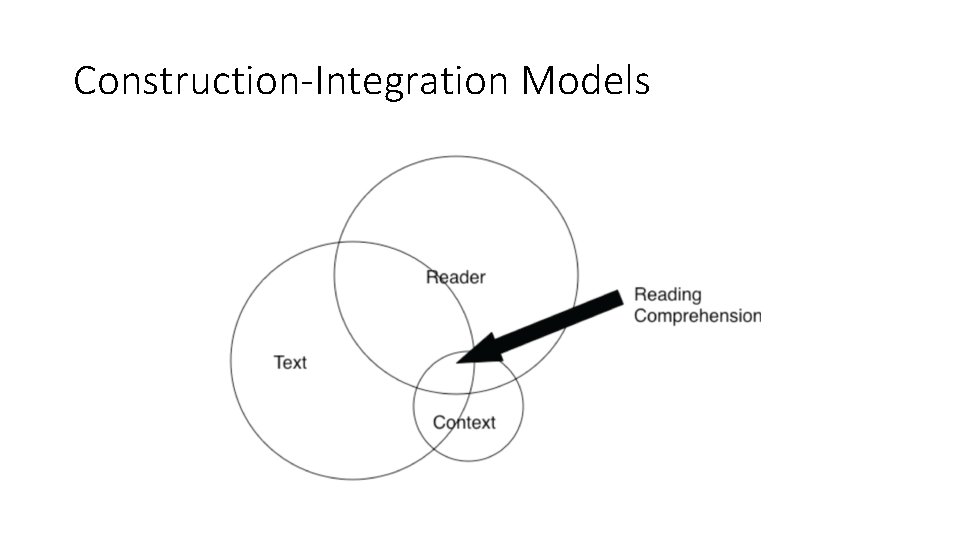
Construction-Integration Models
We are certain now, about reading – just go do it! 2001 Report of the National Reading Panel: Teaching Children to Read
The Age of Assessment – 2000’s • Educational malpractice lawsuits of the 1970’s launch state forays into standards and reading assessments. • By the 1990’s states are buckling under the cost of the sometimes 30 million dollar assessment process. • First Programme for International Student Assessment (PISA) study – 2001. United States ranks in the mid-20’s among nations in reading achievement • NAEP framework revised to emphasize integration of reader and text – 2008 – closely resembles the Michigan reading tests of the 1990’s • Common Core State Standards developed in reading and mathematics – 2008. • PARCC and Smarter Balanced Assessments to follow the Common Core 2012
Backtracking from the Common Core Disastrous rollout of Common Core Inspired tests in New York and Ohio State embark on a “rebranding” effort to convert Common Core in their own image Hurry up process to create new, un-piloted tests
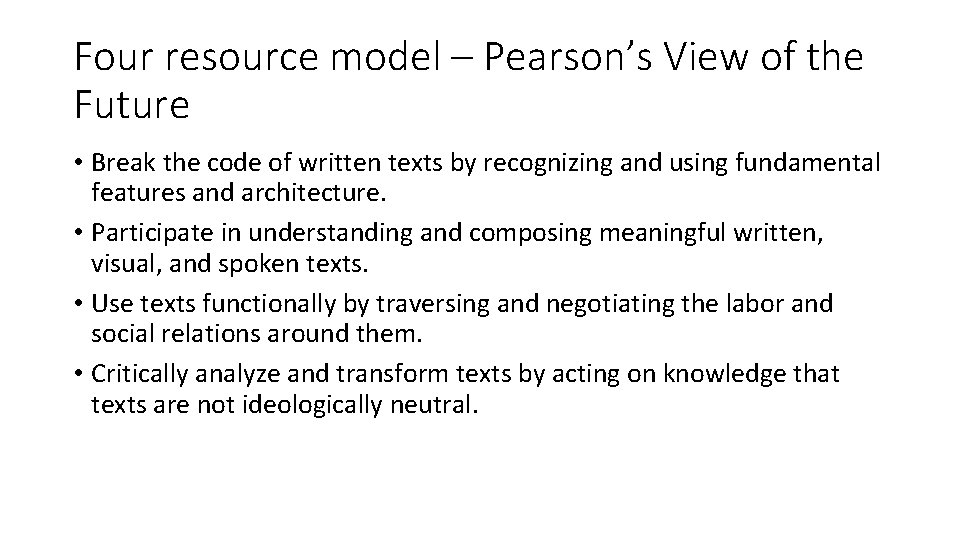
Four resource model – Pearson’s View of the Future • Break the code of written texts by recognizing and using fundamental features and architecture. • Participate in understanding and composing meaningful written, visual, and spoken texts. • Use texts functionally by traversing and negotiating the labor and social relations around them. • Critically analyze and transform texts by acting on knowledge that texts are not ideologically neutral.
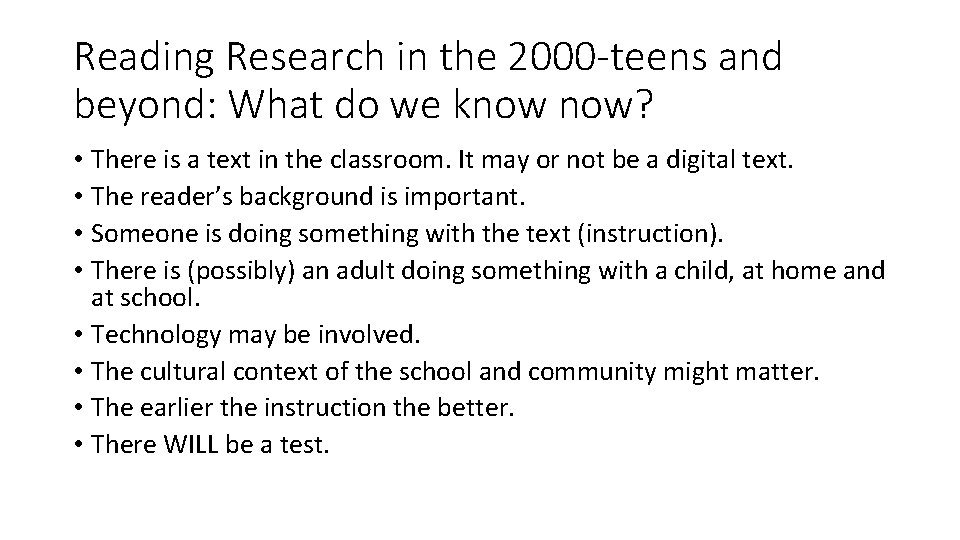
Reading Research in the 2000 -teens and beyond: What do we know now? • There is a text in the classroom. It may or not be a digital text. • The reader’s background is important. • Someone is doing something with the text (instruction). • There is (possibly) an adult doing something with a child, at home and at school. • Technology may be involved. • The cultural context of the school and community might matter. • The earlier the instruction the better. • There WILL be a test.
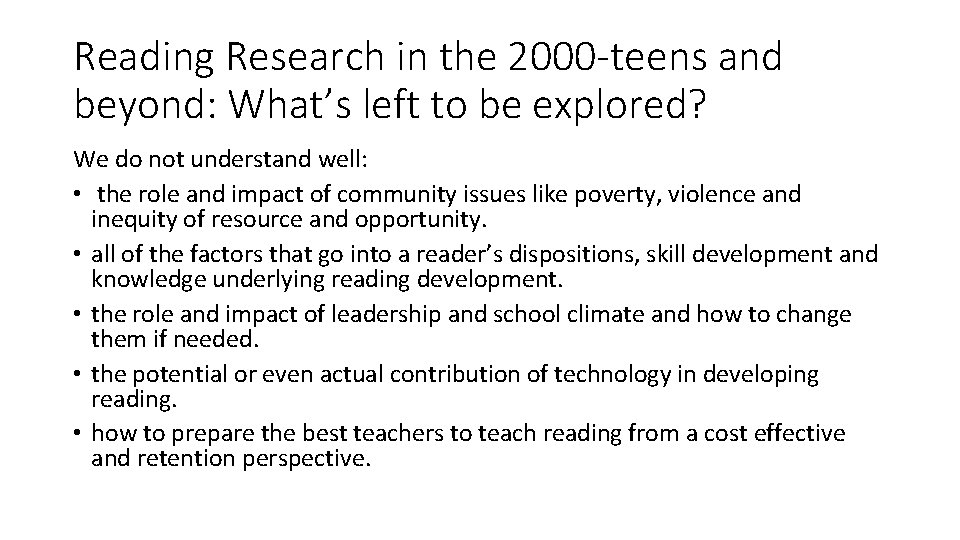
Reading Research in the 2000 -teens and beyond: What’s left to be explored? We do not understand well: • the role and impact of community issues like poverty, violence and inequity of resource and opportunity. • all of the factors that go into a reader’s dispositions, skill development and knowledge underlying reading development. • the role and impact of leadership and school climate and how to change them if needed. • the potential or even actual contribution of technology in developing reading. • how to prepare the best teachers to teach reading from a cost effective and retention perspective.