
The History of Photography Camera Obscura a darkened
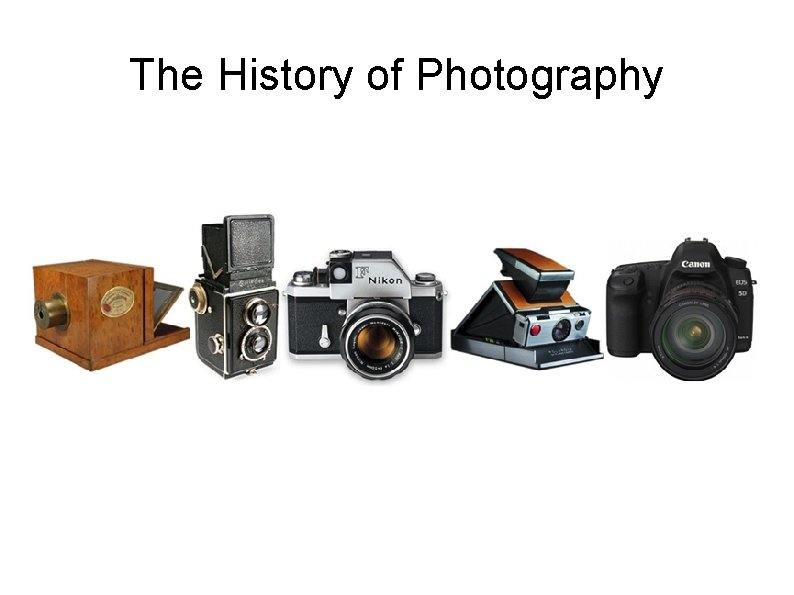
The History of Photography
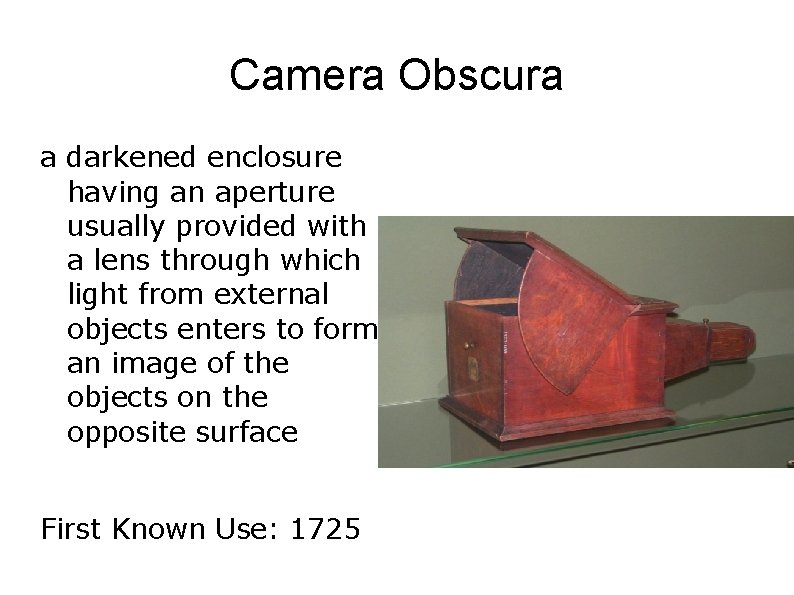
Camera Obscura a darkened enclosure having an aperture usually provided with a lens through which light from external objects enters to form an image of the objects on the opposite surface First Known Use: 1725

Camera Obscura First rooms were darkened with a small hole to project the light Inverted image Used to view eclipses Used by artists to trace subjects
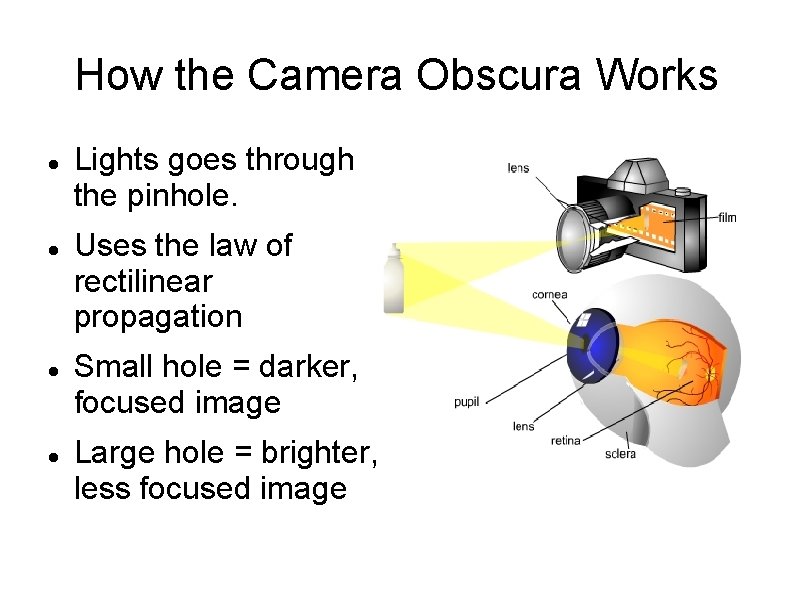
How the Camera Obscura Works Lights goes through the pinhole. Uses the law of rectilinear propagation Small hole = darker, focused image Large hole = brighter, less focused image

The First Photograph 1826 Frenchman Nicéphore Niépce produces first permanent photograph of a view from nature. Uses the photosensitivity of bitumen of Judea. Used silver chloride at first, then used pewter plate covered with bitumen. Called it the heliograph
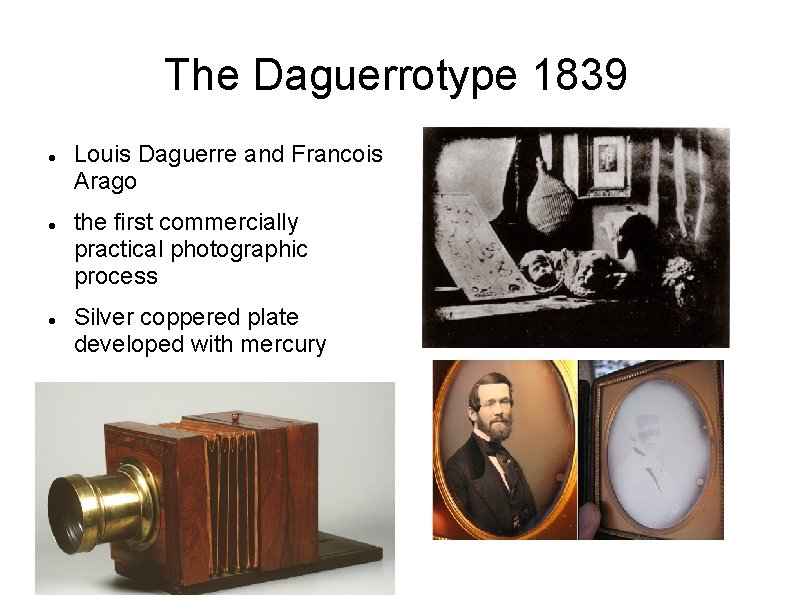
The Daguerrotype 1839 Louis Daguerre and Francois Arago the first commercially practical photographic process Silver coppered plate developed with mercury
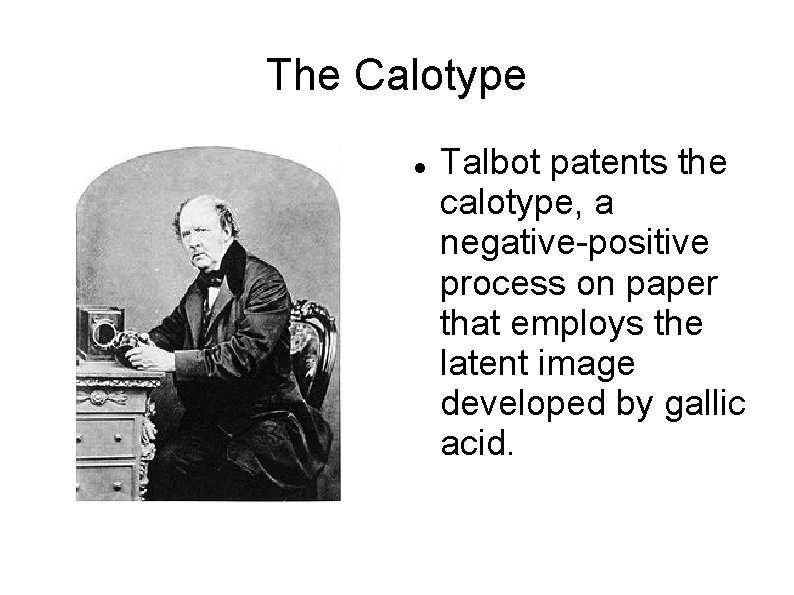
The Calotype Talbot patents the calotype, a negative-positive process on paper that employs the latent image developed by gallic acid.

Watch movie on George Eastman “The Wizard of Photography”
Brief Timeline of Development from Eastman to Now 1930: flash is developed 1935: color photography (Kodachrome) by Kodak 1937: “electron photography” (photocopying) 1946: zoom lens invented 1947: Polaroid invented, photos in one minute 1963: Kodak Instamatic point and shoot 1986: Fuji disposable camera 1992: Kodak is first to store photos on CD
- Slides: 9