
The History of Life Death on Earth Bio
The History of Life - & Death – on Earth Bio 125 Part III: Threats to Diversity
www. gwu. edu/~darwin/Bi. Sc 151/index 4. html
Earth History • The Earth is very old – how old, do geologists currently think? • 4. 55 BILLION (4, 550, 000) years • How much is a Billion (109)? • Start counting one number a second without stopping until you reach a billion. You will be able to stop in 31 years, 259 days, 1 hour, 46 minutes, and 40 seconds!
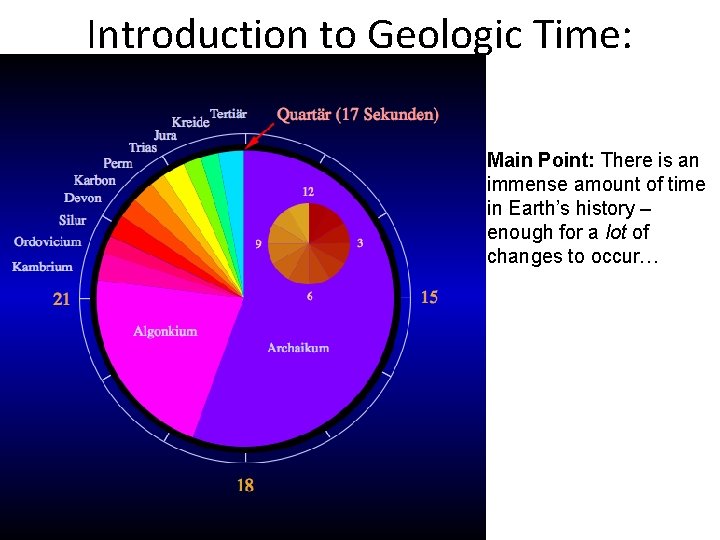
Introduction to Geologic Time: Main Point: There is an immense amount of time in Earth’s history – enough for a lot of changes to occur…
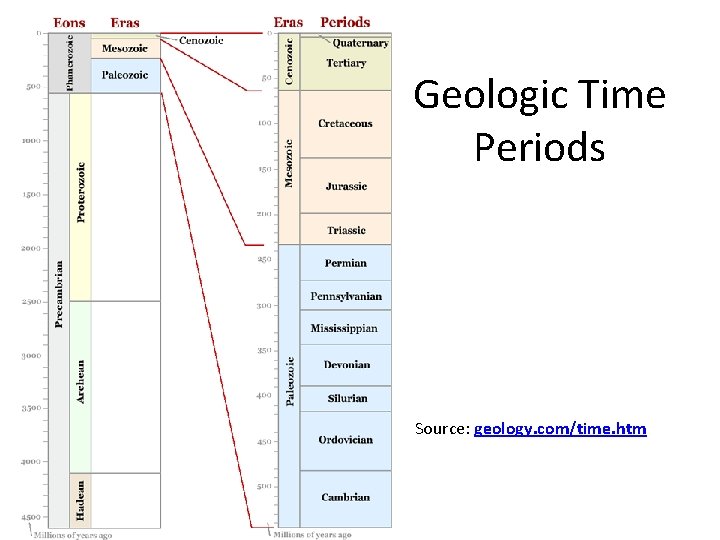
Geologic Time Periods Source: geology. com/time. htm
What are the major events in the history of LIFE? • How life emerged from non-life: very challenging question • Most promising hypothesis: UV energy from sun or lightning combined with elements found in early atmosphere to make complex organic compounds called amino acids – the building blocks of life • For more details visit: http: //www. resa. net/nasa/origins_life. htm
Major events in the history of LIFE • Geological evidence indicates first cells arose 3. 5 billion yrs ago • What kind of life would this have been? • Bacteria or, more likely, Archaea • Where would they have gotten their food? ?
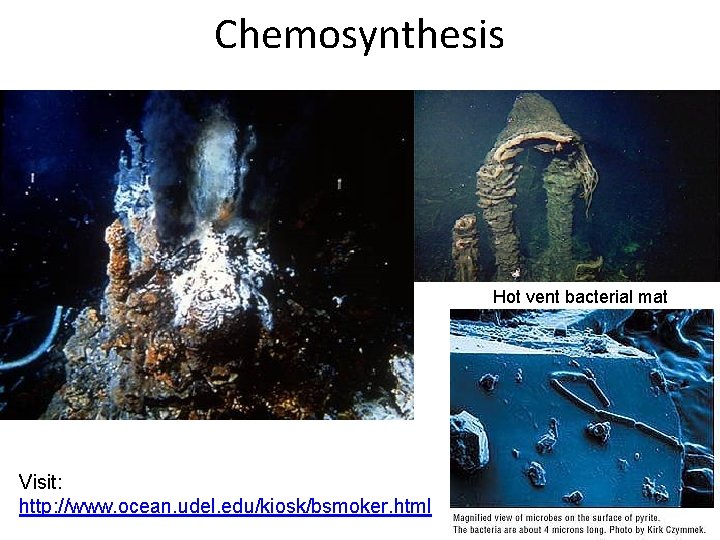
Chemosynthesis Hot vent bacterial mat Visit: http: //www. ocean. udel. edu/kiosk/bsmoker. html
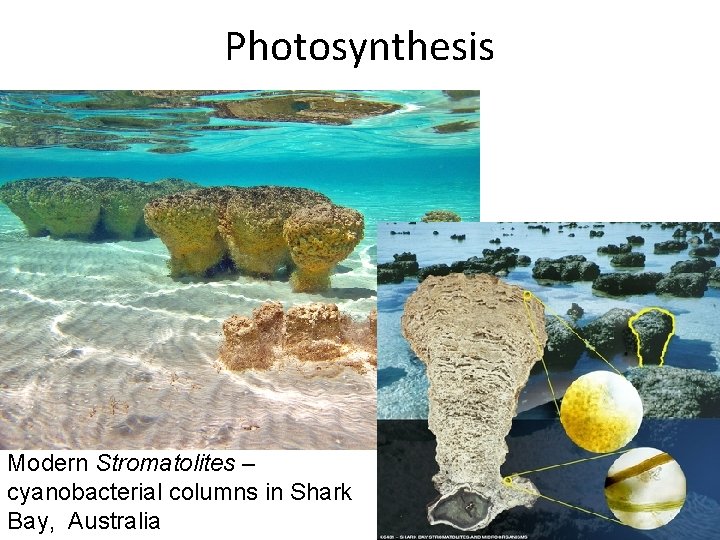
Photosynthesis Modern Stromatolites – cyanobacterial columns in Shark Bay, Australia
Major events in the history of LIFE • Once the first single-celled organisms arose, what do you think were the major milestones in the evolution of life on Earth? • In your groups, begin to create your own sequence of major events in life’s history (use your books, and any prior knowledge you have)
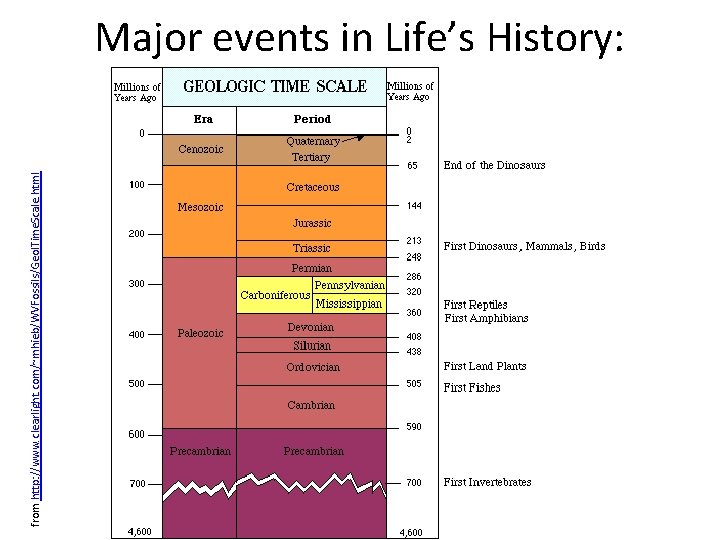
from http: //www. clearlight. com/~mhieb/WVFossils/Geol. Time. Scale. html Major events in Life’s History:
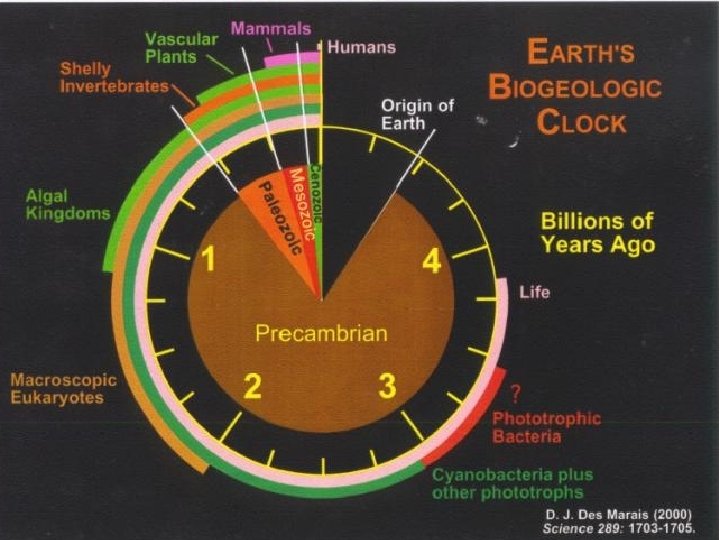
Summary Points: History of Life • History of Life involves enormous change • Follow this Link: http: //www. pbs. org/wgbh/nova/link/history. html • Over time, life has become more diverse & more complex
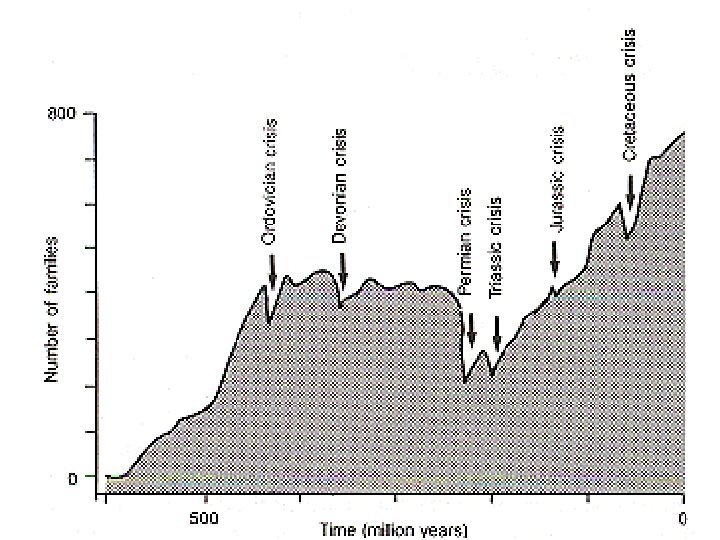
Summary Points: History of Life • BUT – Life & evolution have not progressed uninterrupted….
What is the average “life span” of a species? • Once a species arises via evolution and speciation (processes we’ve discussed!), does it last indefinitely? • What does Wilson say…? • Species last 2 -10 million years (~4 million years on average)
Extinction is part of Evolution • What percentage of all species that have ever lived are now extinct?
Extinction is part of Evolution • How has extinction occurred over the course of the history of life – a steady process? Or in abrupt jumps?
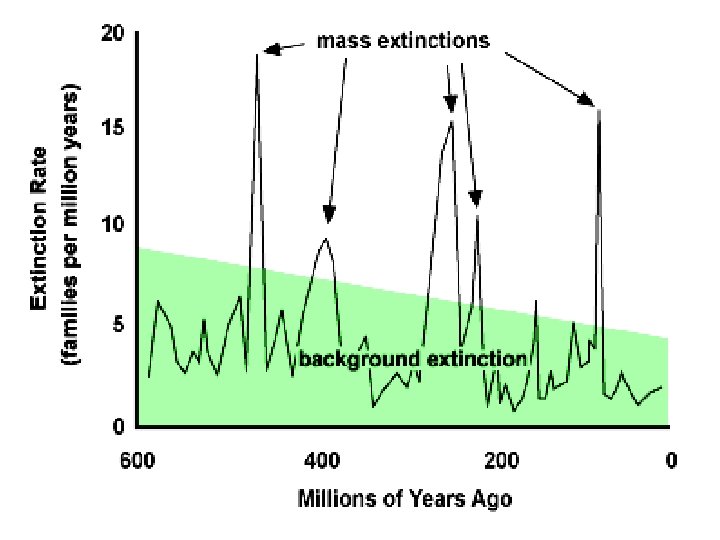
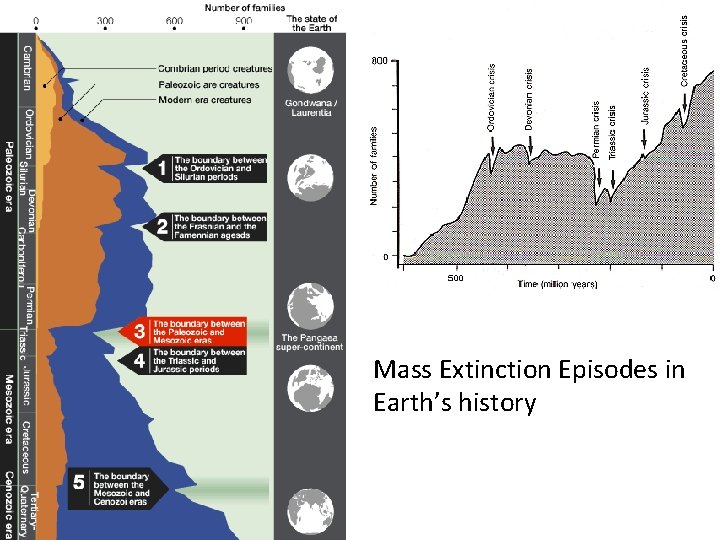
Mass Extinction Episodes in Earth’s history
Causes of Mass Extinctions • 5 major extinction events: • 5 th: “K-T Boundary” = asteroid (dinosaurs) – What did this extinction make room for? • Largest mass extinction event was at end of Permian: 95% of all species went extinct!! Cause unknown, but may be related to land masses coalescing into 1 super-continent (“Pangaea”) climate cooling
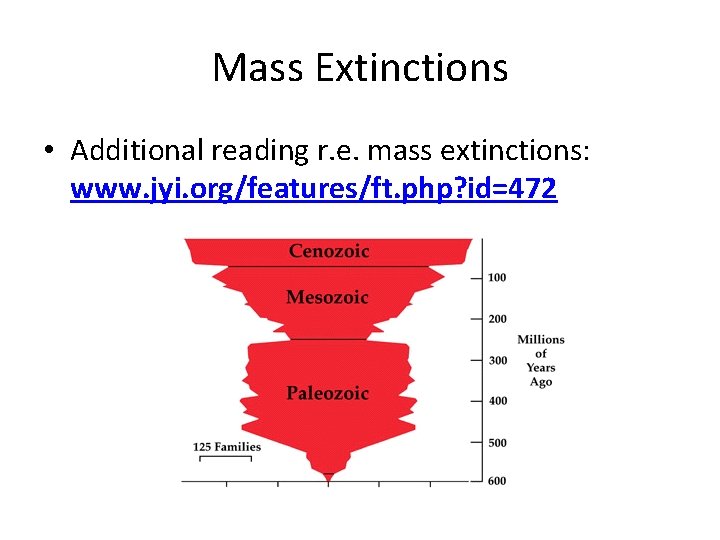
Mass Extinctions • Additional reading r. e. mass extinctions: www. jyi. org/features/ft. php? id=472
Mass Extinctions • What is the relationship between extinction & evolution? • Be able to address this question, and support your argument with some direct evidence from the history of life.
Mass Extinctions • There was another, smaller, mass extinction at the end of the Pleistocene which we will discuss in 2 class sessions • But today people talk about the 6 th Mass Extinction, which is happening today under our very eyes • What is the cause of this 6 th great extinction event? • This is the subject of the rest of the course…
- Slides: 24