
The History of Health Care Principles of Health

- Slides: 46
The History of Health Care Principles of Health Science
Ancient Times • Prevention of injury from predators • Illness/disease caused by supernatural spirits
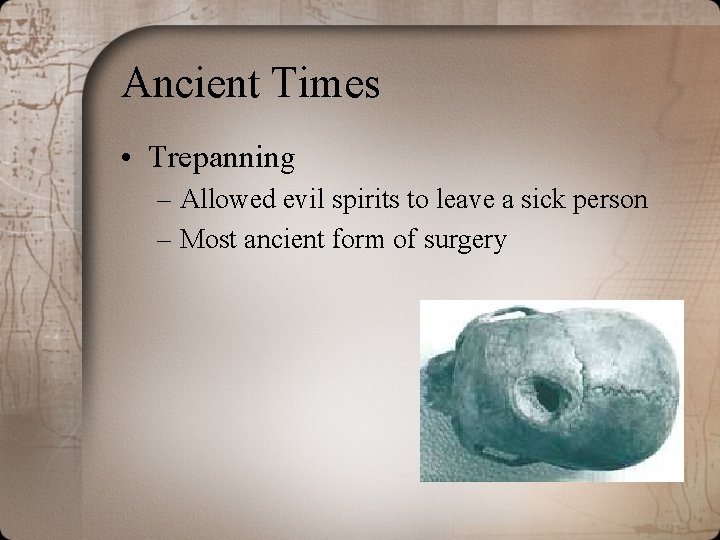
Ancient Times • Trepanning – Allowed evil spirits to leave a sick person – Most ancient form of surgery
Ancient Times • Herbs and plants were used as medicine examples: – Digitalis from foxglove plants • Then, leaves were chewed to strengthen & slow heart • Now, administered by pills, IV, or injections
Ancient times • Foxglove plant
Ancient Times • Herbs and plants were used as medicine examples: – Quinine from bark of cinchona tree • Controls fever and muscle spasms • Used to treat malaria
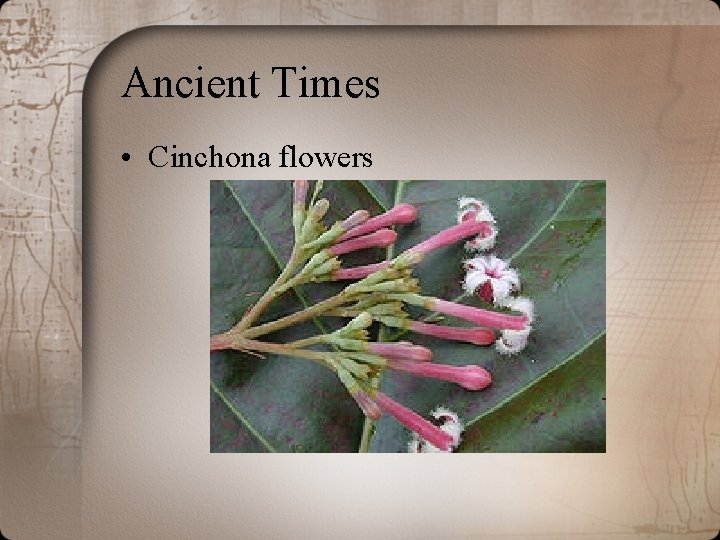
Ancient Times • Cinchona flowers
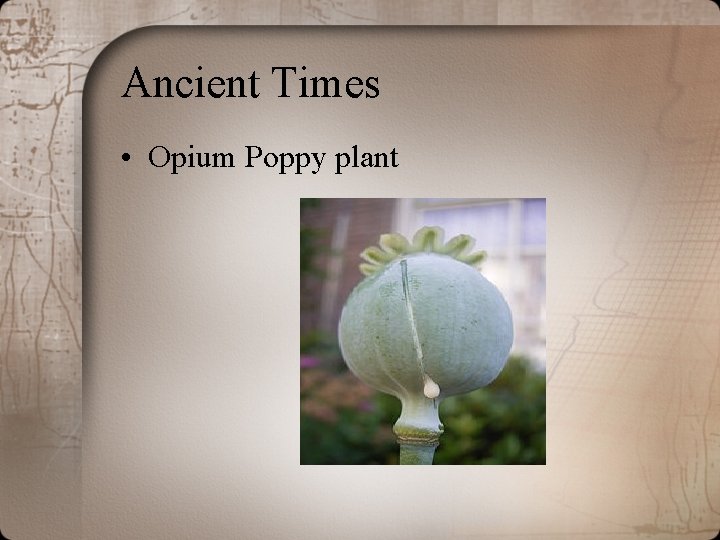
Ancient Times • Herbs and plants were used as medicine examples: – Belladonna and atropine from poisonous nightshade plant • relieves muscle spasms especially GI – Morphine from opium poppy • relieves severe pain
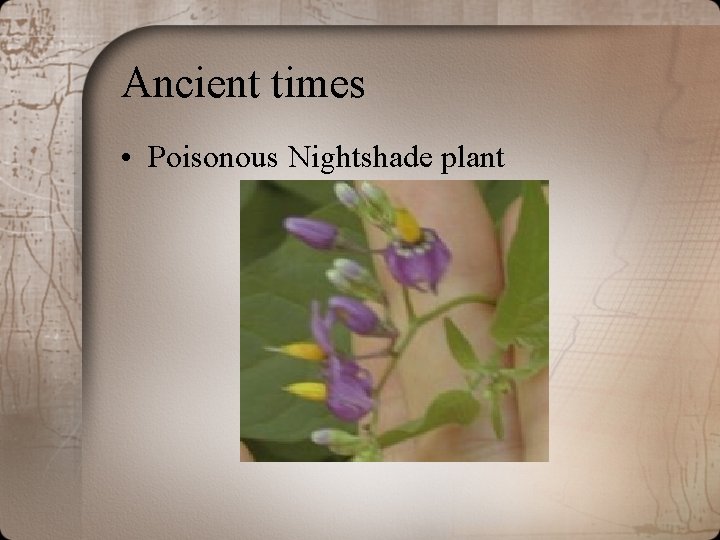
Ancient times • Poisonous Nightshade plant
Ancient Times • Opium Poppy plant
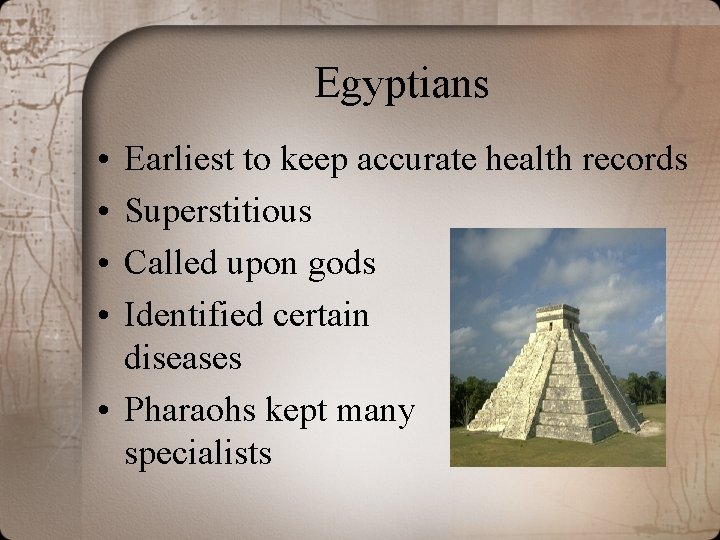
Egyptians • • Earliest to keep accurate health records Superstitious Called upon gods Identified certain diseases • Pharaohs kept many specialists
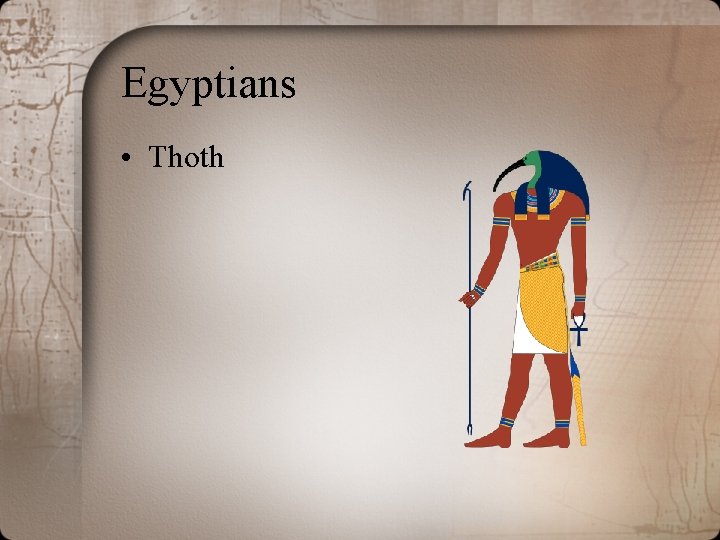
Egyptians • Priests were the doctors – Temples were places of worship, medical schools, and hospitals – Only the priests could read the medical knowledge from the god Thoth
Egyptians • Thoth
Egyptians • Magicians were also healers • Believed demons caused disease • Prescriptions were written on papyrus
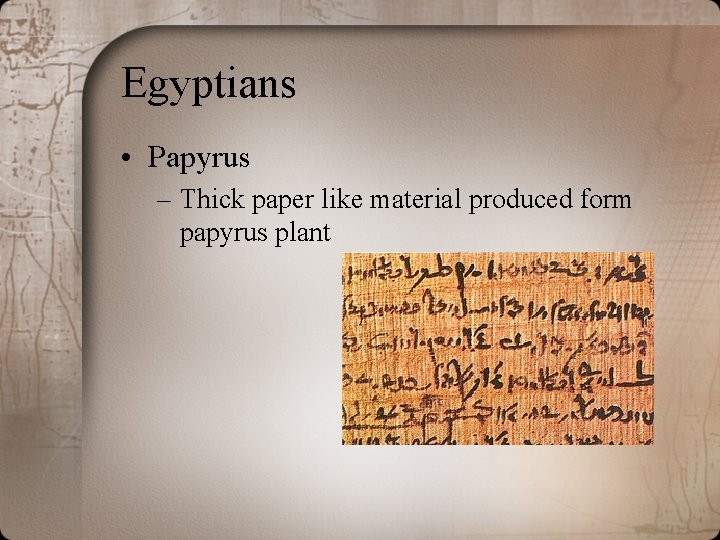
Egyptians • Papyrus – Thick paper like material produced form papyrus plant
Egyptians • Embalming – Done by special priests (NOT the doctor priests) – Advanced the knowledge of anatomy, known as advanced medical practitioners of their time. – Strong antiseptics used to prevent decay – Gauze similar to today’s surgical gauze – Mummification was intended to ensure a safe journey to the afterlife.
Egyptians • Research on mummies has revealed the existence of diseases – Arthritis – Kidney stones – Arteriosclerosis
Egyptians • Some medical practices still used today – Enemas – Circumcision (4000 BC) preceded marriage – Closing wounds – Setting fractures
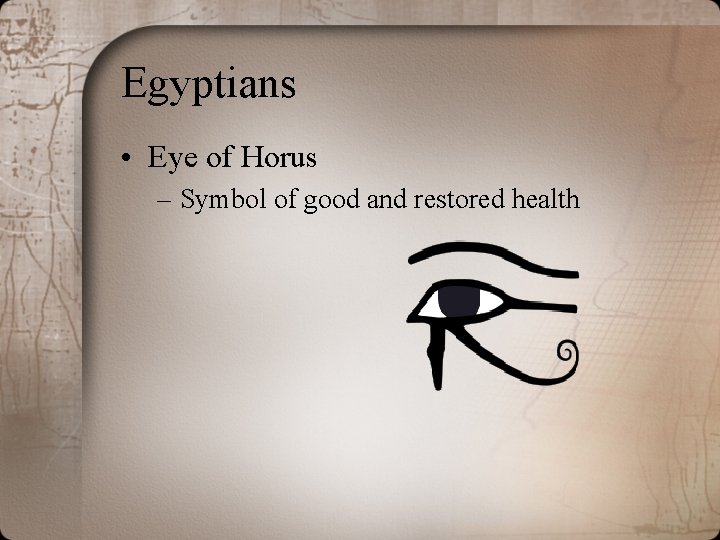
Egyptians • Eye of Horus – 5000 years ago – Magic eye – amulet to guard against disease, suffering, and evil – History: Horus lost vision in attack by Seth; mother (Isis) called on Thoth for help; eye restored – Evolved into modern day Rx sign
Egyptians • Eye of Horus – Symbol of good and restored health
Jewish Medicine • Avoided medical practice • Concentrated on health rules concerning food, cleanliness, and quarantine • Moses: pre-Hippocratic medical practice – banned quackery (God was the only physician) –term used to describe the promotion of unproven or fraudulent medical practices. – enforced Day of Rest
Greek Medicine • Departed from the divine and mysticalmoved toward observation and logical reasoning. • First to study causes of diseases • Research helped eliminate superstitions • Sanitary practices were associated with the spread of disease
Greek Medicine • Hippocrates – no dissection, only observations – took careful notes of signs/symptoms of diseases – disease was not caused by supernatural forces • Father of Medicine – wrote standards of ethics which is the basis for today’s medical ethics
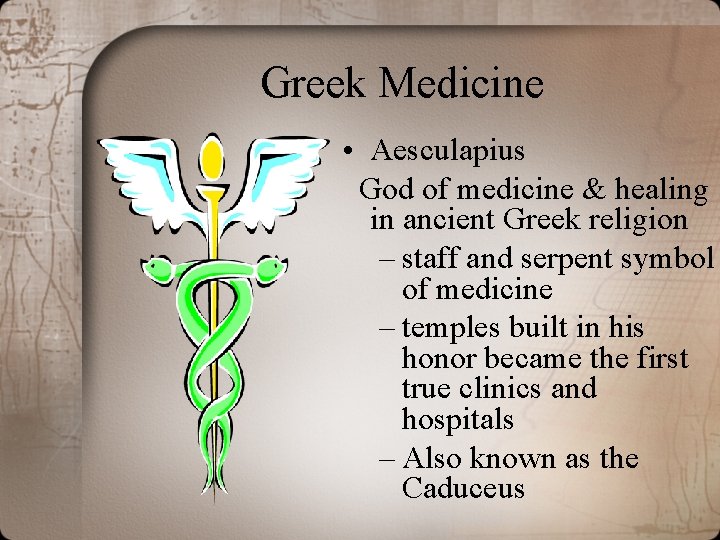
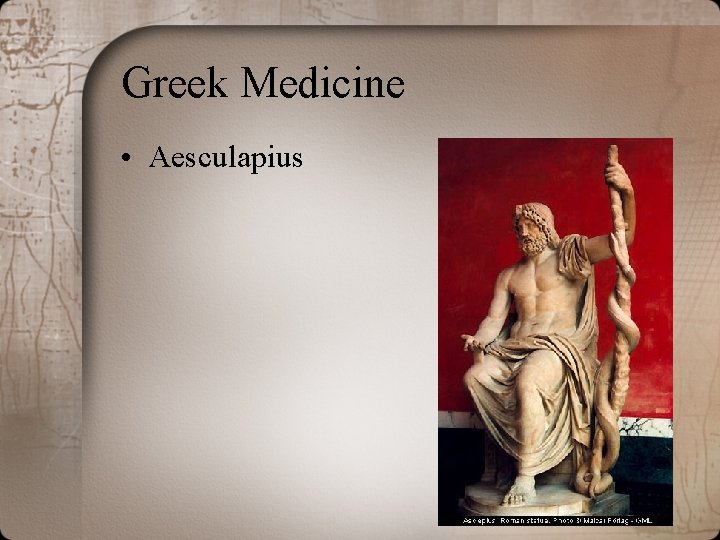
Greek Medicine • Aesculapius God of medicine & healing in ancient Greek religion – staff and serpent symbol of medicine – temples built in his honor became the first true clinics and hospitals – Also known as the Caduceus
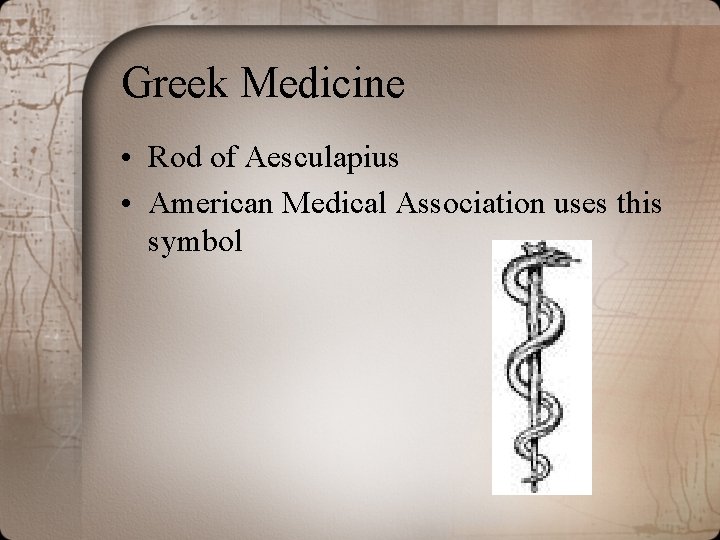
Greek Medicine • Rod of Aesculapius • American Medical Association uses this symbol
Greek Medicine • Aesculapius
Roman Medicine • Learned from the Greeks and developed a sanitation system – Aqueducts and sewers – Public baths • Beginning of public health • If kept fit would be able to combat illness
Roman Medicine • First to organize medical care • Army medicine • Room in doctors’ house became first hospital • Public hygiene – flood control – solid construction of homes
Dark Ages (400 -800 A. D. ) and Middle Ages (800 -1400 A. D. ) • Medicine practiced only in convents and monasteries • custodial care • life and death in God’s hands
Dark Ages (400 -800 A. D. ) and Middle Ages (800 -1400 A. D. ) • Terrible epidemics – Bubonic plague (Black Death) – Small pox – Diphtheria – Syphilis – Measles – Typhoid fever – Tuberculosis
Dark Ages (400 – 800 A. D. ) and Middle Ages (800 -1400 A. D. ) • Crusaders spread disease • Cities became common • Special officers to deal with sanitary problems • Realization that diseases are contagious • Quarantine laws passed
Renaissance Medicine (1350 -1650 A. D. ) • Universities and medical schools for research • Dissection • Book publishing –printing press
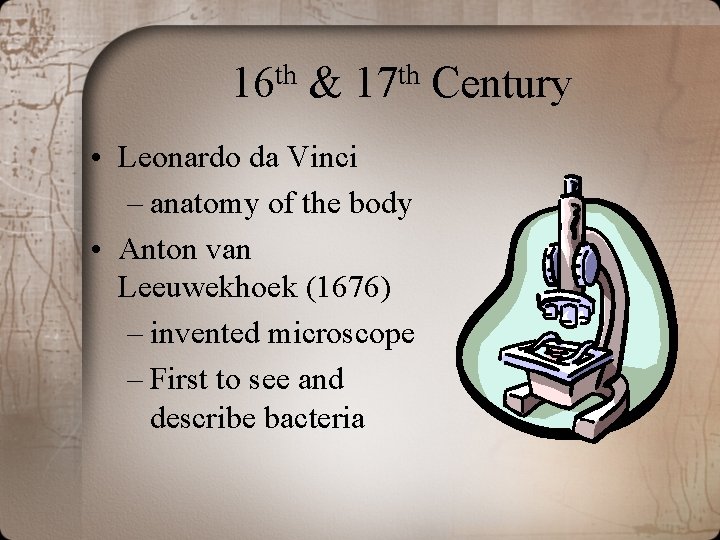
th 16 & th 17 • Leonardo da Vinci – anatomy of the body • Anton van Leeuwekhoek (1676) – invented microscope – First to see and describe bacteria Century
th 16 & th 17 Century • William Harvey (1628) – circulation of blood • Gabriele Fallopian – discovered fallopian tube • Bartholomew Eustachus – discovered the eustachian tube • Some quackery –treatment that pretends to cure disease
th 18 Century • Edward Jenner 1796 – smallpox vaccination • Joseph Priestly – discovered oxygen
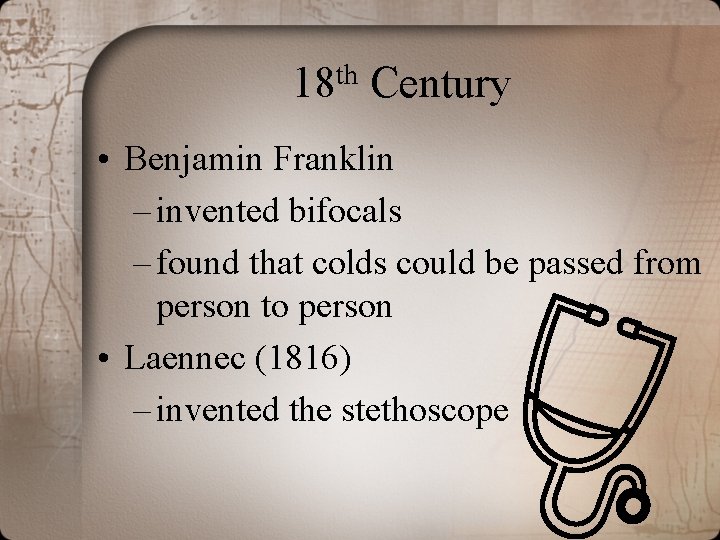
th 18 Century • Benjamin Franklin – invented bifocals – found that colds could be passed from person to person • Laennec (1816) – invented the stethoscope
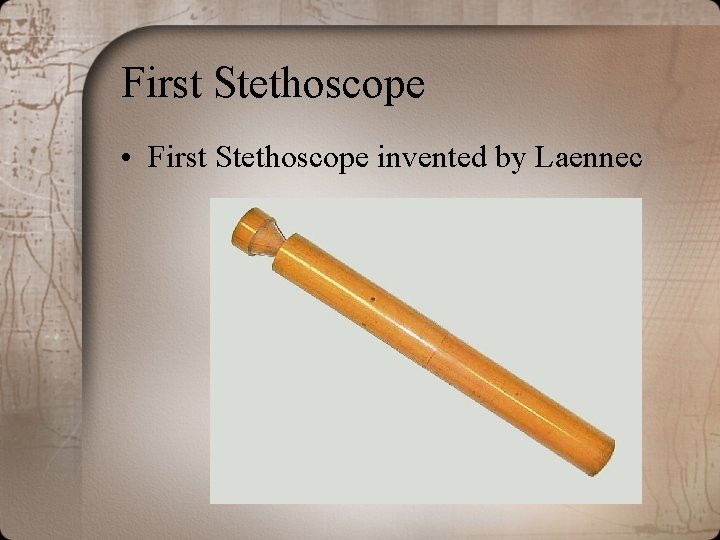
First Stethoscope • First Stethoscope invented by Laennec
th 19 & th 20 Century • Inez Semmelweiss – identified the cause of puerperal fever which led to the importance of hand washing • Louis Pasteur (1860 – 1895) – discovered that microorganisms cause disease (germ theory of communicable disease)
th 18 and th 19 Century • Florence Nightingale 1854 – Led a group of 38 nurses to Turkey to care for soldiers injured in the war in which England was involved. – 1860 - Nightingale School of Nurses opened
th 19 & th 20 Century • Joseph Lister (1865) – first doctor to use antiseptic during surgery • Ernest von Bergman – developed asepsis • Robert Koch (1882) – Father of Microbiology – identified germ causing TB
th 19 & th 20 Century • Wilhelm Roentgen (1895) – discovered X-rays • Paul Ehrlick – discovered effect of medicine on disease causing microorganisms • Anesthesia discovered – nitrous oxide, ether, chloroform
th 19 & th 20 Century • Alexander Fleming (1928) – discovered penicillin • Jonas Salk (1952) – discovered that a killed polio virus would cause immunity to polio • Alfred Sabin – discovered that a live virus provided more effective immunity
1900 to 1945 • Acute infectious diseases (diphtheria, TB, rheumatic fever) • No antibiotics, DDT for mosquitoes, rest for TB, water sanitation to help stop spread of typhoid fever, diphtheria vaccination • Hospitals were places to die • Most doctors were general practitioners
1945 to 1975 • • • Immunization common antibiotic cures safer surgery Transplants increased lifespan chronic degenerative diseases
1945 to 1975 • new health hazards – obesity – neuroses – lung cancer – hypertension • disintegrating families • greatly increasing medical costs
Present • United States, focus of health care shifted from prevention of contagious disease to those, such as – – Cancer Drug abuse Heart disease Concerns related to emergency response and preparedness – Some communicable diseases –AIDS, TB, Avian flu