
THE HISTORY OF CONCRETE AND ITS RECENT DEVELOPMENT






- Slides: 49
THE HISTORY OF CONCRETE AND ITS RECENT DEVELOPMENT SIDDHARTH SHANKAR LECTURER IOE, PULCHOWK CAMPUS CHIEF, CMTL
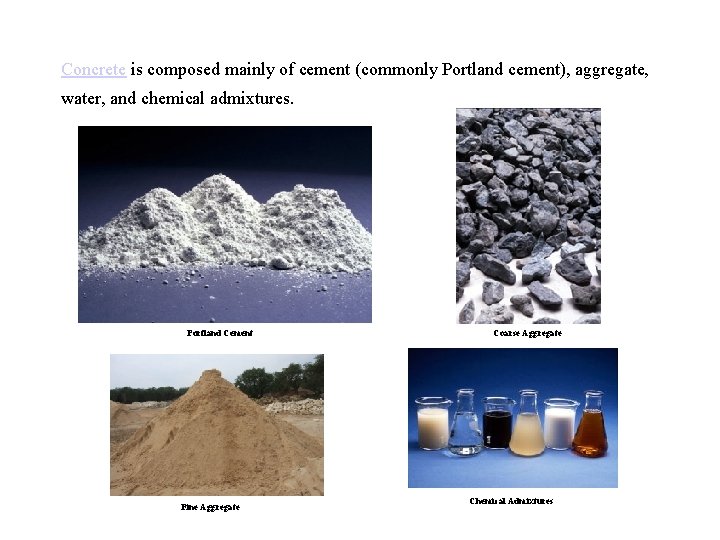
Concrete is composed mainly of cement (commonly Portland cement), aggregate, water, and chemical admixtures. Portland Cement Fine Aggregate Coarse Aggregate Chemical Admixtures
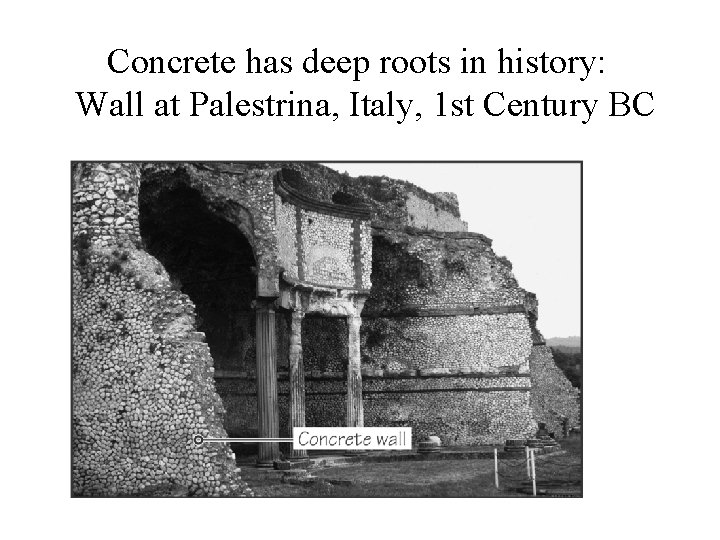
Concrete has deep roots in history: Wall at Palestrina, Italy, 1 st Century BC
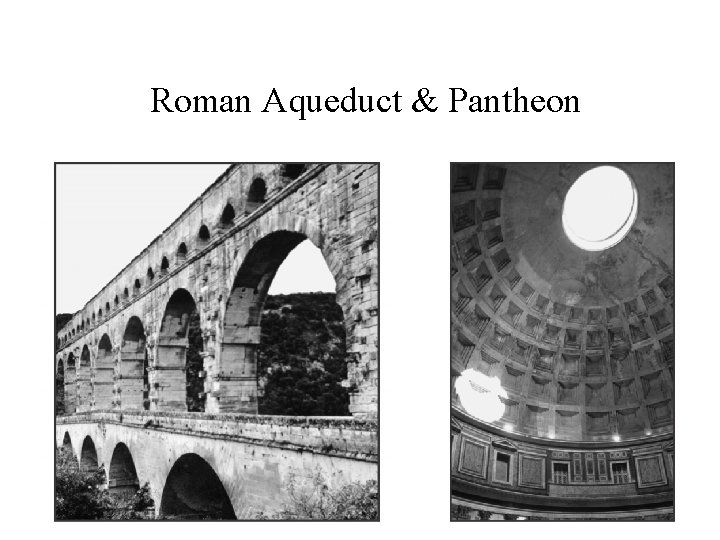
Roman Aqueduct & Pantheon
Concrete • The word “concrete” originates from the Latin verb “concretus”, which means to grow together. • Concrete is most widly use construction material and it is mixture of cement, sand, aggregate and water.
Advantage of Concrete • We have the ability to cast desired shapes – Arches, piers, columns, shells • Properties can be tailored according to need (strength, durability, etc. ) • Ability to resist high temperatures – Will maintain structural integrity far longer than structural steel • Does not require protective coatings • Can be an architectural & structural member at the same time
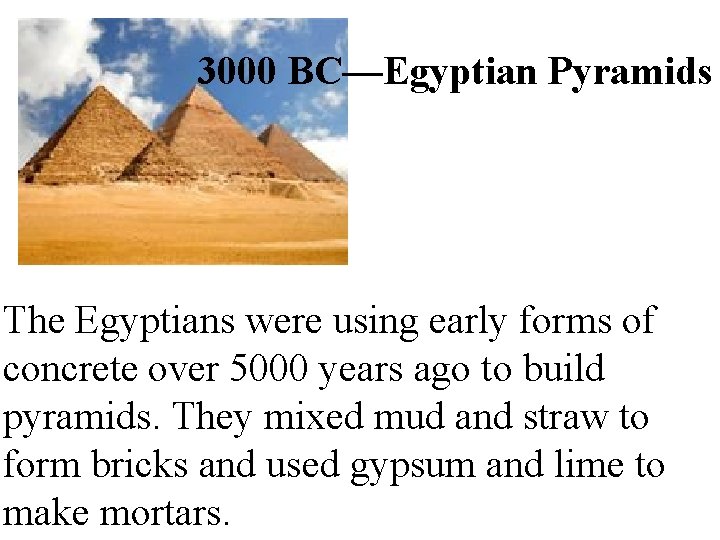
3000 BC—Egyptian Pyramids The Egyptians were using early forms of concrete over 5000 years ago to build pyramids. They mixed mud and straw to form bricks and used gypsum and lime to make mortars.
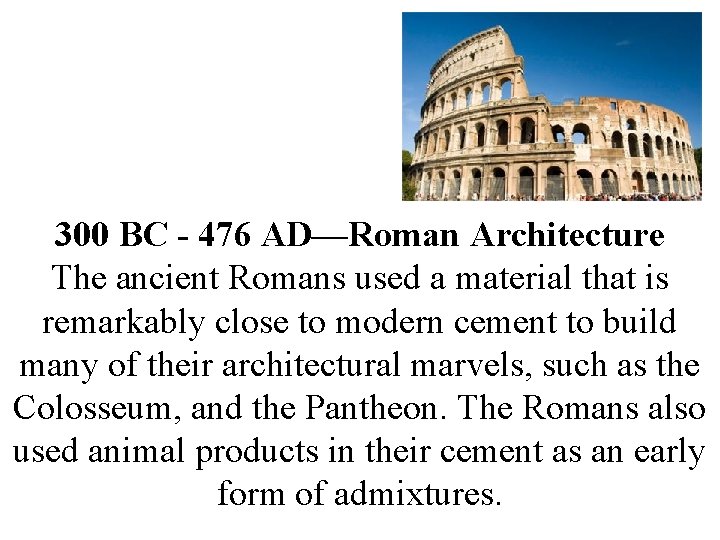
300 BC - 476 AD—Roman Architecture The ancient Romans used a material that is remarkably close to modern cement to build many of their architectural marvels, such as the Colosseum, and the Pantheon. The Romans also used animal products in their cement as an early form of admixtures.
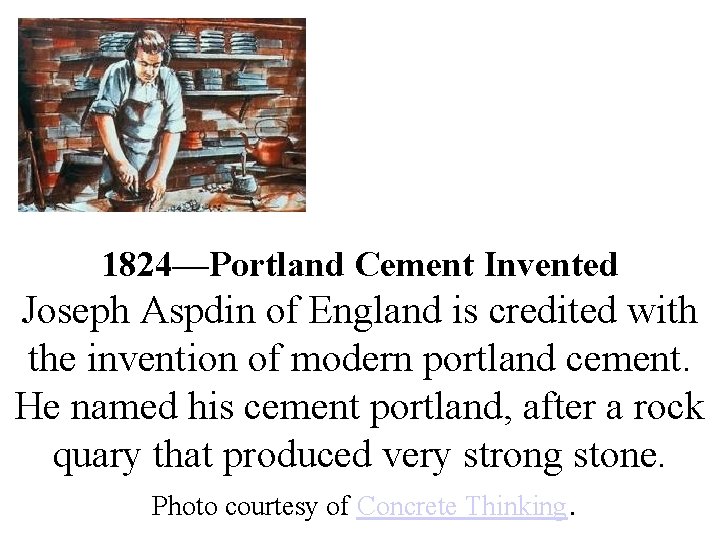
1824—Portland Cement Invented Joseph Aspdin of England is credited with the invention of modern portland cement. He named his cement portland, after a rock quary that produced very strong stone. Photo courtesy of Concrete Thinking.
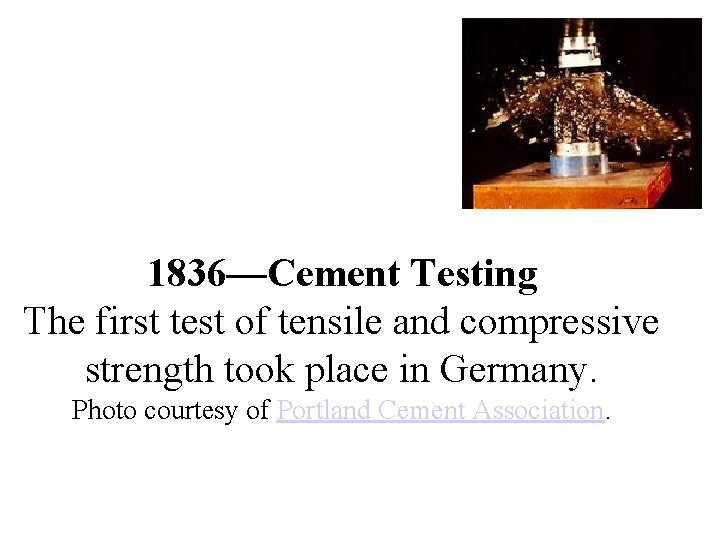
1836—Cement Testing The first test of tensile and compressive strength took place in Germany. Photo courtesy of Portland Cement Association.
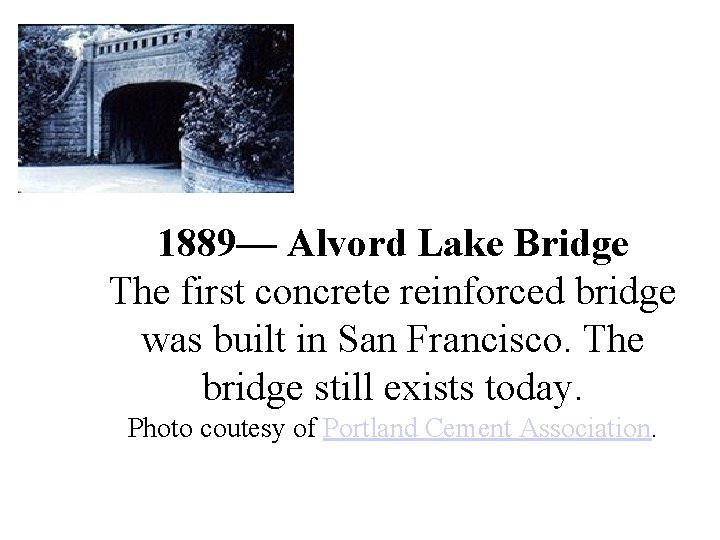
1889— Alvord Lake Bridge The first concrete reinforced bridge was built in San Francisco. The bridge still exists today. Photo coutesy of Portland Cement Association.
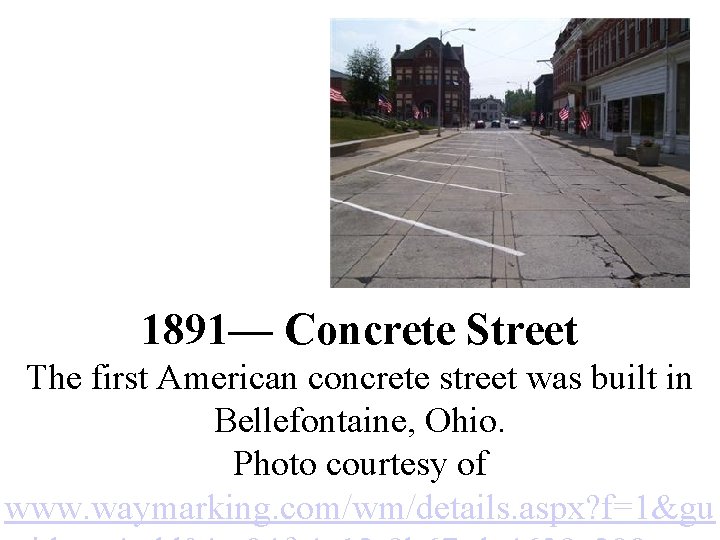
1891— Concrete Street The first American concrete street was built in Bellefontaine, Ohio. Photo courtesy of www. waymarking. com/wm/details. aspx? f=1&gu
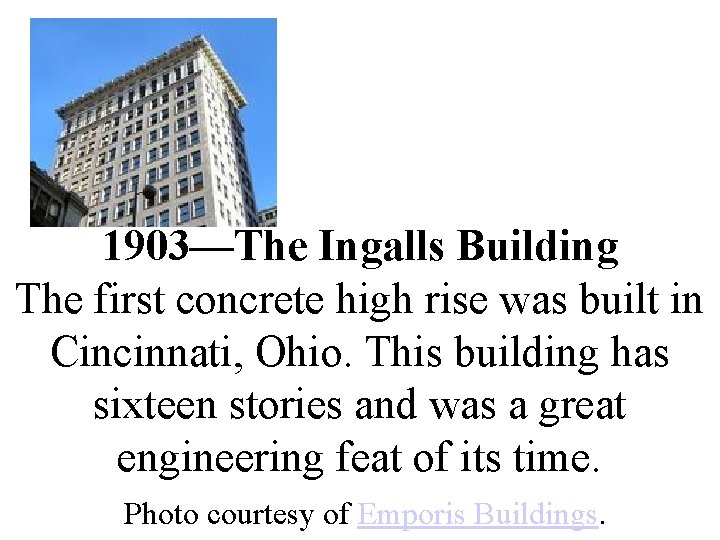
1903—The Ingalls Building The first concrete high rise was built in Cincinnati, Ohio. This building has sixteen stories and was a great engineering feat of its time. Photo courtesy of Emporis Buildings.
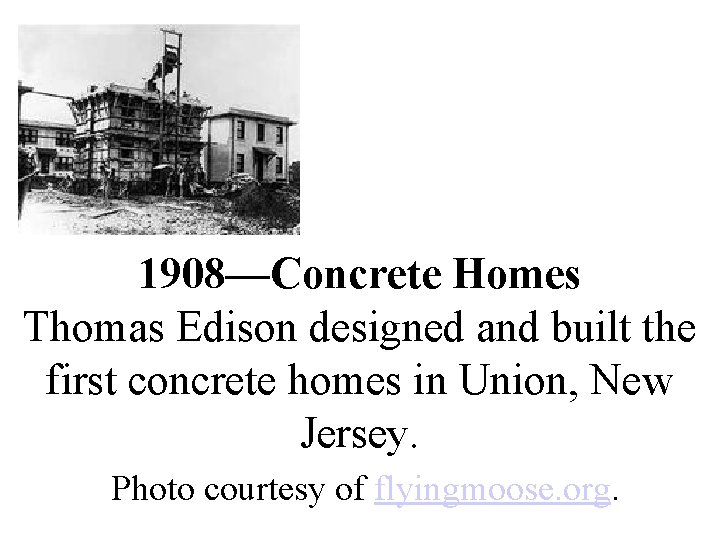
1908—Concrete Homes Thomas Edison designed and built the first concrete homes in Union, New Jersey. Photo courtesy of flyingmoose. org.
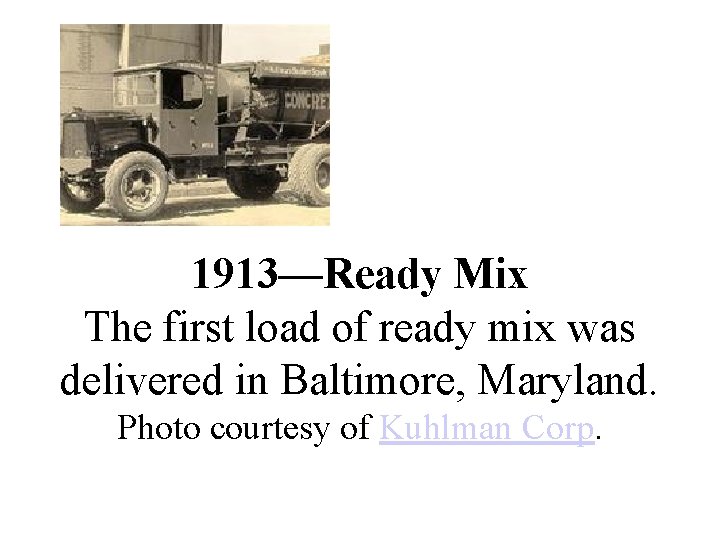
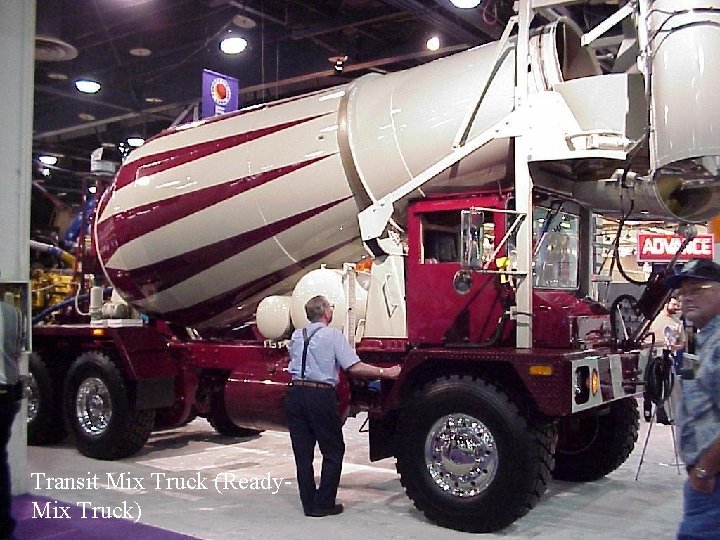
1913—Ready Mix The first load of ready mix was delivered in Baltimore, Maryland. Photo courtesy of Kuhlman Corp.
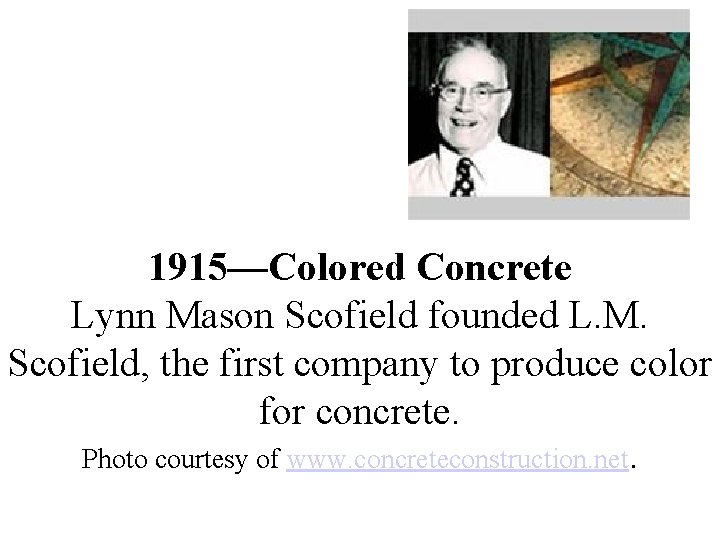
1915—Colored Concrete Lynn Mason Scofield founded L. M. Scofield, the first company to produce color for concrete. Photo courtesy of www. concreteconstruction. net.
1930—Air Entraining Agents Air entraining agents were used for the first time in cement to resist against damage from freezing and thawing.
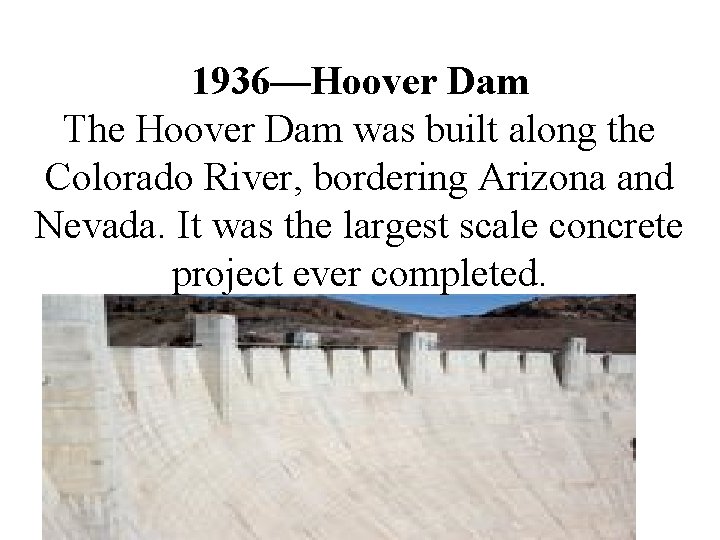
1936—Hoover Dam The Hoover Dam was built along the Colorado River, bordering Arizona and Nevada. It was the largest scale concrete project ever completed.
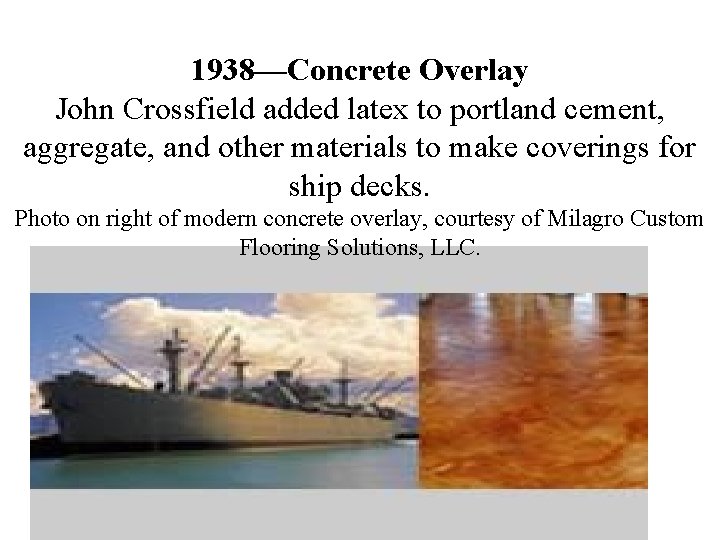
1938—Concrete Overlay John Crossfield added latex to portland cement, aggregate, and other materials to make coverings for ship decks. Photo on right of modern concrete overlay, courtesy of Milagro Custom Flooring Solutions, LLC.
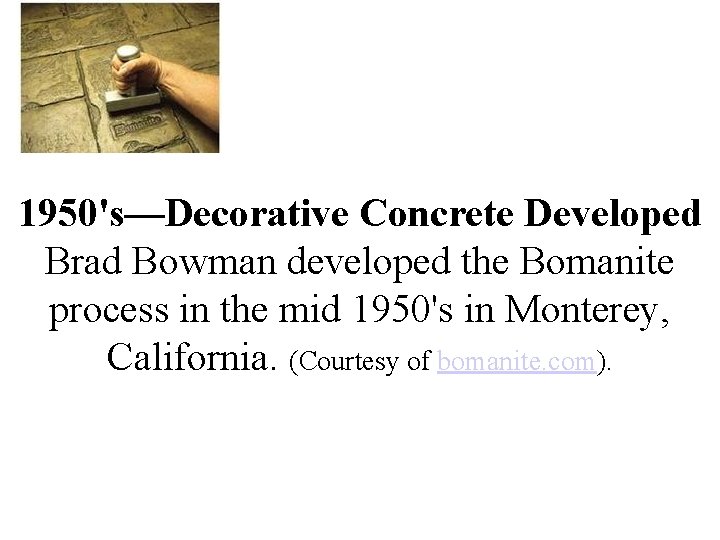
1950's—Decorative Concrete Developed Brad Bowman developed the Bomanite process in the mid 1950's in Monterey, California. (Courtesy of bomanite. com).
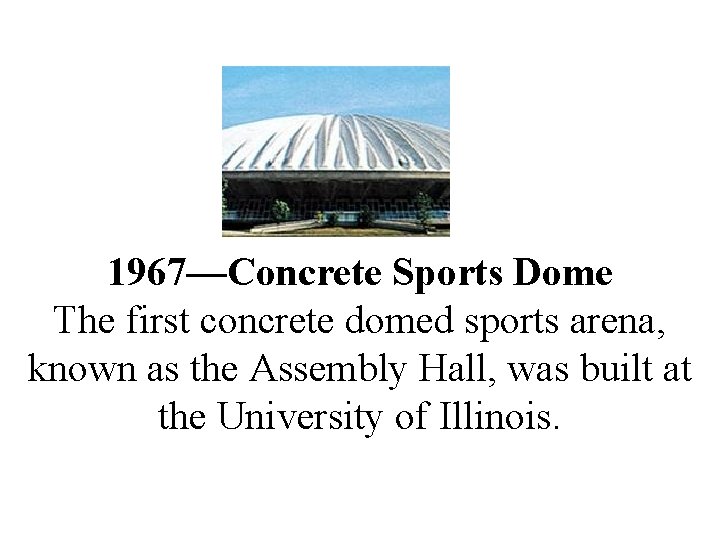
1967—Concrete Sports Dome The first concrete domed sports arena, known as the Assembly Hall, was built at the University of Illinois.
1970's—Fiber Reinforcement Fiber reinforcement was introduced as a way to strengthen concrete.
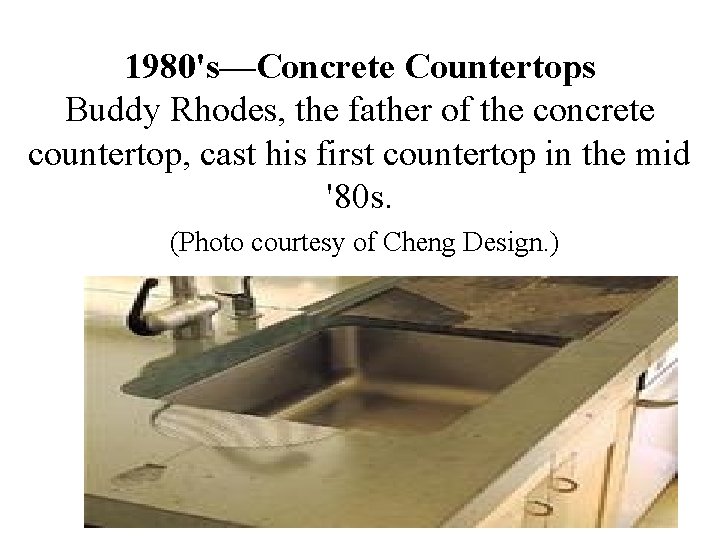
1980's—Concrete Countertops Buddy Rhodes, the father of the concrete countertop, cast his first countertop in the mid '80 s. (Photo courtesy of Cheng Design. )
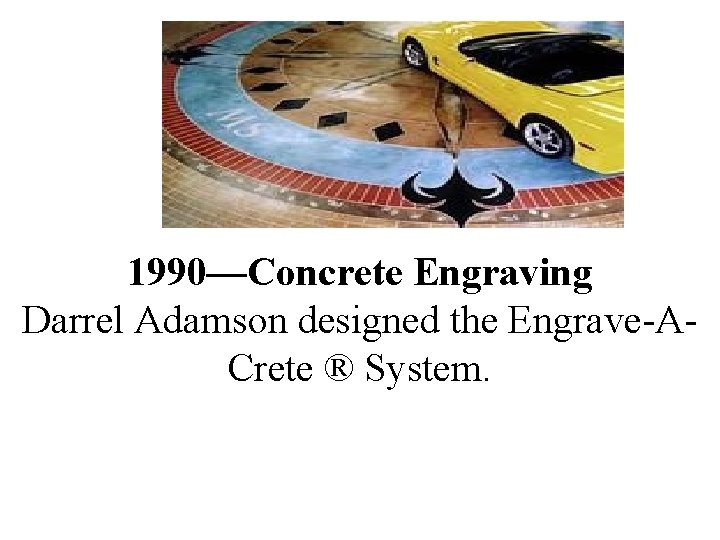
1990—Concrete Engraving Darrel Adamson designed the Engrave-ACrete ® System.
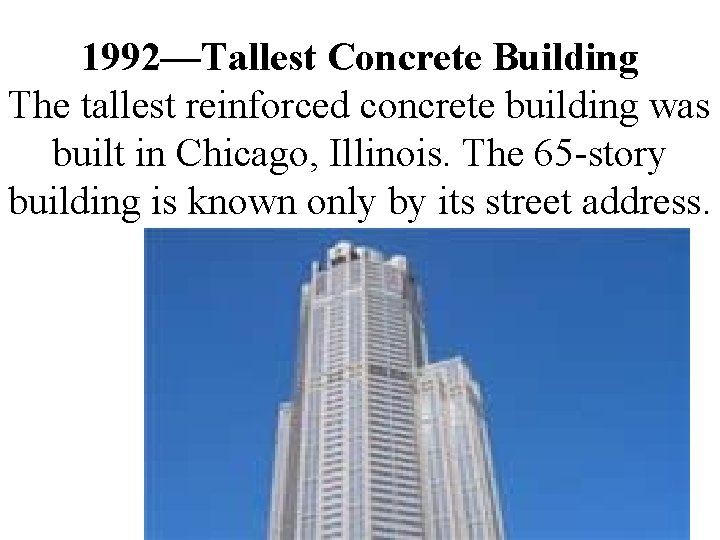
1992—Tallest Concrete Building The tallest reinforced concrete building was built in Chicago, Illinois. The 65 -story building is known only by its street address.
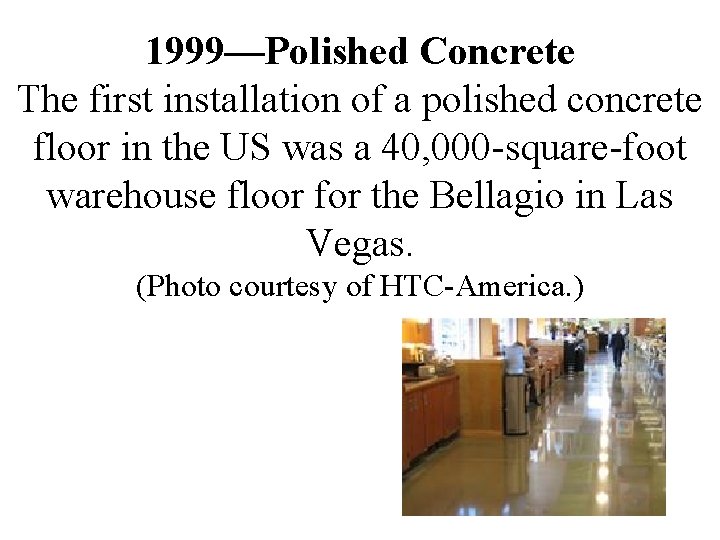
1999—Polished Concrete The first installation of a polished concrete floor in the US was a 40, 000 -square-foot warehouse floor for the Bellagio in Las Vegas. (Photo courtesy of HTC-America. )
Placing and Finishing Concrete
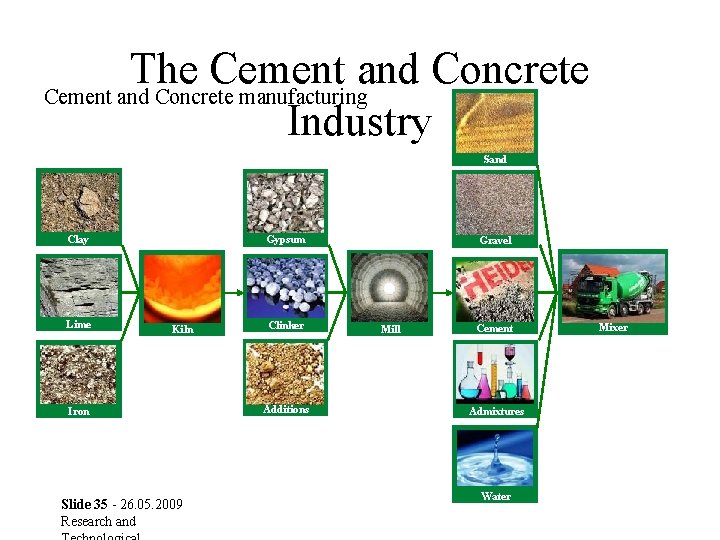
The Cement and Concrete manufacturing Industry Sand Clay Lime Gypsum Kiln Iron Slide 35 - 26. 05. 2009 Research and Clinker Additions Gravel Mill Cement Admixtures Water Mixer
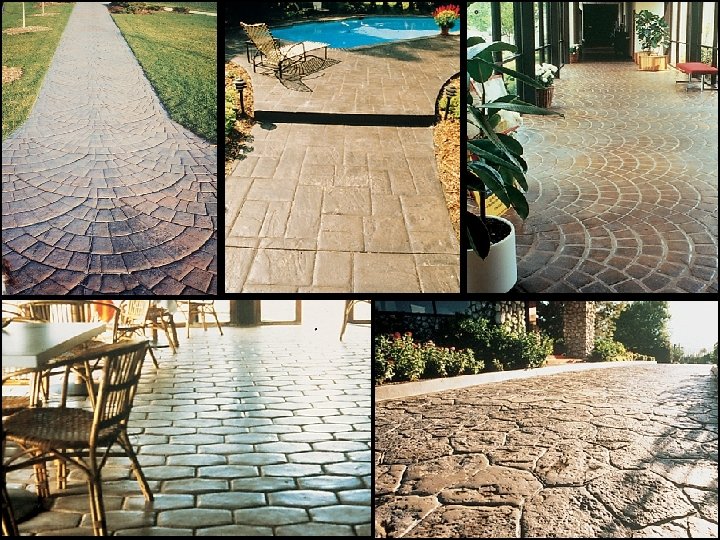
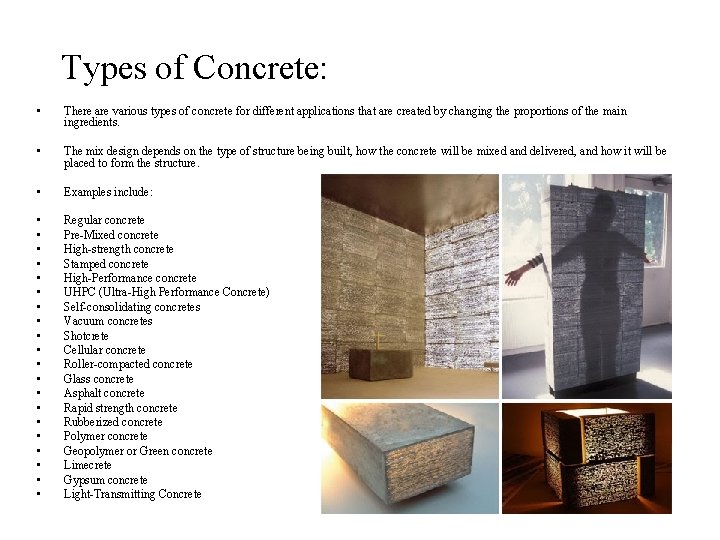
Types of Concrete: • There are various types of concrete for different applications that are created by changing the proportions of the main ingredients. • The mix design depends on the type of structure being built, how the concrete will be mixed and delivered, and how it will be placed to form the structure. • Examples include: • • • • • Regular concrete Pre-Mixed concrete High-strength concrete Stamped concrete High-Performance concrete UHPC (Ultra-High Performance Concrete) Self-consolidating concretes Vacuum concretes Shotcrete Cellular concrete Roller-compacted concrete Glass concrete Asphalt concrete Rapid strength concrete Rubberized concrete Polymer concrete Geopolymer or Green concrete Limecrete Gypsum concrete Light-Transmitting Concrete
LATEST TREND IN CONCRETE • ROLLER COMPACTED CONCRETE • ULTRA HIGH PERFORMANCE CONCRETE • FIBER REINFORCED CONCRETE • CELLULAR CONCRETE • SHOTCRETE • SELF COMPACTING CONCRETE • FLOWABLE CONCRETE
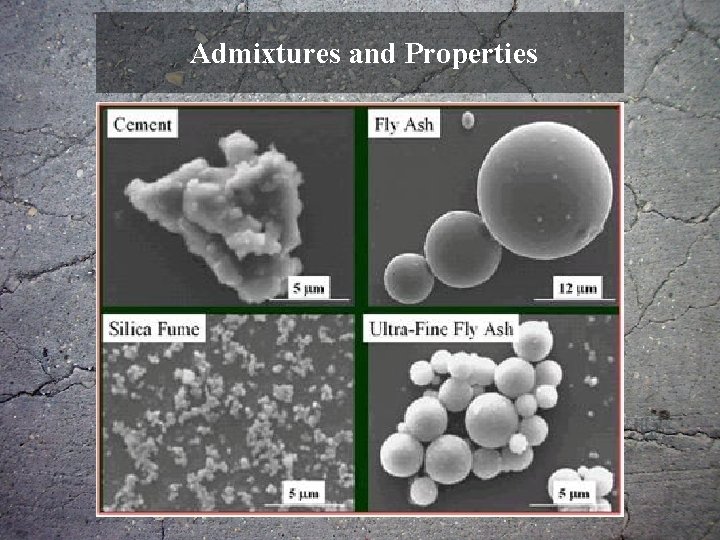
Admixtures and Properties
Polypropylene Fibers Background • Polypropylene is a recent additive to cement as of the 1960 s, whereas other fibers are underway of being tested strength wise for concrete. Properties • When regular concrete is under a great amount of compression it will spilt and deform on the spot into separate pieces once it reaches its greatest tensile load. Mixing sporadically polypropylene fibers into the cement will balance this effect by attaching to the other piece that wants to spilt away and maintain both sides for a longer duration. Benefits • With the addition of polypropylene fiber in the mixture of concrete it enhances the toughness and tensile strength. When concrete is by itself it has the tendency to be very brittle especially in the area of a tensile test which is where the fibers come into play to build in where regular concrete lags, which can increase the compressive strength to a dramatic level. • In coastal areas there is a high concentration of chloride ions from the salty air, this creates corrosion with the steel product which produces rust as a result. This rust has the capacity to expand four to ten times larger than the iron causing a large expansion which makes crakes and voids. Polypropylene fibers now are underway in replacing the reinforcing steel in concrete, which has a much greater strength and can reach up to 20 k psi.
Nanotechnology in Concrete • Nano-catalysts to reduce clinkering temperature in cement production • Silicon dioxide nano-particles (nanosilica) for ultra-high strength concrete • Incorporation of carbon nano-tubes into cement matrix would result in stronger, ductile, more energy absorbing concrete • Eco-binders (Mg. O, geopolymers, etc) modified by nano-particles with substantially reduced volume of portland cement
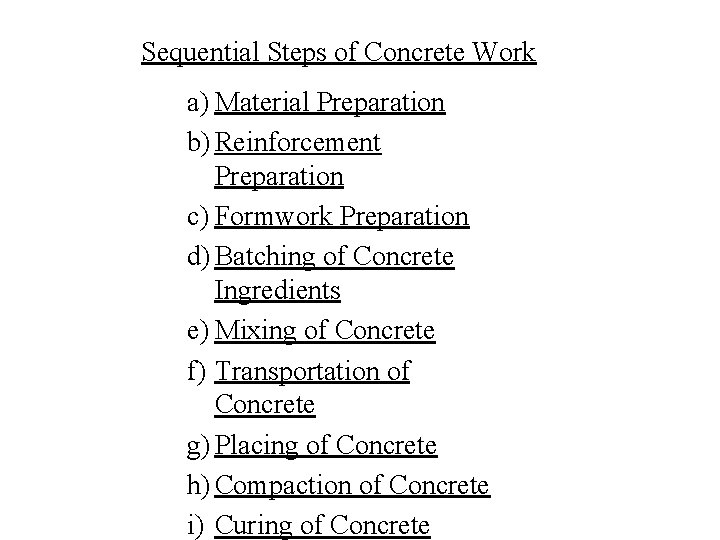
Sequential Steps of Concrete Work a) Material Preparation b) Reinforcement Preparation c) Formwork Preparation d) Batching of Concrete Ingredients e) Mixing of Concrete f) Transportation of Concrete g) Placing of Concrete h) Compaction of Concrete i) Curing of Concrete
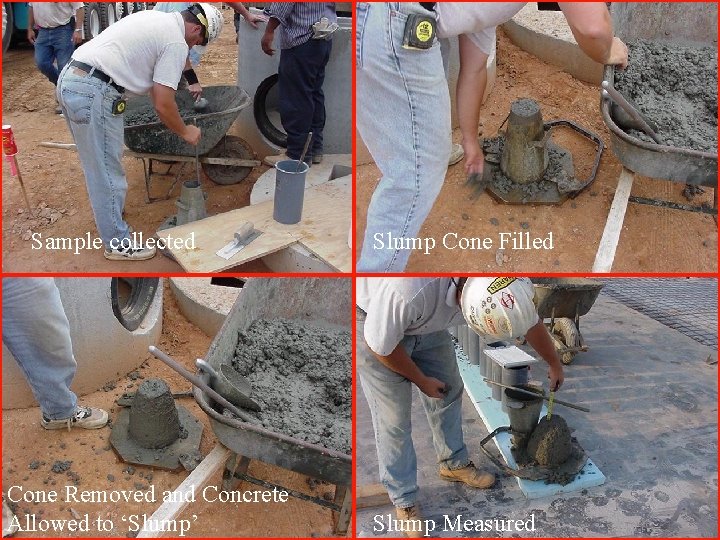
Sample collected Cone Removed and Concrete Allowed to ‘Slump’ Slump Cone Filled Slump Measured
Transit Mix Truck (Ready. Mix Truck)
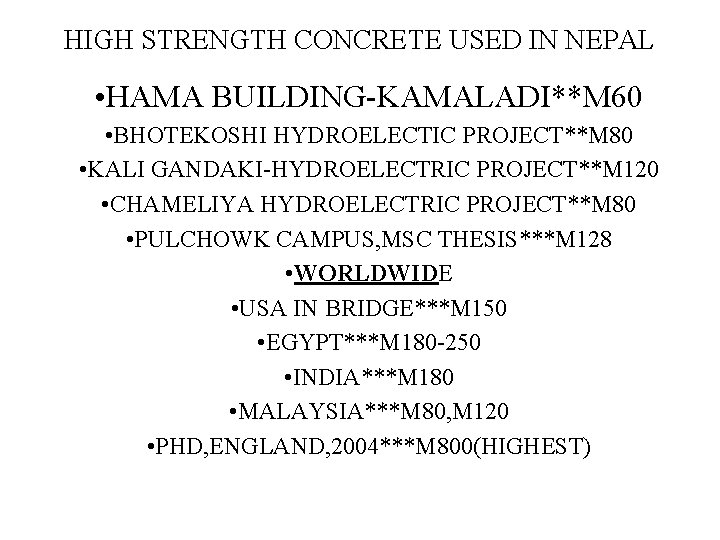
HIGH STRENGTH CONCRETE USED IN NEPAL • HAMA BUILDING-KAMALADI**M 60 • BHOTEKOSHI HYDROELECTIC PROJECT**M 80 • KALI GANDAKI-HYDROELECTRIC PROJECT**M 120 • CHAMELIYA HYDROELECTRIC PROJECT**M 80 • PULCHOWK CAMPUS, MSC THESIS***M 128 • WORLDWIDE • USA IN BRIDGE***M 150 • EGYPT***M 180 -250 • INDIA***M 180 • MALAYSIA***M 80, M 120 • PHD, ENGLAND, 2004***M 800(HIGHEST)
References and Bibliography www. encyclopedia, concrete, com www. concretehistory. com • • • Ambuja Technical Literature Series -66; Commentary and Guidelines for application of IS 456: 2000, Section-2. Austin CK; Formwork Planning; 3 rd edition, 1981 Dhir R K & Jones M R ; Innovation in concrete structure; 4 th edition, 2002. Gambhir M L ; Concrete Technology, 2 nd edition ; Tata Mc Graw-Hill Publishing Company Ltd. New Delhi, 8 th Reprint 2001 IS 456: 2000; IS Code of Practice for Plain and Reinforced Concrete, fourth revision; Bureau of Indian Standards, Manak Bhawan, New Delhi. IS 456: 2000; Explanatory Hand-book for Plain and Reinforced Concrete, fourth revision; Bureau of Indian Standards, Manak Bhawan, New Delhi. Neville A M ; Properties of Concrete; 4 th and Final edition; Pearson Edition Asia, 2006. P. kumar Mehta and Paulo J. M. Monteiro; CONCRETE: Microstructure, properties and Material, Indian Edition(p. n-17 -39) SHETTY M. S. ; CONCRETE TECHNOLOGY: Theory and Practice, S. Chand Company Ltd. 1998. Shrestha K M ; Production of very high Strength Concrete in Nepal; M. Sc. Thesis, I O E Pulchowk Campus, Decc. 2005. Taylor W H ; Concrete Technology and Practice www. concreteworld. com