
The History Of Chernobyl Presentation By Austin Gregg
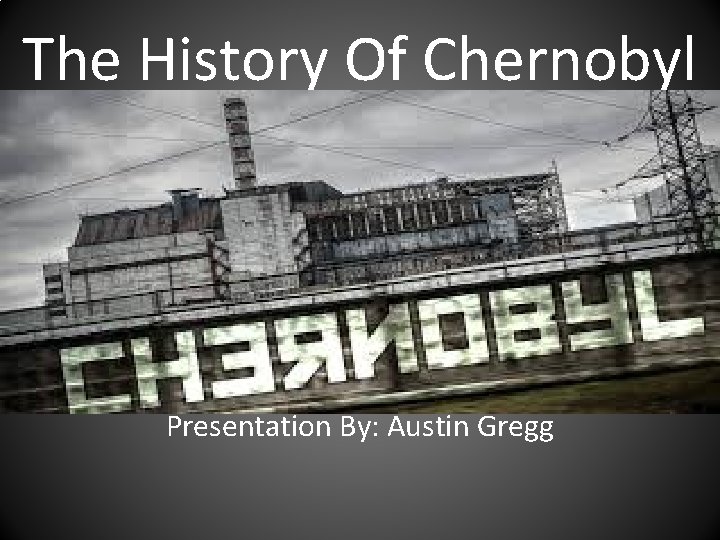
The History Of Chernobyl Presentation By: Austin Gregg
Life Before Chernobyl wasn’t always what it is today(obviously), Chernobyl once was a very populated city with the population at a steady 14, 000 residents. A small city just outside of Chernobyl call Pripyat was proclaimed a city in 1970. The small city was used as a place to house the workers of Chernobyl. Now that you know a little about Chernobyl's early life let get right into the most devastating nuclear disaster of all time. But first lets get a layout of the nuclear plant itself.
Opening Day Construction of the biggest nuclear power plant of its time began on August 15, 1972 and wasn’t completed until 1977. Chernobyl quickly rose to the top of the nuclear chain with 4 fully functional reactors type RBMK-1000. Units 1 and 2 where constructed between 1972 and 1977, while reactors 3 and 4 were completed in 1983. If that’s not enough, two more rectors were in the process of being built at the time of the accident.
Electrical Systems The RBMK-1000 reactors are boiling light water reactors, with two loops that lead steam directly into the turbines. Water is pumped into the bottom of the fuel channels and boils as it slow progresses up the pressure tubes. This process produces steam which feeds two 500 megawatt turbines. A combination of nitrogen and helium is circulated between the graphite blocks to prevent the lose of electrons in the graphite. The power of the reactor is controlled by raising or dropping 211 control rods into the moderator, this absorbs neutrons and slows the fission rate.
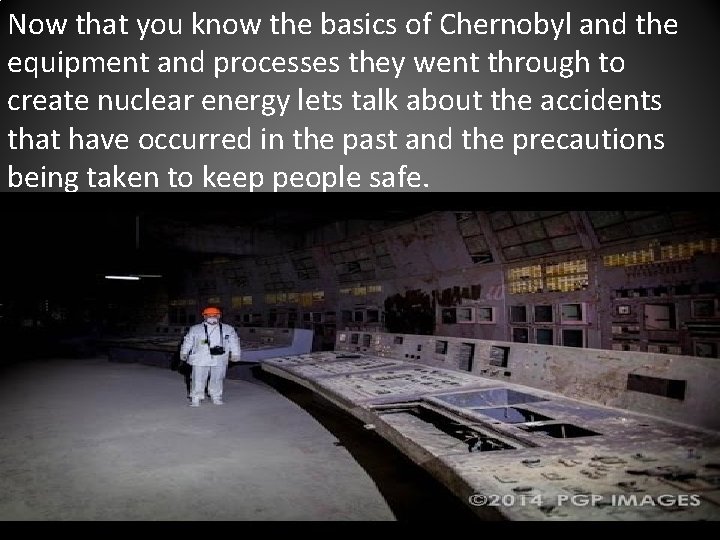
Now that you know the basics of Chernobyl and the equipment and processes they went through to create nuclear energy lets talk about the accidents that have occurred in the past and the precautions being taken to keep people safe.
Accidents(yes it wasn’t the first) Surprisingly Chernobyl has had 4 major accidents in the past. ~ Reactor No. 1 - On September 9, 1982, a core meltdown occurred. The accident was not made public until several years later. The reactor was repaired and put back into operation within months. ~ Disaster in reactor No. 4 - On Saturday, April 26, 1986, a disaster occurred at Reactor No. 4, which has been viewed as the worst accident in the history of nuclear power in the world. Reactor No. 4 was completely destroyed and is being enclosed in a sarcophagus to prevent more escape of radioactivity. Large areas of Europe were affected by the accident.
Accidents ~ Fire in Reactor 2 - On October 11, 1991, a fire broke out in the turbine hall of Reactor 2. The fire began in Reactor 2's Turbine 4 while the turbine was being checked for repairs. A switch caused a surge of current to the turbine, igniting insulating material on some electrical wiring. This led to hydrogen used as a turbine coolant being leaked into the turbine hall.
Accidents ~ Collapse- On February 13, 2013, a portion of the roof and wall near the covered part of the turbine hall collapsed into the enclosed area of the turbine hall. The collapse did not affect any other part of the sealed concrete roof.
Shutdown and decommission Reactors 1 and 3 were shut down in 1996 and 2000. It would have originally taken many more years to shut them down but due to the accident in reactor 4 they shut them down along with reactor 4. The first part of cleaning up is the removal of nuclear fuel from nearby ponds. However it is very hard to contain all of the fuel, the storage units to contain it are not strong and big enough to hold all of the fuel from reactors 1, 2, and 3. Chernobyl has no reactors left to run the turbines therefore generators can not run. The removal of uncontaminated equipment has begun at Reactor 1 and will not be completed until 2020 or 2022.
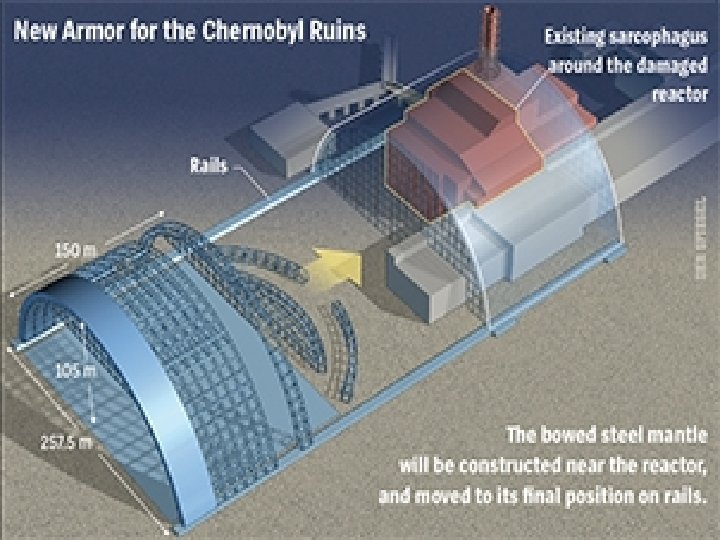
Sarcophagus The plan for this gigantic dome first started in 2003 and is still in the process of being built. The 257 meter long, 150 meter wide, and 105 meter high dome will be slid into place on rails. The new sarcophagus will slide right over top of the already existing concrete sarcophagus. Why does it need a new one when it already has one you may ask. Because the old one has been so covered in radioactivity that it is literally disintegrating in thin air.
Now that we have been through the accidents and the precautions being taken to fix the problem lets get into the eerie part of the equation.
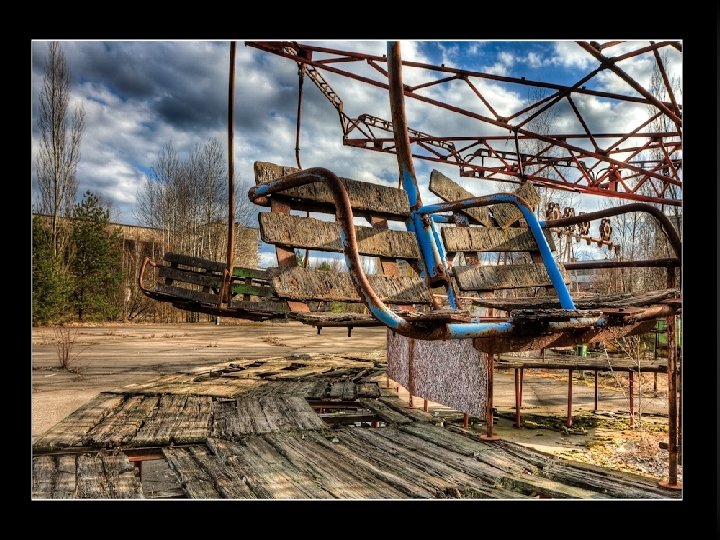
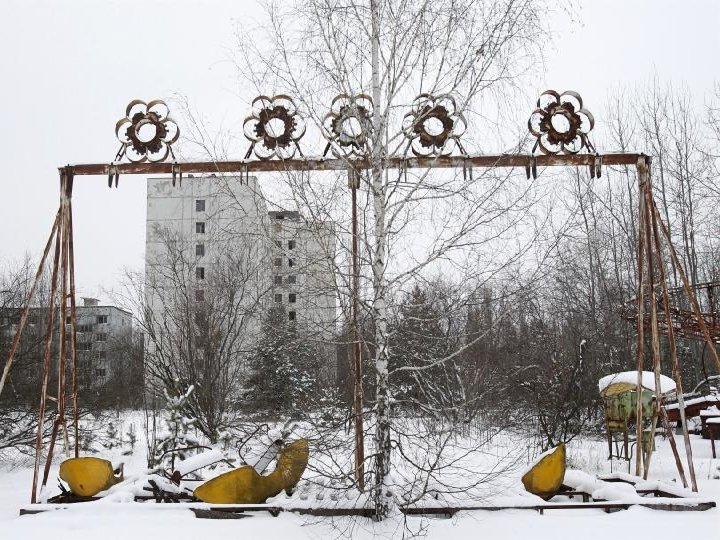
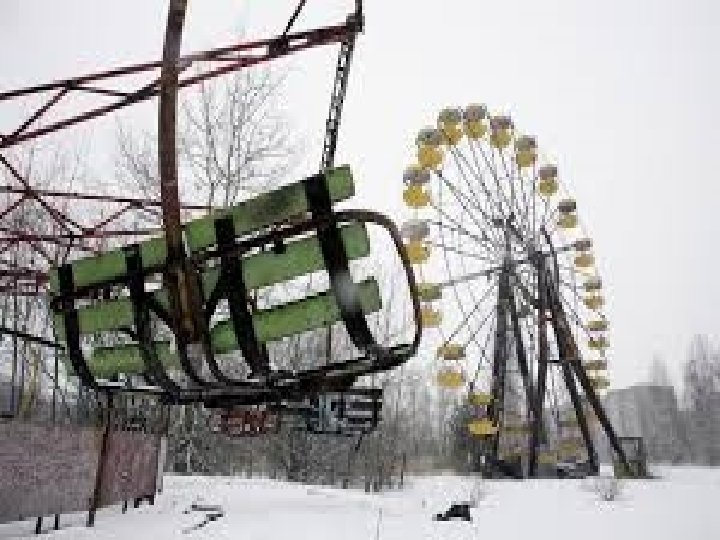
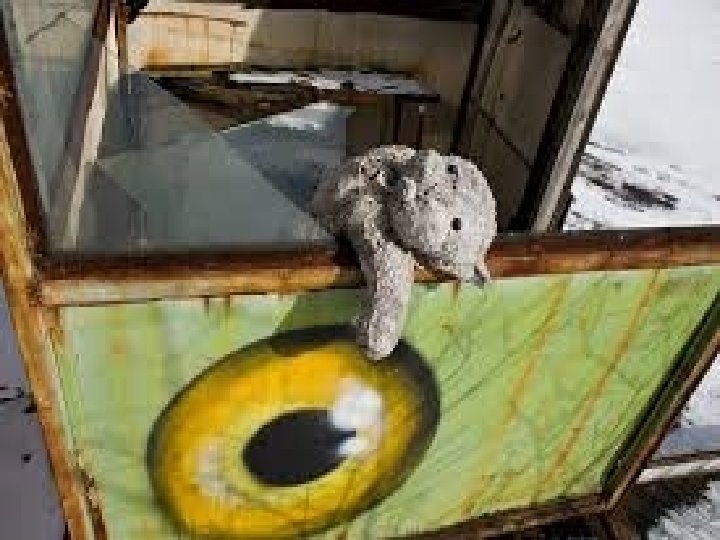
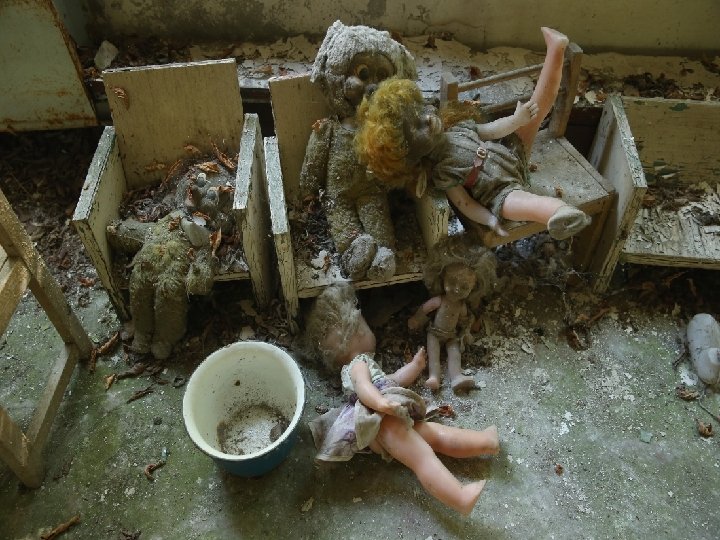
The Famous Pripyat amusement park The park had four attractions: the iconic Ferris wheel, bumper cars, swing boats, and a paratrooper ride. Photographers are known to place stuffed toys in and around the park reflect its sadness. Radiation levels around the park are relatively safe enough for people passing by to with stand the radiation levels.
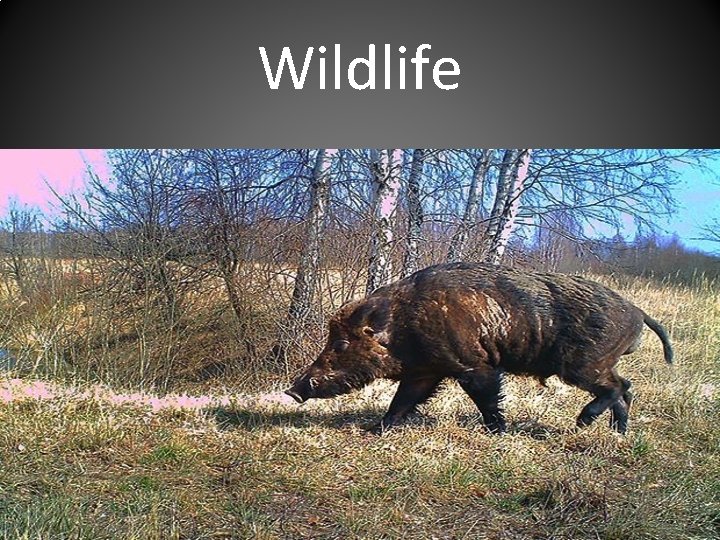
Wildlife
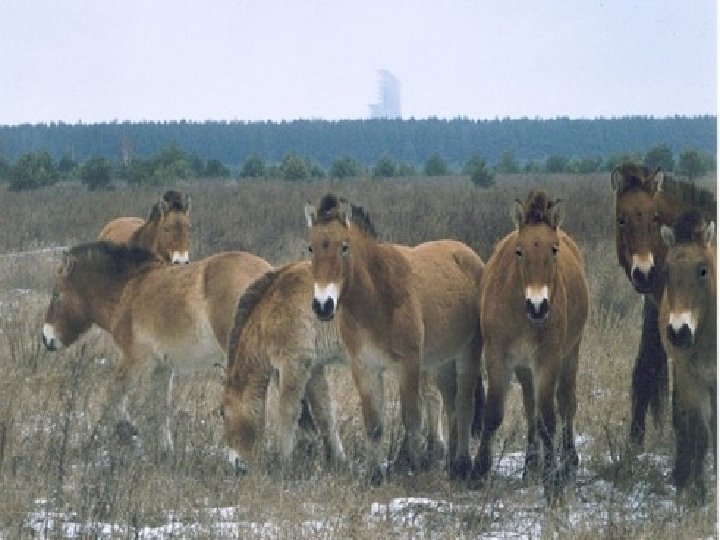
Przewalski's horse The Przewalski horse’s are a rare endangered spices of wild horse's. They where brought to Chernobyl as a clean up act after the nuclear disaster. There are some signs in the horses of radioactivity including shorter legs. The radioactivity is actually doing more harm to the horses than helping the landscape. But what scientist are trying to figure out is how are they still alive with all of the radioactivity in the landscape and in there food source.
- Slides: 23