
THE HISTORY AND POLITICS OF MODERN TURKEY Dr
- Slides: 21
THE HISTORY AND POLITICS OF MODERN TURKEY Dr. Feyzi Karabekir Akkoyunlu karabekir. akkoyunlu@uni-graz. at IRI – USP 2018
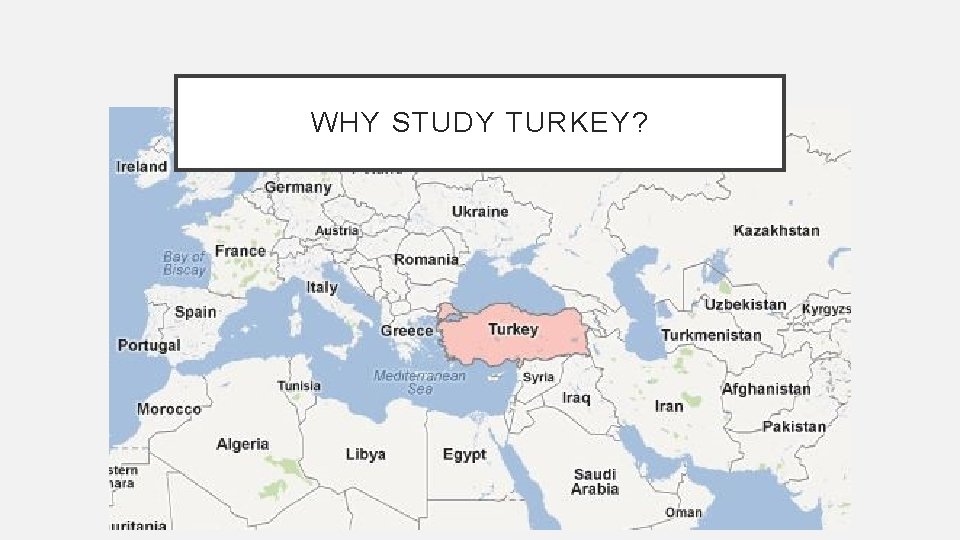
WHY STUDY TURKEY? GEOPOLITICAL RELEVANCE • At the intersection of multiple geopolitical neighbourhoods • Influencing (and influenced by) regional dynamics • A story of economic boom (and bust? ) • Millions of people from Turkey living abroad (mostly in Europe and the US)
WHY STUDY TURKEY?
WHY STUDY TURKEY? HISTORICAL RELEVANCE • Many of the regional issues can traced back to the collapse of the Ottoman Empire, Turkey’s predecessor: • Kurdish conflict • Armenian efforts for genocide recognition • Nationalism and identity politics in the Balkans • Unsettled borders and identities in the Middle East • Cyprus
WHY STUDY TURKEY? CONCEPTUAL RELEVANCE • The major themes of our times can be studied through the example of Turkey: • Secularism and religion • Nationalism and minorities • “Clash of Civilisations” • Civil-military relations • The crisis of liberal democracy, rising populism & new authoritarianisms • Globalisation and its discontents
COURSE OUTLINE SIX LECTURES 1. Intro / From Empire to Nation-State (16 August) 2. Atatürk and the Legacies of Kemalism (23 August) 3. Turkey in the Cold War (30 August) 4. Turkey and the European Union (6 September) 5. The AKP and the Rise and Fall of the ‘Turkish Model’ (13 September) 6. Changes and Continuities from Atatürk to Erdoğan (20 September)
COURSE OUTLINE ASSESSMENT § Class Participation (20%) § Attendance to lectures and participation in class discussions. § You are expected to do the assigned readings ahead of each lecture. § Presentation (30%) § 15 minute presentation. Topic of your choice OR chosen from among discussion Qs in syllabus. § Come talk to me in advance, I’ll help you prepare. § Final Essay (50%) § 3, 000 words. Due midnight Thursday, 11 October. § Questions to be announced.
YOUR TURN!
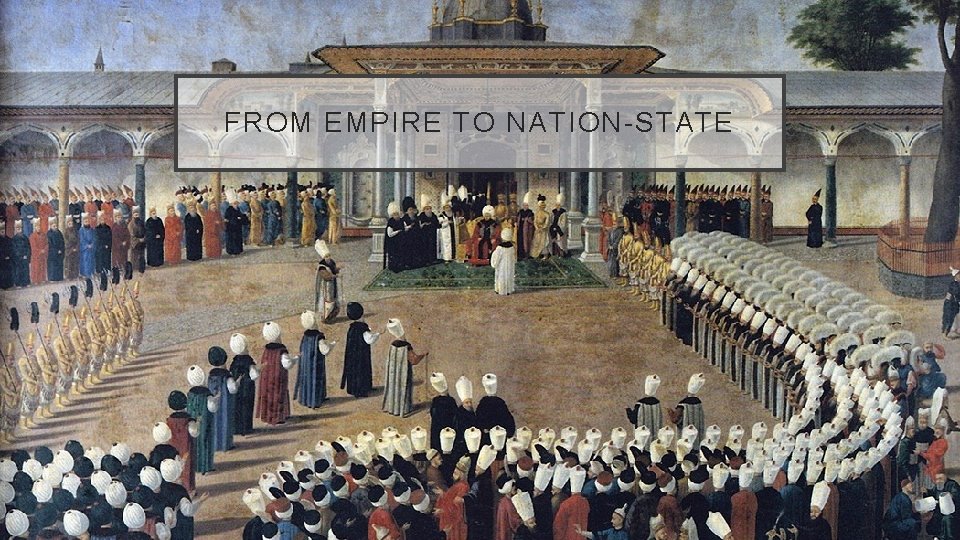
FROM EMPIRE TO NATION-STATE
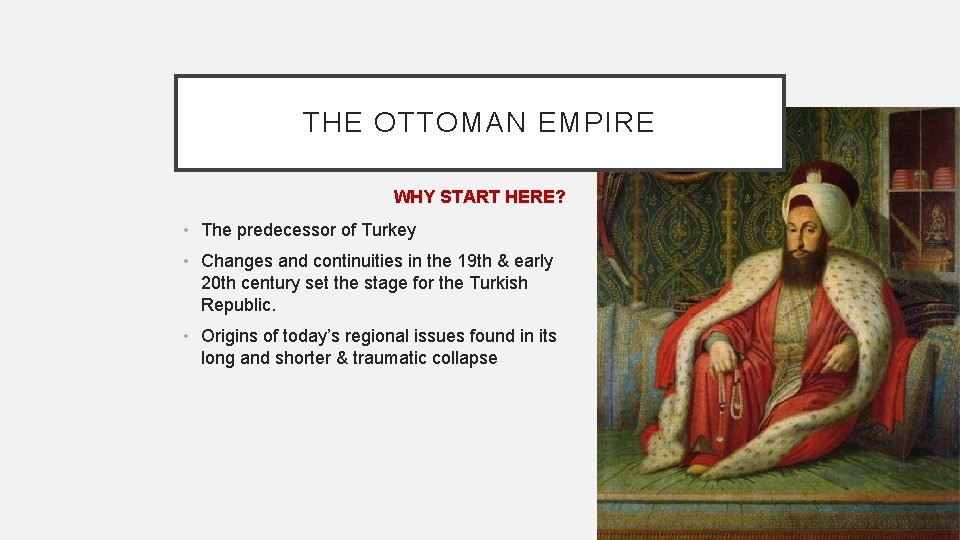
THE OTTOMAN EMPIRE WHY START HERE? • The predecessor of Turkey • Changes and continuities in the 19 th & early 20 th century set the stage for the Turkish Republic. • Origins of today’s regional issues found in its long and shorter & traumatic collapse
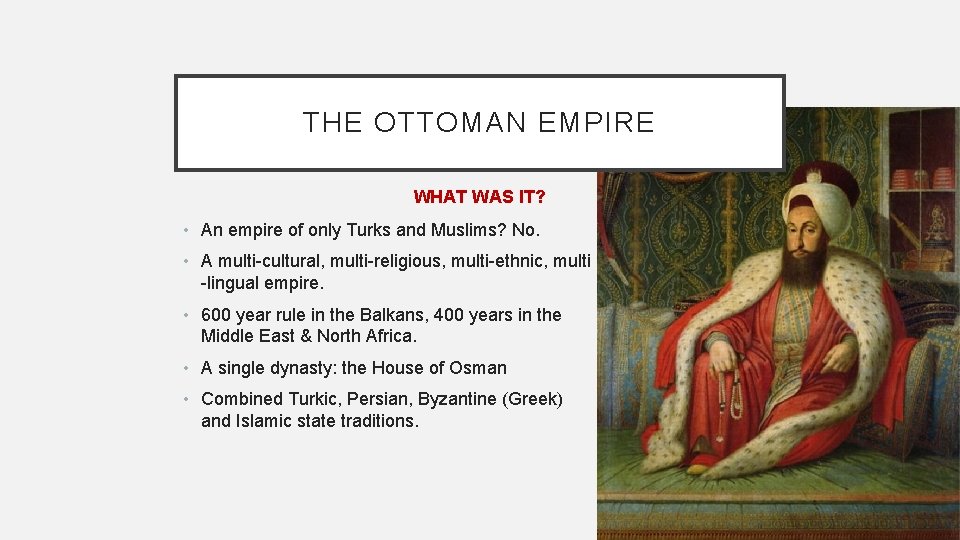
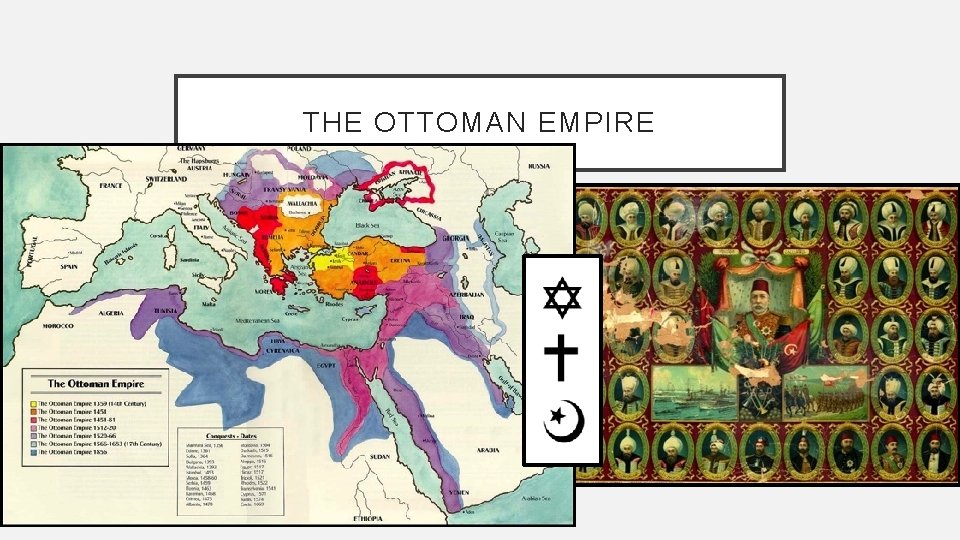
THE OTTOMAN EMPIRE WHAT WAS IT? • An empire of only Turks and Muslims? No. • A multi-cultural, multi-religious, multi-ethnic, multi -lingual empire. • 600 year rule in the Balkans, 400 years in the Middle East & North Africa. • A single dynasty: the House of Osman • Combined Turkic, Persian, Byzantine (Greek) and Islamic state traditions.
THE OTTOMAN EMPIRE
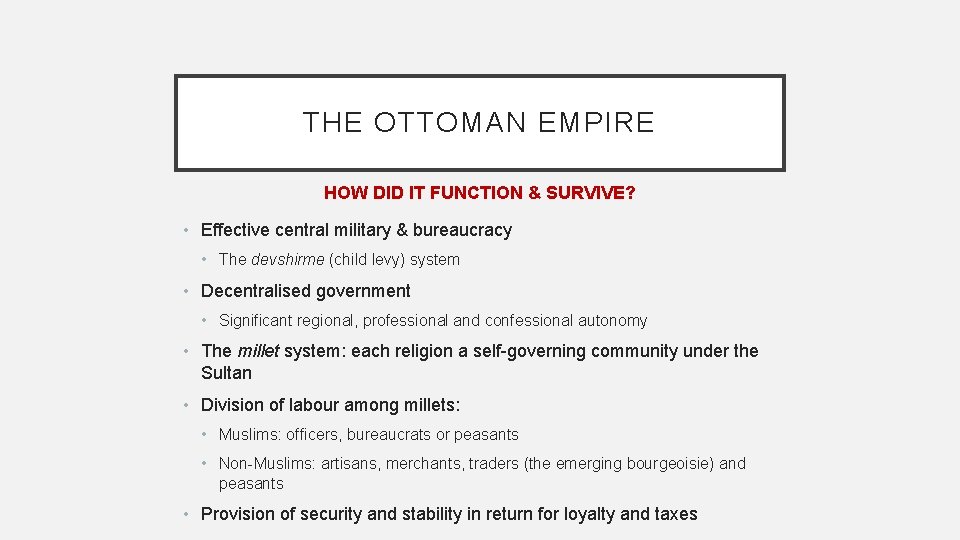
THE OTTOMAN EMPIRE HOW DID IT FUNCTION & SURVIVE? • Effective central military & bureaucracy • The devshirme (child levy) system • Decentralised government • Significant regional, professional and confessional autonomy • The millet system: each religion a self-governing community under the Sultan • Division of labour among millets: • Muslims: officers, bureaucrats or peasants • Non-Muslims: artisans, merchants, traders (the emerging bourgeoisie) and peasants • Provision of security and stability in return for loyalty and taxes
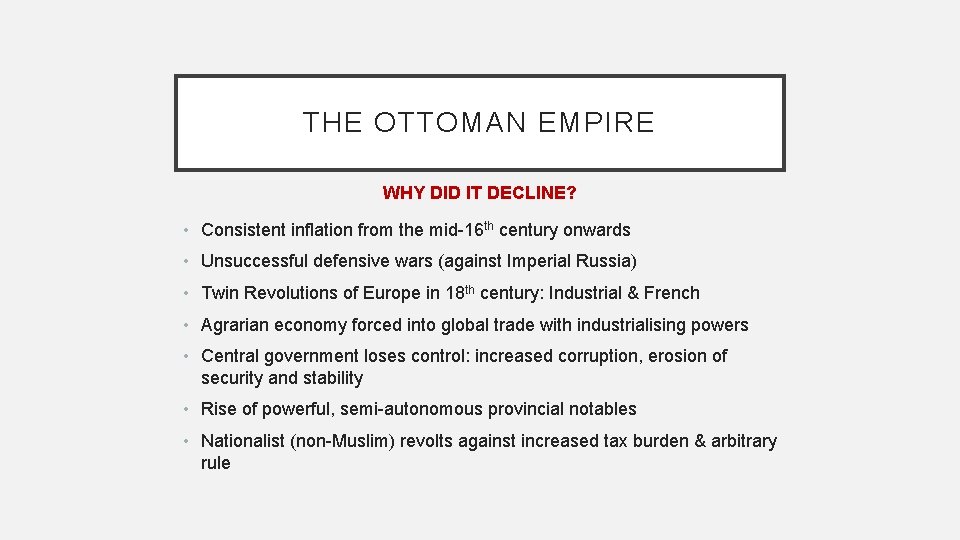
THE OTTOMAN EMPIRE WHY DID IT DECLINE? • Consistent inflation from the mid-16 th century onwards • Unsuccessful defensive wars (against Imperial Russia) • Twin Revolutions of Europe in 18 th century: Industrial & French • Agrarian economy forced into global trade with industrialising powers • Central government loses control: increased corruption, erosion of security and stability • Rise of powerful, semi-autonomous provincial notables • Nationalist (non-Muslim) revolts against increased tax burden & arbitrary rule
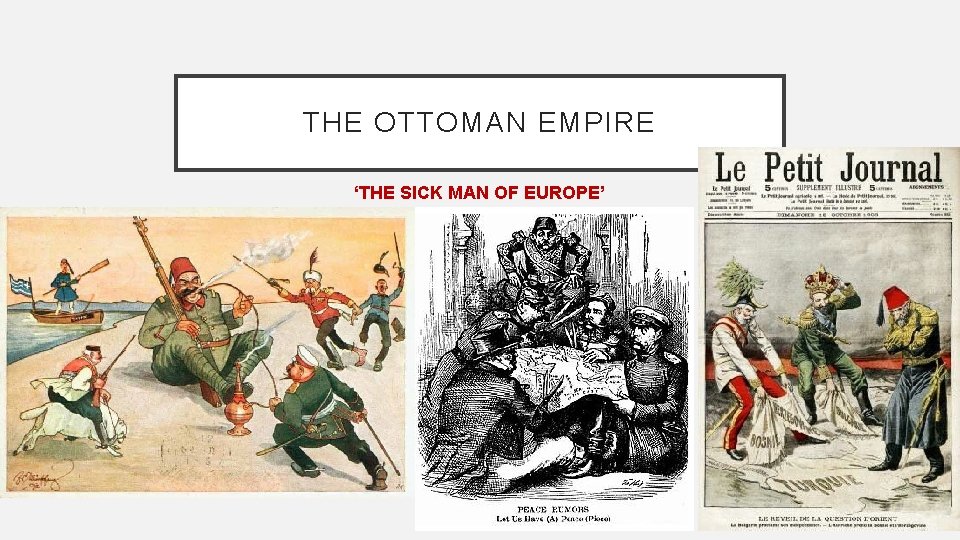
THE OTTOMAN EMPIRE ‘THE SICK MAN OF EUROPE’
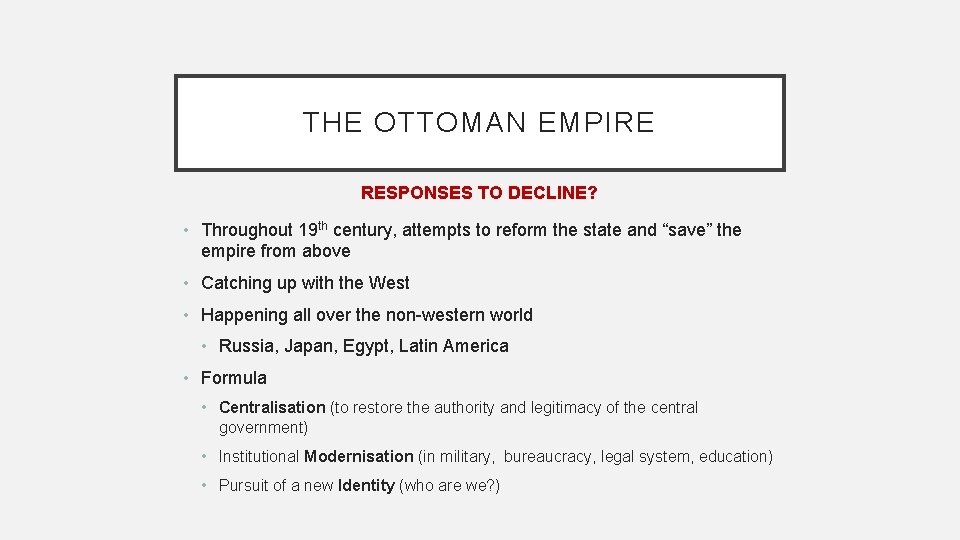
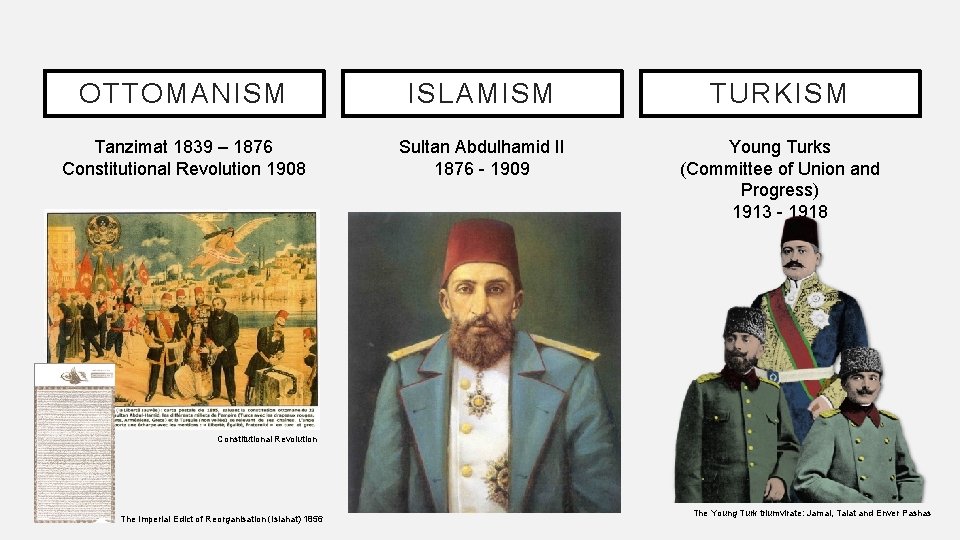
THE OTTOMAN EMPIRE RESPONSES TO DECLINE? • Throughout 19 th century, attempts to reform the state and “save” the empire from above • Catching up with the West • Happening all over the non-western world • Russia, Japan, Egypt, Latin America • Formula • Centralisation (to restore the authority and legitimacy of the central government) • Institutional Modernisation (in military, bureaucracy, legal system, education) • Pursuit of a new Identity (who are we? )
OTTOMANISM ISLAMISM TURKISM Tanzimat 1839 – 1876 Constitutional Revolution 1908 Sultan Abdulhamid II 1876 - 1909 Young Turks (Committee of Union and Progress) 1913 - 1918 Constitutional Revolution The Imperial Edict of Reorganisation (Islahat) 1856 The Young Turk triumvirate: Jamal, Talat and Enver Pashas
THE OTTOMAN EMPIRE THE OUTCOME OF REFORMS • Hampered by lack of economic resources, financial basis and competent personnel • Top-down nature created resistance and fueled new opposition • A system of dualisms: new laws and institutions clashed with old ones • Overall successful? If the aim was to save the empire… then no! • BUT: Also laid the foundations of the modern Turkish state
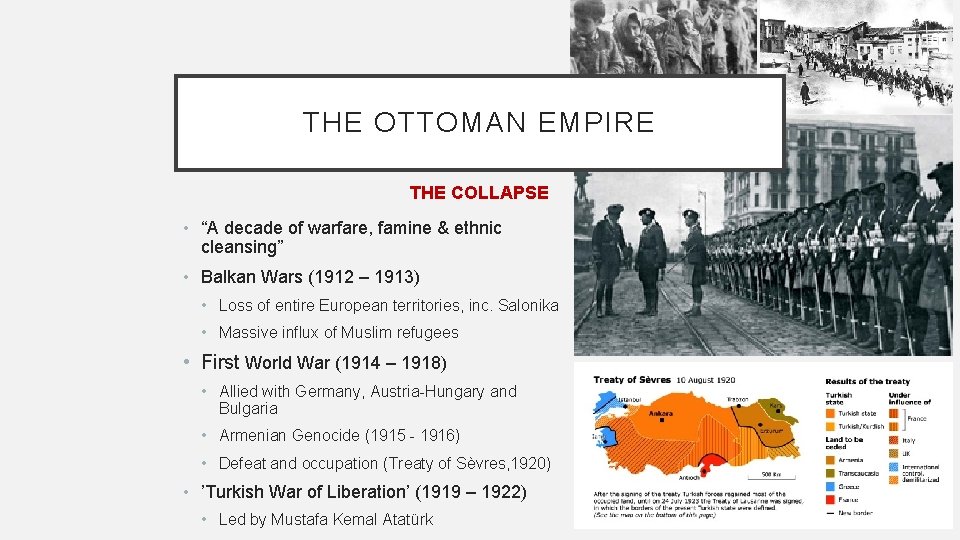
THE OTTOMAN EMPIRE THE COLLAPSE • “A decade of warfare, famine & ethnic cleansing” • Balkan Wars (1912 – 1913) • Loss of entire European territories, inc. Salonika • Massive influx of Muslim refugees • First World War (1914 – 1918) • Allied with Germany, Austria-Hungary and Bulgaria • Armenian Genocide (1915 - 1916) • Defeat and occupation (Treaty of Sèvres, 1920) • ’Turkish War of Liberation’ (1919 – 1922) • Led by Mustafa Kemal Atatürk
THE OTTOMAN EMPIRE THE OUTCOME • Near complete devastation of economic infrastructure, industry • Population decline and radical demographic change • Non-Muslim population of Anatolia reduced to 2% (from about 35 -40% a century earlier) • An overwhelmingly Muslim (but ethnically diverse) population • Loss of expertise, knowledge, capital • Very tough conditions to establish a new ’nation-state’ • But there also opportunities… “strong state, weak society”
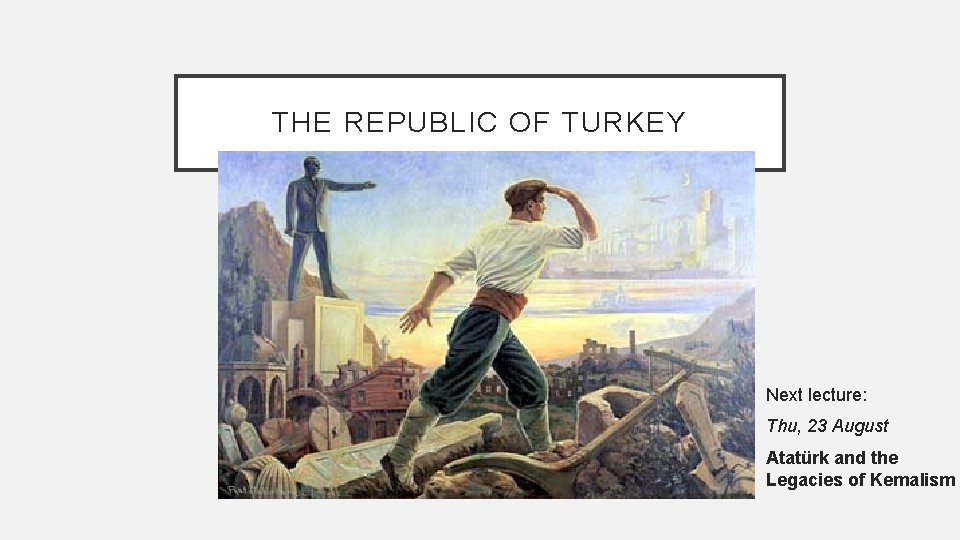
THE REPUBLIC OF TURKEY Next lecture: Thu, 23 August Atatürk and the Legacies of Kemalism