
The history and classification of life Today many




- Slides: 23
The history and classification of life “Today many scientists hope for biological categories that consist of a single ancestral linage and all its evolutionary descendants” “The really cool thing is, we still don’t know the answer”
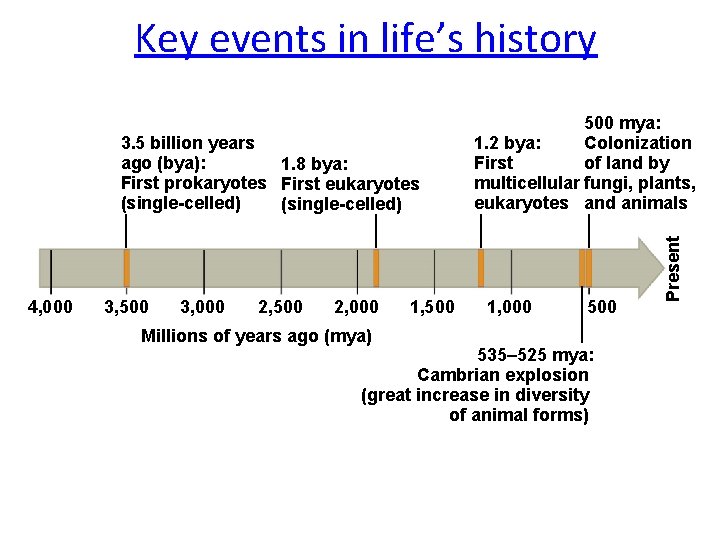
Key events in life’s history 4, 000 3, 500 3, 000 2, 500 2, 000 Millions of years ago (mya) 1, 500 1, 000 535– 525 mya: Cambrian explosion (great increase in diversity of animal forms) Present 3. 5 billion years ago (bya): 1. 8 bya: First prokaryotes First eukaryotes (single-celled) 500 mya: 1. 2 bya: Colonization of land by First multicellular fungi, plants, eukaryotes and animals
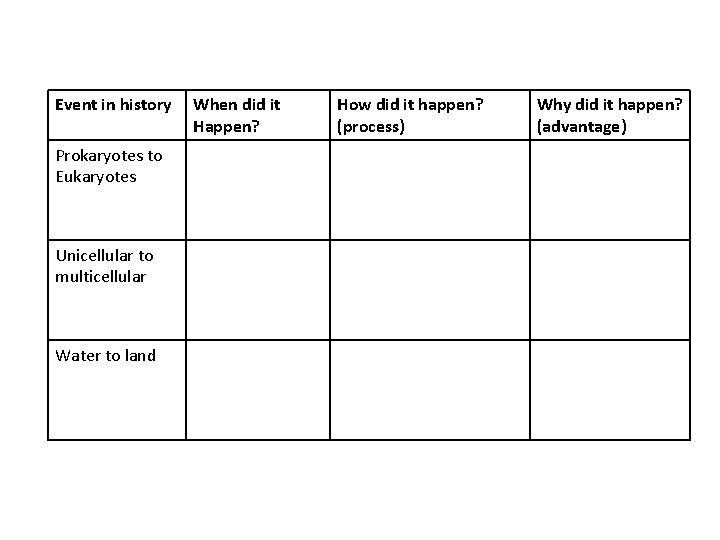
Event in history Prokaryotes to Eukaryotes Unicellular to multicellular Water to land When did it Happen? How did it happen? (process) Why did it happen? (advantage)
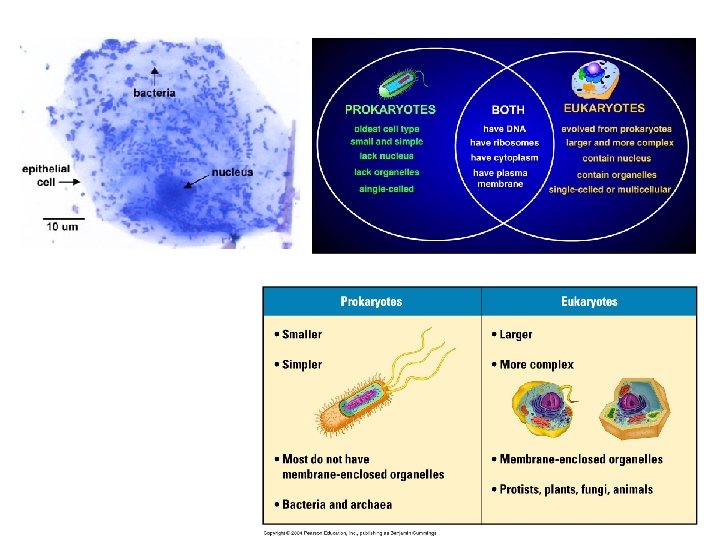
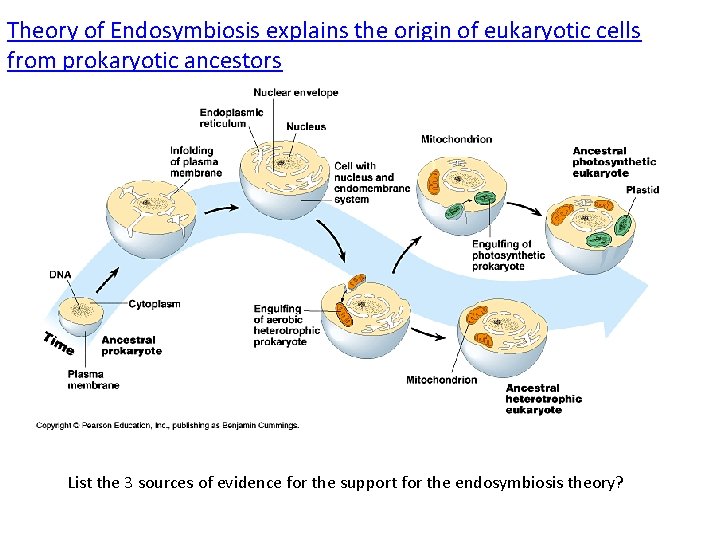
Theory of Endosymbiosis explains the origin of eukaryotic cells from prokaryotic ancestors List the 3 sources of evidence for the support for the endosymbiosis theory?
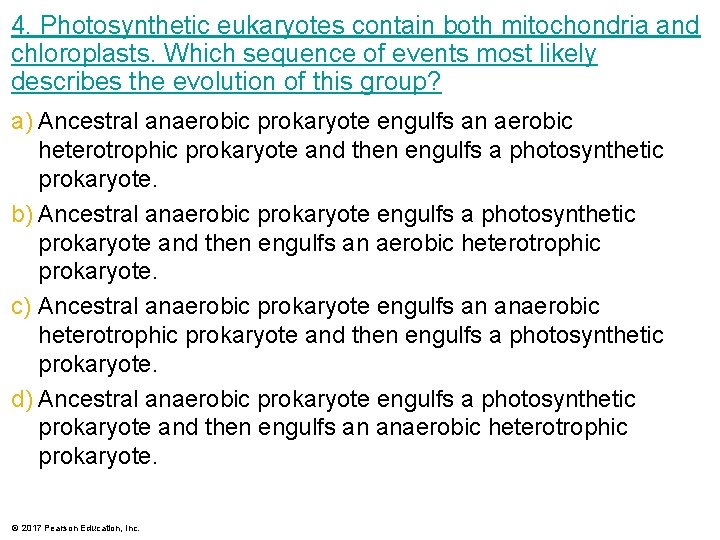
4. Photosynthetic eukaryotes contain both mitochondria and chloroplasts. Which sequence of events most likely describes the evolution of this group? a) Ancestral anaerobic prokaryote engulfs an aerobic heterotrophic prokaryote and then engulfs a photosynthetic prokaryote. b) Ancestral anaerobic prokaryote engulfs a photosynthetic prokaryote and then engulfs an aerobic heterotrophic prokaryote. c) Ancestral anaerobic prokaryote engulfs an anaerobic heterotrophic prokaryote and then engulfs a photosynthetic prokaryote. d) Ancestral anaerobic prokaryote engulfs a photosynthetic prokaryote and then engulfs an anaerobic heterotrophic prokaryote. © 2017 Pearson Education, Inc.
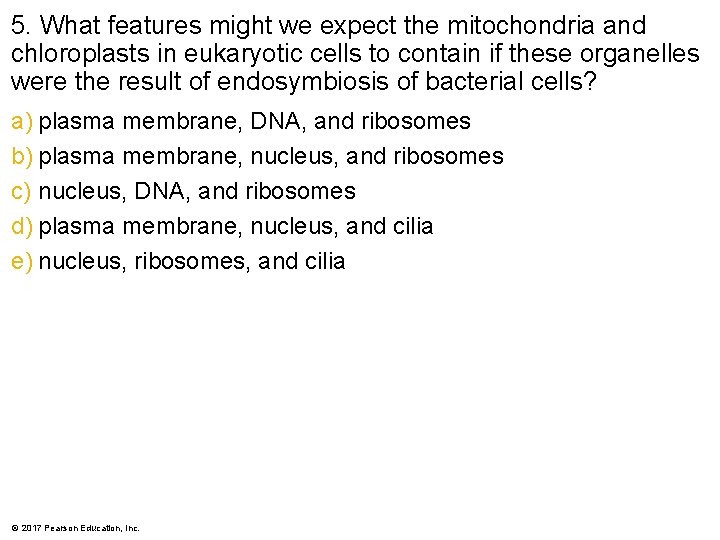
5. What features might we expect the mitochondria and chloroplasts in eukaryotic cells to contain if these organelles were the result of endosymbiosis of bacterial cells? a) plasma membrane, DNA, and ribosomes b) plasma membrane, nucleus, and ribosomes c) nucleus, DNA, and ribosomes d) plasma membrane, nucleus, and cilia e) nucleus, ribosomes, and cilia © 2017 Pearson Education, Inc.
First multicellular organisms were colonies
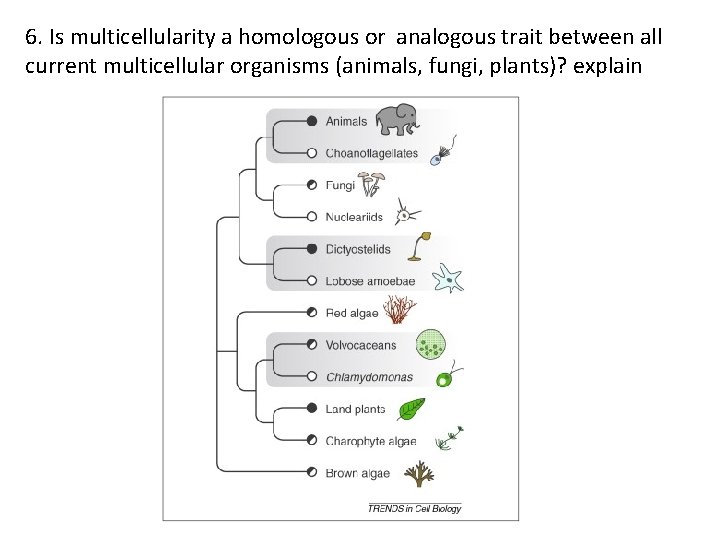
6. Is multicellularity a homologous or analogous trait between all current multicellular organisms (animals, fungi, plants)? explain
535– 525 million years ago “Cambrian explosion” diversification of animal forms
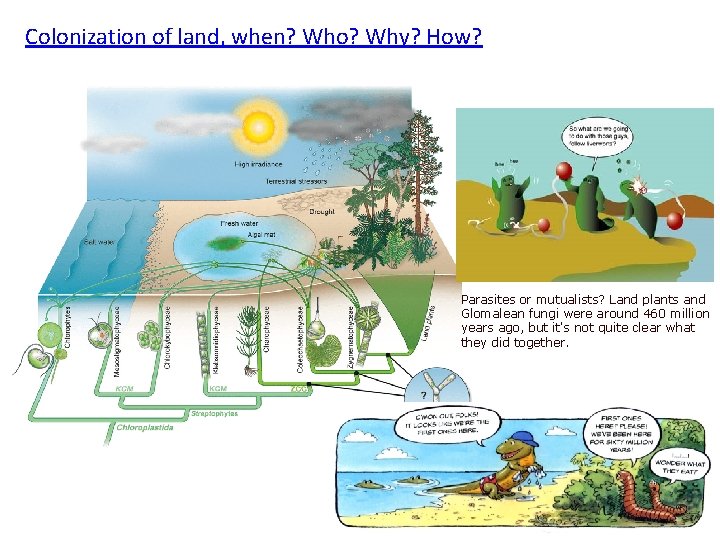
Colonization of land, when? Who? Why? How? Parasites or mutualists? Land plants and Glomalean fungi were around 460 million years ago, but it's not quite clear what they did together.
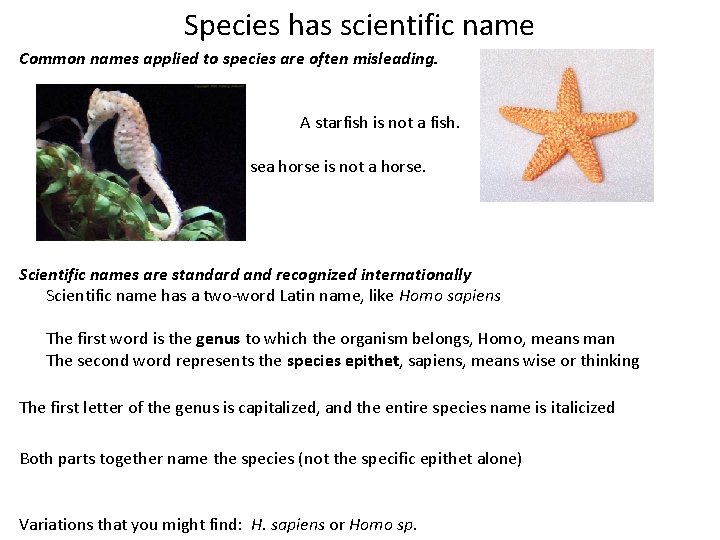
Species has scientific name Common names applied to species are often misleading. A starfish is not a fish. A sea horse is not a horse. Scientific names are standard and recognized internationally Scientific name has a two-word Latin name, like Homo sapiens The first word is the genus to which the organism belongs, Homo, means man The second word represents the species epithet, sapiens, means wise or thinking The first letter of the genus is capitalized, and the entire species name is italicized Both parts together name the species (not the specific epithet alone) Variations that you might find: H. sapiens or Homo sp.
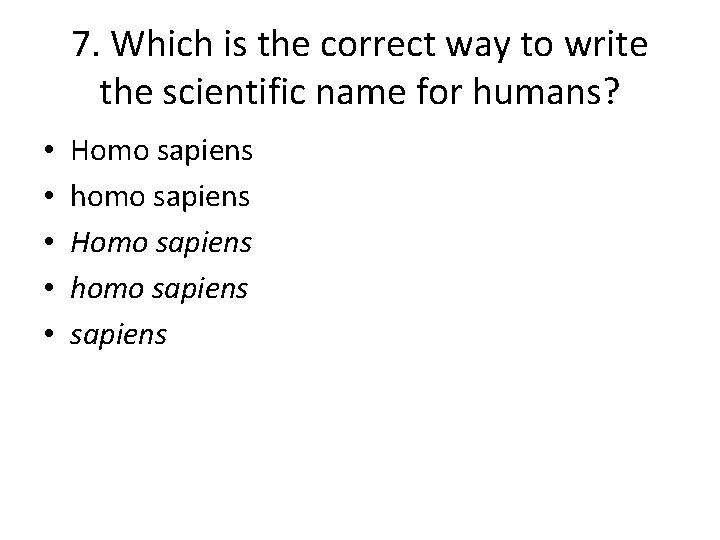
7. Which is the correct way to write the scientific name for humans? • • • Homo sapiens homo sapiens
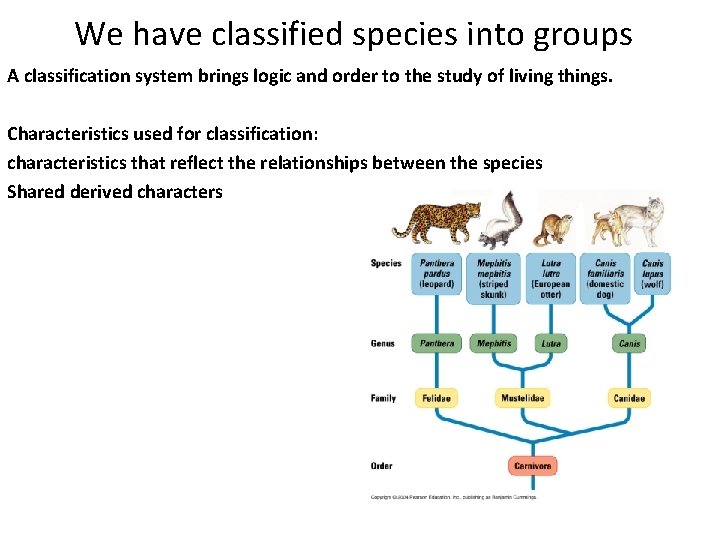
We have classified species into groups A classification system brings logic and order to the study of living things. Characteristics used for classification: characteristics that reflect the relationships between the species Shared derived characters
Hierarchical Classification Did King Phillip Come Over For Good Soup?
8. Which of the following taxonomic categories includes the fewest number of species? • • • Animalia Panthera Felidae Carnivora Mammalia
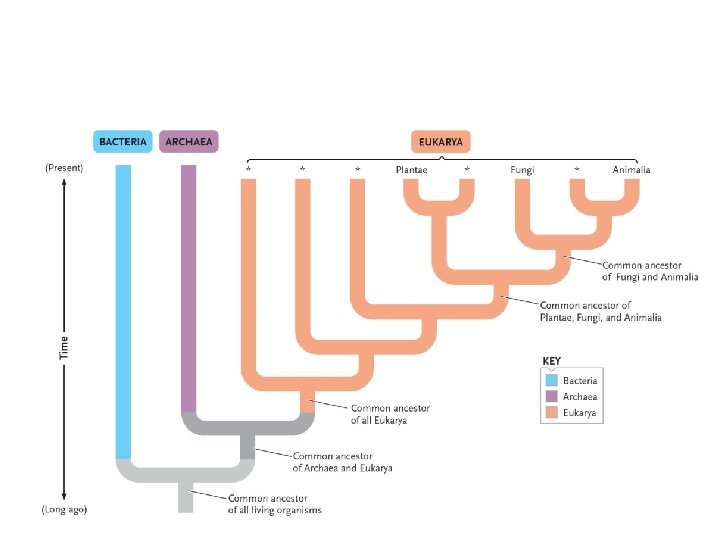
Classification is a work in progress Our classification is constantly changing as we learn more about organisms through new technology 9. Organize these classification systems from oldest to most recent, 5 kingdom, 3 domains, 2 kingdoms 10. The traditional kingdom Monera is now divided into two domains, Archaea and Bacteria. a. True b. False
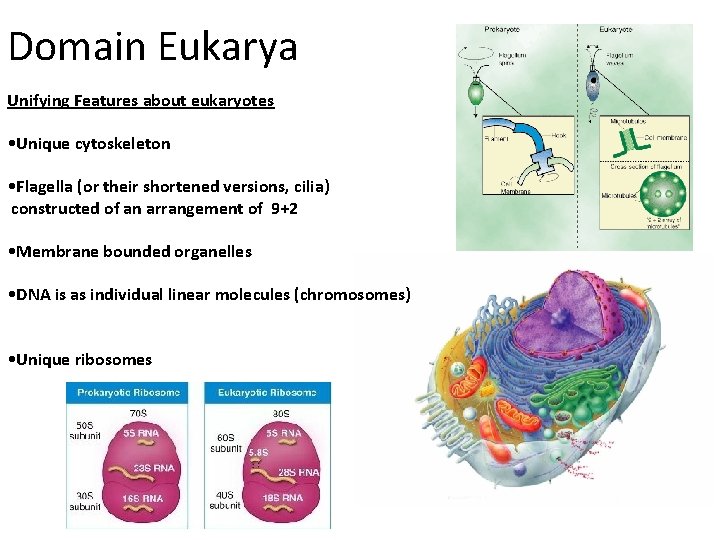
Domain Eukarya Unifying Features about eukaryotes • Unique cytoskeleton • Flagella (or their shortened versions, cilia) constructed of an arrangement of 9+2 • Membrane bounded organelles • DNA is as individual linear molecules (chromosomes) • Unique ribosomes
Kingdoms of Domain Eukarya An important characteristic for dividing eukaryotes into Kingdoms is by: How do they obtain their organic molecules? Kingdom Plantae: autotrophs Kingdom Animalia: Heterotrophs by ingestion Kingdom Fungi: Heterotrophs by absorption Kingdom Protista now Is dead!!
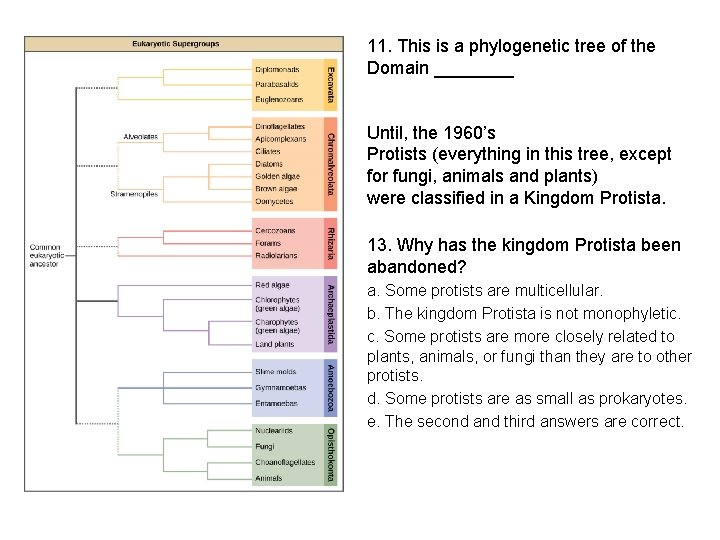
11. This is a phylogenetic tree of the Domain ____ Until, the 1960’s Protists (everything in this tree, except for fungi, animals and plants) were classified in a Kingdom Protista. 13. Why has the kingdom Protista been abandoned? a. Some protists are multicellular. b. The kingdom Protista is not monophyletic. c. Some protists are more closely related to plants, animals, or fungi than they are to other protists. d. Some protists are as small as prokaryotes. e. The second and third answers are correct.
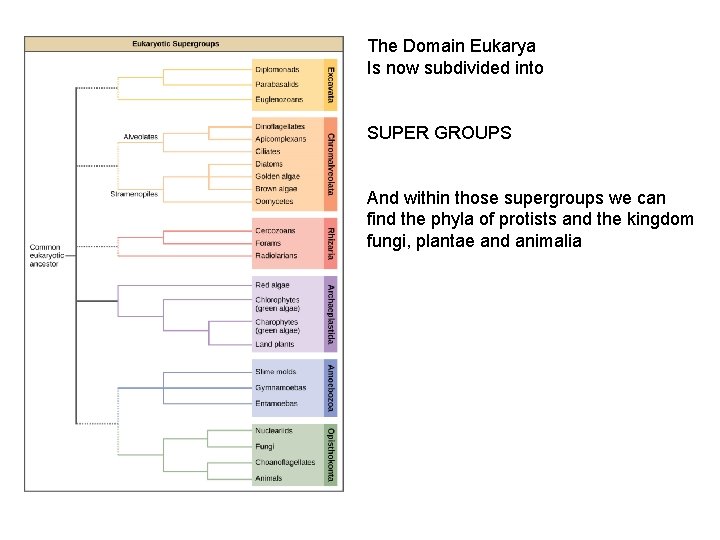
The Domain Eukarya Is now subdivided into SUPER GROUPS And within those supergroups we can find the phyla of protists and the kingdom fungi, plantae and animalia
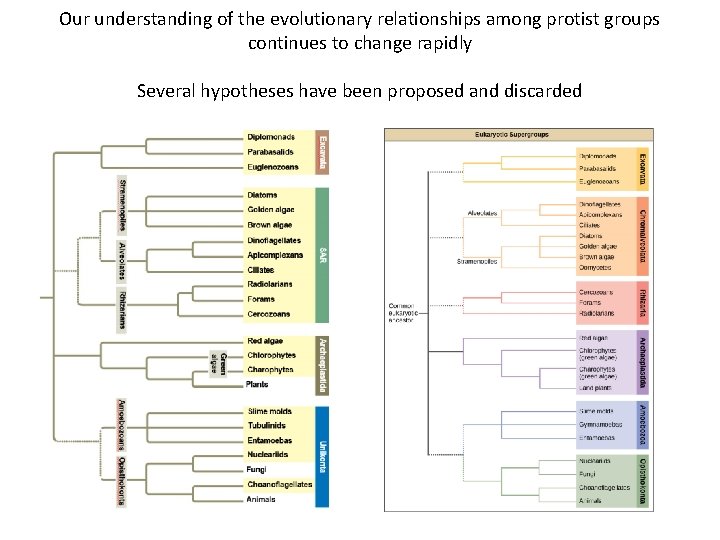
Our understanding of the evolutionary relationships among protist groups continues to change rapidly Several hypotheses have been proposed and discarded