
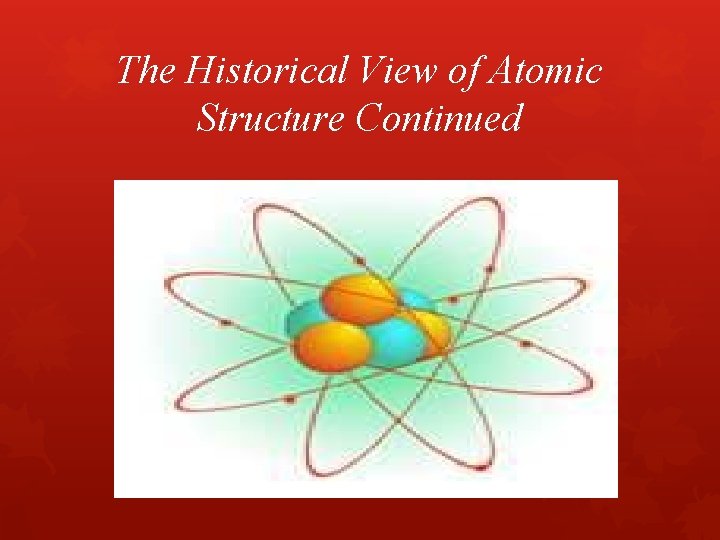
The Historical View of Atomic Structure Continued What
- Slides: 13
The Historical View of Atomic Structure Continued
What is an Atom? The smallest particle of an element that retains the properties of the element.
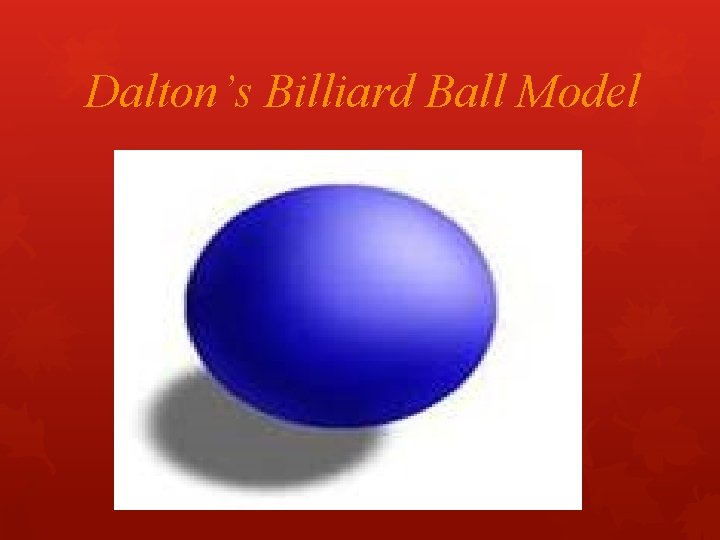
Dalton’s Billiard Ball Model
Dalton’s Five Part Model Elements are made of extremely small particles called atoms. Atoms of a given element are identical in size, mass, and other properties; atoms of different elements differ in size, mass, and other properties. Atoms cannot be subdivided, created, or destroyed. Atoms of different elements combine in simple whole-number ratios to form chemical compounds. In chemical reactions, atoms are combined, separated, or rearranged.
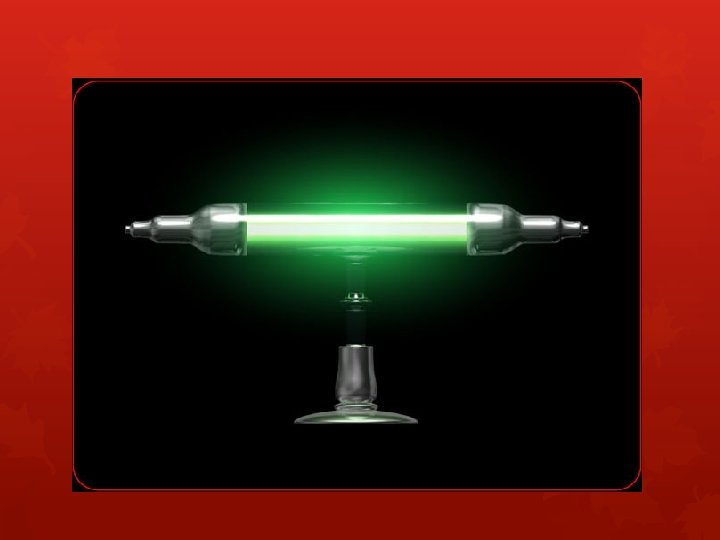
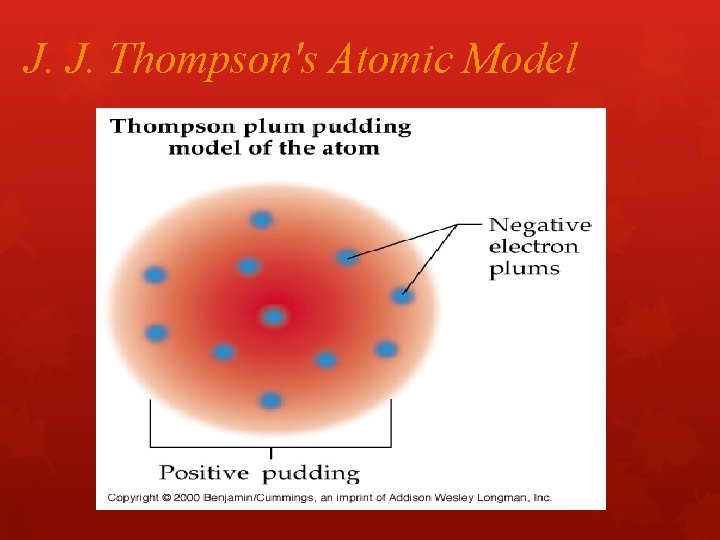
J. J. Thompson Late 1890’s Plum Pudding Model Contribution: Atoms are divisible (a negative charge exists) Evidence/Method: Cathode ray tube experiments http: //www. youtube. com/watch? feature=playe r_embedded&v=XU 8 n. MKkzb. T 8
J. J. Thompson's Atomic Model
Robert Millikan 1909 Contribution: Accurate charge of an electron Evidence/Method: Oil drop experiment http: //www. kentchemistry. com/links/Ato mic. Structure/Millikan. htm
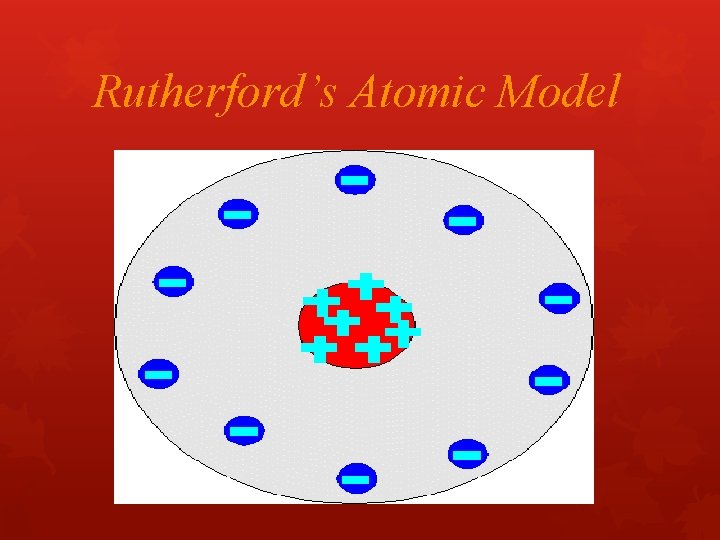
Ernest Rutherford 1911 Contribution: Atoms are mostly empty space with a central positive mass he called the nucleus Evidence/Method: Gold foil experiment http: //www. kentchemistry. com/links/At omic. Structure/Rutherford. Tutorial. htm
Rutherford’s Atomic Model
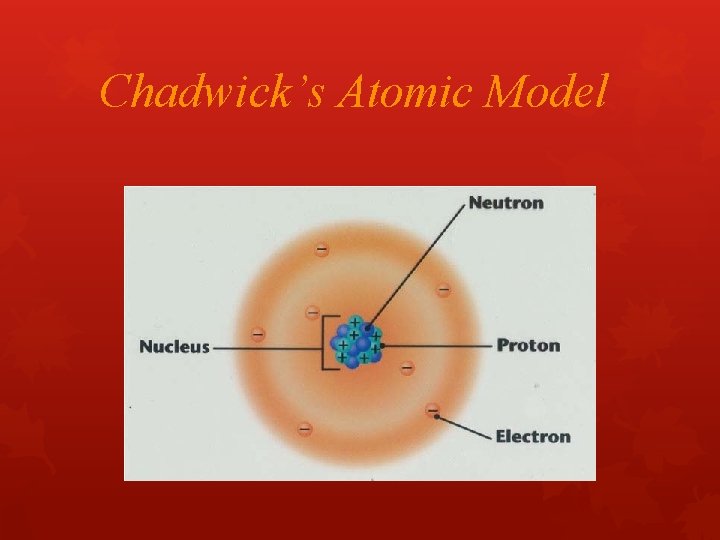
James Chadwick 1932 Contribution: Discovered the neutron, the neutral particle in the nucleus of the atom, Evidence/Method: He did this by bombarding atom’s nuclei with alpha particles. In doing this he could study the structure of the atoms nucleus. http: //www. kentchemistry. com/links/Atomic Structure/Chadwick. htm
Chadwick’s Atomic Model
Acknowledgements o Image Source Page: o http: //www. squidoo. com/chemistry-lapbook John Dalton’s Atomic Model http: //lindseylester. wordpress. com/science-courses/science-10/unit -a/lesson-2 -atomic-theory/ J. J. Thompson’s Atomic Model http: //reichchemistry. wikispaces. com/1875 AD-1900 AD Chadwick’s Atomic Model http: //reich-chemistry. wikispaces. com/mcgilvray-munsey