
The Hierarchy of New France CHAPTER 2 The


- Slides: 7
The Hierarchy of New France CHAPTER 2
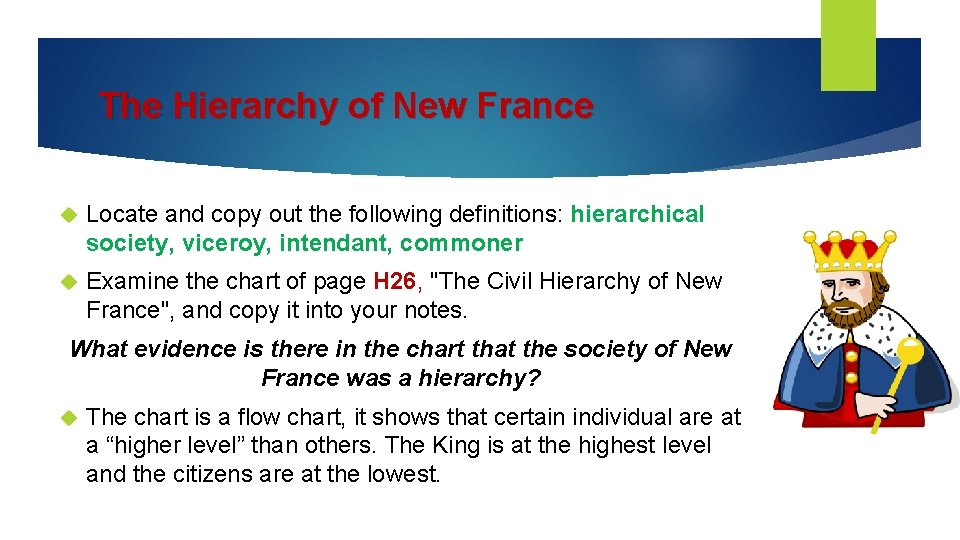
The Hierarchy of New France Locate and copy out the following definitions: hierarchical society, viceroy, intendant, commoner Examine the chart of page H 26, "The Civil Hierarchy of New France", and copy it into your notes. What evidence is there in the chart that the society of New France was a hierarchy? The chart is a flow chart, it shows that certain individual are at a “higher level” than others. The King is at the highest level and the citizens are at the lowest.
The Hierarchy of New France What gives people high or low status today? As unfortunate as it is, money, fame or family name are the most common status decision makers of today. What sorts of roles do our governments fill today? Governments today maintain law and order, peace and security, security run social services like education and health, health etc. How do citizens maintain control over their governments? In a democracy, citizens vote for their representatives in the government.
The Hierarchy of New France Please turn your text to page H 27 and together lets read to H 29. In your notes please make a T Chart with the following headings: Contributions of Count Frontenac Contributions of Jean Talon. Use information from the text to complete the T Chart. Contributions of Count Frontenac Contributions of Jean Talon
The Hierarchy of New France Was New France governed by effective officials? Some officials were dedicated; others were out for personal gain. Why did New France eventually fall to the English? The king did not want to spend too much money on its development. This made it vulnerable to its enemies. Your T Chartwill be taken up next class, be sure to have it complete and in class. It will be marked out of 10, 5 marks person, but I will be looking for specific information.
Stop! Complete worksheets before continuing…
Church/Education in New France Locate and copy out the following definitions: clergy, bishop, diocese, parish, lay organization Turn to page H 31. We will read through to H 33. You will need this information next class, so be sure to take note of key information.