
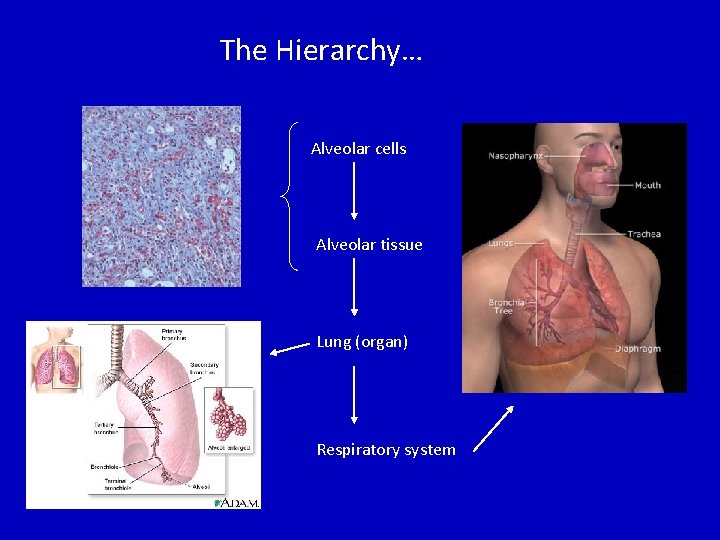
The Hierarchy Alveolar cells Alveolar tissue Lung organ
- Slides: 8
The Hierarchy… Alveolar cells Alveolar tissue Lung (organ) Respiratory system
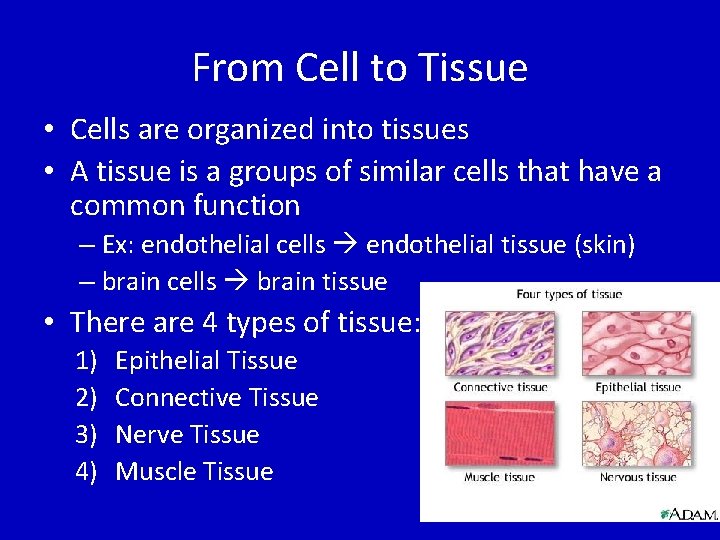
From Cell to Tissue • Cells are organized into tissues • A tissue is a groups of similar cells that have a common function – Ex: endothelial cells endothelial tissue (skin) – brain cells brain tissue • There are 4 types of tissue: 1) 2) 3) 4) Epithelial Tissue Connective Tissue Nerve Tissue Muscle Tissue
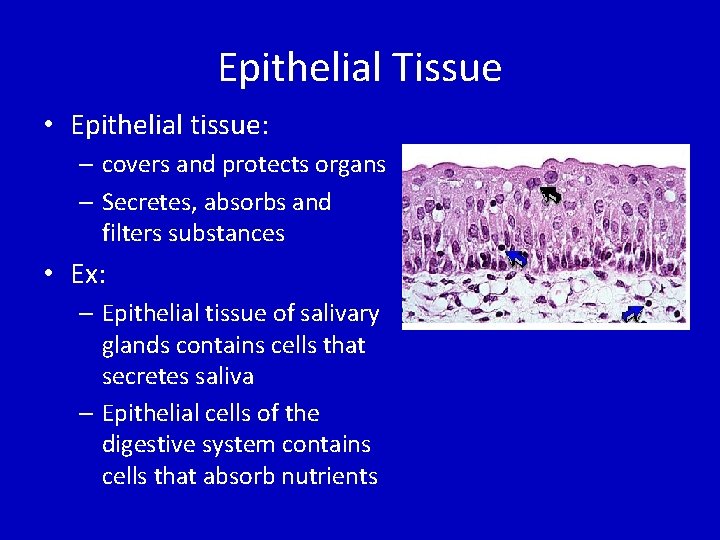
Epithelial Tissue • Epithelial tissue: – covers and protects organs – Secretes, absorbs and filters substances • Ex: – Epithelial tissue of salivary glands contains cells that secretes saliva – Epithelial cells of the digestive system contains cells that absorb nutrients
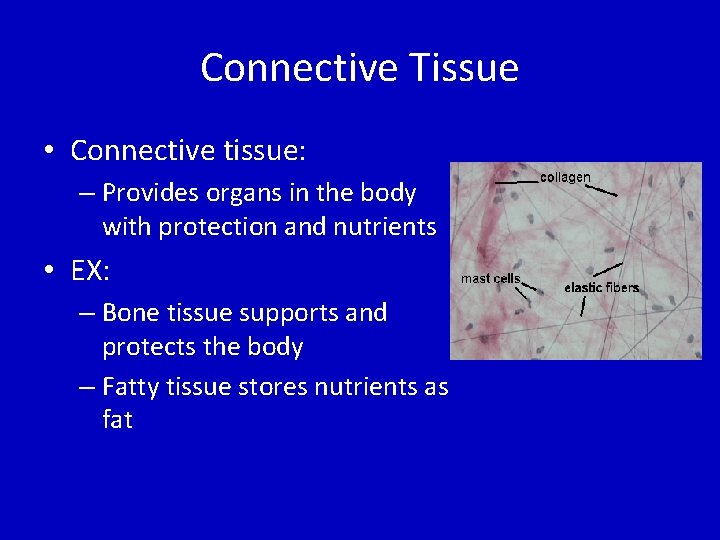
Connective Tissue • Connective tissue: – Provides organs in the body with protection and nutrients • EX: – Bone tissue supports and protects the body – Fatty tissue stores nutrients as fat
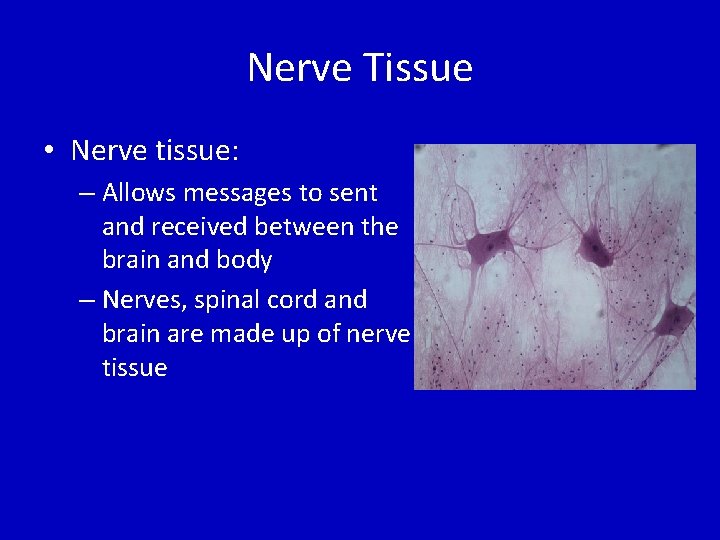
Nerve Tissue • Nerve tissue: – Allows messages to sent and received between the brain and body – Nerves, spinal cord and brain are made up of nerve tissue
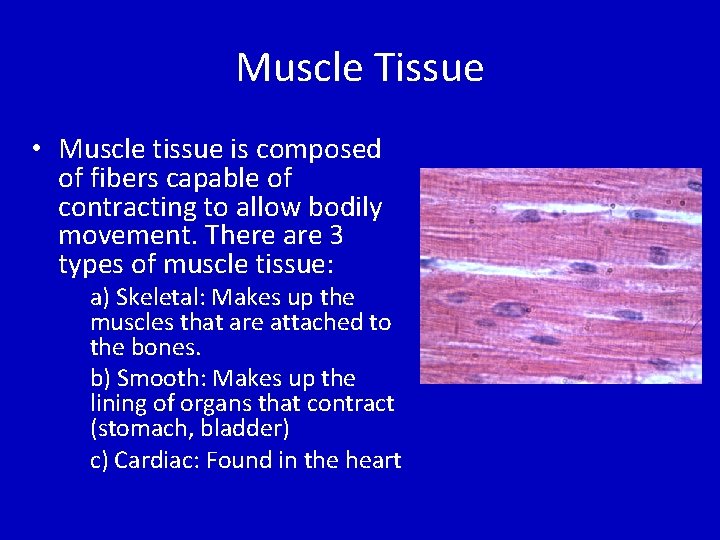
Muscle Tissue • Muscle tissue is composed of fibers capable of contracting to allow bodily movement. There are 3 types of muscle tissue: a) Skeletal: Makes up the muscles that are attached to the bones. b) Smooth: Makes up the lining of organs that contract (stomach, bladder) c) Cardiac: Found in the heart
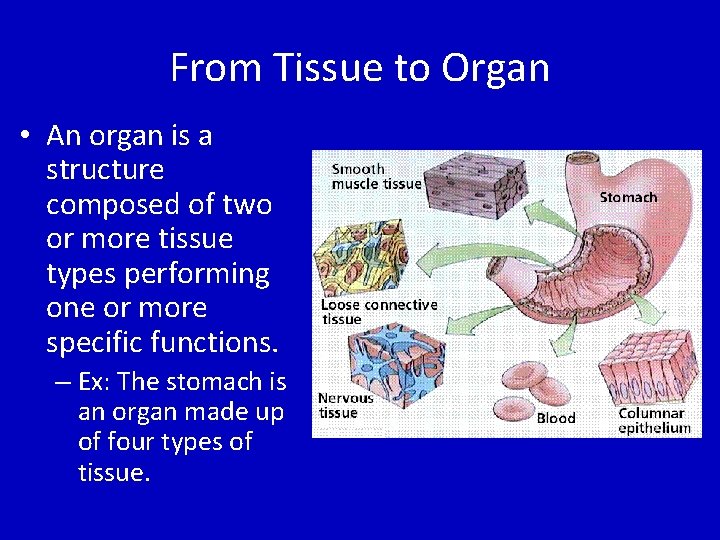
From Tissue to Organ • An organ is a structure composed of two or more tissue types performing one or more specific functions. – Ex: The stomach is an organ made up of four types of tissue.
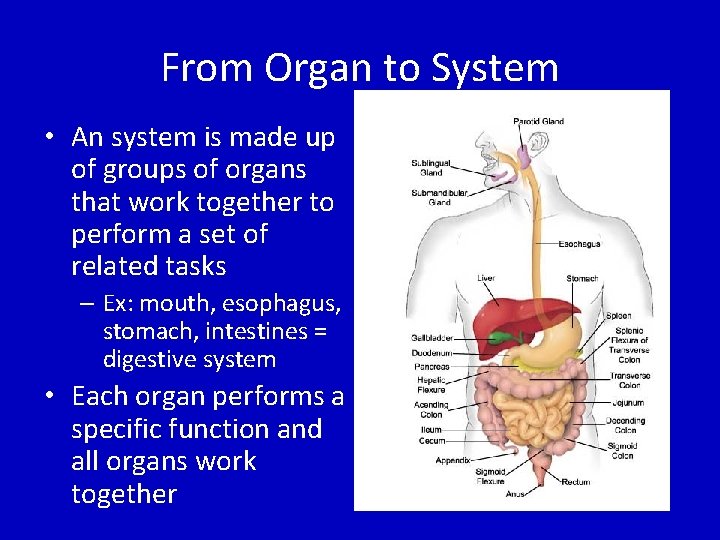
From Organ to System • An system is made up of groups of organs that work together to perform a set of related tasks – Ex: mouth, esophagus, stomach, intestines = digestive system • Each organ performs a specific function and all organs work together