
The Hero Review of Archetypes An archetype is
- Slides: 13
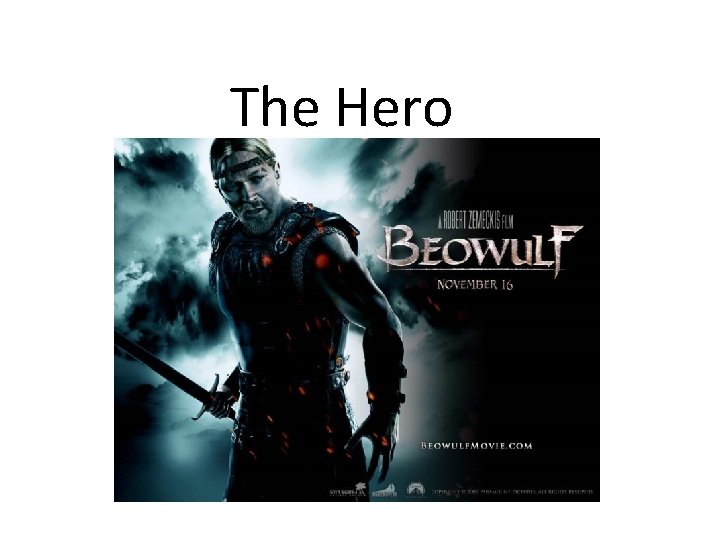
The Hero
Review of Archetypes • An archetype is a recurring pattern of character, symbol, or situation found in the mythology, religion, and stories of all cultures. • Archetypes in Beowulf: – Hero – Monster/villain
Heroes Why do we have them? • Heroes are constructions; they are not real. • All societies have similar hero stories not because they coincidentally made them up on their own, but because heroes express a deep psychological aspect of human existence. • Heroes can be seen as a metaphor for the human search of self-knowledge. In other words, the hero shows us the path to our own consciousness through his actions.
What is a hero? According to Joseph Campbell in The Hero with a Thousand Faces, “a hero is any male or female who leaves the world of his or her everyday life to undergo a journey to a special world where challenges and fears are overcome in order to secure a quest, which is then shared with other members of the hero’s community. ”
Are heroes relevant today? • Heroes are a small part of a culture's mythology. They have been useful for thousands of years to the people for whom they serve as an idealized human, a sort of "super" person, capable of dealing with problems that surpass normal humans and their abilities.
Are heroes harmful? • Every successful society must have means by which it indoctrinates its members into the society's system of values and morals. One of the darker aspects of the hero is the role he plays in disseminating these values. *Article for more info.
One Theory • Joseph Campbell, in his book The Hero with a Thousand Faces, emphasizes that the essential trait of a hero in the making is his restlessness. • Not at ease with his immediate environment and circumstances, a constant unease gnaws at his heart, prompting him to question the very nature of his existence. This inner strife is the first inkling that a greater destiny lies ahead of the potential hero.
Select Characteristics of the Epic Hero • • • Is victorious over a king and /or a giant, dragon, or wild beat The hero meets monsters or monstrous men The hero often crosses a body of water or travels on a bridge The hero is special – has gifts whether superpowers or luck or cleverness The hero struggles for something valuable and important The hero has help from divine or supernatural forces The Hero has a loyal band of companions The Hero makes a stirring speech to his/her companions The Hero engages in test or contests of strength The hero suffers a wound, sometimes emotional or spiritual from which the hero never completely recovers
Stages of the Hero's Journey: 1. The hero is usually taken out of his typical world into an unfamiliar one (travels) 2. The hero approaches his ultimate challenge: meeting his greatest enemy 3. The hero needs a memorial site
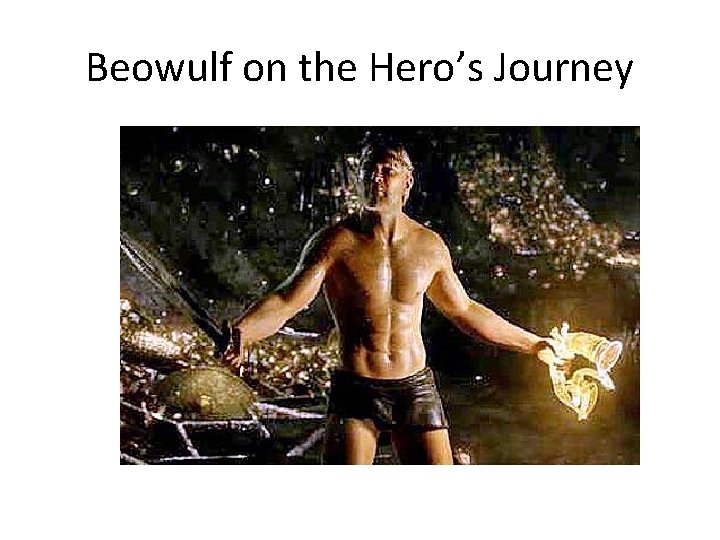
Beowulf on the Hero’s Journey
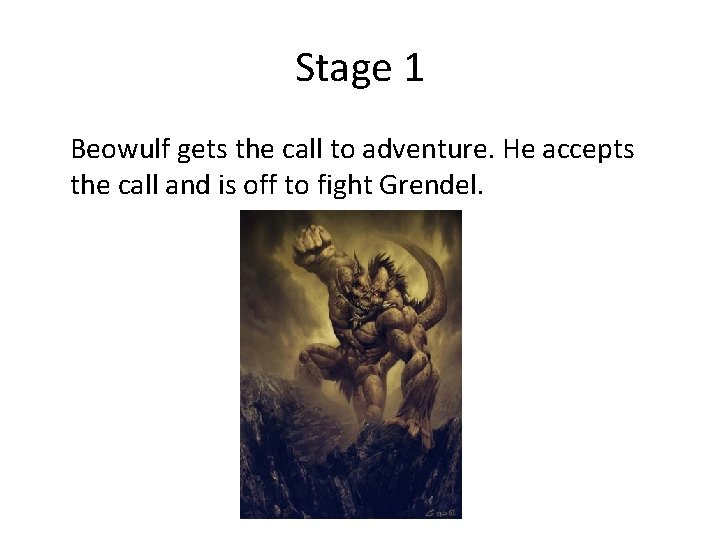
Stage 1 Beowulf gets the call to adventure. He accepts the call and is off to fight Grendel.
Stage 2 Beowulf has his big battle with Grendel and is able to kill him. Grendel's mother was seeking revenge which forced Beowulf to fight against her. This battle was more difficult than the battle with Grendel, but Beowulf is victorious again. The last battle is with the dragon, and even though the dragon dies so does Beowulf.
Stage 3 Lastly, a great hero needs a memorial site. Beowulf wanted to be cremated. Near the sea, Beowulf ashes were placed with the dragon's treasure for all to see and remember his wonderful deeds.