
The Heart Part 2 Heart beat Cardiac Cycle
The Heart – Part 2 Heart beat
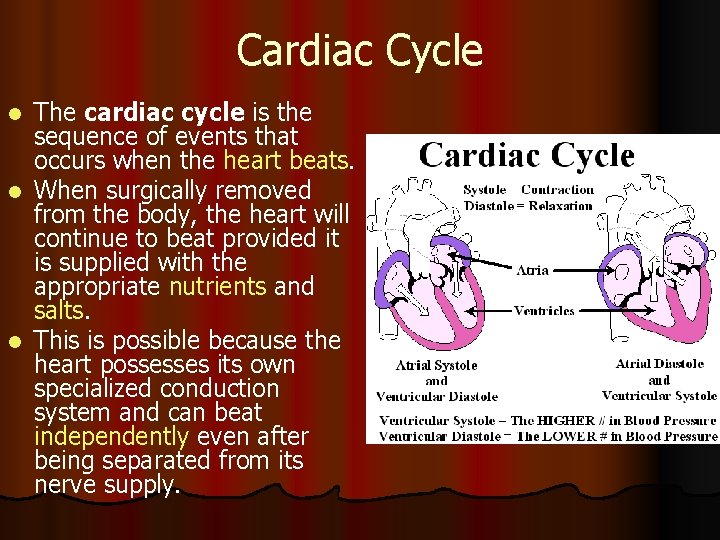
Cardiac Cycle The cardiac cycle is the sequence of events that occurs when the heart beats. l When surgically removed from the body, the heart will continue to beat provided it is supplied with the appropriate nutrients and salts. l This is possible because the heart possesses its own specialized conduction system and can beat independently even after being separated from its nerve supply. l
Heartbeat A heart beat is a 2 -part pumping action that takes approx 1 sec. l The contraction of the heart and its anatomy causes the distinctive sounds heard when listening to the heart with a stethoscope. l The “lubb-dubb” sound is the sound of the valves in the heart closing. l l Activity: Use the stethoscopes to listen to your own heartbeat or a friends.
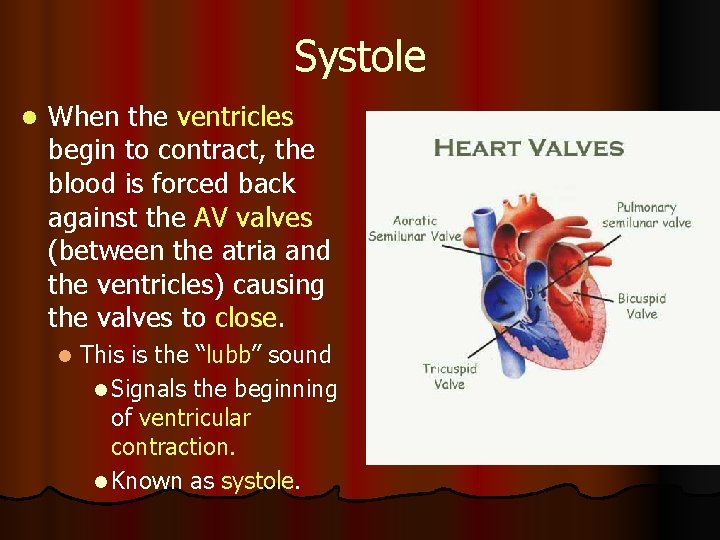
Systole l When the ventricles begin to contract, the blood is forced back against the AV valves (between the atria and the ventricles) causing the valves to close. l This is the “lubb” sound l Signals the beginning of ventricular contraction. l Known as systole.
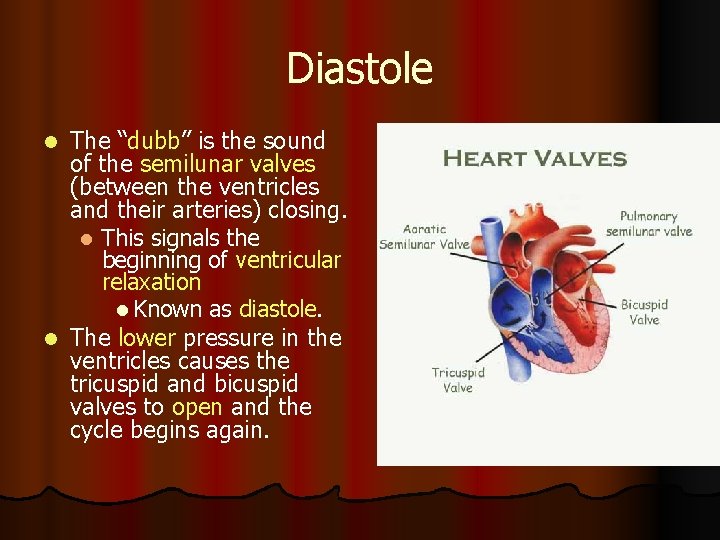
Diastole The “dubb” is the sound of the semilunar valves (between the ventricles and their arteries) closing. l This signals the beginning of ventricular relaxation l Known as diastole. l The lower pressure in the ventricles causes the tricuspid and bicuspid valves to open and the cycle begins again. l

Heartbeat
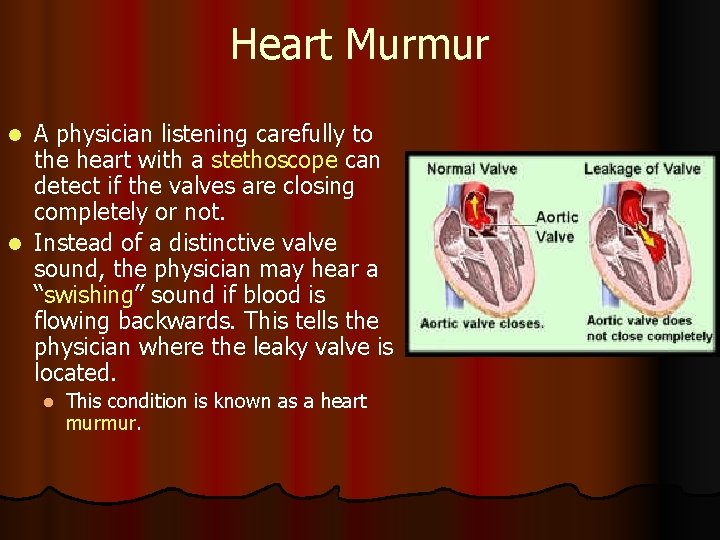
Heart Murmur A physician listening carefully to the heart with a stethoscope can detect if the valves are closing completely or not. l Instead of a distinctive valve sound, the physician may hear a “swishing” sound if blood is flowing backwards. This tells the physician where the leaky valve is located. l l This condition is known as a heart murmur.
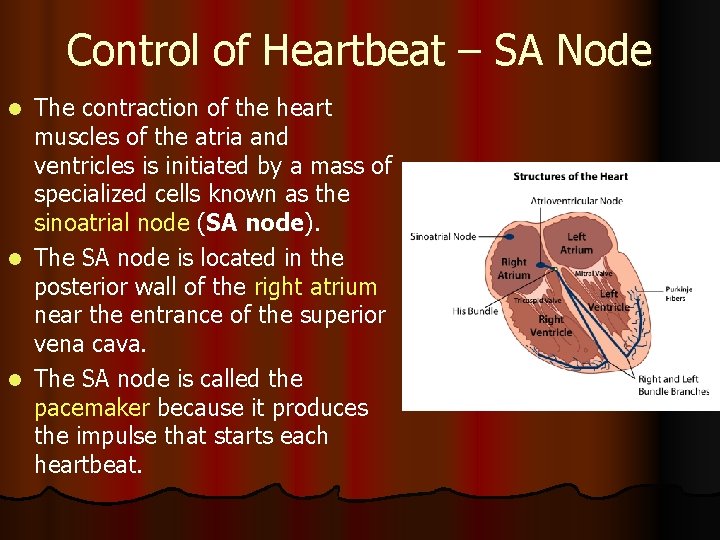
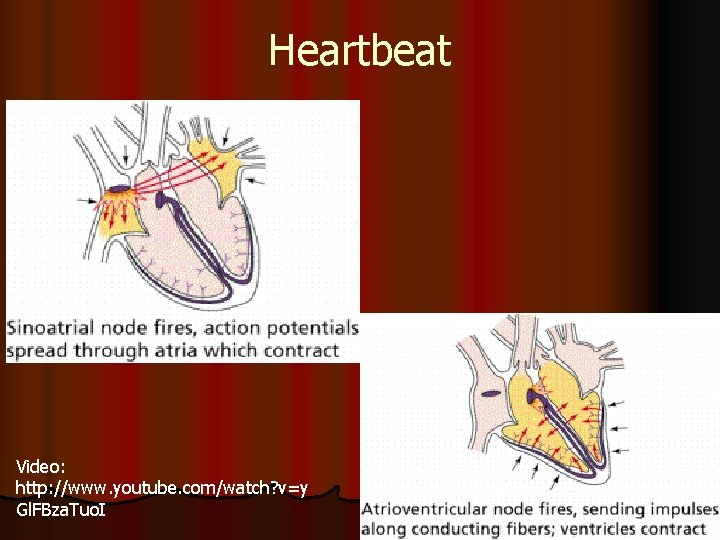
Control of Heartbeat – SA Node The contraction of the heart muscles of the atria and ventricles is initiated by a mass of specialized cells known as the sinoatrial node (SA node). l The SA node is located in the posterior wall of the right atrium near the entrance of the superior vena cava. l The SA node is called the pacemaker because it produces the impulse that starts each heartbeat. l
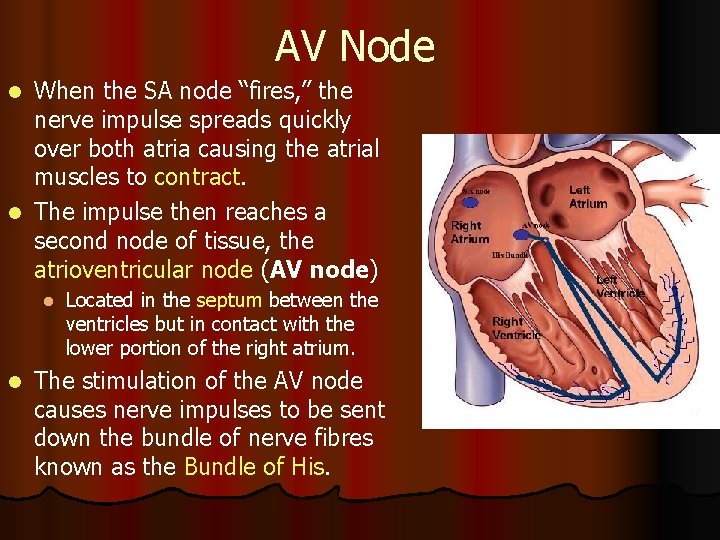
AV Node When the SA node “fires, ” the nerve impulse spreads quickly over both atria causing the atrial muscles to contract. l The impulse then reaches a second node of tissue, the atrioventricular node (AV node) l l l Located in the septum between the ventricles but in contact with the lower portion of the right atrium. The stimulation of the AV node causes nerve impulses to be sent down the bundle of nerve fibres known as the Bundle of His.

Bundle of His l The Bundle of His branches into a pair of nerve fibres through the septum and circles around the base of each ventricle. l Ventricles contract.
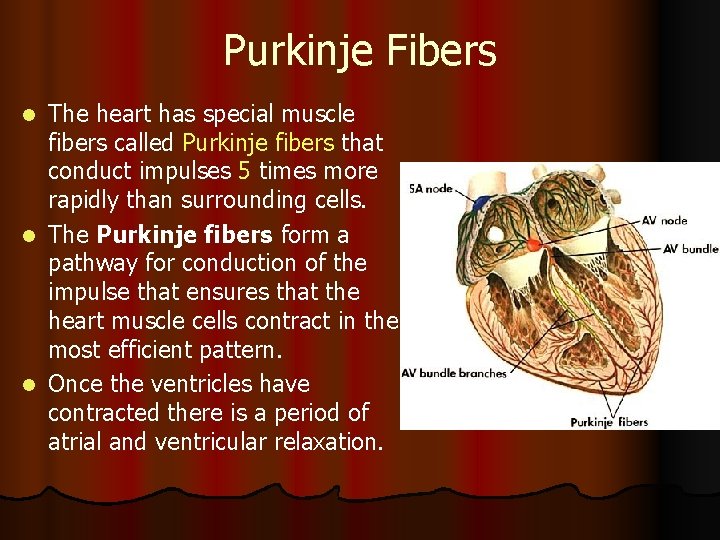
Purkinje Fibers The heart has special muscle fibers called Purkinje fibers that conduct impulses 5 times more rapidly than surrounding cells. l The Purkinje fibers form a pathway for conduction of the impulse that ensures that the heart muscle cells contract in the most efficient pattern. l Once the ventricles have contracted there is a period of atrial and ventricular relaxation. l

Heartbeat Control
Heartbeat Video: http: //www. youtube. com/watch? v=y Gl. FBza. Tuo. I
Heart Rate l Your heart rate (number of heart beats per unit of time) may change depending on physical demands, stress, or hormonal factors. l Activity: Heart rate lab
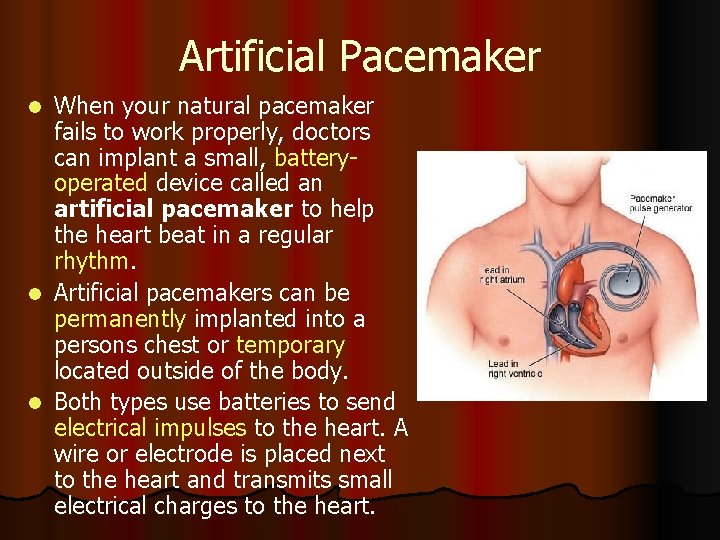
Artificial Pacemaker When your natural pacemaker fails to work properly, doctors can implant a small, batteryoperated device called an artificial pacemaker to help the heart beat in a regular rhythm. l Artificial pacemakers can be permanently implanted into a persons chest or temporary located outside of the body. l Both types use batteries to send electrical impulses to the heart. A wire or electrode is placed next to the heart and transmits small electrical charges to the heart. l
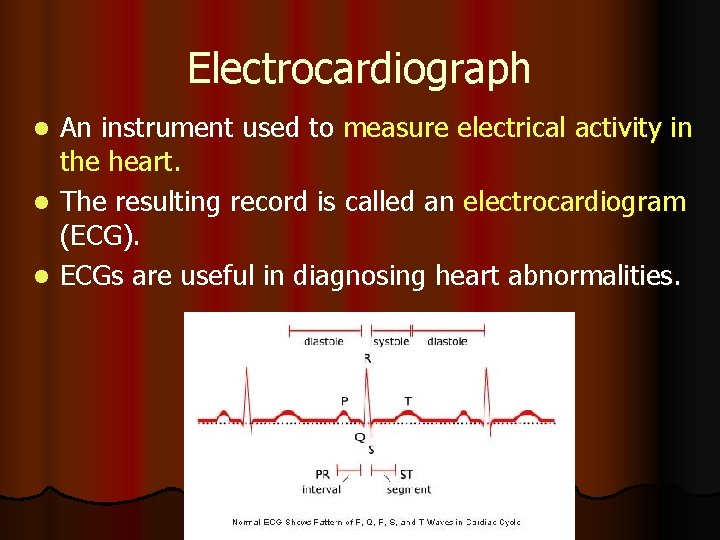
Electrocardiograph An instrument used to measure electrical activity in the heart. l The resulting record is called an electrocardiogram (ECG). l ECGs are useful in diagnosing heart abnormalities. l
Heart Rate and Exercise Ex. When you run, the increased activity in your muscles produces a faster rate of cellular respiration. l This leads to an increase in the amt of carbon dioxide in your blood. l Impulses are sent along the nervous system causing the release of a hormone called noradrenaline. When noradrenaline reaches the SA node, it makes the node fire more rapidly. l
Heart Rate and Emotions Your nervous system may also release a hormone called adrenaline when you are nervous, angry, excited, or after a sudden shock or sharp pain. l All of these conditions produce the “flight or fight” response, a physiological change that prepares the body for anticipated activity. l This response increases heart rate, increasing blood flow to the muscles. l
- Slides: 18