
The Health Belief Model Factors Influencing Patient Compliance

The Health Belief Model Factors Influencing Patient Compliance
Introduction • Half of medical advice is not taken up. • £ 100 million of prescribed medication is discarded every year, at least. • Compliance with screening or preventative programmes is essential for their effectiveness.
Health Belief Model • Health Motivation. • Perceived vulnerability. • Perceived costs and benefits. • Perceived Seriousness.

Health Motivation • The individual’s general interest in health matters, which may correlate with personality, social class, ethic group, religion etc.
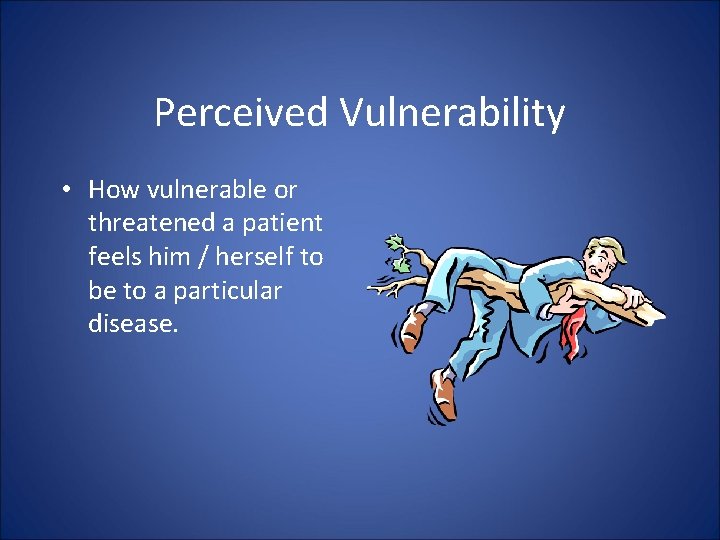
Perceived Vulnerability • How vulnerable or threatened a patient feels him / herself to be to a particular disease.
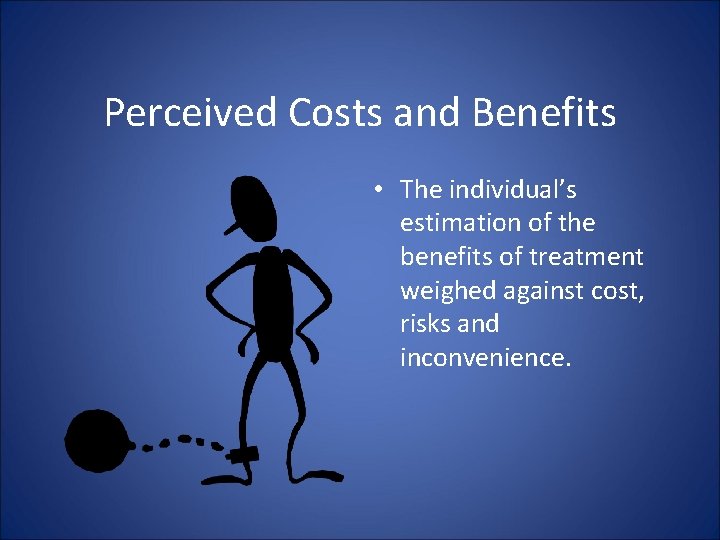
Perceived Costs and Benefits • The individual’s estimation of the benefits of treatment weighed against cost, risks and inconvenience.
Perceived Seriousness • Trigger factors such as alarming symptoms, advice from family or friends, messages from the media, disruption of work or play.
Health Beliefs About Illness or Symptoms • Difficult to elicit. • Patients frightened of looking foolish or ignorant. • Patients may be reluctant to “waste a doctors time” with personal attitudes.
Health Beliefs About Illness or Symptoms • Avoid direct questions e. g. “What do you think will happen if you don’t get your blood pressure checked? ” • Indirect questions helpful: – “What is going through your mind? ” – “What does your wife / husband think? ” – Etc etc.

Checklist Elicit patient’s health beliefs. Reinforce positive attitudes to health. ◦ i. e. praise for giving up smoking for a period in the past, don’t dwell on the fact they re-started.
Checklist • Counter myths and negative attitudes. • Inform patient about causes and prognosis.
Checklist • Plan an appropriate course of action to suit his/her needs and lifestyle. – Don’t ask them to give up cigarettes, alcohol and sexual promiscuity all at once !
- Slides: 12