
The Health and Wellness of Todays College Students
- Slides: 54
The Health and Wellness of Today’s College Students Counseling and Health Services
FGCU Health and Wellness Services • Prevention & Wellness Services (Health Education) • Student Health Clinic • Counseling and Psychological Services (CAPS) • Adaptive Services (Students with Disabilities)
What is going on with Today’s College Students In Terms of Health and Wellness Reporting? • Emotional and behavioral issues are foremost • There is more stress, anxiety and depression among college students today then ever before • College presidents and student affairs officials report that the mental health of college students is their number one concern outside the classroom (Chronicle of Higher Education Survey) • Sharing the data and research • Informed consent
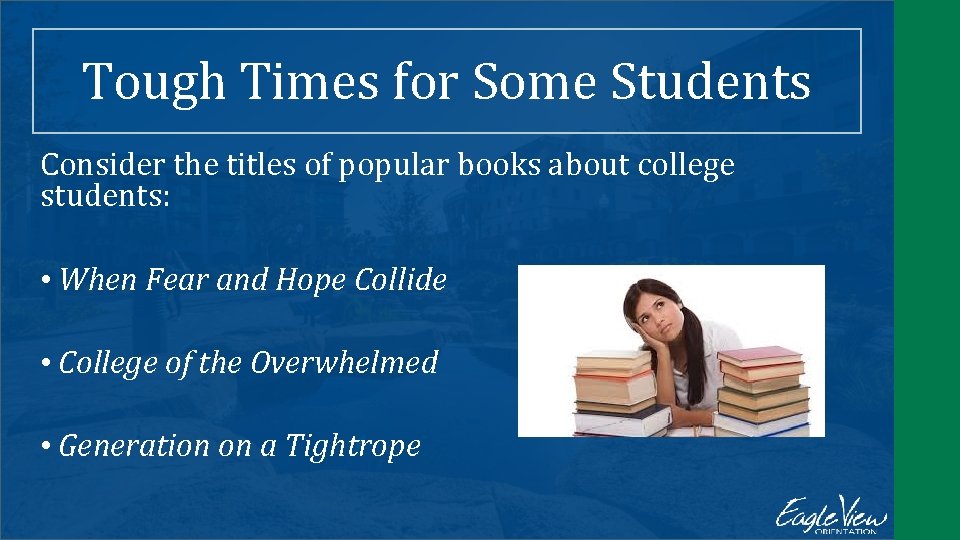
Tough Times for Some Students Consider the titles of popular books about college students: • When Fear and Hope Collide • College of the Overwhelmed • Generation on a Tightrope
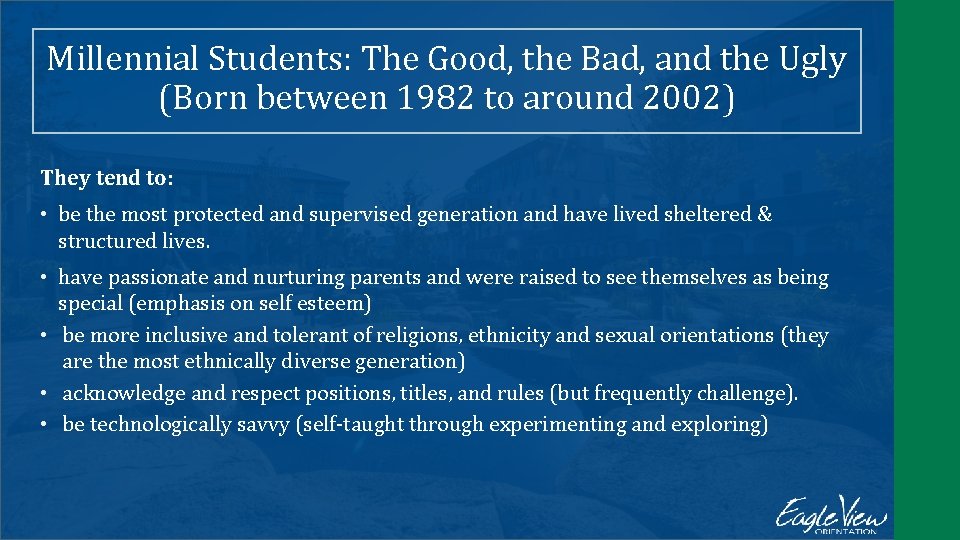
Millennial Students: The Good, the Bad, and the Ugly (Born between 1982 to around 2002) They tend to: • be the most protected and supervised generation and have lived sheltered & structured lives. • have passionate and nurturing parents and were raised to see themselves as being special (emphasis on self esteem) • be more inclusive and tolerant of religions, ethnicity and sexual orientations (they are the most ethnically diverse generation) • acknowledge and respect positions, titles, and rules (but frequently challenge). • be technologically savvy (self-taught through experimenting and exploring)
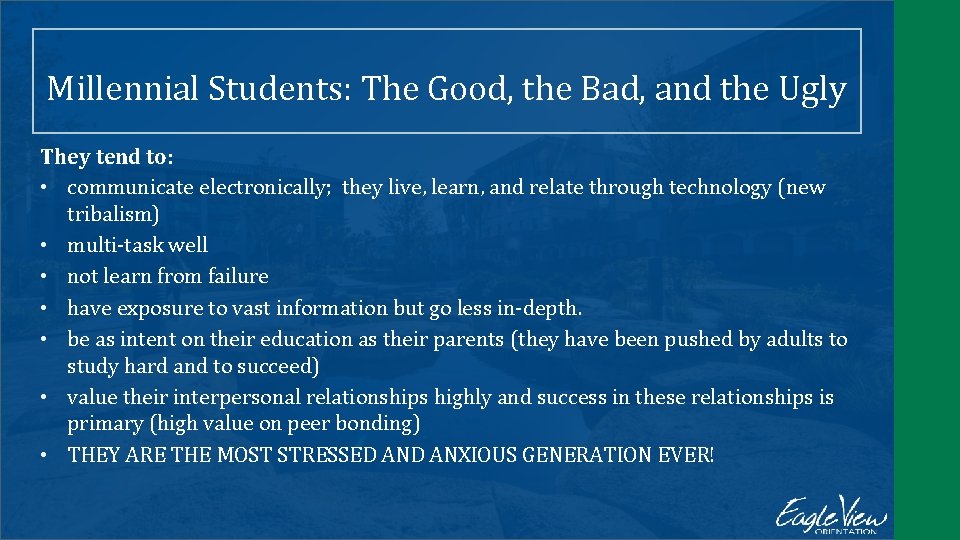
Millennial Students: The Good, the Bad, and the Ugly They tend to: • communicate electronically; they live, learn, and relate through technology (new tribalism) • multi-task well • not learn from failure • have exposure to vast information but go less in-depth. • be as intent on their education as their parents (they have been pushed by adults to study hard and to succeed) • value their interpersonal relationships highly and success in these relationships is primary (high value on peer bonding) • THEY ARE THE MOST STRESSED ANXIOUS GENERATION EVER!
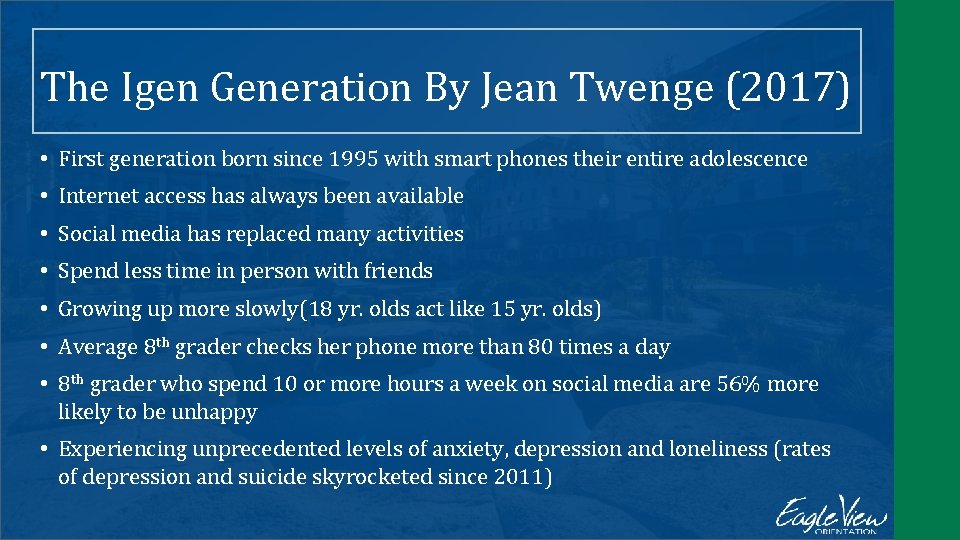
The Igen Generation By Jean Twenge (2017) • First generation born since 1995 with smart phones their entire adolescence • Internet access has always been available • Social media has replaced many activities • Spend less time in person with friends • Growing up more slowly(18 yr. olds act like 15 yr. olds) • Average 8 th grader checks her phone more than 80 times a day • 8 th grader who spend 10 or more hours a week on social media are 56% more likely to be unhappy • Experiencing unprecedented levels of anxiety, depression and loneliness (rates of depression and suicide skyrocketed since 2011)
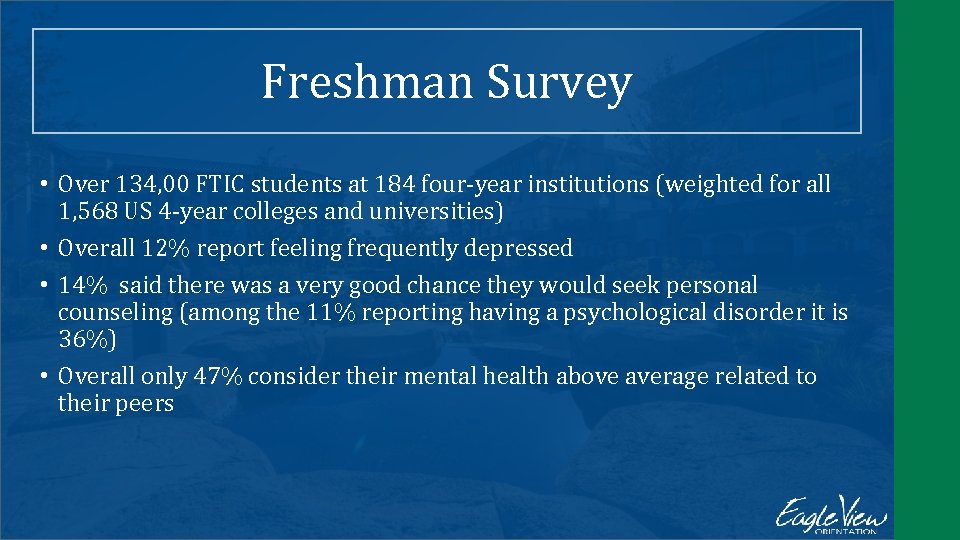
Freshman Survey • Over 134, 00 FTIC students at 184 four-year institutions (weighted for all 1, 568 US 4 -year colleges and universities) • Overall 12% report feeling frequently depressed • 14% said there was a very good chance they would seek personal counseling (among the 11% reporting having a psychological disorder it is 36%) • Overall only 47% consider their mental health above average related to their peers
What is the reason for this downward trend in the feeling of wellness among incoming college students? • One example is finances • 56% of students have some concern about their ability to finance college • For the first time slightly more that half of incoming students say there is a “very good chance” they will get a job to help pay for college expenses • This is true for 75% of the first generation college students
Research Findings Using Personality Assessment • Linear increase in successive generations of students. • Today more students are characterized by unrealistically positive selfappraisal, over activity, and low self-control. • More students feel isolated and misunderstood. • More students may be described as sensitive and sentimental. • General symptoms of anxiety are on the rise. • More students are predicted to experience moodiness, sadness, restlessness, worry, dissatisfaction, and instability.
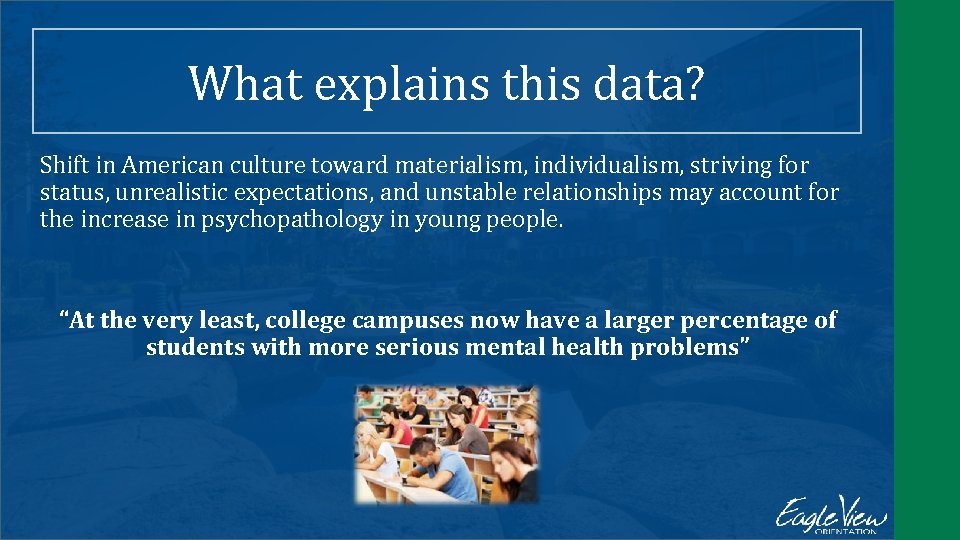
What explains this data? Shift in American culture toward materialism, individualism, striving for status, unrealistic expectations, and unstable relationships may account for the increase in psychopathology in young people. “At the very least, college campuses now have a larger percentage of students with more serious mental health problems”
National Student Survey Results FGCU AY 2017 -2018 (national results) • National College Health Assessment II (NCHA) • Sponsored by American College Health Association (ACHA) • Results have generally been consistent of the last 5 years. • FGCU student data is reported with national reference in red
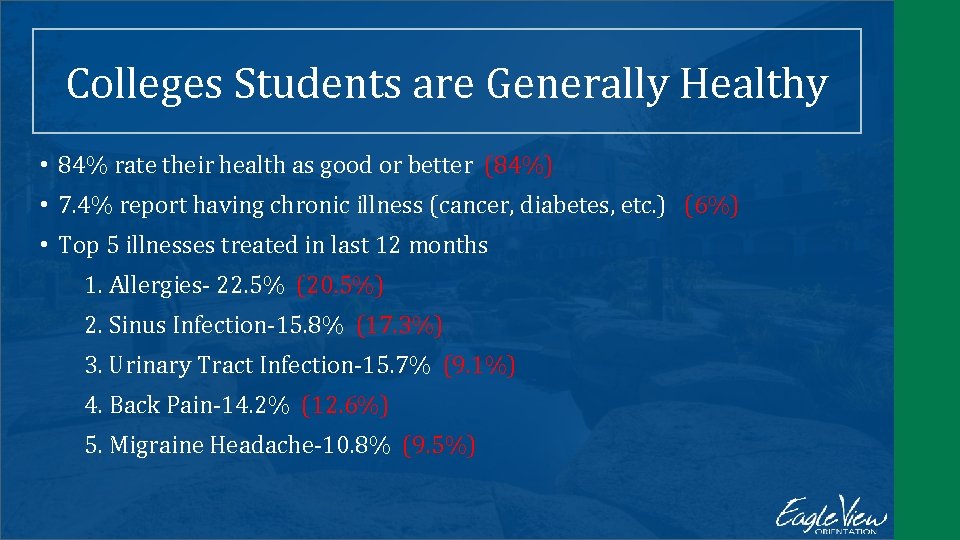
Colleges Students are Generally Healthy • 84% rate their health as good or better (84%) • 7. 4% report having chronic illness (cancer, diabetes, etc. ) (6%) • Top 5 illnesses treated in last 12 months 1. Allergies- 22. 5% (20. 5%) 2. Sinus Infection-15. 8% (17. 3%) 3. Urinary Tract Infection-15. 7% (9. 1%) 4. Back Pain-14. 2% (12. 6%) 5. Migraine Headache-10. 8% (9. 5%)
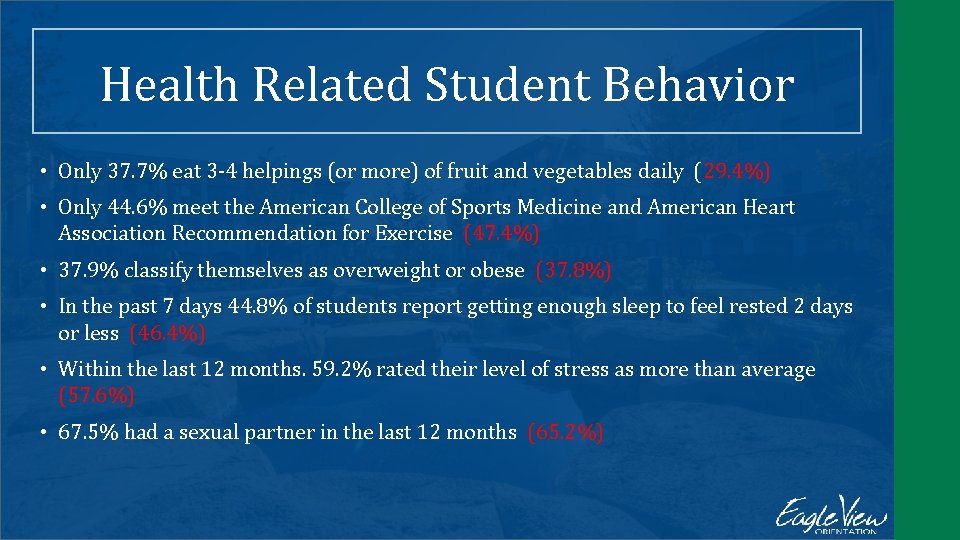
Health Related Student Behavior • Only 37. 7% eat 3 -4 helpings (or more) of fruit and vegetables daily (29. 4%) • Only 44. 6% meet the American College of Sports Medicine and American Heart Association Recommendation for Exercise (47. 4%) • 37. 9% classify themselves as overweight or obese (37. 8%) • In the past 7 days 44. 8% of students report getting enough sleep to feel rested 2 days or less (46. 4%) • Within the last 12 months. 59. 2% rated their level of stress as more than average (57. 6%) • 67. 5% had a sexual partner in the last 12 months (65. 2%)
Emotional, Behavioral and Relationship Issues Counseling and Health Services
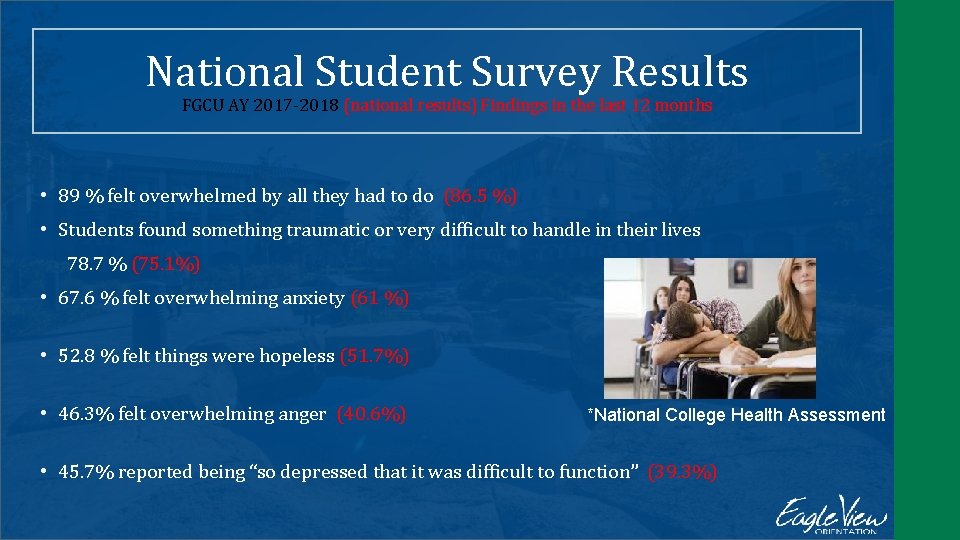
National Student Survey Results FGCU AY 2017 -2018 (national results) Findings in the last 12 months • 89 % felt overwhelmed by all they had to do (86. 5 %) • Students found something traumatic or very difficult to handle in their lives 78. 7 % (75. 1%) • 67. 6 % felt overwhelming anxiety (61 %) • 52. 8 % felt things were hopeless (51. 7%) • 46. 3% felt overwhelming anger (40. 6%) *National College Health Assessment • 45. 7% reported being “so depressed that it was difficult to function” (39. 3%)
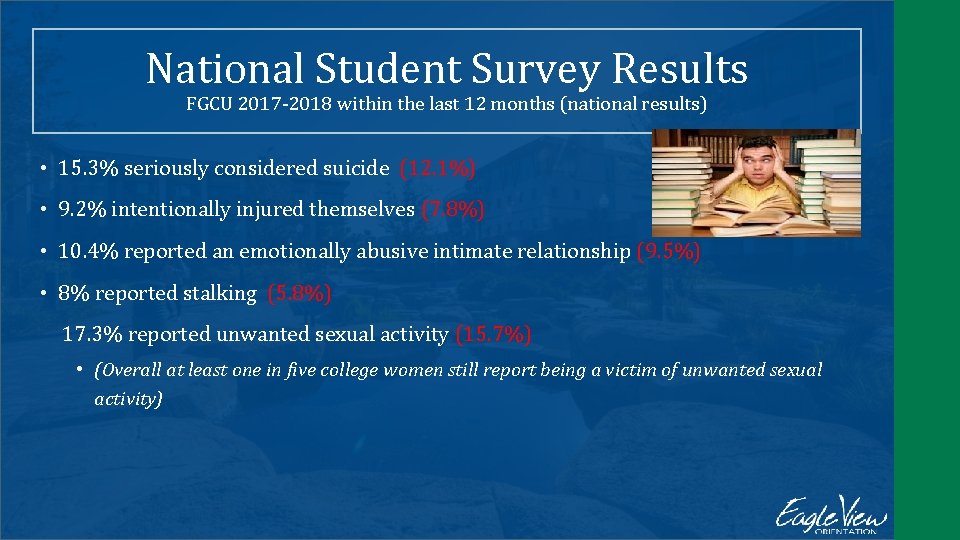
National Student Survey Results FGCU 2017 -2018 within the last 12 months (national results) • 15. 3% seriously considered suicide (12. 1%) • 9. 2% intentionally injured themselves (7. 8%) • 10. 4% reported an emotionally abusive intimate relationship (9. 5%) • 8% reported stalking (5. 8%) 17. 3% reported unwanted sexual activity (15. 7%) • (Overall at least one in five college women still report being a victim of unwanted sexual activity)
What gets in the way of college student success?
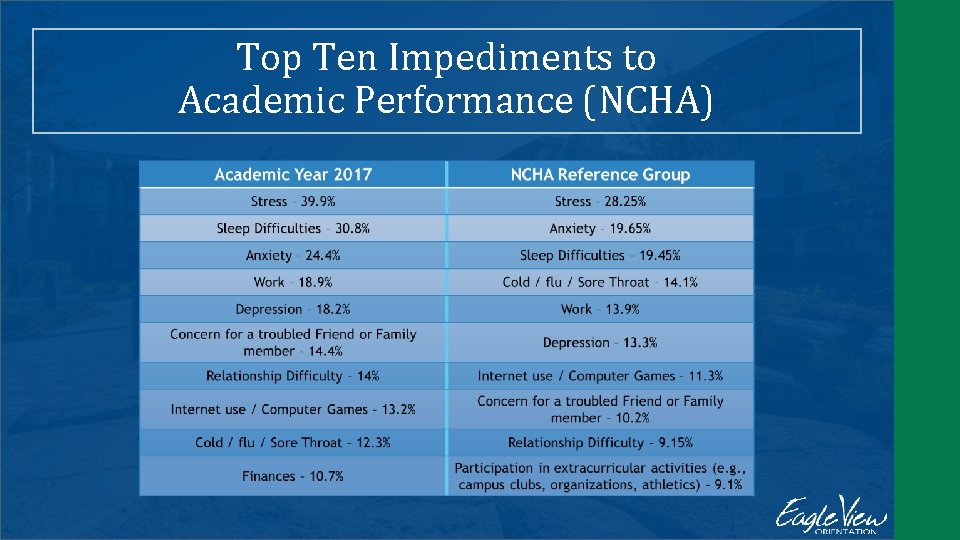
Top Ten Impediments to Academic Performance (NCHA)
What is Going on in Campus Counseling Centers?
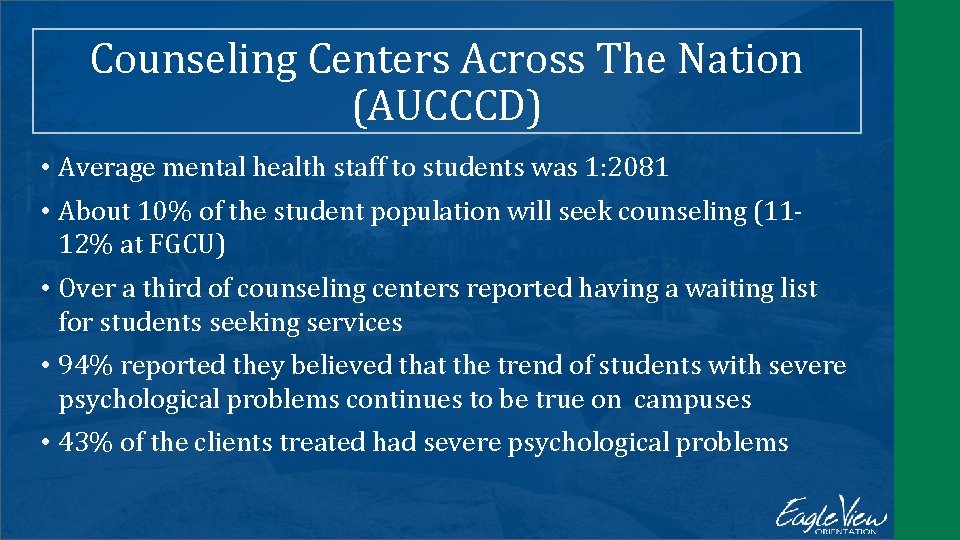
Counseling Centers Across The Nation (AUCCCD) • Average mental health staff to students was 1: 2081 • About 10% of the student population will seek counseling (1112% at FGCU) • Over a third of counseling centers reported having a waiting list for students seeking services • 94% reported they believed that the trend of students with severe psychological problems continues to be true on campuses • 43% of the clients treated had severe psychological problems
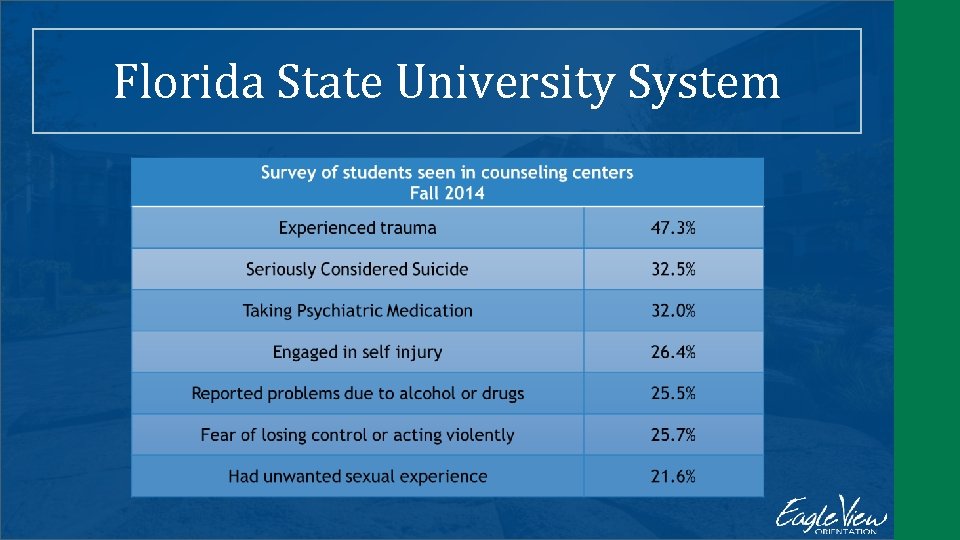
Florida State University System
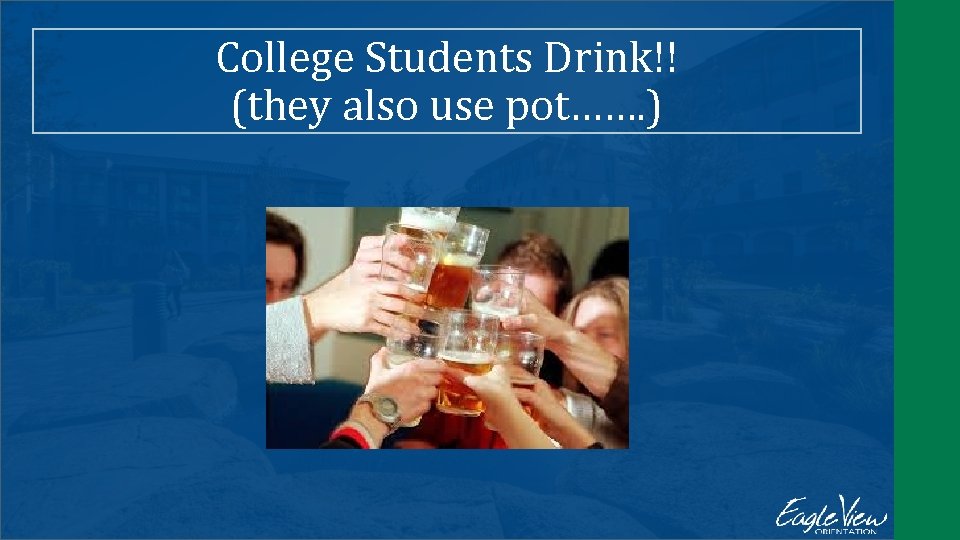
College Students Drink!! (they also use pot……. )
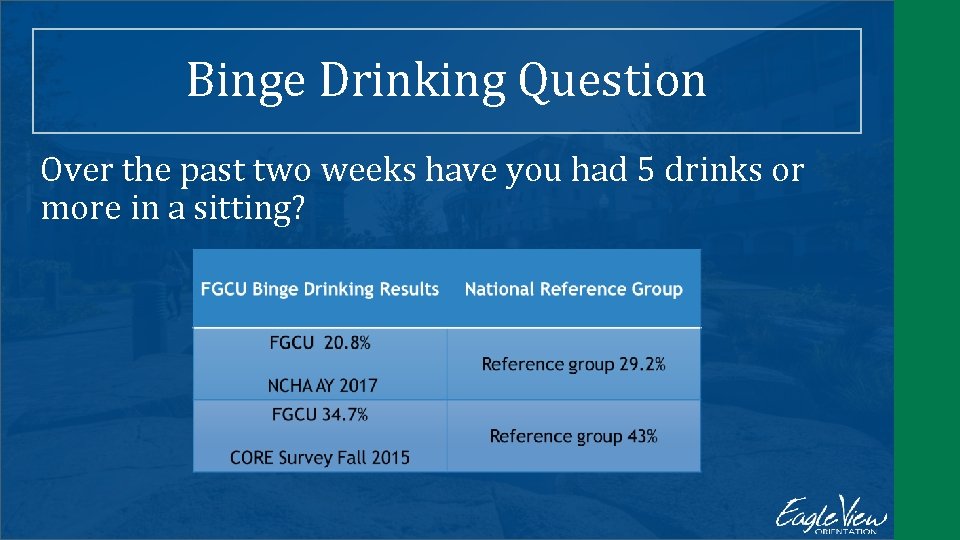
Binge Drinking Question Over the past two weeks have you had 5 drinks or more in a sitting?
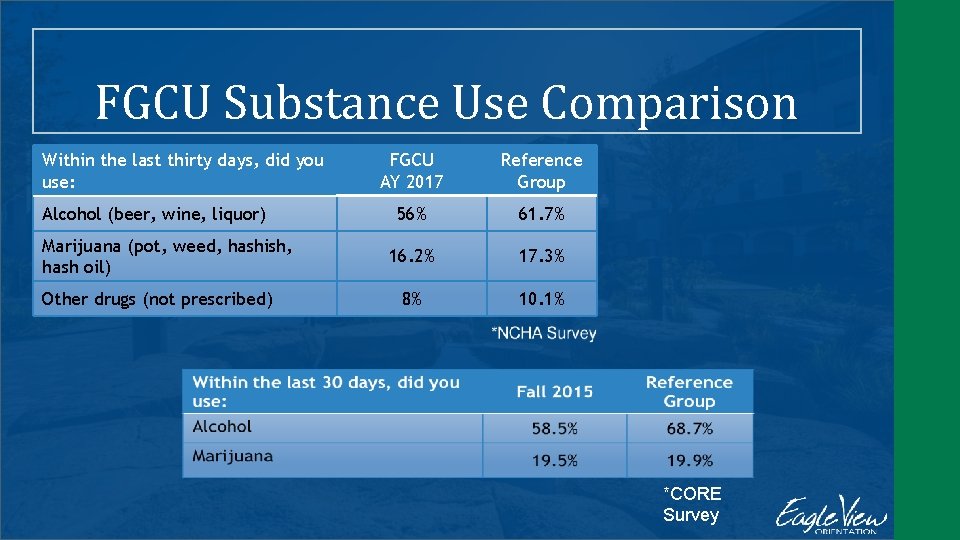
FGCU Substance Use Comparison Within the last thirty days, did you use: Alcohol (beer, wine, liquor) Marijuana (pot, weed, hashish, hash oil) Other drugs (not prescribed) FGCU AY 2017 Reference Group 56% 61. 7% 16. 2% 17. 3% 8% 10. 1% *CORE Survey
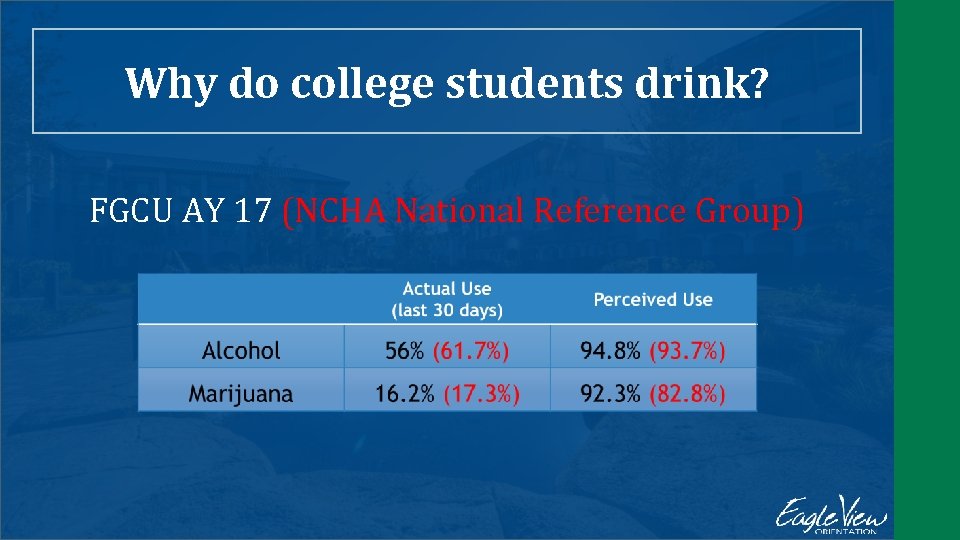
Why do college students drink? FGCU AY 17 (NCHA National Reference Group)
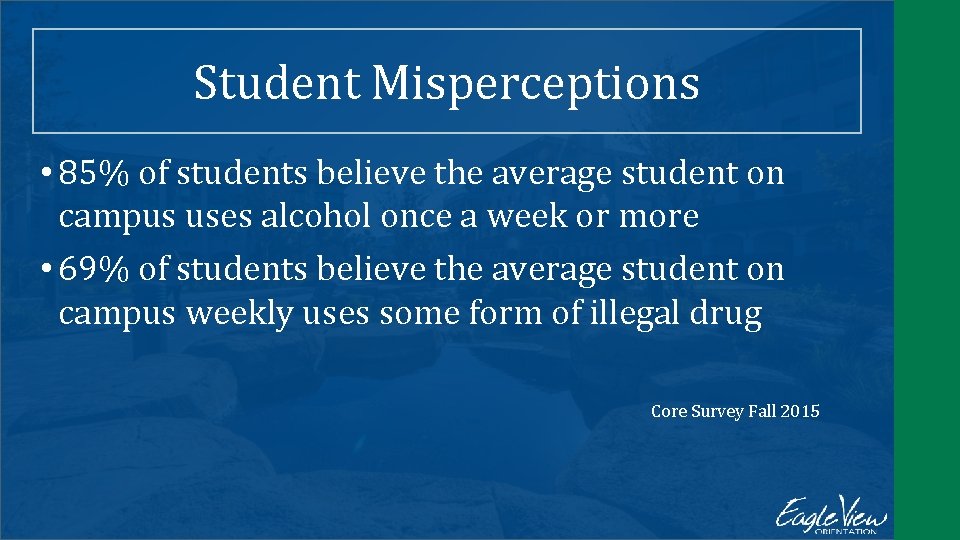
Student Misperceptions • 85% of students believe the average student on campus uses alcohol once a week or more • 69% of students believe the average student on campus weekly uses some form of illegal drug Core Survey Fall 2015
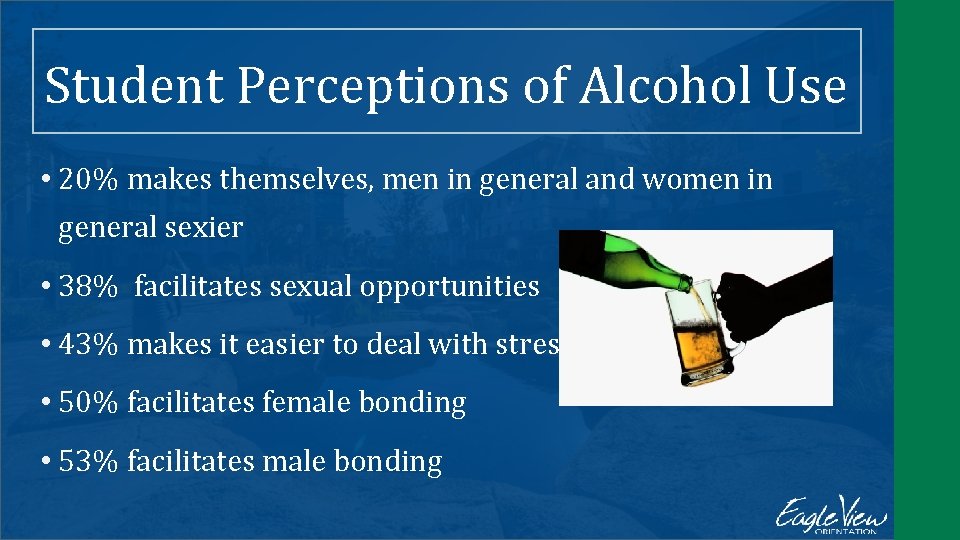
Student Perceptions of Alcohol Use • 20% makes themselves, men in general and women in general sexier • 38% facilitates sexual opportunities • 43% makes it easier to deal with stress • 50% facilitates female bonding • 53% facilitates male bonding
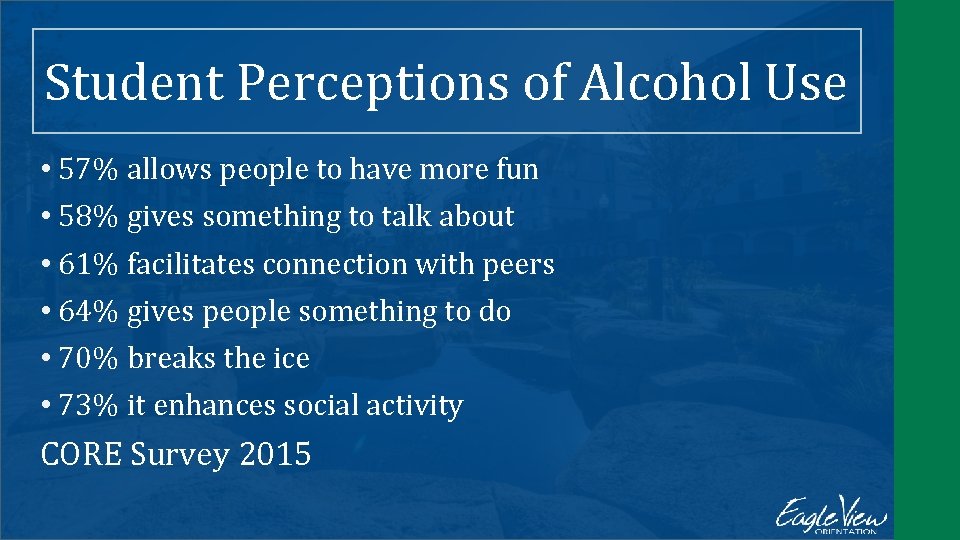
Student Perceptions of Alcohol Use • 57% allows people to have more fun • 58% gives something to talk about • 61% facilitates connection with peers • 64% gives people something to do • 70% breaks the ice • 73% it enhances social activity CORE Survey 2015
Over 1, 100 college students die each year!!
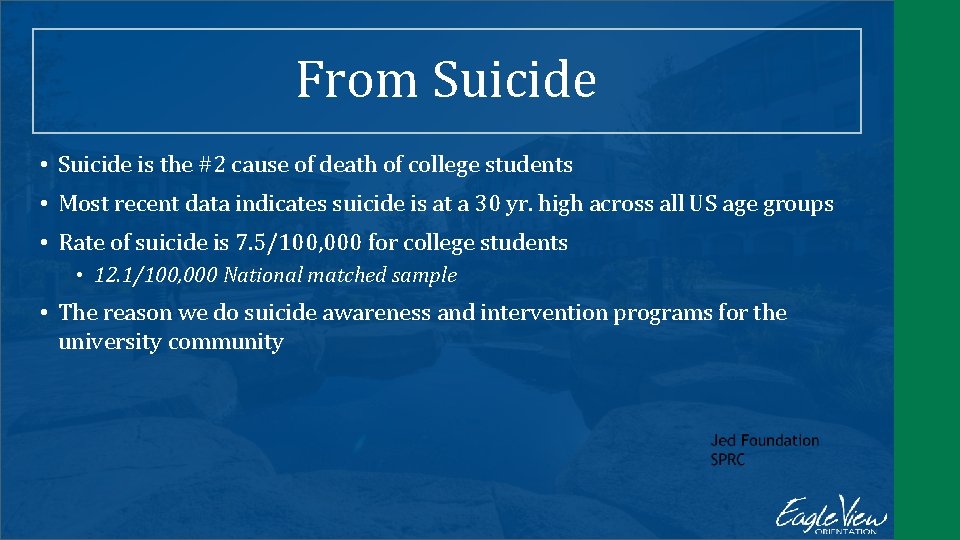
From Suicide • Suicide is the #2 cause of death of college students • Most recent data indicates suicide is at a 30 yr. high across all US age groups • Rate of suicide is 7. 5/100, 000 for college students • 12. 1/100, 000 National matched sample • The reason we do suicide awareness and intervention programs for the university community
Prevention & Wellness (P&W) connects students to relevant wellness information by way of programming, events, Peer Education, health promotion, online tools and a free resource area in our lobby. • Location: Howard Hall 119 • Office hours: 9: 00 am to 5: 00 am Monday-Friday • Program hours: Flexible based on Peer Educator and Staff Availability • Phone: 239 -590 -7733
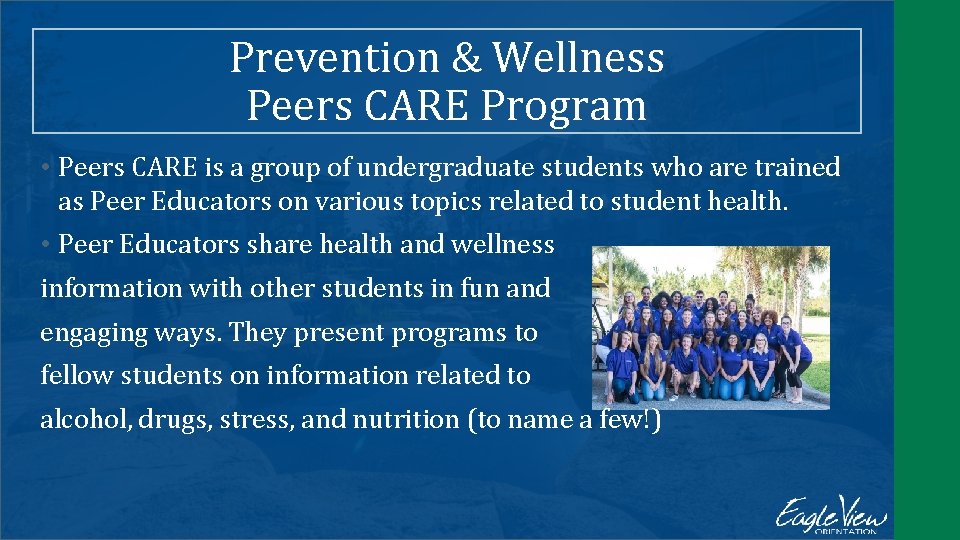
Prevention & Wellness Peers CARE Program • Peers CARE is a group of undergraduate students who are trained as Peer Educators on various topics related to student health. • Peer Educators share health and wellness information with other students in fun and engaging ways. They present programs to fellow students on information related to alcohol, drugs, stress, and nutrition (to name a few!)
Prevention and Wellness My Student Body • My. Student. Body. com (MSB), is an interactive, confidential, online wellness program. • Completion of the MSB Essentials Course is a university requirement for all new undergraduate, transfer, or dualenrolled students, which can help make your college experience a safer, healthier and more successful one. • Look for an email from MSB so you can complete the online course and avoid getting a hold on our account.
Adaptive Services Location: Wellness Building Phone: 239 -590 -7956 E-mail: adaptive@fgcu. edu *Hours: 8 am-5 pm Monday-Friday *Extended hours during the Fall and Spring semesters
Adaptive Services • Provides accommodations and services to students with documented disabilities (learning, ADHD, physical, psychological, temporary) • Accommodations are based on individual need • Examples of accommodations: • • • Extended time on exams Note taking assistance Audio books Furniture/physical space Sign Language interpreting
Adaptive Services • One on one tutoring available for specific subject areas • Assistance with study skills instruction • Examples include: • Test taking strategies • Reading/writing strategies • Organization/time management • Peer Mentoring • General advising and counseling related to disability • Eagles Gather: Student Organization
Student Health Services (SHS) Location: MODULAR VILLAGE (Parking Garage 2) SHS is nationally accredited by AAAHC Hours: **8: 15 am – 4: 45 pm Mon. -Thurs **9: 00 am-4: 45 pm Fri **Hours subject to change per semester Phone: 590 -7966 Service is provided by appointment and limited walk-in (except in emergencies)
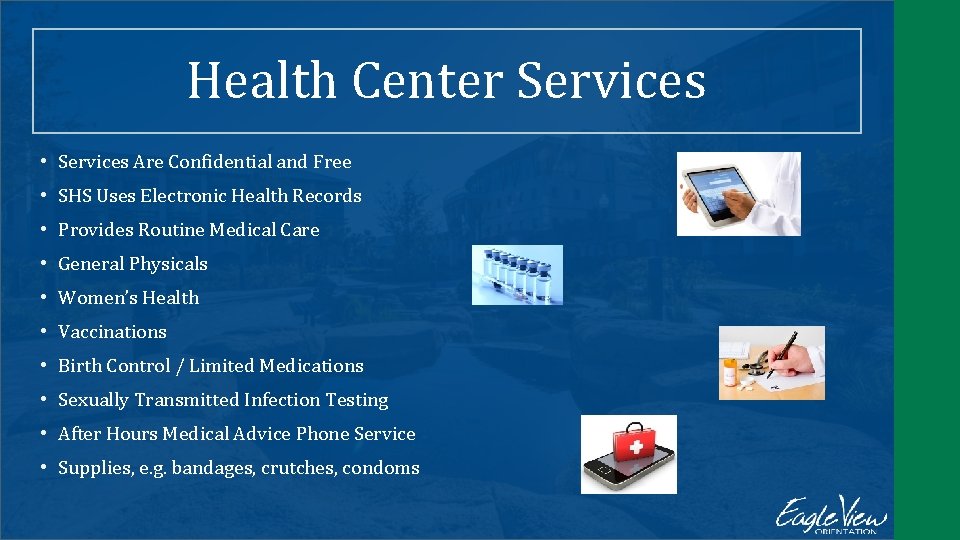
Health Center Services • Services Are Confidential and Free • SHS Uses Electronic Health Records • Provides Routine Medical Care • General Physicals • Women’s Health • Vaccinations • Birth Control / Limited Medications • Sexually Transmitted Infection Testing • After Hours Medical Advice Phone Service • Supplies, e. g. bandages, crutches, condoms
Student Health Services • Staffed by: • • Medical Doctors Nurse Practitioners Registered Nurses Medical assistants • Students under age 18, need parental consent to be treated. (forms available)
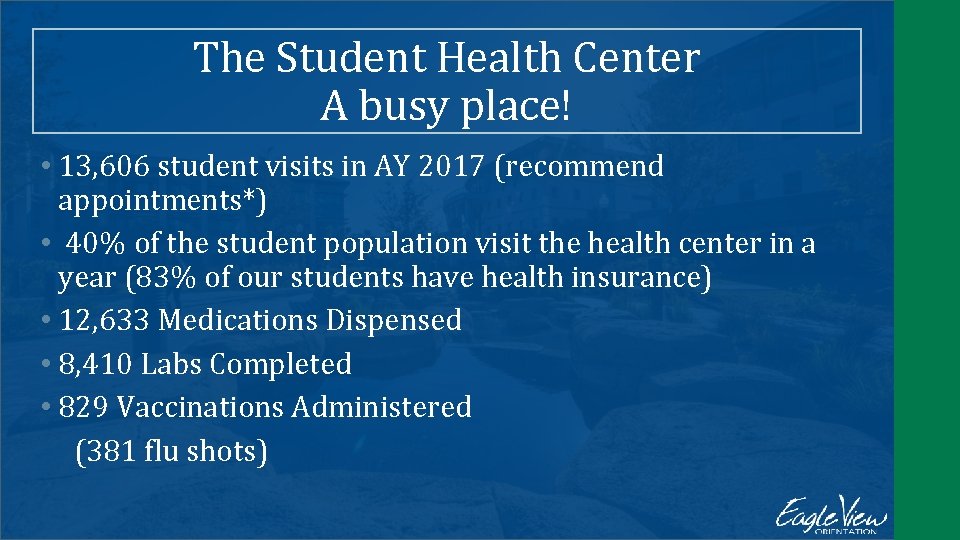
The Student Health Center A busy place! • 13, 606 student visits in AY 2017 (recommend appointments*) • 40% of the student population visit the health center in a year (83% of our students have health insurance) • 12, 633 Medications Dispensed • 8, 410 Labs Completed • 829 Vaccinations Administered (381 flu shots)
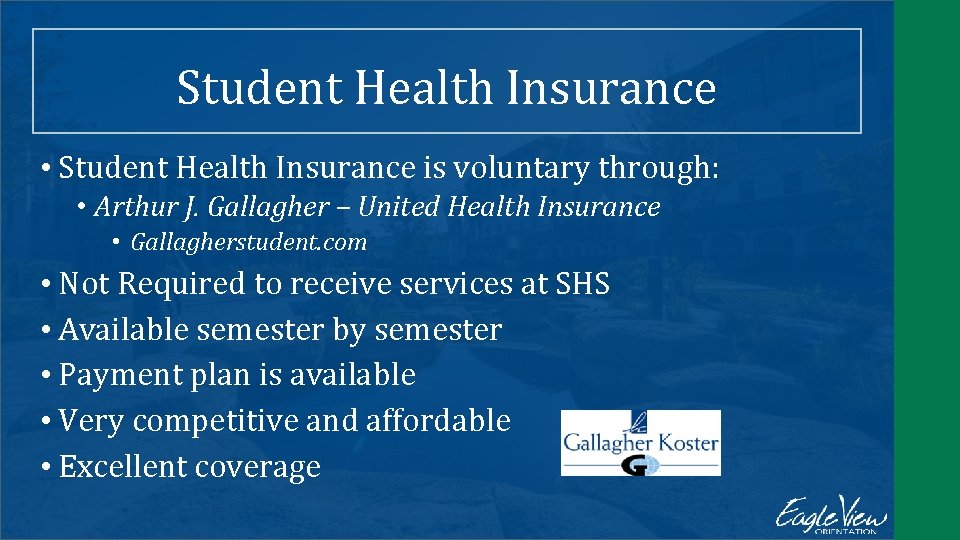
Student Health Insurance • Student Health Insurance is voluntary through: • Arthur J. Gallagher – United Health Insurance • Gallagherstudent. com • Not Required to receive services at SHS • Available semester by semester • Payment plan is available • Very competitive and affordable • Excellent coverage
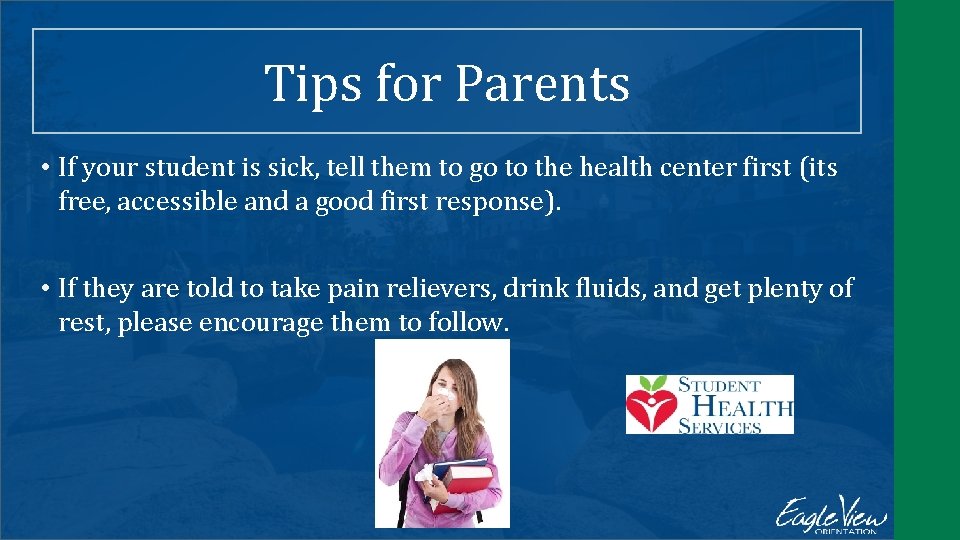
Tips for Parents • If your student is sick, tell them to go to the health center first (its free, accessible and a good first response). • If they are told to take pain relievers, drink fluids, and get plenty of rest, please encourage them to follow.
Tips for Parents • Advise that it is best to make an appointment • Remind them about after hours medical advice phone service. • There will be cost recovery charges for labs and medications. • Ask them if they are keeping up with sleep and dietary needs (FYI - nutritionist services are available at no cost).
Counseling and Psychological Services (CAPS) CAPS is Nationally Accredited by IACS The International Association of Counseling Services Located: Second Floor Howard Hall, Suite 228 **Hours 8: 00 – 6: 00 Mon. -Thurs. 8: 00 - 5: 00 Friday **Hours subject to change per semester Office Phone: 239 -590 -7950 24 hour Help Line: 239 -745 -EARS (3277)
CAPS Services • • • Walk-in Service Operation (free and confidential services) Personal Counseling & Therapy (short term model) Group Counseling & Therapy Psychiatric Services Consultation & Referral Case Management Outreach Programs Career Counseling Assessment Services (disability testing for LD/ADHD) After Hours and Emergency On-call (24/7 availability) http: //studentservices. fgcu. edu/Counseling/ (mental health screening and other electronic resources)
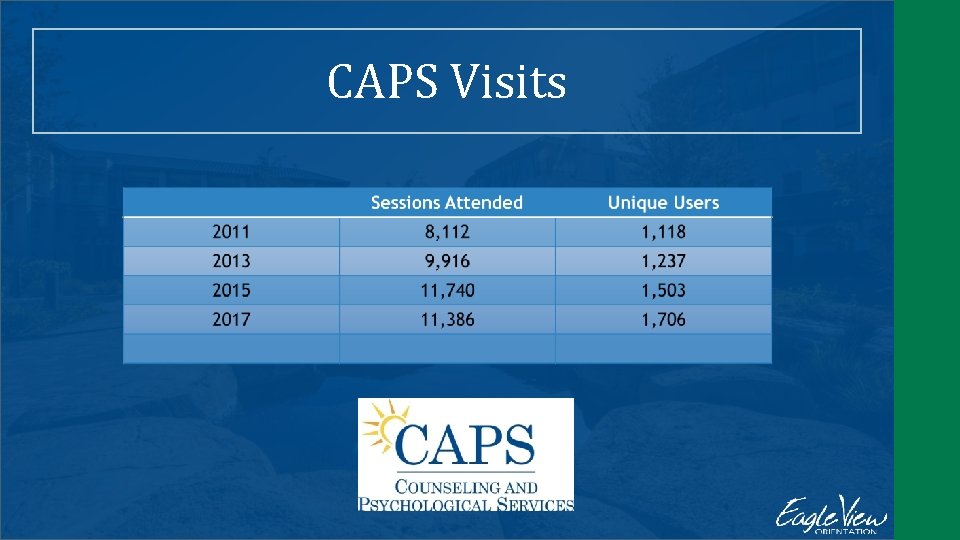
CAPS Visits
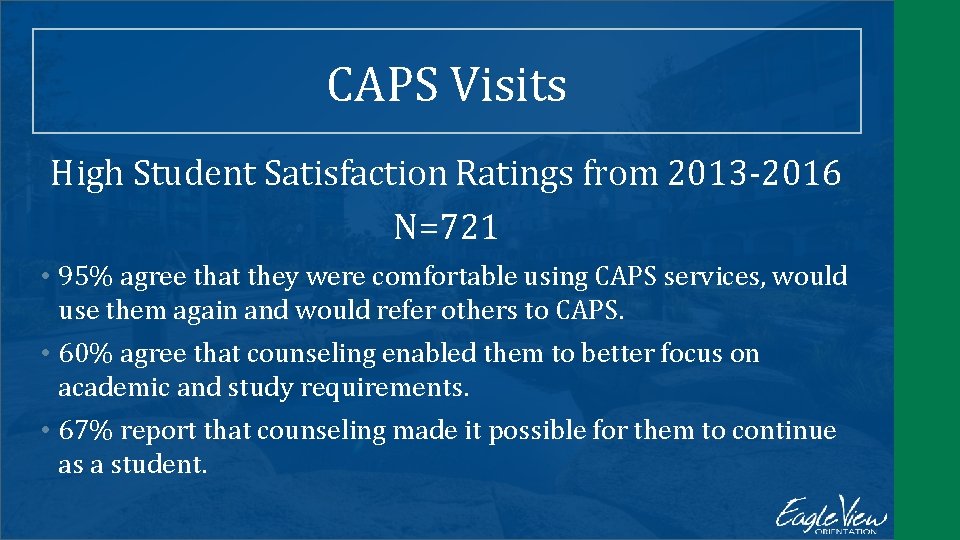
CAPS Visits High Student Satisfaction Ratings from 2013 -2016 N=721 • 95% agree that they were comfortable using CAPS services, would use them again and would refer others to CAPS. • 60% agree that counseling enabled them to better focus on academic and study requirements. • 67% report that counseling made it possible for them to continue as a student.
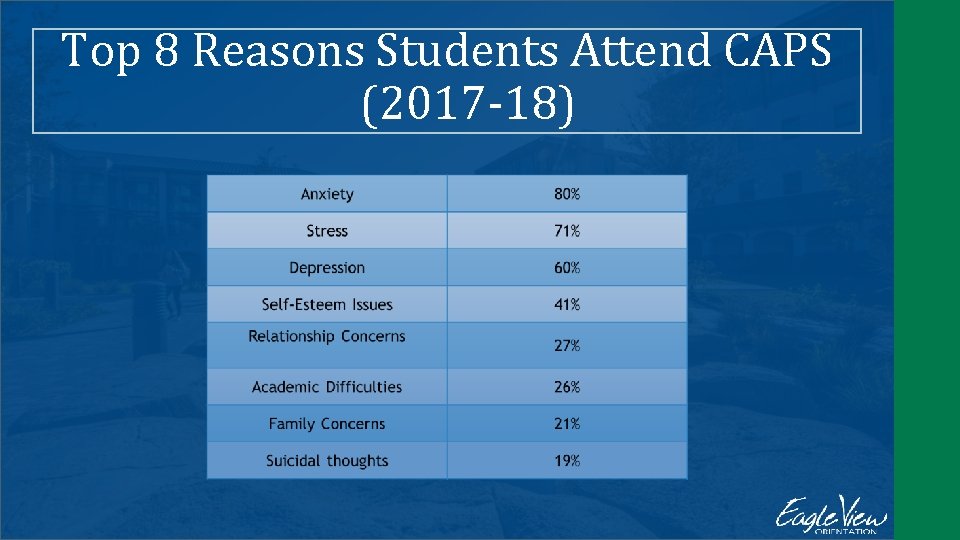
Top 8 Reasons Students Attend CAPS (2017 -18)
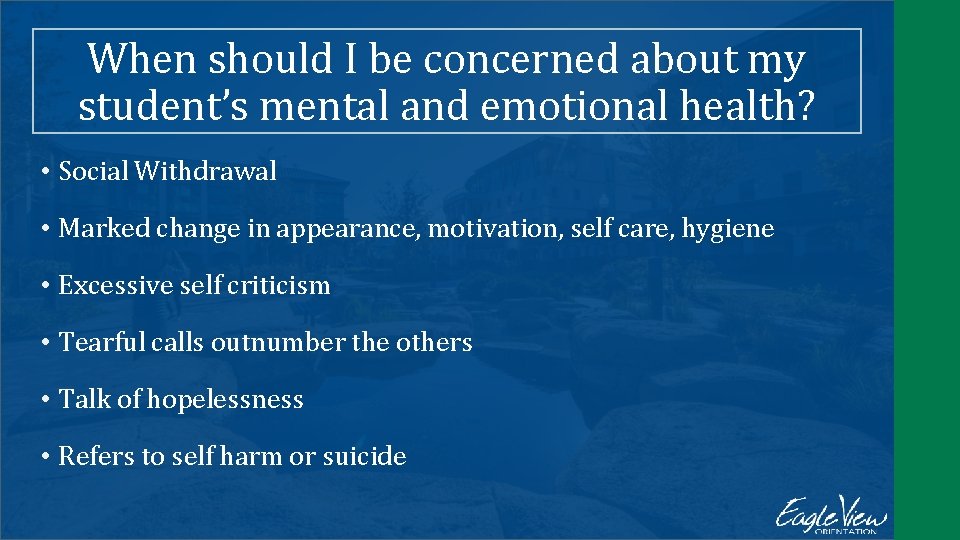
When should I be concerned about my student’s mental and emotional health? • Social Withdrawal • Marked change in appearance, motivation, self care, hygiene • Excessive self criticism • Tearful calls outnumber the others • Talk of hopelessness • Refers to self harm or suicide
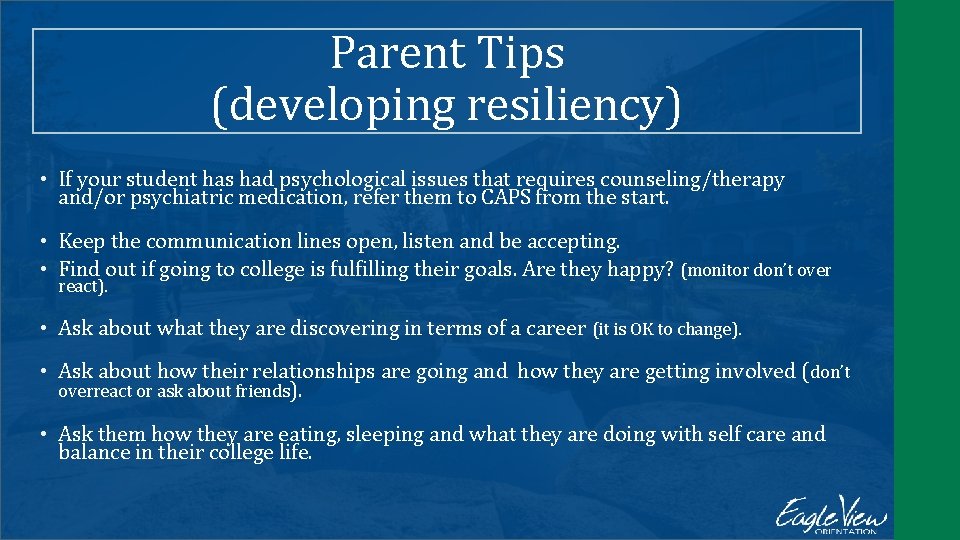
Parent Tips (developing resiliency) • If your student has had psychological issues that requires counseling/therapy and/or psychiatric medication, refer them to CAPS from the start. • Keep the communication lines open, listen and be accepting. • Find out if going to college is fulfilling their goals. Are they happy? (monitor don’t over react). • Ask about what they are discovering in terms of a career (it is OK to change). • Ask about how their relationships are going and how they are getting involved ( don’t overreact or ask about friends). • Ask them how they are eating, sleeping and what they are doing with self care and balance in their college life.
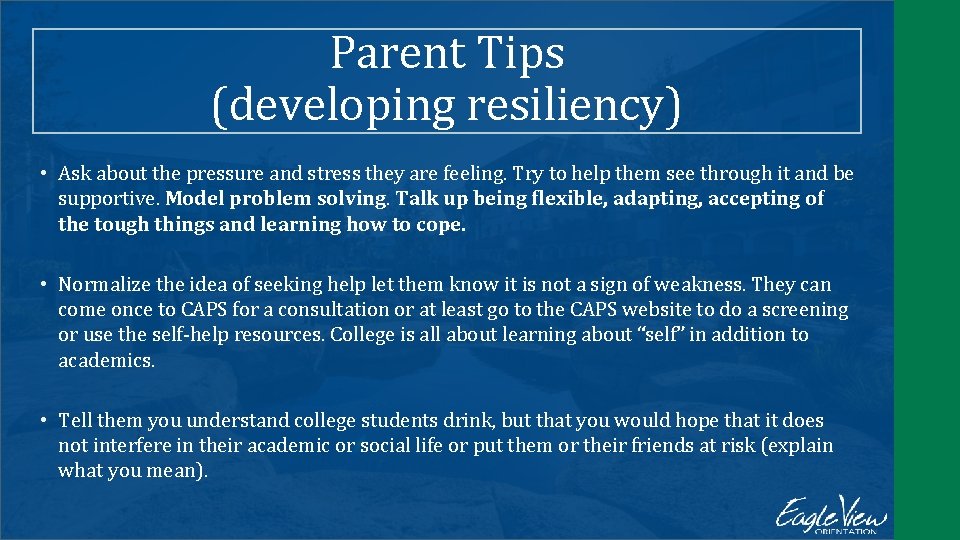
Parent Tips (developing resiliency) • Ask about the pressure and stress they are feeling. Try to help them see through it and be supportive. Model problem solving. Talk up being flexible, adapting, accepting of the tough things and learning how to cope. • Normalize the idea of seeking help let them know it is not a sign of weakness. They can come once to CAPS for a consultation or at least go to the CAPS website to do a screening or use the self-help resources. College is all about learning about “self” in addition to academics. • Tell them you understand college students drink, but that you would hope that it does not interfere in their academic or social life or put them or their friends at risk (explain what you mean).
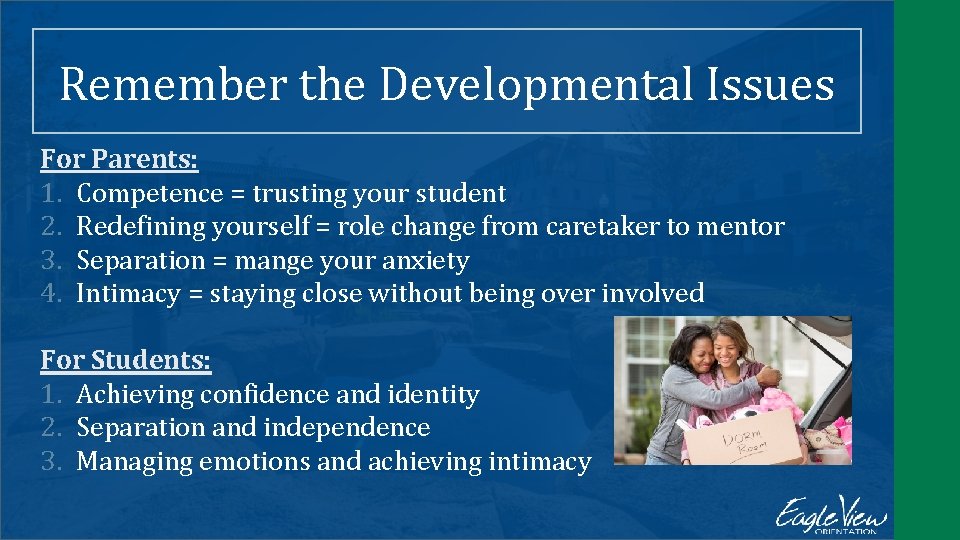
Remember the Developmental Issues For Parents: 1. Competence = trusting your student 2. Redefining yourself = role change from caretaker to mentor 3. Separation = mange your anxiety 4. Intimacy = staying close without being over involved For Students: 1. Achieving confidence and identity 2. Separation and independence 3. Managing emotions and achieving intimacy
Welcome to Florida Gulf Coast University (together we can enable your student’s success)