
The Healing Power of Music The Role of
- Slides: 30
The Healing Power of Music: The Role of Music Therapy in Palliative Care Jill Murphy, BMT, MTA
Goals for today’s session • • Experiment with the power of music Discuss the role of music in our lives Discuss how music is used as therapy Examine how music therapy can be used in palliative care • Show what this sort of therapy looks like • Look at what “you” can take home…
The Power of Music • Music is not something that is easily discussed • Musical Experience #1: – Close your eyes (if you wish) – Let the music guide your thoughts – What word, picture, or memory comes to mind
Feedback on Experience • Care to share? • Where did the music take you? • Did all listeners have the same reaction to the music? • What influences your experience with this piece of music? • Is this surprising?
The Role of Music In your Life • When was the last time you experienced music? • When was the first time? • Where do you use music in your day to day living? Why? • What is the role of this music? • Do you use it “purposely”?
Music Through The Years • Music is universal • For years, music and sound have been used communicatively from very early on, even before language has developed • It is also able to be used after individuals are not longer able to verbalize
(Music Through The Years) • • • We know music is powerful. We know it has healing qualities. We have known this for hundreds of years. Using music as therapy: relatively new Wounded soldiers from WWII showed responses to music in hospital wards • Continued growth since that time
Defining “Music Therapy” • “The skillful use of music and musical elements by an accredited music therapist to promote, maintain, and restore mental, physical, emotional, and spiritual health. ” (CAMT, 1994) • Using music to bring about a change within an individual • Music is the tool used to reach specific goals
Where Do Music Therapist’s Work? • • Private practice Rehabilitation facilities Palliative care programs Centers for seniors Psychiatric hospitals Medical hospitals Schools
The Process • • • Referral is made to therapist An assessment is completed Needs of the individual are determined Goals are created for the individual A treatment plan is created The treatment plan is carried out through music therapy sessions
Referral • Who can make a referral for a patient to MT? • Information: – Patient location – Reasons for referral – Cognitive status – Has MT been discussed with patient?
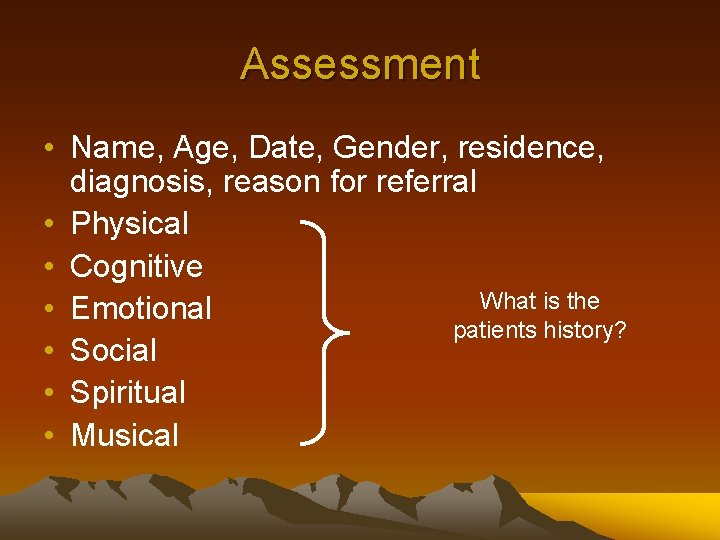
Assessment • Name, Age, Date, Gender, residence, diagnosis, reason for referral • Physical • Cognitive What is the • Emotional patients history? • Social • Spiritual • Musical
Why is this important? • Musical experience #2 • “Dust in the Wind” • “Be Not Afraid”
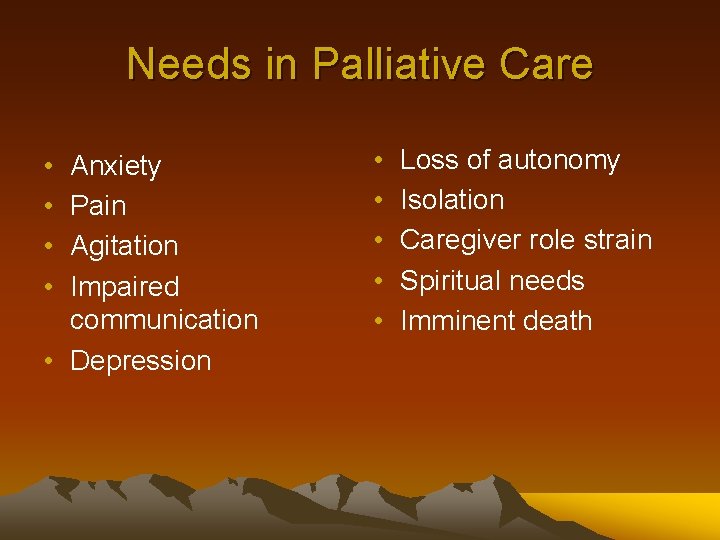
Needs in Palliative Care • • Anxiety Pain Agitation Impaired communication • Depression • • • Loss of autonomy Isolation Caregiver role strain Spiritual needs Imminent death
The Goal of MT in Palliative Care • Main goal: to improve the quality of life for the individual • Heal Vs Cure
Sub-goals… – Help to alleviate fears and anxieties – Reinforce identity and decrease feelings of isolation – Help foster communication – Promote emotional expression – Decrease perception of pain – Aid in life review process
Help to alleviate fears and anxieties • This is unfamiliar / unknown territory • Support and reassurance through familiar music • Iso-principle: taking the pt to a new place • Music listening and relaxation • What does this look like? Share: tension
Reinforce identity and decrease feelings of isolation • Lots of questions (Who am I? ) • Lots of feelings (alone, lost, forgotten) • Provide a means for control / empowerment (song choice, treatment plan, etc) • Familiar music to provide support • Normalize the environment • Interaction, trust, relationship with therapist • What does this look like? Share: hymns
Help foster communication • Lyric analysis: songs have meaning • “Have I Told You Lately” • Music can provide a very comforting presence, even at the very end of life • Positive shared experiences • What does this look like? Share: “You Raise Me Up”
Promote emotional expression • Opportunity for self expression through music: – Singing and instrument playing – Song writing and composition – Vocal / instrumental improvisation • Validate emotional expression • It’s not always easy to talk • What does this look like? Share: drum • “Music expresses feeling and thought, without language; it was below and before speech, and it is above and beyond all words. ” ~Robert G. Ingersoll
Decrease perception of pain • Provide a means of redirecting attention away from pain and carrying a person’s thoughts away from painful stimuli • Focus on the music • Release of dopamine (“feel good”) hormones (Montreal study results) • What does this look like? Can you relate?
Aid in life review process • • • Think back to a musical memory Strong connection “Life review through music” “Gift of a song” Creating a CD – a tangible legacy What does this look like? Share: “A Mother’s Love”
Benefits for families… • What do they see? • Did they expect to find this? • Provides: – A focus – A memory – Involvement – A breather
Our Conference Theme: “Roots, Reality & Reaching Out” Does music therapy fit?
Roots: • Our roots: – Songs from childhood – Spiritual music • Giving patient roots: – Normalizing the environment – Providing security and reassurance – Toe tapping – grounding and connection
Reality • Allowing the patient to “live” in the now – To remember or to forget? – Song writing, expression, improvisation – Relaxation techniques – Acceptance – Control over environment – Involvement of children
Reaching Out • A memory for family – The gift of song – A legacy • Patient Family – Forgiveness – Memories – Support – Communication – Reassurance
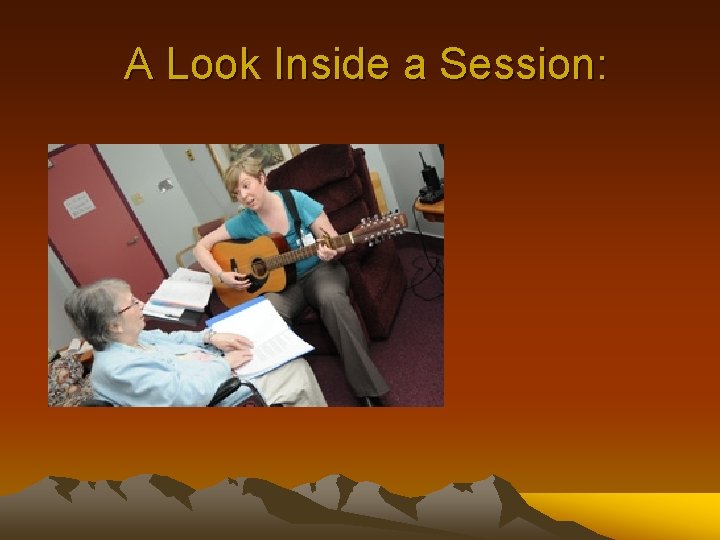
A Look Inside a Session:
What can you do? • On a palliative cart / unit, have CD player accessible with CD’s that are gentle and familiar • Ask patient what their preference in music is and bring those CD’s • Ask about involvement / history with music • Sing with the patient (not as scary as it seems!)
Questions & Comments Resources: http: //www. musictherapy. ca/ CAMT: Canadian Association for Music Therapy http: //www. atlanticmusictherapy. ca/ Atlantic Association for Music Therapy