
The Harmonic Oscillator The Harmonic Oscillator Introduction Why
- Slides: 33
The Harmonic Oscillator
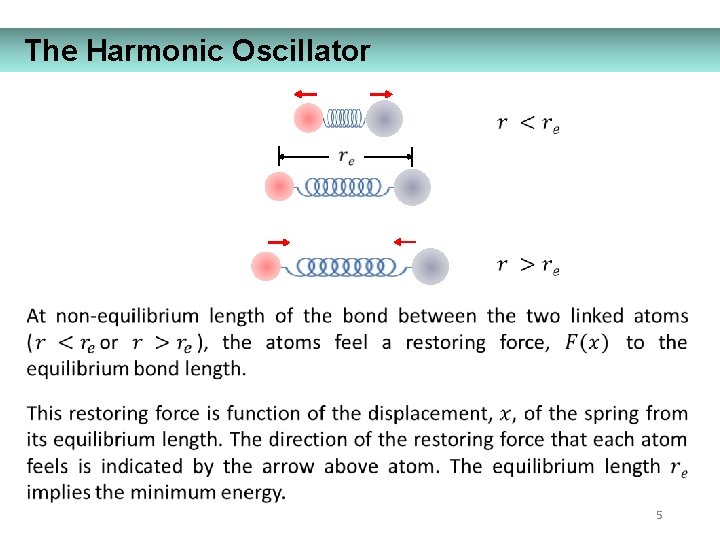
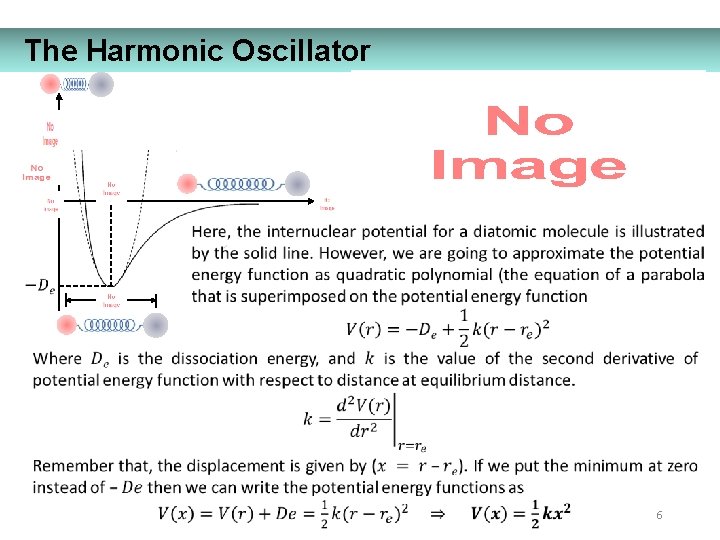
The Harmonic Oscillator Introduction Why do we need to study harmonic oscillator model? The harmonic oscillator system is important as a model for molecular vibrations. The vibrational energy levels of a diatomic molecule can be approximated by the levels of a harmonic oscillator At first, we are going to study harmonic oscillator from a classical mechanical perspective and then will discuss the allowed energy levels and the corresponding wave function of the harmonic oscillator from a quantum mechanical point of view. Later on we are going to describe the infrared spectrum of a diatomic molecules using the quantum mechanical energies. Also we are going to figure out how to determine molecular force constant. Finally, we are going to learn selection rules for a harmonic oscillator and the normal coordinates which describe the vibrational motion of polyatomic molecules. 2
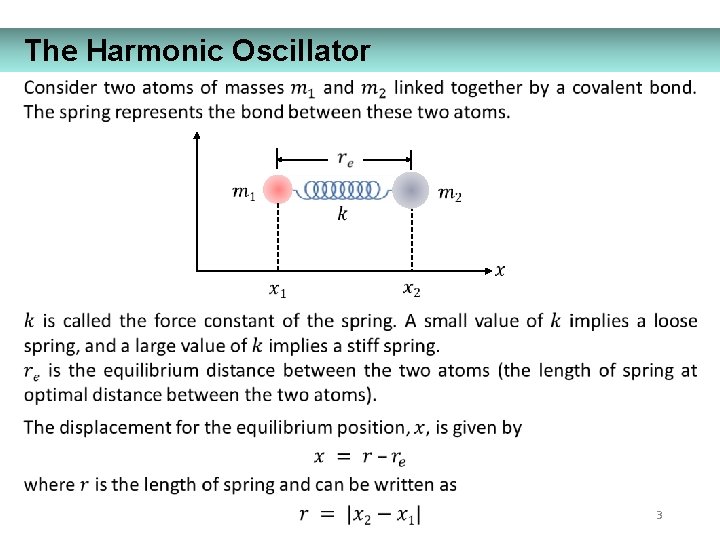
The Harmonic Oscillator 3
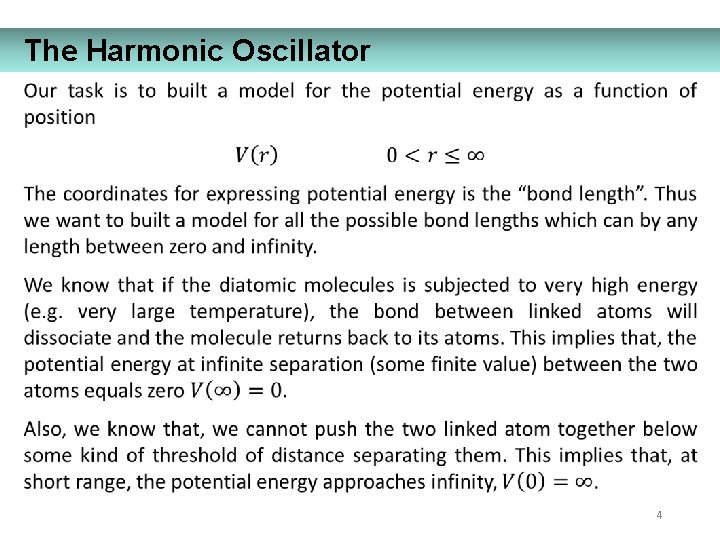
The Harmonic Oscillator 4
The Harmonic Oscillator 5
The Harmonic Oscillator 6
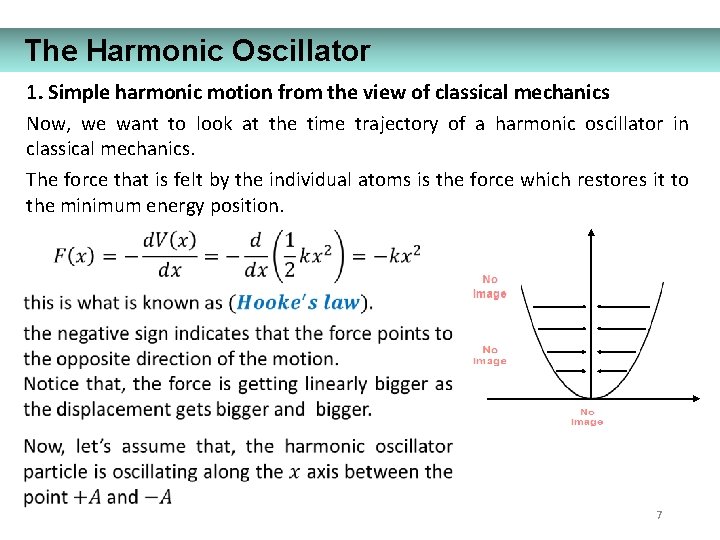
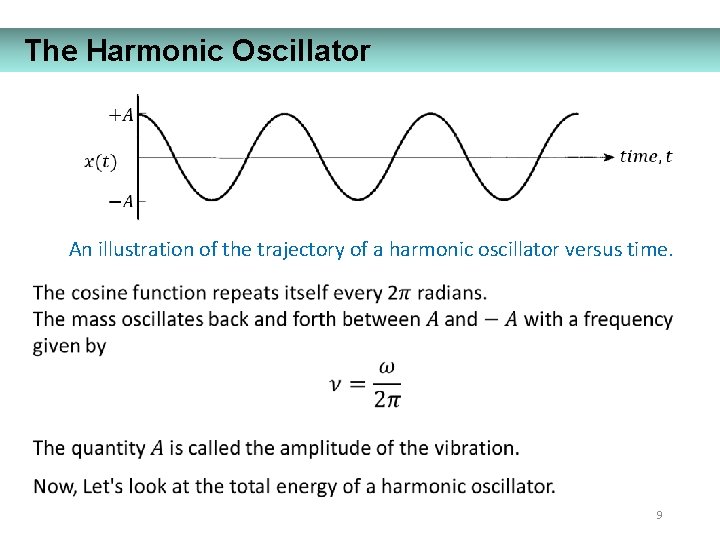
The Harmonic Oscillator 1. Simple harmonic motion from the view of classical mechanics Now, we want to look at the time trajectory of a harmonic oscillator in classical mechanics. The force that is felt by the individual atoms is the force which restores it to the minimum energy position. 7
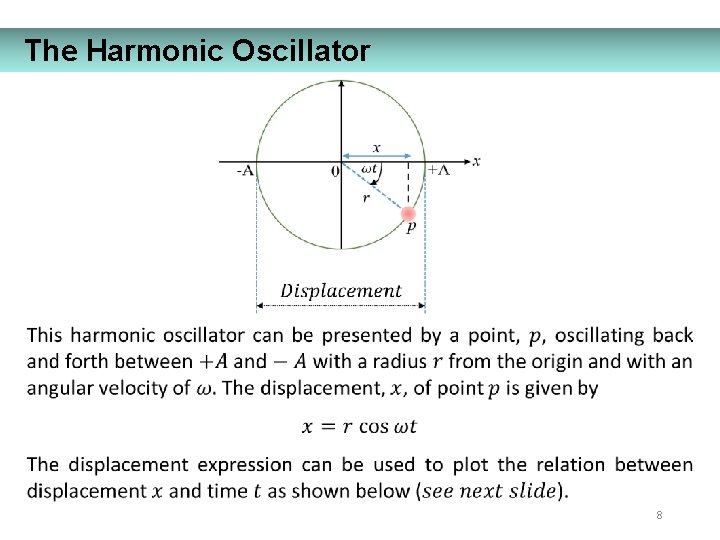
The Harmonic Oscillator 8
The Harmonic Oscillator An illustration of the trajectory of a harmonic oscillator versus time. 9
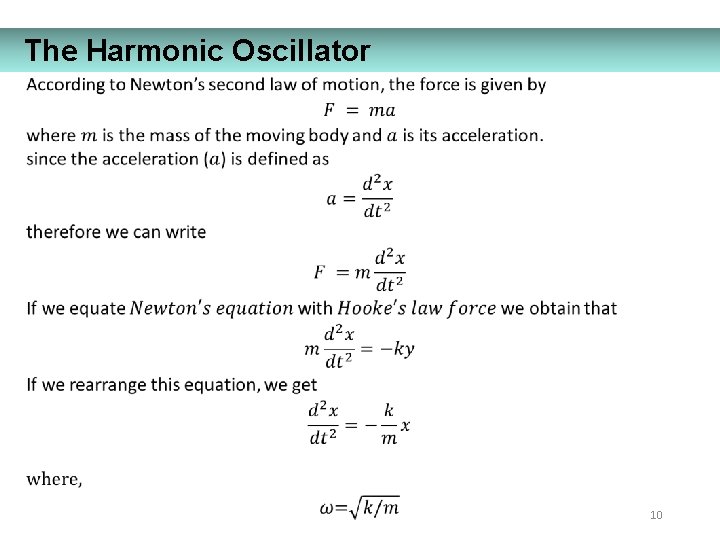
The Harmonic Oscillator 10
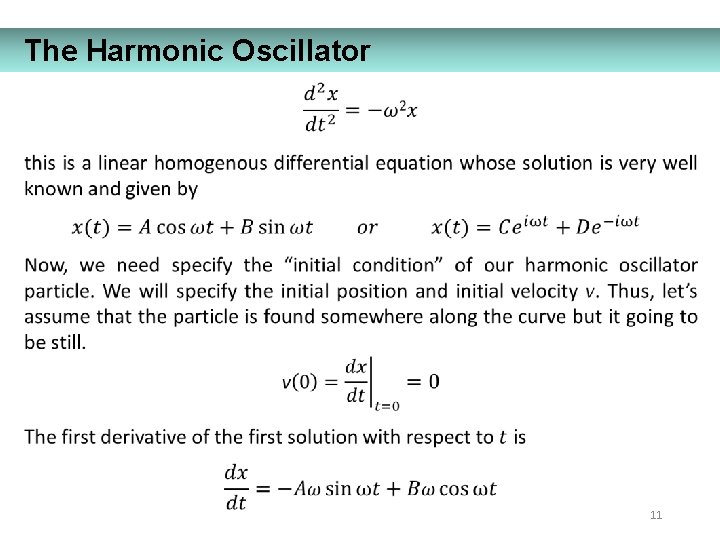
The Harmonic Oscillator 11
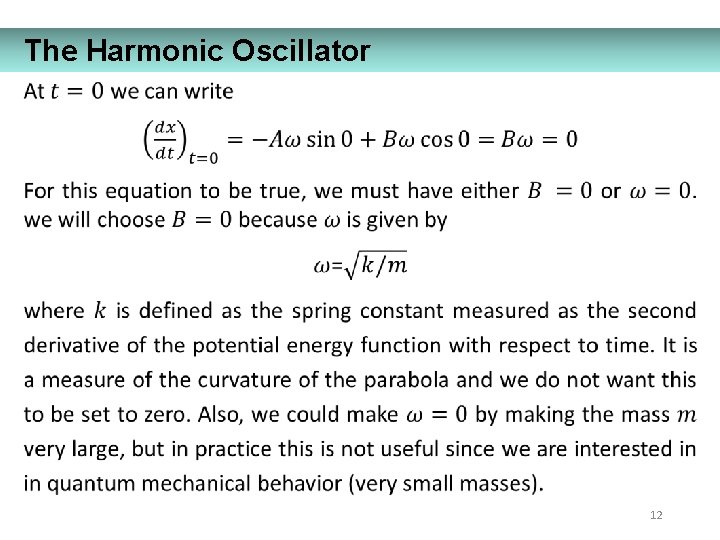
The Harmonic Oscillator 12
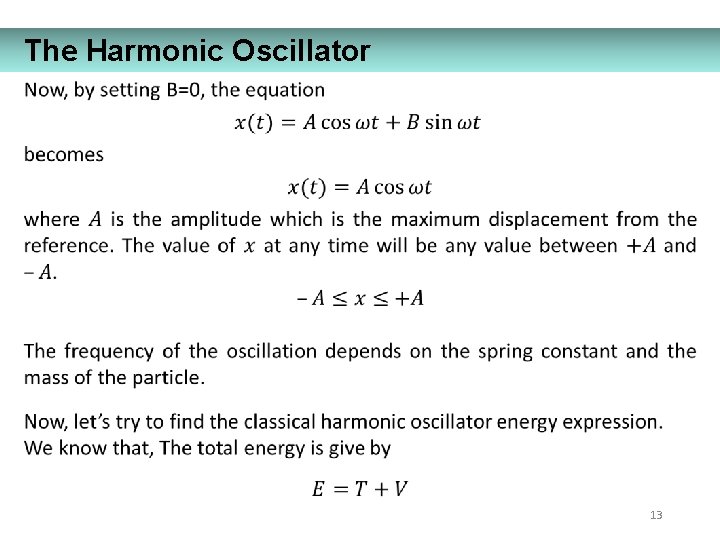
The Harmonic Oscillator 13
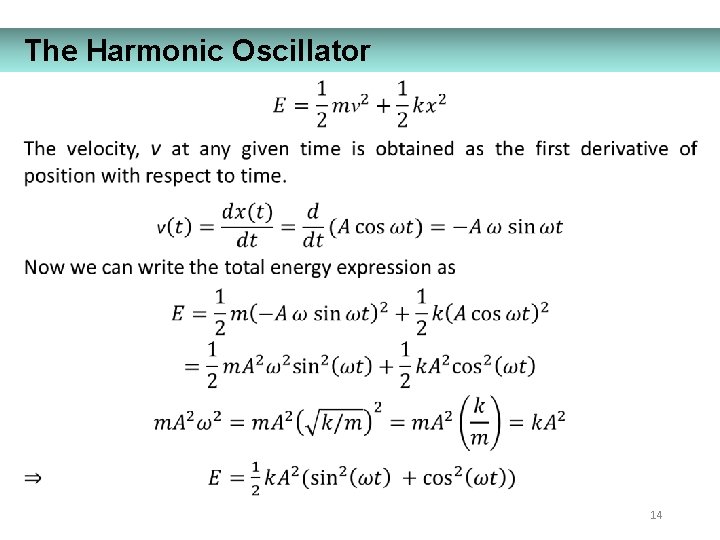
The Harmonic Oscillator 14
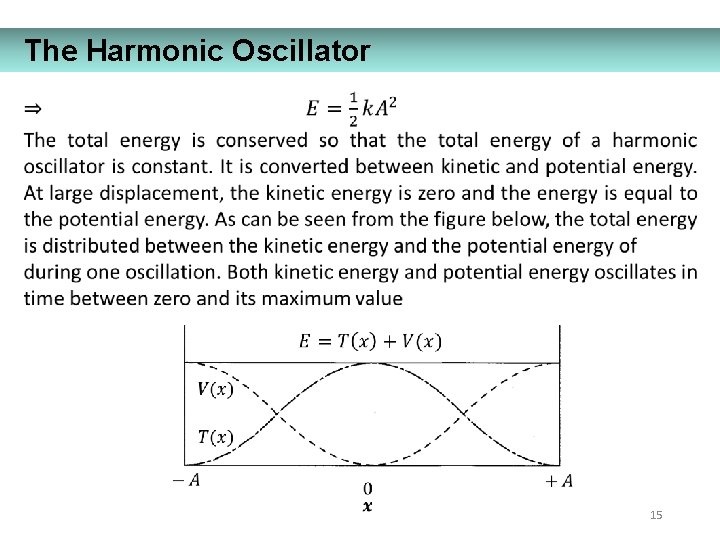
The Harmonic Oscillator 15
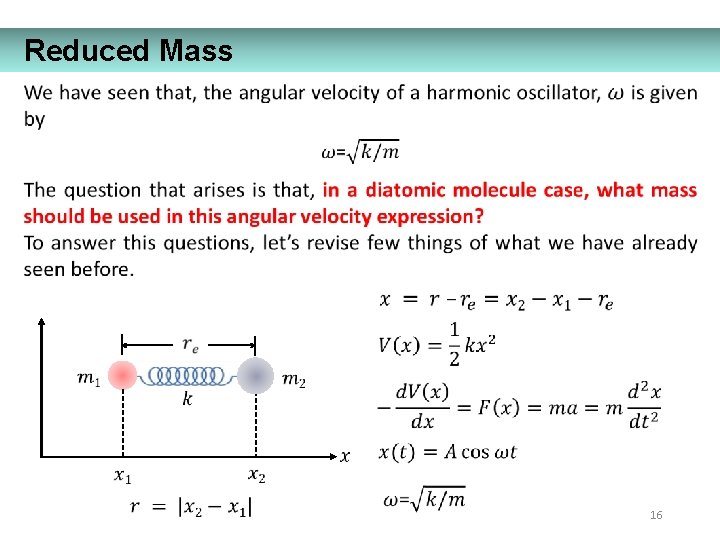
Reduced Mass 16
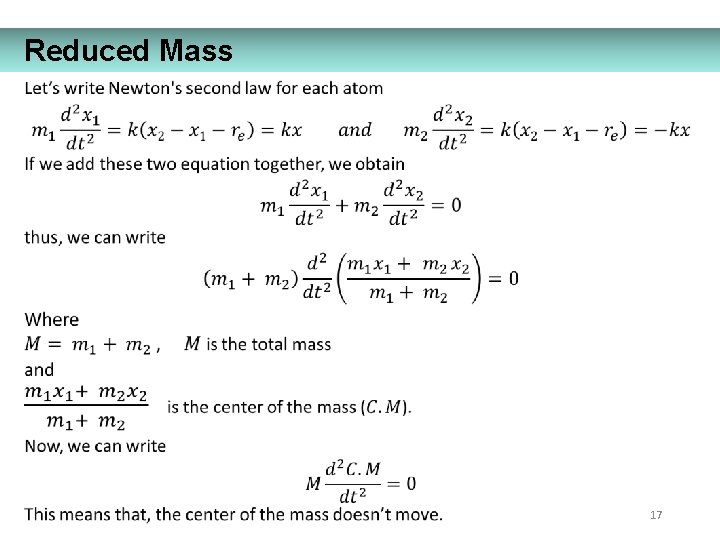
Reduced Mass 17
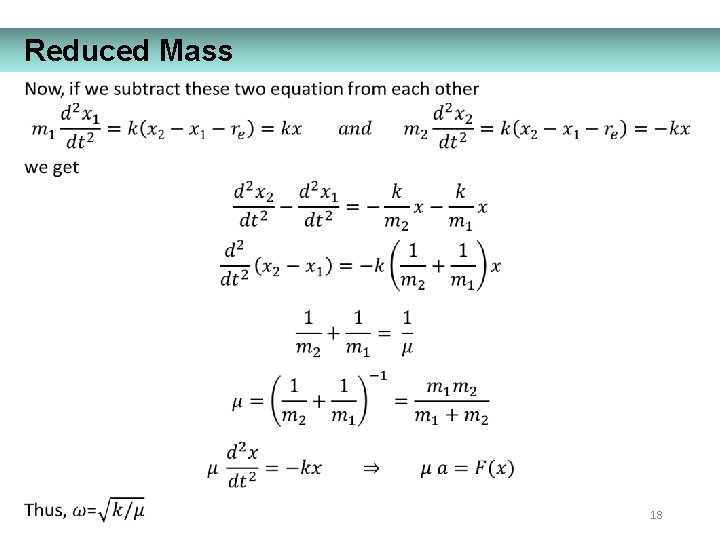
Reduced Mass 18
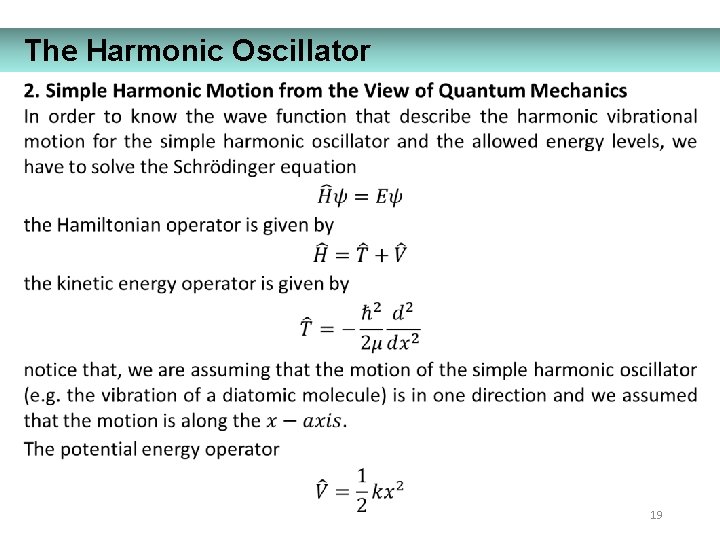
The Harmonic Oscillator 19
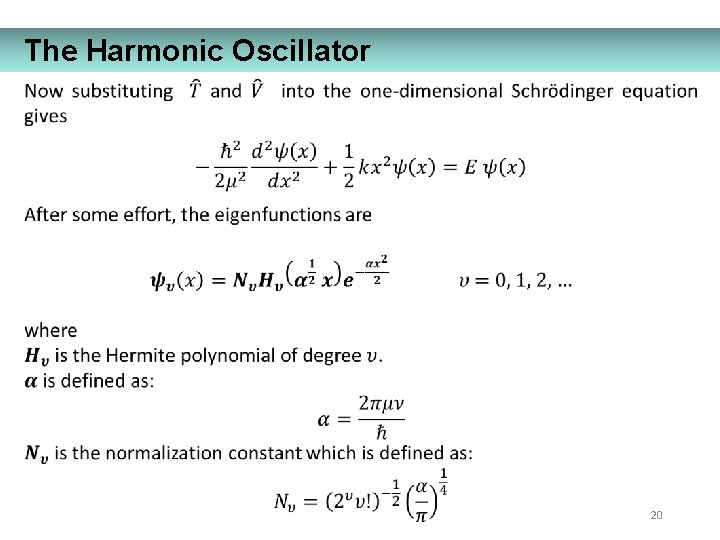
The Harmonic Oscillator 20
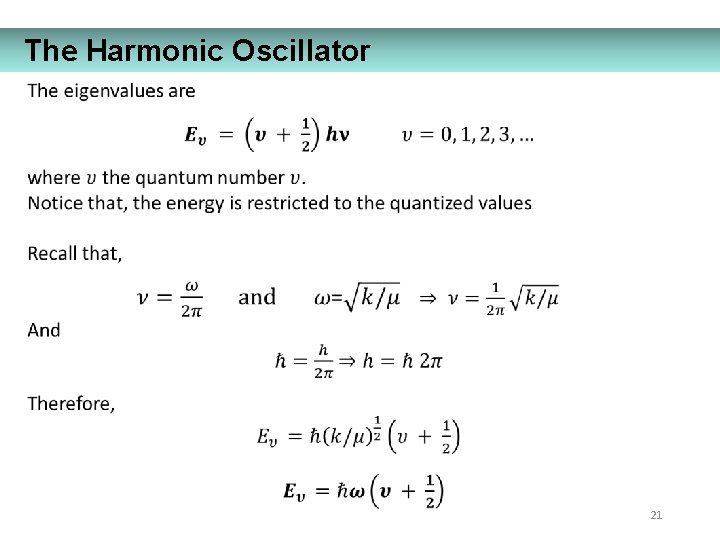
The Harmonic Oscillator 21
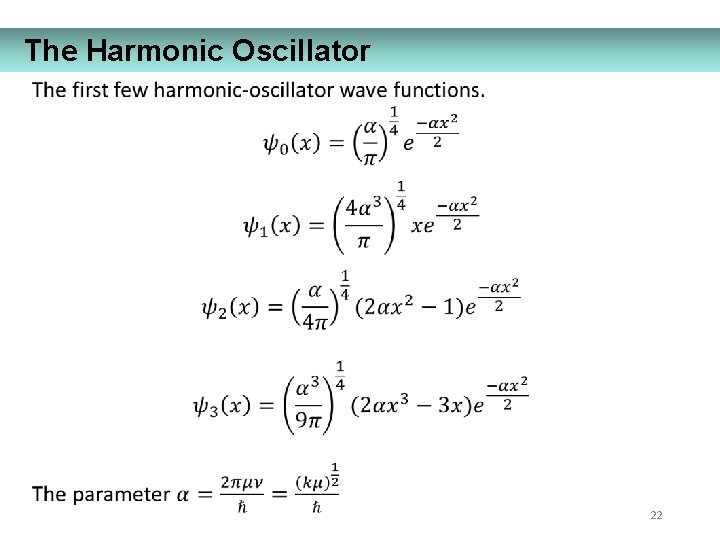
The Harmonic Oscillator 22
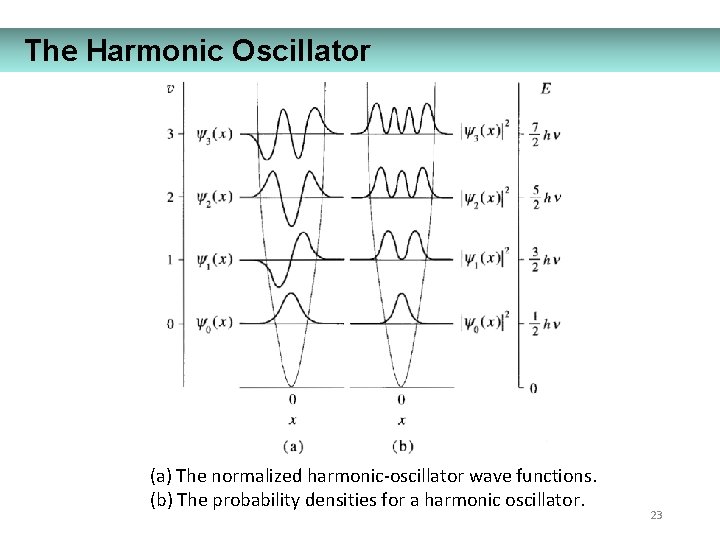
The Harmonic Oscillator (a) The normalized harmonic-oscillator wave functions. (b) The probability densities for a harmonic oscillator. 23
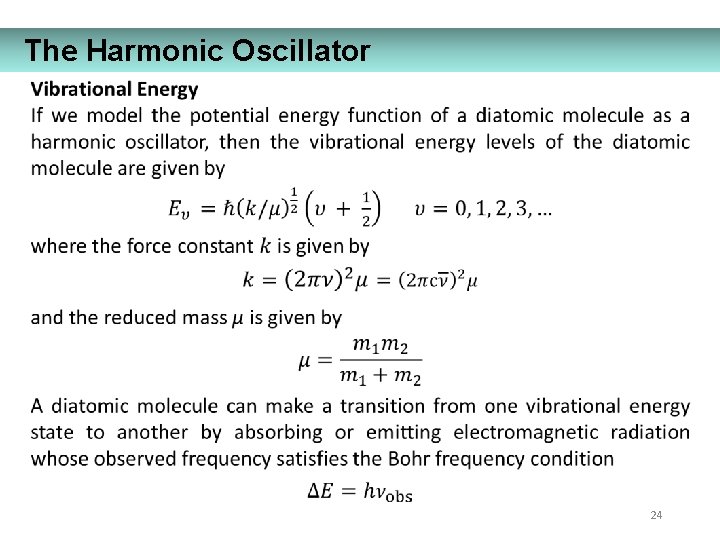
The Harmonic Oscillator 24
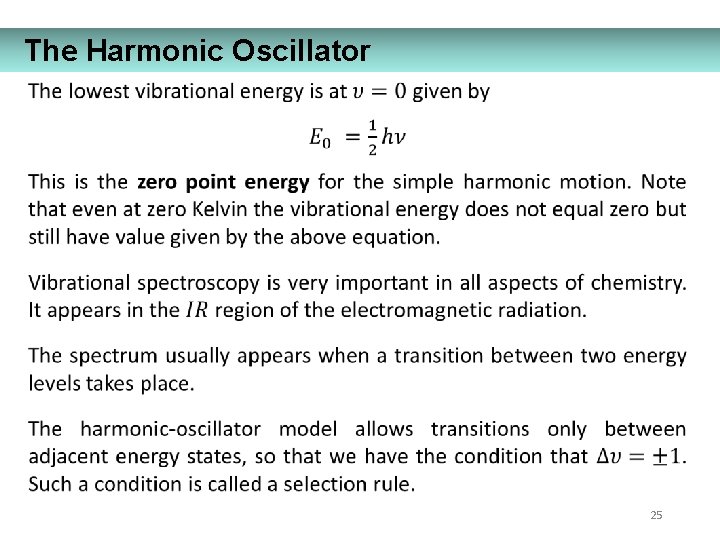
The Harmonic Oscillator 25
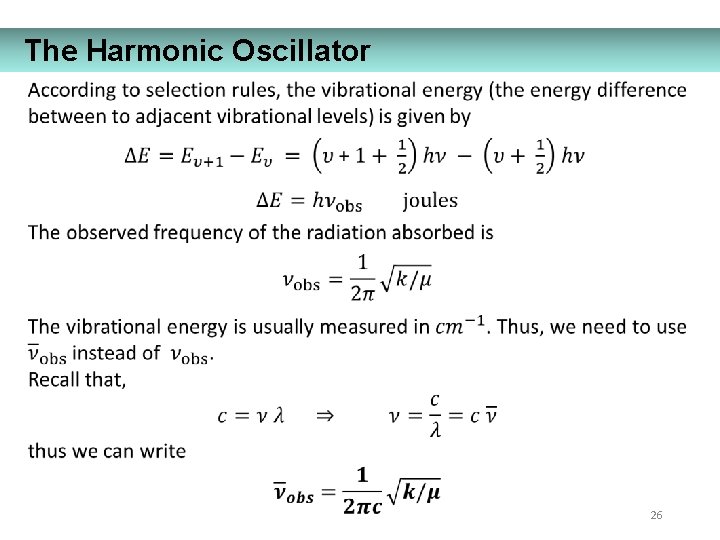
The Harmonic Oscillator 26
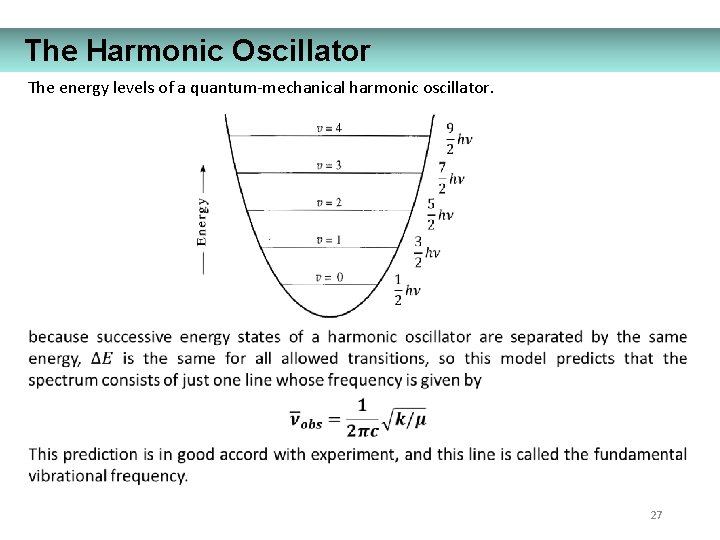
The Harmonic Oscillator The energy levels of a quantum-mechanical harmonic oscillator. 27
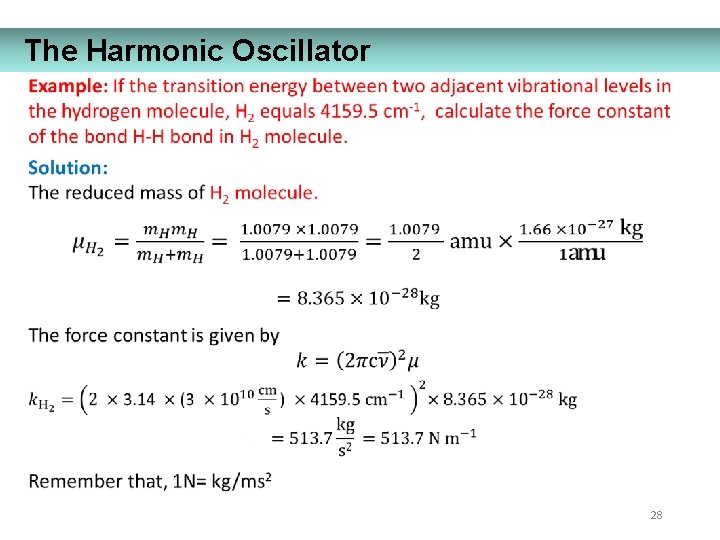
The Harmonic Oscillator 28
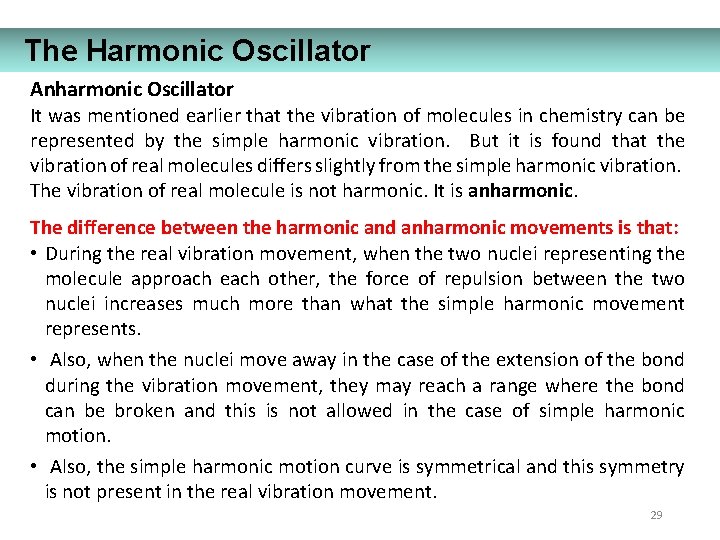
The Harmonic Oscillator Anharmonic Oscillator It was mentioned earlier that the vibration of molecules in chemistry can be represented by the simple harmonic vibration. But it is found that the vibration of real molecules differs slightly from the simple harmonic vibration. The vibration of real molecule is not harmonic. It is anharmonic. The difference between the harmonic and anharmonic movements is that: • During the real vibration movement, when the two nuclei representing the molecule approach each other, the force of repulsion between the two nuclei increases much more than what the simple harmonic movement represents. • Also, when the nuclei move away in the case of the extension of the bond during the vibration movement, they may reach a range where the bond can be broken and this is not allowed in the case of simple harmonic motion. • Also, the simple harmonic motion curve is symmetrical and this symmetry is not present in the real vibration movement. 29
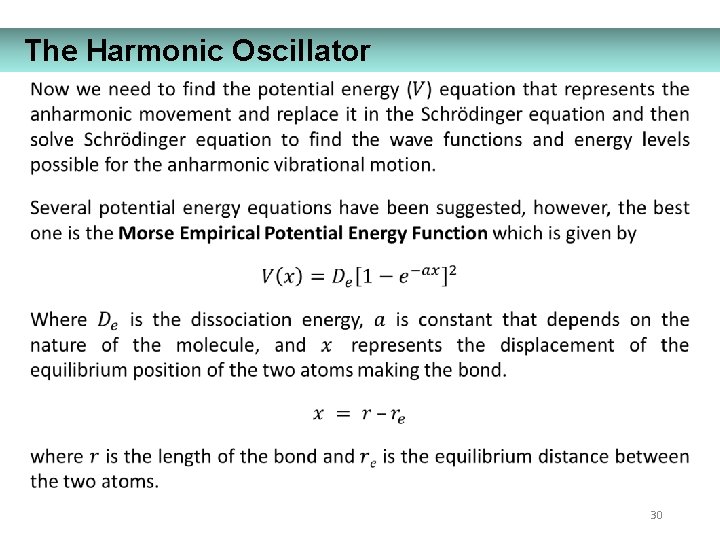
The Harmonic Oscillator 30
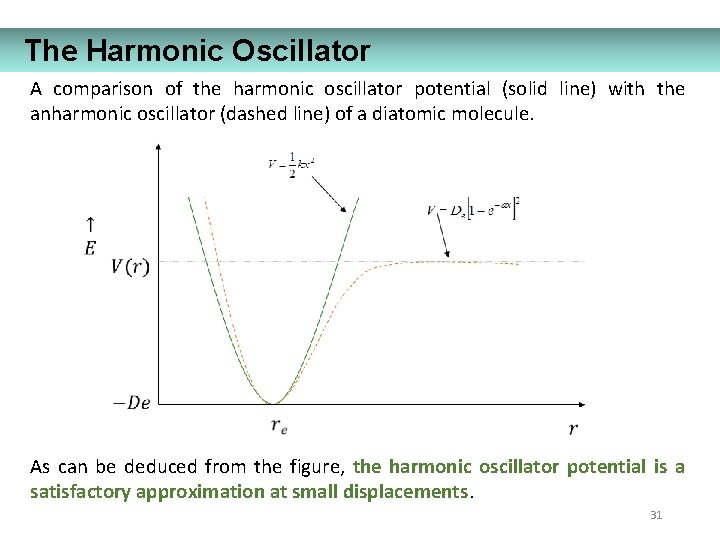
The Harmonic Oscillator A comparison of the harmonic oscillator potential (solid line) with the anharmonic oscillator (dashed line) of a diatomic molecule. As can be deduced from the figure, the harmonic oscillator potential is a satisfactory approximation at small displacements. 31
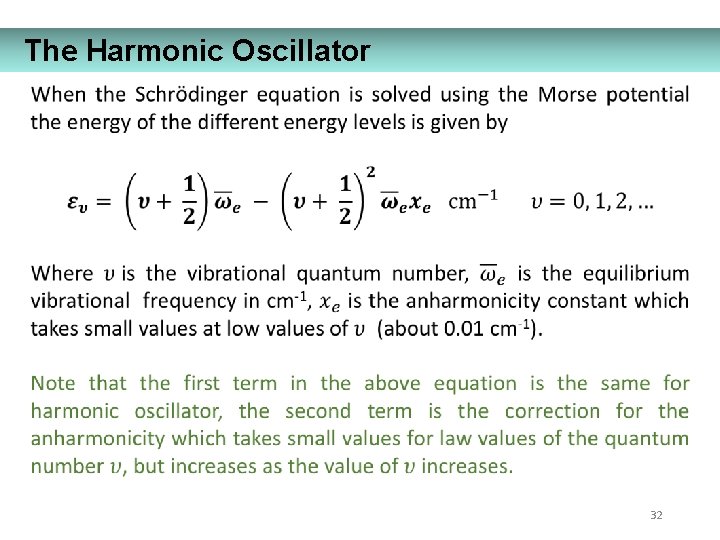
The Harmonic Oscillator 32
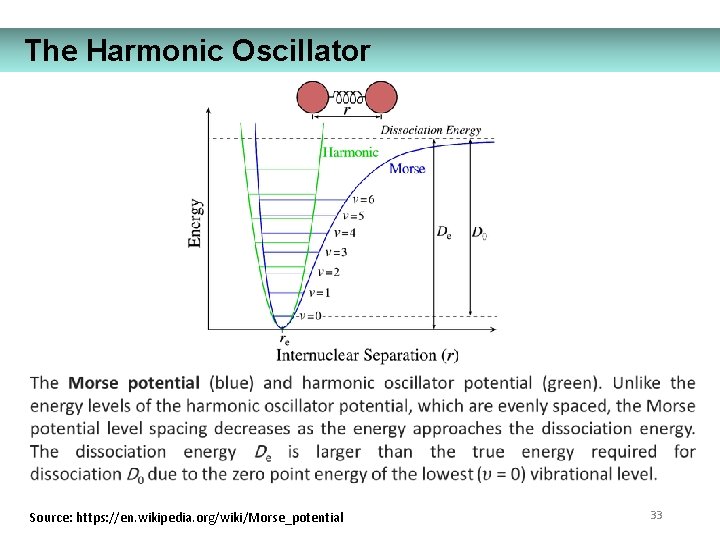
The Harmonic Oscillator Source: https: //en. wikipedia. org/wiki/Morse_potential 33