
The Happiness Formula Who is Happy SONJA LYUBOMIRSKY
The Happiness Formula & Who is Happy? SONJA LYUBOMIRSKY University of California People-http: //www. youtube. com/watch? v=qv 6 x. Ymh 4 Yw&feature=related Places #1 - http: //www. youtube. com/watch? v=t. SPz. Ye 6 Ny-U&NR=1 Places #2 http: //www. youtube. com/watch? v=te. V 8 MYc. Wqik&NR=1
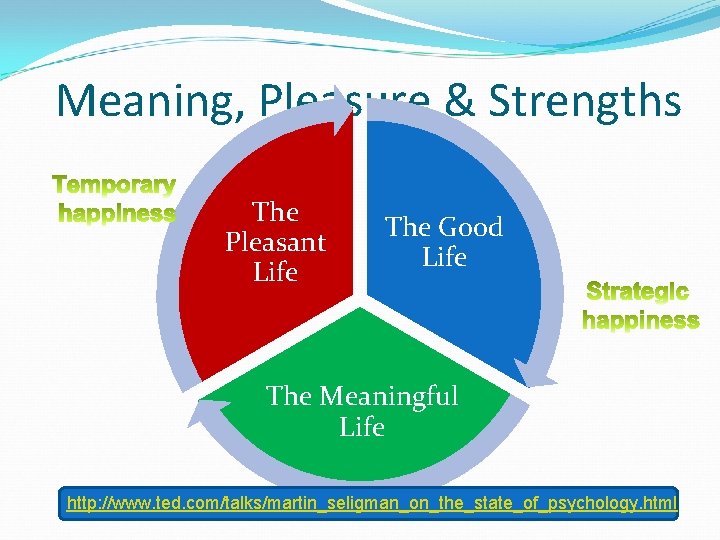
Meaning, Pleasure & Strengths The Pleasant Life The Good Life The Meaningful Life http: //www. ted. com/talks/martin_seligman_on_the_state_of_psychology. html
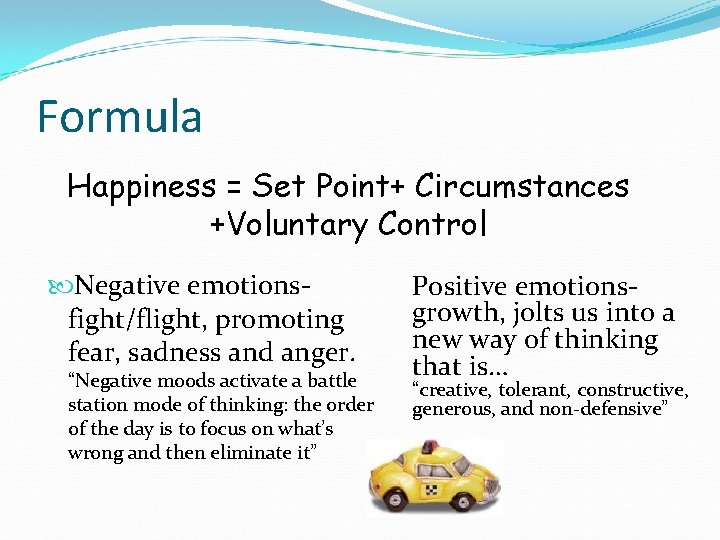
Formula Happiness = Set Point+ Circumstances +Voluntary Control Negative emotionsfight/flight, promoting fear, sadness and anger. “Negative moods activate a battle station mode of thinking: the order of the day is to focus on what’s wrong and then eliminate it” Positive emotionsgrowth, jolts us into a new way of thinking that is… “creative, tolerant, constructive, generous, and non-defensive”
Commercial Break… http: //www. youtube. com/watch? v=Uj. Xi 6 X-mox. E
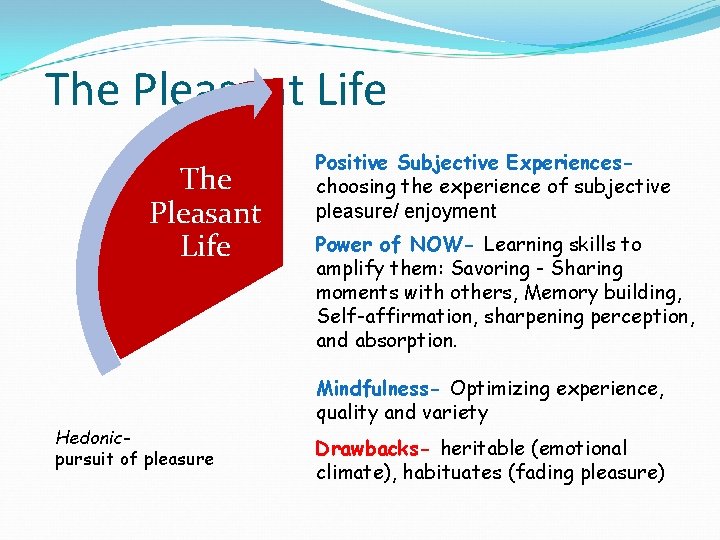
The Pleasant Life Hedonicpursuit of pleasure Positive Subjective Experienceschoosing the experience of subjective pleasure/ enjoyment Power of NOW- Learning skills to amplify them: Savoring - Sharing moments with others, Memory building, Self-affirmation, sharpening perception, and absorption. Mindfulness- Optimizing experience, quality and variety Drawbacks- heritable (emotional climate), habituates (fading pleasure)
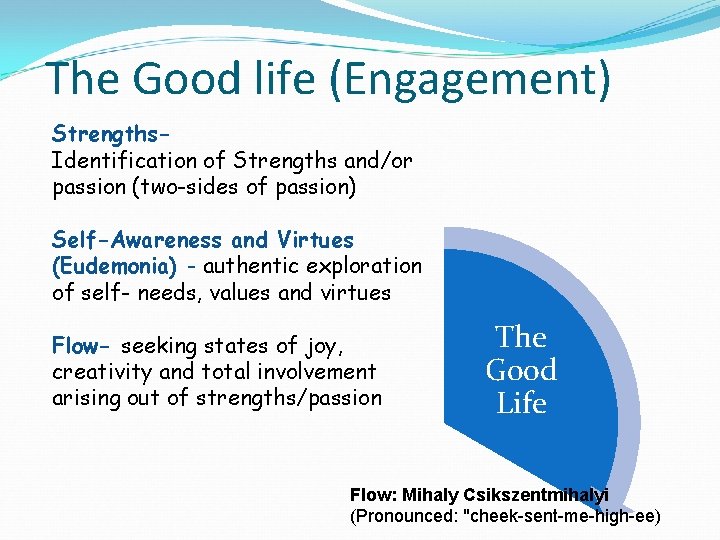
The Good life (Engagement) Strengths. Identification of Strengths and/or passion (two-sides of passion) Self-Awareness and Virtues (Eudemonia) - authentic exploration of self- needs, values and virtues Flow- seeking states of joy, creativity and total involvement arising out of strengths/passion The Good Life Flow: Mihaly Csikszentmihalyi (Pronounced: "cheek-sent-me-high-ee)

The Meaningful Life Transcendence Service- using strengths/talents towards positive causes/institutions Relationships- Emotional responsiveness and intimacy Resilience- strength amidst troubles (meaning makers) Forgiveness – despair or decision The Meaningful Life “Forgiving is not easy; perhaps the only thing more difficult than forgiving is not forgiving” Daniel Klassen

Happier: Ch. 1 Focus Questions O Reflect on a couple of personal experiences where reaching a certain milestone (goal) did not bring you the emotional payoff you expected O How would you define happiness? O What ritual or habit could you form that would increase your happiness?
Happier: Ch. 2 Focus Questions O Time. In-1: Which quadrant (Rat Racer, Hedonist, Nilhist, O O Happiness) do you spend most of your time in? Time. In-2: Do you feel part of the rat race? Looking at your life from the outside, what advice would you give yourself? Time. In-3: Think of a time or experience where you lived as a hedonist. What were the costs and benefits of living this way? Time. In-4: Think back to a time when you felt nihilistic, unable to see beyond your current unhappiness. Had you been looking at the situation from the outside, what advice would you give yourself? Time. In-5: Think back to a period when you enjoyed both present and future benefit. Exercise 1: 4 Quadrants & Meditating
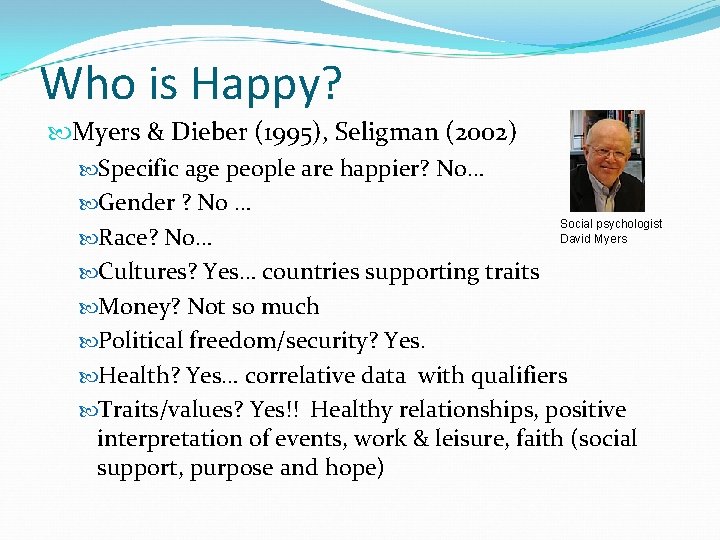
Who is Happy? Myers & Dieber (1995), Seligman (2002) Specific age people are happier? No… Gender ? No … Social psychologist David Myers Race? No… Cultures? Yes… countries supporting traits Money? Not so much Political freedom/security? Yes. Health? Yes… correlative data with qualifiers Traits/values? Yes!! Healthy relationships, positive interpretation of events, work & leisure, faith (social support, purpose and hope)
- Slides: 10