
The Han Dynasty Expands TOPIC 5 LESSON 5


- Slides: 9
The Han Dynasty Expands TOPIC 5 LESSON 5
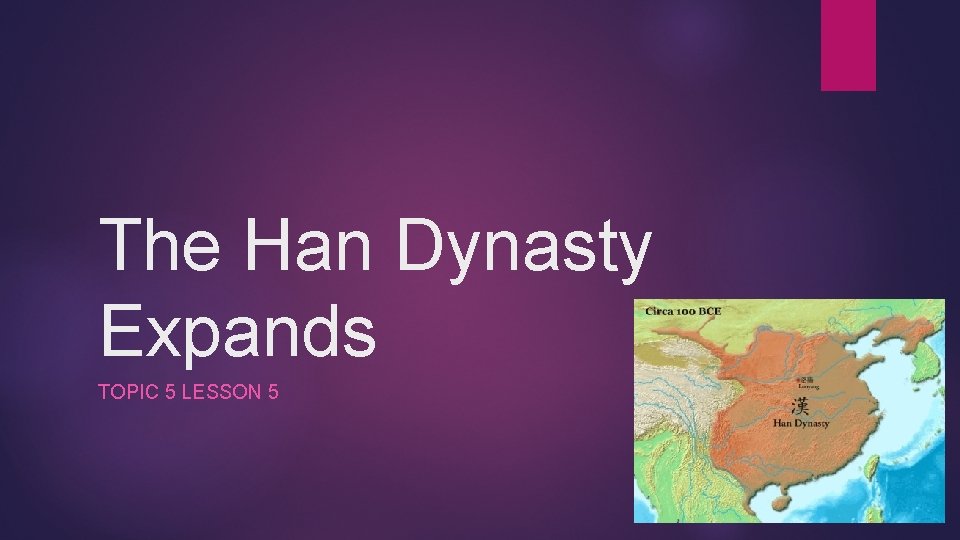
How did the Han Govern China? Han founded in 206 BCE by a rebel general named Liu Bang -ruled for about 400 years -today the largest ethnic group still calls themselves the “Han”
Reuniting & Expanding China • 1 st Han Emperor came from a poor family • Surrounded himself with capable advisors, helped him to hold power Example- advisor pointed out the Qin lost power because of cruel policies, thus encouraged mercy, proper behavior, learning, lower taxes & ended Qin rules. • With these changes, Han stayed in power & expanded China’s territory.
Emperor Wudi – • Dynasty’s 5 th emperor. • Ruled for more than 50 years. • Sent armies west to conquer land in Central Asia, north into the Korean Peninsula & South into now Vietnam.
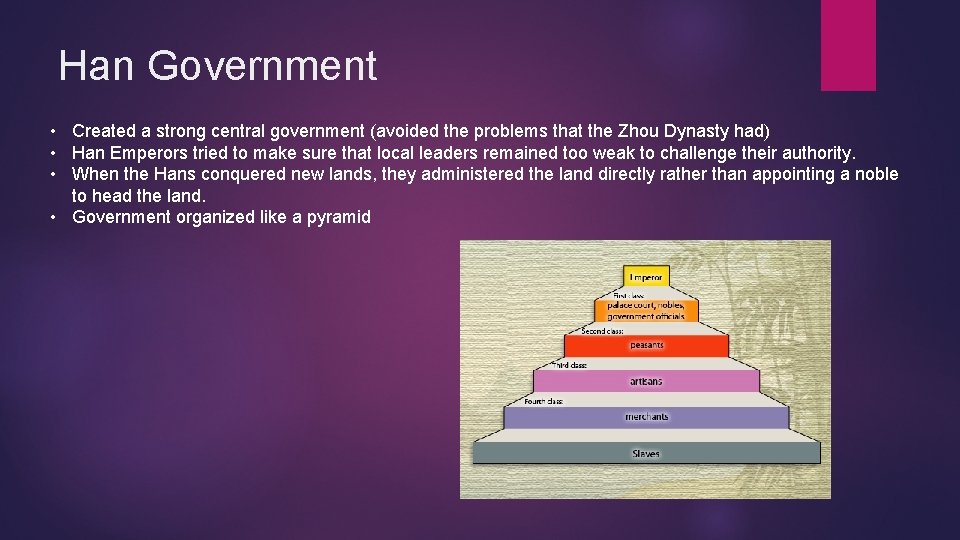
Han Government • Created a strong central government (avoided the problems that the Zhou Dynasty had) • Han Emperors tried to make sure that local leaders remained too weak to challenge their authority. • When the Hans conquered new lands, they administered the land directly rather than appointing a noble to head the land. • Government organized like a pyramid
How did Civil Service Strengthen the Han Government? Civil service system: system of government employees mainly selected for their skills & knowledge • • In the first 200 years of Han rule, civil service system grew to more than 130, 000 officials. Positions NOT hereditary Officials appointed based off of recommendations Used exams based off the ideas of Confucius to find talented officials for the positions • • Officials enjoyed high salaries and comfortable lives Wore special clothes to indicate their ranks Collected taxes, organized labor, enforced laws Officials powers were limited for protection ( could not serve in their home district)
Decline of the Han • At the height of the Han, dynasty ruled over 60 million people • Central government soon weakened & warlords competed for power. • Hans lost power & disunity remained for several centuries.
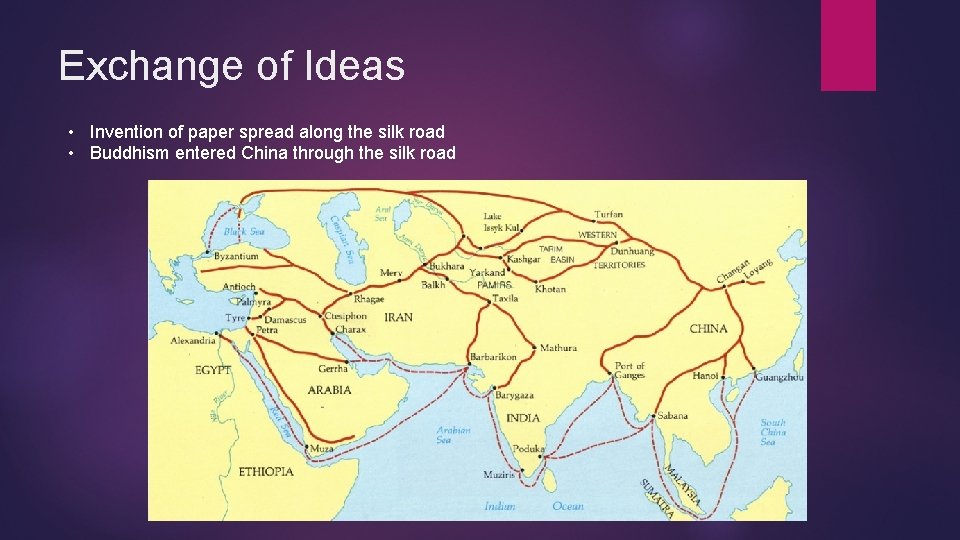
The Silk Road • • • One of the longest lasting contributions of the Han Dynasty Network of trade routes that crossed Asia, eventually connecting China to Southwest Asia Traded goods & ideas Most important good was silk Made from the cacoon of caterpillars called silk worms Strong, soft & can be died any colors Only the Chinese knew how to make silk, guarded the secret Was illegal to export silk worms Towards the end of the Han dynasty, began to send silk ambassadors world wide What did China import while exporting silk? • Horses (strong from central Asia) • Grapes, sesame, onion • Elephants, lions, ostriches
Exchange of Ideas • Invention of paper spread along the silk road • Buddhism entered China through the silk road