
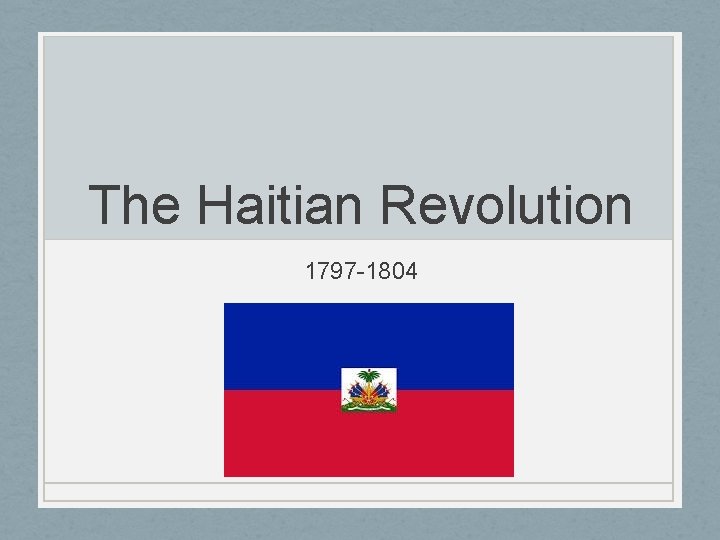
The Haitian Revolution 1797 1804 Overview slave revolt
- Slides: 12
The Haitian Revolution 1797 -1804
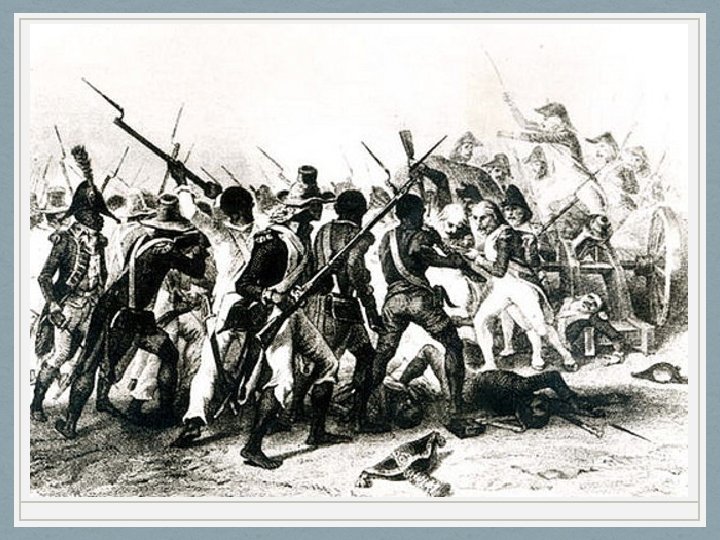
Overview • slave revolt in French colony of Saint-Domingue • culminated in elimination of slavery and founding of a state • most successful slave rebellion ever • involved white colonists (blancs), free blacks (gen de couleur libres), and African-born slaves • estimated that 350 000 Haitians and 50 000 Europeans died in the conflict • influenced slave rebellions in US and Great Britain
Causes • by 1740 s, Saint-Domingue, along with Jamaica, had become main supplier of world’s sugar • slave owners outnumbered by slaves 10: 1 • Saint-Domingue produced 60% of world’s coffee and 40% of world’s sugar, yet colony did not benefit • Dutty Boukman (high priest of vodou) initiated the revolt within weeks, 100 000 slaves joined revolt, 4000 Whites killed, 180 sugar plantations burned
Consequences • by 1792, slaves controlled 1/3 of island • to quell rebellion, Assembly granted rights to free men of colour Europe and US shocked • France sent 6000 soldiers to island • Great Britain and Spain, who controlled rest of Hispaniola, supplied rebels with food, ammunition, medicine, and naval and military support against France
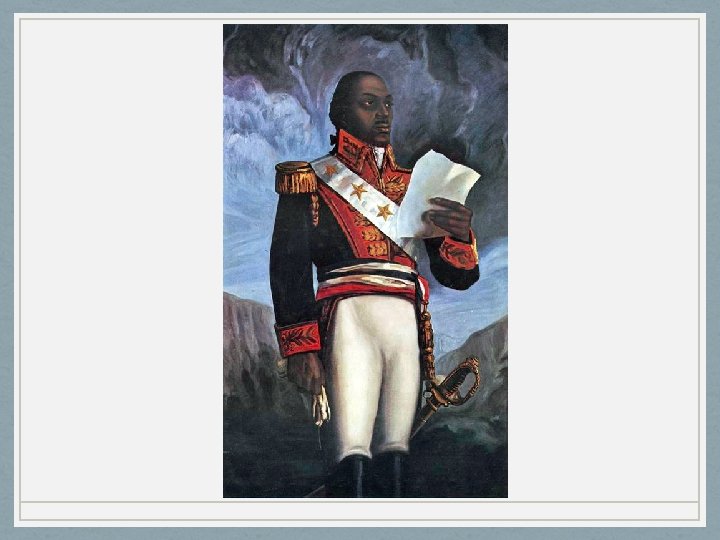
Toussaint L’Ouverture • successful Black commander was Toussaint L’Ouverture, a self-educated former domestic slave • restored control to France after fighting Spanish and British (originally with Spain) • ruled country as effective autonomous entity • 1801 Napoleon sent brother in law Charles Leclerc to restore French rule in area (had instructions to restore slavery) • many of Toussaint’s allies join Leclerc • Toussaint captured and dies in prison in France
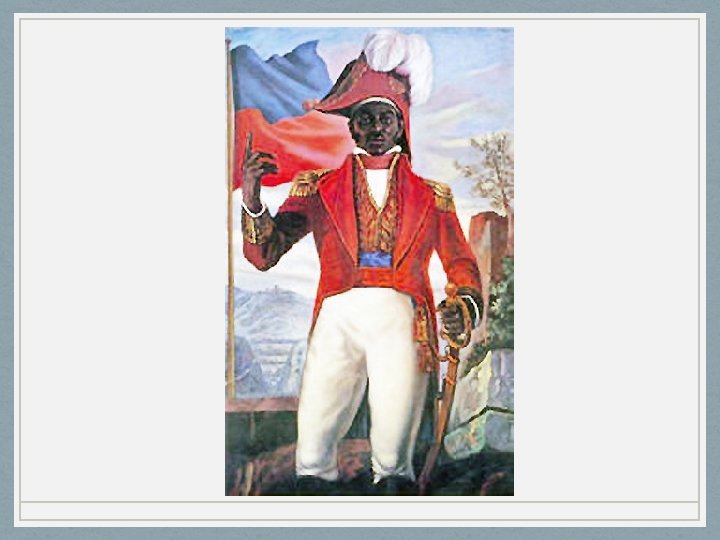
Jacques Dessalines • Napoleon became concerned with European armies and withdrew most troops from colonies • Dessalines, who defected during Touissant’s time, led rebellion and defeated French at Battle of Vertières against Leclerc’s successor, Rochambeau • chosen by council of generals to be governor-general • wanted to rebuild country adopted serfdom, every citizen had to be labourer or soldier, all labourers bound to a plantation • abolished the whip and shortened working day by third to avoid appearance of slavery
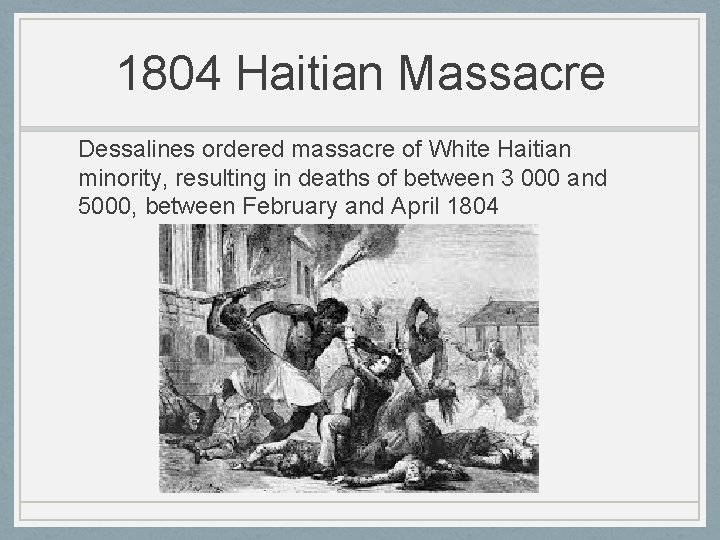
1804 Haitian Massacre Dessalines ordered massacre of White Haitian minority, resulting in deaths of between 3 000 and 5000, between February and April 1804
Aftermath • country still affected by patterns of French rule • Mulatto descendants and wealthy free men, who orchestrated revolution, became Haitian elite • Haitian elite identified more with colonists • another two-caste society created
Independent Haiti • 1825 state compromised when forced to pay 150 million gold francs to French slaveholders to receive French recognition and economic isolation • due to weak economy, Haiti, under President Jean -Pierre Boyer, invaded Dominican Republic in 1822 (22 year occupation) • Haiti forced to take loan from France • France continued slavery in French Guiana, Martinique, and Guadeloupe