
The Guthega skink By Elizabeth Life cycle The
The Guthega skink By Elizabeth
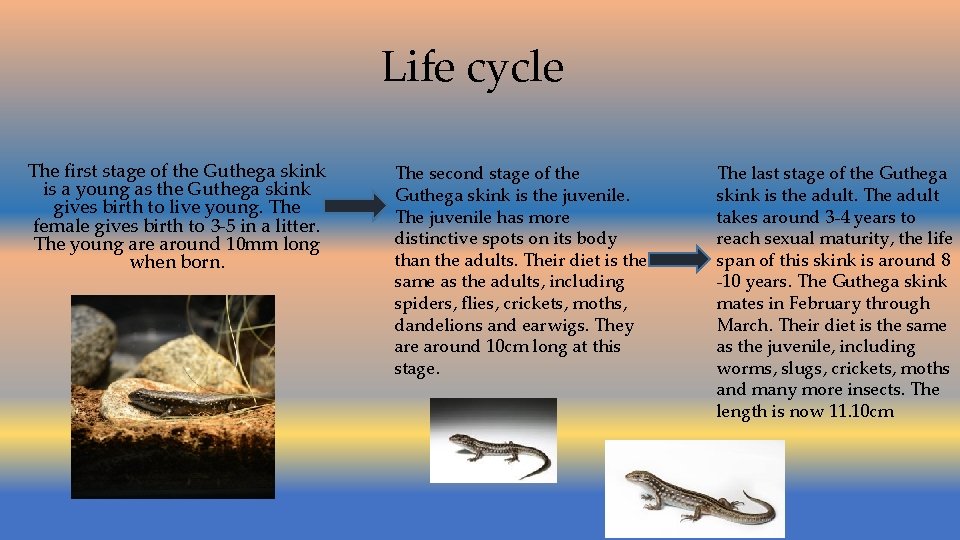
Life cycle The first stage of the Guthega skink is a young as the Guthega skink gives birth to live young. The female gives birth to 3 -5 in a litter. The young are around 10 mm long when born. The second stage of the Guthega skink is the juvenile. The juvenile has more distinctive spots on its body than the adults. Their diet is the same as the adults, including spiders, flies, crickets, moths, dandelions and earwigs. They are around 10 cm long at this stage. The last stage of the Guthega skink is the adult. The adult takes around 3 -4 years to reach sexual maturity, the life span of this skink is around 8 -10 years. The Guthega skink mates in February through March. Their diet is the same as the juvenile, including worms, slugs, crickets, moths and many more insects. The length is now 11. 10 cm
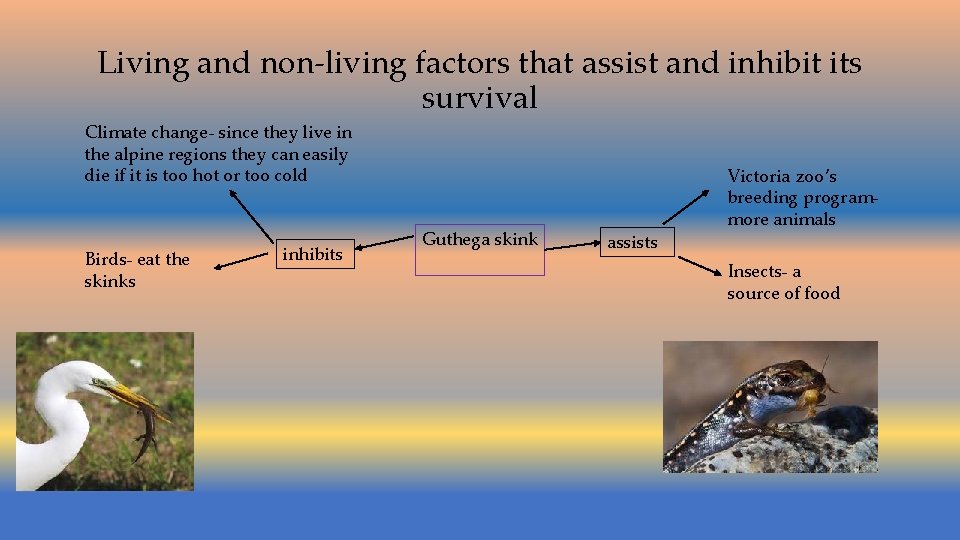
Living and non-living factors that assist and inhibit its survival Climate change- since they live in the alpine regions they can easily die if it is too hot or too cold Birds- eat the skinks inhibits Guthega skink assists Victoria zoo’s breeding programmore animals Insects- a source of food
One element that assist its survival and what life stages it is beneficial to Victoria zoo’s breeding program is captive breeding the Guthega skink and releasing them into the wild. This affects the young, juvenile and adult because when breeding in captivity it provides all stages of life from predators such as birds. It also gives the skink a safe spot to give birth without the risk of death. It also means that the young, juvenile and adult can easily find and eat their food because the prey can not run away from the Guthega skink.
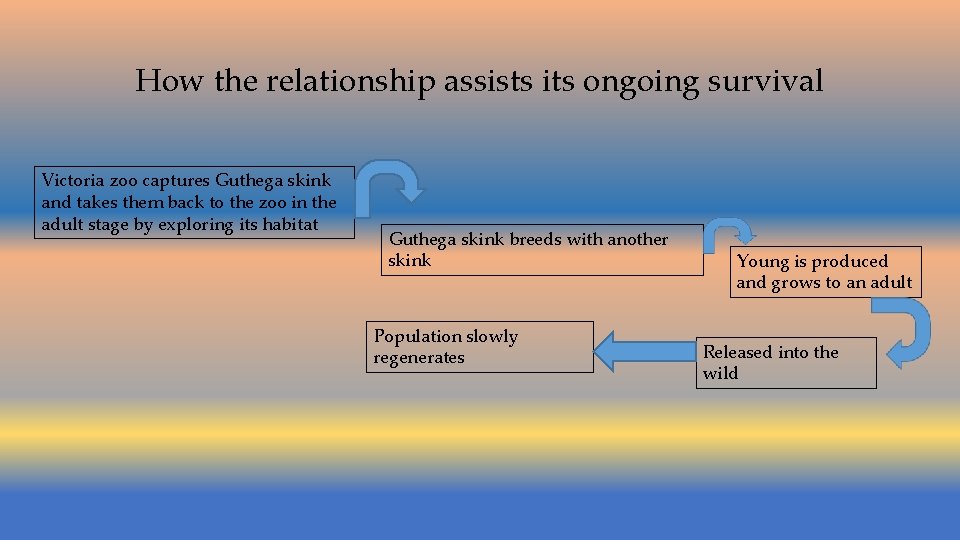
How the relationship assists its ongoing survival Victoria zoo captures Guthega skink and takes them back to the zoo in the adult stage by exploring its habitat Guthega skink breeds with another skink Population slowly regenerates Young is produced and grows to an adult Released into the wild
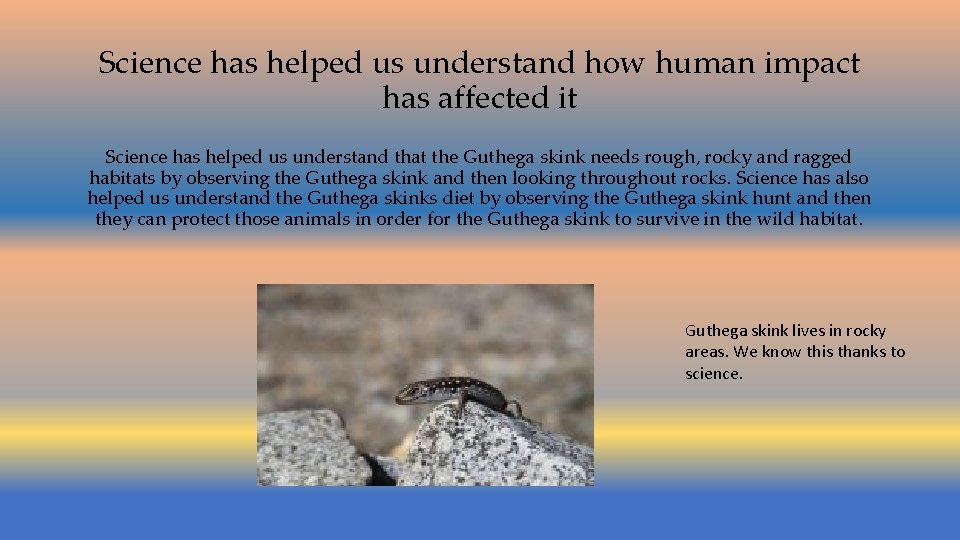
Science has helped us understand how human impact has affected it Science has helped us understand that the Guthega skink needs rough, rocky and ragged habitats by observing the Guthega skink and then looking throughout rocks. Science has also helped us understand the Guthega skinks diet by observing the Guthega skink hunt and then they can protect those animals in order for the Guthega skink to survive in the wild habitat. Guthega skink lives in rocky areas. We know this thanks to science.
actions that have taken place by scientists and how these actions will improve its ongoing survival Action- The Victoria zoo breeding program Reason- the breeding program means that there will be more animals in the wild then the population slowly regenerates. Action- husbandry protocol Reason- by putting rules in place of no killing the animal and no destroying the animals habitat it has a larger chance of surviving. Action- monitoring the environmental conditions Reason- if there is a fire or climate change they can find and rescue all the Guthega skinks they can find. Action- raising community awareness Reason- if they raise awareness people might give them a donation and then zoos Victoria can by new equipment to find and breed the skinks.
- Slides: 7