
The Growth of the MRI in Protoplanetary Disks

- Slides: 31
The Growth of the MRI in Protoplanetary Disks Mark Wardle Macquarie University Sydney, Australia Protoplanetary disks Magnetic diffusion MRI with diffusion Ionisation equilibrium Live and Dead zones
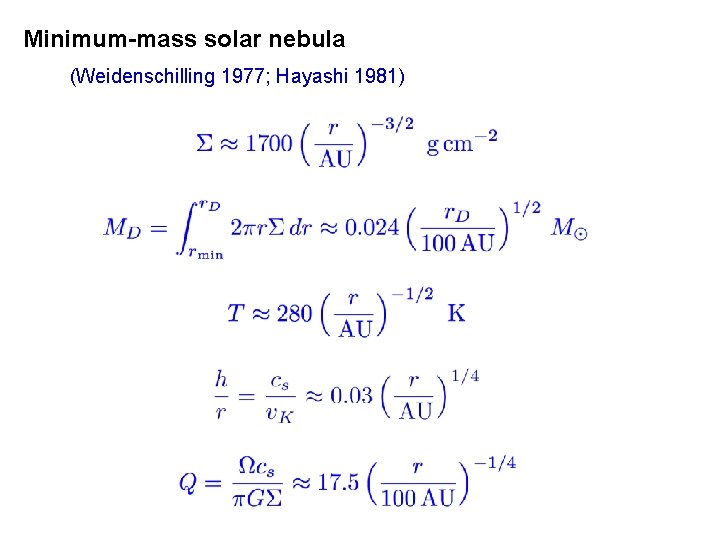
Minimum-mass solar nebula (Weidenschilling 1977; Hayashi 1981)
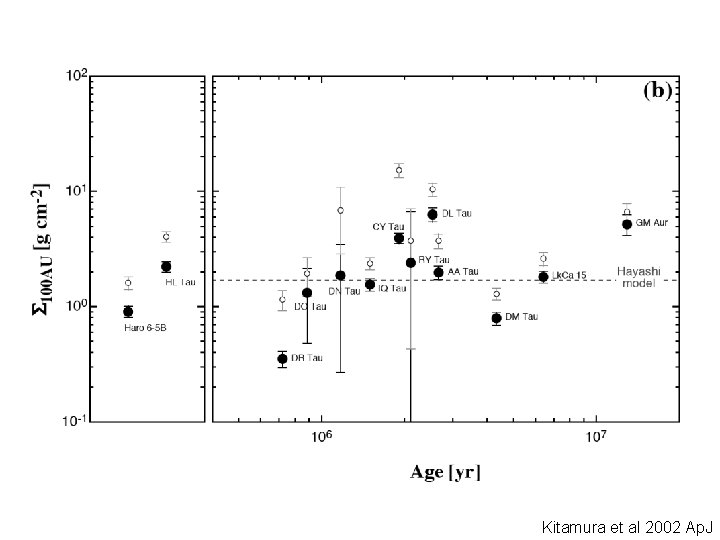
Kitamura et al 2002 Ap. J
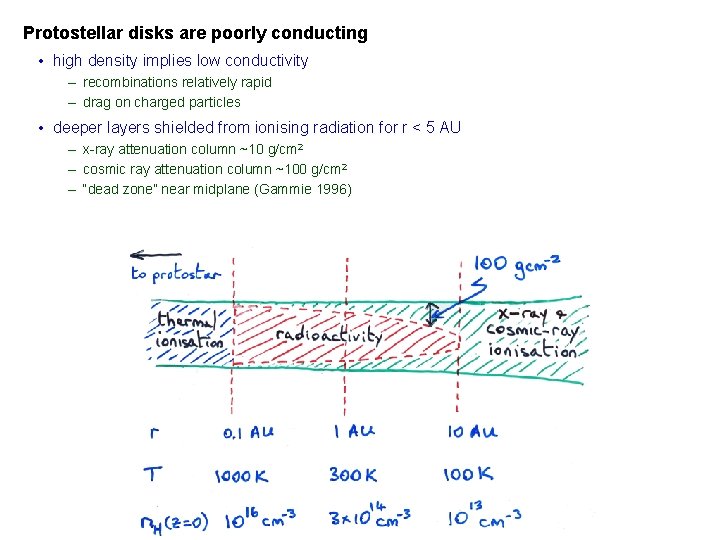
Protostellar disks are poorly conducting • high density implies low conductivity – recombinations relatively rapid – drag on charged particles • deeper layers shielded from ionising radiation for r < 5 AU – x-ray attenuation column ~10 g/cm 2 – cosmic ray attenuation column ~100 g/cm 2 – “dead zone” near midplane (Gammie 1996)
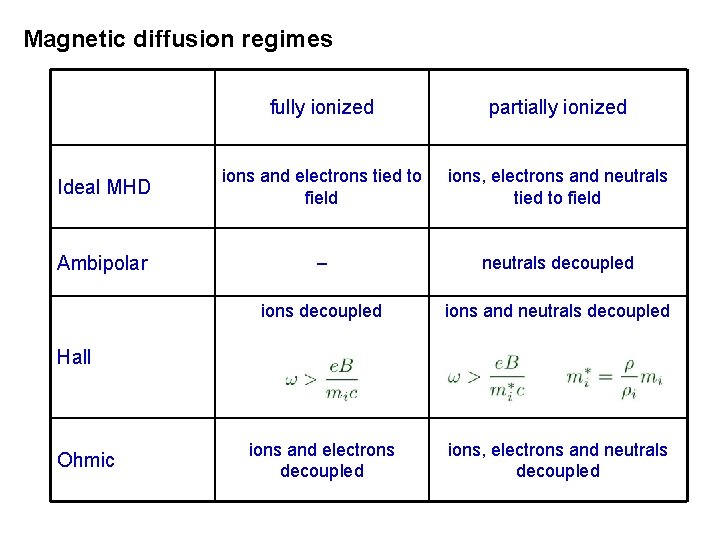
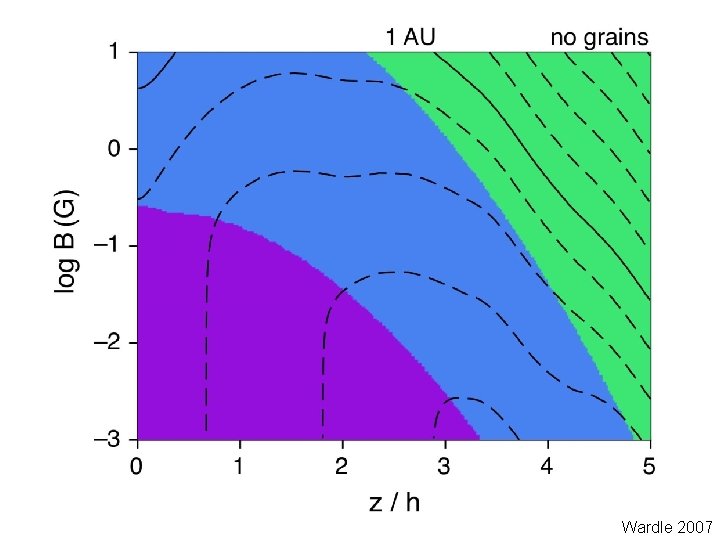
Magnetic diffusion regimes fully ionized partially ionized Ideal MHD ions and electrons tied to field ions, electrons and neutrals tied to field Ambipolar – neutrals decoupled ions and electrons decoupled ions, electrons and neutrals decoupled Hall Ohmic
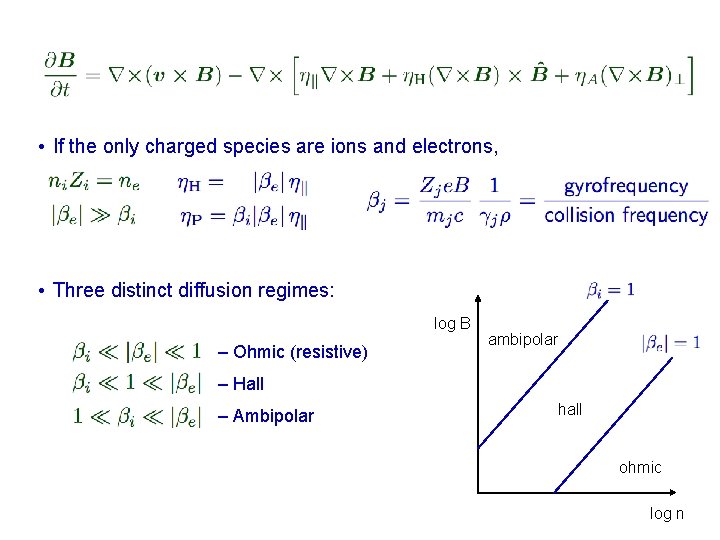
• If the only charged species are ions and electrons, • Three distinct diffusion regimes: log B – Ohmic (resistive) ambipolar – Hall – Ambipolar hall ohmic log n
Wardle 2007
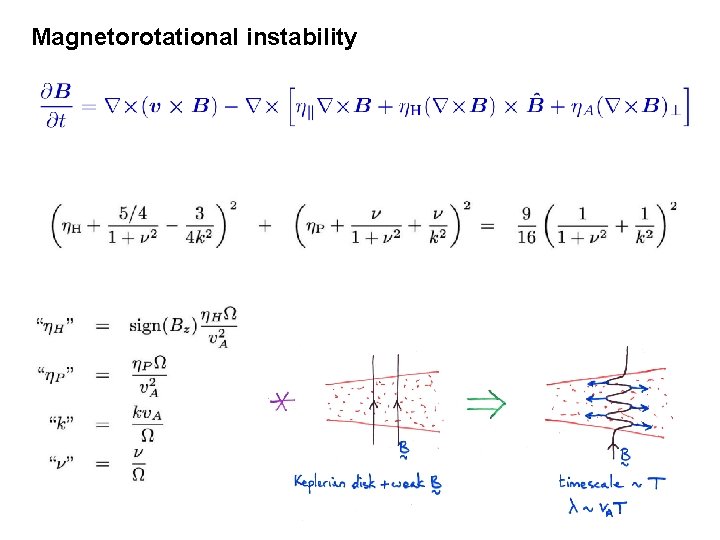
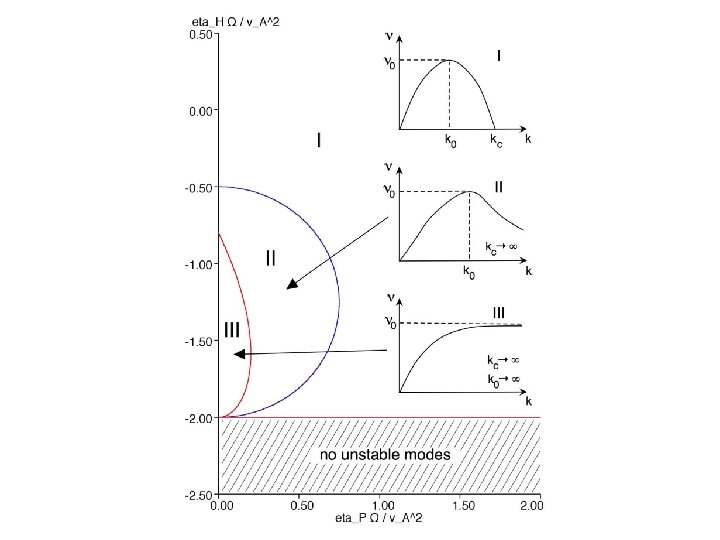
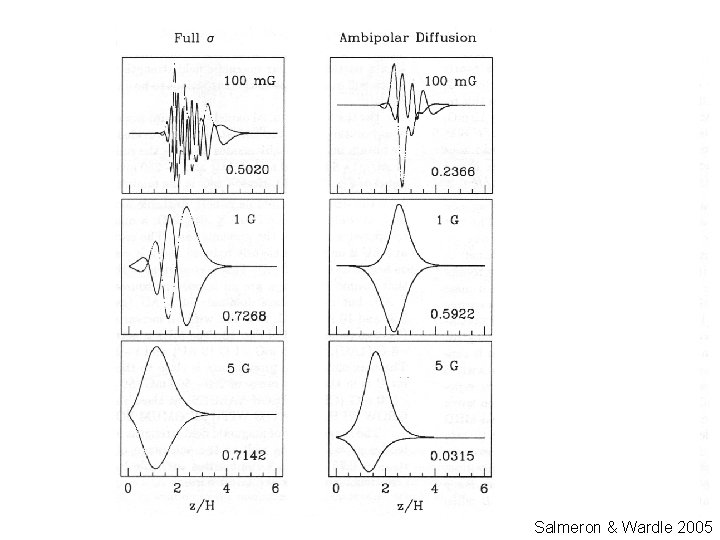
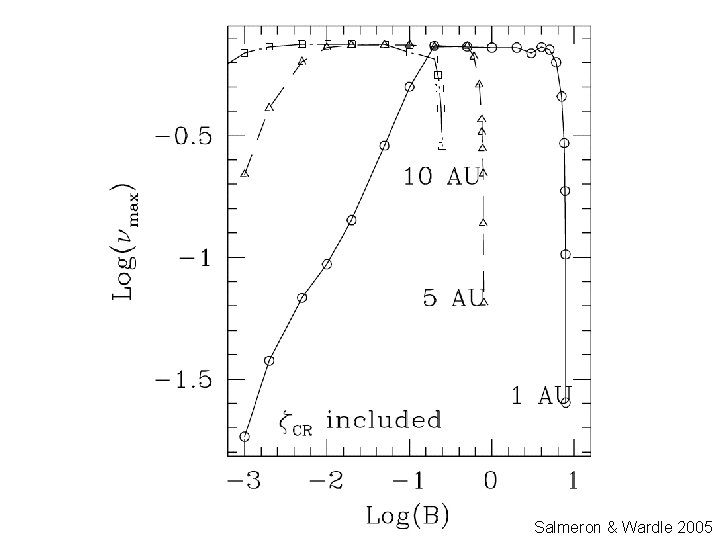
Magnetorotational instability
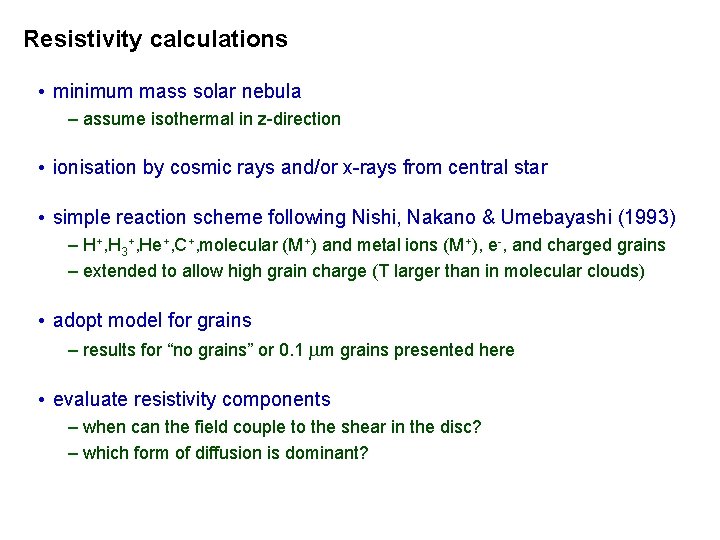
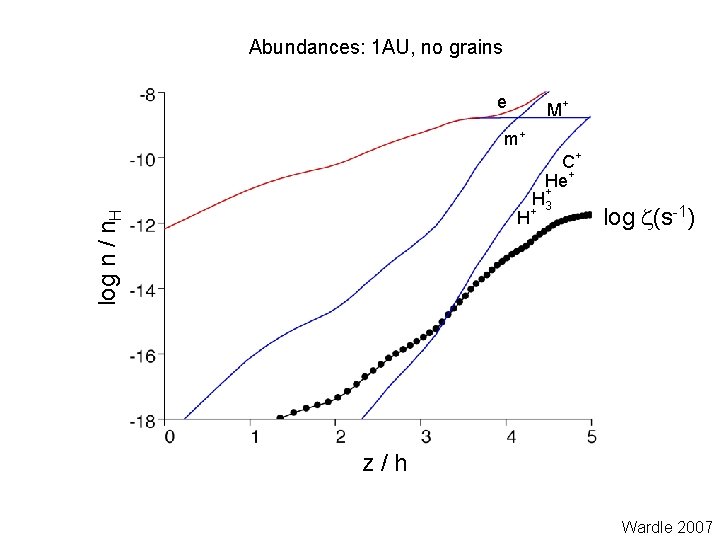
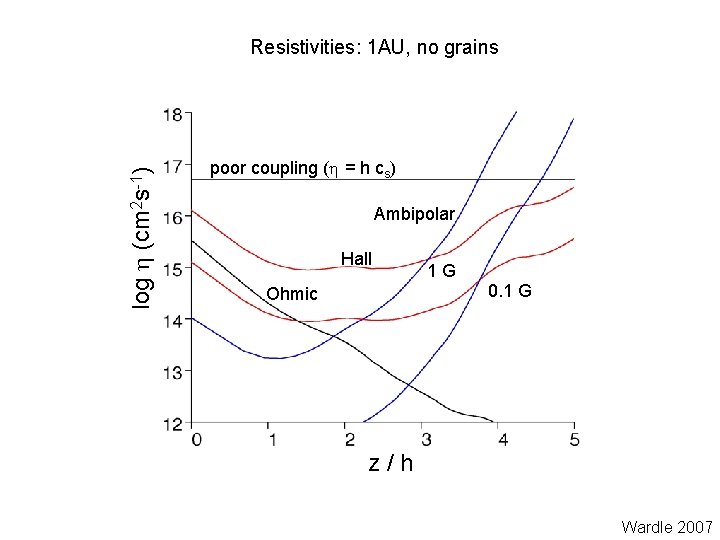
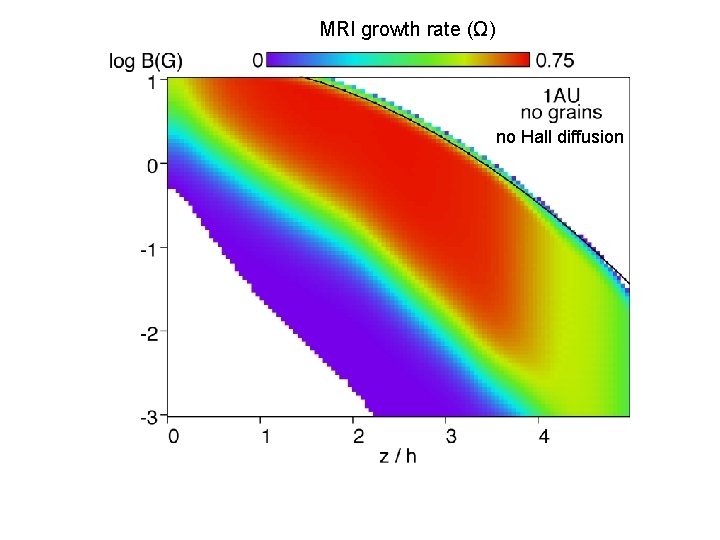
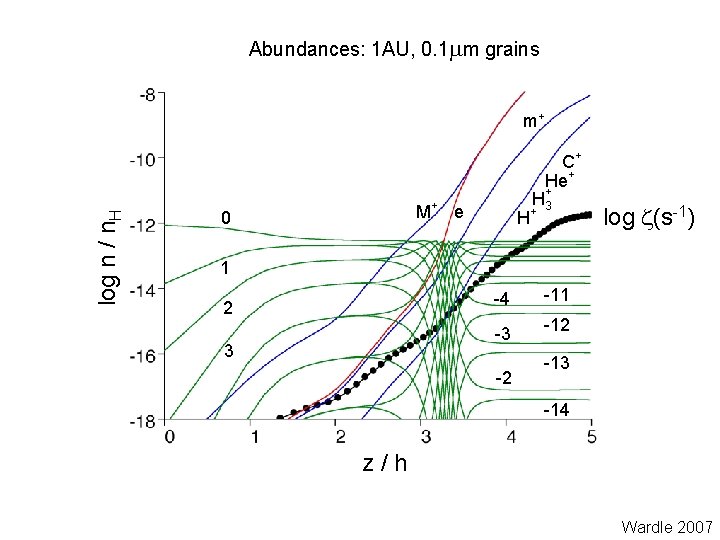
Resistivity calculations • minimum mass solar nebula – assume isothermal in z-direction • ionisation by cosmic rays and/or x-rays from central star • simple reaction scheme following Nishi, Nakano & Umebayashi (1993) – H+, H 3+, He+, C+, molecular (M+) and metal ions (M+), e-, and charged grains – extended to allow high grain charge (T larger than in molecular clouds) • adopt model for grains – results for “no grains” or 0. 1 mm grains presented here • evaluate resistivity components – when can the field couple to the shear in the disc? – which form of diffusion is dominant?
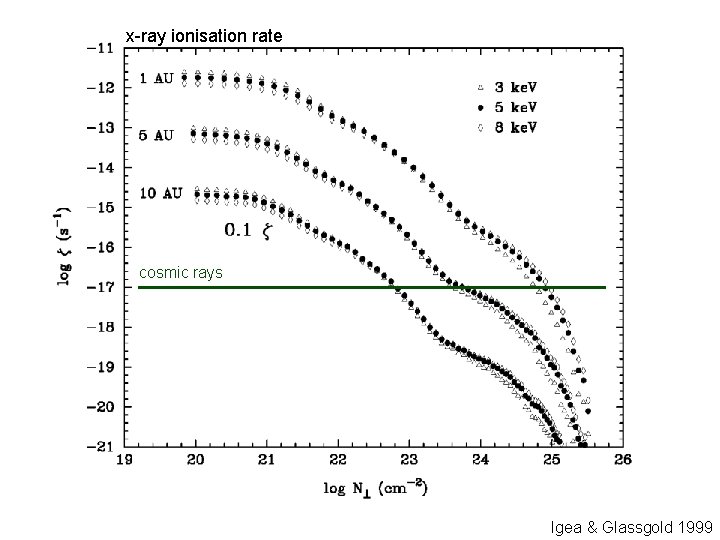
x-ray ionisation rate cosmic rays Igea & Glassgold 1999
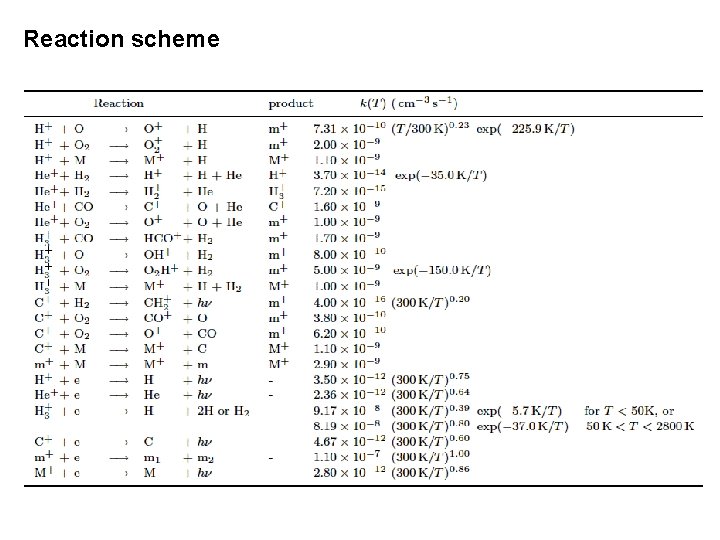
Reaction scheme
Abundances: 1 AU, no grains e M+ m+ C+ He+ H 3+ log n / n. H H+ log z(s-1) z/h Wardle 2007
log (cm 2 s-1) Resistivities: 1 AU, no grains poor coupling ( = h cs) Ambipolar Hall Ohmic 1 G 0. 1 G z/h Wardle 2007
Wardle 2007
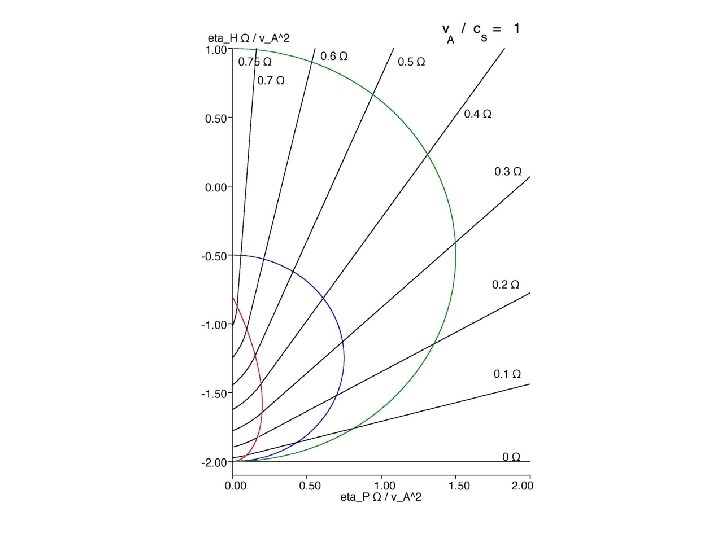
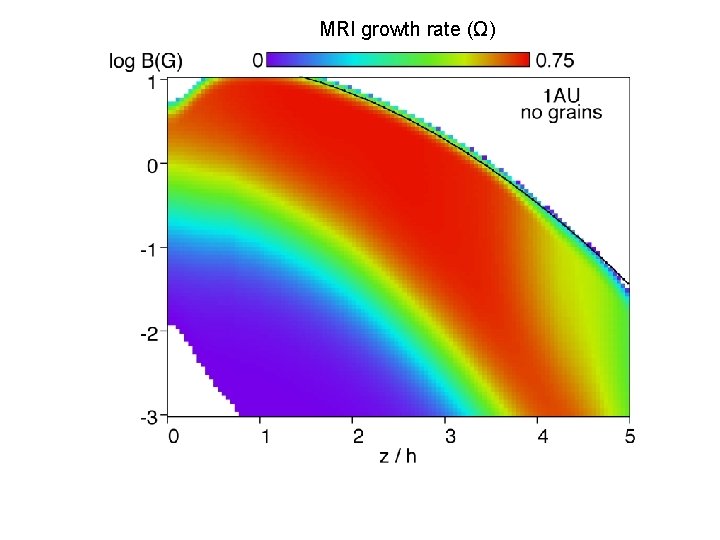
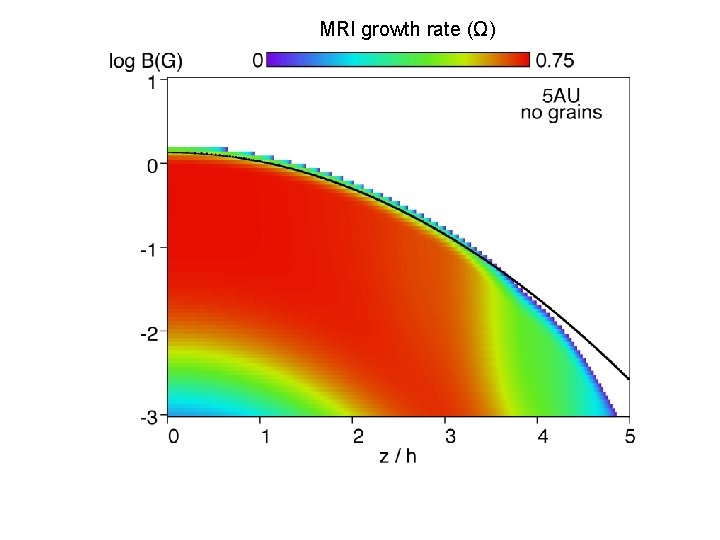
MRI growth rate (Ω)
MRI growth rate (Ω) no Hall diffusion
Salmeron & Wardle 2005
Salmeron & Wardle 2005
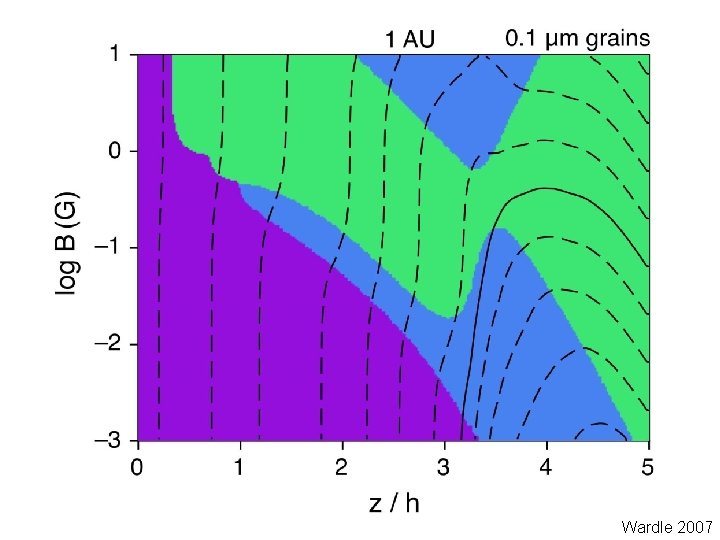
Abundances: 1 AU, 0. 1 mm grains m+ log n / n. H C+ He+ M 0 + H 3+ e H+ log z(s-1) 1 2 3 -4 -11 -3 -12 -2 -13 -14 z/h Wardle 2007
Wardle 2007
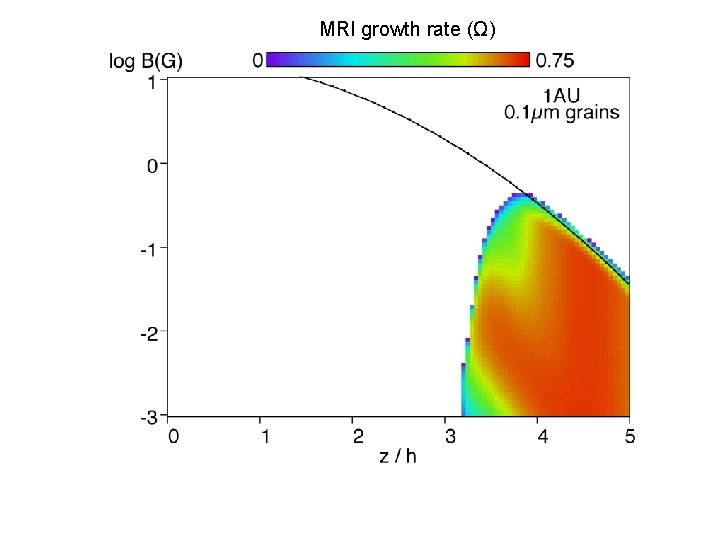
MRI growth rate (Ω)
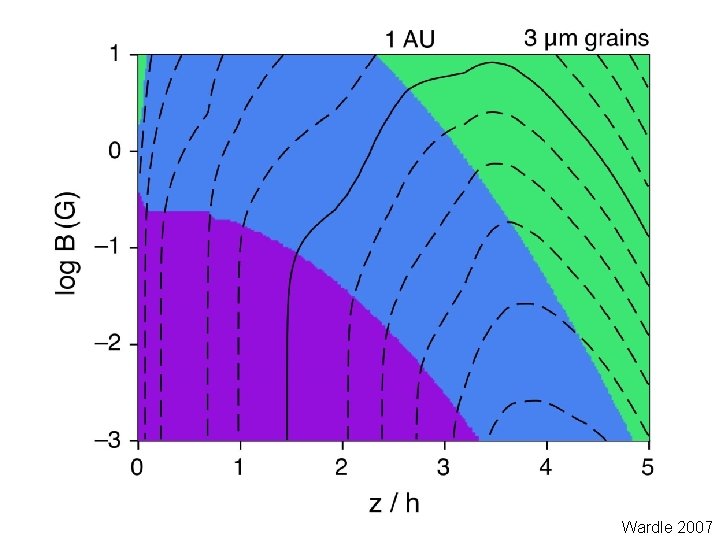
Wardle 2007
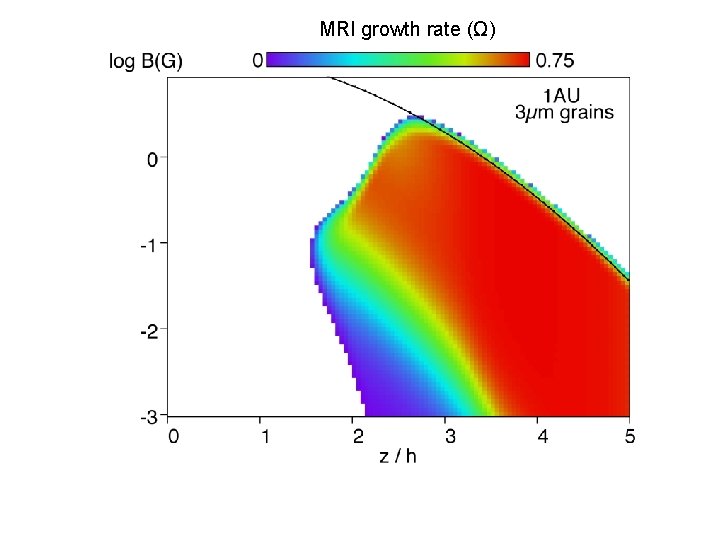
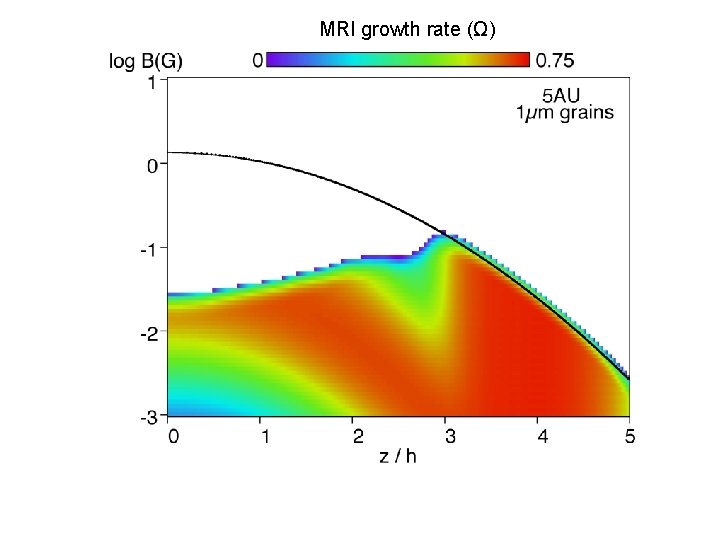
MRI growth rate (Ω)
MRI growth rate (Ω)
MRI growth rate (Ω)
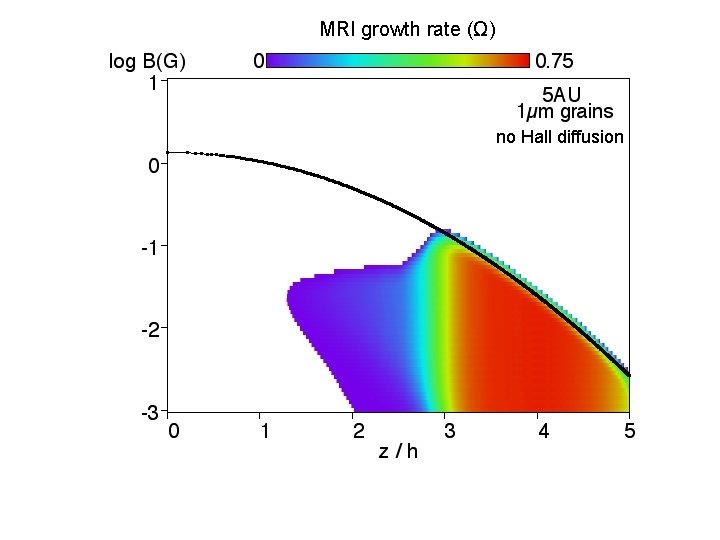
MRI growth rate (Ω) no Hall diffusion
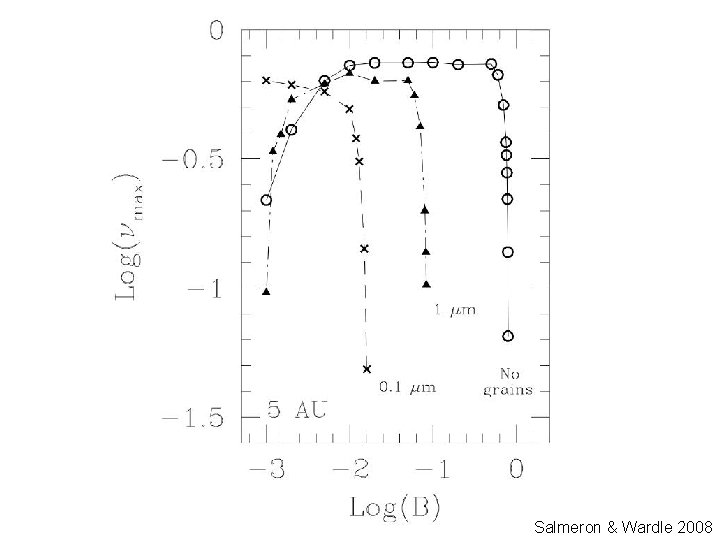
Salmeron & Wardle 2008
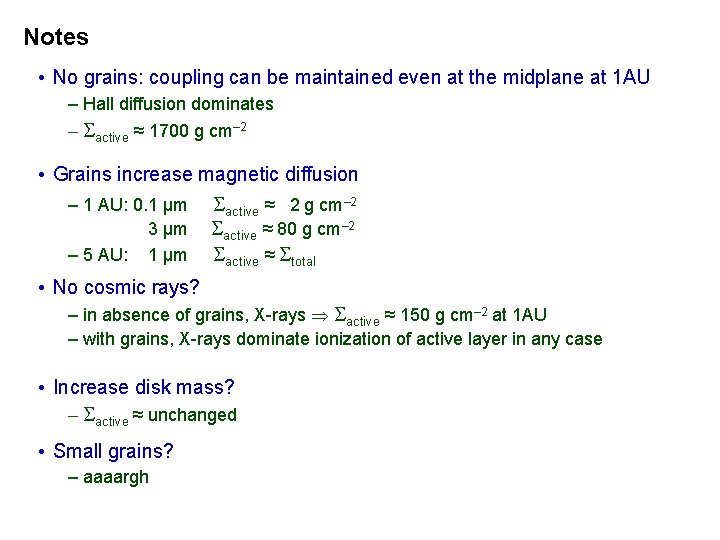
Notes • No grains: coupling can be maintained even at the midplane at 1 AU – Hall diffusion dominates – active ≈ 1700 g cm– 2 • Grains increase magnetic diffusion – 1 AU: 0. 1 µm active ≈ 2 g cm– 2 3 µm active ≈ 80 g cm– 2 – 5 AU: 1 µm active ≈ total • No cosmic rays? – in absence of grains, X-rays active ≈ 150 g cm– 2 at 1 AU – with grains, X-rays dominate ionization of active layer in any case • Increase disk mass? – active ≈ unchanged • Small grains? – aaaargh
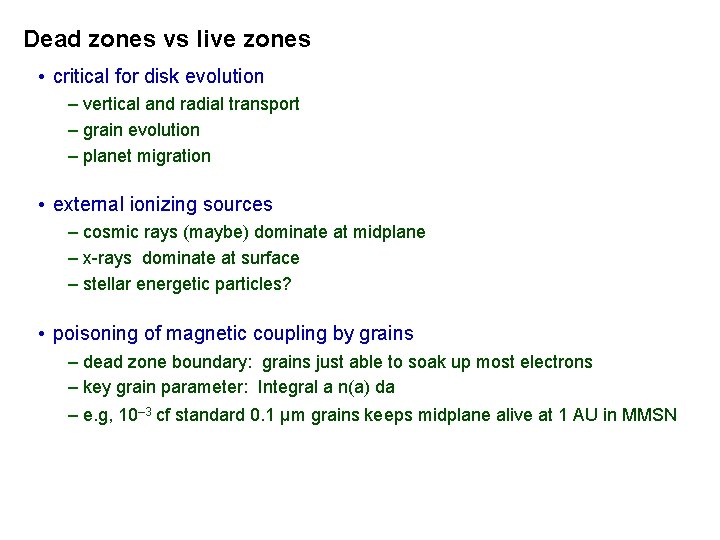
Dead zones vs live zones • critical for disk evolution – vertical and radial transport – grain evolution – planet migration • external ionizing sources – cosmic rays (maybe) dominate at midplane – x-rays dominate at surface – stellar energetic particles? • poisoning of magnetic coupling by grains – dead zone boundary: grains just able to soak up most electrons – key grain parameter: Integral a n(a) da – e. g, 10– 3 cf standard 0. 1 µm grains keeps midplane alive at 1 AU in MMSN