
The Growth of Plants Primary Growth and Secondary
- Slides: 19
The Growth of Plants Primary Growth and Secondary Growth
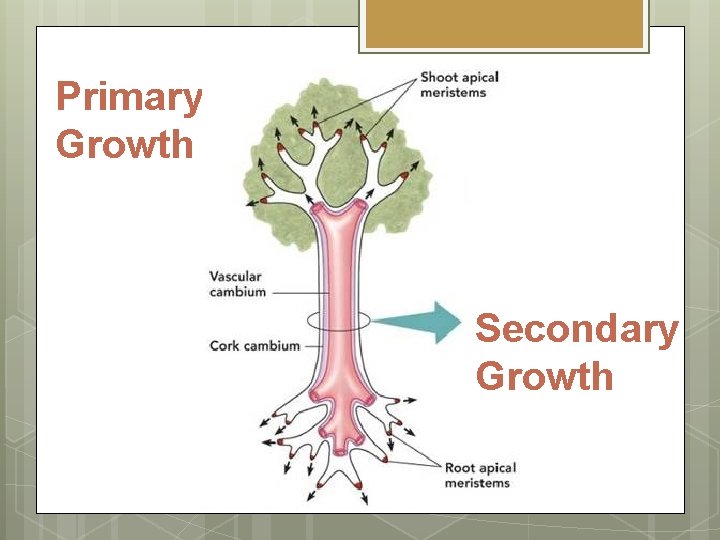
Primary Growth Secondary Growth
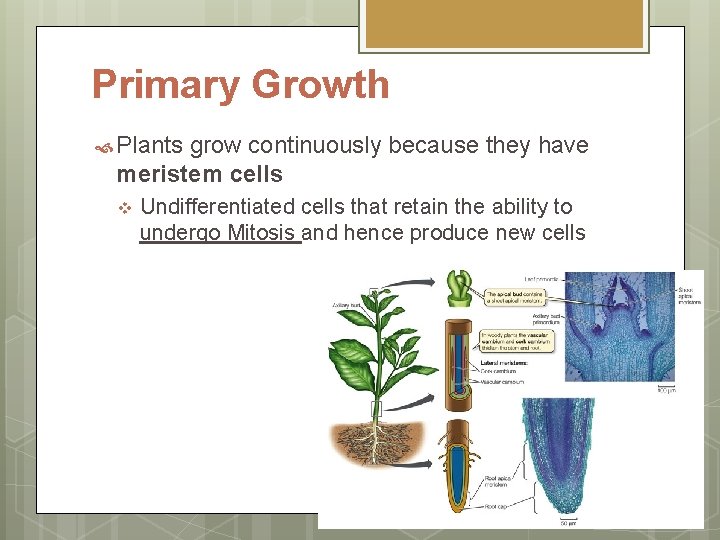
Primary Growth Plants grow continuously because they have meristem cells v Undifferentiated cells that retain the ability to undergo Mitosis and hence produce new cells
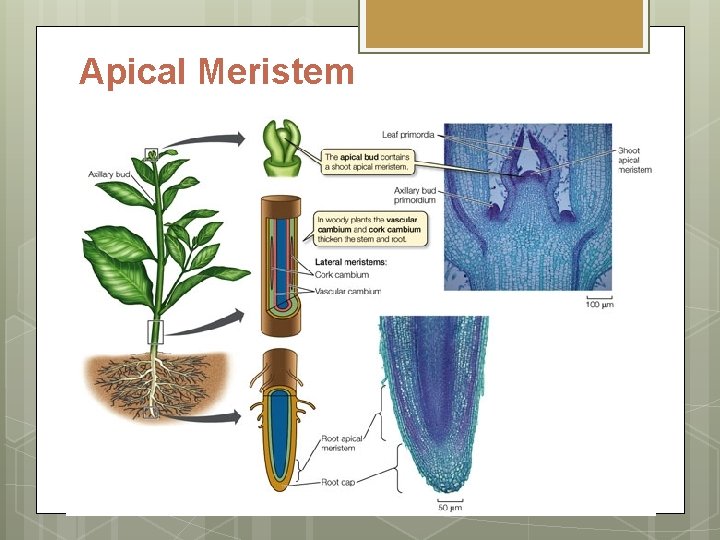
Apical Meristem
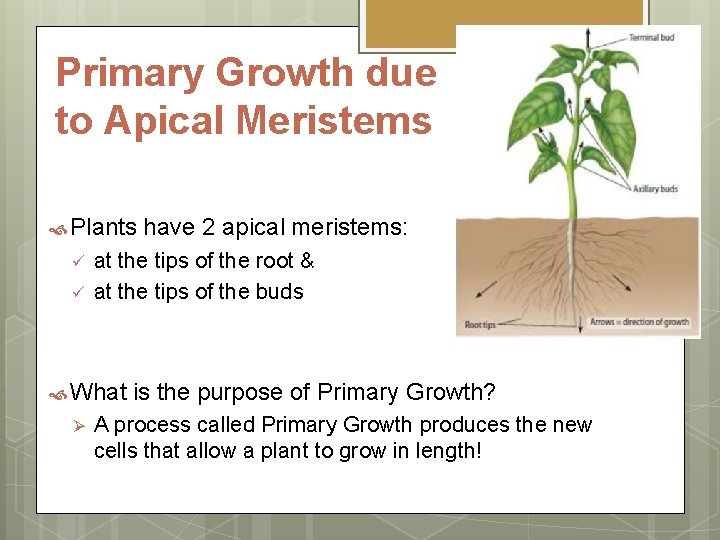
Primary Growth due to Apical Meristems Plants ü ü at the tips of the root & at the tips of the buds What Ø have 2 apical meristems: is the purpose of Primary Growth? A process called Primary Growth produces the new cells that allow a plant to grow in length!
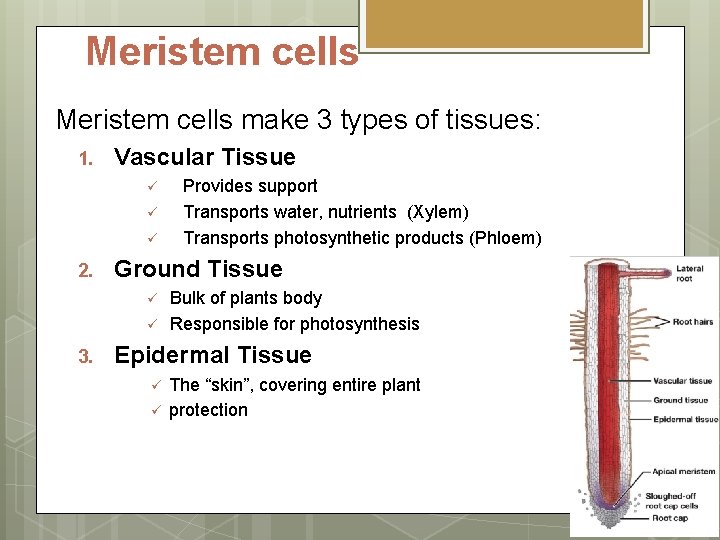
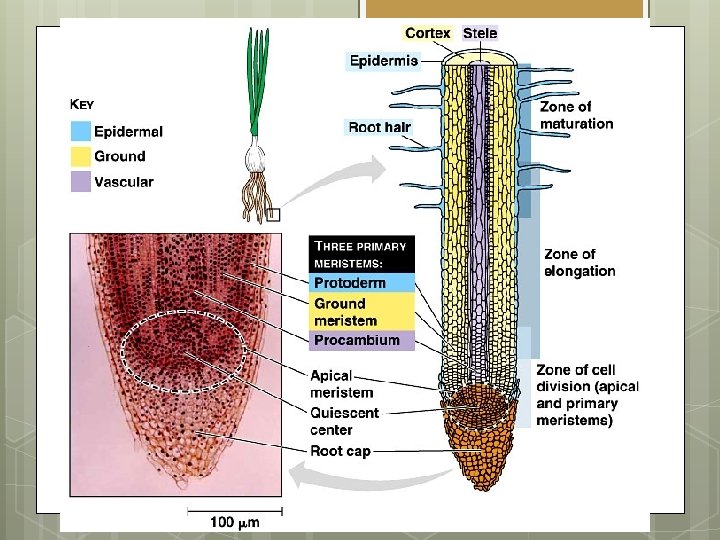
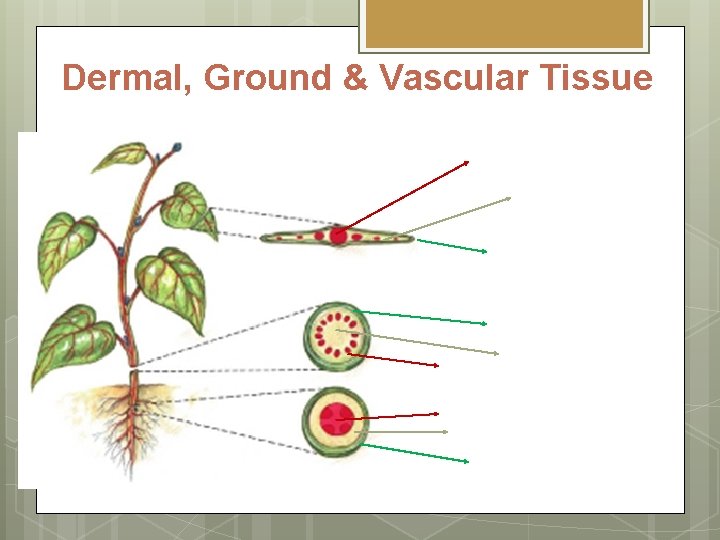
Meristem cells make 3 types of tissues: 1. Vascular Tissue ü ü ü 2. Ground Tissue ü ü 3. Provides support Transports water, nutrients (Xylem) Transports photosynthetic products (Phloem) Bulk of plants body Responsible for photosynthesis Epidermal Tissue ü ü The “skin”, covering entire plant protection
Dermal, Ground & Vascular Tissue
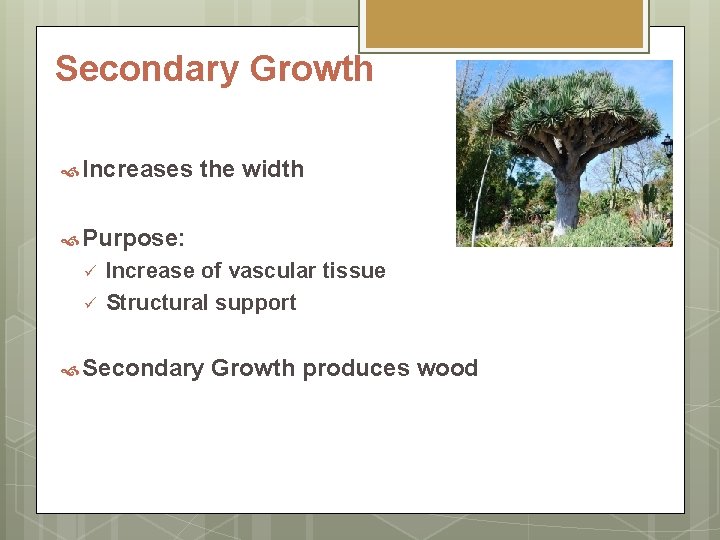
Secondary Growth Increases the width Purpose: ü ü Increase of vascular tissue Structural support Secondary Growth produces wood
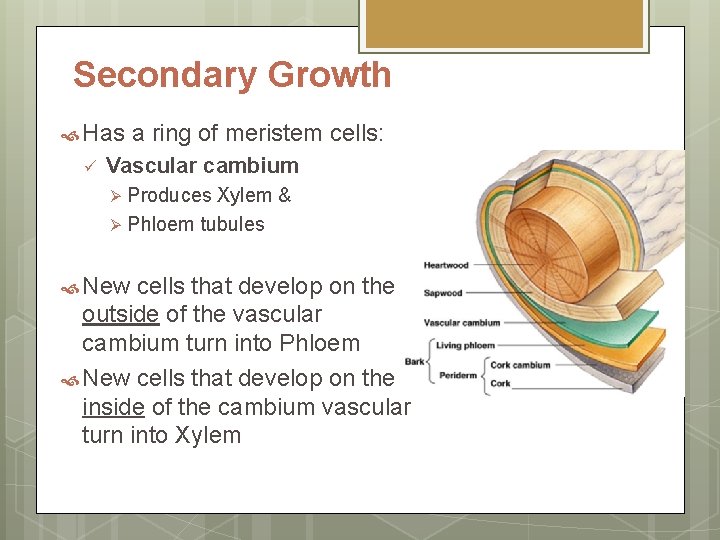
Secondary Growth Has ü a ring of meristem cells: Vascular cambium Produces Xylem & Ø Phloem tubules Ø New cells that develop on the outside of the vascular cambium turn into Phloem New cells that develop on the inside of the cambium vascular turn into Xylem
Secondary Growth
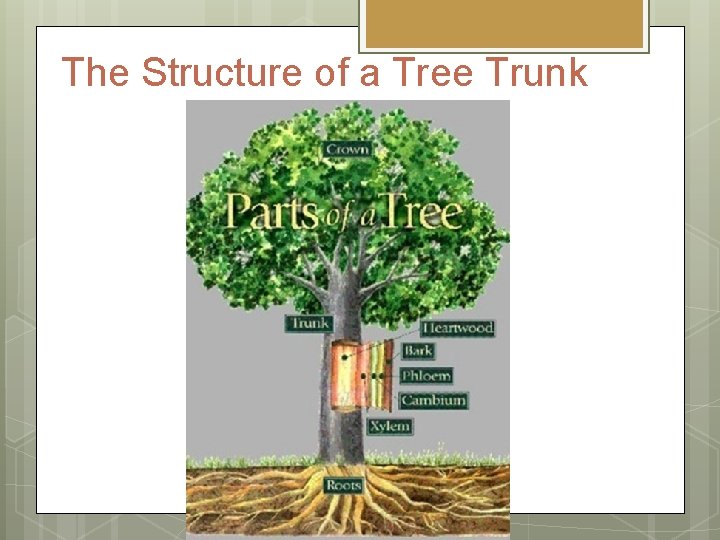
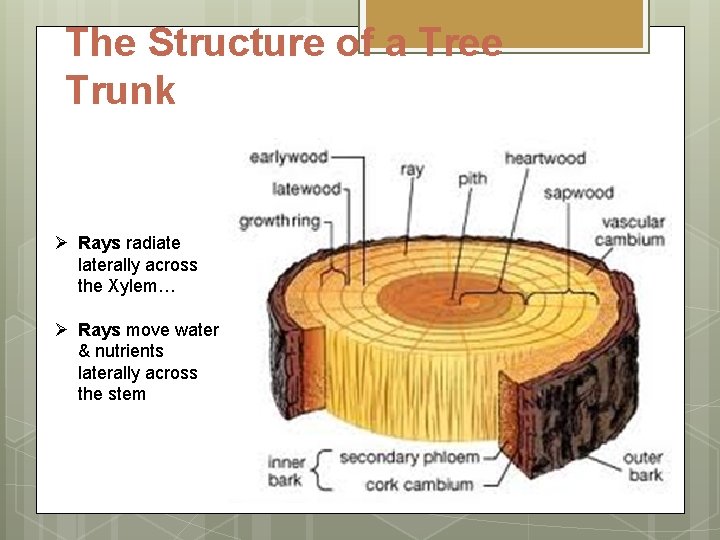
The Structure of a Tree Trunk
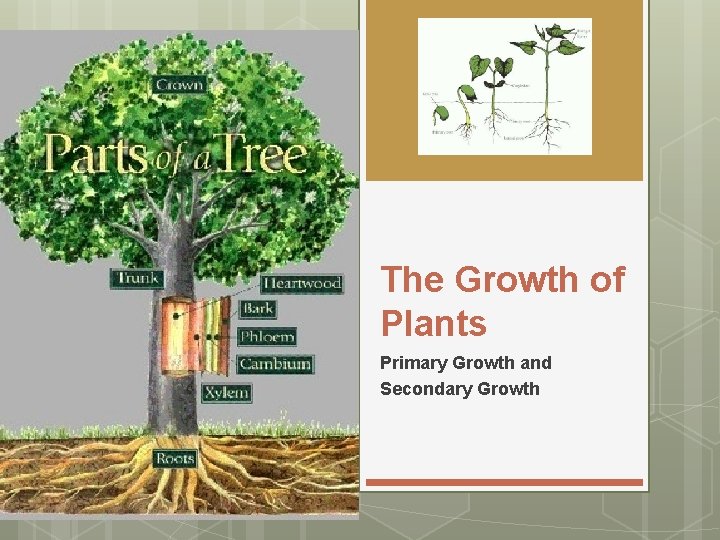
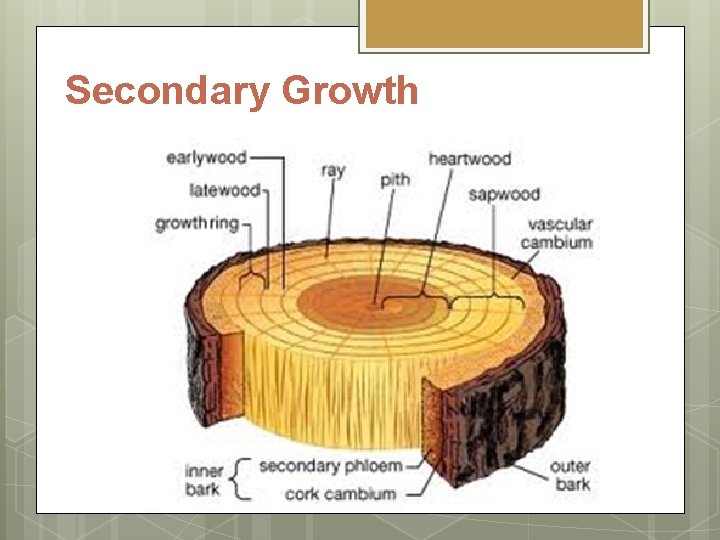
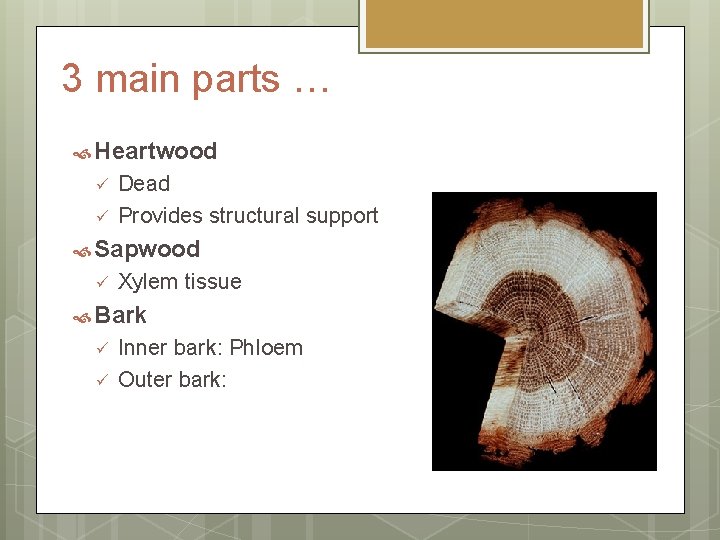
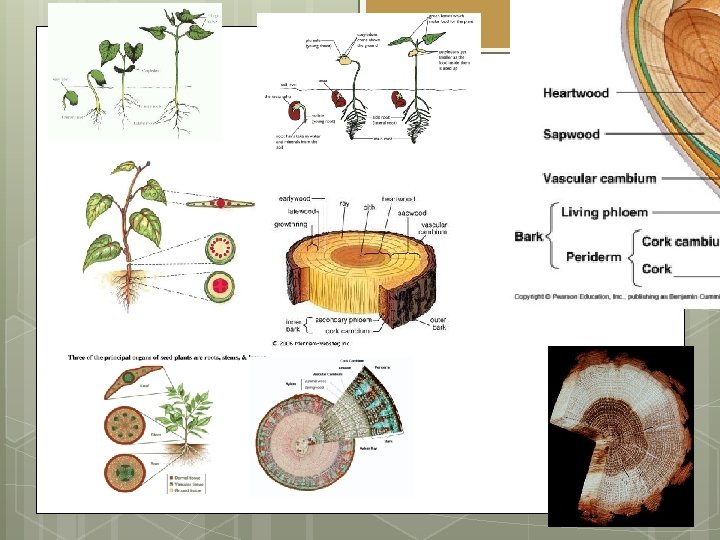
3 main parts … Heartwood ü ü Dead Provides structural support Sapwood ü Xylem tissue Bark ü ü Inner bark: Phloem Outer bark:
The Structure of a Tree Trunk Ø Rays radiate laterally across the Xylem… Ø Rays move water & nutrients laterally across the stem
Let’s draw the structures of a tree trunk … v v v Heartwood Vascular cambium Bark Xylem Phloem Rays
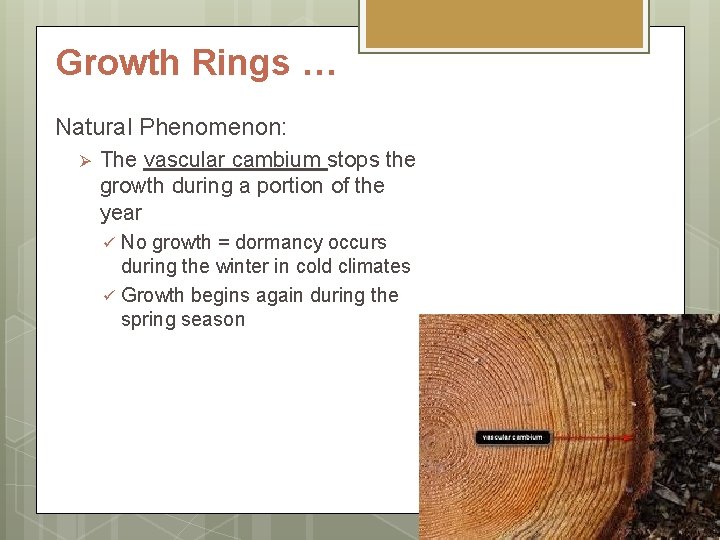
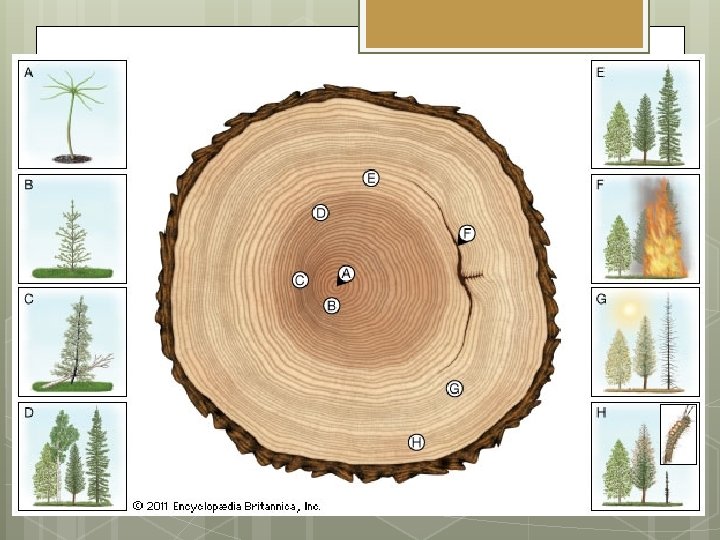
Growth Rings … Natural Phenomenon: Ø The vascular cambium stops the growth during a portion of the year No growth = dormancy occurs during the winter in cold climates ü Growth begins again during the spring season ü
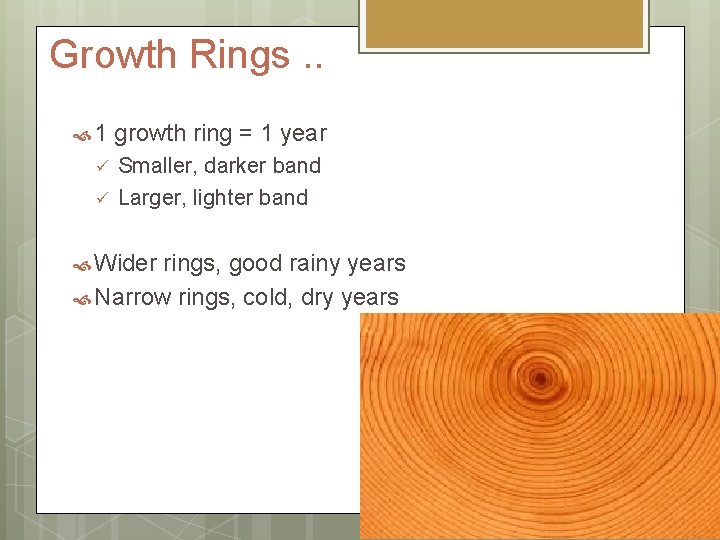
Growth Rings. . 1 growth ring = 1 year ü Smaller, darker band Larger, lighter band ü Wider rings, good rainy years Narrow rings, cold, dry years