
The Growth Inhibitory Role and Cell Membrane Association
The Growth Inhibitory Role and Cell Membrane Association of a Reptilian Insulin-Like Growth Factor Binding Protein Larissa Balogh Endocrine Laboratory California State University at Long Beach Research Advisor: Dr. Kevin M. Kelley
Insulin-like growth factors • Insulin-like growth factors (IGFs) are growthstimulatory peptides • IGF-I receptor activates cell growth • Insulin receptor transduces metabolic functions

INS/IGF Precursor (before vertebrate emergence) INS IGFBP introduced IGF (early vertebrates? ) X ? IGFBP Cell Membrane INS-Receptor (metabolic) IGF-Receptor (growth) Slide by Dr. Kevin Kelley

IGF-binding proteins • IGF-binding proteins (IGFBPs) are the integrators of the endocrine growthregulatory apparatus üblock IGF interaction with insulin receptors ü regulate IGF bioactivity üIGF-independent effects
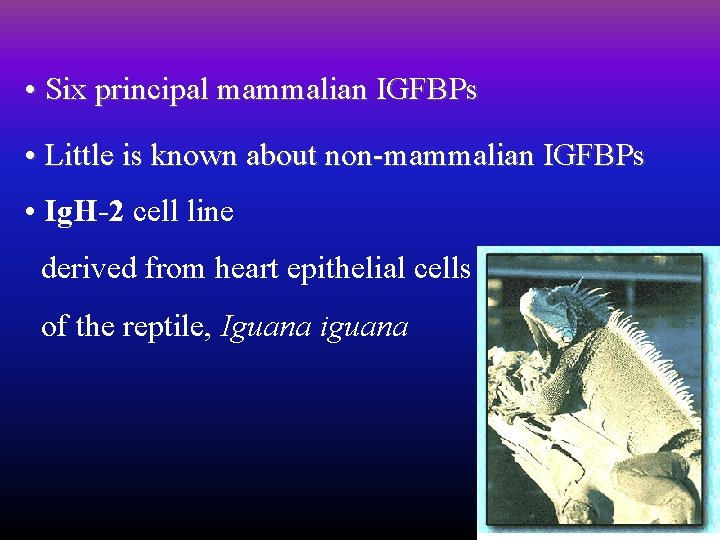
• Six principal mammalian IGFBPs • Little is known about non-mammalian IGFBPs • Ig. H-2 cell line derived from heart epithelial cells of the reptile, Iguana iguana
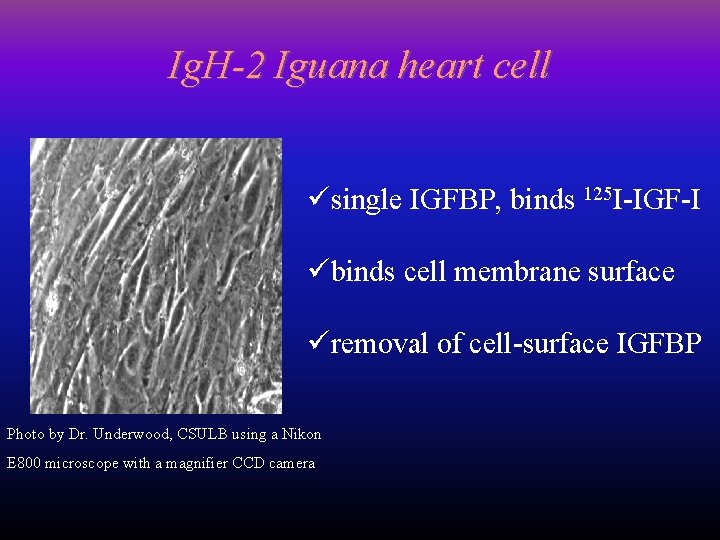
Ig. H-2 Iguana heart cell üsingle IGFBP, binds 125 I-IGF-I übinds cell membrane surface üremoval of cell-surface IGFBP Photo by Dr. Underwood, CSULB using a Nikon E 800 microscope with a magnifier CCD camera
Hypothesis • The membrane-bound Iguana IGFBP serves an IGF-inhibitory role in the heart cells IGF arriving at the cellular site is removed from proximity to the growth receptor
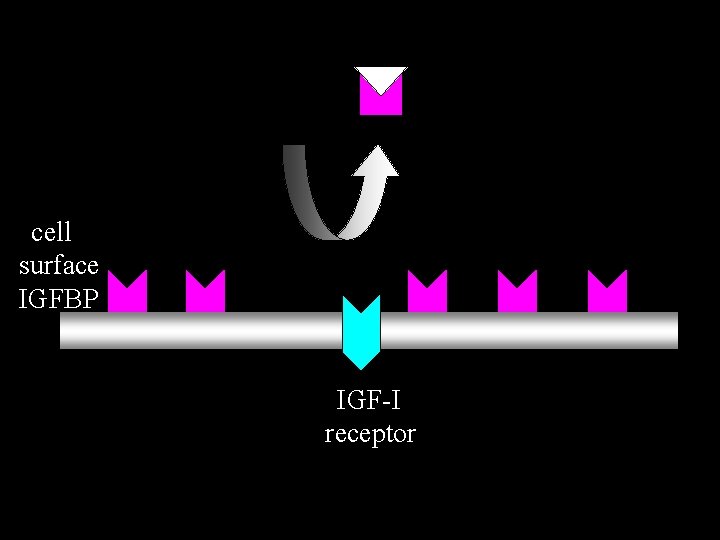
cell surface IGFBP IGF-I receptor
Goals • Determine the effects of IGF-I on cellsurface associated IGFBP (without potential IGF activation of IGF receptor signaling) • Determine the effects of the IGFBP on the cells mitogenic response to IGF-I • Establish if the Iguana IGFBP cell-surface associates by utilizing a RGD sequence
![IGF-I analogs [Ala 31][Leu 60]IGF-I Cell surface IGFBP IGF-I receptor Des(1 -3)IGF-I](http://slidetodoc.com/presentation_image_h2/cfe54ee65d5790f9238d2404a944c4d5/image-10.jpg "IGF-I analogs [Ala 31][Leu 60]IGF-I Cell surface IGFBP IGF-I receptor Des(1 -3)IGF-I")
IGF-I analogs [Ala 31][Leu 60]IGF-I Cell surface IGFBP IGF-I receptor Des(1 -3)IGF-I
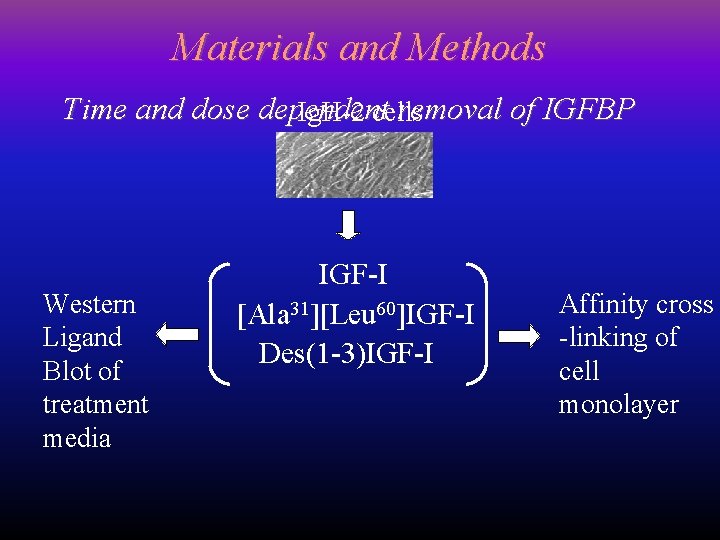
Materials and Methods Time and dose dependent removal of IGFBP Ig. H-2 cells Western Ligand Blot of treatment media IGF-I [Ala 31][Leu 60]IGF-I Des(1 -3)IGF-I Affinity cross -linking of cell monolayer
Materials and Methods Effects of the IGFBP on the cells Thymidine Incorporation assay mitogenic response to IGF-I • Two subsets of cells “ IGFBP present” and “IGFBP removed” • Treatment with IGF-I or Des(1 -3)IGF-I • Addition of [3 H]thymidine • Counted on LSC
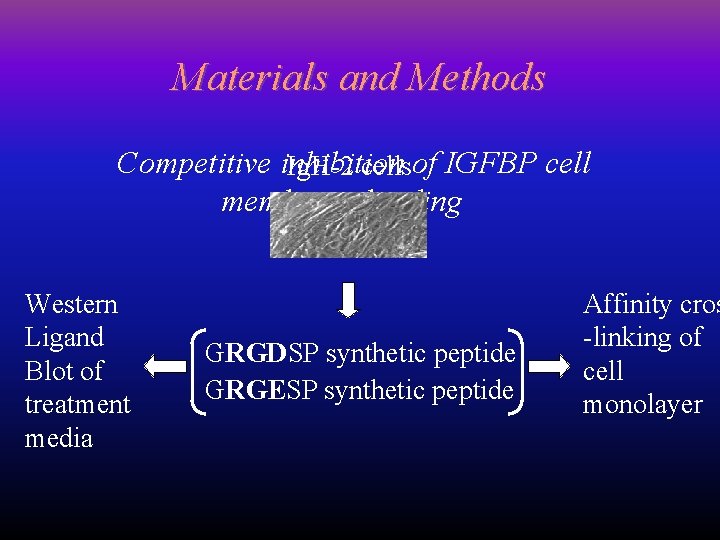
Materials and Methods Competitive inhibition Ig. H-2 cellsof IGFBP cell membrane binding Western Ligand Blot of treatment media GRGDSP synthetic peptide GRGESP synthetic peptide Affinity cros -linking of cell monolayer
Results • Time and dose dependent removal of the IGFBP from the cell surface
![15 minute incubation with [Ala 31][Leu 60]IGF-I IGF receptor (135 k. Da) 0 1](http://slidetodoc.com/presentation_image_h2/cfe54ee65d5790f9238d2404a944c4d5/image-15.jpg "15 minute incubation with [Ala 31][Leu 60]IGF-I IGF receptor (135 k. Da) 0 1")
15 minute incubation with [Ala 31][Leu 60]IGF-I IGF receptor (135 k. Da) 0 1 n. M 3 n. M 0. 1 M IGF Des IGFBP bound with 125 I-IGF-I (37 k. Da) Released IGFBP (30 k. Da) Rat Serum
Results • Effect of the IGFBP on the cells mitogenic response to IGF-I
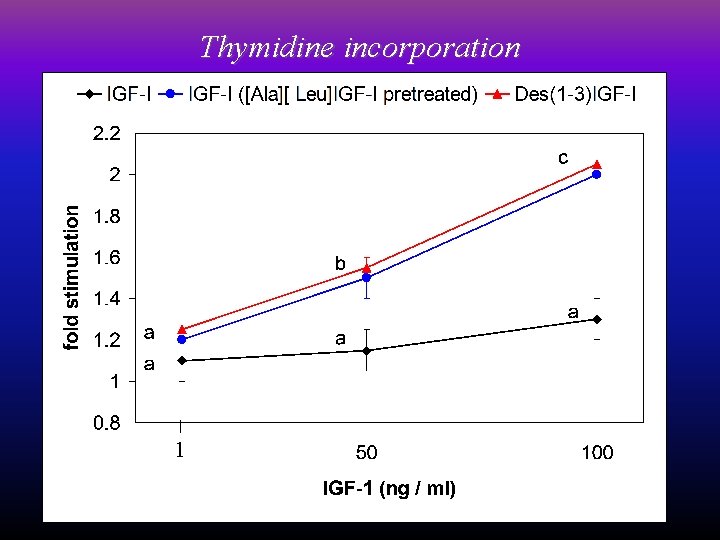
Thymidine incorporation 1
Results • Competitive inhibition of IGFBP cell surface association by a RGD synthetic peptide
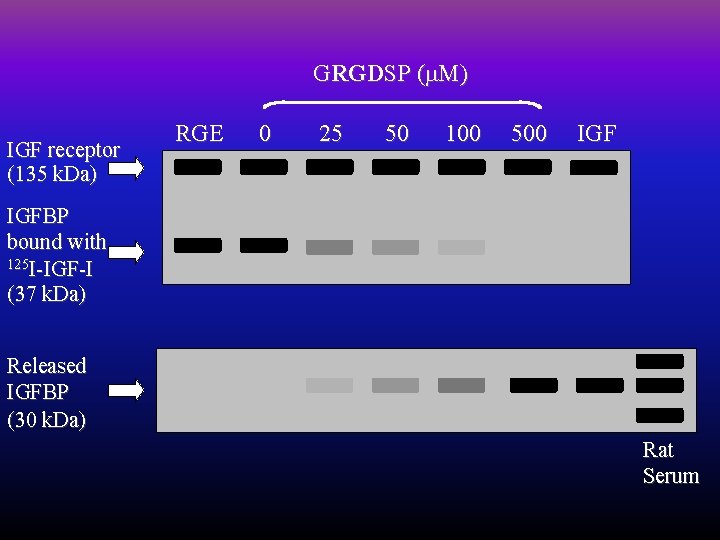
GRGDSP ( M) IGF receptor (135 k. Da) RGE 0 25 50 100 500 IGFBP bound with 125 I-IGF-I (37 k. Da) Released IGFBP (30 k. Da) Rat Serum
Conclusions • Ig. H-2 IGFBP removal from the cell surface by IGF-I is time and dose dependent, but independent of IGF-I activation of receptor signaling functions to inhibit IGF-I growth stimulation cell surfaces associates through a RGD amino acid sequence • Future research will be directed towards the cloning of this IGFBP

Acknowledgments I would like to thank: - Dr. Kevin Kelley, Kathleen Sak, Kameron Schmidt, and all the other members of the CSULB Endocrine Lab - Howard Hughes Medical Institute
- Slides: 21