
The Growing Prominence of Cochrane Systematic Reviews in








- Slides: 24
The Growing Prominence of Cochrane Systematic Reviews in Evidence-Based Resources Cindy Walker-Dilks, Brian Haynes Health Information Research Unit (HIRU) Dept Clinical Epidemiology & Biostatistics Mc. Master University
Health Information Research Unit (HIRU)
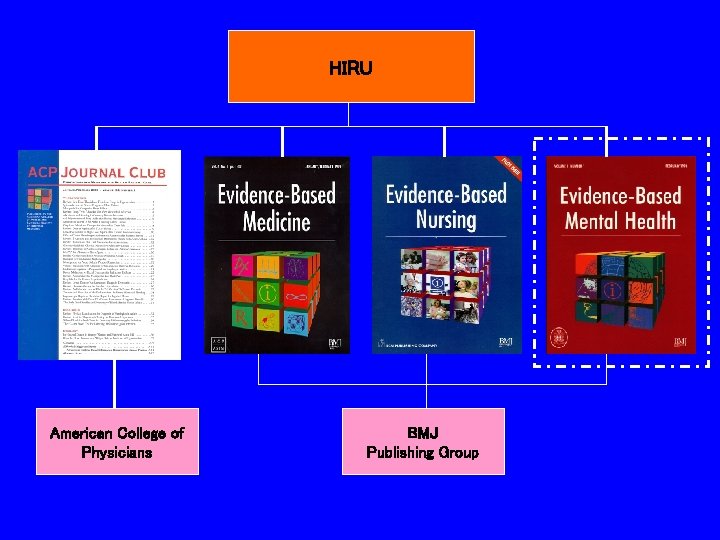
HIRU American College of Physicians BMJ Publishing Group
Evidence-Based Journals Purpose Categories Original studies and Reviews • • • Diagnosis Prognosis Therapy/prevention Etiology/causation Economics • Quality improvement • Clinical prediction guide • Differential diagnosis • Qualitative
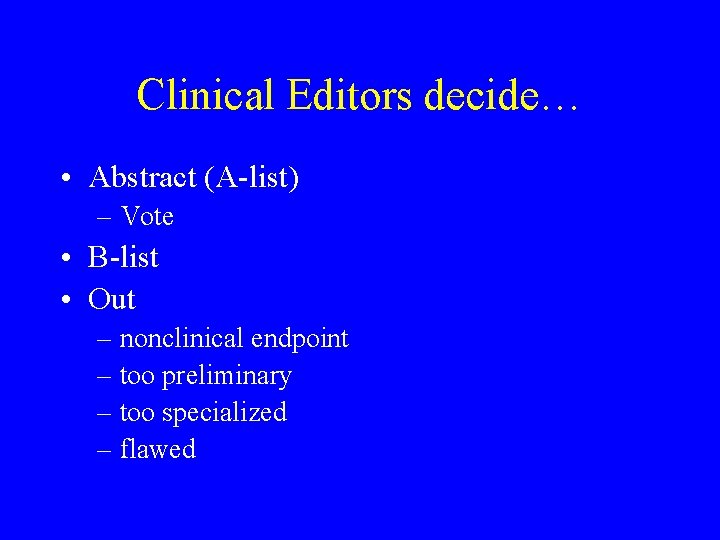
Clinical Editors decide… • Abstract (A-list) – Vote • B-list • Out – nonclinical endpoint – too preliminary – too specialized – flawed
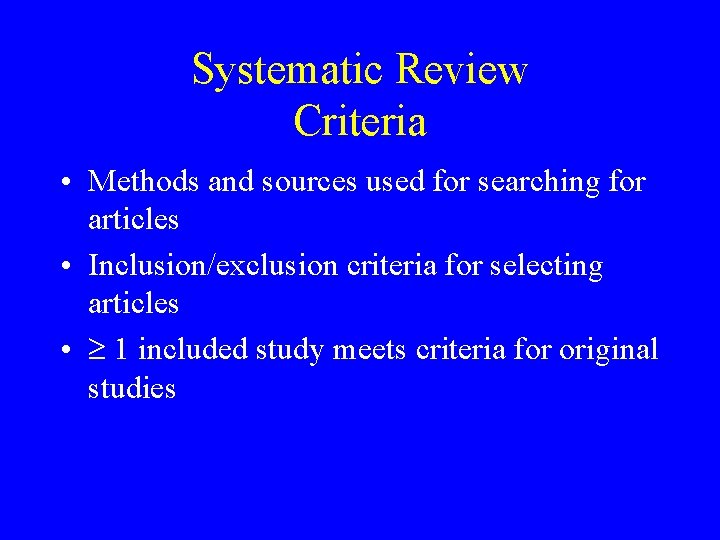
Systematic Review Criteria • Methods and sources used for searching for articles • Inclusion/exclusion criteria for selecting articles • 1 included study meets criteria for original studies
For example… Studies of therapy must have: • random allocation of participants to comparison groups • 80% follow-up • clinically important outcomes
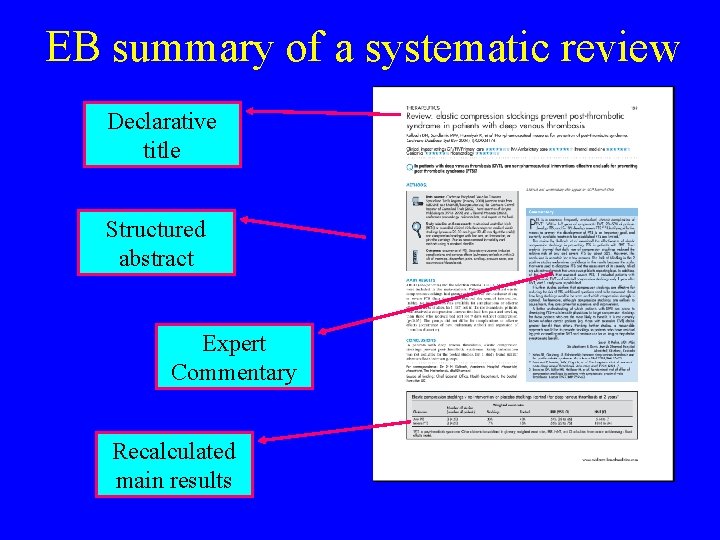
EB summary of a systematic review Declarative title Structured abstract Expert Commentary Recalculated main results
Raw material ~ 115 journal titles
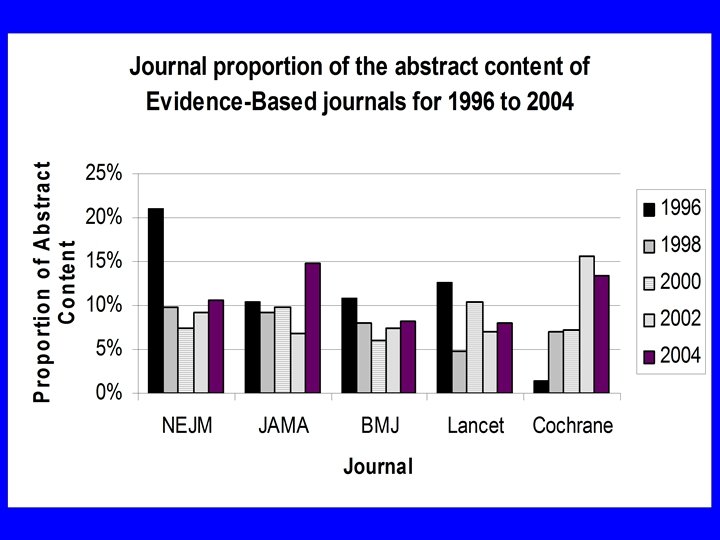
Top Yielding Journals • • • N England Journal of Medicine JAMA BMJ Lancet Cochrane Database Systematic Reviews
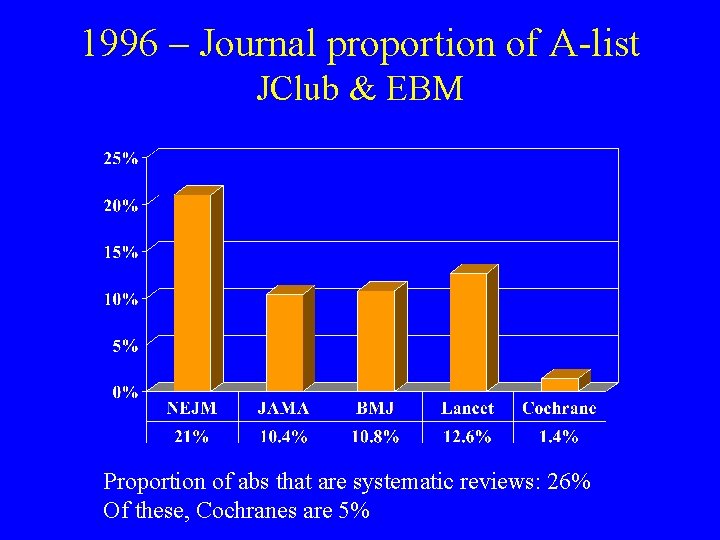
1996 – Journal proportion of A-list JClub & EBM Proportion of abs that are systematic reviews: 26% Of these, Cochranes are 5%
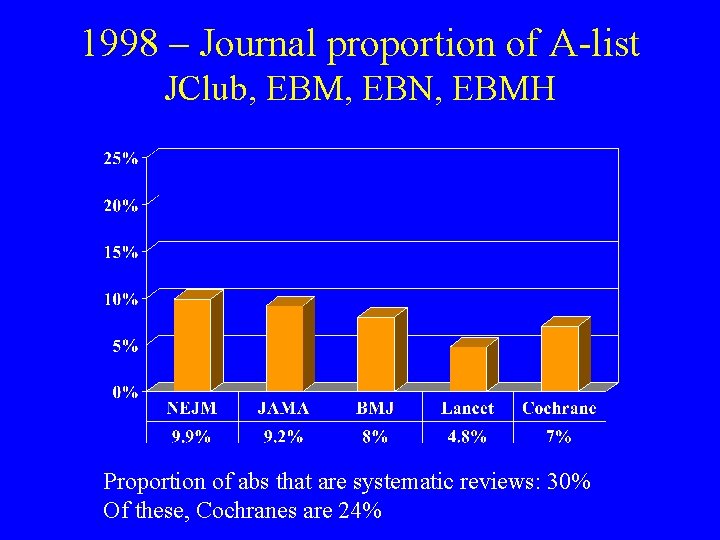
1998 – Journal proportion of A-list JClub, EBM, EBN, EBMH Proportion of abs that are systematic reviews: 30% Of these, Cochranes are 24%
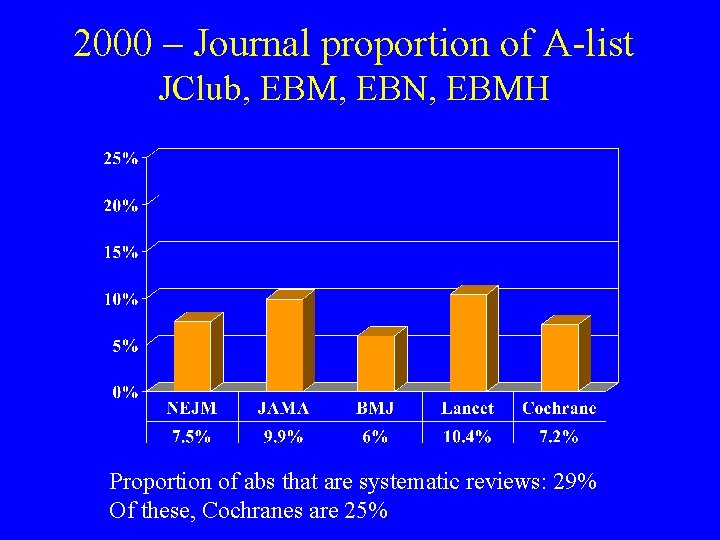
2000 – Journal proportion of A-list JClub, EBM, EBN, EBMH Proportion of abs that are systematic reviews: 29% Of these, Cochranes are 25%
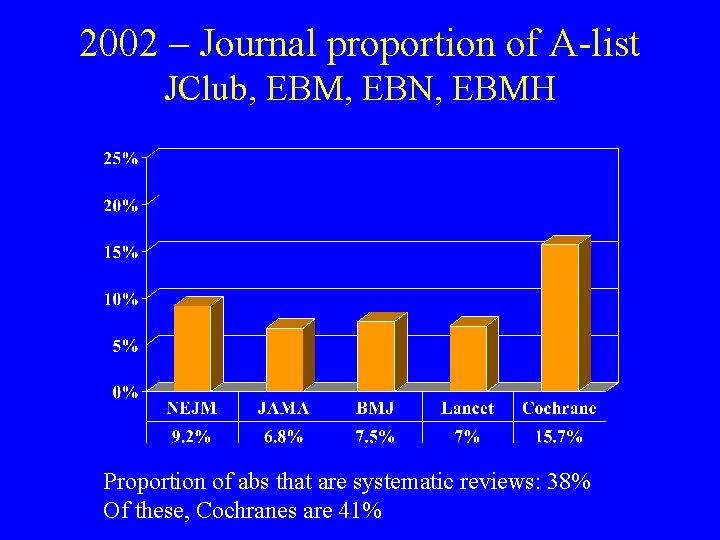
2002 – Journal proportion of A-list JClub, EBM, EBN, EBMH Proportion of abs that are systematic reviews: 38% Of these, Cochranes are 41%
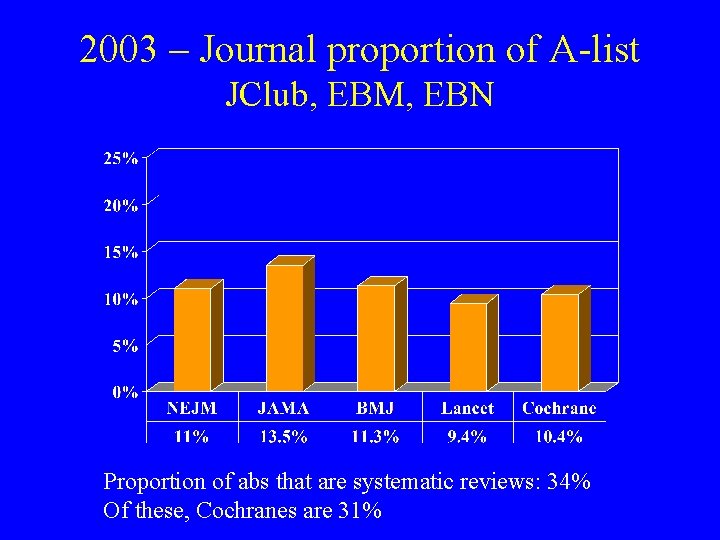
2003 – Journal proportion of A-list JClub, EBM, EBN Proportion of abs that are systematic reviews: 34% Of these, Cochranes are 31%
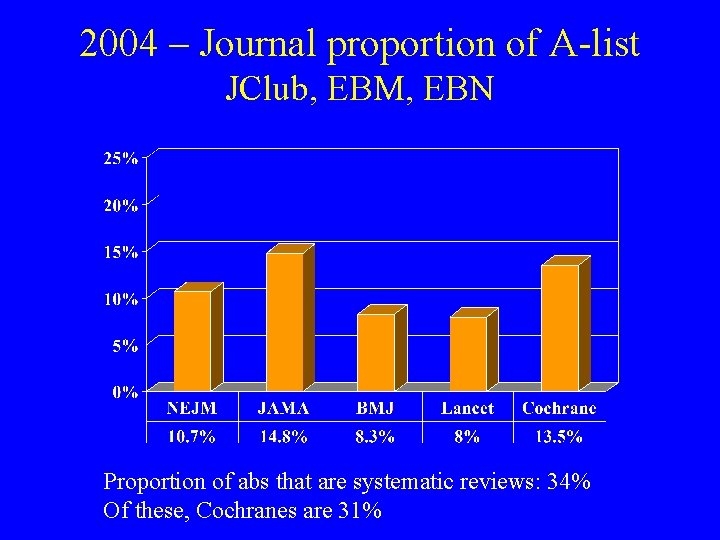
2004 – Journal proportion of A-list JClub, EBM, EBN Proportion of abs that are systematic reviews: 34% Of these, Cochranes are 31%
PLUS PROJECT
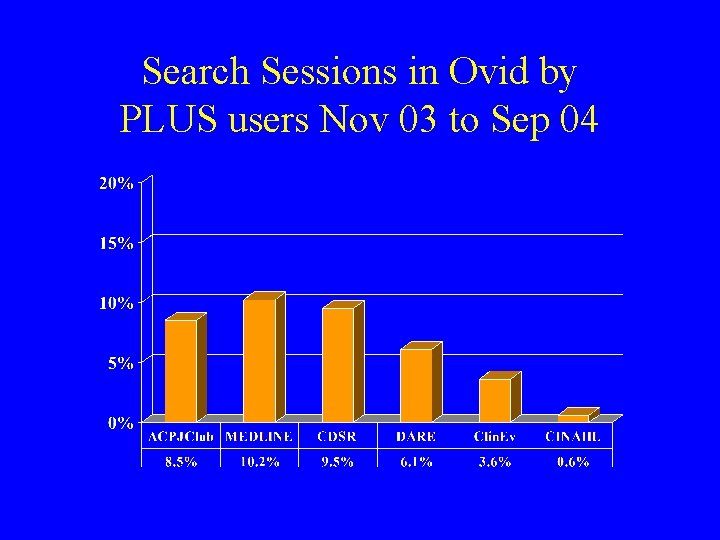
Search Sessions in Ovid by PLUS users Nov 03 to Sep 04
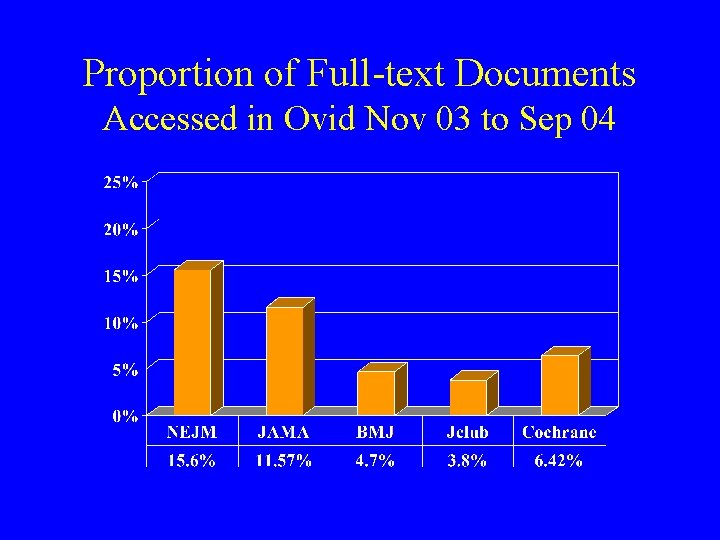
Proportion of Full-text Documents Accessed in Ovid Nov 03 to Sep 04
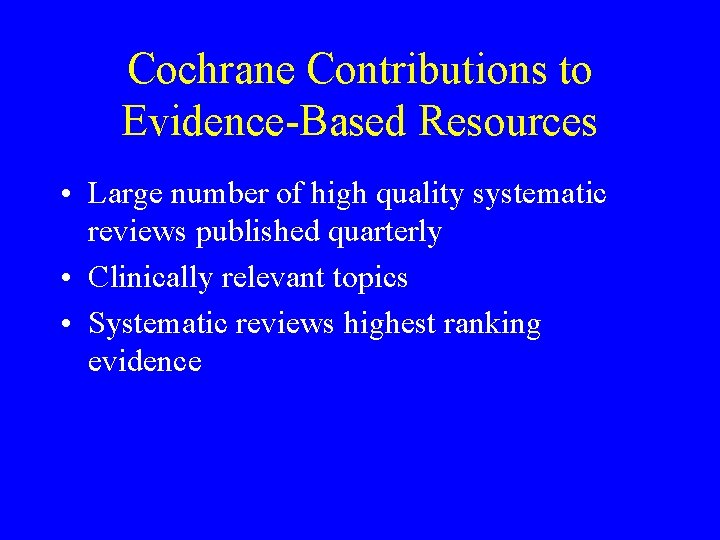
Cochrane Contributions to Evidence-Based Resources • Large number of high quality systematic reviews published quarterly • Clinically relevant topics • Systematic reviews highest ranking evidence