
The Greenpower Masterclass How to Engineer a Race






- Slides: 28
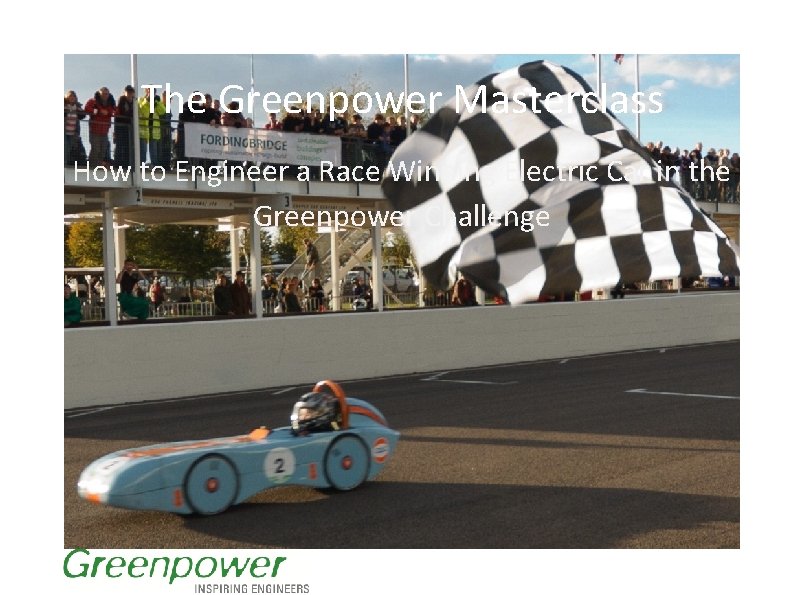
The Greenpower Masterclass How to Engineer a Race Winning Electric Car in the Greenpower Challenge
The Greenpower Challenge has been described as “the best technology competition for schools in the UK”. The unique hands on engineering challenge is for children and young people from 9 -25 to design, build and race a single seat electric powered race car. The challenge is divided into three age categories:
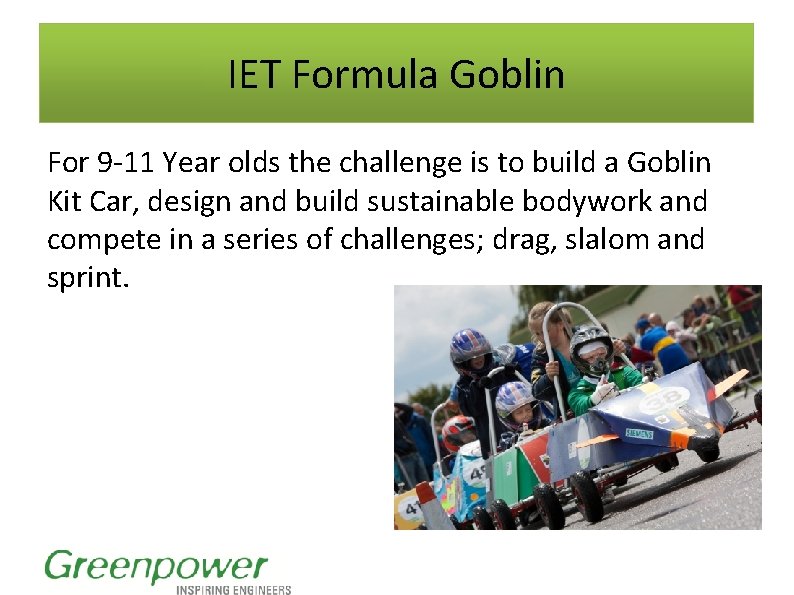
IET Formula Goblin For 9 -11 Year olds the challenge is to build a Goblin Kit Car, design and build sustainable bodywork and compete in a series of challenges; drag, slalom and sprint.
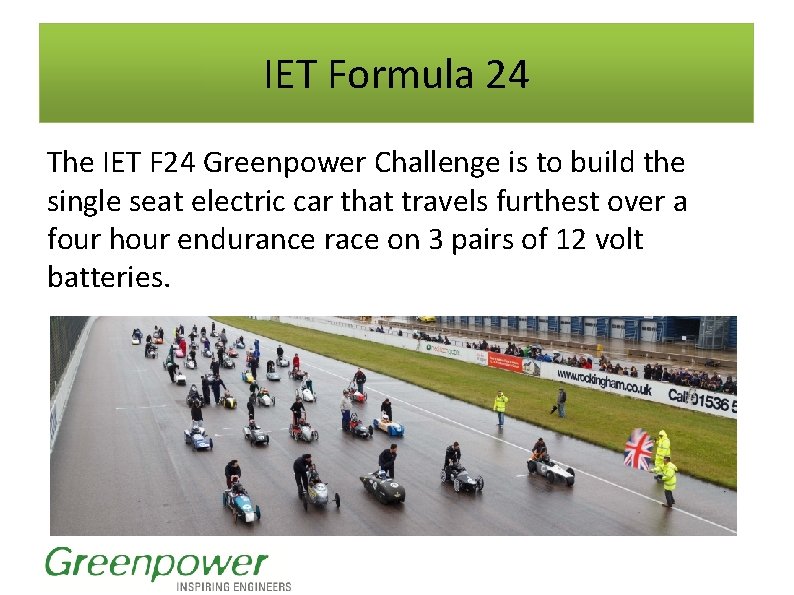
IET Formula 24 The IET F 24 Greenpower Challenge is to build the single seat electric car that travels furthest over a four hour endurance race on 3 pairs of 12 volt batteries.
IET Formula 24+ For 6 th Form students, universities and apprentices, the F 24+ challenge is a shorter, faster race than F 24 with a “constructor’s championship running through the season. This challenge has attracted teams from Jaguar Land Rover, Bentley , Peugeot Citroen, Eton College, and of course, Chipping Sodbury School!
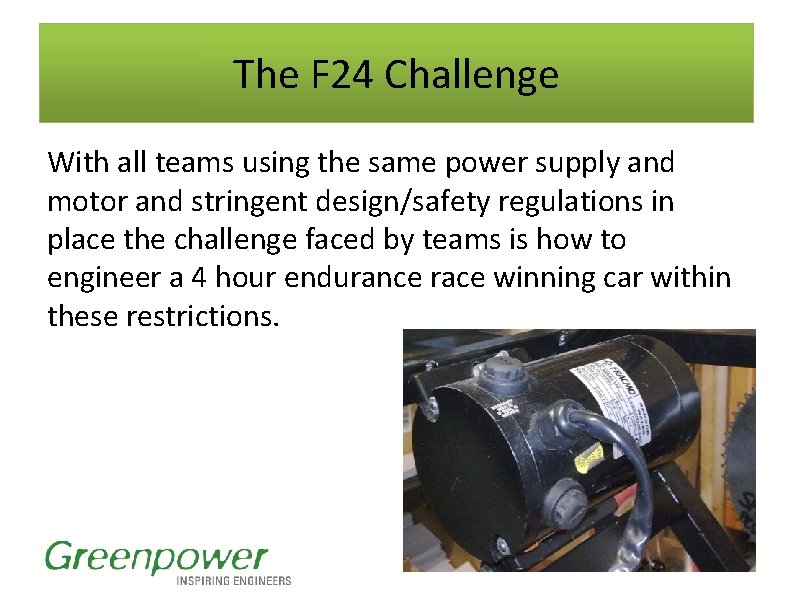
The F 24 Challenge With all teams using the same power supply and motor and stringent design/safety regulations in place the challenge faced by teams is how to engineer a 4 hour endurance race winning car within these restrictions.
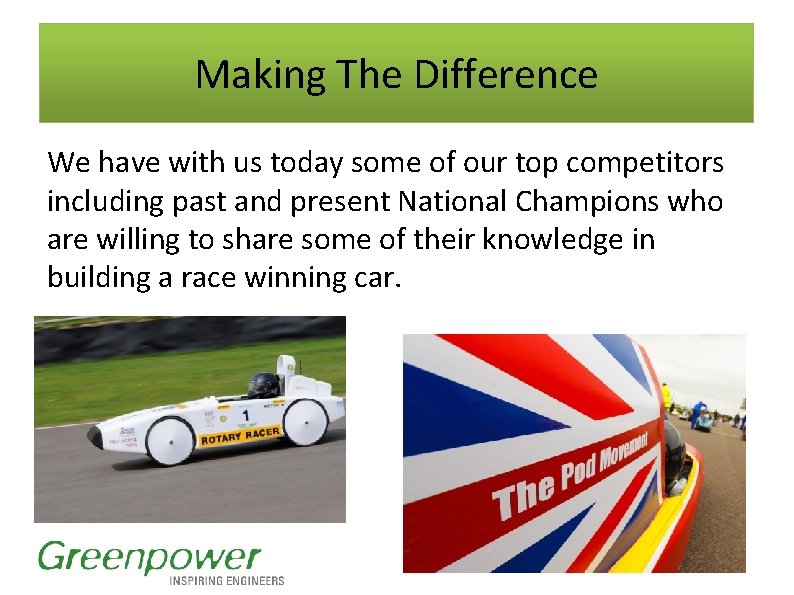
Making The Difference We have with us today some of our top competitors including past and present National Champions who are willing to share some of their knowledge in building a race winning car.
Science and building a car The basics (6 mins) 5 x slides basic science (Aerodynamic, Rolling drag, motor force) KISS, reliability, safety etc Dave
Rolling resistance, drive and gearing 5 x slides Rolling resistance, drive and gearing Wheel geometry & steering Matthew
Aerodynamics 5 x slides Aerodynamic drags with VWT pictures and Wind Tunnel pictures Gareth
Electronics is not necessary for a winning car However, using Electronics can add an edge and make racing performance consistent Uses include: Data gathering, energy management, problem handling, driver and pit crew information
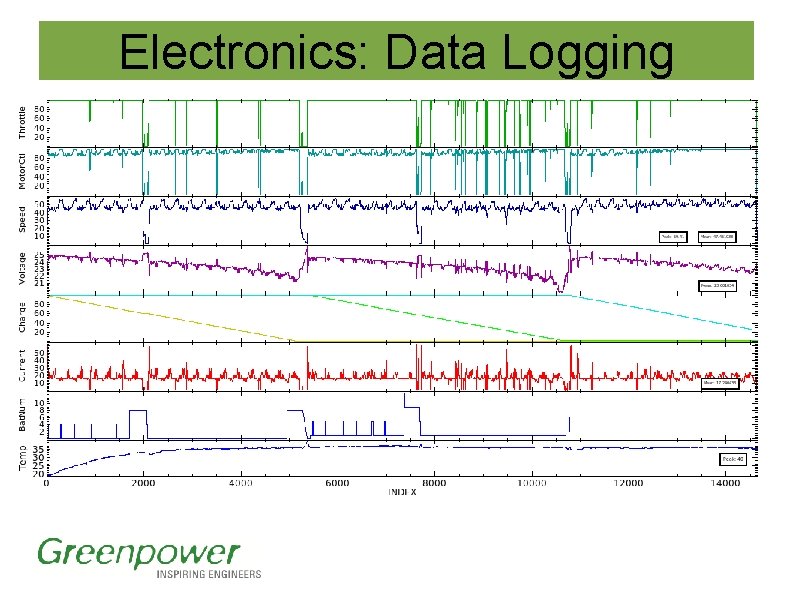
Electronics: Data Logging
Electronics: Data Logging Electronics Dan
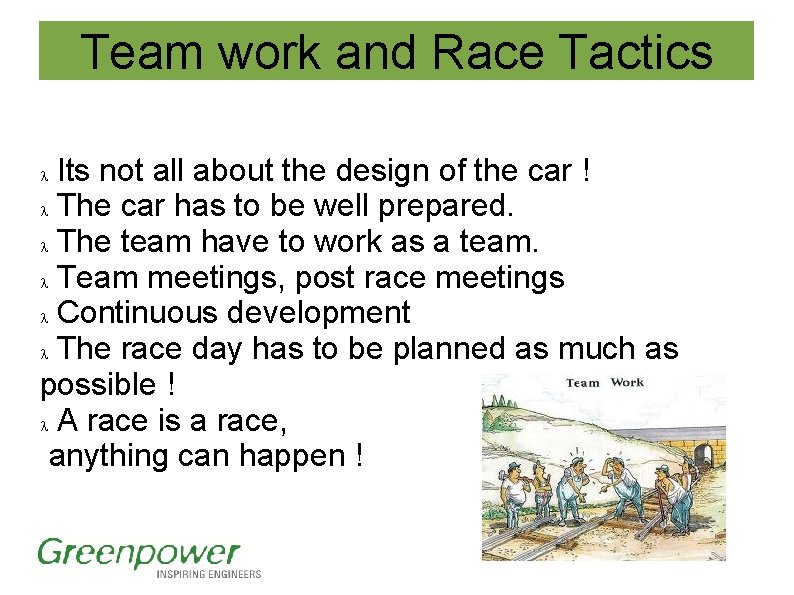
Team work and Race Tactics Its not all about the design of the car ! The car has to be well prepared. The team have to work as a team. Team meetings, post race meetings Continuous development The race day has to be planned as much as possible ! A race is a race, anything can happen !
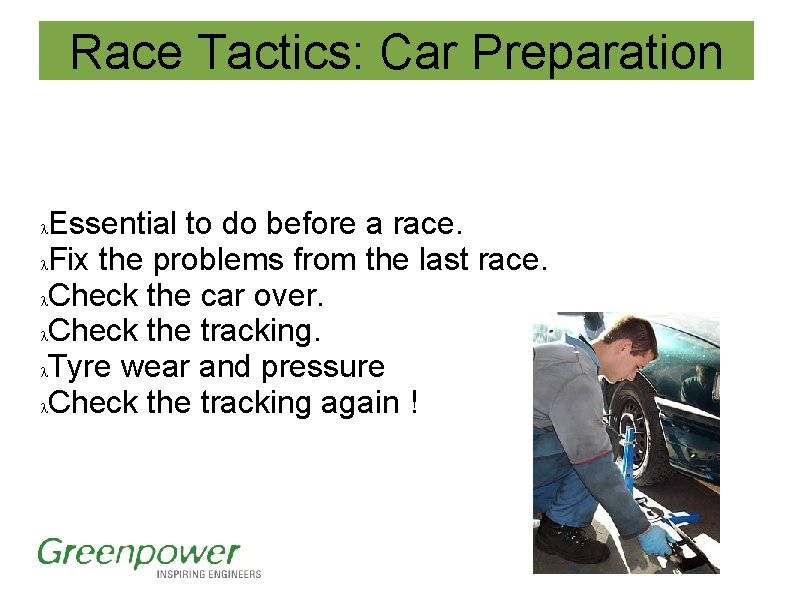
Race Tactics: Car Preparation Essential to do before a race. Fix the problems from the last race. Check the car over. Check the tracking. Tyre wear and pressure Check the tracking again !
Race Tactics: Pit Stops Have to pitstop at least 4 times for driver changes. What driver order ? Can do more with more than 5 drivers. Need to change batteries at two of these at least. When are batteries running out ? Lap timing and/or electronics with telemetry. Battery change times, driver time (20 mins min). Pit stop practice Who are in charge of batteries, pit stop board etc
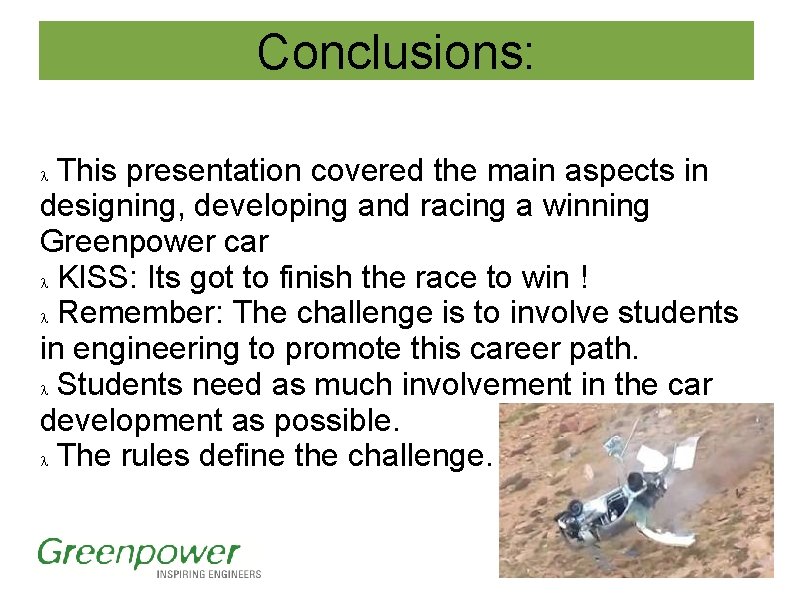
Conclusions: This presentation covered the main aspects in designing, developing and racing a winning Greenpower car KISS: Its got to finish the race to win ! Remember: The challenge is to involve students in engineering to promote this career path. Students need as much involvement in the car development as possible. The rules define the challenge.
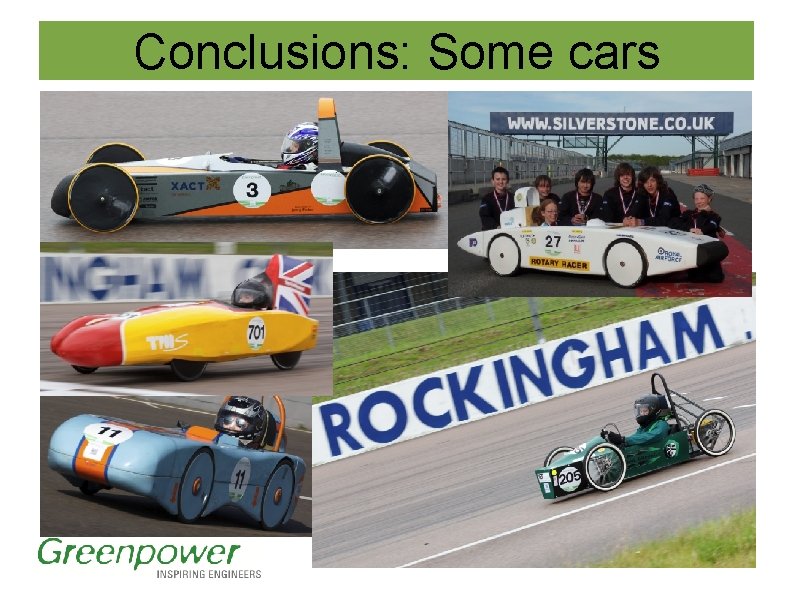
Conclusions: Some cars
Conclusions: What can be acheived A Greenpower can use an average of 400 Watts of electrical energy during a 4 hour race. An efficient Greenpower can average about 30 MPH with this level of power and thus travel 120 miles or more. In electrical terms travelling 120 miles would cost about 20 p in electricity. In terms of MPG of petrol this would be about 3000 MPG !
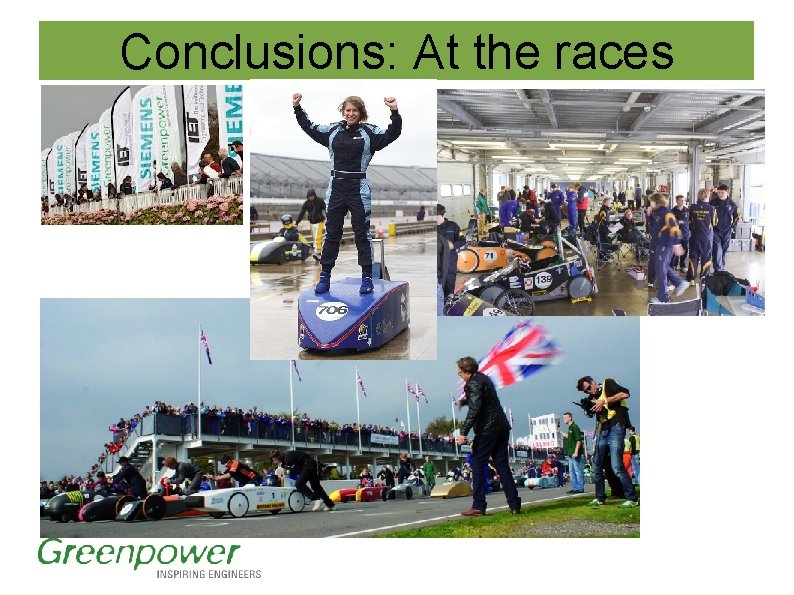
Conclusions: At the races
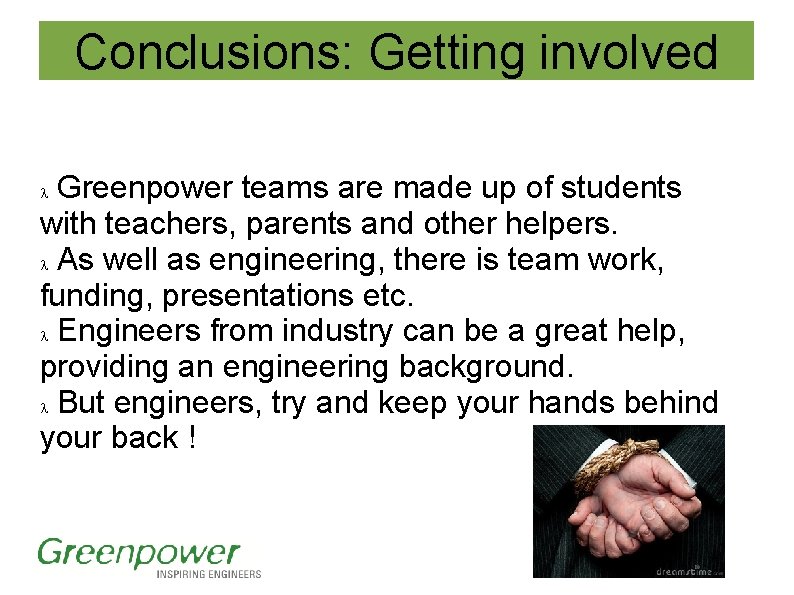
Conclusions: Getting involved Greenpower teams are made up of students with teachers, parents and other helpers. As well as engineering, there is team work, funding, presentations etc. Engineers from industry can be a great help, providing an engineering background. But engineers, try and keep your hands behind your back !
Any questions ? Greenpower is a unique engineering challenge for the engineers of tomorrow Any questions to any of the presenters ?